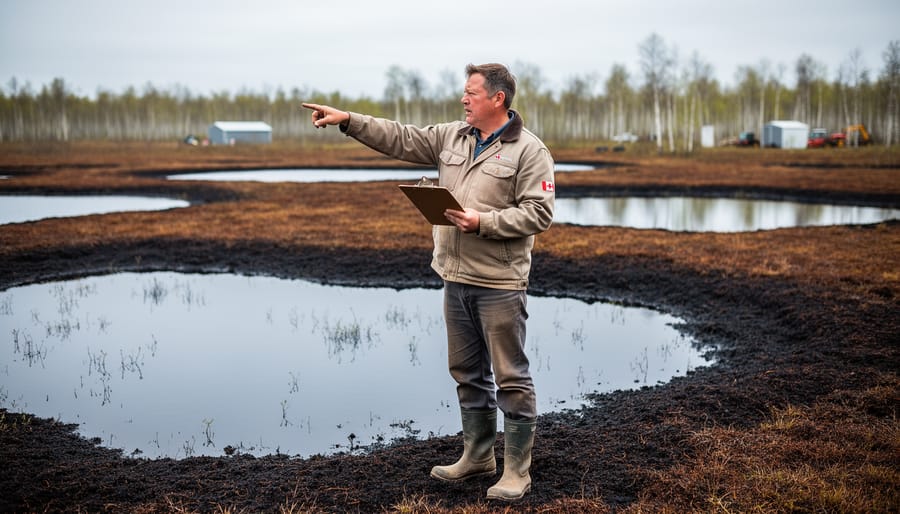
River nutrient availability measures the concentration and transport of nitrogen, phosphorus, and other dissolved nutrients flowing through waterways adjacent to or downstream of agricultural land. For Alberta farmers, this metric has become a key compliance requirement for sustainability programs and environmental markets in 2026, particularly those offering carbon credits or water quality premiums. Understanding and monitoring these nutrient levels is now central to proving your farm’s environmental stewardship and accessing new revenue streams tied to MRV (measurement, reporting, and verification) certification.
The practical connection is straightforward: fertilizer and manure management practices on your land directly influence what enters nearby rivers. Programs that certify reduced nutrient loading need documented proof that your practices are keeping nitrogen and phosphorus on the field rather than in the water. This shifts river monitoring from a purely regulatory concern to a marketable environmental outcome.
The ask might sound technical, but the threshold question is simple: does your operation border or drain into a monitored waterway included in a certification program? If yes, you’ll need to understand baseline nutrient levels, implement best management practices that reduce runoff, and work with accredited verifiers to document the change. Most Alberta producers entering these programs partner with agronomists and environmental consultants rather than shouldering the measurement burden alone. The certification process rewards farms that can demonstrate measurable nutrient reductions over multi-year agreements, creating long-term value for water-conscious management that many operations already practice.
What River Nutrient Availability Means for Your Farm
The Nutrient Cycle: From Field to River
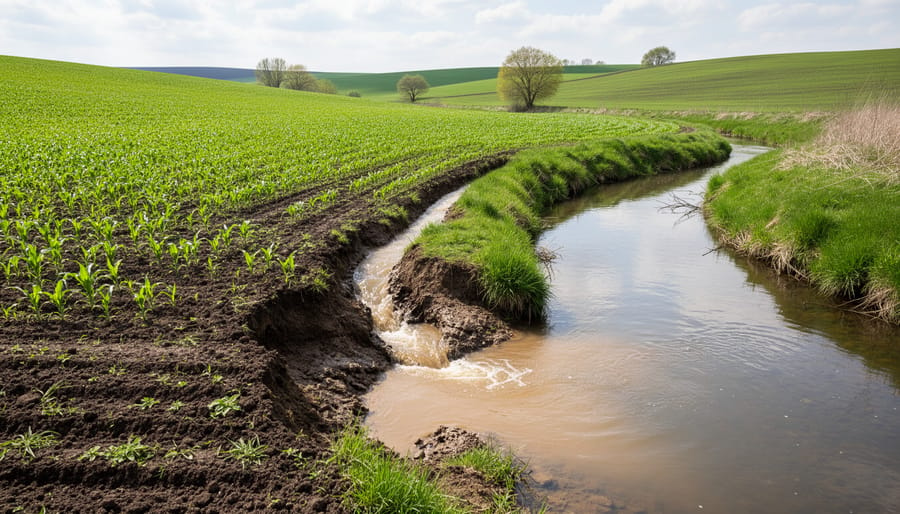
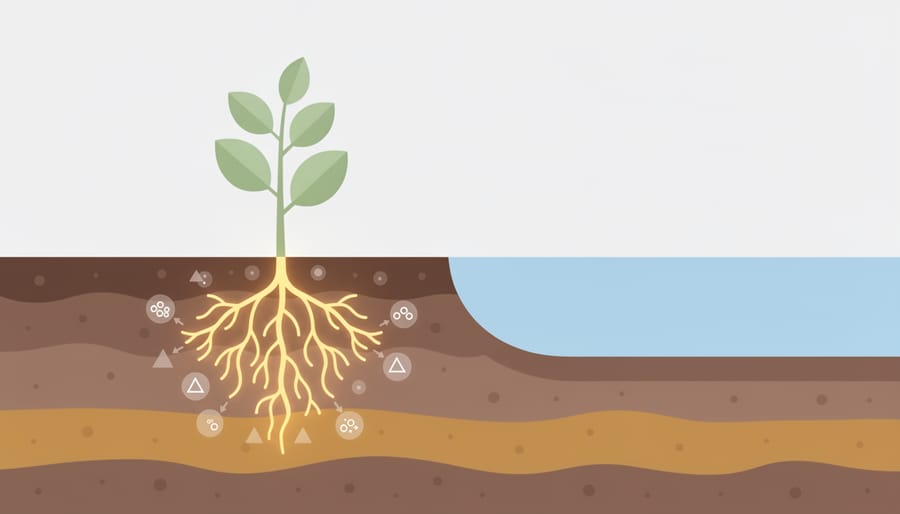
Nutrients move from Alberta farmland to rivers through three primary pathways, each influenced by your soil type, precipitation patterns, and drainage infrastructure. Surface runoff carries dissolved nutrients and soil particles during snowmelt and intense rainfall events, particularly on sloped fields or compacted soils where water can’t infiltrate quickly. This is when you’ll see the most dramatic nutrient movement, think of the spring melt in late March through April when frozen ground prevents absorption and runoff flows directly into drainage ditches and streams.
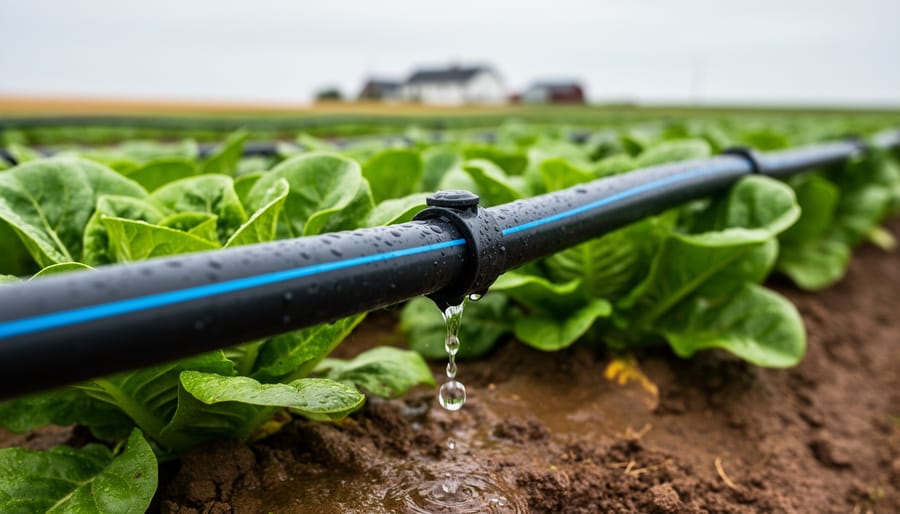
Tile drainage systems, common in irrigated areas of southern Alberta, create a direct conduit for nutrients dissolved in soil water. These subsurface tiles intercept water moving through the soil profile and discharge it to surface waters, often carrying nitrate-nitrogen that’s highly soluble and mobile. The timing matters: peak tile flow typically occurs during spring thaw and after major irrigation events.
Subsurface flow through soil layers represents the slowest pathway but can still transport significant nutrient loads over time. Sandy or coarse-textured soils allow more lateral movement of nutrients toward nearby water bodies, while clay soils tend to hold nutrients longer but release them during saturation events.
Once nutrients reach Alberta’s river systems, whether it’s the Oldman, Bow, or Red Deer rivers, the water’s flow rate, temperature, and biological activity determine how nutrients are processed. High spring flows dilute concentrations but transport larger total loads downstream. Summer low-flow periods concentrate nutrients, potentially triggering algae growth in slower river reaches and reservoirs like the Oldman Reservoir or Gleniffer Lake.
Why Nutrient Availability Matters for Water Quality Certification
Water quality certification has become a market differentiator and a gateway to new revenue streams for Canadian farms. Buyers ranging from major food brands to carbon credit aggregators now ask for verifiable proof that farm operations protect downstream water quality, and river nutrient levels serve as a key metric in that verification process. Programs that once focused solely on carbon sequestration have expanded to include water quality components, recognizing that nutrient management directly affects both climate and aquatic ecosystem outcomes. When you build an MRV plan for certification, nutrient loss data strengthens your eligibility for premium carbon credits and unlocks access to sustainability-focused supply chains willing to pay more for environmentally responsible production.
Beyond market access, certification creates accountability structures that help farms demonstrate stewardship to regulators and communities concerned about drinking water quality and aquatic habitat. Alberta farms participating in water quality MRV report improved relationships with watershed groups and clearer documentation when facing regulatory scrutiny, turning environmental compliance from a defensive position into a proactive strength.
Who Qualifies for Water Quality MRV Certification Programs
Location and Watershed Considerations
Not all farms face the same scrutiny when it comes to water quality certification. Certification bodies and provincial programs prioritize operations based on environmental risk and potential impact. Farms located within priority watersheds, areas where rivers and streams already show elevated nutrient concentrations or serve as municipal drinking water sources, typically move to the front of the line for enrollment and may face stricter monitoring requirements.
In Alberta, regional water quality assessments conducted by watershed planning and advisory councils identify nutrient hotspots where agricultural runoff contributes significantly to downstream impairment. Farms in these designated areas often receive targeted outreach for participation in a water quality program along with technical support to reduce their nutrient footprint. Proximity to sensitive water bodies matters too: operations within 100 meters of year-round streams, within 500 meters upstream of municipal water intakes, or in irrigation districts with intensive row crop production face higher expectations for nutrient management documentation and may be required to implement edge-of-field monitoring as part of certification.
Baseline Practice Requirements
Most water quality certification programs won’t expect your farm to have perfect nutrient management from day one, but they do require documented baseline practices that demonstrate a genuine commitment to reducing nutrient loss. These foundational practices serve as your starting point for MRV verification.
The 4R nutrient stewardship framework, applying the Right source at the Right rate, Right time, and Right place, forms the core expectation. You’ll need records showing soil testing at appropriate intervals (typically every three years minimum), fertilizer application maps or logs, and manure nutrient content analysis if you’re applying organic amendments. Many programs accept your existing agronomist recommendations as proof you’re following 4R principles.
Buffer strips or vegetative zones between fields and water bodies represent another common baseline requirement. Alberta programs typically want at least 10 metres of perennial vegetation along streams, though wider buffers (15-30 metres) strengthen your certification application and improve water quality outcomes.
For livestock operations, documented manure management protocols are essential: storage capacity calculations, application timing restrictions to avoid frozen or saturated ground, and incorporation methods that minimize runoff risk. If your current practices don’t meet these standards, certification bodies usually allow a transition period, often 12 to 24 months, to implement improvements while you begin monitoring.
Documentation and Record-Keeping Standards
Certification bodies require systematic documentation of all nutrient inputs and management activities to verify your farm’s water quality impact. You’ll need complete fertilizer application logs showing product type, nutrient analysis, application rates, dates, and field locations for at least the past three years. Soil test results with sampling dates, depths, and laboratory analysis help establish baseline nutrient levels and justify application decisions.
If you apply manure or compost, maintain detailed records of application dates, volumes, estimated nutrient content, incorporation methods, and weather conditions at application. Keep copies of any previous water quality sampling you’ve conducted, even informal tests, as these provide valuable baseline data. Digital records work well, but many certification programs accept organized paper logs, provided they’re legible and verifiable during audits.
How to Measure and Report River Nutrient Impact
Setting Up Monitoring Points
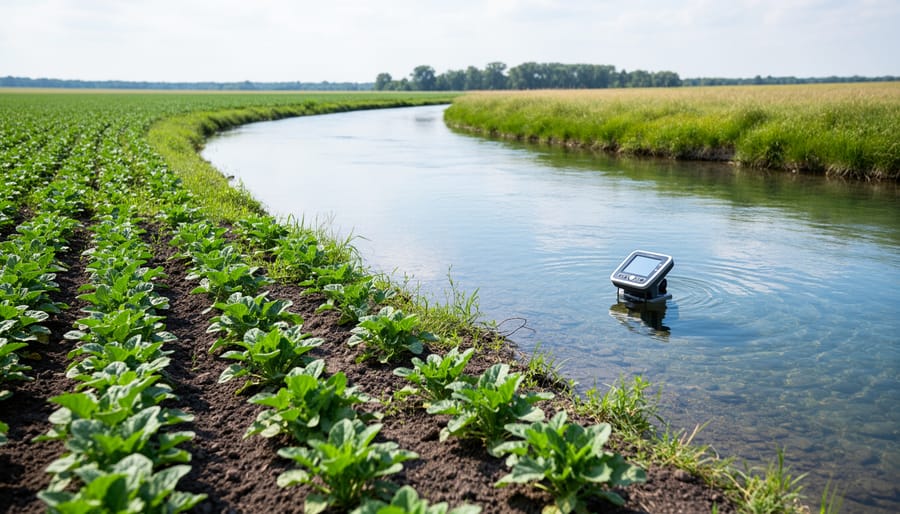
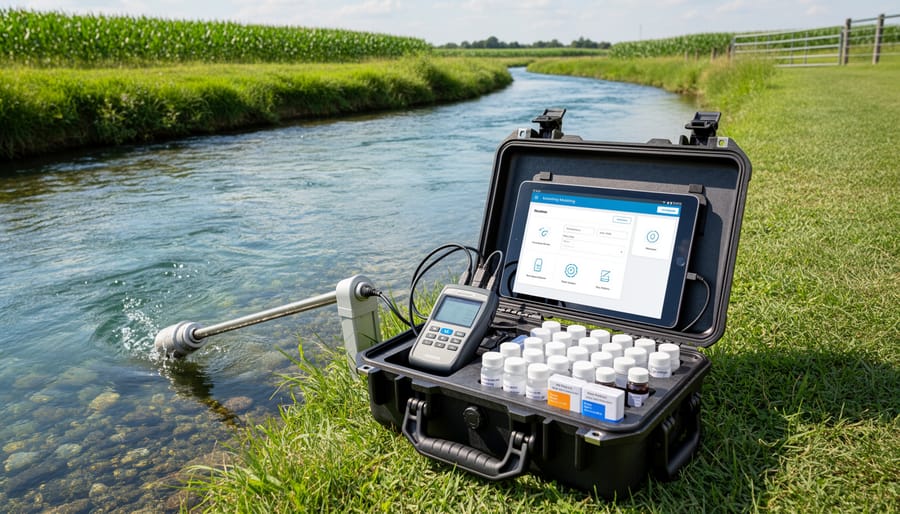
Choose sampling locations that capture your farm’s actual nutrient contribution without mixing in upstream sources. Position your primary monitoring point where field drainage or runoff first enters a waterway, typically at tile outlet pipes, ditch confluences, or the edge of riparian zones where surface runoff concentrates.
For farms with multiple drainage pathways, establish points at each significant outlet rather than relying on a single downstream location that blends multiple sources. This lets you isolate which fields or management zones contribute most to nutrient loading and target improvements where they’ll have the biggest impact.
Consider practical access year-round. Spring snowmelt and post-rainfall events are critical sampling windows, so avoid locations that become inaccessible in mud or high water. Install flow measurement equipment like flumes or weirs at stable points where channel geometry doesn’t shift seasonally.
Mark monitoring sites with durable stakes or GPS coordinates. Certification auditors may visit these locations, and consistency matters, sampling 20 metres upstream one month and 20 metres downstream the next creates data noise that undermines your MRV credibility. If your farm borders a river directly, sample at field boundaries before water mixes with the main channel.
Sample Collection Protocols
Certification programs typically require both routine baseline samples and event-driven samples to capture nutrient patterns accurately. Plan to collect baseline samples monthly during non-runoff periods, usually mid-summer and winter when flow is stable, to establish your farm’s typical nutrient signature.
Event-based sampling matters most. You’ll need samples within the first 2-4 hours of significant runoff events: spring snowmelt, heavy rainfall exceeding 15mm in 24 hours, and irrigation return flows. These capture peak nutrient concentrations when most loss occurs. Set up a simple alert system, rain gauge thresholds or visual checks of field drainage, so you can respond quickly.
Collect samples mid-stream using clean bottles provided by your lab, never from stagnant edges where algae skew results. Fill containers without disturbing bottom sediments, label immediately with date and location, and refrigerate within six hours. For event samples during spring melt, you may need insulated coolers if roads are impassable.
Most programs require four to six events per year plus quarterly baselines. Keep a log noting rainfall amounts, crop stage, and recent fertilizer applications alongside each sample. This context helps auditors interpret your results and demonstrates your understanding of nutrient dynamics on your operation.
Working with Accredited Laboratories
Choosing an accredited laboratory ensures your sampling efforts meet certification standards. In Alberta, look for labs certified under ISO/IEC 17025 for environmental testing or approved by the certification program you’re pursuing. Not all labs offer the same turnaround times or pricing structures, so request quotes from multiple facilities and confirm they can test the specific parameters required for water quality MRV.
Most certification programs require labs to monitor total nitrogen and phosphorus alongside other key indicators:
- Nitrate-nitrogen (NO₃-N): measures the most mobile form of nitrogen prone to leaching and runoff
- Total phosphorus (TP): captures all phosphorus forms, bound and dissolved, indicating overall nutrient load
- Dissolved reactive phosphorus (DRP): the immediately available form driving algal growth in waterways
- Total suspended solids (TSS): indicates erosion and the sediment-bound nutrients leaving your fields
- Electrical conductivity (EC): flags salinity issues that affect nutrient dynamics in some Alberta watersheds
When you receive lab reports, focus on the concentration values (typically mg/L) and compare them against provincial water quality guidelines or certification thresholds. Your certification body will provide conversion formulas to translate concentrations into nutrient loss per hectare when combined with flow measurements. Keep all lab reports in a dedicated folder, digital or physical, as auditors will request them during verification. If results seem unusually high or inconsistent with your practices, contact the lab immediately to confirm proper sample handling before submitting data.
Calculating and Reporting Nutrient Loss
Once you have lab results showing nutrient concentrations and flow measurements from your monitoring points, you’ll need to calculate the total nutrient loss from your fields. The basic formula multiplies the nutrient concentration (mg/L) by the water volume that flowed off your land during the monitoring period, then converts this to kilograms per hectare per year.
Most certification programs provide calculation templates or online MRV platforms where you enter your raw data. The platform typically handles unit conversions automatically, you input your lab’s nitrate-N reading in mg/L, the estimated runoff volume in cubic meters (which you can calculate from drainage area and precipitation records), and your field area in hectares. The system calculates your nutrient loss rate and flags any values that seem unusually high or low for verification.
For seasonal patterns common in Alberta, you’ll combine multiple sampling events across the year. Spring snowmelt and heavy rainfall events usually account for the majority of annual nutrient loss, so certification bodies require event-based sampling during these critical periods rather than just monthly averages. Weight your calculations accordingly, a single spring runoff event might represent sixty percent of your annual phosphorus loss.
When submitting to auditors, include your chain-of-custody documentation: dated photos of sample collection, lab reports with accreditation stamps, flow estimation worksheets, and any weather data you used to calculate runoff volumes. Third-party verifiers will cross-reference your reported loss rates against typical ranges for your soil type, crop rotation, and nutrient application rates to ensure accuracy.
Your Rights and Obligations Under Water Quality Certification
What Certification Programs Must Provide
Reputable water quality certification programs recognize that monitoring represents a significant investment for farms and should provide meaningful support to participants. Most certification bodies operating in Alberta offer technical training at program entry, including workshops on proper water sampling techniques, equipment calibration, and data recording procedures. This initial training typically covers sample collection protocols, handling and storage requirements, and how to use monitoring tools correctly.
Cost-sharing arrangements vary by program, but many certification bodies subsidize 50-75% of laboratory analysis fees for required water quality testing. Some programs provide monitoring equipment on loan, including water samplers, flow meters, and sample bottles, reducing upfront capital requirements. Participants should expect access to online reporting platforms that simplify data entry and calculations, along with technical support staff who can troubleshoot sampling issues or interpret unusual results.
Better programs assign each farm a dedicated technical advisor who conducts site visits, reviews monitoring plans, and helps optimize sampling locations for representative data collection. Ongoing support should include annual refresher training, updates on protocol changes, and assistance preparing for third-party audits. Before joining any certification program, confirm these support services are included in writing rather than optional add-ons, as adequate support directly affects your ability to meet verification standards successfully.
Your Ongoing Responsibilities
Enrolling in a water quality certification program means committing to a multi-year journey, typically three to five years, during which you must maintain the nutrient management practices you’ve implemented. This isn’t a one-time snapshot; you’ll continue collecting water samples according to the agreed schedule, usually twice annually at minimum, and submit updated reports each year. The certification body will require site access for periodic audits to verify that practices remain in place and data collection follows protocol. Your MRV for certification obligations include keeping detailed records of all fertilizer and manure applications, soil tests, and any changes to field management that could affect nutrient runoff.
If you change cropping systems, adjust drainage infrastructure, or modify your nutrient plan, you must notify the certification body and potentially update your monitoring approach. Missing annual reporting deadlines or failing third-party audits can jeopardize your certified status and any associated financial benefits, so build these responsibilities into your farm’s annual calendar from the start.
Data Ownership and Privacy Protections
When you collect water quality data on your farm for certification, you retain ownership of that information. Certification bodies can use your data only for verification and aggregated reporting, they can’t share farm-specific results without your written consent.
Under Canadian agricultural data frameworks, your nutrient monitoring records are protected personal business information. Certification agreements must clearly state how data will be stored, who can access it, and whether it’ll be used for research. You have the right to request data deletion if you withdraw from a program.
Most certification bodies anonymize farm data before sharing trends with researchers or government agencies. Review contracts carefully to understand data-sharing clauses, retention periods, and your ability to control secondary use beyond certification purposes.
Where to Get Help and Technical Support
Government and Extension Resources
Alberta farmers have multiple government channels for water quality MRV support. Start with your regional Alberta Agriculture and Irrigation office, agrologists provide free one-on-one guidance on nutrient management planning, sampling protocols, and connecting you with certification programs. Contact them at 310-FARM (3276) or through their regional service centres.
Watershed Planning and Advisory Councils (WPACs) across Alberta offer localized expertise on river systems and monitoring. Your local WPAC can help identify priority monitoring locations, provide historical water quality data for your watershed, and sometimes loan sampling equipment. Find your council through the Alberta Water Portal.
Agriculture and Agri-Food Canada’s Living Labs program includes water quality monitoring projects in Alberta. Their researchers collaborate with producer groups on MRV protocol development and often provide cost-shared technical support for participating farms.
The Environmental Farm Plan program through the Canadian Agricultural Partnership also funds water quality assessments and practice implementation tied to certification goals.
Certification Body Support Services
Most certification organizations running water quality MRV programs assign each farm a dedicated contact person during onboarding. This coordinator walks you through initial setup, helps you understand monitoring protocols specific to your operation, and answers questions as they arise. Many programs host monthly or quarterly training webinars covering topics like proper sample collection techniques, using digital reporting platforms, and interpreting lab results in the context of your nutrient management plan.
When technical problems occur, whether it’s equipment malfunction, unexpected test results, or confusion about reporting deadlines, certification bodies typically offer email and phone support with response times of one to two business days. Some also maintain online knowledge bases with video tutorials and troubleshooting guides. Staying engaged with these support channels protects certification status by ensuring you meet requirements consistently and address issues before they affect your standing.
Peer Learning and Case Studies
Alberta farmers exploring water quality MRV can learn directly from peers who’ve already navigated the certification process. The Environmental Farms Plan network connects producers implementing nutrient management practices across the province, while regional Watershed Stewardship Groups host farm tours showcasing monitoring setups and buffer zone designs. The Alberta Conservation Association maintains a database of demonstration sites where early adopters share their experiences with sampling protocols and reporting workflows.
Producer-led groups like Forage Seed Alberta and the Alberta Reduced Tillage Linkages organize field days that often include water quality monitoring demonstrations. These events let you see actual monitoring equipment in action, ask questions about lab costs and time requirements, and hear honest assessments of certification’s business value from farmers working similar land. Many watershed councils also coordinate peer mentorship programs pairing new participants with established farms for hands-on guidance through the first monitoring season.
Practical Strategies to Improve River Nutrient Outcomes
Precision Nutrient Management
Variable rate application adjusts fertilizer rates to match soil test results and yield potential across your fields, putting nutrients only where crops can use them. This precision prevents over-application in low-yield zones where excess nitrogen and phosphorus would otherwise leach into tile drains or wash into nearby waterways during spring runoff.
Split applications deliver nutrients when crops actually need them, applying half your nitrogen at seeding and half at tillering, for example, rather than dumping the full season’s supply upfront. A Lethbridge-area barley producer who switched to split applications cut his river-edge nitrate readings by 38% over three years while maintaining the same yields, because less unused fertilizer sat in the soil during April snowmelt.
Enhanced efficiency fertilizers with polymer coatings or urease inhibitors slow nutrient release, matching crop uptake windows and reducing the pulse of soluble nutrients that follows heavy rain. Alberta irrigation districts have documented 25-30% reductions in phosphorus runoff from fields using polymer-coated products compared to conventional broadcast applications. These practices directly improve your water quality MRV metrics while often reducing total fertilizer costs through better nutrient use efficiency.
Edge-of-Field Practices
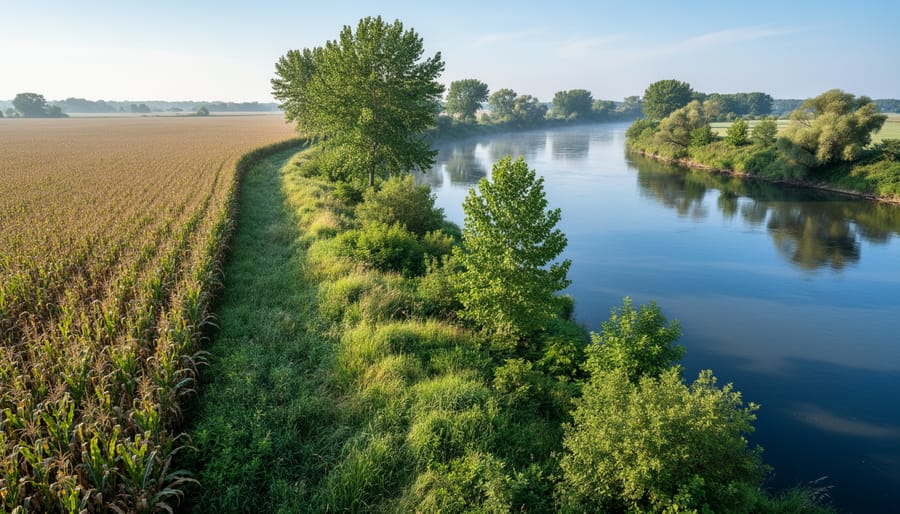
Edge-of-field practices create physical barriers that intercept nutrients before they enter waterways, acting as the last line of defense between your fields and Alberta’s rivers. These practices are particularly valuable for water quality MRV certification because they deliver measurable reductions in nutrient loading.
Riparian buffers, strips of permanent vegetation along stream banks, filter runoff and stabilize soil. For Alberta conditions, aim for minimum 10-meter widths using native grasses, shrubs, and trees suited to your zone. Wider buffers (15-30 meters) capture more nutrients and earn higher certification scores. The Alberta Riparian Habitat Management Society’s “Cows and Fish” program offers free assessments and technical support for buffer establishment.
Grassed waterways manage concentrated flow through fields, slowing water velocity and promoting infiltration. Design them with 3-5% grades and native grass species like smooth brome or creeping red fescue that withstand Alberta’s freeze-thaw cycles and spring melt events.
Constructed wetlands trap nutrients through plant uptake and microbial processes. While installation costs run $5,000-$15,000 per hectare, the Alberta Conservation and Reclamation Regulation and federal Agricultural Clean Technology Program provide cost-share funding covering up to 50% of eligible projects. These wetlands reduce phosphorus loads by 40-70% in monitored Alberta installations.
Drainage and Tile Management
Tile drainage systems create fast pathways for nutrients to reach waterways, bypassing the soil’s natural filtration. In Alberta’s irrigated areas, controlled drainage structures let you raise water tables during non-growing periods, keeping nitrate-rich water in the root zone where crops can use it come spring. Install flashboard risers or water level control gates at tile outlets, this simple retrofit can cut nitrogen loss by 30 to 50 percent without yield penalties.
Bioreactors offer another layer of defense. These wood-chip-filled trenches intercept tile flow and host bacteria that convert nitrate to harmless nitrogen gas. They work best where tile lines concentrate flow from multiple fields. Size the bioreactor to handle your peak drainage volume, and plan for wood chip replacement every eight to twelve years as the carbon source depletes.
Timing matters too. Avoid fall fertilizer applications on tile-drained fields when possible, nutrients applied after harvest face high leaching risk during snowmelt. Shift nitrogen to spring when growing crops actively take it up, reducing what’s left to drain away.
How to Apply or Complete the Process
The application process for water quality MRV certification varies by program, but most follow a similar pathway. Start by contacting the certification body directly through their website or provincial agriculture extension office to confirm eligibility and obtain the official application package. You’ll complete an enrollment form detailing your farm’s location, size, cropping systems, current nutrient management practices, and proximity to water bodies.
Submit the application along with supporting documentation: recent soil test results, fertilizer and manure application records from the past two growing seasons, and maps showing field boundaries, drainage patterns, and nearby waterways. The certification body reviews your submission and assigns a technical advisor who conducts an initial farm visit to confirm monitoring site locations and assess baseline practices.
Once approved, you’ll sign a participation agreement outlining your monitoring commitments, data submission deadlines, and verification protocols. The advisor helps you establish sampling points and connects you with accredited labs for water quality analysis. Many farmers find the process similar to how they measure and get certified for other environmental programs.
Expect the enrollment process to take four to eight weeks from initial application to official participation status, with most technical setup completed before the growing season begins.
Common Questions About River Nutrients and Water Quality Certification
Farmers considering water quality certification naturally have questions about what they’re signing up for. Here are answers to the most common concerns heard across Alberta’s agricultural community.
What does water quality monitoring actually cost?
Typical costs range from $500 to $2,000 annually depending on sampling frequency and parameters tested, though many certification programs offset 50-75% of lab fees and provide monitoring equipment at no cost to participants. Factor in roughly 8-12 hours of your time per year for sample collection and reporting.
How do weather variations affect my results?
Heavy rainfall and spring snowmelt naturally increase nutrient concentrations in runoff, which is why certification protocols require sampling across different conditions rather than penalizing individual high readings. Auditors evaluate your management practices and trends over time, not single storm events.
What happens if my nutrient levels come back high?
High readings trigger a review of your nutrient management plan and may require adjustments like modified application timing or additional edge-of-field practices, but they don’t automatically disqualify you from certification. Programs focus on demonstrable improvement and practice adoption rather than absolute thresholds.
Can I participate if I’m pursuing organic certification?
Yes, water quality MRV complements organic certification perfectly since both emphasize nutrient cycling and environmental stewardship. Organic operations often show lower nutrient loss rates, which can strengthen both certifications simultaneously.
Beyond these basics, farmers often wonder how water quality monitoring fits with carbon programs they’re already enrolled in. Most carbon credit protocols now include water quality co-benefits, and your MRV data can strengthen carbon verification by documenting reduced fertilizer use and improved nutrient efficiency. The monitoring investment serves multiple certification purposes rather than being a standalone requirement.
Time commitment concerns are valid but manageable with proper planning. Sampling during key runoff periods means you’ll collect most samples in spring and after significant rain events, which aligns with times you’re already monitoring field conditions. Batch your lab submissions and use digital reporting tools to minimize administrative burden throughout the growing season.
Understanding river nutrient availability isn’t just about meeting new environmental standards, it’s about positioning your farm for the markets and opportunities ahead. As sustainability certification becomes a gateway to premium buyers and carbon credit programs, farms that proactively address water quality through MRV are building competitive advantages while protecting the rivers and watersheds we all share.
Start with a baseline assessment. You don’t need to have all the answers or perfect systems in place before you begin. Contact your local watershed council or Alberta Agriculture extension office to explore monitoring options that fit your operation’s scale and budget. Many farmers find that tracking nutrient flows reveals management inefficiencies they can fix, turning compliance into profit.
The certification programs emerging across Alberta are designed with farmer success in mind, offering technical support and cost-sharing precisely because they need working farms as partners in watershed protection. Your willingness to measure, report, and improve puts you at the forefront of agriculture’s next chapter, one where environmental stewardship and economic viability reinforce each other. The farms that engage now will shape how these programs evolve and benefit most from the market recognition they bring.