Minnesota’s Agricultural Water Quality Certification Program stands as North America’s most comprehensive voluntary framework for protecting water quality while supporting farm profitability. Launched in 2015, this producer-led initiative certifies farms that meet or exceed state water quality standards, offering legal certainty for ten years and exemption from new water regulations during that period.
The program addresses a challenge familiar to Canadian producers: demonstrating environmental stewardship while maintaining operational flexibility. Participating Minnesota farmers undergo rigorous on-farm assessments evaluating nutrient management, soil conservation, and riparian protection practices. Certified operations receive public recognition and regulatory assurance, creating measurable value beyond environmental benefits alone.
For Alberta farmers and agricultural professionals exploring similar approaches, Minnesota’s model provides tested frameworks worth examining. The program combines voluntary participation with verified outcomes through detailed measurement, reporting, and verification protocols. Independent third-party assessors conduct site evaluations using standardized checklists, ensuring consistency across diverse farming operations from row crops to livestock facilities.
What makes this certification particularly relevant for Canadian contexts is its focus on practical implementation rather than prescriptive methods. Farmers maintain decision-making authority over their operations while meeting performance-based standards tailored to local watershed conditions. The program has certified over 1,200 farms covering more than 400,000 hectares, demonstrating scalability across varied agricultural landscapes.
Understanding Minnesota’s certification structure, verification processes, and producer outcomes offers actionable insights for developing regional water quality programs adapted to Canadian prairie conditions. The following examination explores how measurement and verification systems create credible certification while supporting farm-level conservation investments and watershed protection goals.
What Is the Minnesota Ag Water Quality Certification Program?
The Core Components
Minnesota’s Ag Water Quality Certification Program operates through a voluntary, three-phase process designed to recognize farmers already implementing sound conservation practices. The structure provides valuable insights for Canadian producers considering similar approaches.
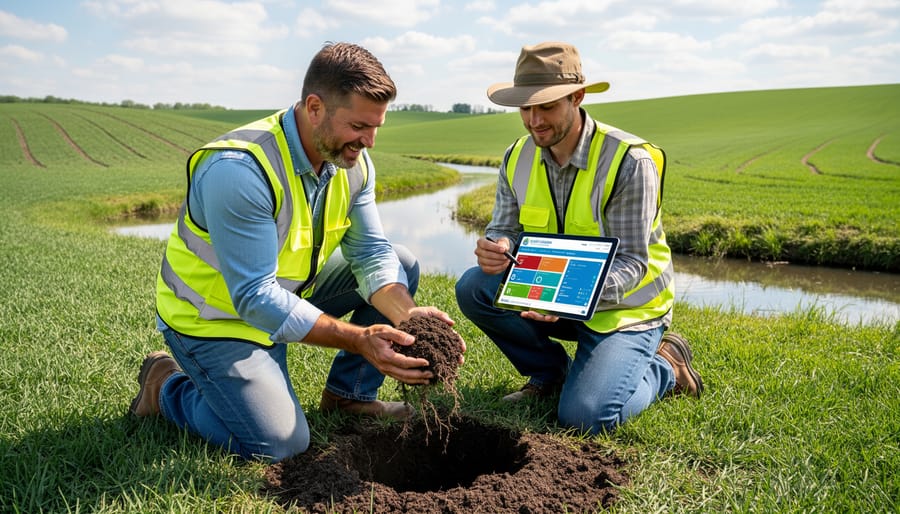
The program begins with a comprehensive farm assessment conducted by certified specialists who evaluate current practices across the entire operation. These professionals examine nutrient management, tillage practices, water and sediment control systems, and livestock management protocols. The assessment covers everything from manure storage facilities to riparian buffer zones along waterways. Unlike punitive inspections, these evaluations identify existing conservation efforts and recommend practical improvements where needed.
Conservation practices assessed include cover cropping, reduced tillage systems, proper nutrient application timing and rates, grassed waterways, and vegetative buffers. The program recognizes that farms achieving approximately 90% compliance with Minnesota’s water quality standards qualify for certification. This threshold acknowledges that agricultural operations exist on working landscapes where achieving absolute perfection isn’t always feasible.
The certification requirements include maintaining detailed records of fertilizer applications, soil testing results, and conservation practice maintenance. Certified farms receive ten-year regulatory certainty, meaning they won’t face new water quality regulations during that period if they maintain their practices.
For Alberta producers, this model demonstrates how baseline assessments combined with recognized conservation standards can provide both environmental benefits and operational stability. The program’s success lies in its collaborative rather than regulatory approach, building trust between agricultural communities and environmental stakeholders while delivering measurable water quality improvements.
Who Can Participate
Minnesota’s Agriculture Water Quality Certification Program welcomes a broad range of agricultural producers who want to demonstrate their commitment to water stewardship. The program is open to farmers and landowners operating various agricultural enterprises, including row crop operations, livestock facilities, and specialty crop producers.
To qualify for certification, participants must be actively farming in Minnesota and willing to implement conservation practices that protect water quality. There’s no minimum or maximum farm size requirement, making the program accessible whether you’re managing 40 hectares or 400 hectares. Both conventional and organic operations can participate, reflecting the program’s inclusive approach to environmental stewardship.
For Canadian farmers considering similar certification pathways, this eligibility model offers valuable insights. The Minnesota program demonstrates that certification isn’t reserved for large-scale operations or those already excelling in conservation—it’s designed to meet producers where they are in their sustainability journey. Livestock producers, grain farmers, and diversified operations all find value in participation.
The key requirement is commitment rather than current practices. Participants work with technical experts to assess their operations, identify priority areas, and develop customized plans that align with their specific agricultural context while protecting local watersheds.
Understanding Nutrient Loss and Its Impact on Water Quality
The Alberta Context
Alberta farmers face remarkably similar water quality challenges to their Minnesota counterparts, making the lessons from the MN Ag Water Quality Certification Program directly applicable to our provincial context. Both regions share intensive livestock operations, significant crop production, and watersheds vulnerable to nutrient loading from agricultural activities.
The Alberta landscape presents unique opportunities and concerns. Our province’s irrigation districts in southern Alberta, combined with dryland farming operations across the prairies, create diverse nutrient management scenarios. Spring runoff from snowmelt, particularly in years following heavy fertilizer application, can transport significant phosphorus and nitrogen loads into waterways like the Red Deer River, Bow River, and numerous tributaries feeding into Lake Winnipeg’s watershed.
Alberta producers already demonstrate strong environmental stewardship through existing programs like the Environmental Farm Plan, but a certification system specifically targeting water quality could provide additional market differentiation and regulatory certainty. The province’s growing emphasis on sustainability, coupled with consumer demand for environmentally responsible food production, creates fertile ground for voluntary certification approaches.
Key challenges include the variability in soil types across Alberta—from heavy clays to sandy loams—which affects nutrient retention and requires tailored management practices. Additionally, our shorter growing season and colder climate impact application timing and nutrient uptake patterns differently than Minnesota’s conditions.
However, Alberta’s robust agricultural extension network, innovative farming community, and experience with precision agriculture technologies position our producers well to adopt comprehensive water quality monitoring and verification systems. Learning from Minnesota’s decade of experience could accelerate implementation while avoiding common pitfalls.
MRV Systems: The Foundation of Credible Certification
Measurement: Tracking Nutrient Loss
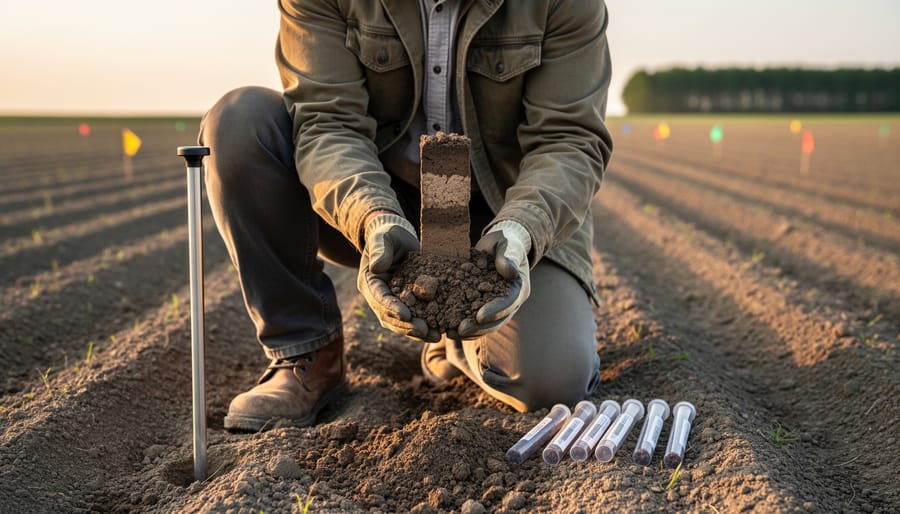
Minnesota’s Ag Water Quality Certification Program relies on comprehensive monitoring systems that Canadian producers can adapt to their own operations. The program uses soil testing protocols that measure phosphorus and nitrogen levels at multiple depths, typically sampling to 60 centimeters to capture root zone dynamics. Producers collect samples in spring and fall to track seasonal nutrient fluctuations and identify potential loss pathways.
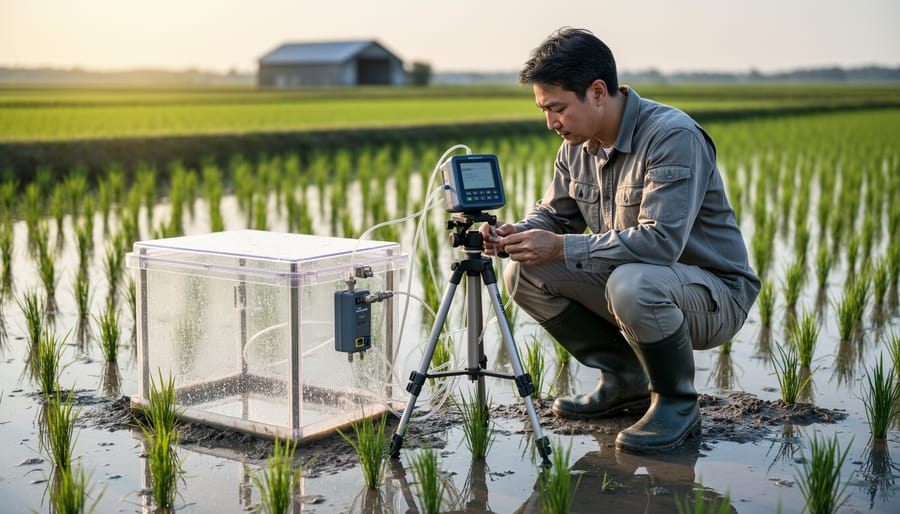
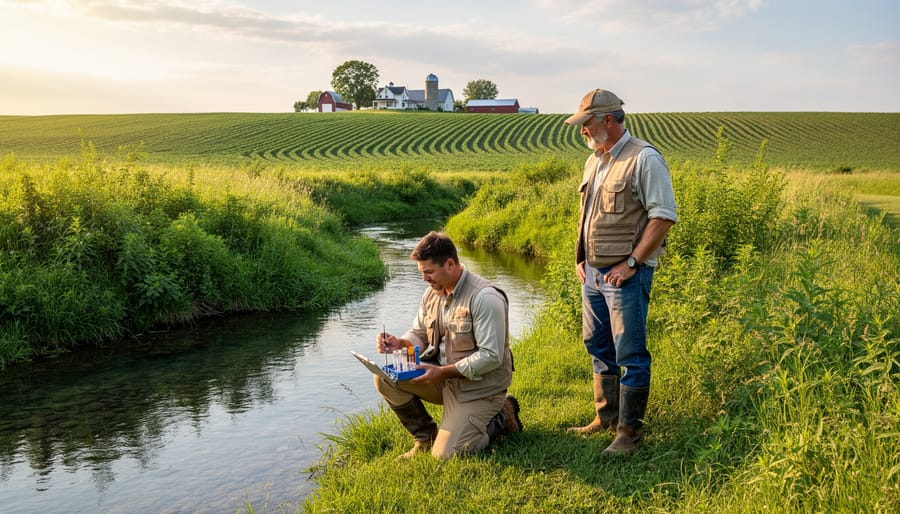
Water quality monitoring involves strategic placement of testing sites at field edges, tile drainage outlets, and nearby waterways. Minnesota farmers measure nitrate-nitrogen concentrations, total phosphorus, and sediment levels using portable field kits and laboratory analysis. These measurement practices provide baseline data essential for certification and ongoing improvement.
For Alberta producers interested in similar approaches, the same tools apply effectively. Soil health indicators like organic matter content, aggregate stability, and biological activity reveal how management practices influence nutrient retention. Many Canadian farmers already conduct routine soil testing; expanding these efforts to include water monitoring creates a complete picture.
Digital tools have simplified data collection considerably. Minnesota participants use mobile apps to record applications, weather conditions, and test results in real-time. Geographic information systems map nutrient distribution across fields, identifying problem areas requiring targeted intervention.
The program also emphasizes affordability. Basic monitoring equipment costs between 500 to 2,000 dollars, with many conservation districts offering free or subsidized testing. This accessibility ensures smaller operations can participate without significant financial barriers, making certification achievable across diverse farm sizes and production systems.
Reporting: Documentation That Works
Minnesota’s program recognizes that farmers run businesses, not paperwork mills. The reporting system uses a practical, streamlined approach that Alberta producers could easily adapt. Certified farmers document their conservation practices through simple annual forms and maintain basic records of activities like fertilizer applications, soil tests, and cover crop plantings.
The genius lies in the flexibility. Rather than demanding complex data collection, the program accepts existing farm records—most of which producers already keep for agronomic or business purposes. Field maps, nutrient management plans, and receipts for conservation seed purchases all count as valid documentation. Digital tools and mobile apps further simplify the process, allowing farmers to snap photos and upload information directly from their equipment.
Documentation requirements scale to farm size and complexity. A 160-hectare operation faces less intensive reporting than a large commercial enterprise. The program also provides templates and examples, ensuring farmers understand exactly what’s needed without hiring consultants.
Results reporting focuses on practice adoption rather than measured water quality outcomes, acknowledging that individual farm impacts are difficult to quantify. This practical compromise maintains program integrity while keeping administrative burden manageable—a lesson particularly relevant for Canadian jurisdictions considering similar certification frameworks.
Verification: Building Trust
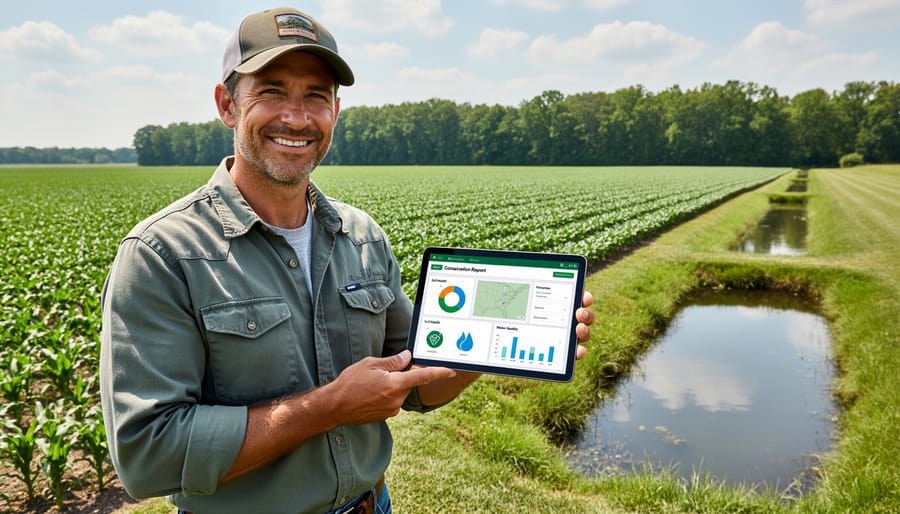
Third-party verification stands as the cornerstone of Minnesota’s program credibility. Independent certifiers conduct on-farm assessments, reviewing documentation, inspecting conservation practices, and validating that implemented measures align with water quality standards. This verification process occurs every other year, ensuring ongoing compliance rather than one-time approval.
Verifiers examine field records, nutrient management plans, and actual field conditions. They measure buffer strip widths, assess cover crop establishment, and review manure application timing against documented plans. For Canadian farmers considering similar frameworks, this independent oversight provides market differentiation and regulatory confidence—critical factors as provincial water quality regulations evolve.
The verification model creates transparency that benefits everyone. Farmers gain recognition for their stewardship efforts, downstream communities see measurable improvements, and agricultural retailers can demonstrate environmental responsibility. Alberta’s Agricultural Operation Practices Act already requires nutrient management plans for certain operations; adding third-party verification could strengthen existing frameworks. Minnesota’s decade of experience shows that credible verification transforms individual farm practices into a collectively trusted system, building social license while protecting water resources across entire watersheds.
Conservation Practices That Earn Certification
Nutrient Management Strategies
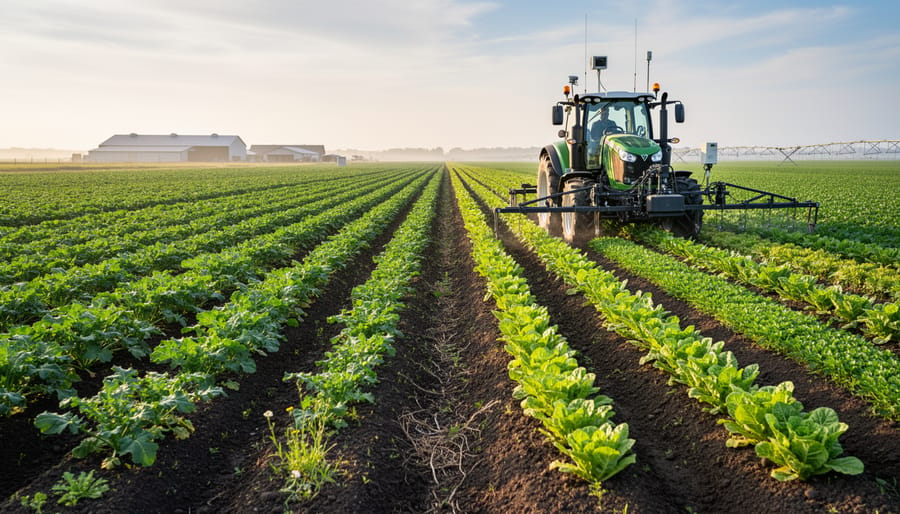
Minnesota’s certification program emphasizes strategic nutrient management through four core practices that Canadian producers can readily adapt. First, precision application technologies like variable rate spreaders ensure nutrients reach crops efficiently, reducing excess that could leach into waterways. Alberta producers implementing GPS-guided systems report up to 15% reductions in fertilizer costs while maintaining yields.
Timing is equally critical. The Minnesota model recommends applying nutrients when crops actively uptake them, avoiding frozen ground or saturated soil conditions common during Prairie spring thaws. This prevents runoff during snowmelt, a shared challenge across northern regions.
Placement techniques, particularly subsurface banding of phosphorus and nitrogen at depths of 5-8 centimetres, significantly decrease surface losses compared to broadcast applications. Regular soil testing every three years forms the foundation, with Minnesota requiring tests before certification renewal. Canadian agronomists echo this recommendation, noting Prairie soils benefit from testing frequencies adjusted to crop rotation cycles.
These evidence-based protocols demonstrate measurable water quality improvements while supporting farm profitability, creating a practical framework Canadian certification programs could adopt regionally.
Soil Health and Cover Cropping
Minnesota’s program emphasizes soil health as a foundational strategy for protecting water quality, a principle equally relevant for Canadian producers facing similar runoff challenges. When soil structure improves through practices like reduced tillage and organic matter incorporation, water infiltration can increase by 25-50%, significantly reducing surface runoff that carries nutrients into waterways.
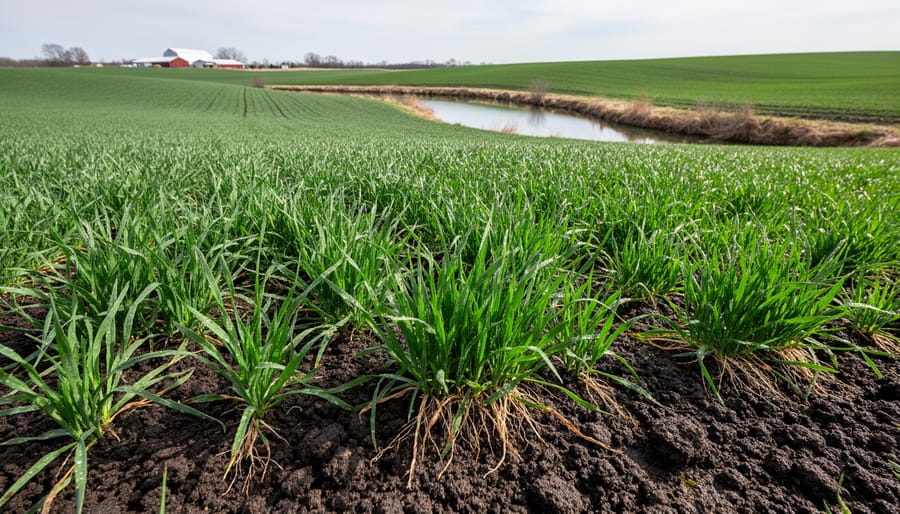
Cover crops play a crucial role in this system. Winter rye, for example, can capture up to 45 kilograms of nitrogen per hectare that would otherwise leach into groundwater or flow into streams during spring melt. This is particularly valuable in Alberta, where snowmelt events can trigger substantial nutrient losses. The program tracks these improvements through soil sampling and visual assessments, providing farmers with measurable proof of their environmental stewardship.
A Manitoba grain producer who adopted cover cropping reported a 30% reduction in phosphorus loss within three years, while maintaining crop yields. The key is selecting species adapted to shorter growing seasons—oats and radish work well in Canadian climates. These practices don’t just protect water; they build resilience, improve nutrient cycling, and can reduce fertilizer costs by 10-15% over time, creating both environmental and economic benefits for participating farms.
Benefits Beyond Environmental Protection
While environmental stewardship stands as the primary goal of water quality certification programs, farmers who participate discover a range of practical benefits that extend well beyond conservation. Minnesota’s Agricultural Water Quality Certification Program demonstrates how comprehensive certification initiatives can deliver tangible value to farm operations.
Economic incentives represent a significant draw for many producers. Certified Minnesota farms gain access to cost-share programs for implementing conservation practices, with some participants receiving up to 75% funding for eligible projects. This financial support helps offset the initial investment required for improvements like upgraded manure storage systems or riparian buffers. For Canadian farmers considering similar programs, this model shows how government partnerships can make conservation financially viable rather than burdensome.
Regulatory certainty provides perhaps the most compelling long-term advantage. Certified operations in Minnesota receive a ten-year exemption from new water quality rules, allowing farmers to plan investments and manage their operations without the uncertainty of changing regulatory requirements. This stability proves invaluable for multi-generational farm planning.
Market access opportunities continue expanding as food companies and processors increasingly seek verified sustainable sourcing. “We’re seeing more buyers specifically requesting products from certified farms,” explains agronomist Jennifer Thompson, who works with producers across the northern Great Plains. “It’s becoming a competitive advantage, particularly in premium markets.”
Community recognition also matters. Certified farmers become conservation leaders within their regions, building social capital and strengthening relationships with neighboring landowners and municipalities. For Alberta producers watching Minnesota’s success, these multi-layered benefits demonstrate how certification programs can strengthen farm businesses while protecting water resources. The key lies in designing programs that acknowledge farmers as environmental solution-providers, not problems requiring regulation.
Lessons for Canadian Agriculture
Existing Canadian Programs and Gaps
Canada currently offers several water quality and environmental farm programs, though they vary significantly by province. The Environmental Farm Plan (EFP) program operates across most provinces, providing farmers with voluntary assessments and cost-share funding for beneficial management practices. In Alberta specifically, the Agricultural Water Quality Index program helps producers evaluate on-farm water conditions, while programs like Growing Forward 2 and the Canadian Agricultural Partnership have funded water quality improvements.
However, these existing programs generally lack the robust measurement, reporting, and verification (MRV) framework that certification programs like Minnesota’s provide. Most Canadian initiatives focus on practice adoption rather than outcome verification. Farmers implement recommended practices—such as buffer strips or controlled drainage—but there’s limited systematic monitoring of actual nutrient reductions or water quality improvements achieved.
This creates a significant gap for Canadian farmers interested in certification or environmental markets. Without standardized MRV protocols, it’s challenging to quantify environmental benefits, access premium markets, or participate in emerging carbon and water quality credit programs.
According to Dr. Jane Robertson, agricultural water specialist at the University of Alberta, “Canadian farmers are doing incredible work protecting water resources, but we need better systems to document and verify these efforts. An MRV-based certification approach could provide that missing piece while opening doors to new revenue streams.”
The opportunity exists to build on Canada’s strong foundation of voluntary environmental programs by incorporating rigorous monitoring and third-party verification, creating pathways for farmers to demonstrate measurable water quality improvements to consumers, processors, and regulatory bodies.
Getting Started: Steps for Canadian Farmers
While Alberta doesn’t currently have a formal water quality certification program identical to Minnesota’s model, farmers across the province can still take meaningful steps to improve water quality practices and position themselves for future certification opportunities. Drawing from the Minnesota experience, here’s how you can get started on your operation today.
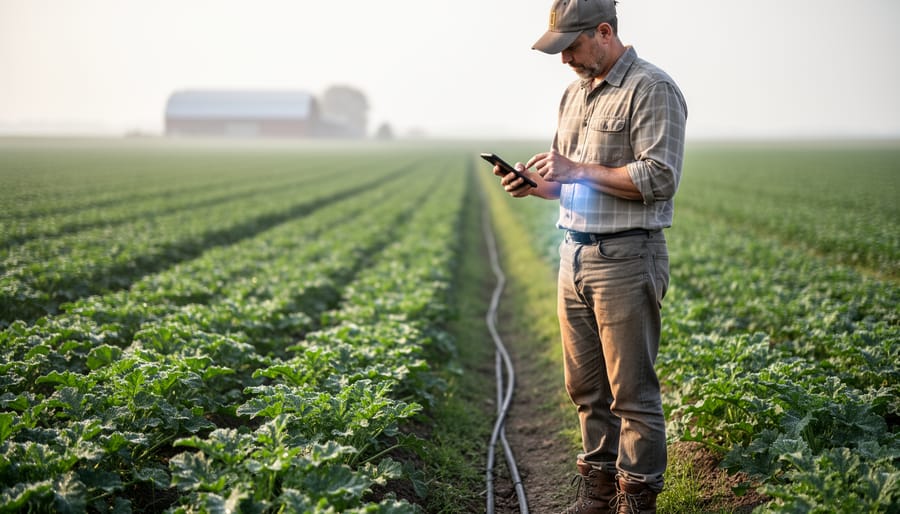
Begin by conducting a thorough assessment of your current practices. Walk your fields with a critical eye toward water movement, noting drainage patterns, vulnerable areas near water bodies, and existing conservation measures. Document your current nutrient application rates, timing, and methods. This baseline information will prove invaluable whether you’re working toward potential future certification or simply tracking your own improvements.
Once you understand your starting point, follow these practical steps:
- Connect with your local agricultural fieldman or extension specialist to discuss water quality concerns specific to your region and soil type.
- Test your soil regularly using a certified laboratory, aiming for samples every three years at minimum to guide precise nutrient applications.
- Review your nutrient management plan, ensuring application rates match crop requirements rather than historical habits or estimates.
- Identify and prioritize one or two high-impact changes you can implement this growing season, such as establishing buffer strips or adjusting fertilizer timing.
- Keep detailed records of all inputs, applications, and conservation practices, using either farm management software or simple spreadsheets.
- Join local producer groups or watershed associations to learn from neighbours who’ve successfully implemented similar practices.
The beauty of starting now is that you’re building the foundation regardless of whether formal certification arrives in Alberta. Many farmers find that improved water quality practices deliver economic benefits through reduced input costs and improved soil health, making these changes worthwhile investments in their own right. Consider reaching out to successful producers who’ve already made these transitions. Their real-world experience navigating similar challenges on Canadian farms will provide practical insights that theory alone cannot match.
Minnesota’s Agricultural Water Quality Certification Program demonstrates that environmental stewardship and economic viability aren’t competing interests—they’re complementary goals that strengthen farming operations and communities alike. The program’s success over the past decade offers a proven blueprint that Canadian farmers, particularly those facing similar nutrient management challenges across the Prairies, can adapt to their own contexts.
While formal certification programs may not yet exist in Alberta or other Canadian provinces, the principles and practices underlying Minnesota’s approach are universally applicable. Farmers can begin implementing these proven strategies immediately: establishing vegetable buffer strips, optimizing fertilizer application timing, improving soil health through cover cropping, and documenting conservation efforts. These actions deliver measurable benefits—reducing input costs by 10-15 percent while protecting watershed health—regardless of certification status.
The real power of certification programs lies in their ability to mobilize collective action. When individual farm improvements connect to broader watershed goals, entire communities benefit from cleaner water, enhanced ecosystem services, and strengthened agricultural reputation. This collective approach also creates stronger advocacy positions when engaging with policymakers and industry stakeholders.
Canadian farmers have an opportunity to lead by example. By adopting these practices now and advocating for formal certification frameworks, you’re investing in agriculture’s future resilience. Connect with your local agricultural extension services, watershed groups, and producer organizations to explore how Minnesota’s model might translate to your region. The certification framework exists—it’s time to bring it home.