Innovative agriculture technologies are digital, mechanical, and biological tools that use data, automation, and precision techniques to increase crop yields, reduce input costs, and improve environmental outcomes on working farms. These technologies range from GPS-guided tractors and soil sensors to drone imaging systems and AI-powered decision platforms, all designed to help farmers make better choices with less guesswork.
For Canadian producers facing labour shortages, rising input costs, and increasingly variable weather patterns, these tools have shifted from nice-to-have novelties to practical necessities. A grain farmer in Central Alberta, for example, can now use variable rate seeding technology to adjust planting density across a single field based on soil quality maps, saving seed costs while boosting yields in prime growing zones. A dairy operation near Red Deer might rely on automated feeding systems and wearable livestock monitors to detect health issues days before visible symptoms appear, reducing veterinary costs and improving herd productivity.
The appeal isn’t just efficiency. Precision agriculture technologies help reduce fertilizer runoff, lower fuel consumption per hectare, and create detailed records that support environmental stewardship goals and regulatory compliance. For younger farmers taking over family operations or new entrants exploring Canadian agriculture innovations these systems offer a path to compete with larger operations and manage more land with fewer hands.
This article breaks down what these technologies actually do, how they function in real farm conditions, which types matter most for Canadian operations, and where they deliver measurable returns. You’ll find practical explanations grounded in Alberta farming realities, expert perspectives from agronomists and equipment specialists, and examples from producers already using these systems in fields across the Prairies.
What Innovative Agriculture Technologies Mean for Canadian Farms
Innovative agriculture technologies are tools, systems and methods that use advanced science, digital data or automation to improve farm productivity, sustainability and decision-making beyond what conventional equipment and practices can achieve. These technologies range from GPS-guided tractors and soil sensors to biological inoculants and AI-powered analytics platforms, all designed to help farmers work more precisely, reduce waste and adapt to environmental challenges.
What sets these innovations apart from traditional farming methods is their reliance on real-time information and targeted interventions. Where conventional approaches often apply the same treatment across entire fields, uniform seeding rates, blanket fertilizer applications, scheduled irrigation, innovative technologies enable site-specific management. A variable-rate seeder adjusts planting density based on soil quality in each zone. A drone spots pest pressure in one corner of a canopy before it spreads. A microbial product boosts nitrogen availability exactly where soil tests show deficiency. This shift from broad strokes to fine-tuned responses changes both the economics and the environmental footprint of farming.
- Precision Agriculture
- Farming practices that use GPS, sensors and data analysis to manage field variability and apply inputs only where and when needed, reducing waste and improving yields.
- AgTech
- The umbrella term for all technological innovations applied to agriculture, including hardware like drones and software like farm management platforms.
- Digital Farming
- The integration of cloud-based tools, mobile apps and connected devices that allow farmers to monitor, plan and execute operations from anywhere with internet access.
- Regenerative Technology
- Tools and biological products that support soil health, carbon sequestration and ecosystem restoration, often combining traditional regenerative practices with modern monitoring capabilities.
- Smart Farming
- Systems that use automation, IoT sensors and machine learning to make autonomous or semi-autonomous decisions about irrigation, feeding, climate control and other tasks.
For Canadian farmers, these technologies have become essential rather than optional. Shorter growing seasons demand every advantage to maximize yield windows. Variable prairie weather requires responsive irrigation and nutrient management. Labour shortages push operations toward automation. Rising input costs make precision application a matter of survival, not experimentation. Climate goals increasingly tie government support and market access to measurable sustainability practices, which these tools help document and achieve. Farms that adopt the right mix of innovations gain resilience, cut operating expenses and position themselves for the next decade of agricultural challenges in ways that conventional methods alone cannot deliver.
How These Technologies Work on the Ground
Data Collection and Monitoring Systems
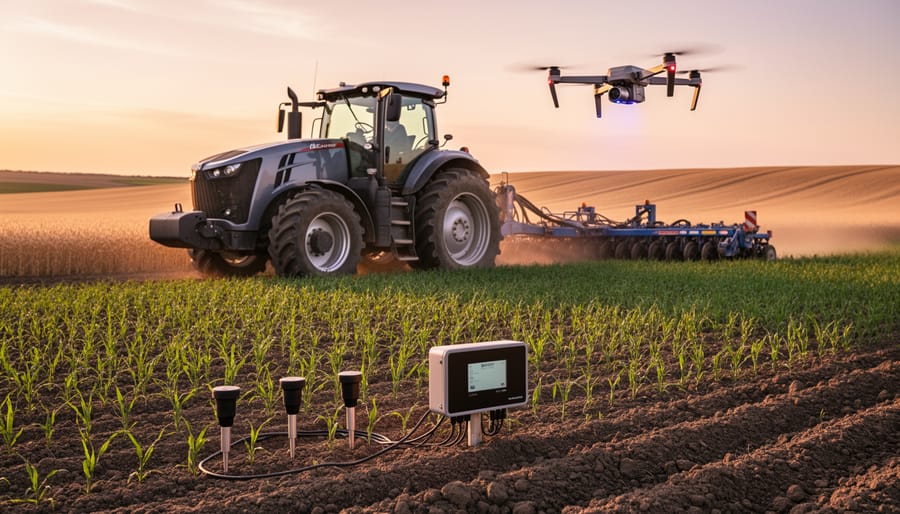
Data collection technologies function as the farm’s nervous system, continuously gathering information that was once impossible or impractical to obtain. Soil moisture sensors installed at various depths transmit readings every few minutes, showing exactly when and where irrigation is needed rather than relying on visual inspection or fixed schedules. These probes measure moisture content, temperature, and electrical conductivity, revealing patterns across different field zones that inform targeted watering strategies.
Drones equipped with multispectral cameras capture images beyond what human eyes can see. They detect plant stress days before symptoms appear, identify nutrient deficiencies through leaf colour analysis, and map weed pressure across entire fields in under an hour. A single flight generates thousands of data points that pinpoint problem areas requiring attention.
Satellite imagery provides the widest view, tracking crop development across large acreages throughout the growing season. Services process this data into vegetation indices that quantify plant health and growth rates, comparing current conditions against historical baselines and neighbouring fields.
Weather stations positioned on-farm record temperature, humidity, wind speed, and rainfall with precision that general forecasts can’t match. This hyperlocal data feeds into disease prediction models and spray timing decisions, reducing fungicide applications while improving effectiveness.
Analysis and Decision Support
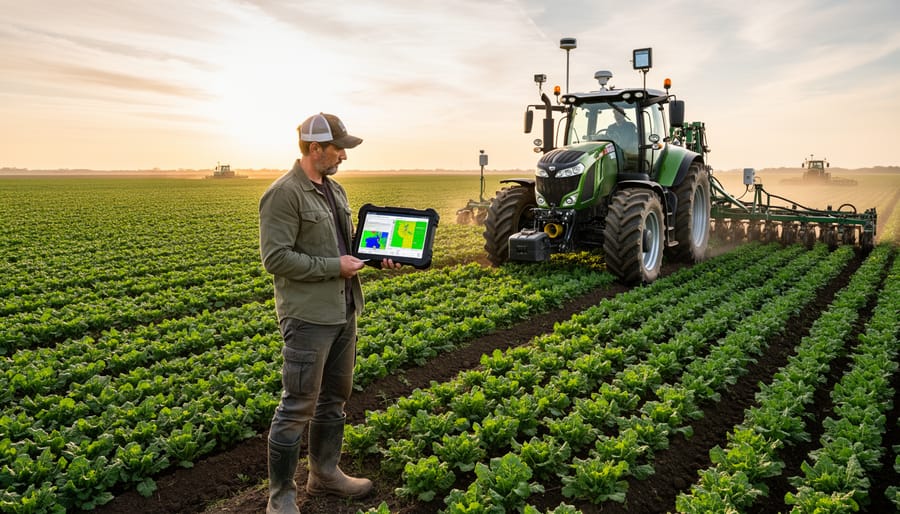
Once sensors and drones gather field data, specialized software platforms take over the analysis. These systems process information from multiple sources, soil moisture readings, weather forecasts, satellite imagery, historical yield maps, and identify patterns that would be impossible to spot manually. The platforms highlight which field zones need more nitrogen, where irrigation should be adjusted, or when pest pressure is building before visible damage appears.
Machine learning algorithms compare your current season against years of regional data, factoring in soil types, crop varieties, and local climate conditions. Instead of guessing whether to spray or wait, you receive specific recommendations: apply fungicide to the northeast twenty acres within the next forty-eight hours, or delay fertilizer application in the low-lying sections until soil temperatures reach twelve degrees.
Canadian farmers particularly benefit from decision support tools calibrated for shorter growing seasons and variable spring conditions. The software calculates optimal planting windows based on soil temperature trends and forecasted precipitation, reducing the risk of seed loss from early planting or yield penalties from late seeding. You maintain control over final decisions, but you’re working with precise insights rather than instinct alone.
Implementation Through Automation
Once data analysis identifies what needs to happen, automation technologies take over the physical work. Variable-rate equipment adjusts seeding density, fertilizer application, or pesticide spraying on-the-fly as tractors move across fields, applying more inputs where soil tests show deficiencies and less where nutrients are adequate. Autonomous tractors and robotic weeders operate with GPS precision, following predetermined paths while farmers monitor progress remotely. In controlled-environment systems like automated greenhouses, sensors trigger heating, cooling, irrigation, and ventilation based on real-time conditions, maintaining optimal growing parameters without constant human oversight. This automation layer translates digital recommendations into consistent, accurate field actions, a capability that’s particularly valuable for regenerative agriculture practices requiring precise cover crop seeding rates or targeted nutrient applications that build soil health over time.
Categories of Agricultural Innovation
Precision Agriculture Tools
Precision agriculture tools treat fields as collections of distinct management zones rather than uniform blocks. GPS guidance systems eliminate overlap and skipped areas during planting, spraying, and fertilizing, reducing waste by up to 10% while cutting operator fatigue. Variable-rate applicators adjust seed density, fertilizer amounts, and chemical application rates on the fly based on soil maps and yield data from previous seasons. A heavy clay pocket gets different treatment than sandy loam 50 metres away.
Variable rate technology paired with yield monitors creates a feedback loop: the monitor records exactly where strong and weak production zones exist, then variable-rate equipment tailors inputs to match each zone’s potential. Soil mapping technologies, from electromagnetic sensors to grid sampling, reveal pH variations, organic matter levels, and nutrient profiles across fields. Alberta farmers use these tools to apply lime only where needed, target nitrogen to high-yield areas, and identify drainage issues before they become yield-limiting problems. The same precision approach extends to pest control innovations and climate solutions optimizing resource use while reducing environmental impact.
Digital Farm Management Platforms
Cloud-based farm management platforms consolidate everything from field maps and input records to equipment maintenance schedules and regulatory documentation into a single accessible system. Instead of juggling spreadsheets, paper logs, and separate apps, farmers can track crop rotations, input applications, harvest data, and financial performance from any device with internet access.
These platforms automatically sync data from connected equipment, yield monitors, GPS systems, weather stations, eliminating manual entry and reducing errors. When you apply fertilizer with variable-rate technology, the platform logs exactly what went where, building a multi-year dataset that reveals patterns in soil fertility and crop response across different zones.
The compliance benefits matter particularly in Canada, where traceability requirements and environmental regulations continue to expand. Digital platforms generate the documentation needed for food safety audits, sustainable certification programs, and carbon credit verification without additional paperwork. Many systems also offer benchmarking tools that compare your operation’s performance against regional averages, helping identify where adjustments might improve profitability or resource efficiency.
Biological and Soil Health Technologies
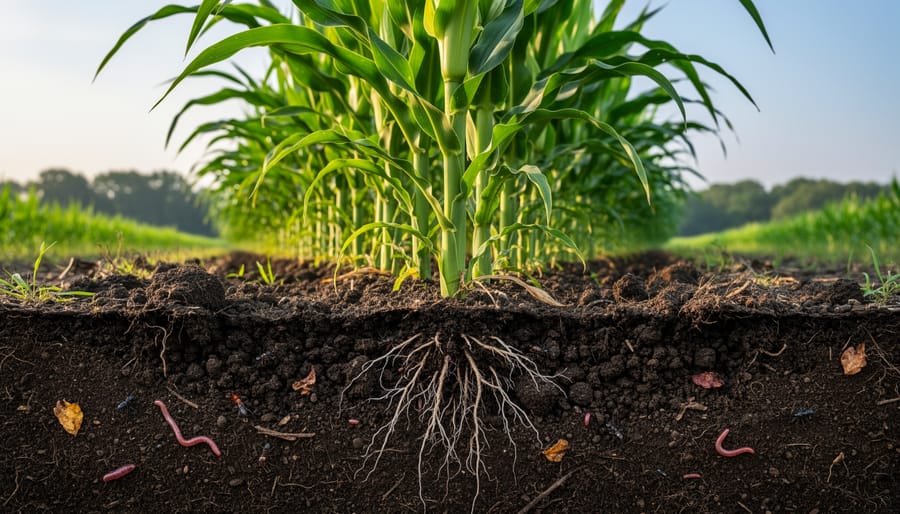
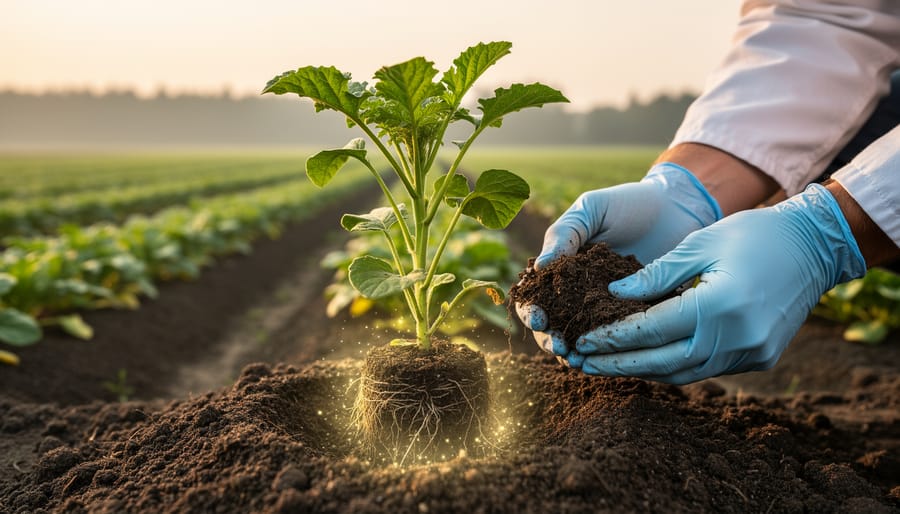
Biological and soil health technologies blend microbiology with digital tools to rebuild living soil ecosystems that industrial farming has depleted over decades. Farmers apply microbial inoculants as biostimulants at seeding or as foliar sprays, introducing beneficial bacteria and fungi that colonize root zones, fix atmospheric nitrogen, solubilize phosphorus locked in soil particles, and outcompete pathogens. Modern formulations use genomic sequencing to identify the most effective strains for Canadian prairie conditions, and some products come with smartphone apps that track application timing and measure changes in soil organic carbon through repeated testing protocols.
Biostimulants made from seaweed extracts, humic acids, or amino acid complexes trigger plants’ natural stress responses, improving drought tolerance and nutrient uptake efficiency without the regulatory burden of synthetic chemicals. Cover crop planning software helps farmers design diverse seed mixes, combining legumes, brassicas, and grasses, that suppress weeds, break pest cycles, and pump carbon into the soil profile between cash crops. Soil sensors installed in test plots measure moisture, temperature, and microbial respiration rates in real time, letting farmers see which practices actually build organic matter rather than relying on annual lab results that arrive months after planting decisions.
Automation and Robotics
Autonomous tractors now guide themselves across fields with centimetre-level accuracy, following pre-programmed routes while adjusting speed and operations based on real-time conditions. These machines work around the clock when conditions permit, eliminating operator fatigue and maintaining consistent depth, spacing, and application rates that human drivers struggle to match over long hours.
Robotic weeders use camera vision and machine learning to distinguish crop plants from weeds, then remove unwanted growth mechanically through precise targeting, sometimes at individual-plant resolution. This approach cuts herbicide use dramatically while addressing growing resistance concerns, though the technology currently works best on vegetables and row crops with clear spacing.
Automated irrigation systems respond to soil moisture readings, weather forecasts, and crop growth stages without manual intervention. Controllers open and close valves across multiple zones, delivering water only where and when needed rather than following rigid schedules that waste resources during rain or cool periods.
Livestock operations apply wearable sensors that monitor cattle health metrics like rumination patterns, activity levels, and body temperature. Early detection of illness or calving complications reduces veterinary costs and mortality rates on ranches where animals graze across vast areas with limited daily observation.
Remote Sensing and Monitoring
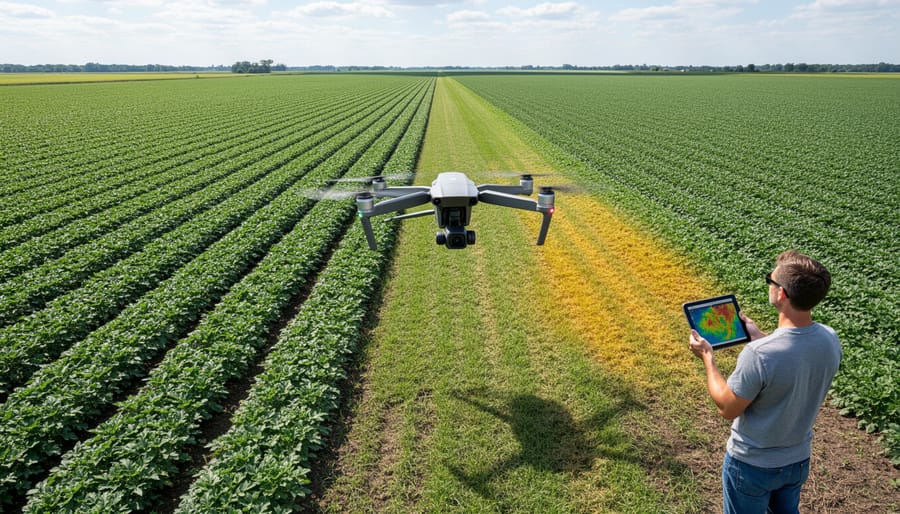
Remote sensing technologies let farmers monitor their entire operation from above and across the landscape, catching problems before they’re visible from ground level. Drones equipped with multispectral cameras fly over fields to map crop stress, identify drainage issues, and spot nutrient deficiencies by measuring how plants reflect different wavelengths of light. A single drone flight can reveal patterns invisible to the naked eye, showing exactly which zones need attention.
Satellite imagery provides similar insights at larger scales, with some services delivering updated field maps every few days during the growing season. Many platforms now offer free or low-cost access to farmers, making this technology more accessible across operations of all sizes.
Weather stations equipped with IoT sensors track hyperlocal conditions, temperature, humidity, rainfall, wind speed, and soil moisture, sending real-time data to your phone or computer. This precision matters in Alberta’s variable climate, where conditions can shift dramatically between adjacent fields. Combined with predictive models, these sensors help you time spraying operations, schedule irrigation, and anticipate frost events with greater accuracy than regional forecasts alone.
Controlled-Environment Agriculture
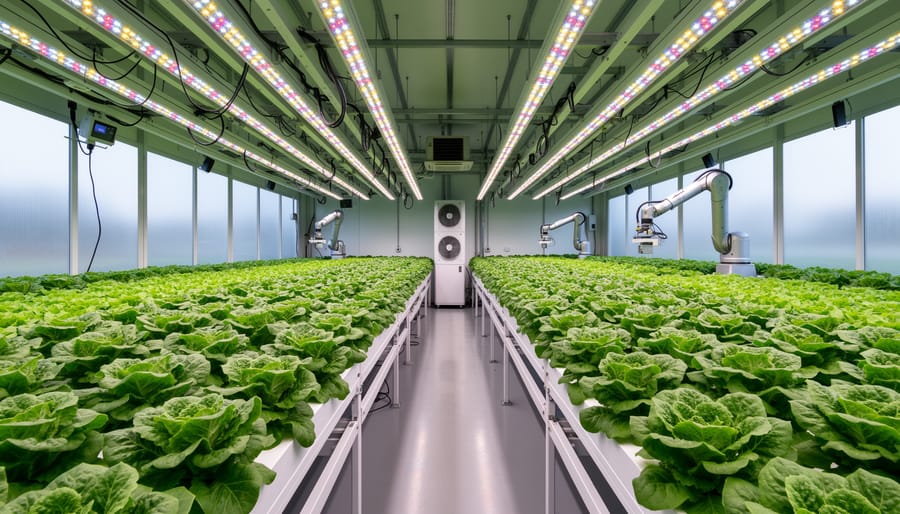
Controlled-environment agriculture transforms Canada’s short growing season into a year-round production opportunity through precise management of temperature, light, humidity, and nutrients. Modern greenhouse systems integrate automated climate controls, LED grow lights, and fertigation systems that adjust inputs based on real-time sensor data. These facilities can extend production windows by months or eliminate seasonal limitations entirely.
Vertical farming takes this further by stacking growing layers in climate-controlled indoor spaces, using 95% less water than field production while generating consistent yields regardless of outdoor weather. Though energy costs remain a consideration, systems powered by renewable sources or waste heat from other operations are becoming more viable across Alberta.
Season-extension technologies, from high tunnels with automated venting to heated propagation houses, offer smaller-scale farmers accessible entry points. These structures protect crops from early frosts and spring cold snaps, letting producers capture premium prices for early-season vegetables and bedding plants. The investment scales from simple hoop houses to fully automated glass structures, matching different operation sizes and market strategies.
Where and How Farmers Apply These Technologies
Canadian farmers apply innovative agriculture technologies to solve region-specific challenges that directly impact profitability and long-term viability. These tools aren’t adopted for novelty, they address real operational pressures like rising input costs, unpredictable weather, and labour shortages.
Precision fertilizer application tackles one of the biggest expense categories on grain farms. Variable-rate spreaders guided by soil test maps deliver nutrients only where needed, cutting fertilizer bills by 15-30% while maintaining or improving yields. A Saskatchewan wheat producer might apply 120 pounds of nitrogen per acre in low-organic-matter zones while reducing it to 80 pounds in areas with better soil health, using sensor data to guide those decisions field by field.
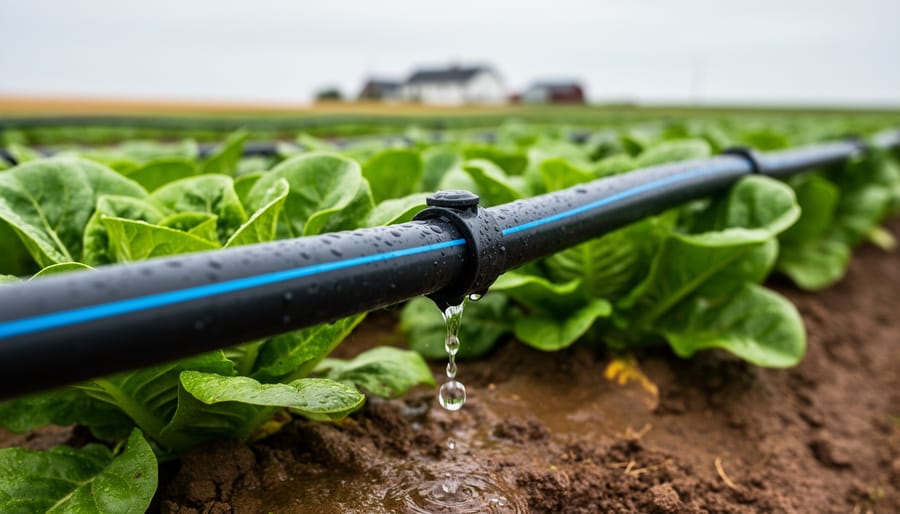
Water management technologies prove essential in the Prairie provinces, where drought cycles threaten crop establishment. Soil moisture sensors placed at multiple depths trigger irrigation systems only when root zones actually need water, reducing usage by up to 40% compared to scheduled watering. Some Alberta operations combine this with weather station data to anticipate rainfall and avoid unnecessary irrigation runs.
Pest and disease monitoring through drone imagery and AI analysis helps farmers spot problems before they become widespread. Weekly flights over canola fields identify patches of clubroot or blackleg days earlier than ground scouting, allowing targeted fungicide applications instead of blanket spraying. This approach cuts chemical costs and reduces environmental impact while protecting yields.
Carbon sequestration initiatives increasingly rely on technology to verify results. Soil carbon monitoring systems using spectral analysis or penetrometer readings document organic matter increases from cover cropping and reduced tillage, creating verifiable data for carbon credit programs. Many of these Alberta farm innovations now include digital record-keeping that simplifies participation in environmental markets.
Season extension technologies address Canada’s short growing window through heated greenhouse systems with automated climate control and supplemental LED lighting. Market gardeners near Edmonton grow tomatoes and peppers year-round using sensors that adjust temperature, humidity, and light intensity based on plant growth stages, creating profitable crops during winter months when imported produce dominates retail shelves.
Livestock operations apply wearable sensors that monitor cattle health metrics like rumination patterns, activity levels, and body temperature. Early detection of illness or calving complications reduces veterinary costs and mortality rates on ranches where animals graze across vast areas with limited daily observation.
Real Results from Alberta Farms
In central Alberta’s Lacombe County, the Weisgerber family’s 2,400-acre grain operation demonstrates what happens when precision agriculture moves from theory to daily practice. After three seasons using variable-rate seeding and fertilization guided by soil mapping and satellite imagery, they’ve cut nitrogen costs by 18% while maintaining yield targets.
“We always knew our fields weren’t uniform, but seeing the data changed how we farm every acre,” says Tom Weisgerber, who manages the operation with his two sons. Their journey started small, one yield monitor and a basic soil test grid, before expanding to include drone scouting, weather stations, and integration with their sprayer’s variable-rate controller.
The initial investment came to roughly $85,000 spread over two years, including equipment upgrades and subscription software. Tom notes the learning curve was steeper than anticipated. “The first year we collected data but didn’t really use it effectively. By year two we understood what patterns to watch for and where small adjustments made the biggest difference.”
Tangible outcomes extend beyond input savings. Soil organic matter in their low-productivity zones has increased 0.4 percentage points since they began targeted cover cropping in those areas, a practice guided by their yield maps. Water infiltration improved noticeably in compacted field corners after they adjusted wheel traffic patterns based on elevation data.
The technology flagged a developing iron deficiency in their canola three weeks before visual symptoms appeared, allowing for timely foliar application that protected 15% of their expected yield. Tom estimates that intervention alone justified half the year’s software costs.
Their advice for other Alberta farmers centres on starting with one problem that costs you money every year. “Don’t try to digitize everything at once,” Tom says. “Pick the technology that addresses your specific pain point, learn it thoroughly, then build from there.” They’re now exploring autonomous weeding for their pulse crops, another incremental step rather than a wholesale transformation.
Common Questions About Agricultural Technology Adoption
Farmers evaluating agricultural technology face practical questions about implementation, costs, and operational fit. These concerns are valid, technology adoption represents a significant shift in how farms operate, and understanding the realities helps make informed decisions.
What’s the realistic upfront cost for getting started?
Entry points vary widely, basic soil testing and farm management software can start under $2,000 annually, while precision equipment retrofits range from $15,000 to $50,000 depending on field size and existing machinery. Many Canadian farmers phase adoption over several growing seasons rather than implementing everything at once.
How steep is the learning curve for someone who’s farmed traditionally?
Most digital platforms are designed for farmers, not programmers, with training sessions typically taking a few hours to a couple of days. The bigger adjustment is shifting from experience-based decisions to data-informed ones, which develops gradually over a season or two.
Will new technology work with my existing equipment?
Many precision tools retrofit to tractors and implements from the past 10-15 years through universal mounting systems and ISOBUS compatibility. Older equipment may require adapter kits or limited functionality, so checking compatibility specifications before purchase prevents costly mismatches.
Who owns the data my farm generates?
Reputable Canadian ag-tech providers specify data ownership in their terms, farmers should retain ownership of their operational data with clear rights to export, delete, or transfer it. Review contracts carefully and avoid platforms that claim exclusive rights to farm-generated information.
How long before I see a return on investment?
Input savings from precision application often appear within the first season, while yield improvements and soil health benefits typically compound over three to five years. Most Alberta operations report breaking even on technology investments within two to four growing seasons, depending on crop prices and scale.
Where can Canadian farmers find local support and training?
Agricultural fieldmen through rural municipalities, provincial extension services, and organizations like Alberta Agriculture and Irrigation offer workshops and one-on-one guidance. Regional equipment dealers increasingly provide training as part of technology packages, and farmer networks through commodity groups share practical adoption experiences.
Beyond these common concerns, consider starting with one technology that addresses your operation’s biggest constraint, whether that’s labour, input costs, or agronomic uncertainty. Success with a single tool builds confidence and demonstrates value before expanding to integrated systems. Talk with neighbours who’ve adopted similar technologies and ask specific questions about their first-season challenges and unexpected benefits. Many find that the support network around agricultural innovation matters as much as the technology itself.
Innovative agriculture technologies represent more than just new equipment or software, they’re fundamentally changing how Canadian farmers approach decision-making, resource management, and long-term planning. From precision tools that reduce input waste to biological innovations that rebuild soil health, these technologies address the real challenges you face: rising costs, labour shortages, climate unpredictability, and the need to produce more while protecting the land for future generations.
The path forward doesn’t require adopting everything at once. Most successful implementations start small, a soil test here, a weather station there, building knowledge and confidence before expanding. The key is matching the technology to your specific operation, whether that’s a grain farm on the prairies or a mixed livestock operation in the foothills.
Canada’s agricultural community offers substantial support for farmers exploring these innovations. Provincial extension services, industry workshops, and farmer networks provide hands-on training and peer-to-peer learning opportunities. Many equipment dealers now offer demonstration programs that let you test technologies before committing to purchase. Online platforms focused on sustainable agriculture connect you with experts who understand Canadian conditions and can answer questions specific to your region and crop mix.
The farms thriving today are those that view technology as a tool for working smarter, not just harder. By integrating innovations thoughtfully into your operation, you’re not just keeping pace with change, you’re actively shaping a more resilient and productive future for Canadian agriculture.