A sustainable food policy alliance is a group of organizations that join forces to shape how food is grown, bought, and served, so the whole system becomes healthier for people and land. In Canada, one example is the Sustainable Food Transition (Transition alimentaire durable) Coalition, a group of associations based in Ottawa, Ontario. It promotes a dietary shift among Canadians toward more plant-based foods and has set a goal of 50% plant-based offerings by 2030.
That target matters for farmers. When demand moves, what gets planted, processed, and sold moves with it. Alberta growers already working with pulses, oilseeds, and cover crops, or building soil health through practices like regenerative gardening are often closer to this conversation than they realize.
This article explains what these alliances do, who can take part, how to get involved, and where to find support. Because membership rules and recent policy activity can change, you’ll be pointed to the coalition directly for current details. Think of it as a practical starting map, built so you can decide whether a seat at the table makes sense for your operation or organization.
What a Sustainable Food Policy Alliance Is and Why It Matters for Policy and Governance
Key Details About the Sustainable Food Transition Coalition
Here is what we can confirm about the coalition, laid out so you can see the essentials at a glance.
| Detail | What we know |
|---|---|
| Name | Sustainable Food Transition – Transition alimentaire durable – Coalition |
| Structure | A group of associations |
| Location | Ottawa, ON |
| Mandate | Promoting a dietary transition among Canadians toward more plant-based foods |
| Stated target | 50% plant-based offerings by 2030 |
| Recent policy updates and partnerships | Not confirmed; check with the coalition directly |
The bilingual name reflects Canada’s two official languages, and the “group of associations” structure means the work is carried out by organizations rather than individual members. The coalition promotes plant-based diet choices across Canada, and it has set a goal of 50% plant-based by 2030 in the offerings it wants to see.
We haven’t confirmed details on recent policy updates, partnerships or membership lists, so we won’t guess at them here. If you want current information, reach out to the coalition in Ottawa directly. They’re the best source for what’s happening now and for how your own association or co-op might take part.
How Canadian Food Policy Works: The Policy and Systems Behind the Alliance
Food policy in Canada isn’t one rulebook written in one place. It’s a layered system where federal, provincial and municipal governments each hold a piece, and industry groups, co-ops, researchers and community organizations all add their voices. Ottawa sets national frameworks and trade rules, provinces like Alberta shape agriculture programs and land-use rules, and towns and cities influence what gets served in schools, hospitals and public buildings. If you want a window into how research feeds those decisions, reading a journal food policy is a good place to start.
So where does an alliance fit? Think of it as a connector. The Sustainable Food Transition – Transition alimentaire durable – Coalition, based in Ottawa, is a group of associations that promotes a dietary transition among Canadians toward more plant-based foods, with a stated goal of 50% plant-based offerings by 2030. Groups like this don’t write laws. They help the people who do by bringing organized, shared perspectives to the table.
Here are the main ways an alliance can influence the food system:
- Shared policy input, through joint submissions during consultations.
- Collaborative research that pools data and expertise across member groups.
- Procurement and menu conversations with institutions that buy and serve food.
- Public education that helps Canadians understand their food choices.
- Farmer-to-farmer knowledge sharing about what works on the ground.
None of this requires everyone to agree on every detail. A balanced food system has room for different production approaches, and policy conversations work best when producers, buyers and communities are all heard. Many Alberta farmers are already exploring practices that cut waste and build resilience, and examples of how Canadian farmers are building systems that never create waste show how policy ideas can take root in real fields and farmyards.
Who Can Take Part: Eligibility and Membership Considerations
The Sustainable Food Transition – Transition alimentaire durable – Coalition describes itself as a group of associations. That tells you something useful right away: participation most likely starts at the organizational level, not with individual members of the public. For most farmers, the path runs through a commodity group, co-op or farm association that already has a seat at the table.
Because the coalition’s actual membership criteria, fees and application rules haven’t been confirmed, treat any specifics you hear secondhand with caution. What you can do is run a quick fit check before reaching out. Here are the questions worth asking:
- Does our association’s mission line up with the coalition’s stated goal of a dietary transition toward more plant-based foods?
- Who speaks for us, and can they represent our members accurately?
- What capacity can we realistically offer, whether time, data or on-farm experience?
- What are the stated membership criteria, according to the coalition itself?
- Is there a non-member way for us to contribute in the meantime?
Mission fit matters most. The coalition has said it wants 50% plant-based offerings by 2030, so an association should be comfortable with that direction, or at least willing to engage with it openly. Willingness to collaborate counts too, since alliance work depends on groups finding common ground and speaking with one voice. If your operation focuses on livestock or mixed production, that isn’t automatically a barrier to taking part in the conversation. It does mean you’ll want to understand the coalition’s positions before committing.
Once you’ve worked through those questions, confirm the real requirements by contacting the coalition directly in Ottawa.
You also don’t need a formal membership to be involved. You can follow the coalition’s public updates, talk with your association’s leadership about its views, and share your own experience with soil health, rotations or reduced input use. Practical stories from Alberta fields carry weight in policy discussions, whether or not your name appears on a membership list.
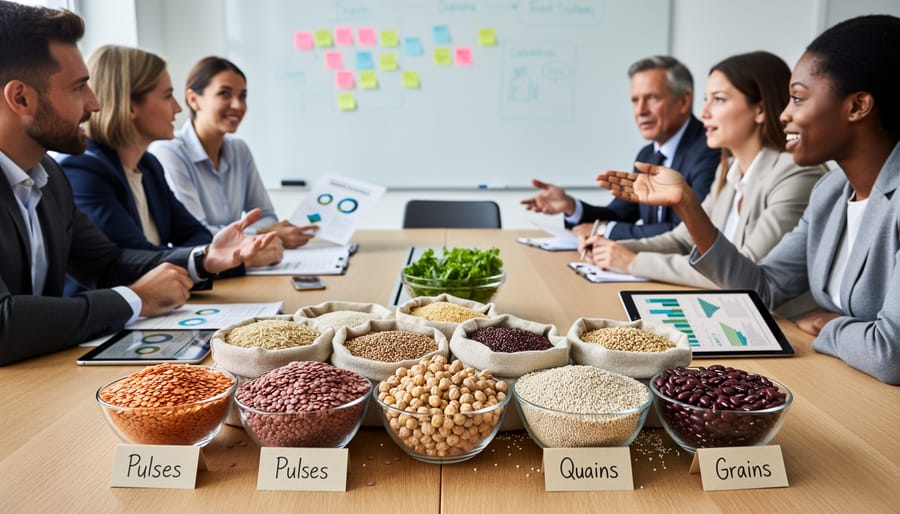
How to Get Involved: Steps to Apply, Join or Contribute to an Alliance
Getting involved usually starts smaller than people expect. Here’s a general sequence that works for most alliances, though you’ll want to confirm each step with the group itself, since the coalition hasn’t published a set application process we can point to.
1. Pick the right alliance. Start with one whose focus matches your priorities. The Sustainable Food Transition – Transition alimentaire durable – Coalition, based in Ottawa, is one example. It describes itself as a group of associations promoting a dietary shift toward more plant-based foods.
2. Read the stated mandate. The coalition says it wants 50% plant-based offerings by 2030. Ask yourself whether that goal fits your operation or your members’ interests. You don’t need to agree with every position, but you should know what you’re signing on to support.
3. Talk to your association or co-op first. Because the coalition is made up of associations, your commodity group, co-op or farm association is often the most direct way in. Ask whether it already has a connection, or whether it would consider one.
4. Reach out and ask how to join or contribute. Contact the coalition directly and ask about eligibility, whether participation is open to organizations only, and what contributing looks like. Don’t assume any fees, forms or deadlines until they confirm them.
5. Prepare what you can offer. Alliances value practical input. Think about:
– on-farm data, such as soil health notes or reduced input use, in metric units like tonnes per hectare
– short farm stories about what has worked on your land
– local connections to buyers, schools or community groups
6. Follow up. A friendly check-in a few weeks later keeps the conversation moving, and it shows you’re serious about contributing.
Every group runs things a little differently, so treat this as a roadmap rather than an official checklist. A single email from your co-op or farm association is a perfectly good place to begin.
Your Rights and Obligations When Working With a Policy Alliance
When you work with a policy alliance, you’re entering a shared arrangement, and it helps to know what that looks like from both sides. These are general expectations, not legal advice, and every alliance sets its own terms.
Start with what you can reasonably expect. A good alliance gives participants a real voice in discussions, is open about the positions it takes, and communicates clearly about decisions and next steps. If you represent a farm association or co-op, you should be able to see how your input shapes the group’s message.
In return, alliances typically ask a few things of participants. You’d be expected to speak accurately for the members you represent, share information honestly, and respect positions the group has agreed on. Many also ask you to contribute something, whether that’s time, on-farm experience, or technical know-how. Alberta producers who can explain how practices like cover cropping or reduced tillage work in our climate often bring exactly the practical perspective these groups need.
It also pays to understand the alliance’s stated goals before you sign on. The Sustainable Food Transition Coalition, for example, is a group of associations that promotes a dietary transition toward more plant-based foods, with a stated aim of 50% plant-based offerings by 2030. Whether that fits your organization’s priorities is for you and your members to decide. The point is to go in informed rather than surprised.
Questions are welcome at this stage, and a well-run alliance will be glad to answer them.
Canadian Case Studies: Farm-Level Examples and Expert Perspectives
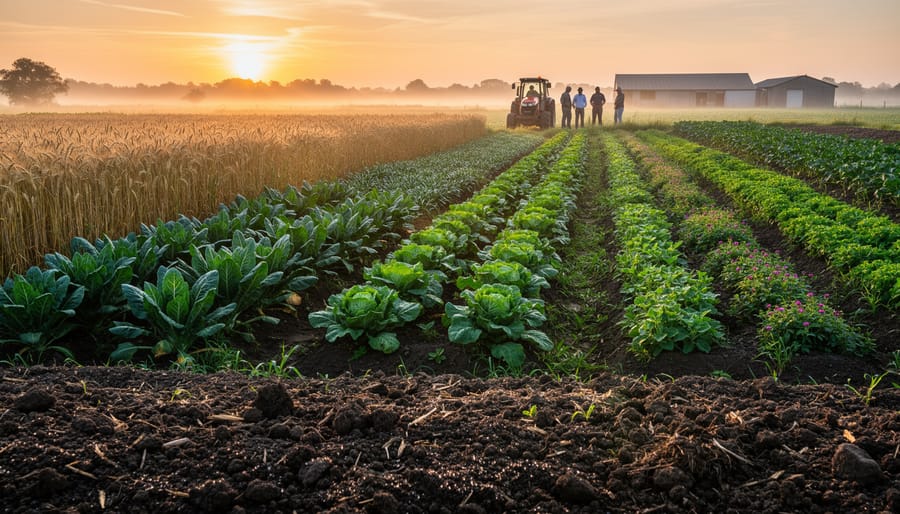
Policy work can feel distant from the field, so this section is about making the connection concrete. Below are the kinds of Alberta-relevant stories worth featuring, with clear placeholders where real voices will go. Nothing here describes a specific farm or result, because those need to come from the producers themselves.
Case study idea 1: A producer adding pulses or other plant-based crops. Picture a mixed operation that brings pulses into its rotation after hearing how an association is engaging with buyers on plant-based demand. The story to tell is what changed in the soil and on the fuel and fertilizer bill, in the farmer’s own words. Adding more crop diversity is a practical place to start, and it fits neatly alongside the coalition’s stated goal of 50% plant-based offerings by 2030.
Case study idea 2: A co-op talking with institutional buyers. Here the focus is how a co-op, working through its association, opened a conversation with schools, hospitals or other large food buyers. The lesson is about collective voice: what the co-op asked for, what it offered, and what it learned.
For inspiration on format, see how others have shared real success stories from Canadian farms.
Interview prompts for Alberta producers
– What first drew you to collaborate with a group or association?
– What changed in your soil health or carbon use, and how did you measure it?
– What would you tell a neighbour who is curious but unsure?
Interview prompts for policy specialists
– How do alliances turn member experience into policy input?
– What can one farmer realistically contribute?
– What should newcomers understand before getting involved?
[Placeholder: Alberta producer interview to be sourced]
[Placeholder: Policy specialist interview to be sourced]
Every farm’s path looks different, and that variety is the strength of a community learning from one another.
Where to Get Help and Stay Informed
Getting started doesn’t require a perfect plan. It starts with a question and the right person to ask. For current details on the Sustainable Food Transition – Transition alimentaire durable – Coalition, contact the group directly. It’s based in Ottawa, ON, and it’s the best source for anything that changes, such as recent policy updates, partnerships or how to take part.
Closer to home, your provincial agriculture department can explain how food policy touches your operation. Local farm associations and co-ops are just as useful. They often sit at the table with groups like this one and can tell you whether it’s worth your time. If your association is already part of a wider alliance, you may be involved sooner than you think.
For hands-on learning, Organic Farming, The Canadian Way workshops and podcasts are a friendly place to hear how other producers approach soil health, lower carbon use and policy. Pick one episode or session and jot down the questions it raises. Those questions make a good starting point when you reach out.
What is a sustainable food policy alliance?
It’s a group of organizations that work together to influence how food is grown, bought and served. The Sustainable Food Transition Coalition is one example, described as a group of associations.
What does Canadian food policy cover?
It spans federal, provincial and municipal decisions about production, procurement, programs and public education. Industry and community groups shape it too.
What does the coalition’s 50% plant-based goal by 2030 mean?
The coalition says it wants 50% plant-based offerings by 2030, as part of promoting a dietary transition among Canadians toward more plant-based foods. Contact the coalition to learn how it defines and measures that goal.
Where can farmers ask questions or get involved?
Start with the coalition itself, then your provincial agriculture department, farm association or co-op. Each can point you to the next step.
Whichever route you choose, bring what you know. Your on-farm experience is exactly what these conversations need.
Policy and governance quietly shape what ends up on Canadian plates, and what gets planted in Alberta fields. Alliances like the Sustainable Food Transition Coalition, a group of associations based in Ottawa, show how organizations can pool their expertise and speak with one voice on how food is grown, bought and served.
You don’t need a perfect plan to get started. The next step is simple: reach out, ask how participation works, and share what you’ve learned on your own land, whether that’s healthier soil, lower carbon use or a new crop in the rotation. Your commodity group or co-op is a good first conversation, and the coalition itself can tell you what’s current.
Sustainable food systems grow stronger when farmers are part of the discussion. So keep learning, keep asking questions, and explore the workshops and podcasts at Organic Farming, The Canadian Way. There’s a place for your experience in this community.