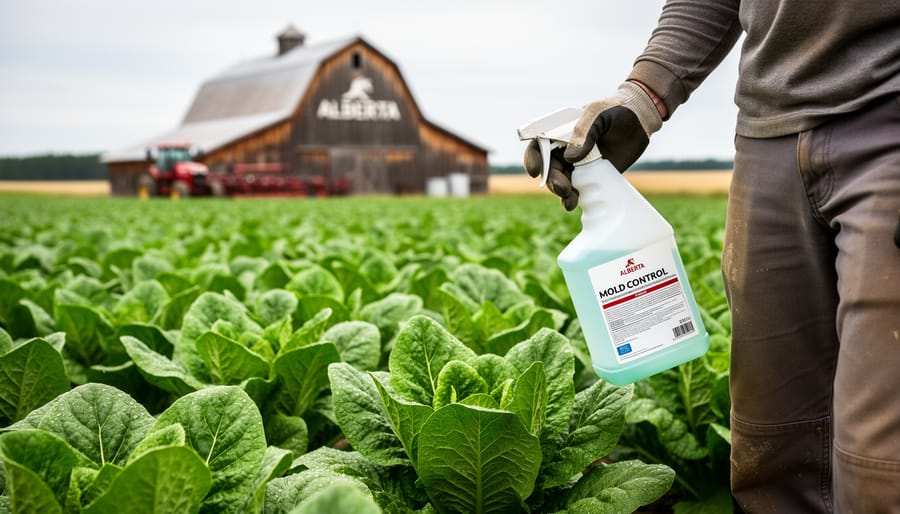
Yes, integrated pest management uses pesticides, but only as a last resort after non-chemical methods have been exhausted. Under Canadian organic standards, certified farmers can apply specific low-risk pesticides listed on approved inputs lists, provided they’ve documented prior cultural, physical, and biological control efforts. This staged approach satisfies both IPM principles and organic certification requirements, allowing you to protect your crops without losing your certified status.
The confusion around pesticides and IPM stems from a fundamental misunderstanding of what “pest management” actually means in a regulatory context. Unlike conventional agriculture, where chemical application is often the first line of defense, IPM builds a hierarchy of interventions. You start with crop rotation, habitat management for beneficial insects, and mechanical removal. Pesticides enter the picture only when those tactics fail to keep pest pressure below economic thresholds.
For Alberta farmers working under organic certification, this distinction matters enormously. Your certifying body doesn’t prohibit pesticide use outright. Instead, they require you to prove that spraying was necessary, that you chose the least harmful product from the approved list, and that you applied it according to label restrictions. The Canadian Organic Standards maintain a permitted substances list that includes mineral-based fungicides, certain botanical extracts, and biological pesticides like Bacillus thuringiensis.
This article walks you through the exact process: what IPM is under Canadian organic rules, who can authorize pesticide use on certified land, how to document your pest management steps for auditors, your rights when facing crop failure, and where to access current approved substance lists and extension support. You’ll see practical examples from Alberta growers who’ve navigated certification while managing challenging pest outbreaks.
What Integrated Pest Management Is and How It Handles Pesticides
Integrated Pest Management is a decision-making framework that treats pest problems as ecological challenges requiring multiple, coordinated solutions rather than one-size-fits-all chemical applications. At its core, IPM aims to manage pest populations economically while minimizing risks to human health, beneficial organisms, and the environment. It’s not a pesticide-free approach, but a strategic system where chemical intervention comes only after other methods have been deployed or considered.
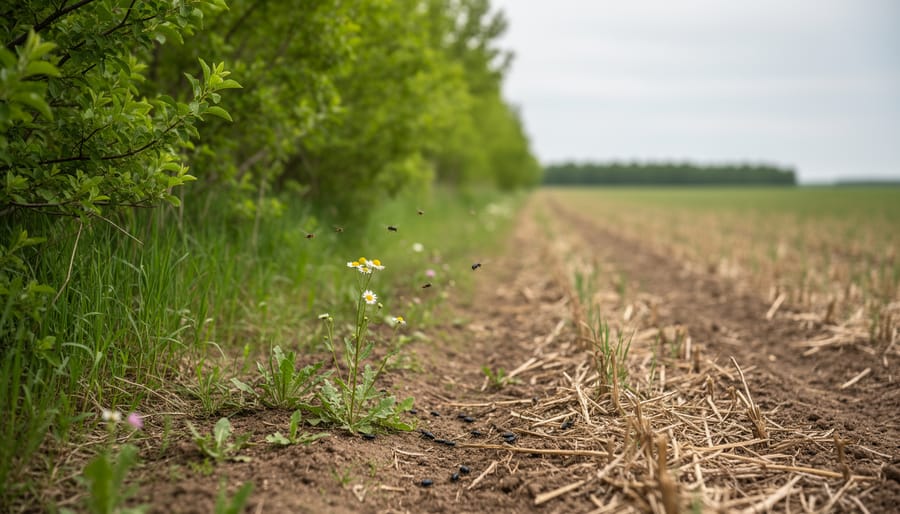
The IPM framework works like a pyramid. Prevention forms the base: crop rotation, resistant varieties, proper spacing, and sanitation reduce pest establishment before problems start. Monitoring builds the next layer. You scout fields regularly, identify pest species accurately, and track population levels against economic thresholds. Cultural and biological controls occupy the middle tiers. These include adjusting planting dates, managing irrigation to discourage disease, encouraging beneficial insects like lady beetles and parasitic wasps, and using mechanical tools such as row covers or flame weeders. Only when these non-chemical tactics fail to keep pest damage below economic thresholds do you move to the pyramid’s top: pesticides as last resort.
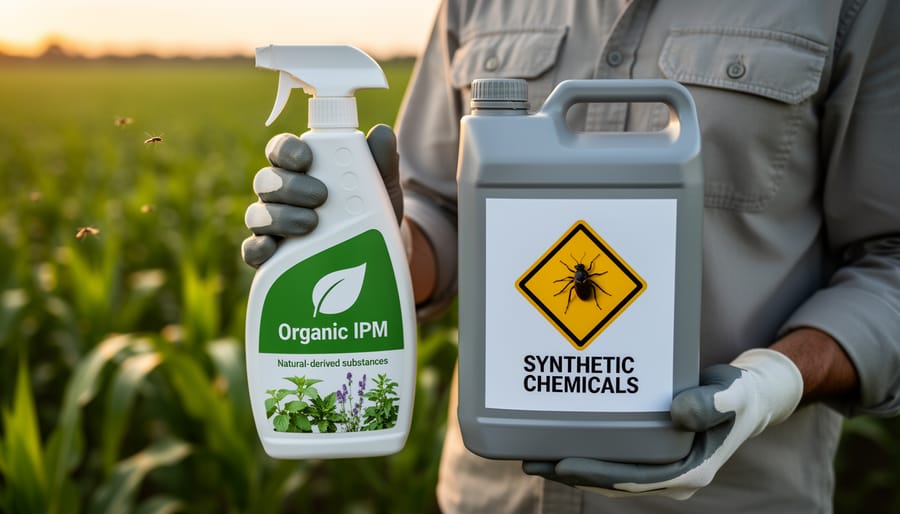
Here’s where terminology matters. ‘Pesticide’ doesn’t automatically mean synthetic chemical. The term covers any substance used to prevent, destroy, or control pests, including organic-approved products like neem oil, insecticidal soaps, Bacillus thuringiensis (Bt), pyrethrin derived from chrysanthemums, and mineral-based fungicides such as sulphur or copper. These are still pesticides, regulated and requiring proper handling, but they meet organic standards when sourced and applied correctly.
Conventional IPM allows synthetic pesticides when justified by pest pressure and economic analysis, though the philosophy remains the same: use the least-toxic option effective for the situation, apply it precisely, and integrate it with non-chemical strategies. Organic IPM operates within stricter boundaries. You’re limited to products on the Canadian Organic Standards Permitted Substances List, which excludes synthetic pesticides entirely. This means your pyramid’s top tier is narrower, demanding stronger reliance on prevention and biological controls. Both approaches require knowledge, record-keeping, and adaptive management, but organic IPM leaves less margin for reactive, chemical-dependent solutions.
Eligibility: When and Where Pesticides Fit in Organic IPM
Canadian Organic Standards and the Permitted Substances List
The Canadian Organic Standards, maintained by the Canadian Food Inspection Agency and updated every five years, establish the framework for all organic production in Canada. At the heart of pesticide eligibility sits the Permitted Substances List (PSL), a detailed inventory of every input organic farmers can legally use while maintaining certification.
The PSL categorizes substances into distinct groups: crop production aids, livestock medications, processing additives, and pest control products. For pesticides specifically, Table 4.2 of CAN/CGSB-32.310 lists approved options. You’ll find botanical extracts like neem and pyrethrum, microbial products such as Bacillus thuringiensis, insecticidal soaps, diatomaceous earth, and mineral-based fungicides including copper and sulphur compounds. Each entry includes annotation numbers that reference restrictions, application timing, crop types, or dilution rates, making careful reading essential.
The review process involves stakeholder input through the Canada Organic Office and technical committees who assess environmental impact, efficacy, and alignment with organic principles. Proposed additions or removals undergo public consultation before adoption.
Access the current PSL through the CFIA website at, or request a printed copy from your certification body. While the PSL applies nationally, individual certifiers, Pro-Cert, Ecocert Canada, OCPP, may impose stricter requirements or demand specific documentation formats. Always verify your certifier’s interpretation before purchasing any product.
Economic Threshold and Documentation Requirements
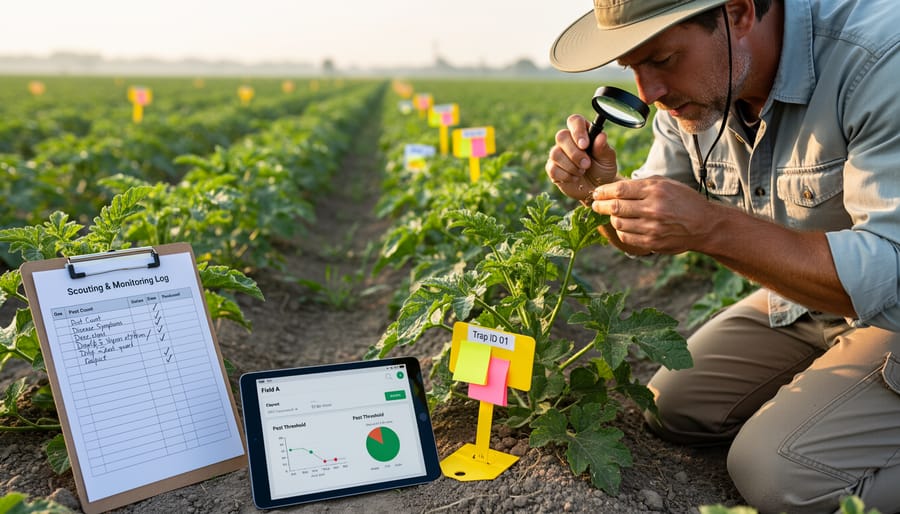
In organic IPM, you can’t spray just because you see a pest. You need to demonstrate justified need, which means the economic damage from the pest will exceed the cost of control if you do nothing. Start by establishing an economic threshold for your crop: the pest population level at which the value of potential damage surpasses the expense of intervention. For example, cabbage worm thresholds differ between fresh-market vegetables destined for high-value retail and processing crops with tighter margins. Scout your fields weekly during critical growth stages, count pests per plant or per square metre, and compare those numbers to published thresholds from Alberta Agriculture and Irrigation or university extension guides.
Document everything. Your organic certifier requires written records showing pest identification, population counts, scouting dates, weather conditions, and the decision-making process that led you to choose a pesticide. Include notes on non-chemical tactics you tried first, row covers, trap crops, or beneficial insect releases, and why they proved insufficient. Save product labels, purchase receipts, application logs with hectare coverage and product rates in metric units, and photographs of damage if possible. This paper trail protects your certification during audits and demonstrates that pesticide use was the last resort, not a reflex. Missing documentation can trigger a compliance review or even suspension, so treat record-keeping as seriously as the spraying itself.
How to Apply IPM Pesticides in Organic Farming: A Step-by-Step Process
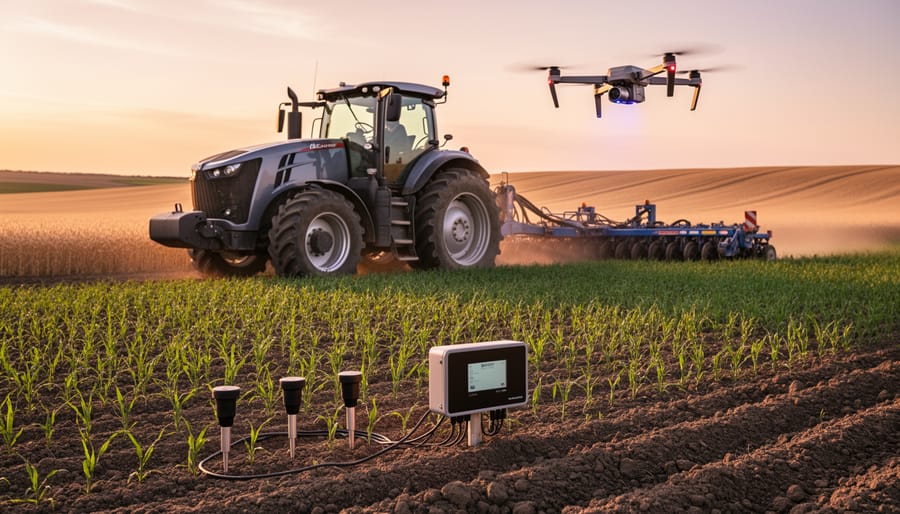
Applying organic pesticides within an IPM framework requires a methodical approach that starts well before you reach for any spray canister. Your first step is establishing a robust scouting and monitoring routine. Walk your fields at least twice a week during the growing season, checking 20 to 30 plants per hectare in a zigzag pattern to catch early pest activity. Record what you find: species, life stage, and population density. Use sticky traps, pheromone lures, or sweep nets for insects like flea beetles or aphids, and note weather conditions that might favour pest outbreaks.
Once monitoring reveals pest numbers approaching your economic threshold, identify the exact species and assess damage levels. A handful of aphids on canola might not warrant intervention, but if you’re seeing 15 or more per plant and beneficials are absent, it’s time to act. Check your records against Canadian Organic Standards to confirm the pest justifies chemical control and that natural pest control methods like crop rotation, beneficial insect release, or mechanical removal have been exhausted or are insufficient.
Select an appropriate organic pesticide from the Permitted Substances List. For aphids, you might choose insecticidal soap or neem oil; for fungal issues on pulse crops, a copper-based product. Read the label carefully to ensure it targets your pest and is approved for your crop. Note the active ingredient concentration and re-entry interval.
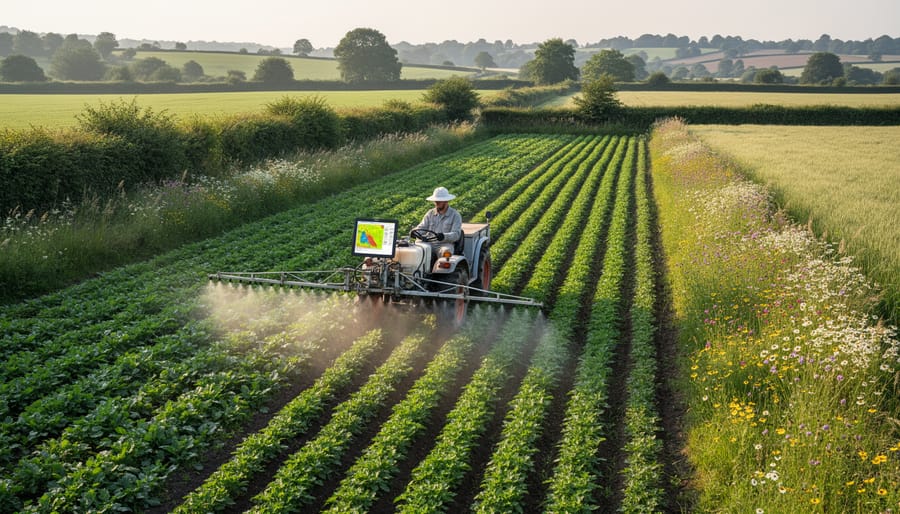
Timing is critical. Apply in early morning or late evening when pollinators are less active and wind speeds are below 10 kilometres per hour. Mix according to label directions using metric measurements: if the rate is 2 litres per hectare, calculate your tank mix based on your sprayer’s output. For example, a 500-litre tank covering 10 hectares needs 100 litres of product diluted to volume. Calibrate your sprayer beforehand to ensure even coverage at the correct rate, typically 100 to 200 litres per hectare for foliar applications. For granular products, measure in grams per square metre and adjust your spreader settings accordingly.
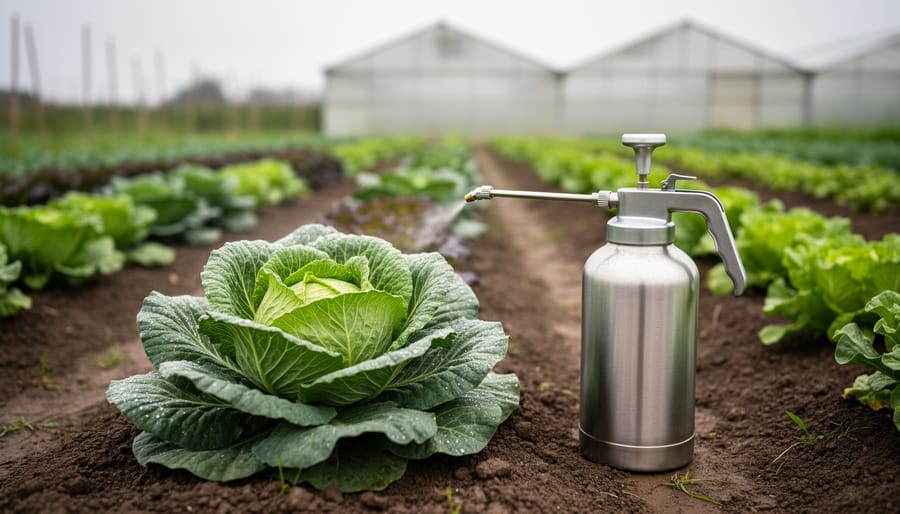
Wear appropriate personal protective equipment: gloves, long sleeves, eye protection, and a respirator if specified. Ensure your equipment is clean and dedicated to organic use to avoid cross-contamination. Apply evenly, targeting pest hotspots while respecting buffer zones near watercourses and neighbouring properties.
Post-application, continue monitoring every three to five days to assess efficacy. Document the product used, rate, conditions, and results in your organic certification records. If pest populations drop below threshold, resume preventive measures. If they rebound, reassess your entire IPM strategy rather than simply respraying. Success with IPM in Alberta comes from treating pesticides as one tool in a diverse management system, not a standalone solution. Adjust cultural practices, enhance habitat for beneficials, and refine your scouting to reduce future reliance on chemical inputs.
Rights and Responsibilities of Organic Farmers Using IPM Pesticides
Operating an organic IPM program with approved pesticides comes with specific rights and obligations that protect both the farmer’s business and the broader organic community. Canadian organic farmers who comply with certification standards maintain access to premium markets and technical support networks while shouldering clear responsibilities for safe, transparent pesticide use.
You’re entitled to purchase and apply any product listed on the Canadian Organic Standards Permitted Substances List without jeopardizing your organic certification, provided you follow the application guidelines and document your use. Your certification body must offer technical guidance when you’re evaluating pest pressure and choosing control options, this support is part of what you pay for through certification fees. When you meet all requirements, you retain protection of the organic price premium and can market your products with the Canada Organic logo or provincial equivalents. If a neighbouring conventional farm causes drift contamination onto your certified land, you have recourse through your certifier’s complaint process and may claim damages, though proving the source and impact requires solid documentation.
Your obligations carry equal weight. Maintaining certification compliance means you must:
- Keep detailed records of all pesticide applications, including product name, quantity in metric units, application date, target pest, and field location
- Establish and maintain buffer zones between treated areas and sensitive sites such as water bodies, neighbouring organic fields, and pollinator habitat
- Train workers on safe handling, protective equipment, and emergency procedures before they mix or apply any pesticide
- Notify your certifier before or immediately after pesticide use, depending on your certification body’s specific rules
- Protect pollinator health by applying during low-activity periods and avoiding bloom stages unless absolutely necessary
Alberta farmers must also hold a valid pesticide applicator certificate if they’re applying restricted products, even organic-approved ones, on more than two hectares. This provincial licensing ensures you understand calibration, drift prevention, and emergency response.
Liability extends beyond your own fields. You’re responsible for preventing drift onto neighbours’ properties, whether they’re organic, conventional, or residential. Even though your products are organically approved, unintended spray on someone else’s certified crop can trigger their decertification and leave you liable for economic damages. Communicate your spray schedule with adjacent landowners, check wind conditions carefully, and use low-drift nozzles and appropriate boom heights. Good neighbour relations often hinge on a single phone call before you start the sprayer.
Where to Get Help: Expert Resources and Support for Organic IPM in Canada
You don’t have to navigate pesticide decisions in your organic IPM program alone. Canada has a robust network of expert resources ready to help you make informed choices that protect both your crops and your certification.
Start with your organic certification body. Pro-Cert, Ecocert Canada, and the Organic Council of the Prairies and Provinces (OCPP) all offer technical support to certified farmers. Their inspectors and consultants can review your pest management plans, clarify which products fit your situation, and help you document interventions properly. Most certifiers host regional workshops throughout the growing season where you can ask questions face-to-face.
Alberta Agriculture and Irrigation employs regional agronomists who specialize in organic production. These specialists conduct farm visits, troubleshoot pest outbreaks, and connect you with research on emerging organic controls. You can reach them through your local ag-fieldman or by calling the agriculture information line. University extension services at the University of Alberta and Olds College also offer pest identification clinics, soil testing, and IPM training sessions tailored to organic systems.
Canadian Organic Growers maintains a national network of farmer mentors and runs an online forum where members share real-time advice on pest challenges. Their library includes fact sheets on organic-approved pesticides, application rates in metric units, and case studies from Alberta farms. Industry associations like Organic Alberta and the Alberta Canola Producers Commission provide crop-specific guidance and sometimes sponsor group purchases of biological control agents, making it easier to source alternatives to chemical pesticides. Regional consultants with organic IPM expertise are available for hire if you need a customized management plan for complex pest situations.
Common Questions About Pesticides in Organic IPM
Are all pesticides banned in organic farming?
No, organic farming doesn’t ban all pesticides. Certified organic farmers can use pesticides listed on the Canadian Organic Standards Permitted Substances List, which includes products like neem oil, pyrethrin, and insecticidal soaps. Synthetic pesticides and those not on the PSL are prohibited.
Can I use the same IPM strategy as conventional farms?
The IPM framework is the same, monitor, set thresholds, and intervene strategically, but the tools differ. Organic IPM relies on cultural controls, biological agents, and approved substances, while conventional systems can use synthetic pesticides. You’ll need to adjust product selection and often intensify preventive measures to stay within organic standards.
What happens if I accidentally use a prohibited product?
Contact your certification body immediately. Depending on the severity, you might face a temporary loss of organic status for affected fields, mandatory transition periods before recertification, or product destruction. Early disclosure and documented corrective action can reduce penalties.
How do I handle pest outbreaks without losing certification?
Focus on rapid scouting to catch outbreaks early, use multiple approved tools in combination (biological controls plus organic sprays), and document every decision. If crop loss seems inevitable, consult your certifier before applying anything questionable, they can advise on emergency protocols or acceptable interventions that preserve your status.
Do organic pesticides harm beneficial insects?
Yes, some can. Broad-spectrum organic products like pyrethrin or insecticidal soap kill beneficial insects along with pests if applied carelessly. Time applications when pollinators aren’t active, spot-spray only infested areas, and use selective biocontrols like Bt that target specific pest groups to protect your beneficial population.
These questions surface regularly in certification audits and farmer workshops across Alberta. The key takeaway: organic IPM gives you tools, not a free pass. You must justify each pesticide application with scouting records, demonstrate that non-chemical methods were tried first, and prove the product is on the PSL. Mistakes happen, but transparency with your certifier and a solid paper trail showing your decision-making process can preserve your organic standing. Many farmers find that keeping a simple logbook with pest counts, weather notes, and intervention dates not only satisfies auditors but also sharpens their IPM skills over time, reducing reliance on any pesticide, organic or otherwise.
Yes, IPM does use pesticides, but in organic farming they’re tools of last resort, not first response. When you implement IPM on your Alberta operation, you’re committing to a knowledge-based system that prioritizes prevention, monitoring, and ecosystem health over chemical inputs. The pesticides you can use under organic certification are carefully regulated, applied only when economic thresholds justify intervention, and chosen to minimize harm to beneficial insects and soil biology.
This approach protects your certification status while keeping your crops competitive. Alberta farmers who’ve mastered organic IPM consistently report lower input costs over time, healthier soil, and premium prices that reward their stewardship. You’re not just managing pests; you’re building resilience into your farming system.
The learning curve is real, but the resources exist. Tap into university extension services, connect with other organic growers in your region, and treat each growing season as an opportunity to refine your strategy. IPM isn’t a static checklist. It’s an adaptive framework that respects both your economic needs and the land you depend on. When you get it right, your farm becomes more profitable and more sustainable at the same time.