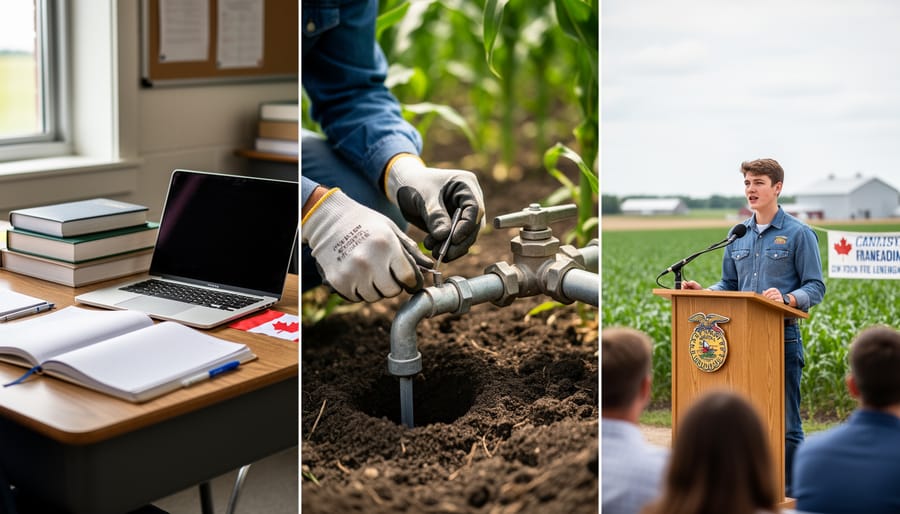
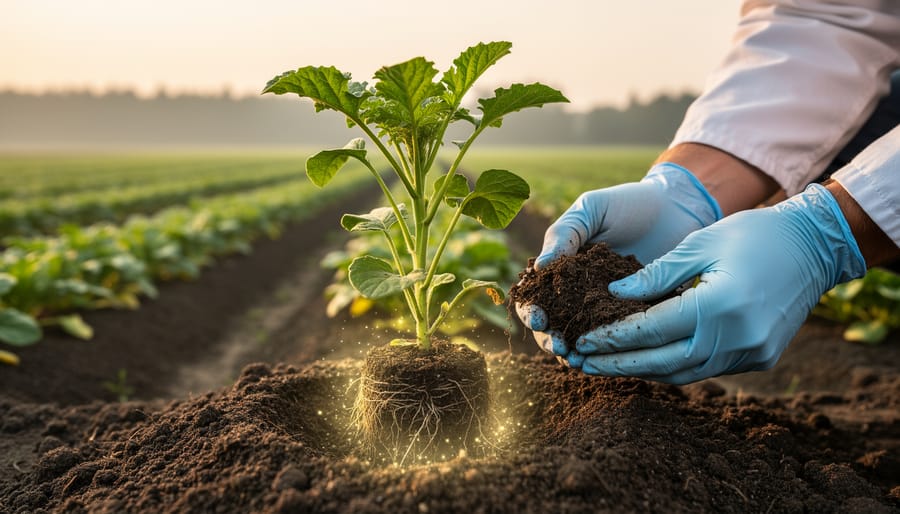
Biotech water researchers are scientists and agricultural specialists who combine biotechnology, microbiology, and soil science to develop water-efficient solutions for crop production. Their work focuses on understanding how plants, soil microorganisms, and water interact at the cellular level, then applying that knowledge to reduce irrigation needs, improve water retention, and protect water quality on working farms.
For organic farmers across the Canadian Prairies, this research has become essential. Water availability continues to shape every growing season decision, from crop selection to harvest timing. Traditional irrigation methods often conflict with organic certification requirements, and climate variability has made historical rainfall patterns unreliable guides for planning. Biotech water researchers address these challenges by engineering biological solutions: drought-tolerant crop varieties developed without genetic modification, beneficial microbe treatments that help plants access soil moisture more efficiently, and soil amendments derived from organic materials that increase water-holding capacity by measurable percentages.
The field sits at the intersection of laboratory science and field application. Researchers begin by isolating specific traits in plants or microorganisms that confer water efficiency. They test these traits under controlled conditions, then validate results through multi-year field trials on commercial farms. The timeline from discovery to farm-ready product typically spans five to eight years, though some microbial treatments move faster.
This article explains what biotech water researchers actually do, how their work translates into tools you can use on your operation, and which specific technologies have proven effective on Canadian organic farms in 2026. You’ll hear directly from researchers working with Alberta producers and learn practical ways to access their findings without navigating complex academic publications or waiting for government extension services to catch up.
What Biotech Water Researchers Do
Biotech water researchers are scientists who combine biology, chemistry, and engineering to solve water-related problems in agriculture. They develop living systems and biological tools that help farms use water more efficiently, improve water quality, and reduce waste, all while maintaining the natural principles that organic farming requires.
These researchers work at the intersection of microbiology, plant science, and agricultural engineering. Rather than relying solely on mechanical filtration or chemical treatments, they harness microorganisms, enzymes, and biological processes to address water challenges. For organic farms, this approach offers solutions that align with certification standards while delivering measurable improvements in water conservation and quality.
The work involves several specialized areas:
- Bioremediation
- The use of living organisms, typically bacteria or fungi, to remove contaminants from water or soil, restoring it to a usable state naturally.
- Microbial Water Treatment
- Systems that employ beneficial microbes to break down organic matter, purify irrigation water, and process farm wastewater without synthetic chemicals.
- Biosensors
- Biological detection tools that use living cells or proteins to measure water quality indicators like nutrient levels, pathogens, or salinity in real-time.
- Soil-Water Microbiome Engineering
- Research focused on cultivating beneficial soil bacteria and fungi that improve water retention, reduce runoff, and enhance crop water uptake efficiency.
Biotech water researchers develop technologies like bioinfiltration systems that use natural biological processes to filter and recycle water on farms. They study how specific microbial communities can transform agricultural runoff into clean irrigation water, or how beneficial soil organisms can help crops access moisture more effectively during dry periods.
For Canadian organic farmers, these researchers serve as problem-solvers who understand both the science of living systems and the practical constraints of farming. They translate laboratory discoveries into field-ready tools that work within organic certification guidelines while addressing real water scarcity and quality issues that Alberta growers face today.
How Biotech Water Research Works in Practice
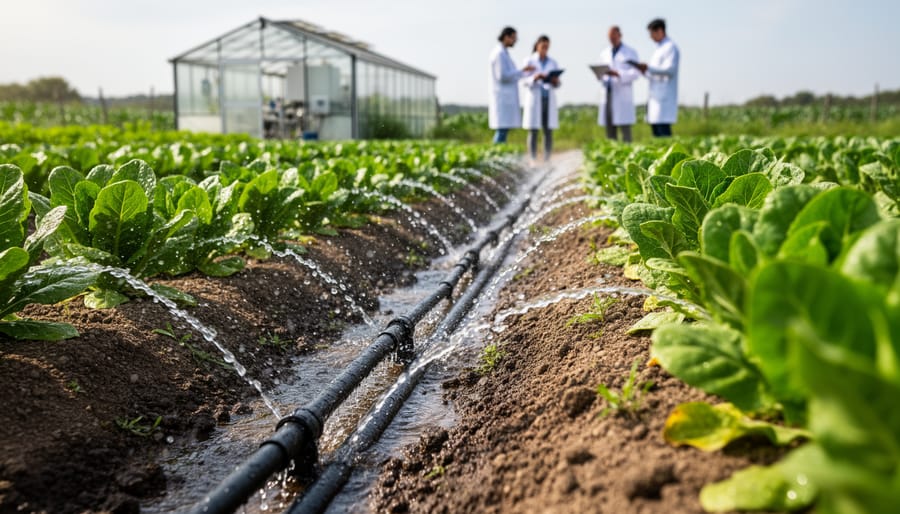
Biotech water researchers follow a systematic approach when tackling water challenges on organic farms. The process starts with identifying a specific problem, whether it’s excessive irrigation needs, poor water retention in soil, or contaminated runoff affecting nearby water sources.
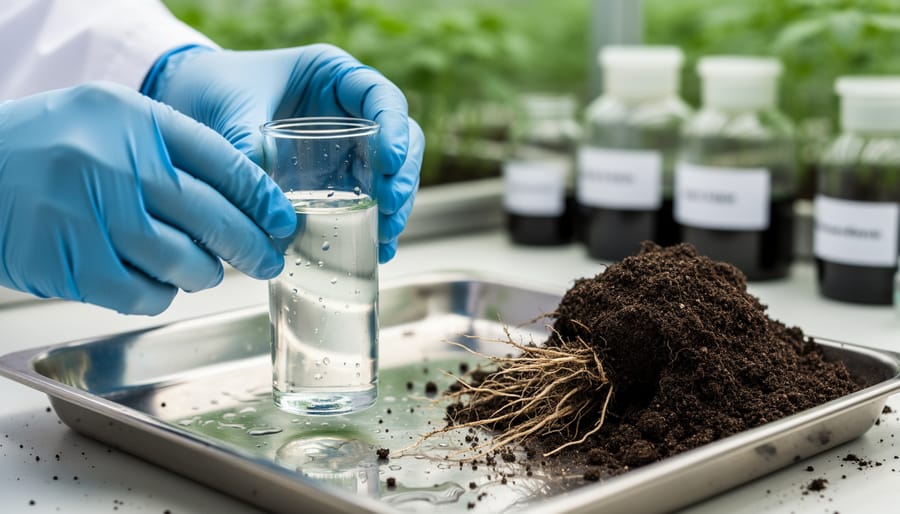
Once they’ve pinpointed the issue, researchers examine the biological systems at play. They collect soil samples, test water quality, and analyze the existing microbial communities. This diagnostic phase helps them understand what’s happening at the cellular and molecular level. On a Saskatchewan organic vegetable farm, for instance, researchers might discover that depleted soil bacteria are failing to bind water molecules effectively, leading to rapid drainage and increased irrigation demands.
With the problem mapped out, they develop biological solutions. This often involves selecting or engineering specific microorganisms, enzymes, or plant varieties that address the water challenge. In Alberta, researchers at the University of Lethbridge have developed bacterial strains that produce biofilms, which act like tiny sponges in the soil, holding moisture near plant roots for longer periods.
The testing phase moves from the lab to controlled field trials. Researchers work directly with organic farmers to establish test plots where they can monitor how the biological solution performs under real growing conditions. They track water usage, soil moisture levels, crop health, and yield data over multiple growing seasons. This step takes time because biological systems need to establish themselves and interact with the existing farm ecosystem.
During implementation, researchers help farmers integrate the solution into their operations. This might mean adjusting irrigation schedules, applying microbial inoculants at specific growth stages, or modifying tillage practices to protect beneficial organisms. The relationship doesn’t end at installation. Researchers continue monitoring outcomes, troubleshooting unexpected issues, and refining the approach based on what they observe in the field.
Throughout this process, researchers maintain detailed records and share findings with the broader agricultural community, ensuring that successful water conservation strategies can benefit other organic farms facing similar challenges.
Key Research Areas and Technologies
Biological Water Treatment Systems
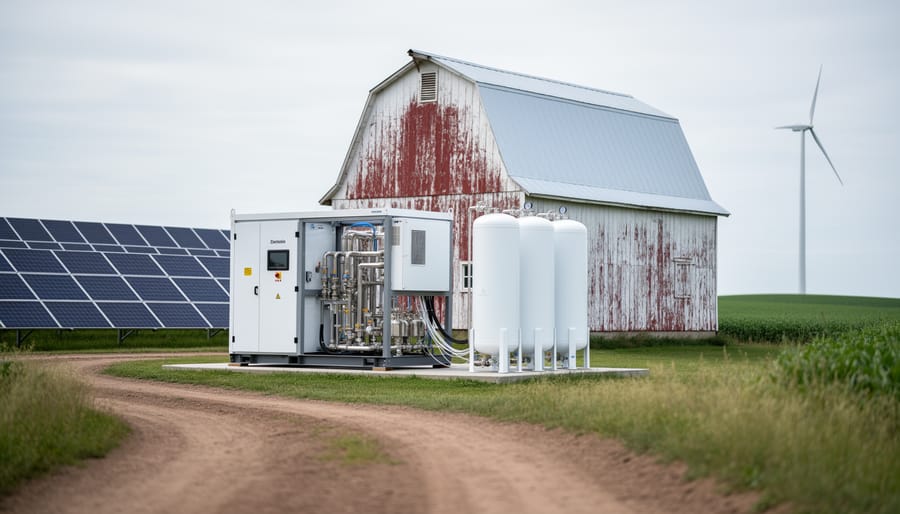
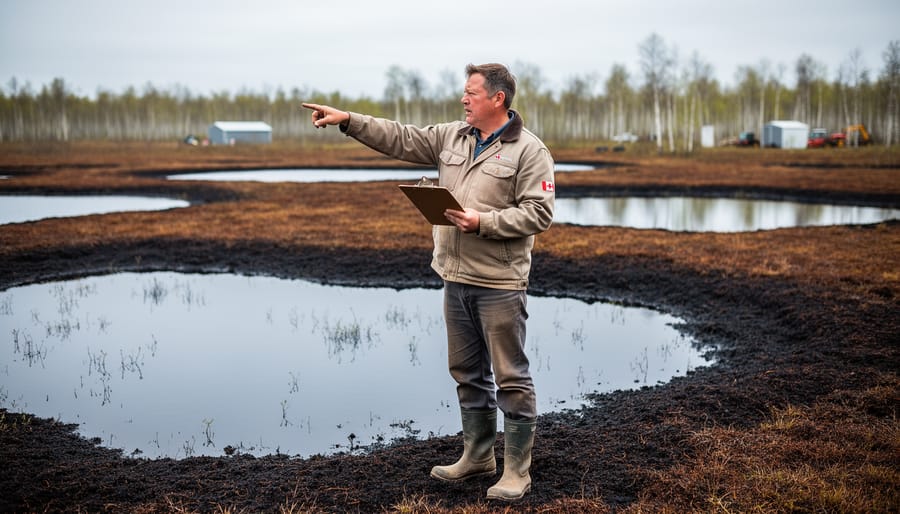
Biological water treatment systems harness naturally occurring or specially selected microorganisms and enzymes to break down contaminants and recycle water for reuse on organic farms. These living systems actively convert waste and organic pollutants into harmless byproducts, helping farms meet strict water quality requirements without relying on synthetic chemicals. On many Canadian organic operations, constructed wetlands and biofilters feature beneficial bacteria that remove nutrients and pathogens from runoff and wash water. Aerobic and anaerobic digesters use microbial communities to process high-strength waste streams, allowing water to be safely cycled back into irrigation systems or storage ponds.
For Alberta growers, where water scarcity and strict environmental guidelines pose constant challenges, these biological systems can mean the difference between compliance and costly waste. By tailoring microbial blends and enzyme formulas to specific farm needs, biotech water researchers ensure the systems remain effective and low-maintenance through changing seasons. Routine monitoring and occasional adjustments keep these solutions working year after year, integrating seamlessly with farm operations focused on sustainability.
Soil Microbiome Enhancement
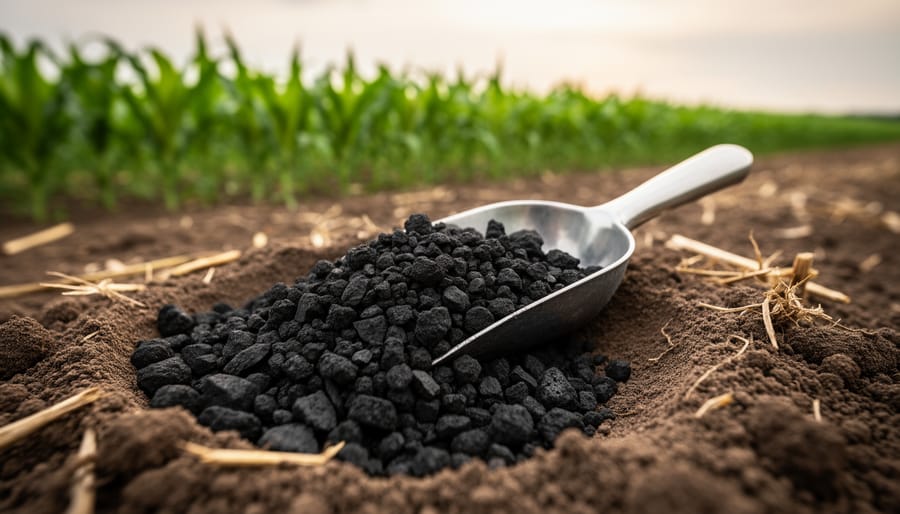
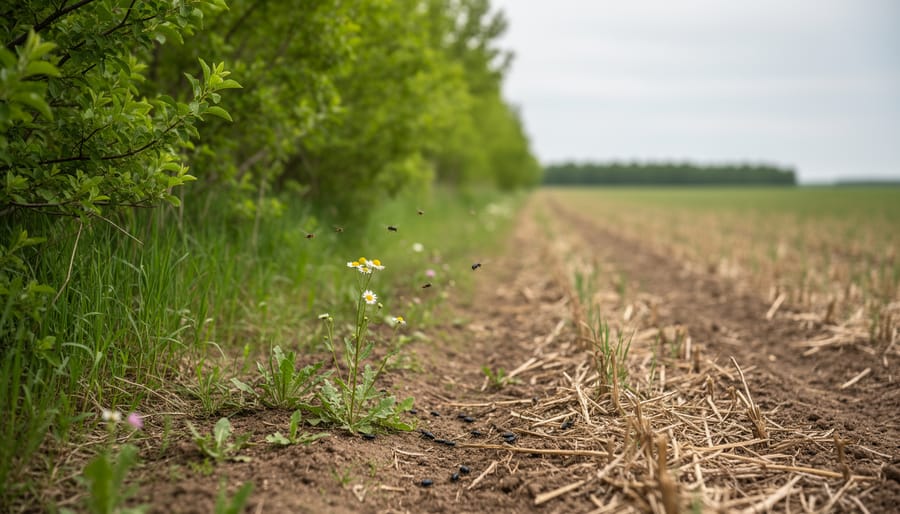
Biotech water researchers are unlocking the potential of the soil microbiome to address the core water challenges faced by organic farms. Their work focuses on identifying and promoting specific strains of beneficial bacteria and fungi that naturally support soil structure, allowing it to hold more water for longer periods. By fostering these microorganisms, researchers help farms increase soil organic matter, which acts like a sponge in the root zone and reduces the frequency and volume of irrigation needed during the growing season.
For example, scientists have isolated mycorrhizal fungi that form symbiotic relationships with plant roots, extending their reach for both water and nutrients. In Alberta’s variable climate, these microbial solutions mean crops stay productive and resilient through unpredictable rainfall. Instead of relying on chemical additives or high volumes of supplemental water, farms can adopt these biologically-based techniques, supporting both organic certification and bottom-line sustainability. This work connects directly to improving water efficiency and soil health in Canadian agriculture.
Biosensing and Monitoring Tools
Biosensing technology translates biological responses into actionable data that organic farmers can use to make immediate irrigation decisions. These tools rely on living organisms or biological molecules that change measurably when water conditions shift, essentially creating an early warning system rooted in nature rather than electronics alone.
One common approach uses engineered microbes that fluoresce or change color in response to soil moisture levels or specific nutrient concentrations in water. Researchers at Canadian agricultural labs have developed bacteria-based sensors that signal when root zones need watering, reducing guesswork and preventing both under- and over-irrigation. Unlike traditional moisture probes, these biological sensors can detect plant-available water, the portion roots can actually absorb, rather than just general wetness.
Another promising area involves biosensors that monitor water quality in real-time, detecting contaminants or nutrient imbalances through biological recognition elements. An Alberta research team recently tested enzyme-based strips that organic vegetable growers can dip into irrigation water to check for salt buildup or pathogen presence within minutes, allowing quick adjustments before crop damage occurs.
These monitoring tools give farmers precise, timely information without requiring expensive laboratory analysis, making water optimization practical even on smaller organic operations.
Applications on Canadian Organic Farms
Irrigation Efficiency Improvements
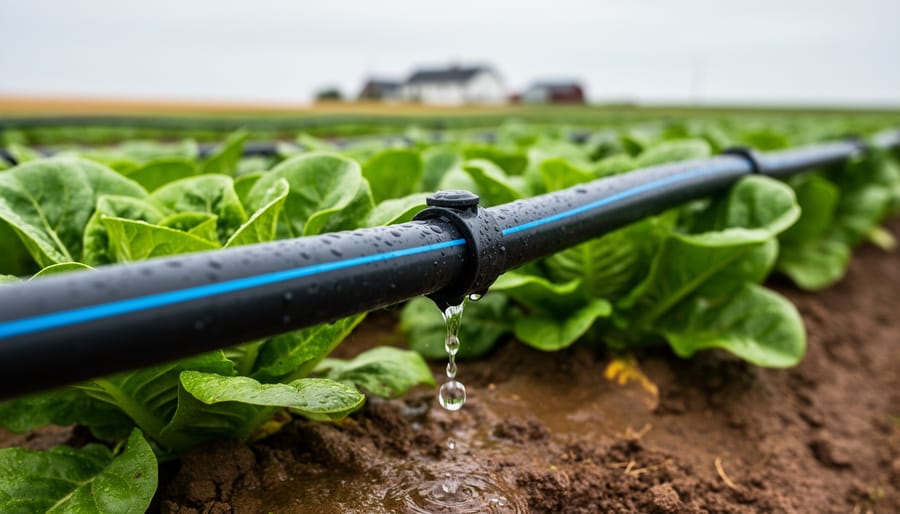
Biotech water researchers have developed solutions that slash irrigation requirements by 30-40% on organic farms while maintaining yields. These improvements come primarily through soil microbiome treatments that enhance water retention and reduce runoff.
Researchers at Alberta universities have created microbial inoculants containing specific bacterial strains that colonize plant roots. These bacteria produce biofilms and polysaccharides that bind soil particles together, creating better soil structure. The result: water penetrates deeper instead of running off, and plants access moisture for longer periods between waterings.
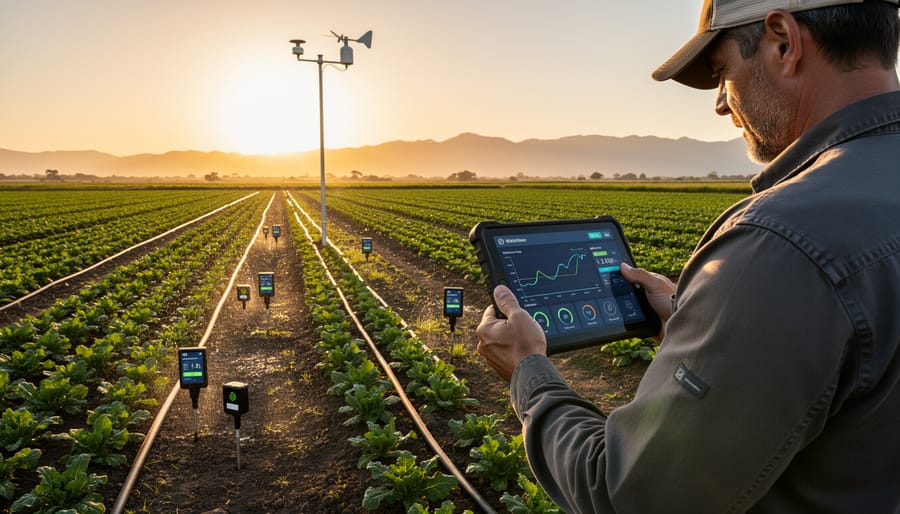
Field trials on organic vegetable operations near Lethbridge showed these treatments extended irrigation intervals from every 3 days to every 5-6 days during peak summer heat. Farmers paired the biological treatments with automated irrigation systems that respond to real-time soil moisture data, creating a precision approach that applies water only when plants need it.
The biotech component works synergistically with existing water-smart practices like mulching and drip systems. One organic grain farmer reported cutting irrigation costs by $8,000 annually while seeing a 12% yield increase in drought-stressed wheat varieties, the improved soil biology helped plants withstand water stress during critical growth stages.
Wastewater Treatment and Reuse
On organic farms, wastewater from vegetable washing, equipment cleaning, and greenhouse operations can add up to thousands of litres daily. Biotech water researchers have developed biological treatment systems that break down organic residues and remove pathogens without synthetic chemicals, making this water safe to reuse for irrigation or other non-consumable purposes. These systems typically use constructed wetlands populated with specific bacterial communities, or bioreactors containing naturally occurring microorganisms that digest nutrients and contaminants. Alberta organic growers using biofilm-based systems report recovering 60-70% of their processing water while staying compliant with organic standards. The approach also helps prevent water pollution in nearby streams and aquifers. Dr. Lynne Neufeld at the University of Waterloo notes that these biological treatments reduce freshwater demand substantially: “We’re seeing greenhouse operations cut municipal water use in half by recycling their own wash water through microbial systems.” Implementation costs range from basic settling ponds with biofiltration at a few thousand dollars to advanced bioreactor setups at $15,000-$25,000, with payback periods of two to four years depending on water prices and usage volume.
Drought Resilience Strategies
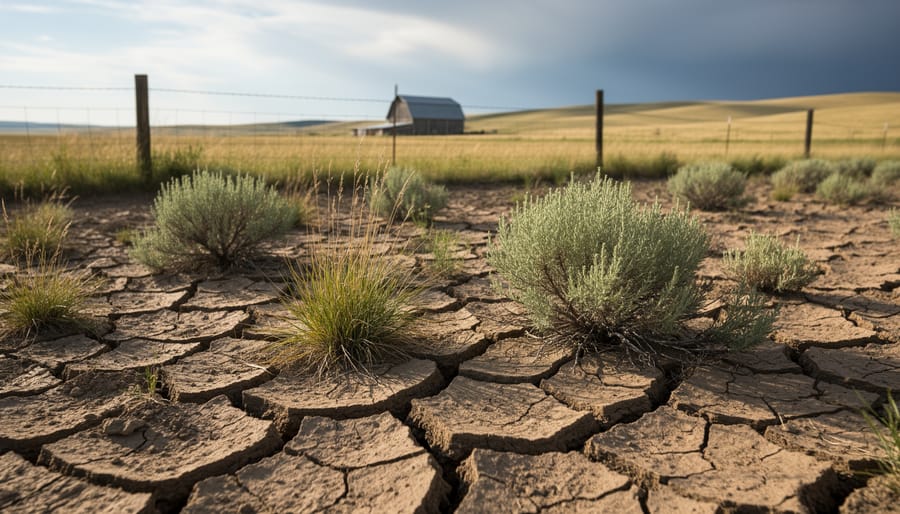
Biotech water researchers are making a real difference for organic farms facing recurring drought and tough water limits. They focus on microbes and root-associated fungi that help crops pull more moisture from dry soils, reducing crop stress without relying on heavy irrigation. Through carefully developed soil inoculants and drought-resistant plant varieties, farms see steadier yields, even during water bans or especially hot spells. Some teams are also piloting biostimulants that trigger plants’ natural drought defenses, building resilience season after season. These solutions are tailored for Canadian farm conditions, giving organic growers a practical edge when every drop counts.
Working with Biotech Water Researchers
Canadian organic farmers have several accessible pathways to connect with biotech water researchers and implement proven technologies on their operations. The research landscape has evolved significantly since 2023, with more institutions now offering farmer-focused partnerships rather than purely academic collaborations.
Start by reaching out to university agricultural research centres in your province. The University of Alberta’s Department of Agricultural, Food and Nutritional Science operates field research stations that specifically partner with Alberta farmers to test biotech water solutions. Similarly, the University of Saskatchewan’s Crop Development Centre and University of Guelph’s Ontario Agricultural College maintain active farmer collaboration programs. These institutions often seek organic farm partners for field trials, providing both technical support and sometimes funding for implementation.
Government funding programs have expanded to support biotech adoption on organic farms. Agriculture and Agri-Food Canada’s AgriScience Program provides grants for on-farm research collaboration, while the Canadian Agricultural Partnership offers cost-share funding through provincial delivery. Alberta’s On-Farm Demonstration Program, for instance, covers up to 75% of costs when implementing innovative water management technologies, including biotech solutions. Check with your provincial agriculture ministry about region-specific programs.
Industry partnerships offer another route. Several Canadian agri-biotech companies run pilot programs where organic farmers can test technologies at reduced cost or through lease arrangements. The BioFuelNet Canada network connects researchers with farmers interested in biological water treatment systems, while regional conservation authorities often coordinate biotech research demonstrations.
When approaching researchers, prepare specific information about your water challenges: current usage patterns, problem areas, crops grown, and irrigation systems in place. Researchers value farmers who can provide real-world testing environments and detailed feedback. Most collaboration agreements allow you to maintain organic certification while participating, but confirm compatibility with your certifying body before committing to any trial.
Don’t overlook peer networks. The Canadian Organic Growers association and provincial organic producer groups frequently host researcher presentations and can connect you with farmers already working with biotech water specialists.
Common Questions About Biotech Water Research
Do biotech water solutions comply with organic certification standards?
Most biological water treatment systems qualify for organic certification because they use naturally-occurring microorganisms and enzymes without synthetic chemicals. Always verify specific technologies with your certification body before implementation.
What does it cost to implement biotech water research on my farm?
Costs vary widely depending on the technology and scale, from a few hundred dollars for biosensors to several thousand for comprehensive treatment systems. Many Canadian universities offer pilot projects at reduced or no cost to farmers willing to participate in research trials.
How long does it take to see results from biotech water conservation methods?
Some technologies like biosensors provide immediate feedback, while soil microbiome enhancements may take a full growing season to show measurable improvements in water retention. Most biological treatment systems demonstrate benefits within three to six months of proper installation.
Do I need special training to work with biotech water technologies?
Basic systems require minimal training, often just a few hours of instruction from the researchers who developed them. More complex technologies typically come with ongoing support from university partners or extension services.
Can biotech water research help with my specific crop and soil type?
Researchers design solutions for diverse agricultural contexts, including Alberta’s varied soil conditions and crop types. Contact researchers at Canadian agricultural universities to discuss customized approaches for your operation.
Are there government programs supporting biotech water research adoption?
Yes, several federal and provincial programs provide funding for sustainable agriculture technology adoption. These initiatives often cover costs for farmers implementing proven water conservation tactics developed through biotech research.
The partnership between organic farmers and biotech water researchers continues to strengthen as both groups recognize the mutual benefits of collaboration. Researchers gain real-world testing environments and practical feedback, while farmers access cutting-edge solutions tailored to their operational realities. This relationship has proven especially valuable in water-stressed regions where conventional approaches no longer meet the challenges of changing climate conditions and increasing production demands.
Biotech water researchers offer organic farmers a science-backed pathway to more resilient, efficient farming operations in a climate where water conservation is becoming critical. Their work translates cutting-edge biological science into practical tools that reduce irrigation demands, improve soil health, and create circular water systems on working farms.
For Canadian organic producers, particularly those in water-stressed regions, these partnerships represent more than just technical support. They connect farms to a broader network of sustainable agriculture innovation happening across university labs, government research stations, and demonstration farms. The technologies emerging from biotech water research align naturally with organic certification requirements because they rely on biological processes rather than synthetic chemicals.
The growing accessibility of these resources in 2026 makes engagement more feasible than ever. Start by reaching out to your provincial agriculture department or nearby university extension office to learn about ongoing research projects accepting farm partners. Many programs provide technical support and even cost-sharing for implementation.
Water conservation through biotechnology isn’t a distant future concept. It’s happening now on Canadian farms where researchers and growers collaborate to test real solutions for real challenges. Whether you’re facing declining groundwater levels, looking to expand production without increasing water use, or preparing for stricter water regulations, biotech water researchers can help you develop strategies that protect both your operation’s viability and the broader agricultural landscape we all depend on.