Regenerative agriculture is a farming approach that restores soil health, increases biodiversity, and improves water cycles through practices like cover cropping, diverse rotations, minimal tillage, and integrated livestock management. The question isn’t whether regenerative practices can benefit ecosystems (the evidence is clear they do), but whether they deliver environmental gains without sacrificing economic viability, and whether they can scale across diverse farm operations in Alberta and beyond.
For producers weighing this shift, sustainability means more than carbon sequestration or improved soil organic matter. It requires honest answers about yield stability during transition years, labour demands during peak seasons, access to markets that recognize regenerative premiums, and resilience against drought or price volatility. Alberta farmers face unique constraints: short growing seasons, variable precipitation, established commodity supply chains, and significant capital already invested in conventional equipment and systems.
This article examines whether regenerative agriculture holds up under scrutiny across environmental, economic, and social dimensions. We’ll define what separates regenerative systems from organic or conservation agriculture, explain the biological and ecological mechanisms that drive soil regeneration, and evaluate real outcomes from Alberta operations that have adopted these methods. You’ll find evidence from long-term field trials, input cost comparisons, and candid assessments of implementation challenges including weed pressure, knowledge gaps, and market access.
The goal here is clarity. Producers considering regenerative practices need more than philosophical arguments or anecdotal success stories. They need data on what works in Canadian conditions, transparent discussion of trade-offs, and practical pathways that fit their land, equipment, and risk tolerance. Whether regenerative agriculture proves sustainable depends heavily on how it’s implemented, supported, and measured over time.
What Regenerative Agriculture Really Means
Regenerative agriculture is a farming approach focused on reversing damage to land rather than simply preventing further harm. While conventional farming often depletes soil fertility over successive growing seasons and organic farming maintains soil health, regenerative methods actively rebuild degraded land, creating richer soil, more diverse ecosystems, and stronger farm resilience over time.
The distinction matters for Alberta farmers working with prairie soils that have lost significant organic matter since conversion to annual cropping. Conventional systems rely heavily on synthetic fertilizers and tillage to maintain yields, which can reduce soil carbon, disrupt microbial life, and increase erosion risk. Organic certification eliminates synthetic inputs but doesn’t necessarily restore ecosystem function. Regenerative agriculture goes further by treating the farm as a living system where each practice, whether planting cover crops, integrating livestock, or reducing tillage, contributes to measurable improvement in soil health and farm productivity.
- Regenerative Agriculture
- A farming system that actively improves soil health, water cycles, and biodiversity over time, reversing degradation rather than just sustaining current conditions.
- Agroecology
- The application of ecological principles to farming, designing agricultural systems that work with natural processes like nutrient cycling and pollination instead of replacing them with external inputs.
- Soil Carbon Sequestration
- The capture and storage of atmospheric carbon dioxide in soil through plant roots, crop residues, and microbial activity, which improves soil structure and fertility while reducing greenhouse gases.
- Ecosystem Services
- Natural processes that benefit farms without cost, including water filtration, pest control by beneficial insects, pollination, and nutrient cycling by soil organisms.
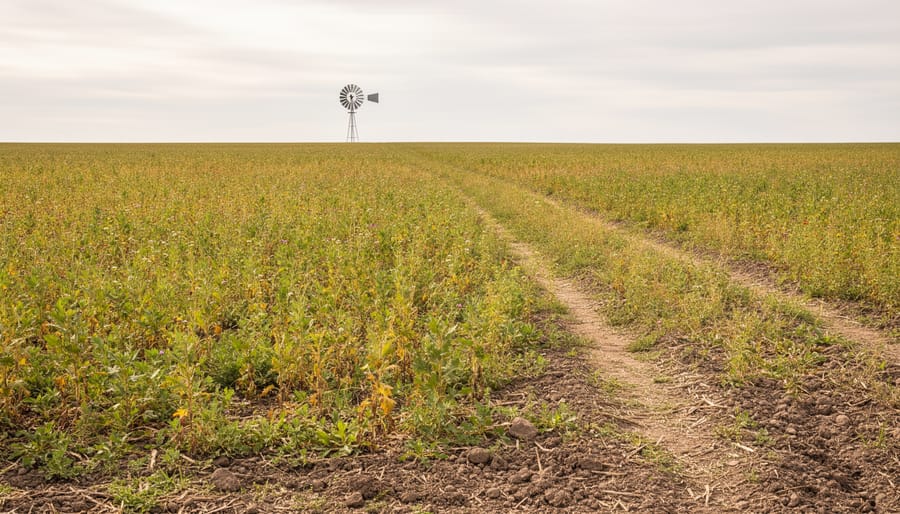
In Alberta’s context, regenerative agriculture means working with the province’s short growing season, variable moisture, and temperature extremes to build soil that can handle drought, retain snowmelt, and support crops with less fertilizer. It’s not about returning to pre-industrial methods but using modern understanding of soil biology and ecosystem function to create farms that get stronger rather than weaker each year. The core question isn’t whether regenerative practices are sustainable, it’s whether extractive systems can continue indefinitely on finite soil resources.
How Regenerative Agriculture Works on Alberta Farms
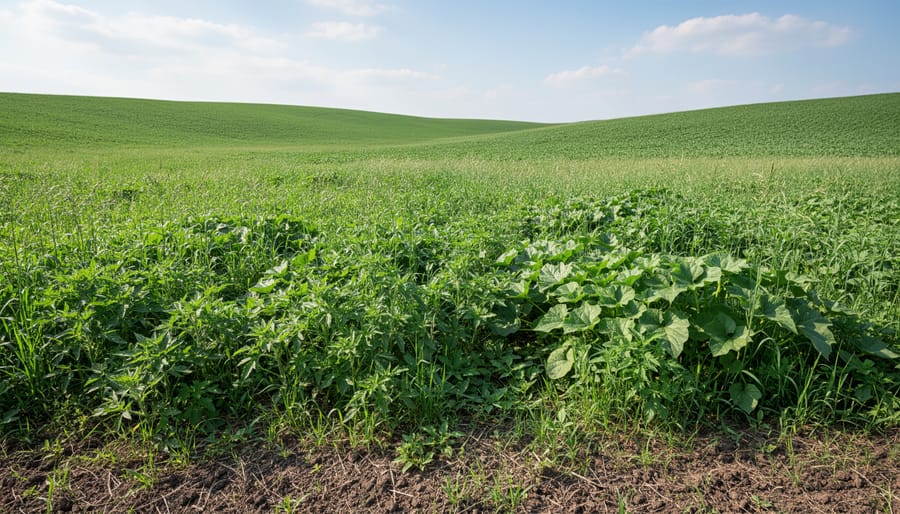
Building Soil Health Through Carbon Cycling
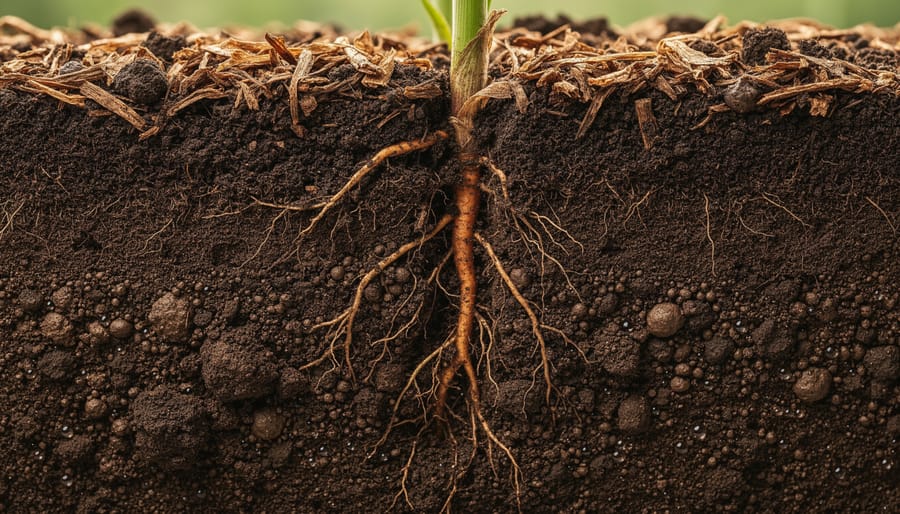
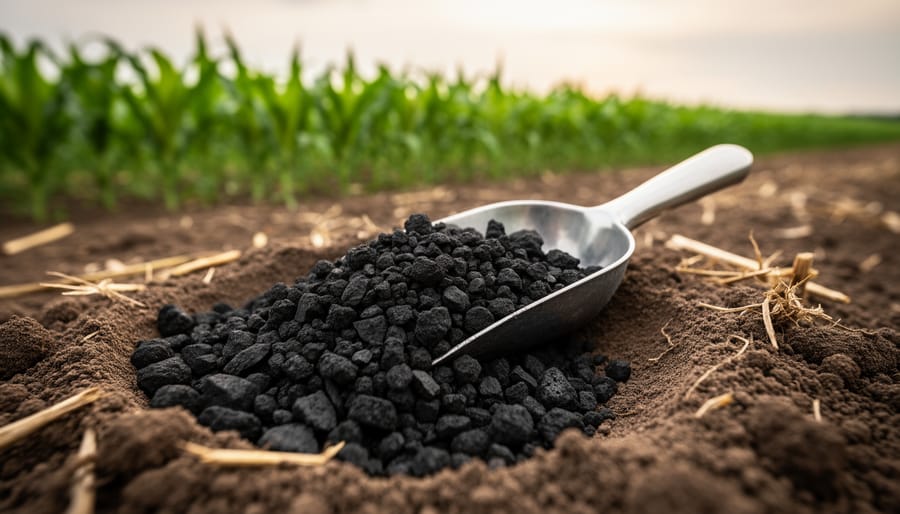
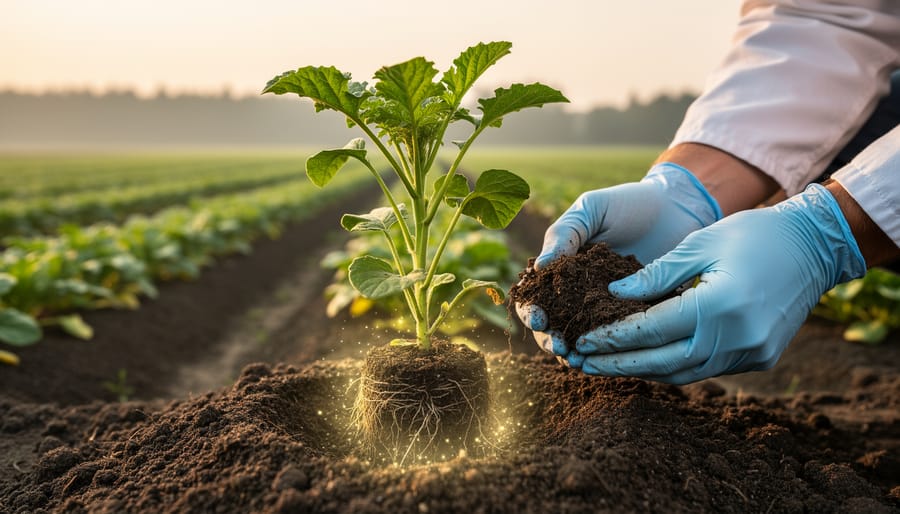
Healthy soil acts as a carbon bank. When you reduce tillage, plant cover crops, or return crop residues and manure to the field, you’re feeding soil microbes that turn plant material into stable organic matter. Those microbes respire carbon dioxide, but the root systems and residues they break down also deposit carbon compounds deeper in the soil profile where they can stay for decades. This process, carbon cycling, builds the dark, crumbly soil structure that holds water during dry spells and drains quickly after heavy rain.
Alberta’s short growing season makes timing critical. Fall-seeded cover crops like winter rye or hairy vetch grow roots through late autumn, pumping sugars into the soil and protecting it from erosion over winter. When you terminate them in spring and plant directly into the residue, you skip the tillage pass that would otherwise expose and oxidize stored carbon. Research on reduced tillage soil carbon shows this approach can increase organic carbon levels by half a percent or more over five to ten years, enough to improve water-holding capacity by several millimeters per rainfall event.
The payoff shows up in nutrient availability too. Organic matter releases nitrogen, phosphorus, and sulfur slowly as microbes decompose it, reducing your fertilizer bill and buffering crops against shortages. Farmers near Red Deer and Lethbridge report noticeably better crop performance in dry years after three or four seasons of cover cropping, because their soils hold an extra week’s worth of moisture.
Creating Farm Resilience Through Diversity
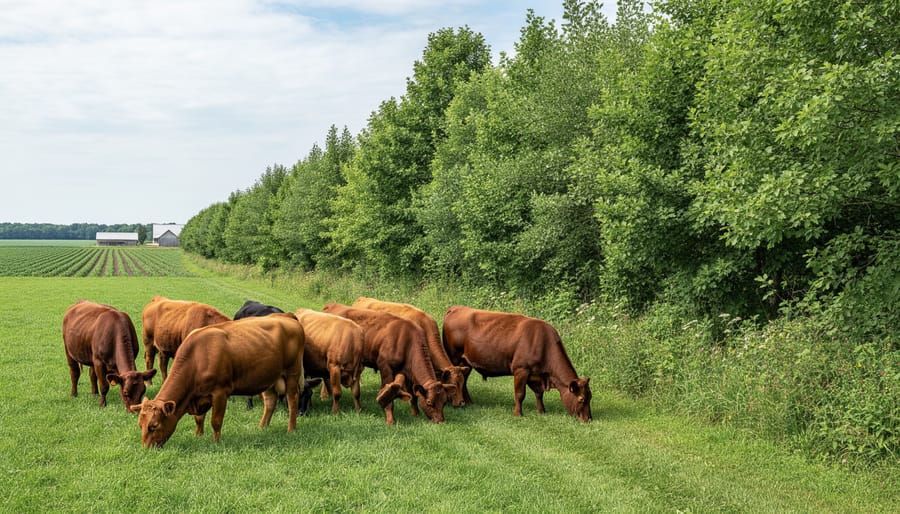
Alberta farmers know that putting all your eggs in one basket rarely ends well. Regenerative agriculture builds farm resilience by deliberately increasing diversity, not just for its own sake, but because varied systems withstand shocks better than monocultures. When you rotate multiple crop species, integrate livestock with grain production, and include perennials alongside annuals, you create overlapping safety nets that protect both your land and your income.
Crop rotations break pest and disease cycles that thrive when the same plant grows in the same field year after year. A wheat-canola-pea rotation, for instance, disrupts weed pressure and reduces reliance on herbicides because each crop competes differently and leaves distinct residue. Adding forages in crop rotations extends this benefit further, perennial forages like alfalfa fix nitrogen, improve soil structure, and provide grazing opportunities that diversify revenue streams. You’re not just growing different crops; you’re spreading economic risk across multiple markets and harvest windows.
Integrated livestock bring another layer of resilience. Cattle or sheep grazing cover crops or crop residues convert what would be waste into protein and manure, cycling nutrients back into the soil without purchased fertilizer. This stacking of enterprises means a poor grain year doesn’t sink the whole operation if livestock prices hold, and vice versa.
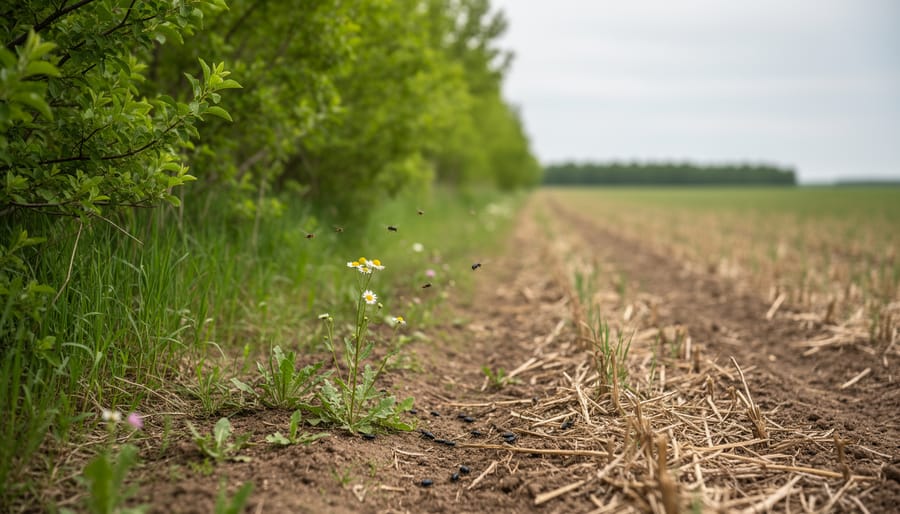
Perennial plantings, shelterbelts, hedgerows, pollinator strips, stabilize the system further. They provide habitat for beneficial insects that control pests, reduce wind erosion, and create microclimates that moderate temperature extremes during Alberta’s volatile springs and falls. Diversity isn’t a luxury in regenerative systems. It’s the foundation that keeps farms functional when conditions shift.
Working With Natural Cycles Instead of Against Them
Conventional agriculture often treats the farm as a factory floor, each input timed to a calendar rather than biological readiness. Regenerative systems flip that logic. They schedule operations around natural cycles: planting cover crops when soil microbes are most active, grazing livestock when pasture regrowth peaks, and timing tillage (if used at all) to avoid disrupting critical nutrient exchange periods.
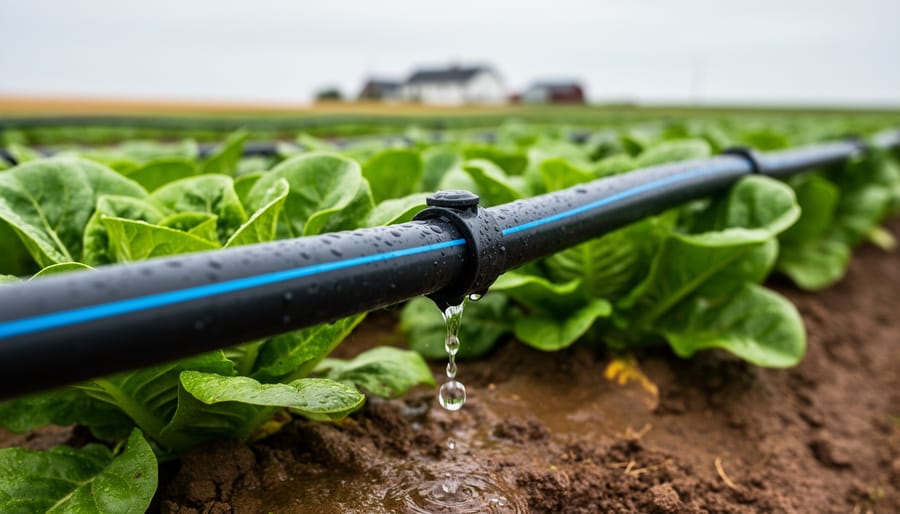
This alignment cuts costs directly. When soil biology cycles nitrogen efficiently, you need less synthetic fertilizer. Research on regenerative agriculture nutrient inputs shows farms can reduce nitrogen applications by 30-50 percent once soil life rebuilds. Water infiltration improves when you stop compacting soil during wet periods, reducing irrigation needs. Pollinator habitat means fewer purchased inputs for crop fertilization.
The shift requires observation skills conventional farming doesn’t demand. You learn to read soil moisture, monitor pest-predator ratios, and time grazing moves to plant recovery rates. But farmers report that working with these cycles, rather than overriding them with chemicals and machinery, reduces both input bills and the energy spent fighting natural systems.
Core Practices in Regenerative Agroecology
Alberta farmers implementing regenerative agroecology draw from a shared toolkit of practices that work together to rebuild soil health and farm resilience. These methods aren’t rigid prescriptions, they’re adaptable components that each farm combines differently based on land, climate, goals, and existing infrastructure. What matters is understanding how each practice contributes to the whole system, then selecting the combination that makes sense for your operation.
The foundational practices fall into several functional categories. Soil management techniques minimize disturbance and maximize organic matter. Biological diversity strategies introduce plants and animals that strengthen ecosystem function. Input reduction methods replace purchased fertilizers and pesticides with on-farm resources. Together, these approaches revitalize land by working with natural processes instead of overriding them.
- No-till or reduced tillage: Leaves soil structure intact, preserves fungal networks, and keeps carbon sequestered underground rather than releasing it through oxidation
- Cover cropping: Plants fields during fallow periods to protect soil, fix nitrogen, break pest cycles, and add organic matter when terminated
- Diverse crop rotations: Alternates plant families across seasons and years to disrupt disease pressure, balance nutrient demands, and support varied soil organisms
- Integrated grazing: Moves livestock through pastures or crop residues in patterns that mimic wild herbivore behavior, stimulating plant growth and distributing nutrients
- Hedgerows and windbreaks: Establishes perennial plantings at field edges to reduce erosion, provide pollinator habitat, and create beneficial insect corridors
- Composting and organic amendments: Recycles farm waste into fertility inputs that feed soil life and improve structure without synthetic chemicals
The power of regenerative agroecology emerges when these practices stack and reinforce each other. A grain farmer might combine no-till with cover crops and extended rotations, creating conditions that boost soil biodiversity and reduce fertilizer needs. A mixed operation could integrate mob grazing with compost application and hedgerow establishment, building sustainable livestock production while enhancing wildlife corridors.
Start-up complexity varies. Some practices like reducing tillage or planting simple cover crop mixes require minimal new equipment or learning. Others like adaptive multi-paddock grazing or composting demand more infrastructure investment and management skill. Most Alberta farms begin with one or two accessible practices, then add complexity as they observe results and build confidence. The transition happens gradually, letting soil biology and farm knowledge develop in parallel rather than demanding immediate wholesale change.
Where Regenerative Methods Are Being Used in Alberta
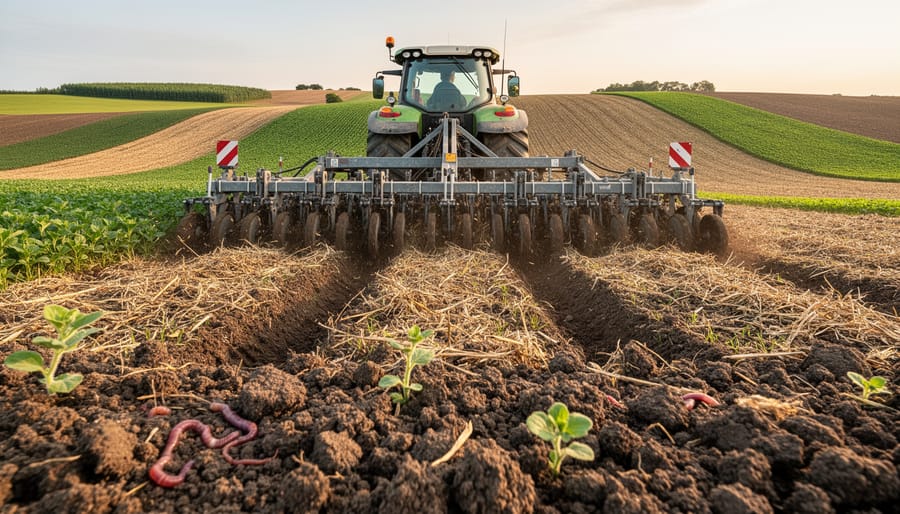
Regenerative methods are moving beyond pilot projects into everyday farm operations across Alberta’s agricultural zones. From the grain belt to cattle country, farmers are adapting these practices to fit their land, climate, and markets.
In the grain-growing regions around Lethbridge and Medicine Hat, farmers are replacing summer fallow with diverse cover crop mixes that include legumes, brassicas, and grasses. These operations maintain their wheat and canola rotations while building soil organic matter between cash crops. One mixed-grain farm near Taber eliminated tillage entirely in 2019, relying instead on cover crops and precise seeding equipment to manage residue and suppress weeds. Soil tests three years later showed a 12% increase in aggregate stability and improved water infiltration rates.
Cattle operations in central Alberta are integrating mob grazing and planned rest periods that allow native grasslands to recover between grazing events. These ranchers move herds through smaller paddocks more frequently, mimicking the grazing patterns that built prairie soils over millennia. The approach supports both livestock sustainability and ecosystem function by preventing overgrazing in any single area while stimulating plant growth through controlled disturbance.
Mixed operations that combine grains and livestock are finding particular synergy in regenerative systems. Farms near Red Deer and Lacombe run cattle on cover crops after harvest, converting plant biomass into manure nutrients while reducing purchased feed costs. The livestock component closes nutrient loops that would otherwise require synthetic fertilizers, and the grazing stimulates root growth in cover species.
Even smaller-scale vegetable operations around Edmonton and Calgary are adopting no-till bed systems, compost applications, and season-long cover cropping between vegetable rows. These growers maintain the intensive production needed for direct-market sales while rebuilding soil structure damaged by decades of cultivation.
The geographic spread shows that regenerative agriculture works across Alberta’s soil types, moisture zones, and farm sizes when practices are matched to local conditions rather than applied as a universal template.
Measuring the Sustainability of Regenerative Agriculture
Sustainability in regenerative agriculture isn’t a single metric, it’s measured across interconnected environmental, economic, and social outcomes that determine whether a farm can maintain productivity and profitability over generations.
Environmental Performance: What the Data Shows
Canadian research consistently demonstrates that regenerative practices improve key environmental indicators. A multi-year study by the University of Alberta found that farms transitioning to reduced tillage and diverse crop rotations increased soil organic carbon by 0.3 to 0.8 percent over five years, translating to 5 to 15 tonnes of carbon sequestered per hectare. That same research documented improved water infiltration rates, up to 40 percent faster in regenerative fields compared to conventionally tilled land, which directly reduces runoff and nutrient leaching into Alberta waterways.
Soil health improvements create cascading benefits. Farms practicing cover cropping and integrated livestock showed 25 to 35 percent higher earthworm populations and measurably greater microbial diversity, both indicators of ecosystem function that support nutrient cycling and disease suppression without chemical inputs.
Economic Viability: Beyond Yield Numbers
Profitability matters as much as environmental outcomes. Research from the Organic Agriculture Centre of Canada tracking 47 farms over eight years found that regenerative operations reduced fertilizer costs by 15 to 30 percent and fuel expenses by 20 to 40 percent as soil health improved and tillage decreased. While some farms experienced modest yield dips in transition years, most stabilized at comparable or slightly higher yields by year three, with significantly lower production costs.
Alberta case studies reveal another economic dimension: drought resilience. During the 2021 drought, farms with established regenerative practices, particularly those incorporating perennials and circular farming nutrient approaches, maintained yields 10 to 25 percent higher than conventional neighbours, thanks to improved soil water-holding capacity.
Social and Community Dimensions
Sustainability extends to farm succession and community stability. Interviews with 30 Alberta regenerative farmers conducted in 2024 found that 73 percent reported reduced physical strain from less tillage, and 60 percent noted improved mental health from working in alignment with natural systems rather than fighting them. Farms adopting these practices also showed higher rates of next-generation engagement, as younger farmers expressed greater interest in managing diverse, ecologically-oriented operations.
Challenges and Realistic Expectations for Alberta Farmers
Transitioning to regenerative agriculture isn’t a flip-the-switch decision. Most Alberta farmers face a learning curve that can feel steep, especially if they’ve worked with conventional systems for decades. You’re essentially relearning how to read your land, understanding soil biology, adjusting timing for cover crops, managing grazing rotations. This knowledge builds over seasons, not weekends.
The financial reality includes upfront costs. New equipment for no-till or interseeding, fencing for rotational grazing, seed for cover crop mixes, these expenses hit before you see returns. Some farmers report yield dips in the first two to three years as soil biology rebuilds and systems stabilize. Your land is adjusting, and that transition period requires both patience and a financial buffer.
Market access presents another practical hurdle. While demand for regeneratively-grown products is growing, premium markets aren’t guaranteed in every region or commodity class. You might grow exceptional beef or grain using regenerative methods but still receive conventional prices if local buyers don’t differentiate or pay premiums. Building direct marketing channels or finding buyers who value your practices takes time and effort.
Weather variability in Alberta adds another layer of complexity. A late spring or early frost can disrupt cover crop establishment. Drought years test even well-managed soil’s resilience. Regenerative systems generally improve your farm’s ability to handle these stresses over time, but they don’t eliminate climate risk.
The good news: you’re not alone in this. Organizations like the Alberta Regenerative Agriculture Alliance offer peer learning networks where experienced farmers share what worked and what didn’t. University of Alberta extension programs provide region-specific research and practical workshops. Many farmers start with one field or practice, learn from it, then expand gradually. This incremental approach reduces both financial risk and the feeling of being overwhelmed.
Regenerative agriculture works, but it demands commitment, flexibility, and realistic timelines. Expect challenges. Plan for them. Then connect with the growing community of Alberta farmers who’ve navigated this path successfully.
Common Questions About Regenerative Agriculture Sustainability
Can regenerative farms match conventional yields?
Yields often dip 10-20% during the first 3-5 years as soil biology rebuilds, but many Alberta operations report matching or exceeding conventional yields once the system stabilizes. The gap narrows considerably during drought years when improved soil structure and water retention provide a buffer that conventionally-managed fields lack.
How long does it take to see soil improvement?
You’ll notice surface changes, better aggregation, increased earthworm activity, within the first growing season. Measurable increases in soil organic matter typically take 3-5 years, though the timeline varies with your starting point, climate zone, and which practices you implement first.
Do I need certification to practice regenerative agriculture?
No certification is required to adopt regenerative practices on your farm. Several programs exist if you want third-party verification for marketing purposes or carbon credit programs, but most Alberta farmers start by changing practices and measuring their own results before pursuing formal recognition.
Can I transition one field at a time instead of the whole farm?
Absolutely, starting with a pilot field or quarter-section lets you learn the practices, adjust to your specific conditions, and demonstrate results before expanding. Many successful regenerative operations in Alberta began this way, using one area as a testing ground while maintaining conventional management elsewhere.
Beyond these basics, farmers often wonder about the financial picture during transition. Federal and provincial programs now offer cost-share funding for cover crop seed, reduced-tillage equipment, and soil testing through initiatives like the Canadian Agricultural Partnership. Carbon credit markets remain inconsistent in Alberta, with payment rates and protocol requirements shifting as the industry matures, so treat potential carbon income as a bonus rather than a foundation of your business plan.
The compatibility question matters too. You don’t need to abandon all synthetic inputs overnight or convert to organic certification. Most regenerative farmers in Alberta use a hybrid approach, reducing fertilizer and pesticide rates as soil health improves, keeping some tools available for severe pest or disease pressure, and adjusting input levels based on what the soil can provide. The goal is continuous improvement, not perfection by someone else’s standard.
If your operation includes livestock, integration becomes simpler because you already have the infrastructure and knowledge to manage grazing. Grain-only farms face a steeper learning curve when adding animals, but many find workarounds through custom grazing agreements with neighbouring ranchers or by starting small with a sheep flock that fits between your existing equipment and labour schedule.
So is regenerative agriculture sustainable? The evidence from Alberta farms says yes, when you approach it as a whole-farm system rather than a collection of isolated practices. The sustainability comes not from any single technique, but from how cover crops, diverse rotations, reduced tillage, and integrated livestock work together to rebuild soil health, strengthen water cycles, and reduce input dependency over time.
This isn’t a quick fix. The transition requires patience through learning curves and initial investments. You might see variable yields in early years as soil biology rebuilds and new management skills develop. But Alberta farmers already implementing these practices report measurable improvements in soil carbon, water infiltration, and economic resilience within three to five years. The key is thinking in system cycles rather than annual snapshots.
Sustainability also means community. No farmer has to figure this out alone. Alberta has a growing network of regenerative agriculture producers, researchers, and educators sharing practical knowledge adapted to prairie conditions. Local farmer groups, university extension programs, and regional workshops offer hands-on support for everything from cover crop selection to grazing management.
The path forward starts with connection. Reach out to other regenerative farmers in your area, attend field days, and tap into resources designed specifically for Canadian agricultural conditions. Regenerative agroecology works best when knowledge flows between neighbours who understand the realities of farming in Alberta’s diverse growing regions.
Your soil, your farm, and your community will benefit from the investment.