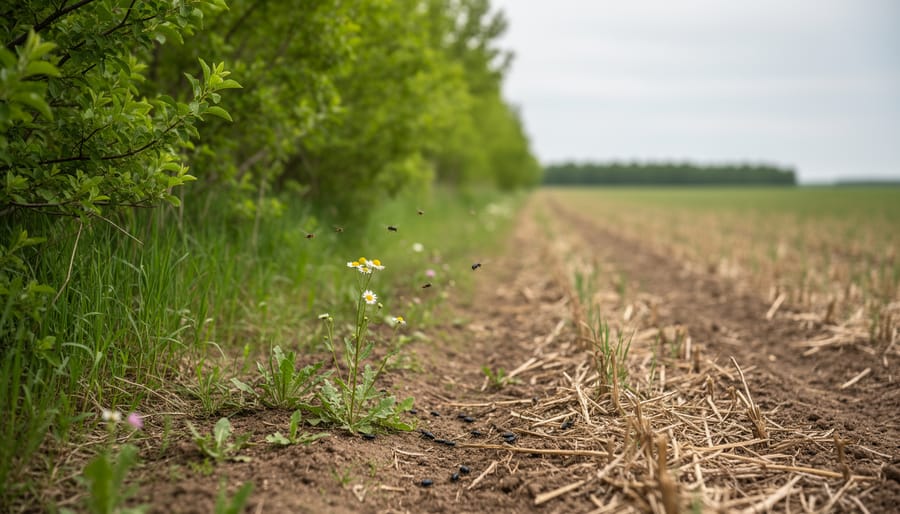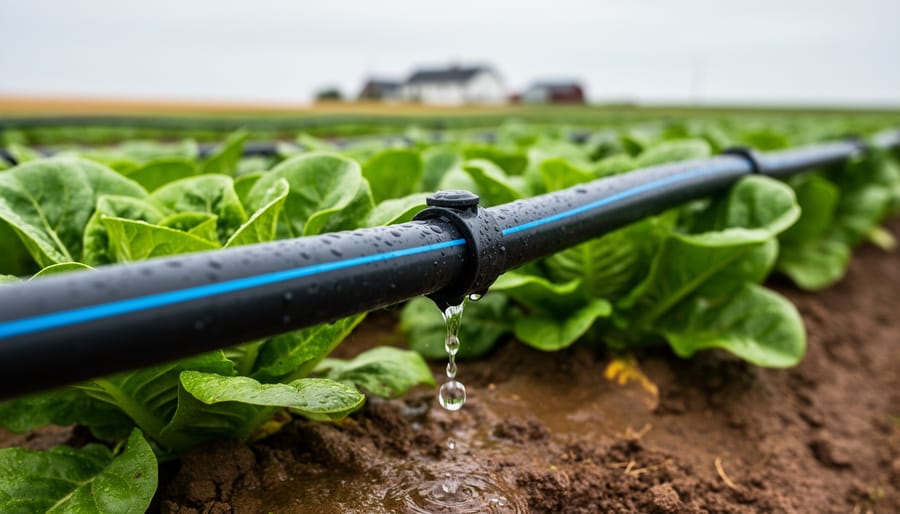
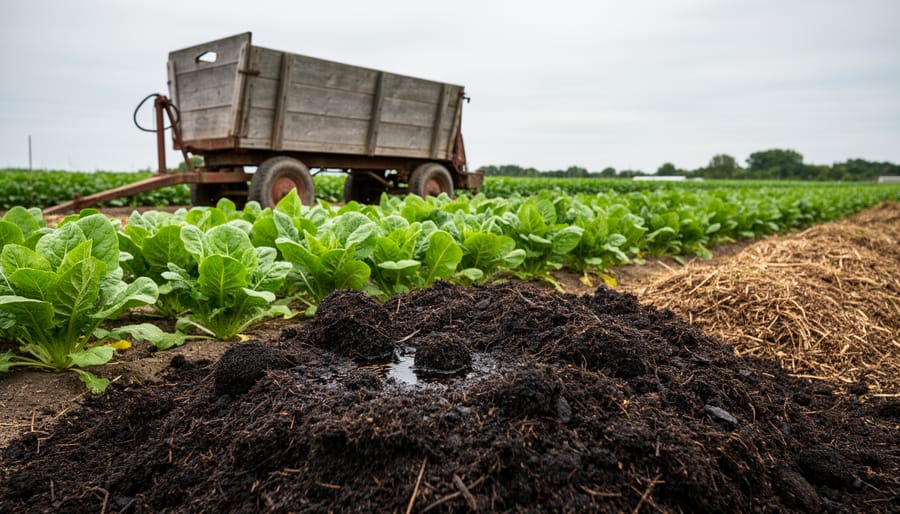
Organic nutrients are natural materials that supply nitrogen, phosphorus, potassium, and other essential elements to crops while building soil health. The ten examples below range from animal manures and composts to plant-based amendments and biosolids, each with specific nutrient profiles, application rates, and guidance on sourcing within a circular farm system.
Alberta farmers looking to close nutrient loops face a practical question: which organic sources deliver the fertility their crops need without synthetic inputs? The answer depends on what’s available locally, the nutrient demands of your rotation, and how well each material integrates with your soil type and climate. Manure from livestock operations, municipal compost programs, and on-farm green manures all play distinct roles. Some materials release nutrients quickly in the season of application, while others build long-term soil organic matter and feed microbial populations over years.
Circular nutrient management means matching outputs from one part of the farm or community to inputs elsewhere. A dairy operation generates manure that supplies nitrogen and phosphorus to cropland; that cropland grows forage or grain that feeds the herd. Municipal food waste becomes compost that returns to market gardens. Cover crops fix atmospheric nitrogen and return it to the soil when terminated. Each example in this article includes nutrient content ranges, recommended application rates in metric units, and practical notes on timing, handling, and regulatory considerations for Canadian conditions. Understanding these details helps you select the right organic nutrient sources, apply them effectively, and build fertility year over year without depending on off-farm synthetic fertilizers.
Why Organic Nutrients Matter in Circular Nutrient Management
Circular nutrient management treats farm inputs and outputs as connected loops rather than one-way flows. When you apply organic nutrients, manure, crop residues, compost, or green manures, you’re returning carbon, nitrogen, phosphorus, and trace elements to the soil instead of hauling them away or letting them go to waste. This closes the loop: nutrients that grew one crop become the fertility for the next, reducing your need to bring in external fertilizers and turning waste streams into assets.
The benefits extend well beyond nutrient replacement. Organic materials improve soil structure by binding particles into stable aggregates, which means better water infiltration, less crusting, and easier seedbed preparation. They also feed soil microbes, the bacteria, fungi, and other organisms that mineralize nutrients, suppress diseases, and form beneficial partnerships with crop roots. Healthy microbial communities break down residues more efficiently, cycle nutrients faster, and help your crops access what they need when they need it.
Carbon sequestration is another advantage gaining attention in discussions around soil and climate change. Each tonne of organic matter you incorporate stores carbon that would otherwise remain in the atmosphere or be lost through decomposition and erosion. Over time, building soil organic carbon improves resilience: your fields hold more moisture during dry spells, resist erosion during heavy rains, and maintain productivity even when weather doesn’t cooperate. For Alberta growers managing everything from canola and wheat to pulses and forages, these organic matter benefits translate to more consistent yields and lower input costs, season after season.
How We Selected These Organic Nutrient Examples
We built this list around what Alberta farmers can actually access and use, not theoretical ideals. Each organic nutrient source here meets four key criteria we established with input from certified organic advisors and regional agronomists.
First, availability in Canadian agricultural contexts. Every example is either produced locally in Alberta or readily available through Canadian suppliers. We focused on nutrient sources you won’t spend weeks tracking down or pay prohibitive shipping costs to obtain.
Second, proven effectiveness in nutrient cycling. These aren’t experimental amendments, they’re materials with documented nutrient profiles and established track records in Western Canadian growing conditions. We prioritized sources backed by university research, farm trials, or extensive practical use.
Third, ease of integration into circular systems. Each option fits naturally into closed-loop nutrient management, whether that’s recycling your own farm waste streams, partnering with nearby operations, or tapping into regional by-product networks.
Finally, practical relevance to Alberta’s diverse farming operations. We included options suitable for grain farms, mixed operations, market gardens, and specialty crops, recognizing that one size doesn’t fit all in our province’s varied agricultural landscape.
1. Composted Manure: The Foundation of Nutrient Recycling
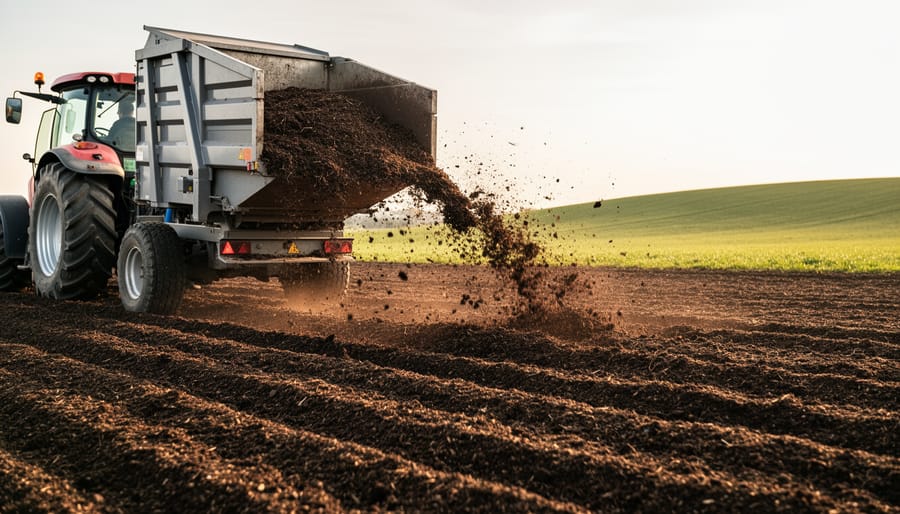
Composted manure transforms livestock waste into a cornerstone nutrient source, effectively closing the loop on integrated farm operations. Cattle, poultry, and hog manures each offer distinct nutrient profiles that enrich soil while reducing dependency on external inputs.
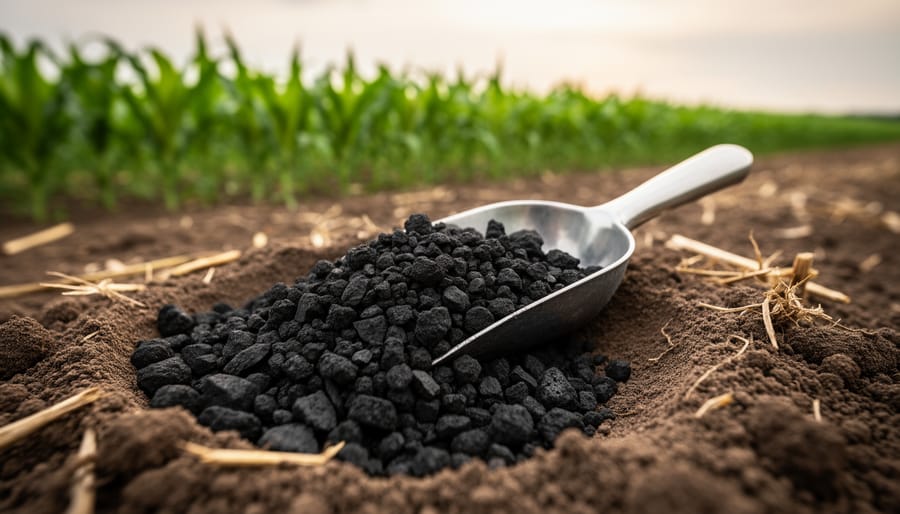
Cattle manure compost typically delivers a balanced N-P-K ratio around 1.5-0.8-1.2 once properly decomposed, along with substantial organic matter that improves soil structure. Application rates of 10 to 20 metric tonnes per hectare work well for most field crops, though soil tests should guide exact amounts. Poultry manure runs hotter in nutrients, roughly 3-2.5-2 N-P-K, making it potent for row crops and vegetables at 5 to 10 tonnes per hectare. Hog manure compost falls between these extremes, offering around 2-1.5-1.5 and similar application flexibility.
Proper composting neutralizes pathogens and weed seeds while stabilizing nutrients for slower, steadier release. The process heats the pile to 55°C or higher, killing harmful organisms and breaking down raw organic matter into humus-rich material that feeds soil microbes for seasons.
On a mixed grain and cattle operation near Lacombe, Alberta, the farm cycles 2,500 tonnes of composted cattle manure annually back onto 200 hectares of barley and canola. Soil organic matter climbed from 3.2% to 4.8% over five years, while commercial fertilizer costs dropped by roughly 40%. The system proves that manure isn’t waste, it’s a renewable fertility resource that builds soil health with every application cycle.
2. Green Manure and Cover Crops: Growing Your Own Fertility
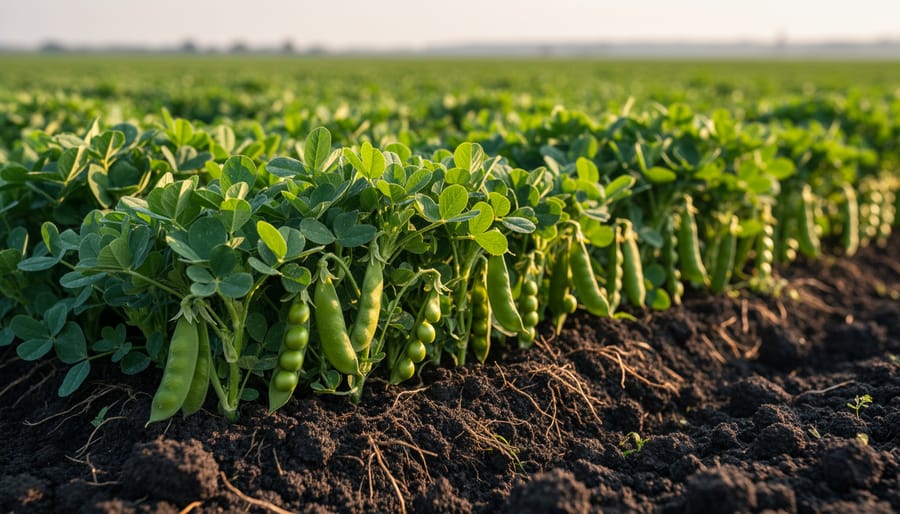
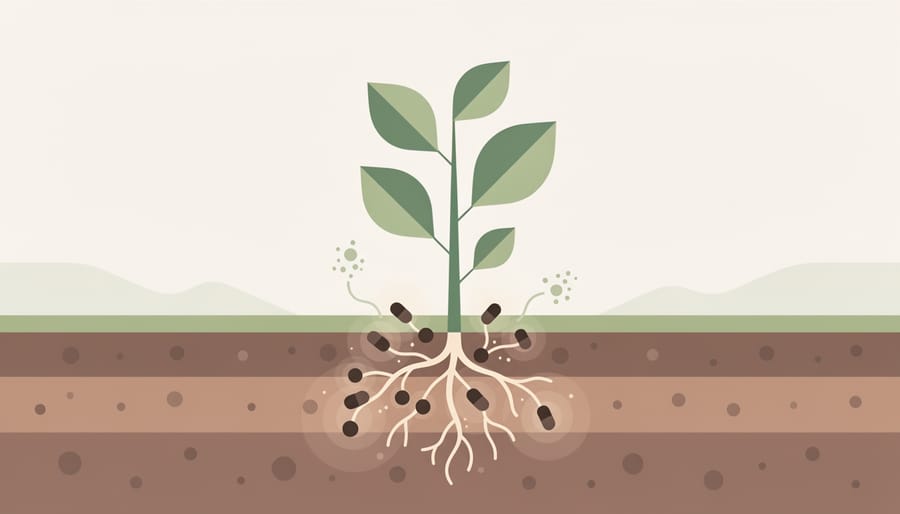
Green manure and cover crops turn your land into a nutrient factory. Instead of buying fertility, you grow it right in your fields. Legumes like red clover, field peas, and hairy vetch excel at pulling nitrogen from the air through root nodules containing nitrogen-fixing bacteria. When you terminate these plants and incorporate them, you’re adding 45 to 135 kilograms of nitrogen per hectare, depending on species and stand density. Clover typically delivers 90 to 110 kg N/ha, while field peas contribute 55 to 90 kg N/ha in a single season.
Brassicas, oilseed radish, tillage radish, and mustard, don’t fix nitrogen but they mine nutrients from deep in the soil profile with their aggressive taproots. Radishes can reach 60 centimetres down, bringing phosphorus and potassium up where your cash crop can access them. When these brassicas break down after winter kill or termination, they release those nutrients and add substantial organic matter that feeds soil microbes and improves structure.
For Alberta growers, timing matters. Seed red clover at 11 to 17 kg/ha in early spring, either broadcast into standing grain or drilled after harvest. Field peas go in at 90 to 135 kg/ha in late April or early May. Fall-seeded hairy vetch (22 to 34 kg/ha by late August) overwinters and delivers peak biomass by June. Oilseed radish and mustard work well as late-summer plantings (8 to 11 kg/ha in mid-July through early August) after cereals or canola.
These living mulches also prevent wind and water erosion, suppress weeds, and break pest cycles, benefits that extend well beyond nutrient value. Terminate cover crops two to three weeks before planting your cash crop to allow decomposition, or use them in no-till soil health systems by crimping or roller-chopping to leave residue on the surface.
3. Crop Residues: Returning What the Field Gave
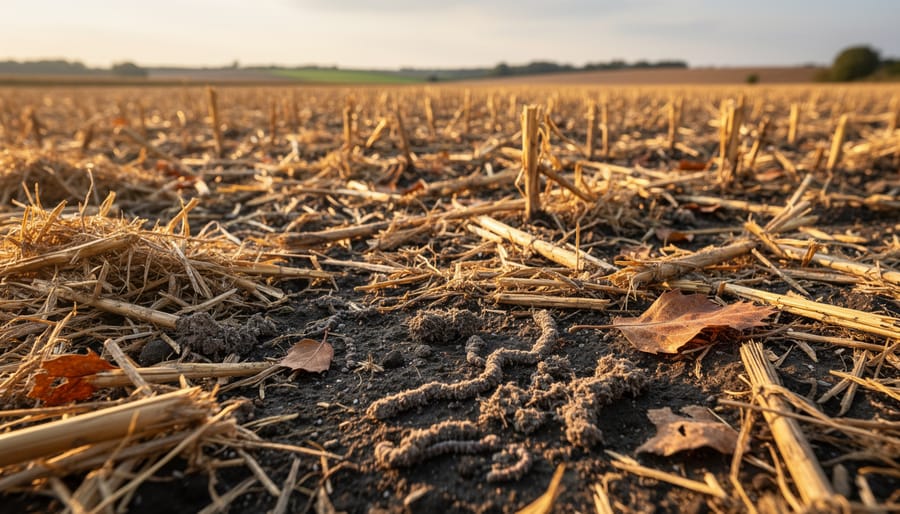
Crop residues, the straw, stubble, and chaff left after harvesting cereals and oilseeds, are among the most readily available organic nutrient sources on any farm. Instead of burning or removing them, leaving residues in place returns significant amounts of carbon and nutrients to the soil, completing a natural cycle that builds organic matter and feeds microbial life.
A typical wheat crop, for example, leaves behind residues containing roughly 50 kg of nitrogen, 10 kg of phosphorus, and 80 kg of potassium per hectare. Over time, as microbes break down this material, those nutrients become available to the next crop. The catch is carbon-to-nitrogen ratio: wheat straw sits around 80:1, meaning it’s carbon-rich and decomposes slowly. During early decomposition, soil microbes temporarily tie up available nitrogen to process all that carbon. This immobilization phase usually lasts a few weeks to months, depending on temperature and moisture.
For no-till and reduced-till systems common across Alberta, managing residue distribution is critical. Combine settings matter, spread chaff and straw evenly to avoid dense mats that delay decomposition and interfere with seeding. Some growers use light harrowing or high-speed discs to incorporate residues without full tillage, speeding breakdown while maintaining soil structure. Timing seeding to allow residues a head start on decomposition, or applying a small nitrogen starter to offset tie-up, keeps the nutrient cycle moving without yield penalties.
4. Vermicompost: Worm Castings for Nutrient-Rich Soil
Vermicompost, the finished product of red wiggler worms breaking down organic matter, delivers nutrients in a form that’s immediately available to plants while boosting long-term soil biology. Unlike raw compost, worm castings pack a concentrated nutrient punch: typically 1.5-2.5% nitrogen, 1-3% phosphorus, and 1-2% potassium, plus humic acids and beneficial microbes that improve nutrient uptake and disease suppression.
The real value lies in microbial activity. Each gram of quality vermicompost contains millions of beneficial bacteria and fungi that colonize root zones, enhance nutrient cycling, and help crops resist stress. Alberta growers using vermicompost in greenhouse transplants or high-value vegetable beds often see stronger seedling establishment and improved yields even with modest application rates.
For field application, broadcast 500-1,000 kg per hectare on annual vegetable or berry crops, working it into the top 10-15 cm of soil. Row crops can use targeted banding at 50-100 kg per 100 metres of row, concentrating castings where roots will access them. Greenhouses and market gardens typically apply 10-20% by volume in potting mixes.
Small-scale production is feasible with insulated bins and kitchen scraps; commercial setups require windrows or flow-through systems with reliable feedstock like dairy manure or food processing residues. Several Canadian suppliers now offer bulk vermicompost for farms looking to avoid setup costs while closing nutrient loops.
5. Biosolids and Municipal Compost: Closing Urban-Rural Loops
Treated biosolids, the stabilized organic matter from municipal wastewater treatment plants, and green waste compost from municipal yard programs offer Alberta farmers a practical way to close the nutrient loop between cities and rural areas. Instead of sending these materials to landfills, they return phosphorus, nitrogen, and organic matter to agricultural soil. Biosolids typically provide 2-5% nitrogen and 1-3% phosphorus on a dry weight basis, while municipal compost delivers slower-release nutrients and substantial organic matter for building soil structure. Both improve water-holding capacity and support microbial communities over time.
In Canada, biosolids must meet strict standards under the Canadian Council of Ministers of the Environment (CCME) guidelines and provincial regulations, including maximum heavy metal concentrations for cadmium, copper, lead, mercury, nickel, and zinc. Alberta Environment and Protected Areas requires that biosolids applied to agricultural land meet Class A or Class B pathogen reduction standards and comply with metal limits to protect soil and crop safety.
Municipal green waste compost has lower regulatory hurdles since it comes from leaf, grass, and yard trimmings rather than sewage, but testing for maturity, salts, and weed seeds remains important. Application rates for compost generally range from 10-30 tonnes per hectare, spread every two to three years. Both biosolids and compost reduce the need for purchased fertilizers, divert organic waste from landfills, and strengthen the circular economy by linking urban waste streams with rural productivity, a win for sustainability and farm economics.
6. Bone Meal and Blood Meal: Animal By-Product Nutrients
Bone meal and blood meal turn livestock processing residues into valuable soil amendments, keeping nutrients in circulation rather than sending them to landfill. Both products concentrate specific macronutrients, making them powerful tools when soil tests reveal targeted deficiencies in your nutrient management plan.
Bone meal typically analyzes at 3-5% nitrogen and 12-18% phosphorus, with a slow-release profile that feeds crops over several months as soil microbes break down the ground bone. It’s particularly valuable for establishing perennials, supporting root development in transplants, and correcting phosphorus deficits without the runoff risks of more soluble fertilizers. Application rates generally range from 100 to 300 kg per hectare for field crops, worked into the soil at planting or applied in bands.
Blood meal delivers a nitrogen punch at 12-14% N, releasing more quickly than bone meal, expect plant-available nitrogen within two to four weeks under warm, moist conditions. Use 50 to 150 kg per hectare for vegetables and specialty crops needing a mid-season nitrogen boost, or incorporate it pre-plant for heavy feeders like brassicas and sweet corn.
These slaughterhouse by-products close a significant loop in livestock-based agriculture, transforming what would otherwise be waste into fertility. Source them from federally inspected facilities to ensure processing standards, and store in dry conditions to prevent caking and nutrient loss.
7. Fish Emulsion and Hydrolysate: Marine-Based Fertility
Fish-based fertilizers turn seafood processing by-products, heads, bones, entrails, into valuable liquid nutrients for crops. Fish emulsion is made by cooking and straining fish waste, while hydrolysate uses enzymatic or cold processing to break down proteins, preserving more amino acids and micronutrients. Both products close the loop on a major waste stream from Canada’s commercial fisheries.
Typical nutrient analysis for fish emulsion sits around 5-1-1 (N-P-K), though ratios vary by source. Fish hydrolysate often runs 2-4% nitrogen plus trace amounts of calcium, magnesium, sulfur, and beneficial microbes. The nitrogen releases quickly, making these products ideal for fast-growing vegetables, berries, and greenhouse crops that need a mid-season boost.
Application methods include foliar sprays at 2-4 litres per 100 litres of water, applied early morning or evening to prevent leaf burn. For soil drench, dilute 5-10 litres per hectare and apply through drip systems or alongside irrigation. The smell can be strong, plan application timing accordingly if neighbours or customers are nearby.
Canadian sources include Atlantic fish processors in Nova Scotia and New Brunswick, plus some Pacific Coast suppliers. Choose certified organic products if maintaining certification, and confirm the fish source avoids overfished stocks. Used thoughtfully, these marine-derived nutrients bring nitrogen and amino acids to crops while reducing seafood waste headed for landfills.
8. Alfalfa Meal and Pellets: Legume-Derived Slow Release
Processed alfalfa meal and pellets offer Canadian farmers a steady nitrogen supply that releases gradually over weeks, not days. Alfalfa typically contains 2.5-3% nitrogen, 0.5-1% phosphorus, and 2-3% potassium, along with trace minerals like calcium, magnesium, and iron. Because it’s a legume-derived product, the nitrogen is bound in organic forms that soil microbes must break down, giving you a controlled feed rather than a quick spike.
In horticultural settings, work alfalfa meal into potting mixes or top-dress around perennials at 100-150 kg per hectare for vegetable gardens and high-value crops. For field applications, broadcast pellets at 250-500 kg per hectare before seeding cereals or oilseeds, or incorporate into the soil ahead of a nitrogen-demanding crop in your rotation. Pellets are easier to spread with standard equipment and less dusty than meal.
Alfalfa also acts as a soil conditioner, improving tilth and feeding beneficial microbes as it decomposes. Time applications for cool-season crops in early spring or fall when microbial activity matches your crop’s nitrogen uptake curve. Pair alfalfa with faster-acting sources like composted manure if you need early-season nitrogen, or rely on it alone for mid- to late-season crops that benefit from sustained, moderate feeding throughout the growing period.
9. Wood Ash: Potassium and Lime from Forest Residues
Wood ash from untreated firewood delivers a concentrated dose of potassium (typically 3-7% K₂O) and calcium (25-45% as calcium carbonate equivalent), making it a valuable forestry by-product for farms with acidic soils or potassium deficiencies. Its liming effect can raise pH by 0.5 to 1.0 units depending on soil type and application rate, which is particularly useful in Alberta’s boreal transition zones where soils tend toward acidity.
Apply wood ash sparingly: 500-1,000 kg per hectare is a reasonable starting point on moderately acidic soils. Over-application risks excessive pH jumps, nutrient imbalances, and sodium buildup, ash can contain 1-3% sodium, enough to harm soil structure and sensitive crops if you dump too much. Always soil test before and after use to track changes. Spread ash evenly in fall or early spring, ideally incorporating it lightly to avoid wind drift and maximize contact with soil particles.
Use only ash from clean, unpainted, untreated wood. Residues from chemically treated lumber, plywood, or painted wood can introduce heavy metals and toxic compounds into your soil. Store ash in covered containers to prevent leaching, and integrate it into your organic management plan alongside other amendments to balance nutrient inputs and maintain long-term soil health.
10. Seaweed and Kelp Meal: Trace Minerals from the Ocean
Kelp meal and seaweed extracts bring ocean-derived fertility to prairie farms, delivering over 60 trace minerals and bioactive compounds that synthetic fertilizers cannot match. Harvested primarily from Canada’s Atlantic coast, Ascophyllum nodosum being the most common species, these amendments supply potassium, magnesium, calcium, and critical micronutrients like boron, zinc, and iodine in naturally chelated forms that plants absorb readily.
Beyond mineral content, kelp contains natural plant hormones (cytokinins, auxins, gibberellins) that stimulate root development, improve nutrient uptake efficiency, and enhance crop resilience to drought and frost stress. Farmers report stronger stands, better disease resistance, and improved grain fill when kelp is integrated with foundational soil health principles.
Application methods vary by product form. Dry kelp meal works well broadcast at 100 to 200 kilograms per hectare before seeding or banded with other amendments; it releases nutrients gradually as soil microbes break it down. Liquid kelp extracts, applied through sprayers at 2 to 5 litres per hectare, provide quick foliar uptake, ideal for vegetable crops, pulses, or as a transplant starter.
While kelp does not replace primary nutrients, it fills micronutrient gaps and stimulates soil biology, making it a valuable complement to composted manure or cover crops in circular systems.
Matching Organic Nutrients to Your Farm’s Needs
Choosing the right organic nutrients starts with your soil test and crop plan, not what’s trendy or cheapest. Pull recent test results for pH, organic matter, and available N-P-K levels, then compare those numbers against your upcoming crop’s requirements. A canola field needing 100-120 kg/ha of nitrogen demands a different strategy than a pulse crop that fixes its own nitrogen. Match the nutrient gaps with sources that deliver what you need without overshooting, excess phosphorus from repeated heavy manure applications can accumulate and pose runoff risks.
Before you commit to any material, consider these practical factors:
- Soil test results: nutrient levels, pH, and organic matter percentage
- Crop rotation: what each crop removes and what the next one needs
- Local availability: what you can source within your region or on-farm
- Cost: price per unit of nutrient delivered, including transport and spreading
- Handling equipment: spreaders, injectors, or tillage tools you already own
Timing matters as much as material choice. Apply slow-release sources like composted manure or alfalfa meal in the fall or early spring so nutrients mineralize when crops need them. Fast-acting options such as blood meal or fish emulsion work well for side-dressing or correcting mid-season deficiencies. Layering multiple sources, compost for baseline fertility, cover crops for nitrogen, wood ash for potassium, builds a resilient system that buffers against shortfalls and smooths out nutrient release across the season. Track what you apply each year in a nutrient budget spreadsheet, adjusting ratios as soil tests and crop performance tell you what’s working.
Expert Insights: Building Resilient Nutrient Cycles
We spoke with Dr. Amara Patel, an agronomist with Alberta Agriculture and Irrigation who specializes in organic production systems, about what she’s seeing on farms that successfully integrate multiple organic nutrient sources.
“The biggest shift I’ve noticed in 2026 is that farmers aren’t treating organic amendments as one-to-one replacements for synthetic fertilizer,” Dr. Patel explains. “They’re building nutrient budgets that combine three or four sources, maybe composted manure for baseline fertility, a legume cover crop for nitrogen fixation, and fish hydrolysate for transplant establishment. Each source does something different for soil biology and nutrient timing.”
Her key recommendation: start small and track results. “Pick two organic nutrients you can source reliably within 100 kilometres. Apply them at half the recommended rate on a test strip, take tissue samples mid-season, and compare yields. You’ll learn what works in your soil faster than any generalized advice can tell you.”
Dr. Patel emphasizes timing as critical. “Composted manure in fall gives microbes months to mineralize nutrients before spring seeding. Green manure terminated two weeks before planting prevents nitrogen tie-up. Most failures I see come from poor timing, not poor products.”
She’s encouraged by growing collaboration. “Farmers are sharing manure analysis data and application maps through local networks. That peer knowledge, what worked on a neighbour’s clay loam under similar rainfall, is invaluable for building resilient systems that don’t rely on a single nutrient source.”
Common Questions About Organic Nutrients in Circular Systems
Farmers transitioning to organic nutrient sources often have similar concerns about practical implementation and regulatory compliance. Here are answers to the most common questions about using organic nutrients in circular systems.
How do I calculate application rates for organic nutrients?
Start with a soil test to identify nutrient deficiencies, then match the nutrient content of your chosen organic amendment (listed on the label or analysis sheet) to your crop’s requirements. For example, if your soil test shows you need 60 kg of nitrogen per hectare and you’re using composted manure with 1.5% nitrogen, you’d apply roughly 4 tonnes per hectare to meet that need.
Can I combine different organic nutrients in the same season?
Yes, and many farmers do to meet diverse nutrient needs. You might apply composted manure in spring for baseline fertility, then use a foliar fish emulsion mid-season for quick nitrogen, and incorporate cover crop residues in fall. Just track total nutrient inputs to avoid over-application.
How long does it take to see results from organic nutrients?
Fast-acting sources like blood meal or fish emulsion can show effects within 2-4 weeks, while slow-release materials such as bone meal or composted manure may take a full growing season or longer. Soil health improvements like better structure and microbial activity often become noticeable after 2-3 years of consistent organic inputs.
Are there risks of nutrient runoff with organic sources?
Yes, particularly with fresh manure or over-application of any organic nutrient. Apply organic materials when crops can actively use the nutrients, avoid frozen or saturated soils, and maintain buffer strips near water bodies. Properly composted materials release nutrients more slowly, reducing runoff risk compared to raw manures.
Understanding these practical aspects helps you integrate organic nutrients confidently into your circular nutrient management plan. Most organic farmers find that keeping detailed records of what they apply, when, and where makes it easier to fine-tune their approach over time and demonstrate compliance with certification standards. If you’re pursuing organic certification, check with your certifying body about documentation requirements and approved input lists before applying any new nutrient source.
Building a circular nutrient system doesn’t require a complete overhaul overnight. The ten organic nutrient sources we’ve explored, from composted manure and cover crops to seaweed meal and wood ash, offer Alberta farmers practical pathways to close nutrient loops, reduce external inputs, and strengthen soil health over time.
Each option brings something different to the table. Some deliver quick nitrogen boosts, others rebuild phosphorus reserves or feed soil microbes with trace minerals. The real power comes from combining these sources strategically based on what your land needs and what’s accessible in your region.
Start small. Choose one or two options that fit your operation, maybe composted manure from a neighboring livestock producer, or a cover crop mix between cash crops. Test, observe, and adjust. Soil fertility is a long game, and every cycle you complete adds resilience to your farm.
The beauty of circular nutrient management is that it turns waste into value, supports your soil biology, and positions your operation for sustained productivity. You’re not just feeding this season’s crop; you’re investing in decades of healthy, responsive soil. That’s the foundation every farm needs.