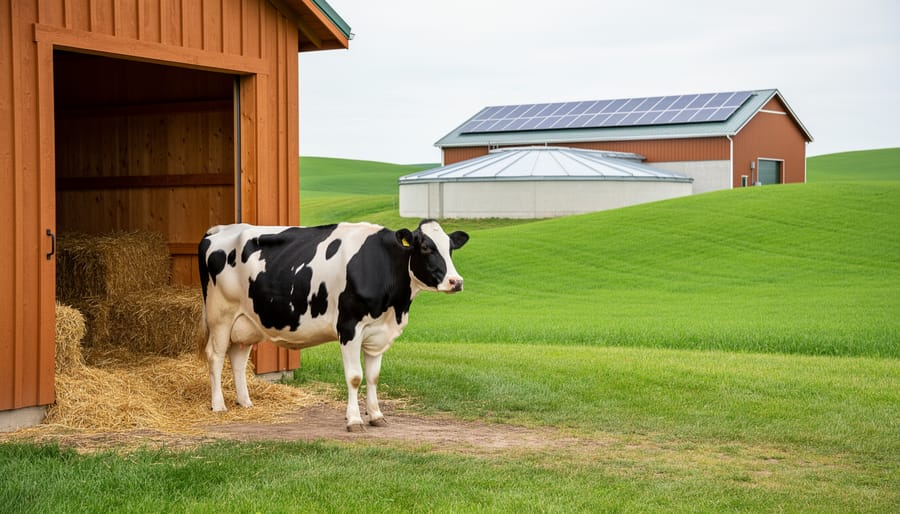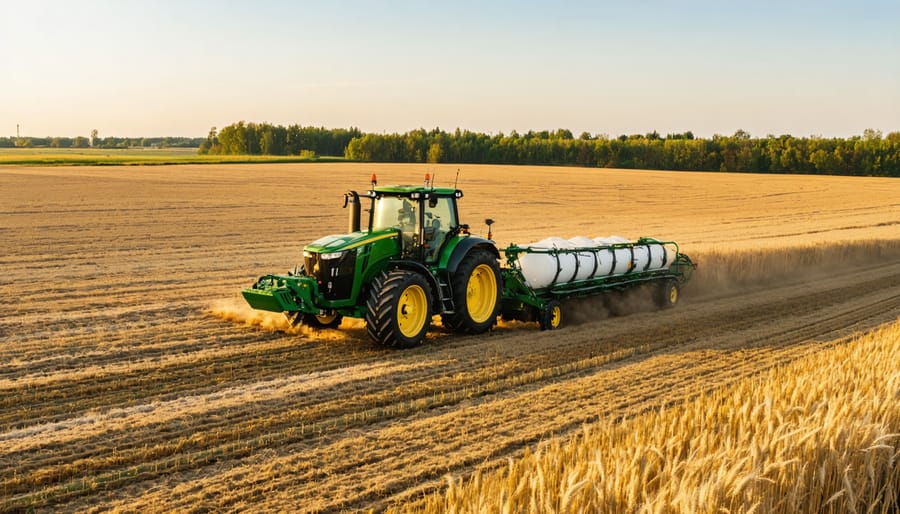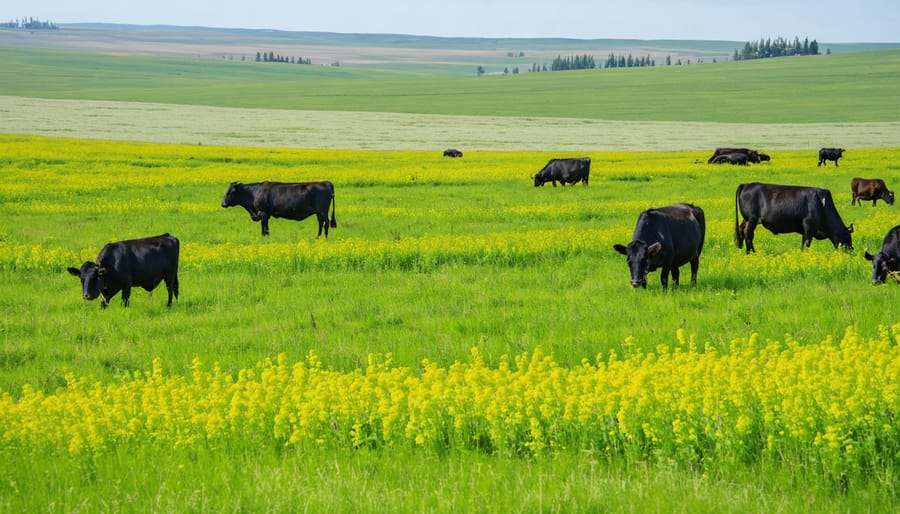
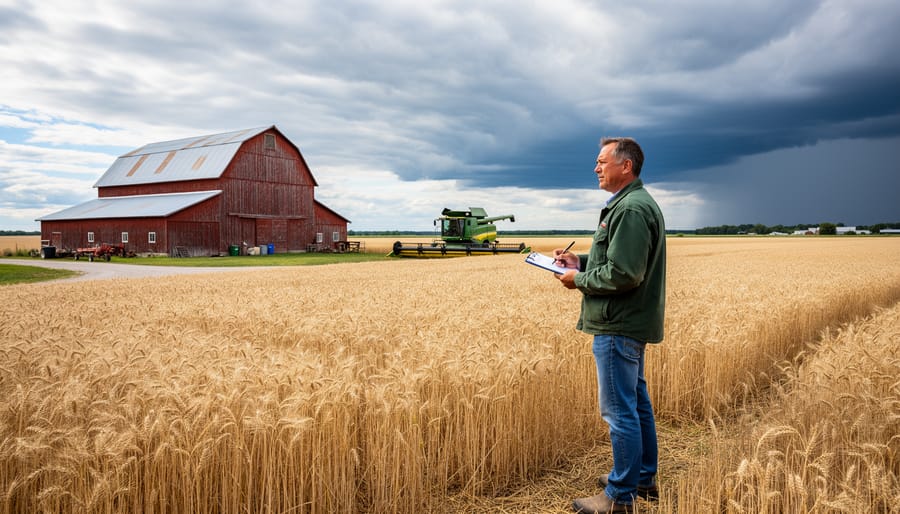
Risk management farming is the practice of identifying, assessing, and addressing the various threats that can disrupt your agricultural operation, then implementing strategies to minimize their impact on your farm’s productivity and financial health. It’s a proactive approach that treats uncertainty not as something to fear, but as a normal part of farming that you can prepare for and navigate successfully.
For Canadian farmers operating in 2026, the stakes have never been higher. Climate volatility brings unprecedented weather swings across the Prairies. Input costs fluctuate dramatically. Market access can shift overnight. A single hailstorm, price collapse, or equipment breakdown can turn a profitable year into a financial crisis. Yet farms that approach these challenges systematically, with clear risk management frameworks, consistently outperform those that rely on luck or react only when disaster strikes.
This article breaks down risk management farming into practical components you can start using immediately. You’ll learn the five-step process successful farms follow to identify and prioritize risks, understand the major categories of threats facing Canadian agriculture (from production and market risks to regulatory and human resource challenges), and see exactly how these principles apply through real examples from Alberta operations. We’ll also examine a detailed case study showing how one diversified farm near Red Deer transformed its vulnerability profile over three growing seasons.
The goal isn’t to eliminate every risk. That’s impossible, and attempting it often costs more than the protection is worth. Instead, you’ll discover how to make informed decisions about which risks to avoid, which to reduce, which to transfer through insurance or contracts, and which to simply accept as part of running a sustainable farm business.
What Risk Management Farming Means
Risk management farming is a systematic, forward-looking approach to identifying potential threats to your operation, evaluating how likely and severe they might be, and putting strategies in place to reduce their impact before problems occur. Rather than waiting for disasters to strike and scrambling to respond, risk management means building resilience into your farm’s structure, finances, and practices so you can weather challenges without catastrophic losses.
This approach differs fundamentally from reactive crisis management. Crisis management kicks in after something goes wrong, a crop failure, a market crash, a sudden regulatory change. You’re already damaged and fighting to limit the bleeding. Risk management farming, by contrast, anticipates these possibilities while you still have options. You assess what could happen, decide which risks matter most to your specific operation, and implement protective measures when you have time and resources to do it thoughtfully.
Think of it as the difference between installing a good fence before your cattle wander onto the highway versus chasing them down after they’ve already escaped. Both require effort, but one saves you money, stress, and potential tragedy.
Understanding the main categories of agricultural risk helps frame your management approach:
- Production Risk
- Uncertainties affecting crop yields and livestock productivity, including weather variability, pest pressures, disease outbreaks, and soil degradation.
- Market Risk
- Volatility in commodity prices, input costs, and demand for your products that can dramatically affect farm revenues from season to season.
- Financial Risk
- Challenges related to cash flow timing, debt obligations, interest rate changes, and securing capital needed for operations or transitions.
- Institutional Risk
- Changes in government policies, regulations, trade agreements, and certification requirements that alter the rules under which you operate.
- Human Risk
- Threats stemming from labour availability, workplace injuries, family succession issues, and the health of key decision-makers on the farm.
For Canadian farmers pursuing sustainable practices, risk management becomes even more foundational. Transitioning to organic production, implementing regenerative techniques, or diversifying income streams all involve upfront investments and learning curves. A solid risk management framework gives you the stability to make these long-term improvements without betting the farm on a single approach or season.
How Risk Management Farming Works
The Risk Assessment Framework
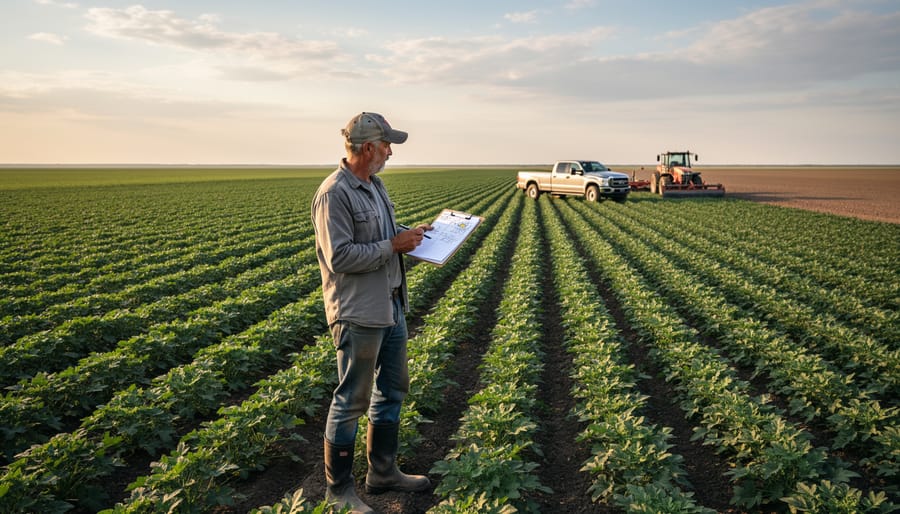
A workable risk assessment framework starts with a simple matrix: plot each risk’s likelihood (how often it might happen) against its potential impact (how much damage it could do). Alberta farmers typically use a five-point scale for both dimensions, very low to very high, creating a grid that shows which risks demand immediate attention and which can wait. This isn’t abstract theory; it’s a practical sorting tool that turns an overwhelming list of threats into a prioritized action plan.
The assessment process works best when farmers gather concrete data rather than relying on gut feelings alone. Track your actual yields over five to ten years to see how often drought truly affects production. Review price histories for your crops to understand real volatility patterns. Calculate your operational costs and margins to identify where thin buffers leave you exposed. Many operations now layer in precision agriculture tools soil sensors, weather stations, yield monitors, that provide objective measurements of production risks you might otherwise underestimate or miss entirely.
Once you’ve plotted your risks, focus first on the high-likelihood, high-impact quadrant: these are your “red zone” threats that need mitigation strategies before the next growing season. Moderate risks in the middle require monitoring and contingency plans. Low-probability, low-impact risks usually don’t justify immediate investment. The framework isn’t static, reassess annually as your operation changes and new risks emerge.
Building Your Risk Management Plan
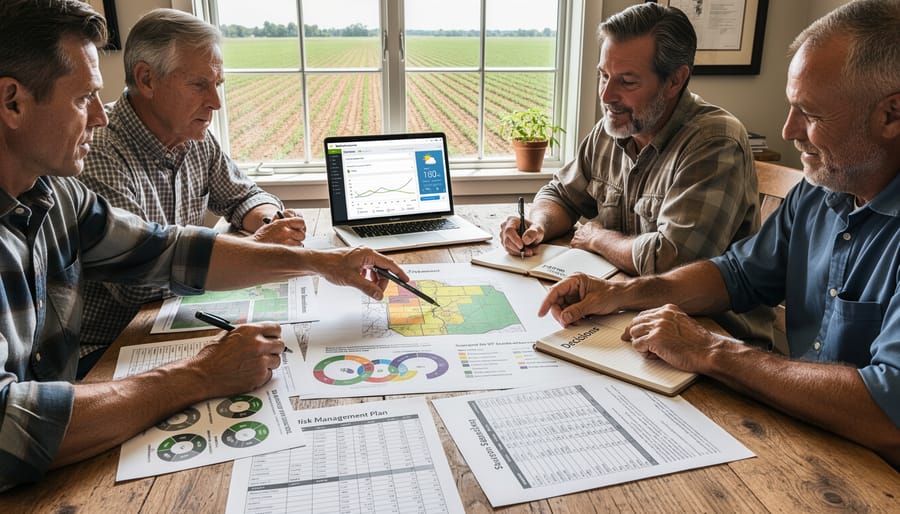
Creating a written risk management plan transforms abstract intentions into actionable farm protection. Start with a one-page executive summary that lists your farm’s top five risks and the primary strategy for each, this becomes your quick reference guide.
Your plan needs four core components. First, document all identified risks with their likelihood and impact ratings. Second, specify your chosen mitigation strategies for each significant risk, including responsible parties and timelines. Third, outline your monitoring schedule, monthly for financial metrics, quarterly for production risks, annually for strategic threats. Fourth, list emergency contacts and response protocols for crisis situations.
Make the plan operational by linking it to existing farm management systems. Include risk checkpoints in your weekly team meetings. Add risk indicators to your financial dashboards. Schedule quarterly review sessions to update risk ratings based on changing conditions.
Avoid creating a static document that sits in a drawer. Build quarterly reviews into your calendar, triggered by harvest completion, financial year-end, or major weather events. Update the plan whenever you introduce new enterprises, acquire land, or face unexpected challenges.
Keep the language straightforward and the format simple, spreadsheets or basic templates work better than complex software for most farms. The goal is a living document that guides daily decisions, not a compliance exercise that gets completed once and forgotten.
Types of Farm Risks and Management Strategies
Production and Environmental Risks
Production risks hit closest to home for Alberta farmers because they directly threaten what you grow. Weather variability tops the list, late spring frosts that damage emerging crops, mid-summer droughts that stress plants during critical growth stages, or excessive rainfall that delays harvest and reduces quality. These events aren’t hypothetical; they’re becoming more frequent as climate patterns shift across the prairies.
Pest and disease pressures follow close behind. Warmer winters allow previously uncommon pests to establish populations in Alberta, while wet conditions create ideal environments for fungal diseases like fusarium and sclerotinia. You might face new challenges with insects you haven’t dealt with before, requiring different management approaches than traditional practices provided.
Soil degradation presents a slower but equally serious threat. Continuous cropping without adequate organic matter replenishment depletes soil structure and biology. Erosion from wind and water removes your most productive topsoil, particularly on fields with low cover or poor conservation practices. Addressing climate-smart risk through improved soil health builds resilience against multiple production threats simultaneously, creating a buffer when individual challenges emerge.
Market and Price Risks
Canadian farmers face significant market and price risks that can swing income wildly from year to year. Commodity price volatility remains the most visible threat: canola, wheat, and beef prices respond to global supply shocks, currency fluctuations, and geopolitical events far beyond any individual producer’s control. A strong harvest across the prairies can depress grain prices just when costs remain high, squeezing margins unexpectedly.
Supply chain disruptions have intensified since 2020, affecting everything from access to farm inputs like fertilizer and machinery parts to the ability to move products to market on time. Rail capacity constraints and port delays create bottlenecks that can leave grain sitting in bins longer than planned, limiting cash flow when bills come due. Meanwhile, shifting consumer preferences toward organic, local, and sustainably produced foods create both opportunity and risk as farmers weigh whether to pivot production to meet these demands or maintain conventional operations.
Export market uncertainties add another layer of complexity. Trade disputes, tariff changes, and shifting international regulations can close profitable markets overnight or open new ones just as quickly. Alberta producers exporting beef or pulse crops must navigate these changing conditions while managing the financial exposure that comes with long production cycles and delayed payment terms.
Financial and Credit Risks
Cash flow management tops the financial risk list for Alberta farmers, where income concentrates in harvest periods while expenses remain year-round. Late payments from buyers, unexpected equipment repairs, or delayed government program payments can create dangerous cash gaps that threaten operations even when the farm is profitable on paper.
Debt servicing becomes precarious when farm revenues decline but loan obligations remain fixed. Many Canadian farmers carry substantial operating lines and equipment financing, manageable during good years but potentially crushing during poor harvests or market downturns. Interest rate fluctuations compound this risk, as variable-rate loans can see payments spike unexpectedly, squeezing already tight margins.
Accessing capital for sustainable farming transitions presents unique challenges. Traditional lenders often view organic certification, regenerative practices, or diversification projects as higher risk due to transition periods with reduced yields or uncertain returns. This creates a catch-22 where farmers need financing to implement practices that will ultimately strengthen their operations, but struggle to secure it without proven track records in those systems.
Regulatory and Policy Risks
Canadian agricultural policy shifts constantly, creating uncertainty for producers navigating compliance requirements and program eligibility. Environmental regulations tighten as governments pursue climate targets, carbon pricing adjustments, nutrient management mandates, and pesticide restrictions can fundamentally alter operational costs and practices. Organic certification standards evolve, demanding updated documentation systems and potentially disqualifying inputs you’ve relied on for years.
Trade agreements reshape market access overnight. CUSMA provisions affect cross-border sales, while new international partnerships open opportunities but introduce quality standard complexities. Federal and provincial programs change funding criteria without warning, leaving farmers scrambling to adjust budgets mid-season. Alberta producers face additional provincial regulatory layers around water use, land management, and livestock operations that vary significantly from neighboring jurisdictions, requiring vigilant monitoring of policy developments at multiple government levels.
How Risk Management Farming Is Used in Practice
Diversification Strategies

Canadian farmers manage risk most effectively by avoiding over-reliance on any single crop, market, or revenue source. Diversification spreads exposure across multiple enterprises, so a setback in one area doesn’t threaten the entire operation’s viability.
Crop rotation stands as the foundation of production diversification. By rotating cereals with pulses, oilseeds, and forages, Alberta farmers reduce pest and disease pressure, improve soil health, and stabilize yields across variable seasons. This practice also diversifies market exposure, when wheat prices slump, canola or lentils might perform better.
Many operations extend diversification beyond crops into livestock, processing, or value-added products. A grain farm adding a cow-calf operation or direct-to-consumer sales creates income streams with different risk profiles and timing. Crop-livestock integration offers particular resilience by cycling nutrients, utilizing crop residues, and generating revenue from multiple markets throughout the year.
Agritourism, custom work for neighbours, or renewable energy installations provide non-production income that insulates the farm from agricultural market swings. The goal isn’t maximum diversification, it’s strategic selection of complementary enterprises that fit your land, skills, and markets while genuinely reducing overall risk rather than just spreading attention thin.
Insurance and Financial Tools
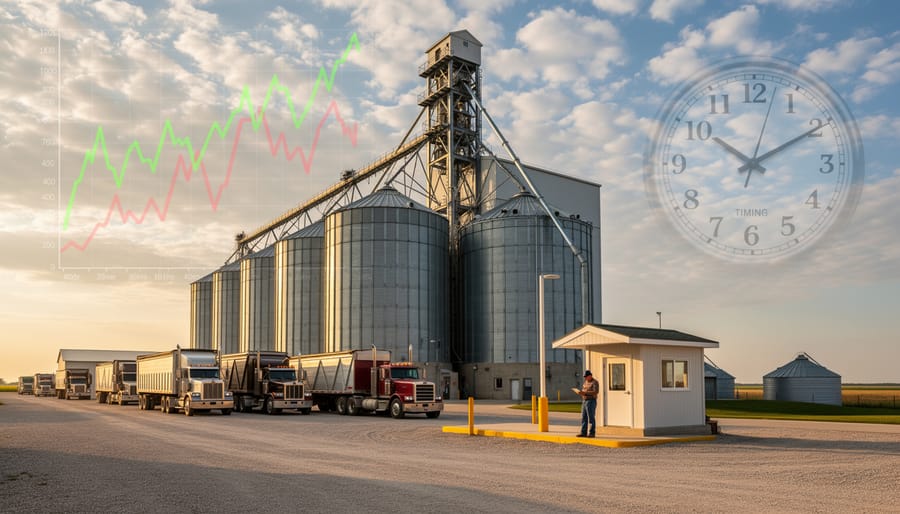
Canadian farmers have access to a robust suite of government safety net programs designed specifically for agricultural risk management. AgriInsurance provides production insurance covering yield losses from natural perils like drought, excess moisture, hail, and frost, critical for Alberta’s variable growing conditions. Premiums are cost-shared between farmers, provincial governments, and the federal government, making coverage accessible even for operations with tight margins.
AgriStability offers income protection when a farm’s margin drops more than 30% below its historical average, helping producers weather multi-year downturns or market collapses. AgriInvest functions as a matching savings account where government contributions amplify your deposits, creating a financial cushion for smaller income dips or investments in risk-reducing infrastructure like soil sensors.
Beyond government programs, private crop-hail insurance fills coverage gaps, while livestock mortality insurance protects against animal losses. Forward contracts and futures markets let farmers lock in prices months ahead, reducing market volatility exposure. Some operations use crop revenue insurance combining yield and price protection, or explore weather derivatives that pay out based on specific temperature or precipitation thresholds rather than actual crop damage.
Sustainable Practices as Risk Mitigation
Sustainable farming practices do double duty: they build long-term productivity while simultaneously reducing your exposure to multiple risk categories. When you invest in soil health through cover cropping, reduced tillage, and compost applications, you’re creating a biological buffer against drought stress, erosion, and input cost volatility. Healthier soils with higher organic matter hold more water during dry periods, drain better during wet spells, and support stronger plant immune systems that resist disease pressure. Soil regeneration strategies like these reduce your dependence on external inputs, cutting both costs and supply chain vulnerabilities.
Water conservation infrastructure, from dugouts and irrigation upgrades to strategic wetland preservation, protects against increasingly variable precipitation patterns in Alberta. Biodiversity enhancements such as shelterbelts, pollinator habitat, and integrated livestock create ecosystem services that naturally suppress pests, improve pollination, and stabilize microclimates. These investments require upfront capital and patience, but they compound over time, transforming your operation into a more resilient system that can weather shocks other farms can’t absorb.
Risk Management in Sustainable Farm Finance
Risk management and financial sustainability work together, not in parallel. When lenders evaluate farm loan applications, they look closely at how well a farm anticipates and prepares for disruption. A documented risk management plan signals operational maturity and reduces perceived lending risk, often translating to better interest rates and more flexible repayment terms. Canadian financial institutions increasingly view farms with proactive risk strategies as safer investments because these operations demonstrate lower likelihood of defaulting during inevitable downturns.
This creditworthiness advantage creates access to capital needed for strategic growth and transformation. Farms with strong risk frameworks can more readily finance infrastructure upgrades, technology adoption, or transitions to higher-value production systems. An Alberta grain farm wanting to shift acreage into organic production, for example, faces a three-year transition period with reduced yields and premium-free pricing, a vulnerable window. Lenders familiar with the farm’s track record of managing weather risk, market volatility, and operational challenges will more likely finance this transition, knowing the operation has systems to navigate uncertainty.
The financial benefits extend beyond loan approval. Risk management directly improves cash flow predictability through diversified income streams, insurance coverage that prevents catastrophic losses, and operational practices that stabilize yields. This predictability allows farmers to make confident investments in soil health improvements, perennial cropping systems, or renewable energy infrastructure, all capital-intensive changes that pay dividends over years, not seasons.
Canadian programs like the Agricultural Clean Technology Program recognize this connection, offering cost-share funding specifically for technologies that reduce environmental impact while managing operational risk. Solar installations provide energy price certainty; precision irrigation systems protect against drought while conserving water; cover cropping reduces erosion risk while building soil carbon. Each investment addresses multiple risk categories simultaneously, demonstrating how sustainable practices function as financial risk mitigation tools rather than cost centers.
Canadian Case Study: Alberta Organic Farm
Three Rivers Organic Farm near Red Deer faced mounting pressures in 2023. The 640-acre mixed operation was transitioning to certified organic production while dealing with severe drought, volatile grain prices, and rising input costs. Owner Sarah Chen knew reactive management wasn’t enough, she needed a systematic approach.
Chen started with a formal risk assessment, identifying her top vulnerabilities: water scarcity, market access for organic grains, and cash flow gaps during the three-year transition period. She worked with an agricultural consultant to quantify each risk’s potential impact on farm revenue.
Her mitigation strategy tackled multiple fronts simultaneously. For production risk, she installed a solar-powered irrigation system with water-efficient drip lines, reducing water use by 40% while maintaining yields. She diversified beyond wheat and canola, adding high-value crops like organic lentils and heritage grains with established buyers.
On the financial side, Chen enrolled in AgriStability and secured a line of credit before she needed it, ensuring liquidity during lean months. She negotiated forward contracts for 60% of her anticipated organic grain production, locking in premium prices while leaving room to capitalize on spot market opportunities.
The regulatory piece involved meticulous record-keeping systems to maintain organic certification and document sustainable practices for potential carbon credit programs, turning compliance into a revenue opportunity.
Two years into implementation, measurable results emerged. The farm weathered a second drought year without yield catastrophe. Diversified markets provided $180,000 in revenue that wouldn’t have existed under the old monoculture system. Most telling: Chen’s bank approved expansion financing in 2025 based on her demonstrated risk management, something unlikely under her previous reactive approach.
The case illustrates how comprehensive risk management transforms vulnerability into resilience, particularly for farms navigating complex transitions in Alberta’s challenging climate.
Common Questions About Risk Management Farming
What does it cost to implement risk management on my farm?
Basic risk management costs little beyond your time, you can start with free government resources and self-assessment tools. More comprehensive approaches might involve professional consultations ($500-2000 annually), insurance premiums, or investments in risk-reducing infrastructure, but these costs typically offset themselves through reduced losses and better financial planning.
How much time does risk management take?
Initial setup requires 10-20 hours to assess your operation and document your plan. Ongoing management fits into your regular farm routines, most farmers spend 30-60 minutes monthly reviewing and updating their strategies, with a more thorough annual review taking a half-day.
Where should I start if I’ve never done formal risk management?
Begin with a simple inventory of what worries you most about your operation. List your top five concerns, then research one mitigation strategy for each. Many farmers find the Agriculture Financial Services Corporation (AFSC) risk assessment worksheets a helpful starting point for Canadian conditions.
Are there government programs that help with farm risk management?
Canada offers several support programs including AgriInsurance for crop and livestock protection, AgriStability for income stabilization, and the Canadian Agricultural Partnership which funds risk management education and tools. Alberta farmers can also access AFSC programs tailored to provincial conditions.
Can small farms benefit from risk management, or is it only for large operations?
Small farms often benefit more because they have less financial cushion to absorb shocks. Scaled-down approaches work perfectly well, a 50-acre organic vegetable operation needs the same thinking process as a 5000-acre grain farm, just applied to different risks and with simpler documentation.
How do I know if my risk management strategies are working?
Track specific metrics like reduced input costs from soil health improvements, fewer emergency expenses, improved credit terms from lenders, or lower stress during challenging seasons. Most farmers notice tangible results within 18-24 months, though some strategies like diversification show benefits immediately.
How does risk management fit with my existing farm business plan?
Risk management strengthens your business plan by identifying vulnerabilities in your strategies and protecting your projected revenues. Think of it as the defensive complement to your growth plans, it doesn’t replace your operational planning but makes it more resilient and realistic.
What if I’m transitioning to organic or regenerative practices, does that change my risk management approach?
Transitions introduce temporary risks like yield variability and new learning curves, but they also reduce long-term risks through improved soil health and market premiums. Your risk management plan should account for the transition period specifically, then evolve as your new practices stabilize.
The questions farmers ask about risk management reveal common barriers: concern about costs, uncertainty about time commitments, and worry that formal planning might feel overwhelming. These are legitimate considerations, but they shouldn’t prevent you from protecting your operation.
The reality is that you’re already managing risks informally every day, you check weather forecasts before field work, you maintain equipment to prevent breakdowns, you watch market reports before selling. Formalizing this process simply makes it more systematic and comprehensive. You’ll catch risks you might have missed and respond to challenges more strategically instead of reactively.
Support is more accessible than many farmers realize. Agricultural extension services across Alberta offer free workshops and one-on-one consultations. Industry associations like the Agricultural Producers Association of Saskatchewan or Organic Alberta provide member resources and peer learning opportunities. Online tools from Agriculture and Agri-Food Canada let you work through risk assessments at your own pace, on your own timeline.
The key is starting somewhere rather than waiting for perfect conditions or complete knowledge. Pick one risk category that concerns you most, whether that’s market volatility, weather extremes, or cash flow gaps, and develop a strategy for that single area. Once you’ve seen how that process works and experienced the peace of mind it brings, expanding to other risk categories becomes much easier. Risk management isn’t an all-or-nothing proposition. It’s a gradual build-up of protective strategies that compound over time, making your operation progressively more resilient and sustainable.
Risk management farming isn’t about eliminating uncertainty, that’s impossible in agriculture. It’s about building resilience so your operation can weather storms, adapt to changing conditions, and thrive over the long term. The Canadian farmers who consistently succeed aren’t necessarily those who avoid all risks, but those who understand their risks, plan for them systematically, and build flexibility into their operations.
Starting your risk management journey doesn’t require a complicated framework or expensive consultants. Begin with a simple assessment: list the top five risks facing your farm right now, estimate their potential impact, and identify one practical step you could take to reduce each one. That process alone will shift your mindset from reactive crisis management to proactive planning.
The connection between risk preparedness and financial sustainability is direct. Lenders, investors, and farm business advisors increasingly view robust risk management as a sign of professional farm management. More importantly, the strategies you implement, whether diversification, insurance coverage, or soil health improvements, directly strengthen your operation’s ability to generate consistent returns and support your family’s livelihood.
Alberta farmers have access to excellent resources through provincial agricultural departments, industry associations, and programs like AgriStability. Take advantage of them. Your farm’s future depends not on avoiding all challenges, but on being prepared when they arrive.