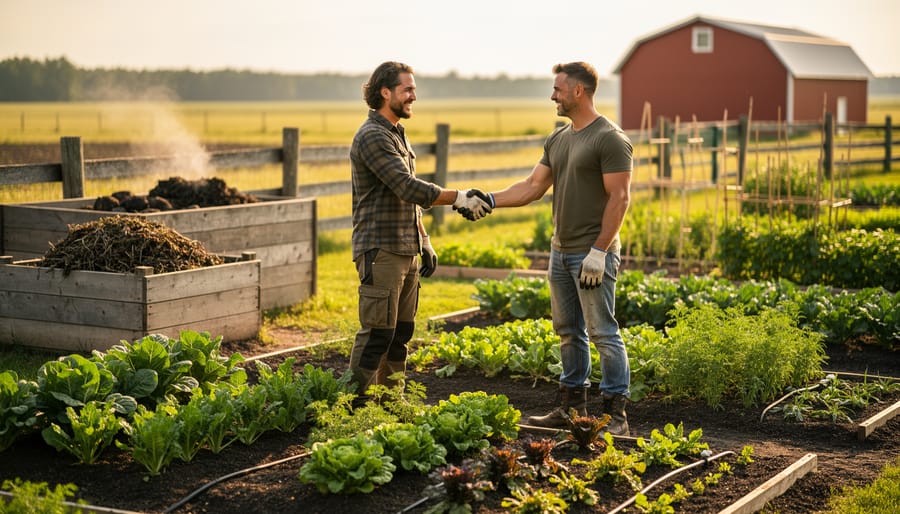
Participatory guarantee systems (PGS) offer small to mid-sized organic farmers in Canada a community-based certification alternative that relies on peer review, transparency, and shared accountability rather than formal third-party audits. Unlike conventional organic certification, which can cost between $1,500 and $5,000 annually and requires extensive documentation, PGS certification typically runs $200 to $800 per year and replaces inspections with farm visits conducted by fellow growers and local consumers who verify your practices through direct observation and relationship building.
The model works because trust replaces bureaucracy. Farmers join a local PGS group, open their operations to regular peer visits, and in turn participate in reviewing others’ farms. The result is a certification that costs less, builds stronger regional food networks, and reflects the realities of diversified organic operations where paperwork often outweighs production capacity. In Alberta, several emerging PGS initiatives have demonstrated that farmers can reduce certification barriers while maintaining consumer confidence and accessing direct-to-market opportunities like farmers’ markets, CSA programs, and local retail partnerships.
This approach isn’t for everyone. Operations seeking export markets, large wholesale accounts, or government organic labels still need accredited third-party certification. But for growers prioritizing local sales and community connection, PGS provides a structured path to organic verification that fits both your budget and your farming philosophy. The system has gained traction across Canada as producers look for ways to prove their organic integrity without the administrative weight of conventional certification programs.
What Are Participatory Guarantee Systems?
Participatory Guarantee Systems are community-based quality assurance mechanisms where groups of farmers verify each other’s organic practices through direct peer review rather than relying on distant third-party certifiers. Recognized by the International Federation of Organic Agriculture Movements (IFOAM) since 2004, PGS have gained traction globally as accessible alternatives to conventional certification, and Canadian organic standards are increasingly acknowledging their legitimacy for certain market channels. In a PGS, farmers within a defined geographic area, often a region like central Alberta or the Peace Country, form verification groups that conduct regular farm visits, assess compliance with agreed-upon organic standards, and collectively vouch for each member’s production practices.
The system rests on five foundational principles that distinguish it from traditional certification. Trust forms the bedrock: members build relationships through repeated interactions and shared values around organic agriculture, creating accountability through personal connection rather than anonymous audits. The social process principle emphasizes learning and knowledge exchange during farm visits, turning verification into an opportunity for collective skill-building rather than a pass-fail inspection. Peer review means farmers themselves, people who understand local growing conditions, climate challenges, and practical realities, conduct the evaluations, bringing relevant expertise that distant certifiers may lack. Transparency requires open documentation and shared decision-making, with all members having access to verification records and standards interpretation. Finally, participation demands active engagement: members cannot simply pay fees and receive certification; they must contribute time to reviewing other farms, attending meetings, and strengthening the community’s collective organic knowledge.
These principles translate into practical differences from third-party certification bodies. Cost represents the most immediate distinction: while conventional organic certification in Canada can run $1,200 to $3,000 annually depending on farm size and certifier, PGS groups typically operate on member dues of $200 to $500, covering administrative costs and shared resources rather than certifier profit margins. Accessibility improves dramatically when your verifiers are neighbouring farmers who understand that June planting schedules in Alberta shift with late frosts, not auditors working from standardized checklists developed for different climates. The verification visit becomes a two-way conversation where a farmer can explain why they manage weeds a certain way in heavy clay soil, and reviewers can offer techniques that worked on their own land.
Community engagement transforms from a side benefit into the core function. In third-party systems, farmers interact with certifiers primarily through paperwork and brief annual inspections. PGS members gather multiple times yearly, share equipment and knowledge, coordinate on bulk organic input purchases, and sometimes collaborate on marketing their collectively verified products. This ongoing relationship means verification reflects genuine understanding of each farm’s context rather than checkbox compliance, and problems get addressed through peer support rather than punitive decertification.
Who Qualifies for Participatory Guarantee Systems
Farm and Production Requirements
Farmers entering a PGS must demonstrate compliance with Canadian Organic Standards, the same baseline third-party certifiers use. Your land requires a minimum three-year organic transition period free from prohibited substances before crops can be certified organic. During this time, documenting every input applied, seed source, and pest management action is mandatory.
PGS groups expect detailed field histories showing what grew where, rotation patterns, and soil amendments used. You’ll need receipts proving inputs meet organic standards, no synthetic fertilizers, GMO seeds, or prohibited pesticides. Your transition zone must have clear physical separation or buffer strips from conventional fields to prevent contamination.
Record-keeping doesn’t end after transition. Annual planting records, harvest logs, sales documentation, and input invoices remain essential for peer reviewers to verify. Many Alberta farmers work with transition partners who’ve navigated these requirements and can help establish systems that satisfy both PGS peers and organic standards without drowning in paperwork.
Participation and Community Commitments
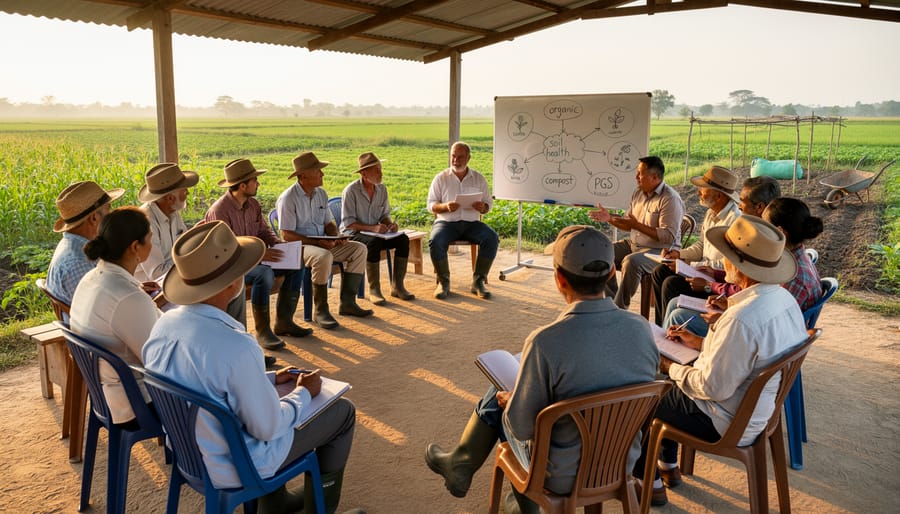
Joining a PGS means committing real time to your fellow farmers, not just your own operation. Most groups require you to participate in at least two to three farm verification visits per year beyond your own annual review. These visits typically take half a day each, including travel time within your local area.
You’ll also attend quarterly or biannual community meetings where the group discusses standards, addresses concerns, and shares knowledge about organic practices. These sessions run two to four hours and form the backbone of peer learning that makes PGS valuable. Some Alberta groups combine meetings with field days, turning obligations into practical learning opportunities.
Expect to maintain farm records accessible for peer review, daily logs of inputs used, field rotations, and pest management decisions. While less formal than third-party certification paperwork, these documents must still demonstrate compliance with Canadian Organic Standards.
The time investment averages one to two days per month during peak verification season (usually spring and fall), with lighter commitments in winter months. For farmers already attending co-op meetings or market gatherings, this fits naturally into existing community engagement patterns.
How to Establish and Join a Participatory Guarantee System
Forming a Local PGS Group
Forming a local PGS group starts with identifying organic farmers within a reasonable driving distance, typically a two-hour radius works well in Alberta, where winter travel and spread-out operations create practical limits. Reach out through regional organic farming associations, farmers’ markets where you already sell, and local farm supply stores that cater to organic producers. The initial conversation matters: you’re looking for farmers who share a commitment to organic standards but may struggle with third-party certification costs or prefer community accountability over external audits.
Once you’ve gathered interest from five to ten farms, hold a founding meeting to establish geographic boundaries and decide which crops or livestock your group will cover. Some Alberta PGS groups focus exclusively on vegetable operations, while others include grain farms or small-scale livestock. Discuss what organic standards mean in your specific context, how you’ll handle pest pressure common to your region, what inputs you’ll approve, and how you’ll address the growing farm-to-table demand from local consumers. Document these agreements in writing; shared expectations prevent conflicts during peer reviews and keep your group focused on mutual support rather than policing.
Developing Verification Protocols
Your verification protocols form the backbone of trustworthy organic assurance within your PGS group. Start by downloading the current Canadian Organic Standards from the Canadian Food Inspection Agency website, these define what counts as organic in Canada and provide the baseline your group must meet. Break the standards into checklist categories: soil management, pest control inputs, crop rotation practices, livestock welfare (if applicable), and buffer zones from conventional operations.
Adapt these categories to Alberta’s reality. Include questions specific to short growing seasons, such as how farmers handle greenhouse production during winter or manage cover crops in Zone 3 climates. For common Alberta crops like canola, wheat, and pulses, specify acceptable rotation patterns and seed sourcing requirements. Create separate checklists for different farm types, grain operations need different verification points than mixed vegetable farms or livestock producers.
Document what reviewers should observe during visits: soil test results, input receipts, field maps showing rotation history, and seed purchase records. Establish a simple scoring or pass/fail system with clear thresholds. Build in annual protocol reviews so your group can refine questions based on actual farm visit experiences and evolving organic practices.
Conducting Peer Reviews and Documentation
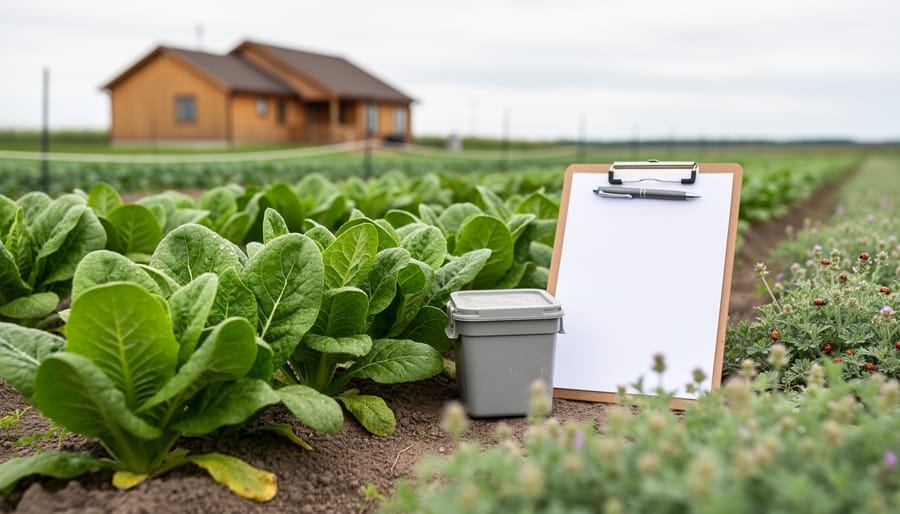
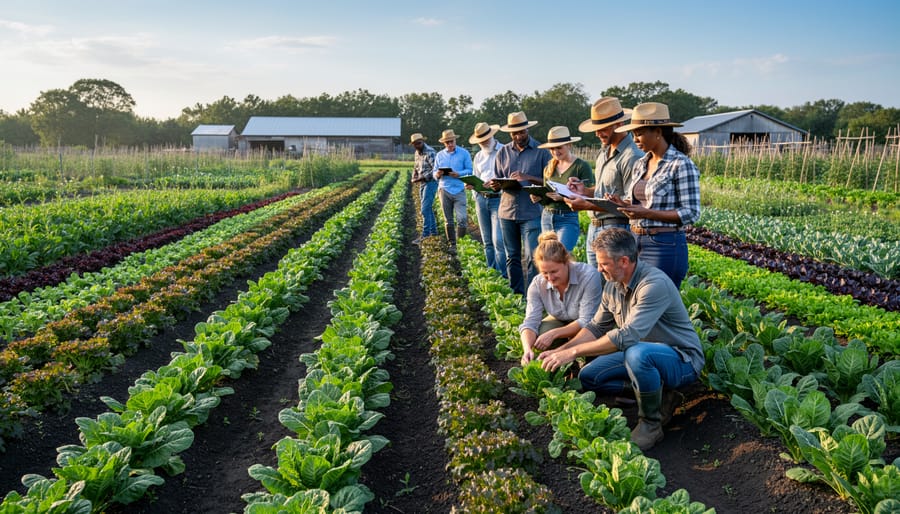
Farm visits are the heart of your PGS verification process. Schedule reviews during growing season when you can observe crops, livestock, and field practices firsthand rather than relying solely on paperwork. Most Alberta PGS groups conduct visits between June and September, timing them to catch peak production activity.
Assemble a small team, typically two to four farmers from your PGS group who aren’t closely related to the farm under review. This peer panel brings diverse expertise: one member might focus on soil health and inputs, another on livestock welfare, and a third on record-keeping systems. Walk the entire operation, not just showcase fields. Check compost piles, storage areas, and boundary buffers where drift from neighbouring conventional farms could occur.
Your checklist should cover Canadian Organic Standards requirements but adapted to local crops and conditions. For grain farmers, verify seed sources and cleaning equipment protocols. For livestock operations, examine pasture rotation schedules and medication records. Take photos to document practices like mulching techniques or pest management approaches, these become valuable teaching tools for the whole group.
Document findings the same day while observations are fresh. Use a standardized form that records both compliant practices and areas needing improvement. Be specific: “Three-year crop rotation observed with field maps” beats “good rotation practices.” File reports in a shared system accessible to all PGS members, maintaining transparency while respecting privacy for sensitive farm details.
Schedule annual reviews at consistent intervals, sending reminders 30 days ahead so farmers can prepare records and plan their time.
Your Rights and Responsibilities in a PGS
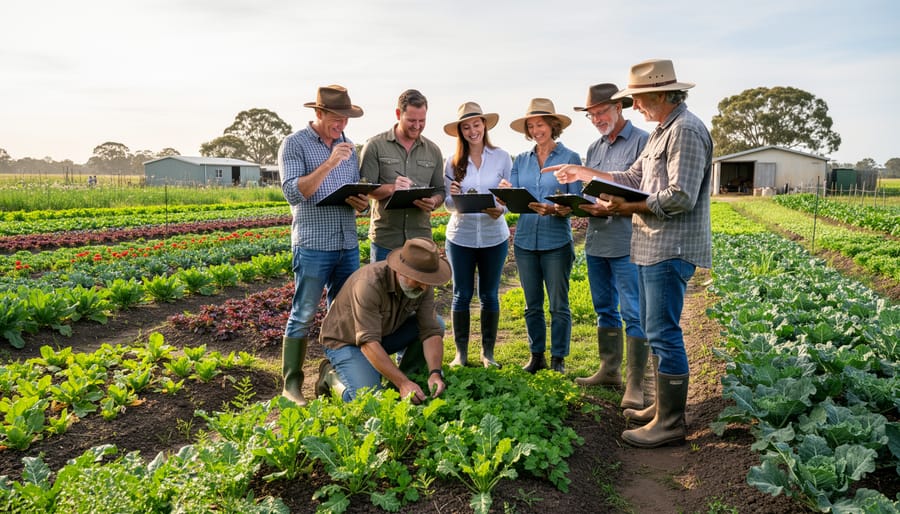
Joining a PGS means entering a reciprocal relationship with your community. You gain certain protections and access, but you also commit to upholding standards and supporting fellow farmers through active participation.
As a PGS member, you have the right to a fair and transparent peer review process. Your farm verification will be conducted by fellow farmers who understand local conditions, not distant inspectors applying generic checklists. You’re entitled to know who will visit your operation, what criteria they’ll assess, and how decisions are reached. If your group finds non-conformities during a review, you have the right to a clear explanation, a reasonable timeline to address issues, and access to an appeals process if you believe the assessment was unfair or inaccurate.
You also gain the right to market your products as organically verified within the scope of Canada’s organic regime recognition for PGS. This typically means direct sales at farmers’ markets, farm gate sales, community-supported agriculture boxes, and local retail partnerships that accept PGS verification. Your group must provide you with documentation proving your organic status, and you’re entitled to use any collective branding or logos the PGS has established.
| Your Rights as a PGS Member | Your Responsibilities as a PGS Member |
|---|---|
| Fair peer review by knowledgeable local farmers | Participate in at least two peer reviews of other farms annually |
| Transparent decision-making and access to group records | Maintain complete and honest records of all inputs, practices, and yields |
| Clear explanation of any non-conformities found | Disclose any prohibited substances or practices immediately |
| Access to appeals process for disputed findings | Attend annual meetings and contribute to protocol updates |
| Documentation to verify organic status for marketing | Submit annual farm plans and allow scheduled verification visits |
On the responsibility side, honesty forms the foundation. You must disclose all inputs, practices, and any incidents that might affect your organic status, even when the news is uncomfortable. If you accidentally sprayed a prohibited fungicide or discovered contamination from a neighbour’s drift, report it. The strength of PGS rests on trust, and concealing problems undermines everyone’s credibility.
Participation is non-negotiable. Expect to spend at least two days per year visiting other members’ farms for verification, plus additional time for annual meetings and emergency visits when needed. You’re not just receiving certification; you’re helping verify others, which means learning their systems and providing constructive feedback.
How PGS Certification Compares to Third-Party Certification
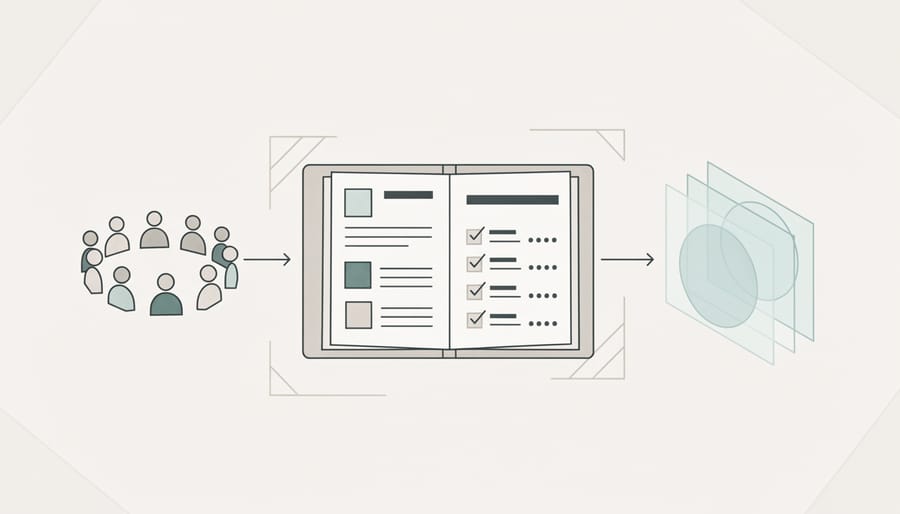
Understanding where PGS certification opens doors, and where it hits walls, matters as much as knowing how to run one. In Canada as of 2026, PGS operates in a hybrid recognition space: it’s respected within local and direct-market circles but doesn’t yet carry the same regulatory weight as third-party certification under the Canada Organic Regime.
The Canadian Food Inspection Agency still requires third-party certification for any product labelled “organic” in interprovincial trade or export markets. If you’re selling certified organic grain to a processor in another province, shipping beef to the United States, or supplying a national grocery chain, you’ll need a CFIA-accredited certification body behind you. PGS can’t issue that stamp. Where PGS shines is in local, community-supported agriculture models: farmers’ markets, farm-gate sales, community-supported agriculture boxes, and regional co-ops that value peer verification and direct relationships over bureaucratic paperwork.
Cost differences favour PGS dramatically for small-scale producers. Third-party certification typically runs $1,200 to $3,000 annually for a diversified vegetable farm under 10 acres, plus the hidden costs of hours spent preparing documentation for external auditors. PGS groups in Alberta report per-farm costs between $200 and $600 per year, covering shared administrative expenses, training materials, and occasional travel for peer reviews. You trade money for time, PGS demands active participation in others’ farm visits and group meetings, roughly 15 to 25 hours annually depending on group size.
Provincial variations add complexity. British Columbia and Quebec have shown more openness to recognizing PGS within regional organic marketing initiatives, while Ontario’s regulatory environment remains tighter. Alberta sits in the middle: PGS produce moves freely at urban farmers’ markets and through direct channels, but larger institutional buyers still default to third-party credentials. Some farmers run both systems, maintaining third-party certification for wholesale accounts while using PGS for transparency and community connection in direct sales.
Where to Get Support and Resources
The Canadian Organic Growers network serves as the primary national hub for PGS information and support, offering webinars, written guides, and connections to regional coordinators who can answer questions about starting or joining local groups. Their website maintains an updated list of active PGS initiatives across Canada and provides template documents for verification protocols and record-keeping systems that align with Canadian Organic Standards.
In Alberta, the Organic Alberta cooperative delivers workshops on community-led certification and maintains a directory of farmers interested in forming PGS groups by region. They’ve developed Alberta-specific resources that address prairie climate considerations and the logistics of organizing peer reviews across larger distances common in western Canada. The organization also facilitates introductions between experienced PGS participants and farmers exploring the model for the first time.
Key resources organized by type include:
- Agriculture and Agri-Food Canada’s AgriAssurance Program offers cost-share funding for developing certification systems and quality assurance protocols that can support PGS establishment costs
- The Organic Federation of Canada provides policy updates on PGS recognition status and advocates for regulatory acceptance at federal and provincial levels
- IFOAM Organics International maintains the global PGS database and offers case studies from mature systems worldwide that can guide Canadian groups
- Provincial agriculture departments in Alberta and British Columbia have rural development officers who can advise on forming agricultural cooperatives and accessing provincial grants
- The Organic Council of Ontario runs peer-learning circles that include PGS-certified farmers willing to share operational knowledge
For farmers interested in models that combine direct marketing with certification, exploring rural-urban partnerships can reveal how PGS groups build consumer trust through farm visits and community events. Local food councils and farmers’ market associations often know which producers are working within PGS frameworks and can facilitate connections to those networks.
Community-Led Success: Alberta PGS Case Studies
Real-world examples show how participatory guarantee systems work on the ground. Three Alberta farming communities have built PGS networks that verify organic claims while strengthening local food systems.
Peace Country Organic Producers Collaborative (Grande Prairie Region)
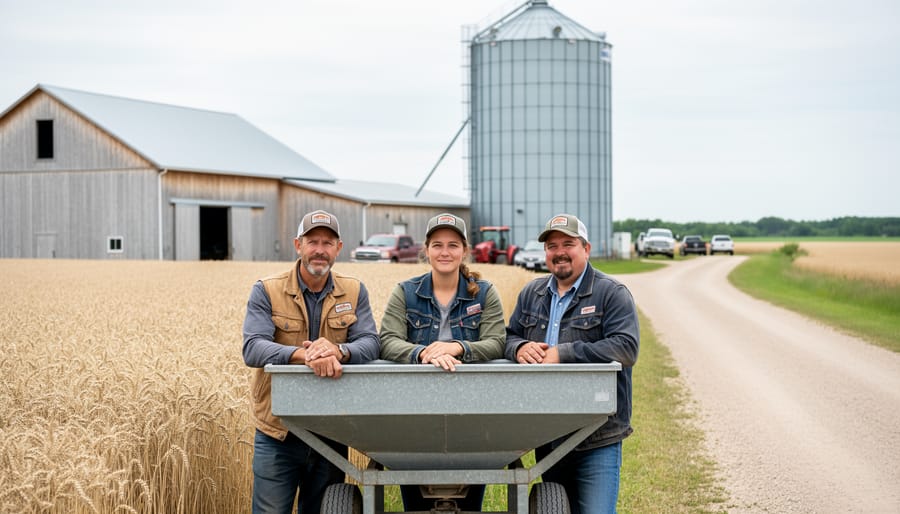
Eight farms across the Peace River basin formed this PGS in 2024, covering everything from grain operations to mixed vegetable producers. Sarah Chen, who grows specialty grains on 160 acres near Sexsmith, joined after third-party certification costs became unsustainable. “The annual fee was eating into profits on crops that already have tight margins,” she explains. “With our PGS, I pay $150 annually and spend two days each spring visiting other farms for verification.”
The group meets quarterly to review standards and conducts peer visits between May and August. Their verification checklist covers soil amendments, seed sourcing, pest management records, and buffer zones from conventional fields. Chen notes the biggest challenge was developing trust initially. “We’re competitors in some markets, but we realized transparency actually strengthened our collective reputation. Buyers at farmers’ markets recognize our PGS seal now.”
Market outcomes have exceeded expectations. Five members sell through a shared booth at the Grande Prairie Farmers’ Market, where they display their peer-reviewed certification documents. Two have secured contracts with Edmonton restaurants specifically seeking locally verified organic ingredients.
Foothills Livestock PGS (Sundre-Olds Corridor)
Twelve ranchers managing grass-fed beef, lamb, and heritage pork established Alberta’s first livestock-focused PGS in 2023. The group spans 80 kilometers but shares similar grazing ecosystems and climate challenges. Rick Paulson, raising grass-finished beef near Carstairs, describes the practical value: “Conventional organic certification for our scale, 40 cow-calf pairs, cost more than we’d make in premium prices. The PGS lets us access organic-seeking customers at one-tenth the cost.”
Their verification protocol emphasizes pasture management, feed records (particularly during winter feeding), animal health documentation, and slaughter facility compliance. The group faced initial skepticism from some direct-sale customers unfamiliar with PGS. They addressed this by creating a website explaining their standards and posting verification visit reports.
Paulson reports a 30% premium over conventional beef prices, with waiting lists for quarter and half beef shares. “Customers like knowing who verified us, it’s their neighbors, not an inspector from Toronto.”
These groups demonstrate that PGS works where farmers commit to honest peer review and invest time in building community trust.
How to Apply or Complete the Process
There is no single “official application” for joining a Participatory Guarantee System in Canada because PGS operates as a locally organized certification model rather than a centralized program. The process depends entirely on which community group you’re connecting with.
If you’re joining an existing PGS, contact the group coordinator to request their membership package. You’ll typically fill out a farm profile describing your operation, acreage, crops or livestock, and current organic practices. Submit documentation of your transition timeline if you’re not yet fully organic. Attend an introductory meeting where members explain verification procedures and participation expectations. Once accepted, schedule your initial farm visit with assigned peer reviewers.
If you’re forming a new PGS, start by organizing a founding meeting with interested farmers in your area. Draft shared organic standards based on Canadian Organic Standards. Create simple verification forms and record-keeping templates. Establish a review schedule and assign initial peer review teams. Document everything in a group operations manual.
For recognition under Canadian organic regulations, contact the Canadian Organic Standards office about emerging PGS pathways. Alberta farmers can reach the Alberta Agriculture organic program for province-specific guidance on how PGS documentation integrates with regional marketing claims.
Where to Get Official Help
Canadian farmers exploring Participatory Guarantee Systems can start with the Canadian Organic Growers (COG)the national organization that has been piloting and promoting PGS frameworks since 2015. Their website maintains a registry of active PGS groups across provinces and offers downloadable templates for verification protocols, peer review checklists, and farmer agreements. Contact their organic standards coordinator at standards@cog.ca or call 613-216-0741 for guidance specific to your region and farm type.
For Alberta-based operations, the Alberta Organic Producers Association provides provincial context on how PGS certification aligns with market requirements and connects farmers to existing local groups. Their office in Leduc handles inquiries Monday through Friday at 780-955-1023.
Since PGS recognition varies by market and buyer, confirm acceptance with your intended sales channels. The Canadian Food Inspection Agency (CFIA) remains the authority on federal organic regulation; while PGS isn’t yet recognized for the Canada Organic logo, CFIA’s organic certification page () clarifies where third-party certification is mandatory versus where community-based systems suffice for direct-to-consumer sales.
For funding to establish a new PGS group, check Agriculture and Agri-Food Canada’s AgriAssurance Program, which has supported farmer-led quality assurance initiatives including some pilot PGS projects.
Common Questions About Participatory Guarantee Systems
Canadian farmers considering PGS often have similar practical questions about how the system works day-to-day. Here are answers to the most common concerns that come up when growers explore this certification alternative.
How much time does PGS participation actually require?
Most farmers spend 8-12 hours annually on PGS activities, including conducting two to three peer reviews of other farms, attending one or two group meetings, and hosting their own annual verification visit. Record-keeping takes roughly the same time as any organic certification system.
Can I transition from conventional farming directly into a PGS?
Yes, but you’ll need to complete a three-year transition period following Canadian Organic Standards before receiving full organic verification through the PGS. Many groups welcome transitioning farmers as observer members who can participate in peer reviews and learn the standards before their land qualifies.
What happens if there’s a disagreement about whether my farm meets organic standards?
Most PGS groups have a clear appeals process where you can request a second verification visit with different peer reviewers, present additional documentation, or address specific concerns raised. Decisions are made collectively rather than by a single inspector, which typically leads to fair outcomes.
How do verification visits work during Canadian winters?
Alberta PGS groups typically schedule farm visits between May and October when fields and livestock operations are fully visible. Winter verification can focus on record review, storage facilities, and planning for the coming season, with a follow-up field visit once snow clears.
Does my farm insurance recognize PGS certification?
Most Canadian farm insurance policies do not differentiate between PGS and third-party organic certification, as both verify adherence to organic practices. Confirm with your specific insurer that organic production coverage applies regardless of certification method.
Can I hold both PGS verification and third-party organic certification?
Yes, and some farmers do exactly that to access both local direct markets where PGS is trusted and wholesale channels requiring official Canada Organic certification. The peer review process and record-keeping largely overlap, though you’ll pay fees for the third-party certification.
Will provincial organic associations work with PGS-verified farmers?
Many provincial associations welcome PGS participants as members and recognize the value of community-led verification, even though they cannot grant federal organic logo use. They often provide training, networking, and advocacy that benefits all organic growers regardless of certification path.
The insurance question deserves extra attention because coverage gaps can create real financial risk. Check whether your policy specifically covers organic inputs and the higher replacement value of organic crops, not just whether it acknowledges your certification method. Some insurers offer organic endorsements that apply to any verified organic operation.
For farmers worried about time commitments conflicting with peak season work, remember that PGS groups schedule verification visits by mutual agreement. You coordinate dates that work for both your operation and the peer reviewers, typically during shoulder seasons when field work is less intense. The collaborative nature means fellow farmers understand harvest pressures and won’t expect you at a group meeting when you’re combining wheat.
Participatory Guarantee Systems offer Canadian farmers a practical route to organic verification that builds community strength alongside market credibility. For small-scale and mid-sized operations across Alberta and beyond, PGS removes the financial and bureaucratic barriers of traditional certification while creating networks of shared knowledge and mutual support.
The choice to pursue PGS is not just about certification. It’s about whether you value direct relationships with fellow farmers, transparent verification processes, and the chance to shape standards that reflect your region’s realities. If your operation thrives on local markets, direct sales, and community trust, PGS may align better with your business model than distant third-party audits.
Starting or joining a PGS group demands time and genuine commitment to peer review, but the returns extend beyond organic status. You’ll gain troubleshooting partners, market connections, and proof of your practices that resonates with customers who buy local. As Canadian organic markets continue growing and regulatory frameworks evolve, community-led verification positions you at the forefront of sustainable agriculture built on trust rather than paperwork alone. Reach out to organic farming networks in your area and explore whether PGS fits your farm’s future.