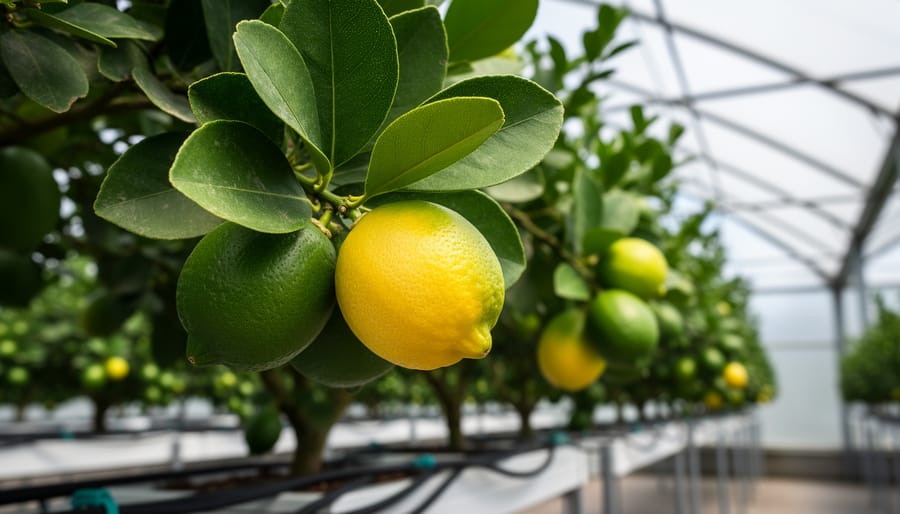
In Canadian greenhouses and protected growing systems, key limes typically reach peak harvest between late autumn and early spring when grown under controlled conditions, with most Alberta operations timing their first major flush for November through February. This tropical citrus adapts surprisingly well to northern climates when paired with proper irrigation management, and the integration of keyline water harvesting systems has opened new possibilities for resource-conscious growers exploring high-value specialty crops.
The timing window shifts based on your greenhouse heating capacity, the age of your trees, and how effectively you’ve captured and stored water through the growing season. Younger trees planted in spring may produce a light crop by their second winter, while mature specimens in optimized environments can yield fruit year-round with strategic pruning. Trevor Hadwen, who manages a 2,000-square-metre greenhouse operation near Lacombe, saw his first commercial harvest 18 months after installing both climate controls and a keyline irrigation network that reduced his water costs by nearly 40 percent.
Canadian growers venturing into key lime production face a learning curve, but the combination of protected agriculture techniques and sustainable water management creates a viable path for diversification. Understanding both the biological rhythms of citrus and the hydrological patterns of your land determines whether this crop fits your operation.
Quick Answer: When Are Key Limes Ready to Harvest?
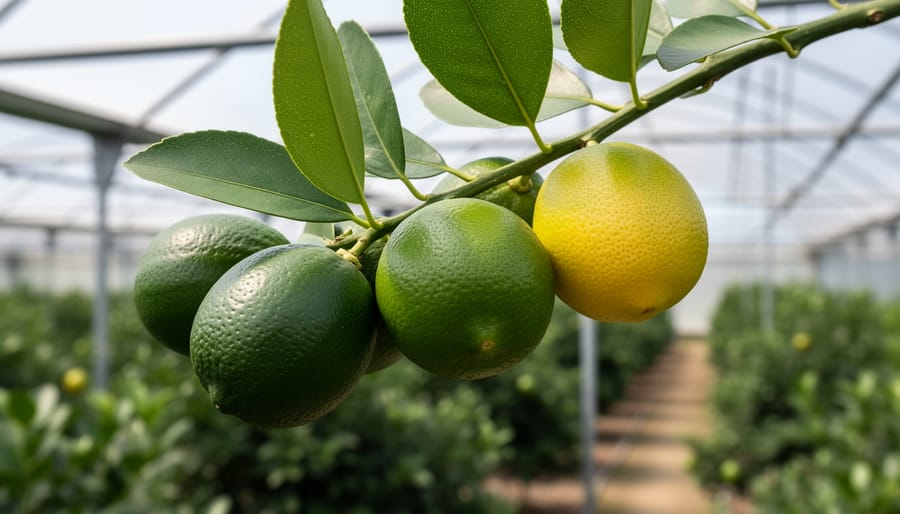
Key limes reach harvest readiness 90 to 120 days after flowering, though this window varies based on growing conditions and tree health. In Alberta and across Canada, where key limes grow almost exclusively in heated greenhouses or high tunnels, you have more control over this timing compared to outdoor tropical production. The extended development period in controlled environments means you can plan harvest schedules around market demand and labour availability.
Look for several physical indicators that signal harvest readiness. The fruit should measure 25 to 50 millimetres in diameter, roughly the size of a golf ball. Color provides your clearest visual cue: limes transition from deep, dark green to a lighter yellow-green shade as they mature, though many growers harvest slightly early while still predominantly green to capture maximum acidity and aromatic oil content. Gently squeeze the fruit; ripe limes yield slightly to pressure without feeling soft or mushy.
The surface should feel smooth and glossy, with a noticeable citrus fragrance when you scratch the skin lightly with your thumbnail. This oil-rich peel indicates the essential oils have developed fully, which is crucial for culinary quality and market value. In greenhouse settings, you can monitor individual branches or zones, since your controlled flowering often means fruit at different development stages across the same tree. This staggered maturity actually benefits small-scale organic operations by spreading harvest labour over several weeks rather than demanding one intensive pick.
Understanding Key Lime Harvest Windows
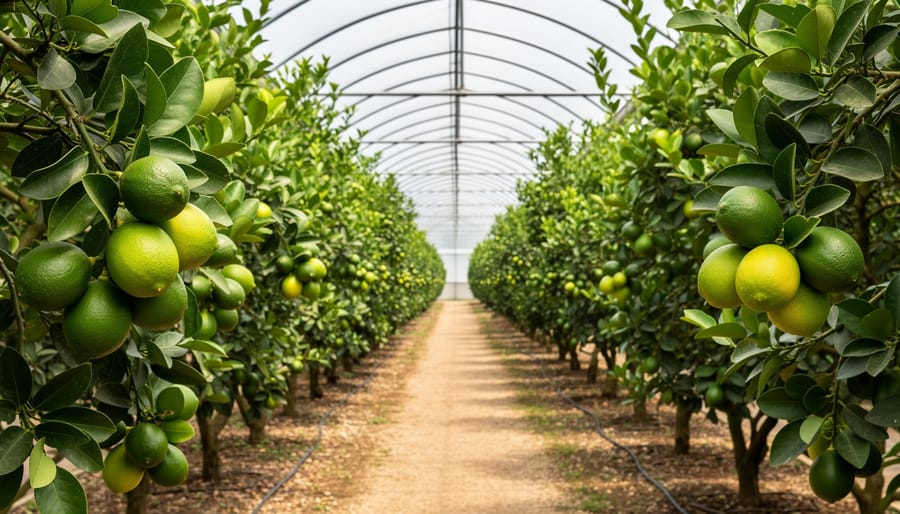
Tropical vs. Canadian Protected Growing
In their native tropical zones 10-11, key lime trees produce fruit year-round with no true dormancy period. Growers in Florida, Mexico, and the Caribbean harvest continuously as individual fruits ripen on different branches, typically picking every few weeks. The warm, stable climate means flowers develop into harvestable fruit within 90-120 days regardless of season.
Canadian production operates under completely different rules. Alberta’s harsh winters and short growing season make outdoor citrus impossible, even in protected microclimates, temperatures regularly drop below -20°C. Successful key lime growing here requires heated greenhouse structures that maintain consistent tropical conditions artificially.
This controlled environment creates both advantages and constraints. You control temperature, humidity, and day length, which means you can trigger flowering and harvest on your schedule rather than nature’s. However, you’re also managing energy costs that spike during Alberta’s long, cold winters. Most greenhouse citrus growers in Canada time their main production for spring through fall when supplemental heating demands are lower and natural light is stronger.
The practical result: Canadian key lime harvest becomes event-based rather than continuous. Instead of perpetual small harvests, you’ll typically see two or three concentrated harvest windows per year, timed around your flowering management and energy budget. Understanding this fundamental shift from tropical abundance to scheduled production is essential for economic viability in northern climates.
Multiple Harvests and Year-Round Potential
Controlled environment production transforms key limes from a seasonal crop into a year-round opportunity for Canadian organic growers. In heated greenhouses with consistent temperatures and supplemental lighting, key lime trees can flower multiple times annually rather than following a single tropical bloom cycle. This staggered flowering creates overlapping fruit development stages on the same tree, allowing harvests every 6-8 weeks once production stabilizes.
Alberta growers can manipulate lighting schedules and temperature profiles to induce flowering during specific windows, aligning harvest timing with peak market demand periods. Winter harvests particularly command premium prices when imported tropical fruit costs rise and local organic produce options narrow. Strategic pruning after each harvest encourages new flush growth and subsequent flower buds, maintaining the production cycle.
Mature trees in optimized greenhouse systems typically support 4-6 distinct harvest windows annually, with individual trees yielding 15-30 kg per year once fully established. This continuous production model spreads labour demands across the calendar and generates steadier cash flow than field crops, though it requires year-round attention to pollination, fertigation scheduling, and monitoring fruit development stages across multiple cohorts simultaneously.
Signs of Harvest Readiness
Key limes signal readiness through a combination of visual and tactile cues that Canadian greenhouse growers can monitor daily during the harvest window. Start by measuring diameter: fruit should reach 25 to 50 millimeters across, roughly the size of a golf ball. Smaller fruit often lacks the oil content and acidity that define quality key limes.
Color provides the most obvious indicator. Immature fruit appears dark green with a hard, thick rind. As sugars accumulate and oils develop, the skin shifts to yellow-green or pale lime, sometimes with a slight glossy sheen. Don’t wait for full yellow unless you prefer sweeter, less acidic fruit; most commercial and culinary applications favor the yellow-green stage when aromatics peak.
Test firmness by gentle pressure. Ripe key limes yield slightly but don’t feel spongy or soft, which indicates overripeness and declining quality. The skin should release a strong, citrusy aroma when you scratch it lightly with a thumbnail, that’s the essential oil layer signaling full maturity. In controlled environments, fruit can hang on the tree for several weeks once ripe, but prompt harvest preserves maximum oil content and prevents water loss through the thin rind.
Factors That Shift Key Lime Harvest Timing
Temperature and Light Management
Controlled temperature and light directly determine how quickly key limes mature from flower to harvestable fruit in Canadian greenhouse operations. When you maintain daytime temperatures between 21-29°C and nighttime temperatures of 15-18°C, fruit development follows a predictable 90-120 day timeline. Drop below 15°C consistently, and development slows or stalls, pushing your harvest window back by weeks.
Alberta’s winter presents the biggest challenge. From November through February, natural daylight drops to 8-9 hours, and without intervention, trees shift into semi-dormancy. Fruit development can stretch to 150 days or longer. Supplemental lighting, ideally full-spectrum LEDs providing 14-16 hours total photoperiod, keeps trees actively photosynthesizing and fruit progressing on schedule. Research from northern European citrus growers shows supplemental lighting can cut winter fruit development time by 25-30%.
The trade-off is energy cost. Heating and lighting a greenhouse through an Alberta winter requires careful economic analysis, but it enables year-round harvest scheduling rather than single-season production. Growers using passive solar design, thermal mass, and efficient LED systems report more viable returns, especially when targeting premium organic markets during winter months when imported key limes command higher prices.
Water and Nutrient Availability
Water availability directly influences how quickly key limes reach harvest maturity and whether they develop the aromatic oil content that defines quality fruit. In Canadian greenhouse systems, inconsistent irrigation creates stress that delays fruit sizing and causes uneven ripening across your crop, making harvest scheduling unpredictable. Keyline water harvesting addresses this challenge by providing gravity-fed, consistent moisture distribution without the energy costs and mechanical complexity of pump systems.
When you design keyline catchment from greenhouse roofs and adjacent land, you’re creating a passive irrigation reservoir that delivers water at steady volumes throughout the growing cycle. This eliminates the feast-or-famine pattern common with municipal water or well systems that may face pressure fluctuations or seasonal restrictions. Key limes respond to this stability by setting fruit more uniformly and developing at consistent rates, which means your 90-120 day harvest window becomes genuinely predictable rather than a rough estimate.
For organic fertigation, keyline-stored rainwater offers a clean base for compost teas, fish emulsion, and kelp extracts without chlorine or chemical residues that disrupt soil biology. Apply liquid organic fertilizers biweekly during active fruit development, targeting nitrogen levels around 100-150 ppm for balanced growth without excessive vegetative flush that would compete with fruit maturation. The calcium and magnesium naturally present in rainwater support cell wall development, reducing split fruit and extending post-harvest shelf life by 3-5 days compared to chemically treated water sources.
Pollination and Fruit Set Variables
Pollination success directly controls when you’ll harvest, since key limes mature 90-120 days after fruit set. In Canadian greenhouses, you can’t rely on natural insect activity during winter months. Hand pollination with a small brush gives you precise timing control, you know exactly when flowers were pollinated and can predict harvest windows accurately. Managed bumblebee colonies work well in larger operations, providing consistent pollination across multiple flushes, though their activity drops when temperatures fall below 15°C. A poorly pollinated flower either aborts or develops misshapen fruit that matures unevenly. Track your pollination dates carefully; late-winter pollination typically yields fruit ready for harvest in late spring or early summer, while summer pollination sets up fall crops. Temperature stress during the critical 2-3 day pollination window can cause fruit drop, pushing your entire harvest schedule back by weeks.
Tree Maturity and Variety Differences
Young key lime trees in their first two to three years of production consistently bear lighter crops and reach harvest maturity 10-15 days later than established trees. In Alberta greenhouses, a two-year-old tree might produce 15-30 fruits per flush, while a five-year-old specimen yields 80-120 fruits with more predictable timing. The tree’s energy initially prioritizes root and canopy development over fruit maturation, which delays the shift from green to harvest-ready yellow-green.
Canadian growers primarily work with Mexican key limes (Citrus × aurantiifolia), the true Key lime variety, though some source Persian limes (Citrus × latifolia) marketed as “key limes” due to supplier confusion. Mexican types typically reach harvest at 90-105 days after flowering in controlled environments, while Persian limes require 110-130 days and grow noticeably larger. This 15-20 day difference matters when coordinating organic market deliveries or planning succession plantings in limited greenhouse space.
Keyline Water Harvesting for Citrus Production
Designing Keyline Systems for Protected Growing
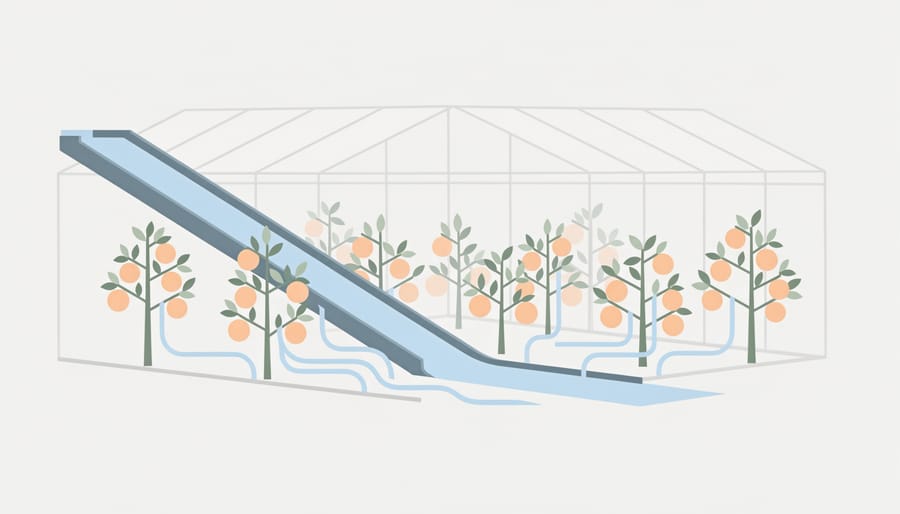
Greenhouse roofs offer exceptional water capture potential, a 30 by 12 meter hoop house in Alberta can collect over 200,000 liters annually from just 550mm of precipitation. The key is directing this clean, chlorine-free runoff into storage tanks positioned above your citrus growing area, creating gravity-fed pressure for drip irrigation lines.
Start by installing eavestrough along both roof edges, sloping toward collection barrels or an IBC tote elevated on a platform. A 1-meter height difference provides adequate pressure for low-flow emitters serving potted key limes. Filter debris with simple mesh screens before storage to prevent clogging.
For larger operations, design your keyline pattern around the greenhouse perimeter. Survey the landscape to identify the keyline, the contour where water naturally accumulates. Install shallow swales just above this line to intercept runoff from surrounding land, then channel it toward your elevated tanks. This captures spring snowmelt and summer storms that would otherwise bypass your production area.
Connect storage to a header line running the length of your citrus bench, with individual drip emitters (2-4 liters per hour) for each tree. Include a simple valve system to control flow rates. When you harvest rainwater this way, you eliminate pumping costs while maintaining the consistent moisture citrus demands during fruit development.
Water Quality and Organic Compliance
Keyline-harvested rainwater offers Canadian citrus growers several advantages over municipal or well sources, particularly for maintaining organic certification and supporting the microbial communities essential for healthy key lime production. Unlike treated municipal water, which typically contains chlorine or chloramine compounds that can suppress beneficial bacteria and fungi in potting media or raised beds, rainwater captured through keyline systems remains free of these sterilizing agents. This matters significantly for organic growers relying on mycorrhizal partnerships and compost-based fertility programs to support fruit development and consistent harvest timing.
The absence of dissolved salts and heavy metals in rainwater also helps prevent gradual accumulation in container or greenhouse soils, a common issue in Alberta where hard well water can elevate soil EC levels over successive seasons, stressing trees and delaying fruit maturity. Keyline systems naturally filter water through vegetated swales and soil horizons before it reaches storage, reducing sediment and pathogen loads while preserving the beneficial microorganisms that support plant immunity.
From a compliance perspective, using harvested rainwater helps organic operations prevent water pollution of downstream waterways by eliminating runoff from greenhouse roofs and surrounding hardscape, aligning with organic standards that require environmental stewardship beyond the production area itself.
Harvesting Techniques and Best Practices
Key limes require careful handling to preserve the essential oils in their thin, delicate skin and maximize storage life for organic market sales. Unlike thick-skinned citrus, key limes bruise easily, and damaged fruit deteriorates within days rather than weeks. In Canadian greenhouse operations, harvest technique directly affects marketability and whether your crop commands premium prices or becomes processing-grade juice fruit.
Harvest in the morning after any dew has evaporated but before peak heat stresses the fruit. This timing, typically 8-10 AM in heated greenhouses, ensures fruit is fully turgid with minimal water stress, which helps maintain firmness during handling. Avoid harvesting after heavy watering or fertigation cycles when fruit is overly hydrated and prone to splitting.
- Select fruit that has reached 25-50 mm diameter and shows yellow-green color shift, with slight give under gentle thumb pressure. Fruit harvested too green lacks aroma and oil development; overripe fruit begins softening and losing acid balance.
- Prepare sanitized bypass pruners or harvest snips cleaned with diluted hydrogen peroxide solution to prevent cross-contamination between trees, which matters in organic certification audits.
- Cut the stem 3-5 mm above the fruit rather than pulling or twisting, which tears the skin and damages the button (stem end). Clean cuts reduce entry points for fungal decay during storage.
- Place fruit gently into padded harvest containers, shallow trays lined with soft cloth work better than deep buckets where bottom fruit gets crushed. Never drop fruit or allow impacts.
- Sort immediately into three grades: premium (unblemished, 35-45 mm), standard (minor surface marks, correct size), and processing (small, scarred, or soft spots). This sorting prevents one damaged fruit from accelerating decay in the whole batch.
- Move harvested fruit into your cooling area within 30 minutes. Key limes respire rapidly at room temperature, losing moisture and oil intensity. Cooling to 10-13°C within an hour significantly extends shelf life.
Handle each fruit only once if possible. Repeated touching damages the oil glands in the skin, causing that characteristic brown spotting you see on mishandled limes at retail. In commercial greenhouse operations, some Alberta growers use soft cotton gloves to further minimize skin contact and oil transfer.
For trees with mixed ripeness, common in controlled environments with staggered flowering, harvest every 5-7 days rather than attempting to clear a tree in one pass. This selective picking delivers consistently sized, premium-quality fruit and trains you to recognize optimal ripeness through repeated observation across harvest cycles.
Post-Harvest Care and Storage
Once you’ve picked your key limes, the clock starts immediately. These small citrus fruits are delicate and prone to moisture loss, so proper handling in the first hour determines whether they’ll reach market in prime condition or deteriorate within days.
Gently place harvested limes in shallow containers, no more than three layers deep, to prevent bruising from weight pressure. Inspect each fruit and remove any with punctures, splits, or soft spots, as damaged limes release ethylene gas that accelerates ripening in healthy fruit. Within 2-4 hours of harvest, move limes to your storage area.
The ideal storage environment sits between 10-15°C with 85-90% relative humidity. Temperatures below 10°C trigger chilling injury, causing surface pitting and internal breakdown. Above 15°C, you’ll see rapid yellowing and softening that cuts shelf life in half. A basement cold room, walk-in cooler, or insulated storage shed with humidity control works well for small-scale operations. Monitor conditions with a digital thermometer-hygrometer placed at fruit level, not on the wall.
Under optimal conditions, key limes maintain quality for 2-3 weeks. Check stored fruit every three days, removing any that show signs of decay, excessive yellowing beyond the yellow-green harvest stage, or surface mold. Commercial organic growers often use perforated plastic clamshells or waxed cardboard flats that allow air circulation while maintaining humidity around the fruit.
For direct market sales, consider that most customers prefer key limes with some green color remaining, as they associate deep yellow with overripeness. Plan your harvest and storage schedules to deliver fruit within 7-10 days of picking for peak market appeal and the aromatic oil intensity that commands premium prices.
Canadian Case Study: Alberta Greenhouse Citrus Pioneer
Tom Bergman didn’t set out to grow tropical fruit when he installed a keyline water capture system on his Red Deer County property in 2023. The organic vegetable grower wanted to reduce his reliance on municipal water for his 2,000 square foot heated greenhouse. But after harvesting rainwater from his greenhouse roof and redirecting spring runoff through shallow swales, he had consistent, chlorine-free irrigation that opened unexpected possibilities.
“I started with two Mexican key lime trees as an experiment,” Bergman explains. “Everyone said citrus was impossible in Alberta, but I had the water system, the greenhouse was already heated for winter greens, and there’s zero local competition.”
His first harvest came 14 months after planting three-year-old grafted trees. He learned quickly that harvest timing in a controlled environment differs from textbook tropical cycles. “The books say 90 to 120 days after flowering, but I found temperature consistency matters more than the calendar. When I let nighttime temps drop below 15°C to save on heating, fruit development stalled for weeks.”
Bergman now maintains 21-24°C daytime and 16-18°C nighttime temperatures from October through March, with natural heating taking over in warmer months. His keyline system delivers a reliable 800 litres weekly to the greenhouse during growing season, stored in food-grade tanks that gravity-feed to drip lines. “The captured water costs me nothing to pump, and it keeps my organic certification simple. No chlorine, no treatment chemicals, just clean rainwater,” he notes, pointing to the real results other Alberta growers have documented with similar systems.
His trees now produce 8-12 kg of fruit per harvest, with three distinct flowering and harvest cycles yearly. Calgary restaurants pay $28-32 per kilogram for his certified organic key limes, compared to $8-10 for conventional imports. “The economics work because there’s no shrinkage from shipping, chefs love the freshness, and I harvest exactly when the fruit hits peak oil content, usually when they’re still mostly green but starting to yellow at the blossom end.”
Common Questions About Key Lime Harvest Timing
Should I wait until key limes turn fully yellow before harvesting?
No. Key limes reach peak flavor and oil content while still mostly green with just a yellow-green blush. Fully yellow fruit is overripe, with diminished acidity and essential oil concentration that reduces market value and shelf life.
How often can I harvest from the same tree in a greenhouse setting?
Mature trees in controlled environments can produce 3-4 harvest cycles per year if managed properly. Staggered flowering allows continuous small harvests every 90-120 days rather than a single large crop, which better matches organic market demand and cash flow needs.
Is winter production realistic in Alberta without excessive heating costs?
Winter fruiting is technically possible but economically challenging. Most successful Alberta growers schedule flowering for late winter so harvest falls in spring and summer when heating costs drop. Integrating passive solar design and water-smart practices reduces energy inputs significantly.
What organic pest management works during the fruiting period?
Focus on prevention: maintain humidity below 70% to discourage fungal issues, release predatory mites for spider mite control, and use yellow sticky traps for whiteflies. Neem oil applications should stop 30 days before harvest to avoid residue on fruit.
What price can I expect for organically grown key limes in Canadian markets?
Organic key limes command premium prices, typically 3-5 times conventional imported fruit when marketed directly to restaurants, craft distilleries, and specialty grocers. Expect wholesale prices between $12-$18 per kilogram for certified organic, locally grown fruit, with direct-market retail reaching $25-$35 per kilogram during peak demand periods.
How long can I store harvested key limes before quality declines?
Properly stored fruit maintains quality for 2-3 weeks at 10-15°C with 85-90% humidity. Quality degrades faster at room temperature or below 10°C. For best results, harvest only what you can sell or process within 10 days, and communicate expected shelf life clearly to buyers.
These questions reflect the real learning curve Alberta growers face when moving from field crops to specialty greenhouse production. Success hinges on matching your harvest schedule to reliable market channels rather than producing speculatively. Many growers find that pre-selling to committed buyers reduces storage concerns entirely and allows you to harvest at absolute peak ripeness, maximizing the flavor intensity and oil content that justify premium pricing.
Growing key limes in Alberta’s climate demands precision, but Canadian organic farmers who master the 90-120 day harvest window can tap into a lucrative specialty market. Success hinges on recognizing the right indicators, fruit diameter between 25 and 50 millimeters, the subtle shift from dark green to yellow-green, firm yet slightly yielding texture, and timing your pick when aromatic oils peak.
Keyline water harvesting transforms this tropical crop into a viable protected-environment enterprise by delivering consistent, gravity-fed irrigation that stabilizes fruit development and eliminates the unpredictability that plagues conventional greenhouse systems. When your trees receive steady moisture from captured rainwater, harvest schedules become predictable, quality improves, and organic certification remains intact.
This isn’t a crop for every operation, but Alberta growers looking to diversify beyond traditional offerings will find key limes offer strong margins and year-round production potential. Start small, monitor your environmental controls closely, and study the pitfalls to avoid as you integrate water harvesting infrastructure. The combination of controlled growing environments and sustainable irrigation gives Canadian farmers a genuine competitive advantage in specialty citrus production.