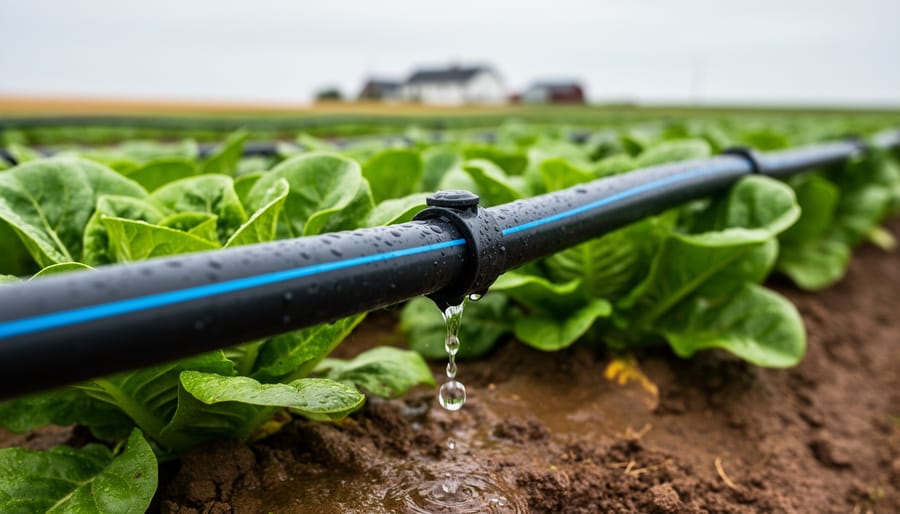
Soil health management systems reduce pest pressure by building diverse microbial communities and improving soil structure, creating conditions where beneficial organisms naturally suppress harmful pests before they reach economic thresholds. This approach works because healthy soils support predatory insects, beneficial nematodes, and fungi that compete with or consume pest species, reducing the need for chemical interventions while strengthening crop resilience.
For Canadian prairie farmers, particularly those managing the heavy clay soils common across Alberta and Saskatchewan, this biological foundation offers a practical path forward. When soil biology thrives, crops access nutrients more efficiently, root systems expand deeper into the profile, and plant tissues develop the structural integrity that deters feeding damage. The system relies on managing what happens below ground to influence what happens above it.
The science is straightforward. Soil organisms form intricate food webs where each tier supports the next. Bacteria and fungi break down organic matter, protozoa and nematodes consume bacteria, and predatory species regulate pest populations. Disrupting this balance through intensive tillage or chemical overuse removes the natural checks that keep pest species in control. Rebuilding it requires deliberate management choices: reducing tillage intensity, maintaining living roots year-round, incorporating diverse crop rotations, and adding organic amendments strategically.
This isn’t about abandoning modern farming tools. It’s about layering biological systems into existing operations to create agro-ecosystem balance that reduces input costs and risk exposure. Producers who have shifted toward soil health management report fewer disease outbreaks, lower insect pressure, and crops that withstand environmental stress more effectively. The transition takes time, typically three to five growing seasons to see measurable shifts in soil biology, but the foundation you build compounds across years.
The Biology-Pest Connection: Why Soil Life Matters for Pest Control
How Beneficial Organisms Outcompete Pests
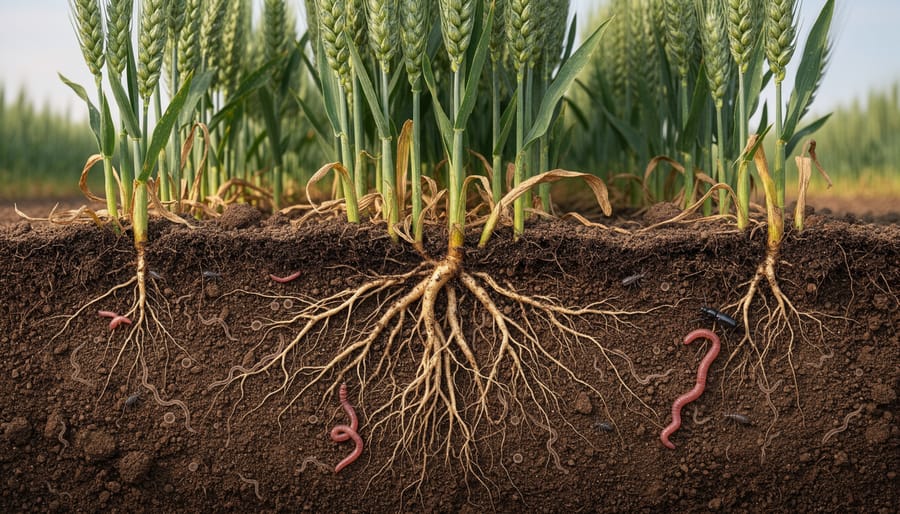
Healthy soil teams up with biology to keep pest populations in check. When you build thriving communities of beneficial microbes, nematodes, and fungi, they outcompete harmful organisms for food, space, and resources, a dynamic called competitive exclusion. Think of it like filling a room with helpful tenants so there’s no vacancy for troublemakers.
Beneficial fungi colonize root surfaces and occupy the same ecological niches that pathogenic species need. When these spots are already occupied, disease-causing organisms struggle to establish. The same principle works with nematodes: predatory and bacterial-feeding species consume resources and patrol the same soil zones where pest nematodes would otherwise thrive. Research confirms that soil biodiversity reduces pests by creating competitive pressure that limits pest survival and reproduction.
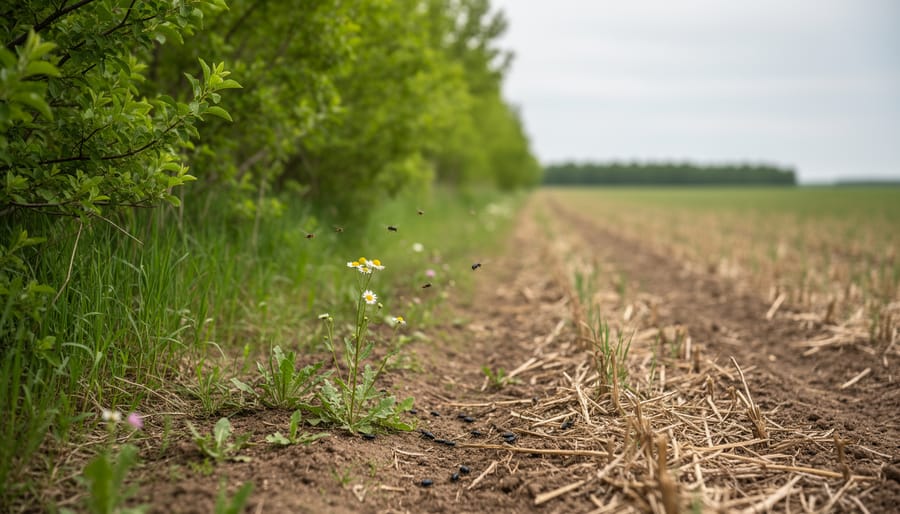
This biological competition extends above ground too. Diverse soil life supports populations of natural predators including ground beetles, spiders, and parasitic wasps that feed on pest insects at vulnerable life stages. These predators need stable habitat and alternative food sources that healthy soil ecosystems provide year-round.
The key is maintaining abundance. A soil with millions of beneficial organisms per handful can absorb pest introductions without significant crop damage, while depleted soil gives pests an easy foothold. Building this biological buffer takes consistent practices that feed and protect soil life, but once established, it creates ongoing competitive resistance to pest pressure.
Plant Health as Pest Defense
Strong plants are naturally better at defending themselves against pests. When soil provides balanced nutrition and supports robust root systems, plants build thicker cell walls that physically resist penetration by insects and pathogens. These structural defenses make it harder for pests to establish feeding sites or entry points.
Healthy soil also enables plants to produce defensive compounds, natural chemicals that deter feeding or slow pest reproduction. Plants grown in biologically active soil with balanced nutrients allocate more resources to these protective substances. Stressed plants, by contrast, often lack the energy to maintain both growth and defense, making them attractive targets.
The difference shows up in how pests behave in the field. Insects and diseases preferentially attack weakened plants with compromised defenses. When you walk a field, pest damage typically concentrates on plants showing nutrient deficiencies or stress symptoms, the ones with yellowing leaves, stunted growth, or shallow roots struggling in compacted zones.
Soil health management systems address these vulnerabilities at the root cause. By maintaining active microbial communities that cycle nutrients efficiently and protect root function, you grow plants with the biological capacity to resist pressure. This doesn’t eliminate pests entirely, but it shifts the balance so your crop can tolerate pest presence without significant yield loss. The plant’s own defenses become your first line of protection, reducing how often you need to intervene with other control measures.
Core Practices in Soil Health Management Systems
Keeping Living Roots in Soil Year-Round
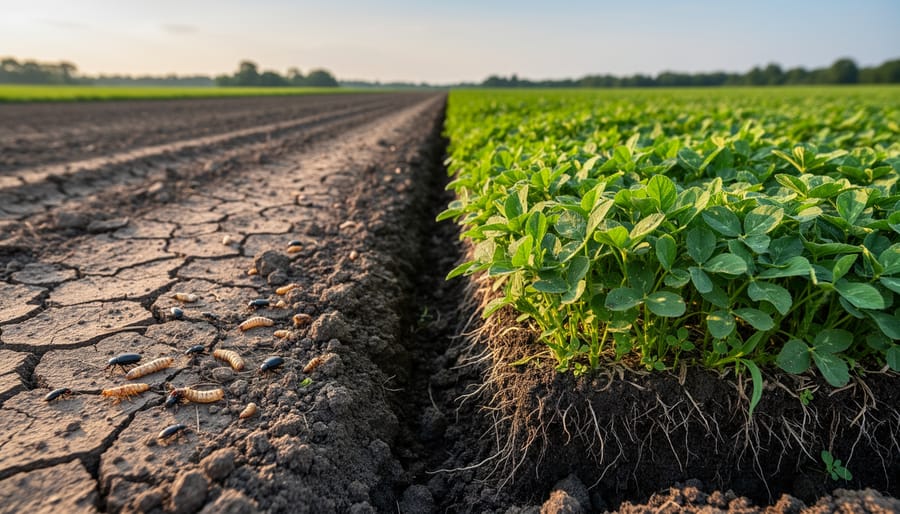
Living roots in the soil year-round accomplish what bare ground can’t: they keep the soil food web alive and working. When roots are actively growing, they exude sugars and carbon compounds that feed beneficial bacteria and fungi. These organisms, in turn, compete with pathogenic species for space and resources, creating an environment less hospitable to pests before crops even go in the ground.
The challenge on the prairies is fitting this into short growing seasons. Many Alberta farmers use cool-season cover crops like winter rye or hairy vetch seeded immediately after harvest. These establish quickly in fall, protect soil through winter, and provide early spring growth before termination for cash crops. The key is getting covers established with enough time to develop roots, typically four to six weeks of growth before freeze-up makes a meaningful difference.
For those hesitant to add a full cover crop step, extending cash crop rotational diversity serves a similar purpose. Alternating cereals with oilseeds and pulses keeps different root types in soil across seasons, preventing pest populations from building around a single crop’s root environment. Some operations maintain living roots by under-seeding cover species into standing crops, giving covers a head start before harvest.
The biological payoff builds over time rather than overnight. Soil organisms multiply when consistently fed, and pest species struggle to establish in these active, competitive environments. Bare soil periods, by contrast, allow pest eggs and larvae to develop without biological pressure, creating problems for the next crop. Keeping something growing, whether covers, cash crops, or diverse rotations, interrupts that cycle naturally.
Minimizing Soil Disturbance
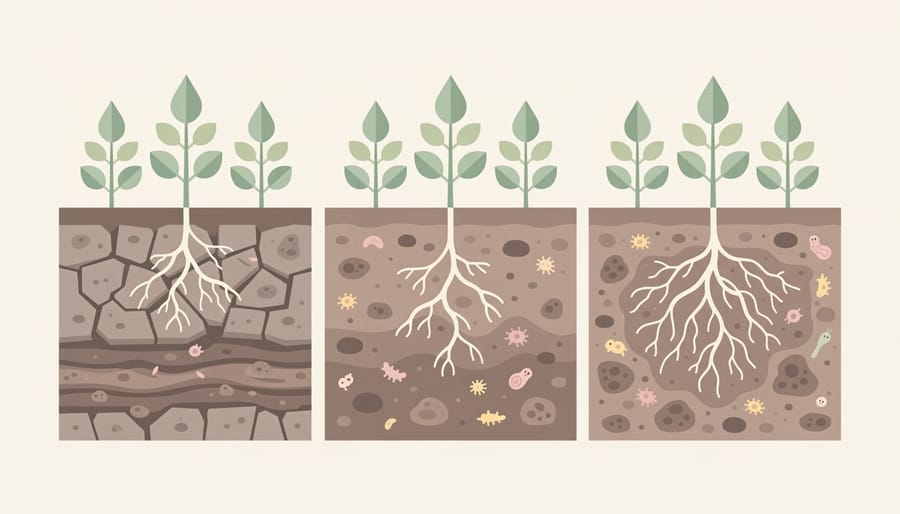
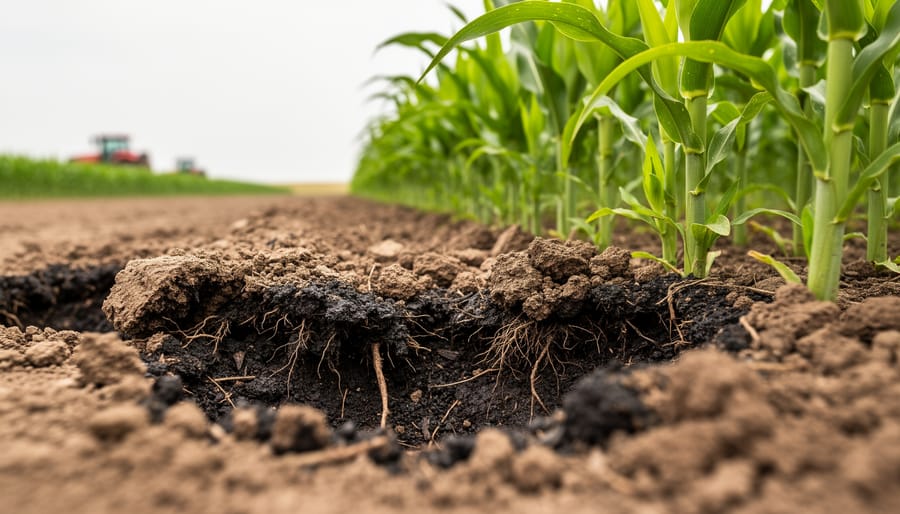
Every pass with heavy tillage equipment fractures the underground architecture that supports pest-suppressing organisms. Tillage shatters fungal hyphae networks that extend through healthy soil like microscopic webs, competing with disease-causing fungi for space and nutrients. These beneficial networks can’t re-establish overnight, they need years of undisturbed growth to form the dense connections that exclude pathogens and help plants access water and nutrients during stress periods when pest pressure typically increases.
Reducing tillage intensity preserves the physical habitat structure that beneficial organisms require. Earthworms, predatory nematodes, and soil-dwelling beetles that consume pest larvae need stable tunnels and aggregates to thrive. When soil remains largely intact between crops, these populations build over successive seasons rather than being reset to near-zero with each cultivation pass.
No-till and reduced-till systems also maintain soil pore structure that regulates moisture more consistently than repeatedly worked ground. This stability prevents the waterlogged or drought-stressed conditions that weaken plants and make them more attractive to pests. Healthier plants grown in structured soil develop stronger root systems and more robust natural defenses.
The transition requires patience. Fields recently converted from intensive tillage may show little immediate pest reduction as soil biology rebuilds slowly. Practical steps include reducing tillage depth and frequency gradually, using zone or strip-till where complete no-till isn’t immediately feasible, and accepting that biological pest suppression develops as a long-term system benefit rather than an instant solution.
Building Diversity Above and Below Ground
Diversity in both crop selection and soil biology creates overlapping defenses that pests struggle to navigate. Complex rotations that alternate plant families break pest reproduction cycles by removing their preferred hosts. When you follow canola with a cereal, then a pulse, you starve specialized pests that depend on continuous access to the same crop type. The longer and more varied your rotation, the fewer opportunities pests have to establish stable populations.
Intercropping takes this further by growing multiple species simultaneously. Companion plants can confuse pest navigation, provide habitat for beneficial insects, or create physical barriers that slow pest movement. Even simple combinations like cereals with legumes add complexity that monoculture pests find disruptive.
Below ground, this plant diversity feeds different soil organisms with varied root exudates and residue chemistry. Some plants favour bacteria, others support fungi, and many feed both in different proportions. This varied menu builds a diverse soil food web where beneficial organisms fill ecological niches that might otherwise host pathogenic species.
The approach mirrors what many Canadian farmers are already learning about winning without chemicals through biological management. You’re not eliminating all pests, but you’re creating conditions where their populations rarely reach economically damaging thresholds. The system becomes resilient through redundancy, multiple pathways to suppress different pest types rather than relying on any single control method.
Measuring Soil Health for Pest Management
Visual and Physical Field Assessments
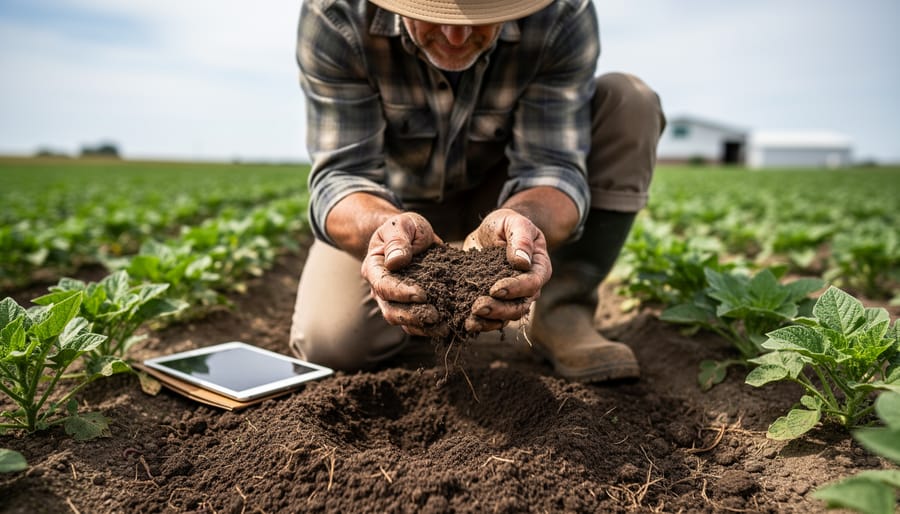
Walk into your field with a shovel and your observations can tell you more about pest suppression potential than you might expect. Start by digging a soil pit about thirty centimeters deep and examining what you uncover.
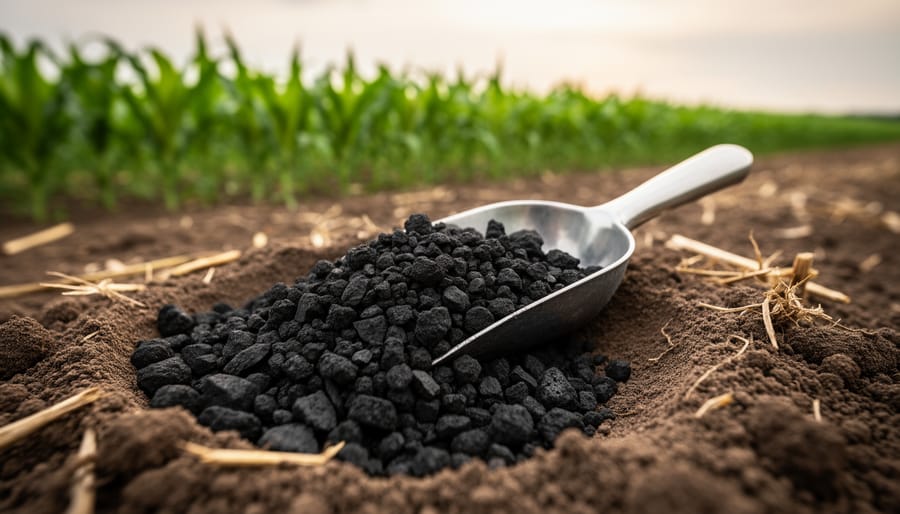
Healthy soil structure crumbles into medium-sized aggregates rather than breaking into powder or forming hard clods. These aggregates house the beneficial organisms that compete with pests. When you break apart a clump, look for visible pore spaces, they indicate good aeration and drainage that supports beneficial biology while making conditions less favorable for many soil-dwelling pests.
Check for biological activity. Earthworms, beetles, and other visible organisms suggest a functioning soil food web. Their presence means predators are active and competition for resources is high, both factors that suppress pest populations naturally.
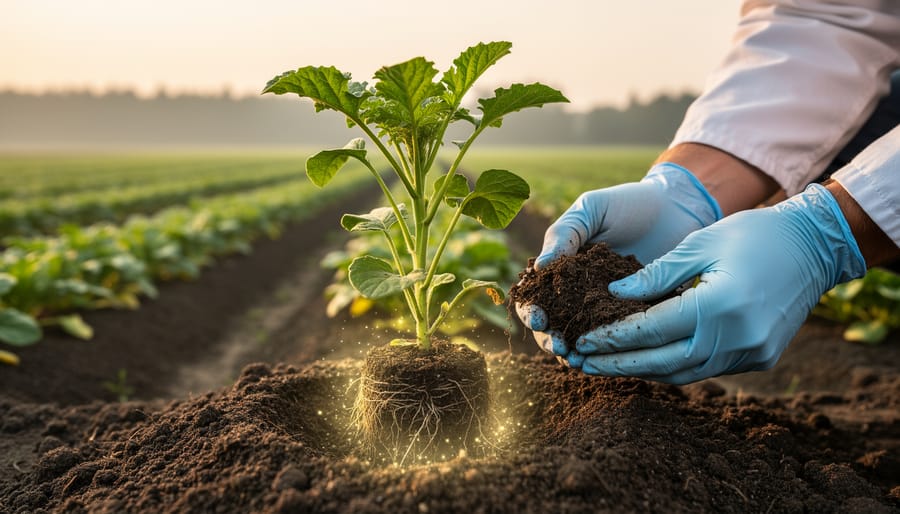
Pull a plant and examine its roots. White, fibrous roots with good branching indicate healthy plants better equipped to resist pest attacks. Discolored, stubby, or damaged roots often signal stress that makes plants vulnerable.
Assess water infiltration by pouring water on the soil surface. If it pools rather than soaking in steadily, compaction or poor structure may be limiting the beneficial organisms that help control pests.
These field observations give you a baseline. Repeat them across different areas and through seasons to track how your soil health practices are building the biological defenses that reduce pest pressure over time.
When to Consider Laboratory Testing
Laboratory testing becomes valuable when you need deeper insight into your soil’s biological capacity beyond what field observations reveal. While visual assessments show surface-level activity, lab tests can confirm whether your soil biology is robust enough to suppress pest populations effectively.
Biological activity tests measure microbial respiration and active carbon, indicators that healthy microbial communities are cycling nutrients and outcompeting pathogenic organisms. When these metrics show strong activity, you’ve built the foundation for natural pest suppression. Aggregate stability tests reveal whether fungal networks and microbial glues are binding soil particles, these same networks that crowd out disease-causing fungi.
Nutrient balance tests matter because they show whether your soil can deliver the right nutrients at the right time. Plants fed properly through biological processes develop stronger defenses against pest attack. Look for patterns: balanced calcium-to-magnesium ratios support cell wall strength, while adequate micronutrient availability helps plants synthesize defensive compounds.
Pairing lab results with field observations and smart sensors gives you the complete picture. If tests show weak biological activity in areas where you’re seeing pest pressure, that’s your signal to adjust practices, add cover crops, reduce disturbance, or introduce organic matter. The goal isn’t hitting specific numbers but understanding whether your system trends toward biological balance or biological vulnerability.
Implementing Systems on Alberta Farms
Starting Small: Pilot Areas and Incremental Change
Start with a single field or quarter-section rather than converting your entire operation at once. This pilot approach lets you observe how soil health practices affect pest pressure in your specific conditions without risking your whole farm’s productivity during the learning curve.
Choose an area that’s manageable but large enough to show meaningful results, typically 40 to 80 acres. Pick a field where you can easily compare results against your standard practices on adjacent land. Avoid your most problematic fields for initial trials; you want to see what soil health systems can do under representative conditions, not test them against your worst pest hotspots right away.
Set clear benchmarks before you begin. Document current pest levels, soil conditions, and input costs for your pilot area. Track changes season by season, noting what works and what challenges emerge. Many Alberta farmers find that pest pressure shifts gradually as soil biology builds, you’re creating climate-resilient health in living systems, which takes time.
Expect a transition period. Soil biology doesn’t rebuild overnight, and you might see variable results in year one or two as microbial communities establish themselves. Budget for this adjustment phase and resist the temptation to abandon practices when results aren’t immediately dramatic.
Use your pilot area as a learning laboratory. Invite neighbors, agronomists, or extension specialists to walk the field with you. Their observations combined with yours create valuable knowledge about how these systems perform in prairie conditions, helping you refine your approach before expanding.
Equipment and Input Adjustments
Transitioning to soil health management systems doesn’t necessarily require a complete equipment overhaul, but some adaptations make implementation more practical on prairie farms.
For reduced tillage, your existing seeder likely needs modification rather than replacement. Adding row cleaners helps manage residue in cooler spring soils, while adjustable down-pressure systems ensure seed-to-soil contact without excessive disturbance. Coulter attachments can cut through cover crop residue when direct seeding. Many Alberta farmers find that adjusting opener angles and upgrading closing wheels addresses most challenges without major capital investment.
Cover crop establishment works with standard seeders if you time planting carefully, though some operators add a basic broadcast seeder for quicker establishment after harvest. For early-terminated covers, a roller-crimper attachment can replace herbicide termination while creating effective mulch. The key consideration is seed size compatibility, your grain drill handles larger cover crop seeds like peas and cereals well, while smaller seeds like radish or clover may need different metering systems.
Organic amendment application depends on material type and availability. Solid manures require spreaders you may already own, though calibration matters more as you target specific fields for biological boost rather than blanket application. Liquid amendments like compost tea need spray equipment, but small-batch application through existing sprayers lets you test effects before scaling up.
Start with what you have. Most successful transitions involve gradual equipment adjustments as you learn which practices deliver results on your specific operation.
Expert Perspective: Making the Transition Work
Tom Hendricks farms grain near Lacombe and began shifting toward soil health practices about seven years ago after watching input costs climb while dealing with persistent flea beetle and cutworm pressure. His perspective cuts through the hype around soil health to what actually happens in the field.
“The first thing people ask is whether you see fewer pests immediately,” Hendricks says. “The honest answer is no. Building soil biology takes time, you’re establishing populations of beneficial organisms, strengthening plant defence systems, and changing the soil environment. I noticed gradual changes over several seasons, not a light switch.”
What he did observe fairly quickly was better plant emergence and more uniform stands, which he attributes to improved soil structure and root development. “Healthier plants handle pest pressure differently. They don’t collapse under the same insect load that used to devastate a stressed crop.”
The transition brought practical challenges. Equipment modifications for direct seeding into cover crops required both investment and learning. “I spent two seasons figuring out seed placement and residue management. You can’t just switch systems overnight and expect everything to work perfectly.”
Hendricks emphasizes starting with observation rather than dramatic changes. He began by reducing tillage on selected fields while monitoring soil structure, residue breakdown, and pest populations. “I wanted to see what was actually happening in my soil before committing the whole operation. That patience paid off because I learned what works here, not what works in a textbook or on someone else’s farm.”
His advice for farmers considering soil health systems focuses on realistic expectations and gradual implementation. “Talk to agronomists who understand biological systems, connect with farmers further along this path, and give yourself permission to learn as you go. The pest suppression benefits are real, but they come as part of building overall system resilience, not as a quick fix.”
The shift to soil health management systems represents a fundamental change in how we approach pest pressure, moving from reactive chemical intervention to proactive biological resilience. By building diverse soil communities, maintaining living roots, and minimizing disturbance, you create conditions where beneficial organisms naturally suppress pests before economic thresholds are reached. This isn’t about eliminating every pest organism; it’s about establishing a balanced system where your soil biology works alongside your management decisions.
The practices outlined here work together as a system. Cover crops feed the biology that competes with pathogens. Reduced tillage preserves the habitat those organisms need. Crop diversity disrupts pest cycles while supporting beneficial populations. None of these practices delivers overnight results, but the cumulative effect builds season after season, creating resilience that chemical inputs alone cannot provide.
Start with assessment. Walk your fields and evaluate what you’re already seeing, soil structure, biological activity, areas where pest pressure consistently appears. Choose one practice that fits your operation and test it on a manageable scale. Learn what works in your specific conditions before expanding.
You’re not making this transition alone. Alberta’s agricultural networks offer soil health workshops, on-farm research collaborations, and producer groups where farmers share practical experience with these systems. Regional agronomists can help interpret soil tests and adapt practices to your climate and cropping system. The knowledge base exists; the question is where you’ll start building soil health into your pest management strategy.