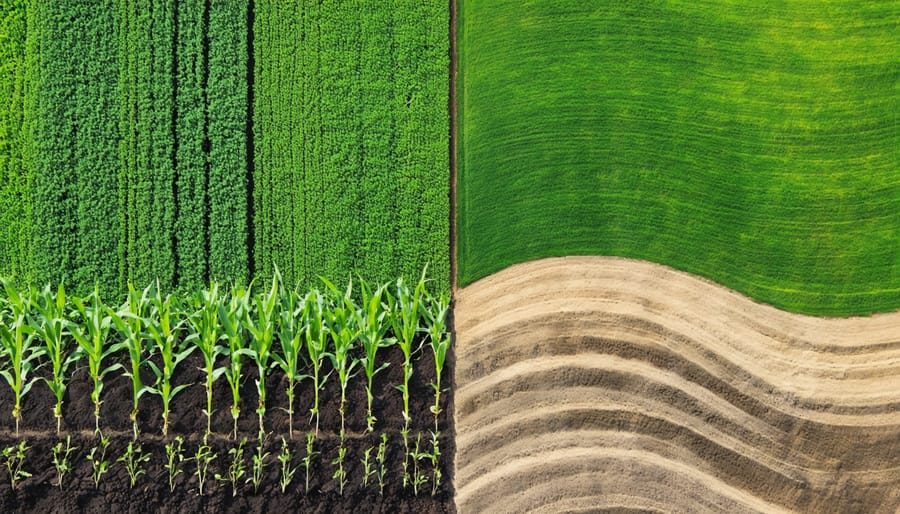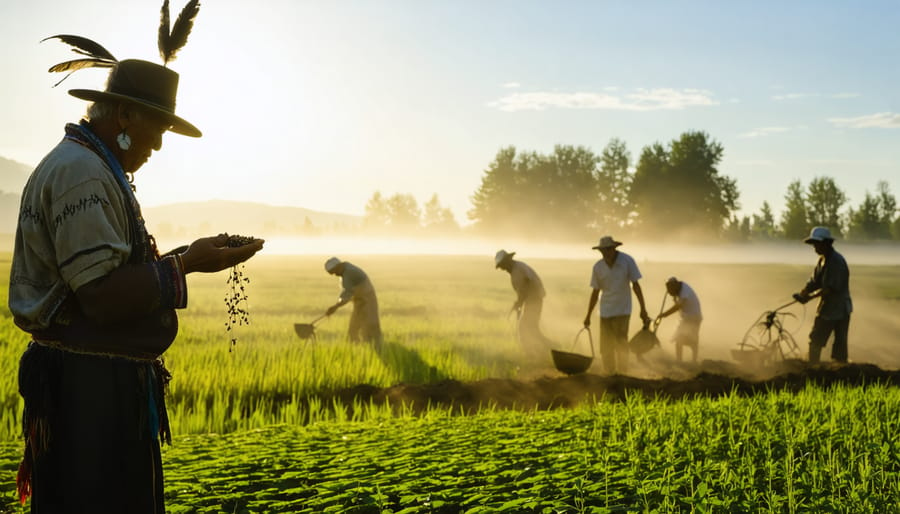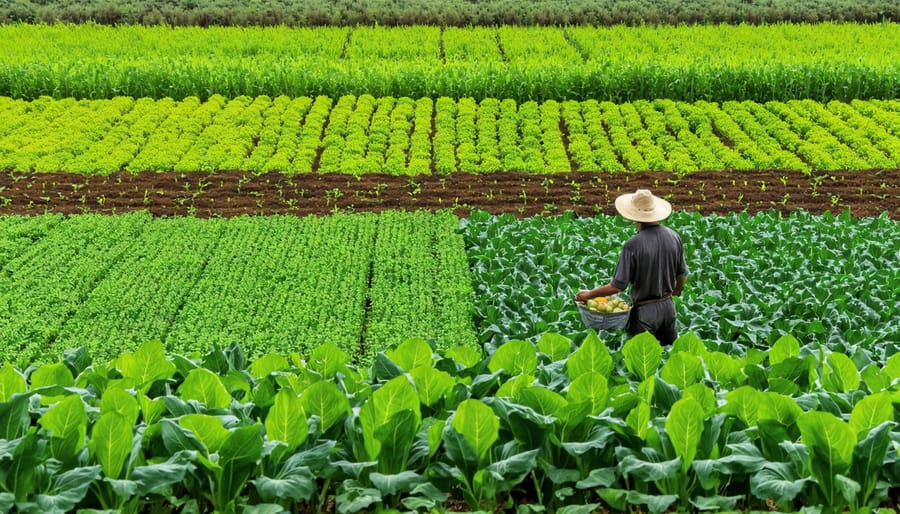
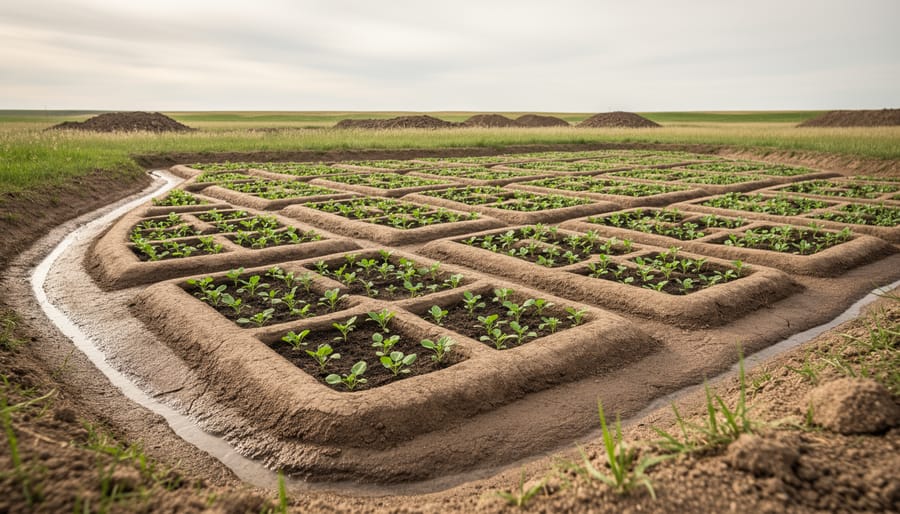
Zuni farming is a centuries-old Indigenous agro-aquaculture system developed by the Zuni people of the American Southwest that combines waffle gardens, terraced fields, and runoff harvesting to grow crops in arid conditions with minimal water inputs. This traditional approach captures every drop of rainfall and snowmelt through carefully engineered earthworks, channeling water to crop beds while preventing soil erosion and maximizing infiltration.
For Canadian farmers facing increasingly unpredictable precipitation patterns, particularly across the Prairies, Zuni techniques offer proven solutions. The system’s core principles translate directly to dryland agriculture: work with natural water flows rather than against them, create microclimates that protect plants from wind and temperature extremes, and build soil structure that holds moisture longer.
What makes Zuni farming especially relevant in 2026 is its focus on water efficiency without expensive infrastructure. Alberta producers managing quarter sections with variable topography can adapt these techniques using basic earthmoving equipment and observation skills. The waffle garden design, for instance, creates sunken beds surrounded by raised edges that capture irrigation water or rainfall, reducing runoff by up to 85% compared to flat fields.
This Indigenous water wisdom isn’t about replicating exact historical practices. It’s about understanding the engineering logic behind each component and applying those principles to your specific soil type, slope, and climate challenges. The following sections break down how the system functions, its key components, and practical applications for Canadian growing conditions.
What Zuni Farming Means
Zuni farming is a traditional dryland agricultural system developed by the Zuni Pueblo people of what is now New Mexico over centuries of adapting to an arid climate with unpredictable rainfall. Rather than relying on consistent irrigation, Zuni farmers engineered a sophisticated approach to capture, direct, and retain seasonal moisture through terracing, sunken garden beds, and strategic field placement. This system allows productive crop growth in regions receiving as little as 200-300 millimetres of annual precipitation, making it one of the most successful examples of dry farming without irrigation in North America.
The practice emerged in the high desert plateaus of the Colorado Plateau, where the Zuni people cultivated corn, beans, and squash using techniques passed down through generations. Fields were positioned to intercept runoff from summer thunderstorms and spring snowmelt, with earth and stone structures slowing water movement and allowing it to soak into the soil. Indigenous crop varieties were selected for deep root systems and drought tolerance, traits that enabled survival through extended dry periods.
- Waffle Gardens
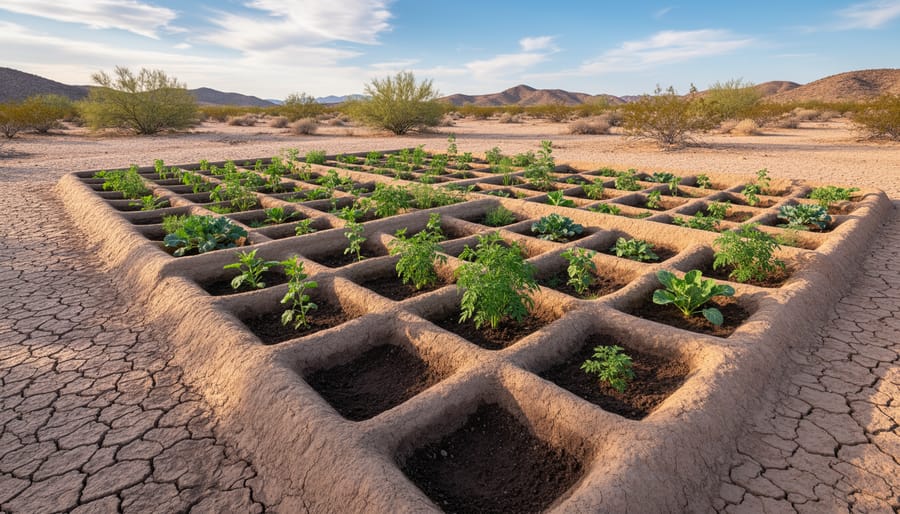
- Sunken grid systems where each square cell is bordered by raised earth walls to trap water and reduce wind exposure, creating protected microclimates for individual plants.
- Ak Chin Fields
- Agricultural plots positioned at the mouths of arroyos or below slopes to capture seasonal floodwater and runoff, maximizing moisture availability without constructed irrigation.
- Runoff Agriculture
- A farming approach that relies on harvesting and directing naturally occurring water flows from rain and snowmelt rather than pumping or channeling from permanent water sources.
- Traditional Crop Varieties
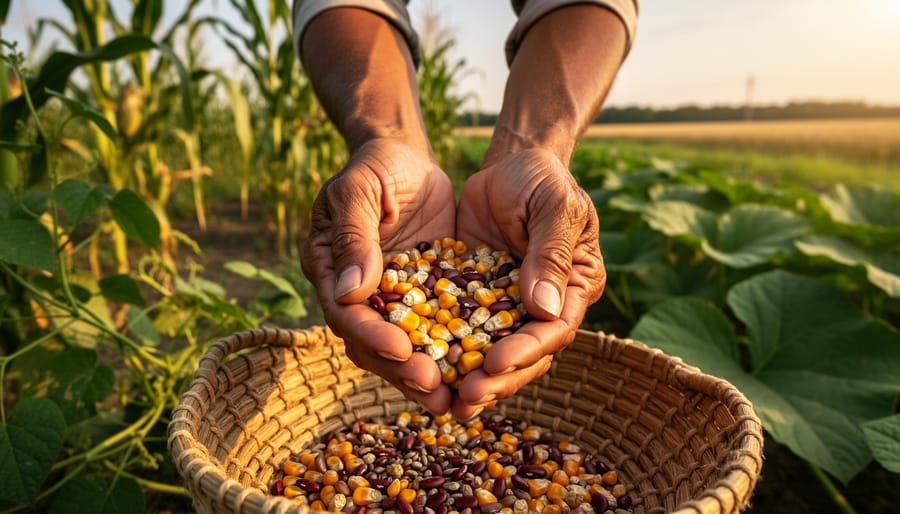
- Heirloom seeds adapted over generations to thrive in low-moisture conditions, including Zuni blue corn, tepary beans, and drought-resistant squash cultivars.
Zuni farming is classified as an agro-aquaculture practice because its success depends on sophisticated water management rather than simply planting in dry soil. The system treats water as a resource to be captured, stored in the earth, and released to crops over time, paralleling wetland farming techniques that work with natural hydrology. For Canadian farmers facing water scarcity in prairie and foothill regions, understanding how Zuni techniques maximize every drop of precipitation offers practical lessons in climate-adapted agriculture.
How Zuni Farming Works
Water Harvesting and Distribution
Zuni water management starts with reading the land. Farmers position fields where seasonal runoff naturally concentrates, placing crops at the base of slopes and near shallow washes that carry snowmelt and summer thunderstorm flows. Rather than building large-scale irrigation infrastructure, the system works with the timing and movement of ephemeral water.
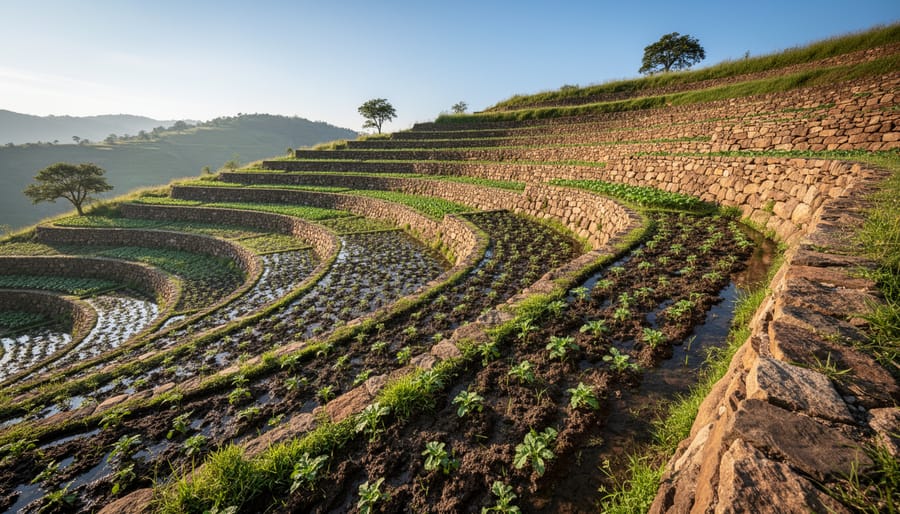
Check dams built from stacked stone or packed earth slow runoff as it moves downslope. These low barriers spread water across wider areas and give it time to soak into the soil instead of rushing past in a single event. A series of small dams creates a staircase effect, with each level capturing sediment and moisture before passing overflow to the next terrace below.
Field placement is equally strategic. Ak chin fields sit at the mouths of arroyos where occasional floods deposit both water and nutrient-rich silt. The fields are shaped to receive and hold this flow, with slightly raised borders that prevent water from escaping once it arrives. During dry periods, the moisture stored in the root zone sustains crops without supplemental irrigation.
This approach treats every raindrop as precious. By capturing water where it falls and holding it where crops grow, Zuni farmers stretch limited precipitation across the entire growing season. The techniques require careful observation of drainage patterns and seasonal timing, but no pumps, pipes, or external water sources.
Soil Building and Microclimate Creation
Zuni farmers engineer growing spaces that trap moisture and moderate temperature extremes through deliberate manipulation of topography and soil structure. Sunken gardens, excavated beds positioned below ground level, create protective pockets where plants escape the drying force of desert winds while benefiting from cooler, more stable conditions. These depressions accumulate organic debris naturally, building soil fertility over successive seasons without external inputs.
The waffle bed system takes this principle further by dividing the growing area into individual square cells bordered by low earthen walls. Each cell functions as a miniature ecosystem, capturing and holding water from rain or snowmelt while concentrating composted plant material and household waste. The raised borders cast shade during intense afternoon heat, reducing evaporation from the soil surface. Wind passes overhead rather than scouring moisture from plant leaves, a critical advantage in environments where desiccation poses the primary threat to crop survival.
Soil temperatures in these sunken structures remain several degrees cooler than surrounding terrain during summer days, extending the viable growing window for sensitive crops. The concentrated organic matter improves soil structure, creating aggregates that absorb water quickly during brief storms yet release it slowly to root systems. This self-maintaining cycle, where the physical design continuously enhances soil quality, represents a fundamental shift from fighting the environment to working with its patterns. The system requires no pumps, no irrigation infrastructure, and no external water sources beyond what the sky provides.
Seed Selection and Crop Adaptation
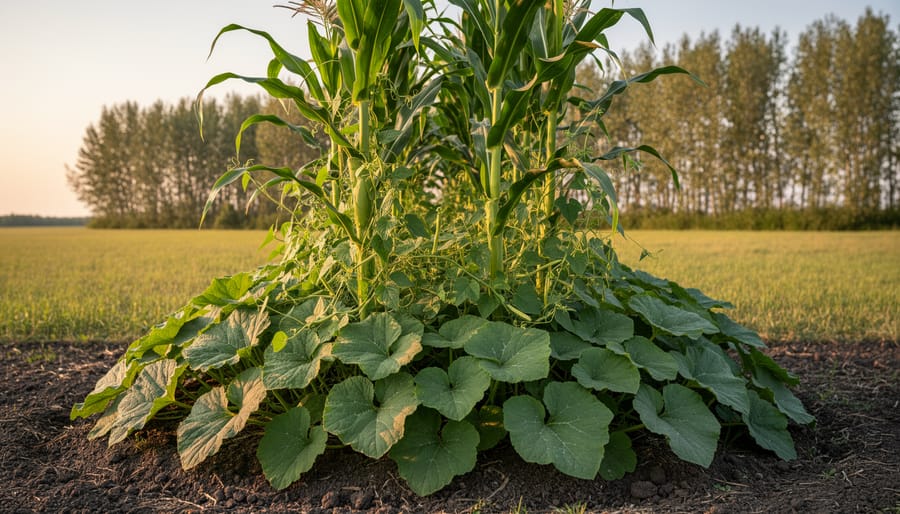
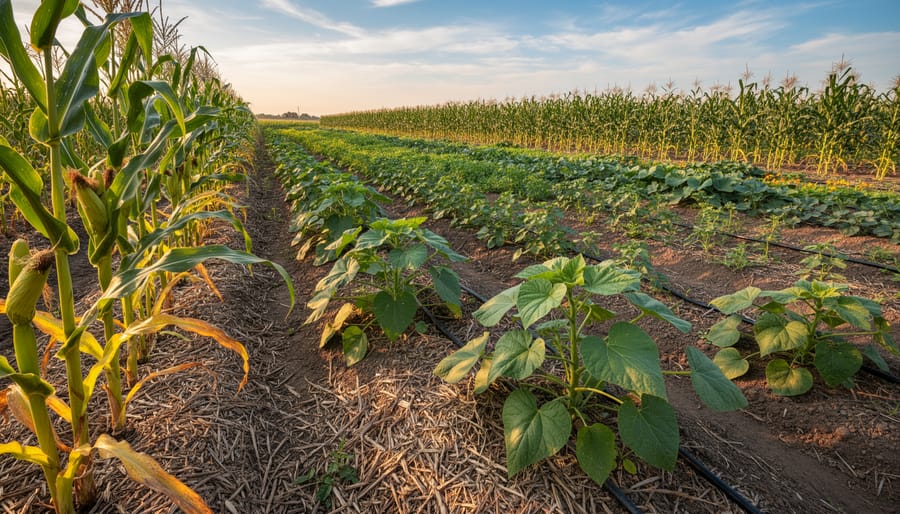
Zuni farmers developed crop varieties through generations of careful seed saving, selecting plants that thrived in dryland conditions with minimal water. Their signature trio, corn, beans, and squash, evolved distinct characteristics: deep-rooted corn that taps subsurface moisture, nitrogen-fixing beans that enrich soil, and broad-leafed squash that shades the ground to reduce evaporation. This Three Sisters companion planting creates a self-supporting ecosystem where each plant enhances the others’ survival. The beans climb corn stalks instead of requiring separate supports, while squash leaves suppress weeds and maintain soil moisture. Together, these crops demonstrate Indigenous pest control through biodiversity, intercropping confuses pests and reduces concentrated infestations that plague monocultures, while diverse root depths and growth patterns maximize nutrient use without depleting the soil.
Core Components of Zuni Agricultural Systems
Waffle Gardens
Waffle gardens are the most recognizable feature of Zuni agriculture: a grid of rectangular cells sunk below ground level, separated by low earthen walls. Each cell measures roughly one square meter and sits 15 to 30 centimeters below the surrounding surface. The sunken design captures rainwater and snowmelt, funneling it into the growing area where it soaks into the soil instead of running off. The raised walls between cells act as windbreaks, reducing evaporation and protecting young plants from the constant wind that sweeps across the high desert.
Farmers plant directly into the bottom of each cell, where moisture concentrates and temperatures stay more stable than on exposed ground. The grid layout allows precise water management: if one cell receives too much water, it doesn’t flood neighboring plants. During dry spells, the sunken position keeps roots cooler and conserves whatever moisture remains in the soil. Traditional waffle gardens grow corn, beans, squash, chiles, and herbs, with each cell accommodating a small cluster of plants that benefit from the shared microclimate.
Ak Chin (Floodwater) Fields
Ak Chin fields represent an ingenious response to unpredictable desert rainfall. Rather than relying on irrigation, Zuni farmers position these fields at the mouths of arroyos, dry gullies that temporarily channel water during storms, or at the base of slopes where runoff naturally collects. When summer monsoons or spring snowmelt arrive, the fields capture this ephemeral flow, absorbing moisture deep into the soil profile.
The system works because placement is everything. Fields sit where topography funnels water, often in fan-shaped configurations that spread runoff across planting areas. Farmers read the land carefully, observing drainage patterns over years to identify prime spots. Once established, these fields require no pumps or ditches. The water arrives on its own schedule, and drought-adapted corn varieties planted there respond quickly to the moisture pulse.
This approach shares principles with Indigenous soil practices across North America that prioritize working with natural water movement rather than against it. For Canadian farmers in regions with seasonal runoff or spring melt, the lesson is clear: strategic field placement can harvest water without infrastructure.
Terracing and Check Dams
Terracing and check dams form the structural backbone of Zuni water management. These features reshape the landscape to control water flow rather than fighting against it.
Terraces are stepped platforms cut into slopes, breaking steep grades into manageable horizontal segments. Each level catches and holds water that would otherwise rush downhill, allowing it to soak into the soil. Stone retaining walls support the terrace edges, built without mortar using carefully fitted local rock. The walls also absorb daytime heat and release it at night, extending the growing season for crops planted against them.
Check dams are low barriers built across drainage channels and shallow washes. Constructed from stacked stones, brush, and packed earth, they slow flash floods to a manageable pace. Water pools behind each dam, deposits nutrient-rich sediment, then gradually seeps into the ground or flows over to the next structure downstream. A series of check dams transforms a single erosive water event into sustained soil moisture across multiple growing areas.
Both techniques require minimal maintenance once established. Stones stay in place for decades, and damaged sections are easily repaired with materials found on-site. The system works with gravity and natural water patterns rather than requiring pumps or engineered channels.
How Zuni Techniques Are Applied Today
Dryland Farming in Prairie and Foothill Regions
Alberta’s Chinook Belt and southern prairie regions share critical challenges with traditional Zuni homelands: unpredictable rainfall, high evaporation rates, and intense summer heat. Farmers in these areas are adapting Zuni principles to extend growing seasons and reduce irrigation dependency.
Sunken bed systems work remarkably well in foothill zones where spring runoff provides brief but intense water pulses. Lethbridge-area growers have tested shallow depression gardens that capture snowmelt and early rains, keeping root zones moist three to four weeks longer than flat beds. The technique cuts water use by 30 to 40 percent for high-value crops like garlic and shallots.
Check dam concepts translate effectively to managing ephemeral creeks and seasonal coulees. Small earthen berms slow runoff during June thunderstorms, allowing moisture to infiltrate rather than race off parched slopes. This approach suits mixed grain-and-vegetable operations where irrigation infrastructure is costly or impractical.
Windbreak design borrows from Zuni microclimate thinking. Instead of single shelterbelt rows, some Alberta farms now plant staggered hedgerows that create pockets of reduced wind and higher humidity, mimicking the protective effect of waffle garden walls. These zones support tender crops that typically struggle in open prairie conditions.
The key adaptation is timing: Canadian growers must account for shorter frost-free windows and cooler nights. Zuni techniques extend soil moisture availability during critical germination and flowering periods when prairie droughts hit hardest, making them particularly valuable as climate patterns become less predictable.
Indigenous Knowledge Integration in Canadian Agriculture
Canadian Indigenous communities have long practiced water management and wetland cultivation techniques that share core principles with Zuni farming, offering proven models for climate-adapted agriculture. Coast Salish peoples created clam gardens and tidal terraces that controlled water flow and extended growing zones, while Blackfoot and Cree communities developed sophisticated irrigation systems using stone alignments and earthworks to direct snowmelt across prairie landscapes. These practices demonstrate the same understanding of water capture, microclimate creation, and soil building found in Zuni systems.
Modern integration of these Indigenous approaches strengthens regional food security and cultural continuity. Projects across Alberta and Saskatchewan now combine traditional agriculture in wetlands knowledge with contemporary dryland farming, using check dams modeled after historical Indigenous structures and selecting heritage crop varieties maintained by First Nations seed keepers. The Siksika Nation’s agricultural programs, for example, blend ancestral water management with current soil science to rebuild food sovereignty on reserve lands. This integration honours the expertise embedded in Indigenous farming systems while addressing the water scarcity and climate volatility Canadian farmers increasingly face.
Common Questions About Zuni Farming
Farmers considering Zuni-inspired techniques often have practical questions about adapting these methods to their own operations. While the systems originated in the high desert Southwest, many of the underlying principles translate effectively to other dryland and semi-arid regions.
Can Zuni farming methods work in Canadian climates?
Yes, the core water-harvesting and soil-protection techniques adapt well to prairie and foothill regions with low precipitation. Alberta’s Palliser Triangle and similar dryland areas share the moisture scarcity that Zuni methods address, though you’ll need to adjust timing and crop selection for shorter growing seasons and different rainfall patterns.
What crops work best with these techniques?
Traditional Zuni crops (corn, beans, squash) thrive in water-harvesting systems, but Canadian growers have success with drought-tolerant vegetables like potatoes, carrots, and heritage grain varieties. Focus on crops bred or selected for your region’s specific moisture and temperature conditions rather than copying the exact Zuni palette.
How much water do these systems actually save?
Waffle gardens and terraced systems can reduce supplemental irrigation needs by 40 to 70 percent compared to conventional flat-bed gardening, depending on your baseline rainfall and soil type. The savings come from capturing every bit of natural precipitation rather than producing water from nothing.
Where can I learn more about implementing these practices?
Contact Indigenous agricultural networks, university extension services focused on dryland farming, and organizations working on Indigenous food sovereignty. The Canadian Indigenous Seed Library and provincial agricultural departments often offer workshops on water-smart growing techniques.
Most Zuni-inspired adaptations require minimal specialized equipment. You can build check dams and waffle beds with basic hand tools, though larger terracing projects benefit from machinery for initial earthwork. The investment is primarily in labour and planning rather than expensive inputs, making these techniques accessible to operations of various scales. Start small with a test plot to understand how water moves across your specific landscape before committing to larger installations.
Zuni farming stands as living proof that sophisticated water management doesn’t require modern technology. For over a thousand years, these techniques have sustained communities in one of North America’s driest regions by working with natural water flows rather than fighting them. The principles remain strikingly relevant as Canadian farmers face increasingly unpredictable precipitation patterns and growing pressure on water resources.
The waffle gardens, terraced fields, and floodwater capture systems described throughout this article share a common thread: they maximize every drop of available moisture while building soil health over time. These aren’t museum pieces or historical curiosities. They’re proven agricultural strategies that address the same challenges many Canadian operations face today, particularly across the Prairies and southern interior regions where water scarcity limits production.
What makes Zuni farming especially valuable is its foundation in multi-generational observation and adaptation. Indigenous agricultural knowledge, whether from the Southwest United States or from First Nations communities across Canada, offers hard-won insights into working with variable climates and limited water. Integrating these approaches doesn’t mean abandoning modern tools. It means adding time-tested strategies to your existing toolkit.
Start by connecting with your regional agricultural extension office to explore water conservation techniques suited to your specific conditions. Reach out to Indigenous agricultural networks in your province to learn about traditional practices developed for Canadian climates. The knowledge is there. The question is whether we’re willing to learn from it.