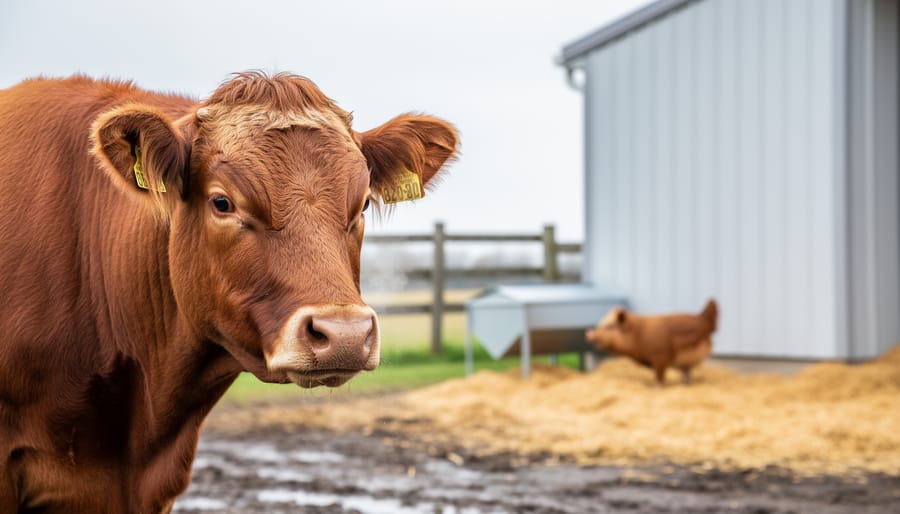
Energy storage for animals refers to the biological processes by which livestock and other farm animals convert feed into stored chemical energy, primarily as fat and glycogen, to fuel metabolism, growth, reproduction, and daily activities. For Canadian farmers managing cattle, pigs, poultry, or other species, understanding these storage mechanisms means the difference between profitable, efficient operations and wasted feed costs that can erode margins by 15 to 30 percent per production cycle.
Every kilogram of feed you put in front of an animal doesn’t translate directly into meat, milk, or eggs. Animals store surplus energy when intake exceeds immediate metabolic needs, then mobilize those reserves during periods of high demand or limited feed availability. This storage capacity evolved as a survival strategy, but on modern farms it shapes everything from finishing weights in beef cattle to egg production rates in laying hens.
The practical implications extend beyond individual animal performance. Better grasp of energy storage helps farmers match ration formulation to production stage, time market-ready animals more precisely, and reduce methane emissions per unit of output. These outcomes align directly with sustainability goals that matter to Alberta producers facing both economic pressure and environmental accountability. Just as solar microgrids capture and store renewable power for later use on farms, animals capture dietary energy and release it when biological demands spike.
This article breaks down how energy storage works in farm animals, the different forms storage takes, and how you can apply this knowledge to improve feed efficiency and environmental performance on your operation.
What Energy Storage in Animals Means
Energy storage in animals refers to the biological process by which livestock convert nutrients from feed into reserves they can draw on later, much like storing hay for winter, except the storage happens inside the animal’s body. When cattle, poultry, or other farm animals eat, their digestive systems break down carbohydrates, fats, and proteins into usable energy. Some of that energy powers immediate needs like movement, digestion, and maintaining body temperature. The rest gets tucked away as energy stored as glycogen and fat creating reserves the animal can tap during periods of high demand, calving, lactation, rapid growth, or when feed quality drops.
This storage system isn’t just biology. It directly affects your bottom line and your farm’s environmental footprint. An animal that efficiently stores energy from pasture in summer can safely draw down those reserves during Alberta’s harsh winters, reducing the need for expensive purchased feed. Better energy storage translates to improved feed conversion ratios, meaning less feed wasted per kilogram of beef, milk, or eggs produced. That efficiency matters for both your wallet and the planet: animals that convert feed effectively produce fewer greenhouse gas emissions per unit of output.
Understanding these key concepts helps you manage energy storage on your operation:
- Energy storage
- The biological process of converting feed nutrients into reserves (glycogen, fat, protein) that animals can mobilize later for production or survival.
- Feed conversion ratio
- The amount of feed required to produce one unit of product (meat, milk, eggs), lower numbers mean more efficient energy use and better storage.
- Body condition score
- A visual and hands-on assessment of an animal’s fat reserves, typically rated on a scale that helps farmers gauge whether livestock are storing adequate energy.
- Metabolizable energy
- The portion of feed energy an animal can actually absorb and use after accounting for losses in digestion and metabolism.
- Maintenance requirements
- The baseline energy an animal needs daily just to stay alive and healthy before any goes toward growth, milk production, or building reserves.
On a sustainable farm, managing animal energy storage means timing feed quality and quantity to match production cycles. You build body condition when pasture is lush and cheap, then allow controlled drawdown during pregnancy or lactation when nutrient demands spike. This approach reduces reliance on purchased inputs, cuts waste, and keeps animals in optimal condition for productive, low-stress lives.
How Animal Energy Storage Works
From Feed to Stored Energy
When an animal consumes feed, its digestive system breaks down the nutrients into forms the body can absorb and use. Carbohydrates from grains and forages are broken down into simple sugars like glucose. The small intestine absorbs these sugars into the bloodstream, where they travel to the liver and muscles. Here, insulin signals cells to convert excess glucose into glycogen, a compact storage form that can be quickly mobilized when energy is needed.
Proteins from feed break down into amino acids during digestion. While the animal uses most of these amino acids to build muscle, repair tissue, and produce milk or eggs, any surplus can be converted to glucose through a process called gluconeogenesis. This happens mainly in the liver and provides a backup energy pathway when carbohydrate intake falls short.
Fats, whether from oilseeds, grain byproducts, or pasture, are digested into fatty acids and glycerol. The small intestine absorbs these components, which then travel through the lymphatic system into the bloodstream. Fat that isn’t immediately burned for energy gets stored in adipose tissue throughout the body. This adipose tissue serves as the animal’s primary long-term energy bank, capable of holding far more energy per unit weight than glycogen.
The liver orchestrates this entire storage process, deciding which nutrients to send where based on the animal’s current energy balance and production demands.
When and Why Animals Draw on Stored Energy
Animals tap into their stored energy reserves when their immediate energy intake from feed falls short of their body’s demands. On Alberta farms, this happens predictably across the production calendar and unpredictably when weather or forage conditions shift.
Early lactation is the classic example. A dairy cow producing 40 litres of milk daily burns far more energy than she can physically eat in the first weeks after calving. Her body pulls from fat reserves built up during the dry period to fuel milk production, which is why cows naturally lose body condition early in lactation. Beef cows face similar demands nursing heavy calves on spring pasture.
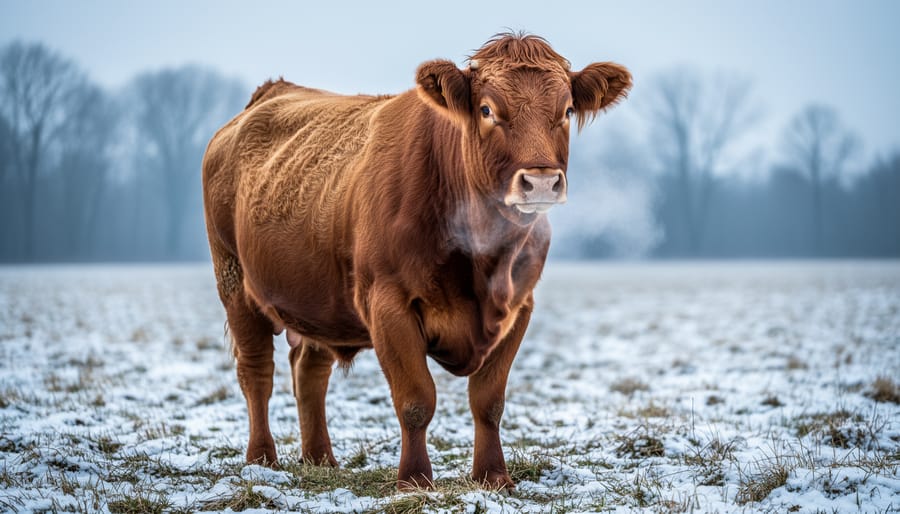
Cold stress forces animals to divert energy from production to simply staying warm. When temperatures plunge below -20°C, common across Alberta winters, cattle can burn 20 to 30 percent more energy just maintaining body heat. If they entered winter with adequate body condition, they draw on fat reserves. If not, production suffers or they lose dangerous amounts of weight.
Common situations that trigger energy mobilization include:
– Calving and early lactation when milk production outpaces feed intake
– Extreme cold snaps requiring extra energy for thermoregulation
– Reduced pasture quality in late fall or drought conditions
– Increased milk production during peak lactation phases
– Rapid growth periods in young stock finishing on backgrounding rations
Feed scarcity, whether from drought, delayed greenup, or winter feeding gaps, leaves animals no choice but to metabolize stored reserves. A beef cow grazing dormant winter pasture might meet only 60 percent of her energy needs from forage alone, relying on body fat to bridge the gap until spring. Understanding these patterns lets farmers plan feeding strategies that support animals through high-demand periods without overfeeding during maintenance phases.
Forms of Energy Storage in Livestock
Glycogen: Short-Term Fuel
Glycogen serves as your livestock’s first line of energy defense, stored primarily in the liver and muscles. Think of it as a ready-to-use fuel tank, animals can tap into these reserves within minutes when they need a quick burst of energy. A beef steer, for example, stores roughly 500 to 800 grams of glycogen in its liver and similar amounts across muscle tissue, depending on body size and condition.
This form of storage is limited but critical. During early lactation, a dairy cow draws heavily on glycogen to support milk production before her feed intake catches up. Similarly, cattle in the finishing phase rely on glycogen for the metabolic push needed to deposit intramuscular fat and gain weight efficiently. The problem is capacity: glycogen stores deplete within 12 to 24 hours of high demand or restricted feeding, forcing animals to switch to slower fat mobilization.
Understanding these dynamics helps you time feeding strategies around production peaks. Just as modern farms use geothermal energy to provide consistent heating without depleting resources, managing glycogen availability through strategic feeding maintains animal performance without overtaxing their biological systems. Monitor body condition and feed quality closely during high-output periods to keep these short-term reserves topped up.
Body Fat: Long-Term Reserves
Body fat represents the largest and most flexible energy reserve in livestock, serving as the biological equivalent of a long-term savings account. When animals consume more energy than they immediately need, their bodies convert excess nutrients into adipose tissue, fat deposits stored primarily beneath the skin, around internal organs, and within muscle tissue. Unlike glycogen’s limited storage capacity, fat can accumulate in substantial quantities, allowing animals to build significant reserves during periods of abundant feed.
This storage system becomes critical during Alberta’s seasonal cycles. Cattle grazing lush summer pastures naturally deposit fat, building body condition that carries them through winter when forage quality drops and energy demands increase. A beef cow in good condition entering calving season can draw on these reserves to support late pregnancy and early lactation without compromising her health, even when feed availability is limited.
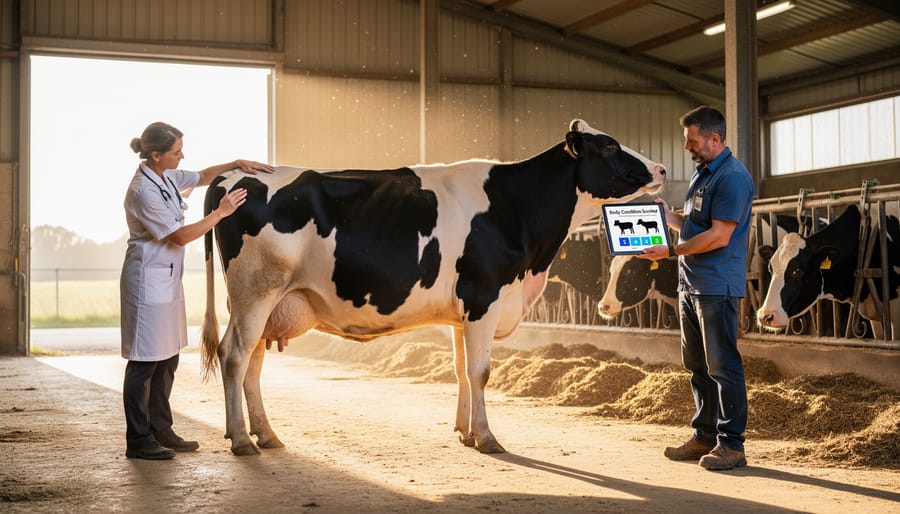
Body condition scoring, the systematic assessment of an animal’s fat reserves through visual appraisal and palpation, translates this biological storage into practical farm management. A cow scoring 3 on a 5-point scale holds optimal reserves; too thin (score 2) and she lacks energy for production, too fat (score 4+) and feed efficiency suffers. Strategic feeding to maintain target body condition scores across production stages lets farmers match their animals’ biological energy storage with seasonal feed availability and production demands.
Protein: Emergency Backup
When feed is severely inadequate or energy demands spike beyond what glycogen and fat can supply, livestock resort to breaking down muscle protein for fuel, a metabolic last resort with real costs. Unlike fat, which exists specifically for storage, protein builds and maintains muscle, organs, and immune function. Tapping into it means sacrificing tissue the animal needs to stay healthy and productive.
This protein catabolism typically occurs during prolonged underfeeding, late pregnancy in thin cows, or extended cold stress without adequate nutrition. The animal loses body condition rapidly, muscle wastes visibly along the topline and hindquarters, and production suffers: milk yield drops, growth stalls, and fertility declines. Recovery is slow and expensive, requiring high-quality protein supplements and time the production cycle often doesn’t allow.
Prevention hinges on monitoring body condition scores throughout the year and adjusting rations before animals slide into negative energy balance. In Alberta’s harsh winters, that means ensuring adequate energy density in feed well ahead of calving or lambing, when demands peak. Once muscle breakdown starts, you’re already behind, nutritionally and economically. Proper planning keeps protein where it belongs: building the animal, not fueling it.
How Farmers Use Energy Storage Principles on Sustainable Farms
Strategic Feeding to Match Production Cycles
Timing your feed’s energy density to match where animals are in their production cycle transforms how efficiently they use stored reserves and external nutrition. Rather than feeding the same ration year-round, you align high-energy inputs with periods of peak demand and allow animals to safely draw on body reserves during lower-stress phases.
Flushing ewes or cows two to three weeks before breeding provides a strategic energy boost that improves ovulation rates and conception. You’re not fattening them, you’re signaling to their metabolic systems that conditions are favorable for reproduction. A body condition score of 3.0 to 3.5 (on a 5-point scale) at breeding typically yields better pregnancy rates than animals that are too lean or overly fat.
Steaming up dairy cows in the final three weeks before calving means gradually increasing energy density to prepare for the massive demands of early lactation. This prevents excessive body condition loss in those critical first weeks when milk production spikes before appetite catches up. The goal is controlled weight gain, not rapid fattening, which can cause metabolic disorders.
Across seasons, particularly in Alberta’s variable climate, you manage body condition strategically. Cattle can build reserves on summer pasture, enter winter with adequate fat cover, and safely mobilize stored energy through the coldest months with targeted supplementation rather than expensive free-choice feeding. This approach cuts feed costs while maintaining animal health and productivity through natural cycles.
Reducing Feed Waste and Carbon Emissions
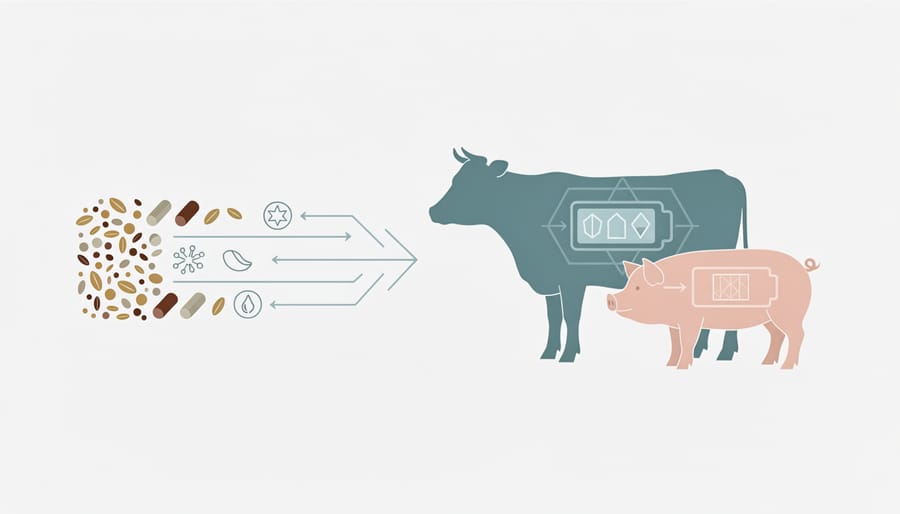
When you match feed energy to an animal’s actual storage capacity and production demands, you cut waste at the source. Overfeeding doesn’t accelerate gains once glycogen and reasonable fat reserves are full, it just passes through as manure or, worse, ferments into excess methane. A beef steer finishing on high-energy rations it can’t fully metabolize produces more methane per kilogram of gain than one fed to match its digestive and storage limits.
Precision feeding based on body condition and production stage improves feed conversion ratios by 10 to 15 percent in many Alberta operations. That means less purchased feed, lower costs, and fewer emissions per unit of meat or milk. The approach mirrors smart energy management elsewhere on the farm: you supply energy when and where it’s needed, not in constant surplus.
Farms that refine their understanding of animal energy storage also open pathways to capture waste differently. Manure from well-fed, efficiently converting livestock has lower volatile solids but can still fuel biomass power systems, closing nutrient loops while generating on-site energy. Better biological efficiency reduces the environmental footprint at every step.
Alberta Case Study: Seasonal Grazing and Body Condition
A 300-head cow-calf operation near Lacombe, Alberta demonstrates how managing animal energy storage cuts costs and emissions. The ranch uses body condition scoring (BCS) in late October to assess each cow’s fat reserves before winter. Cattle grazing native fescue and mixed prairie through summer typically reach BCS 3.0 to 3.5 by fall, enough stored energy to sustain them through calving without constant grain supplementation.
The operation allows cows to naturally draw down body reserves during winter months, providing only minimal hay and protein supplements when temperatures drop below -20°C or before calving. This approach reduced purchased feed costs by 35 percent compared to their previous constant-supplementation program. Because the cattle convert summer pasture, a low-input, carbon-sequestering resource, into body fat reserves, the system lowers the farm’s overall carbon footprint while maintaining healthy calving rates above 92 percent.
The key is monitoring: monthly BCS checks ensure no cow drops below BCS 2.5, the threshold where reproductive performance suffers. Strategic timing replaces year-round feeding.
Expert Insights: Optimizing Animal Energy Systems
Dr. Sarah Mitchell, an Alberta-based ruminant nutritionist with over fifteen years advising cattle operations across the province, emphasizes that effective energy management starts with regular body condition scoring. “Most producers underestimate how much information they can gather just by running their hands along a cow’s ribs and tailhead,” she explains. “A BCS assessment every four to six weeks through the production cycle tells you whether animals are building reserves when they should be or burning through them too quickly.”
Mitchell recommends ultrasound backfat measurement for precision finishing operations and breeding stock evaluation, particularly before winter. “You want adequate reserves heading into cold stress periods, but excess fat drives up maintenance costs and can complicate calving.” She stresses timing feed energy to match physiological demand, building condition on cheaper summer forage, then strategically supplementing through lactation peaks.
Integration with farm-level sustainability goals matters too. “When you optimize biological energy storage in your herd, you’re reducing purchased feed inputs and methane per kilogram of beef,” Mitchell notes. This pairs well with renewable infrastructure; farms investing in wind energy storage to power operations often find similar efficiency thinking improves livestock performance. “Both systems, mechanical and biological, reward careful monitoring and responsive management rather than blanket approaches.”
Understanding how your animals store and use energy isn’t just biology, it’s a practical tool that puts you in control of your farm’s efficiency and sustainability. When you grasp that cattle build fat reserves on summer pasture to carry them through Alberta winters, or that dairy cows mobilize glycogen during early lactation, you can time your feeding strategies to match their actual needs instead of guessing or overfeeding.
This knowledge translates directly into better outcomes. You’ll make smarter decisions about body condition scoring, adjust ration energy density to production stages, and avoid the costly mistake of either starving animals into protein breakdown or wasting feed on excessive fat deposition. The result is healthier livestock, lower feed costs, and fewer greenhouse gas emissions per kilogram of meat or milk produced.
Animal energy storage is one piece of the larger puzzle of sustainable farm systems. Just as you might consider solar panels or battery storage to make your operation more resilient, optimizing how your livestock convert and store feed energy builds resilience into your herd. It reduces your dependence on purchased inputs, smooths out seasonal volatility, and aligns animal performance with what your land can provide.
The farms that thrive in the coming decades will be those that stack efficiencies, managing every form of energy, from sunlight to silage to stored body reserves, with intention and evidence. You already have the foundation. Now apply it.