A regenerative ecosystem in agriculture refers to a farming system where soil health, plant diversity, water cycles, and wildlife populations improve year over year through intentional management practices that mimic natural ecological processes. Instead of simply sustaining current conditions or slowing degradation, these systems actively rebuild biological function and resilience.
For Canadian farmers facing intensifying weather variability and input cost pressures, regenerative ecosystems offer a practical pathway forward. The 2024 growing season across the Prairies demonstrated how farms with stronger soil biology and diverse plant communities weathered both early-season drought and late-summer flooding with less yield loss than conventional monocultures. That resilience stems directly from functional ecosystem processes: deeper root systems that access moisture, improved soil aggregation that prevents erosion, and beneficial insect populations that manage pests without chemical intervention.
This article breaks down how regenerative ecosystems function within working farmland, the key components that drive biodiversity enhancement, and specific applications Alberta producers are implementing right now. You’ll find clear explanations of the biological mechanisms at play, from mycorrhizal networks that extend nutrient access to pollinator corridors that support both wild species and crop production. The focus remains squarely on practical implementation: what changes on the ground, how long it takes to see measurable improvements, and what early adopters across the region have learned through direct experience. Understanding these systems starts with recognizing that healthy farms and healthy ecosystems aren’t separate goals but the same outcome achieved through aligned management decisions.
What a Regenerative Ecosystem Means for Your Farm
A regenerative ecosystem on your farm is one that maintains and increases its own biological capacity over time. Unlike a conventional system that requires constant external inputs to produce crops, a regenerative ecosystem builds soil fertility, captures and cycles nutrients, and becomes more productive through the interactions of diverse plants, animals, and microorganisms. This is fundamentally different from a degenerative system that depletes resources faster than it can replace them, requiring ever-increasing fertilizer and pesticides to maintain yields.
The distinction matters for your operation. Where conventional farming treats soil as an inert growing medium and manages it through purchased inputs, understanding how regenerative agriculture works means recognizing your land as a living system capable of producing many of its own inputs. Even sustainable agriculture, while maintaining current productivity, doesn’t necessarily restore degraded functions or increase ecosystem capacity the way regenerative systems do.
- Regenerative Ecosystem
- A farm system where biological processes actively improve over time, building soil, increasing biodiversity, and enhancing water cycling without depleting natural capital.
- Ecosystem Function
- The actual work done by living organisms on your land: breaking down organic matter, fixing nitrogen, cycling nutrients, controlling pests, and retaining water.
- Biodiversity Indicators
- Observable signs of ecosystem health such as earthworm populations, beneficial insect presence, plant species diversity, and bird activity that signal improving biological function.
- Soil Food Web
- The network of bacteria, fungi, protozoa, nematodes, and other organisms that decompose organic matter and make nutrients available to plants.
- Functional Redundancy
- When multiple species perform similar roles in your ecosystem, creating resilience so that if one population declines, others maintain essential functions like pest control or pollination.
On Alberta farms, you can measure regenerative ecosystem development through simple observations: increased earthworm counts in spring soil samples, faster water infiltration after rainfall, reduced bare soil between crop rows, and greater diversity of insects and birds throughout the growing season. These aren’t abstract environmental goals but practical indicators that your farm is producing more from biological activity and less from purchased inputs.
How Regenerative Ecosystems Work on Agricultural Land
The Role of Soil Biology
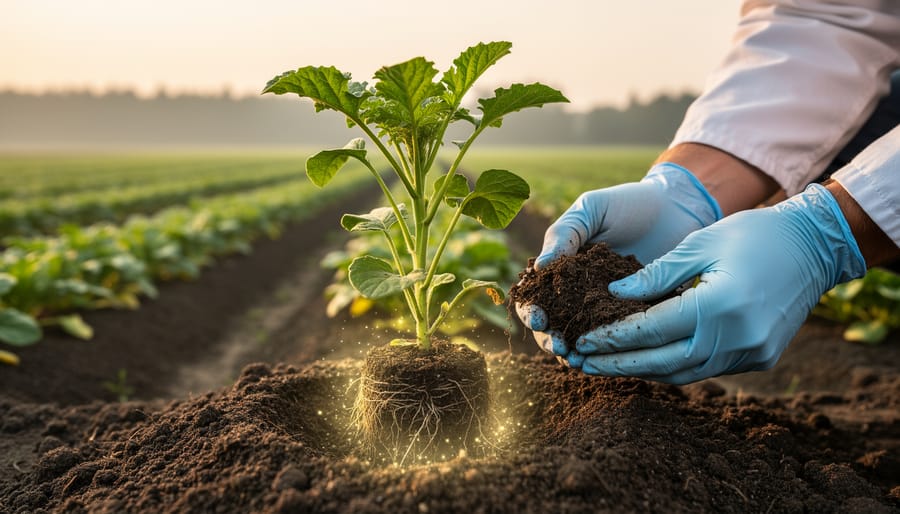
Beneath your feet, an invisible workforce drives regenerative ecosystem function. Soil bacteria, fungi, protozoa, and nematodes form a complex food web that determines whether your land thrives or merely survives. These organisms break down organic matter into plant-available nutrients, create soil structure through their secretions and movements, and protect crops from pathogens through competitive colonization.
Mycorrhizal fungi extend plant root systems by metres, trading soil nutrients and water for plant sugars. Bacteria convert atmospheric nitrogen into forms crops can use. Earthworms and arthropods build soil architecture while processing residues. When this biological community functions properly, you see improved nutrient cycling secrets at work and better water infiltration during heavy rains.
Alberta farmers building soil biology often start by minimizing tillage, maintaining living roots year-round through cover crops, and adding diverse organic matter. Within two to three years, you can observe increased earthworm populations and improved soil aggregation, tangible signs your underground ecosystem is recovering and strengthening plant resilience against drought and disease pressure.
Above-Ground Biodiversity Contributions
Above-ground biodiversity works as your farm’s free labour force. Birds hunt grasshoppers and cutworms along field edges, reducing pest pressure without spray costs. A single tree swallow consumes thousands of flying insects daily during nesting season. Ground beetles patrol crop rows at night, eating aphids and slug eggs you’ll never see.
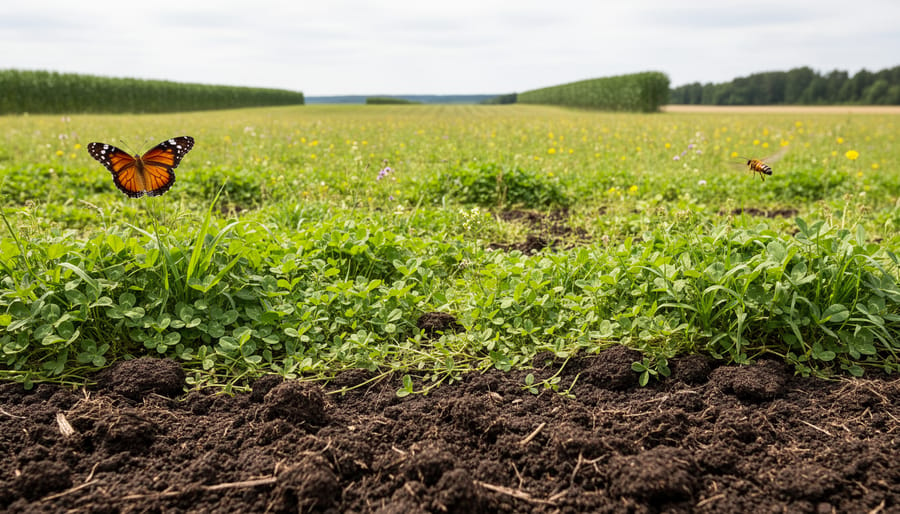
Pollinators deliver direct economic value. Native bees work earlier in cool prairie mornings than honeybees, improving canola and lentil yields. Hover flies pollinate while their larvae devour aphid colonies, double benefit from one species. Watch for these insects around flowering cover crops and field margins.
Wildlife also moves nutrients across your operation. Coyotes and hawks deposit phosphorus-rich droppings in pastures after hunting rodents from grain fields. Migrating geese transfer nitrogen from wetlands to uplands. Even corvids spreading weed seeds can benefit soil biology if you’re managing diverse plant communities.
Start noticing what’s present. Regular sightings of killdeer, meadowlarks, or vesper sparrows indicate improving grassland health. Increased dragonfly populations suggest better water quality in dugouts. More predatory wasps around crops mean your ecosystem is rebuilding its pest control capacity. These observations cost nothing but tell you whether your regenerative practices are attracting functional biodiversity.
Plant Community Dynamics
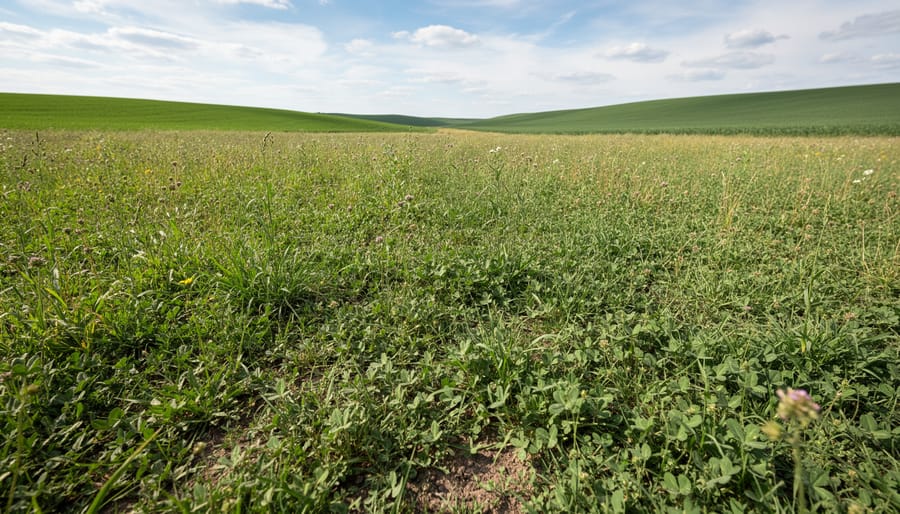
Plant diversity creates the structural foundation for resilient regenerative systems on prairie farms. When you rotate varied crop families, each species contributes different root architectures that access nutrients at distinct soil depths and feed different microbial communities. A canola-wheat-pulse rotation, for example, creates alternating patterns of taproots and fibrous roots that build soil structure and prevent disease cycles that plague monocultures.
Cover crops extend this diversity beyond the cash crop season. Winter rye establishes deep roots that scavenge leftover nitrogen, while radishes break compaction layers that limit water infiltration. Planting multi-species cover blends intensifies these benefits: you might combine cereals for biomass with legumes for nitrogen fixation and brassicas for pest suppression, creating year-round soil coverage that protects against erosion during Alberta’s harsh freeze-thaw cycles.
Perennial crops like alfalfa or intermediate wheatgrass add another dimension, maintaining living roots throughout the year and establishing permanent habitat for beneficial insects and soil organisms. This layered approach to plant communities creates overlapping growth periods and complementary resource use that stabilizes yields even when weather conditions challenge any single species.
Components That Build Regenerative Farm Ecosystems
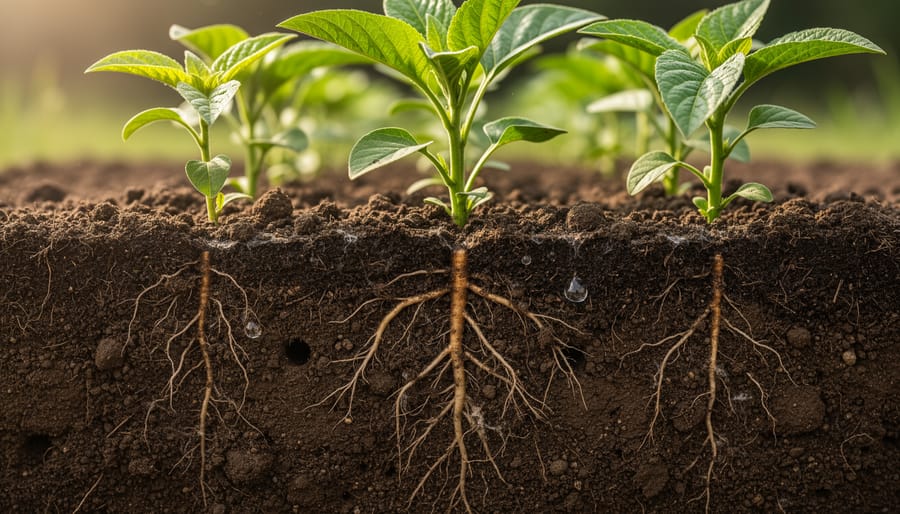
Building a regenerative ecosystem requires assembling both living and structural elements that work together to create self-renewing cycles on your land. Think of these components as the toolkit you’ll draw from based on your farm’s specific context, climate, and production goals rather than a rigid checklist you must complete all at once.
The living components form the biological engine of your regenerative system. Plant diversity stands at the foundation: you’re moving beyond monoculture toward varied crop rotations that include different root structures, nutrient needs, and growth patterns. On Alberta farms, this might mean rotating canola with cereals, pulses, and multi-species cover crops that include legumes, brassicas, and grasses. Perennial forages and pastures create year-round living roots that feed soil biology even during our long winters. These diverse plant communities support the microbial populations we explored earlier while providing habitat structure above ground.
Animal integration brings another dimension of ecosystem function. Whether you run cattle, sheep, or poultry, managed livestock act as biological activators that stimulate plant growth, distribute nutrients unevenly (which creates diversity), and break pest cycles through their grazing and trampling patterns. Even grain farmers without their own livestock can partner with neighbours for planned grazing on cover crops or stubble.
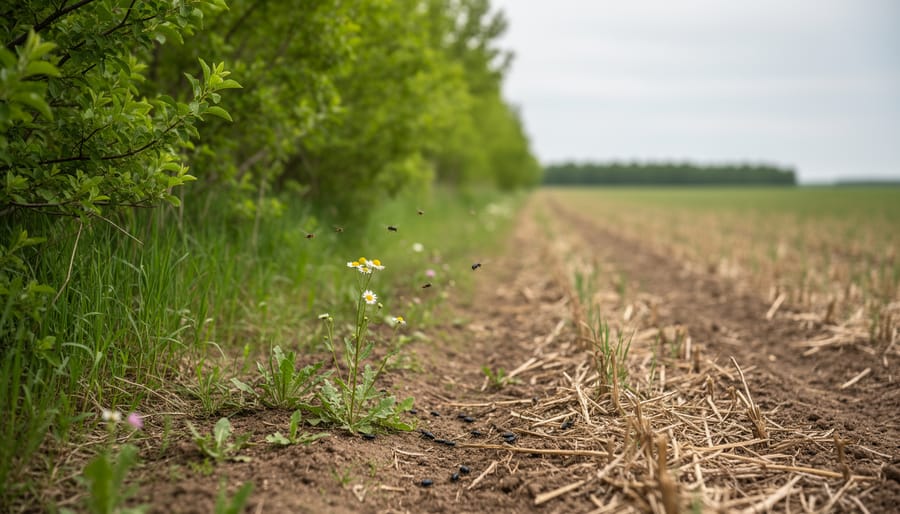
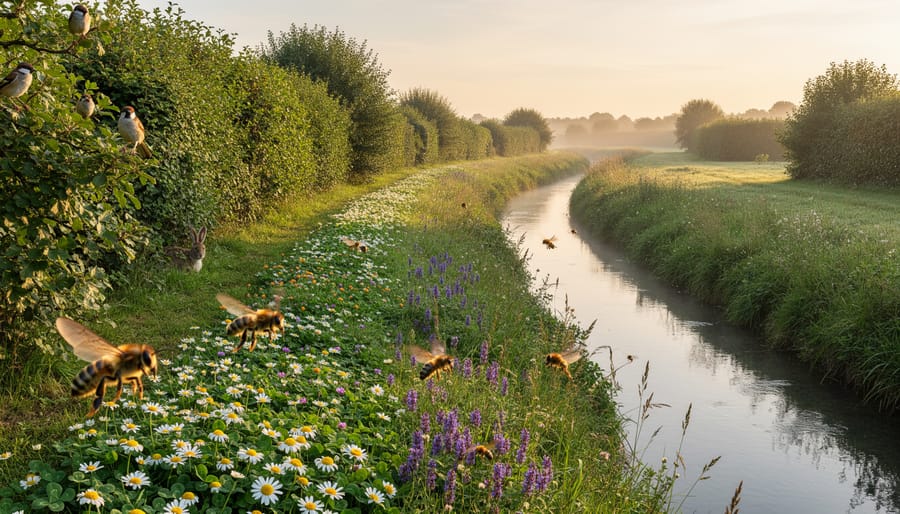
The structural components create permanent framework that anchors your ecosystem through seasonal extremes. Hedgerows and shelterbelts do more than block wind. They provide nesting sites for beneficial insects and birds, create microclimates that moderate temperature swings, and act as wildlife corridors connecting different parts of your operation. On prairie farms, these might include caragana, buffaloberry, or wolf willow that handle our temperature ranges and moisture variability.
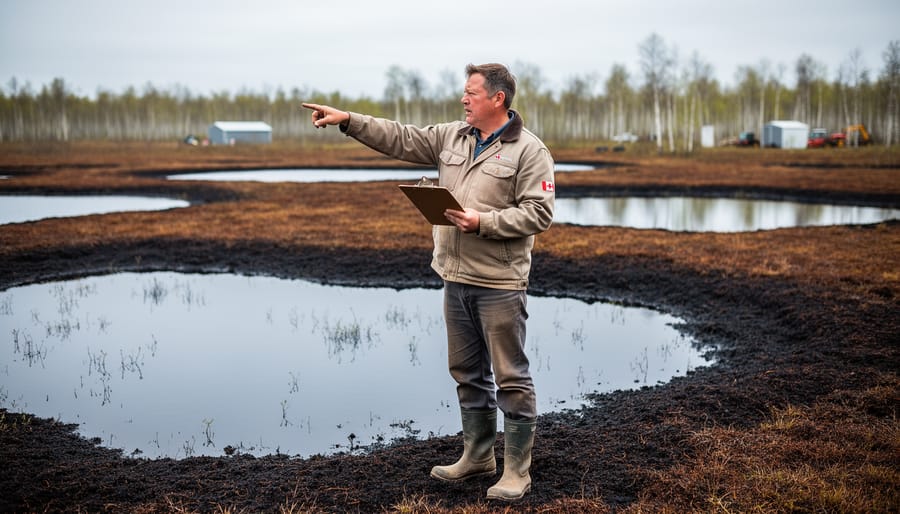
Wetlands and riparian buffers around sloughs, creeks, and drainage areas serve as biological hotspots. These transitional zones between water and upland support the highest concentration of species diversity on most farms. Leaving or restoring vegetated buffers around these features protects water quality while creating refuge for frogs, beneficial insects, and waterfowl that contribute to pest management across your fields.
Soil structure itself becomes a component you actively manage. Maintaining areas of minimal disturbance, building aggregation through root exudates and fungal networks, and protecting surface residue create the physical habitat where soil organisms thrive.
Here’s a practical checklist of components you can integrate into prairie farm ecosystems:
- Diverse crop rotations with varied root architectures and nutrient cycling patterns
- Perennial forages or pastures that maintain living roots year-round
- Livestock integration through planned grazing or partnerships
- Pollinator habitat strips with native flowering plants adapted to Alberta conditions
- Beneficial insect refuges including undisturbed field margins and beetle banks
- Riparian buffers around water features with native shrubs and grasses
- Minimal disturbance zones where soil structure remains intact
- Native plant corridors connecting habitat patches across your operation
Not every farm needs every component immediately. Start by identifying which elements already exist on your land and which missing pieces would address your most pressing challenges, whether that’s pest pressure, moisture retention, or soil health decline.
Practical Applications on Canadian Farms
Case Study: Prairie Grain Farm Transition
The Henderson family’s 1,200-hectare grain operation near Lacombe transitioned to regenerative practices starting in 2019. They began with 120 hectares, introducing a seven-crop rotation that included peas, flax, and two cover crop species alongside their traditional wheat and canola. Instead of summer fallow, they planted diverse cover mixes with radishes, clover, and vetch.
By year three, soil aggregate stability improved from 42% to 68%, and earthworm counts tripled. The Hendersons documented returning grassland bird species, including vesper sparrows and savannah sparrows, that hadn’t nested on the property in over a decade. Beneficial ground beetle populations increased noticeably during field walks.
Economic results required patience. The first two years saw a 12% yield reduction as soil biology rebuilt, costing roughly $18,000 in forgone revenue. However, fertilizer expenses dropped 30% by year four as nitrogen-fixing legumes and improved nutrient cycling reduced synthetic inputs. By 2025, net margins matched their conventional baseline despite slightly lower yields, with input savings offsetting production differences.
The transition demanded more management attention and initial learning. The Hendersons connected with other regenerative farmers through regional networks and adjusted practices based on their specific soil types and moisture patterns. They now plan to expand regenerative management across their entire operation over the next five years.
Integrating Livestock for Ecosystem Function
Livestock transform pasture and cropland into functioning ecosystems when moved strategically across the landscape. Managed grazing concentrates animals briefly in one area before moving them, allowing plants full recovery time between grazing events. This mimics how bison historically moved across Canadian prairies, stimulating plant growth through selective grazing and trampling that breaks soil crusts.
Cattle contribute far more than meat and manure. Their selective grazing favours diverse plant communities over monocultures. Hoof action presses seeds into soil contact and creates microhabitats where moisture collects. Their urine and manure deliver nutrients directly where plants grow, feeding soil biology rather than requiring trucked-in fertilizers.
During Alberta’s short growing season, rotation timing matters. Grazing cool-season grasses early, then moving cattle to warm-season species as temperatures rise, maximizes both forage quality and ecosystem stimulation. Winter bale-grazing on different fields each year distributes fertility while building organic matter. Even small acreages benefit from dividing pasture into paddocks that cattle occupy for days rather than months, giving plants three to six weeks of rest between grazings.
Monitoring Ecosystem Health
Checking ecosystem function doesn’t require expensive lab tests. Start with a spade test: dig a 30 cm deep hole and examine the soil profile. Look for earthworms (10-20 per shovelful indicates healthy biology), root channels throughout the depth, and soil that crumbles rather than forms clods. Healthy regenerative soil smells earthy, not sour or chemical.
Track water infiltration using a simple can test. Remove both ends of a large coffee can, push it 5 cm into the soil, fill with water, and time how long it takes to drain. Regenerative systems should absorb 2.5 cm or more per hour, much faster than compacted conventional fields.
For biodiversity monitoring, walk your fields regularly at different times of day. Count bird species you observe, note insect activity on crops, and photograph pollinators. Even casual observations reveal trends. One Alberta farmer noticed ground-nesting bees appearing in year three of his transition, a clear sign his ecosystem was recovering.
Document changes with photos from the same spots each season. Over time, you’ll see visual evidence: more plant diversity between rows, earthworm castings on the surface after rain, and wildlife using your fields for habitat beyond just feeding.
Overcoming Common Challenges in the Canadian Climate
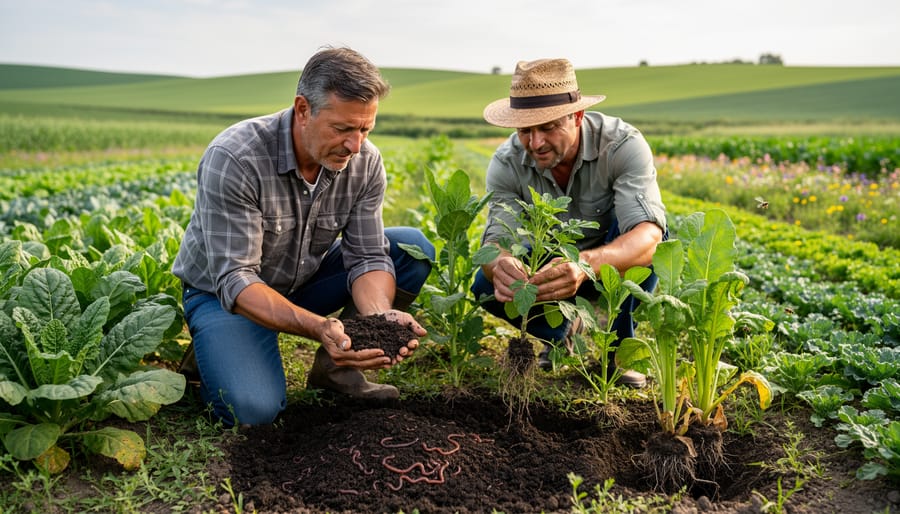
Alberta’s climate presents real hurdles when establishing regenerative ecosystems, but regional farmers have developed practical workarounds that address these constraints without abandoning core principles.
Short growing seasons demand strategic timing. Many farmers now plant cool-season cover crops like hairy vetch or winter rye in late August, allowing 4-6 weeks of growth before freeze-up. These species establish root systems that resume growth in early spring, effectively extending your functional growing period. For cash crops, selecting shorter-maturity varieties and using no-till practices helps soils warm faster in spring, gaining you 7-10 days on planting windows.
Winter dormancy isn’t wasted time in regenerative systems. Standing crop residue and cover crop biomass create insulating layers that protect soil biology through freeze-thaw cycles. Research from Lethbridge shows that soils with year-round plant cover maintain microbial populations 40% higher than bare ground through winter, meaning your ecosystem doesn’t reset to zero each spring.
Moisture variability requires building resilience rather than fighting nature. Increasing soil organic matter by even 1% can boost water-holding capacity by 25,000 litres per acre. Farmers managing this through diverse rotations and reducing tillage report more consistent yields during both drought and excess moisture years. The biodiversity component matters here too, varied root depths access moisture at different soil levels, stabilizing production across unpredictable seasons.
Pest pressure often spikes during transition years as ecosystems rebalance. Expect 2-3 seasons of adjustment where beneficial predator populations catch up to pest levels. Maintaining habitat strips with native plants accelerates this process by providing overwintering sites for beneficial insects. One Strathmore farmer reported his flea beetle issues resolved by year three once ground beetle populations established in permanent cover areas.
Economic considerations are straightforward: initial costs run $30-50 per acre for cover crop seed, but input savings on fertilizer and fuel typically offset this within two growing seasons as soil function improves.
Frequently Asked Questions
What are the startup costs for building a regenerative ecosystem?
Initial investments vary widely depending on your current system and chosen practices. Cover crop seed and some equipment modifications might cost $30-80 per acre in year one, but many farmers start with minimal expense by adjusting existing rotations or implementing mob grazing with current infrastructure. The most significant cost is often time spent learning and observing rather than purchased inputs.
How long before I see results on my land?
Soil biology improvements and increased water infiltration often appear within 12-18 months of implementing cover crops or reducing tillage. Measurable improvements in soil organic matter and significant biodiversity changes typically take three to five years. Economic returns through reduced input costs usually begin in years two to four as soil health builds.
Can I sell into conventional commodity markets while farming regeneratively?
Absolutely. Most Alberta farmers building regenerative ecosystems continue selling grain, livestock, and other products through standard channels without premium prices or certification. The economic advantage comes primarily from lower input costs and improved resilience, not necessarily from price premiums, though niche markets are available if you choose to pursue them.
Where can I find local expertise and support in Alberta?
Connect with regional agronomists familiar with regenerative practices, join farmer-led groups focused on soil health, and attend winter workshops hosted by agricultural sustainability organizations. Many county agricultural service boards now have staff with regenerative agriculture knowledge, and peer-to-peer learning through farm tours proves invaluable during transitions.
How do I manage weeds during the transition period?
Weed pressure often increases temporarily as you reduce herbicide use or change tillage patterns. Most successful farmers use a combination of strategic cover cropping to outcompete weeds, targeted spot spraying where necessary, and adjusting seeding dates or densities. The key is maintaining patience as diverse crop rotations and improved soil biology gradually reduce weed pressure over three to four years.
Do I need livestock to create a regenerative ecosystem?
No, though livestock integration can accelerate ecosystem development through nutrient cycling and plant stimulation. Grain-only operations successfully build regenerative systems using diverse crop rotations, cover crops, and reduced tillage. If you don’t have livestock, consider custom grazing arrangements where neighbours graze your cover crops, or focus on the abundant benefits achievable through plant diversity and soil biology alone.
Starting small makes sense for most operations. You don’t need to transform your entire farm overnight or invest heavily in new equipment. Many Alberta farmers begin with 40 or 80 acres, testing practices and building knowledge before expanding. This approach limits financial risk while you learn what works in your specific soil type and microclimate. Even a single field planted to a diverse cover crop mix can demonstrate soil biology improvements and give you practical experience before committing more land.
Budget constraints shouldn’t prevent you from taking first steps. The most accessible entry point is often adjusting your existing crop rotation to include more diversity or reducing tillage intensity on a portion of your land. These changes require minimal investment but begin the process of rebuilding soil structure and biology. As your soil health improves and input costs decline, you can reinvest those savings into expanding regenerative practices across more acres or trying additional components like perennial strips or wildlife habitat areas.
Building a regenerative ecosystem on your farm delivers tangible benefits that compound over time. Improved soil structure means better water infiltration during spring melt and summer storms, reducing runoff and erosion across your fields. Enhanced biodiversity creates natural pest control and pollination services, cutting your reliance on purchased inputs. The soil health gains translate directly to stronger crop resilience during drought or disease pressure, conditions that Alberta farmers know all too well.
These systems also position your operation as part of the climate solution. Carbon sequestration, water retention, and reduced tillage all contribute to climate adaptation while building long-term farm viability. The transition doesn’t require a complete overhaul overnight. Start with one field, add a diverse cover crop mix, or introduce rotational grazing on a small pasture section.
Connect with other farmers making similar changes through local agricultural networks and regenerative farming groups across the prairies. Learn from their experiences, share observations, and build the knowledge base together. Every step toward regenerative practices enhances biodiversity, strengthens your land’s productive capacity, and creates ecosystems that work with you rather than against you. Your farm can become a model of resilience, profitability, and ecological health for the next generation.