A pest management program may include a combination of cultural, biological, mechanical, and chemical controls designed to reduce crop damage while protecting beneficial organisms and the environment. Rather than relying on a single tactic, an effective program integrates multiple strategies tailored to the pest species, crop stage, and local conditions, creating a system that’s both resilient and responsive.
For Canadian farmers working toward organic certification or sustainable production goals, understanding what belongs in a pest management program isn’t just academic. It’s the difference between reactive spraying and proactive farm stewardship. The right program reduces input costs, preserves soil health, and meets market expectations for low-residue food.
This article breaks down the core components you’ll want in your plan, with particular attention to microbial and biological tools that fit organic systems. You’ll see how monitoring, thresholds, and habitat management work together, and why timing matters as much as product choice. Whether you’re managing canola beetles in central Alberta or greenhouse aphids near Edmonton, the principles stay consistent: observe, intervene strategically, and measure results.
We’ll also look at real examples from Canadian farms that have shifted from calendar-based applications to threshold-driven programs, cutting costs without sacrificing yields. Expect practical guidance on selecting control methods, integrating new microbial products approved for organic use, and building a program that works within your crop rotation and labor schedule. If you’ve been piecing together pest tactics without a clear framework, you’ll leave with a structure that fits your operation and your values.
What a Pest Management Program Means for Organic Farms
A pest management program is a planned, systematic approach to controlling pests and diseases that threaten crop health and yield. For organic farms in Canada, these programs rely on prevention, monitoring, and carefully chosen interventions that work with natural systems rather than depending on synthetic pesticides. The goal is to keep pest damage below economically damaging levels while protecting soil life, beneficial insects, and water quality.
Conventional pest management often defaults to chemical sprays applied on a calendar schedule, regardless of whether pests are present. Organic programs take a different path. They start with building healthy soil and plant resilience, then layer in multiple tactics, crop rotation, beneficial insects, microbial inoculants, physical barriers, and botanical sprays, only when monitoring shows a genuine need. This integrated approach reduces risk, cuts input costs over time, and aligns with the values driving most farmers toward organic certification in the first place.
Integrated pest management, or IPM, is the framework behind these programs. It combines biological, cultural, mechanical, and organic-approved chemical controls into a coordinated strategy, always favouring the least disruptive option first. Canadian organic operations must follow this philosophy to maintain certification under the Canadian Organic Standards which prohibit most synthetic pesticides and require documented pest management plans that demonstrate prevention and monitoring before any intervention.
- Integrated Pest Management (IPM)
- A decision-making process that combines monitoring, prevention, and multiple control tactics to manage pests economically while minimizing environmental impact. It replaces routine pesticide applications with targeted interventions based on actual pest presence and threshold levels.
- Biological Control
- The use of living organisms, predatory insects, parasitoids, nematodes, or microbial agents, to suppress pest populations naturally. Examples include releasing lady beetles to control aphids or applying Bacillus thuringiensis to target caterpillars.
- Economic Threshold
- The pest population level at which the cost of control measures equals the expected crop loss if no action is taken. It helps farmers decide when intervention is financially justified rather than spraying preventively.
- Microbial Antagonists
- Beneficial bacteria and fungi that compete with, parasitize, or produce compounds toxic to plant pathogens and pests. They protect crops by occupying infection sites, producing enzymes that break down pest structures, or triggering plant immune responses.
Understanding these core concepts helps organic farmers build programs that meet certification requirements while staying practical for day-to-day field operations. The framework is flexible enough to adapt to Alberta’s short growing season, variable weather, and the specific pest pressures faced on the prairies.
How Pest Management Programs Work
Monitoring and Pest Identification
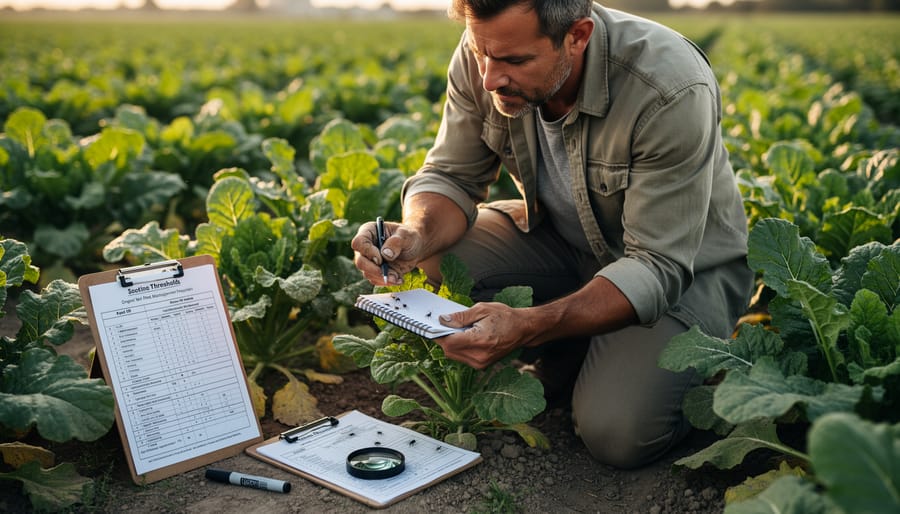
Monitoring starts before pests become visible problems. Walk your fields weekly during the growing season, checking leaves, stems, and soil for early signs of damage or disease. Look for chewed foliage, discoloured spots, webbing, or insect egg masses. In Alberta’s short but intense summers, pest populations can explode quickly once temperatures rise above 15°C, so consistent scouting catches issues while they’re still manageable.
Use a systematic approach: divide fields into zones and inspect the same representative areas each time. Count pests per plant or per square metre, and note growth stages. This builds a baseline so you recognize when numbers spike. Accurate identification matters because management tactics vary, flea beetles, for instance, require different responses than aphids or cutworms. Provincial extension resources and local agronomists can help distinguish look-alike species common to the prairies.
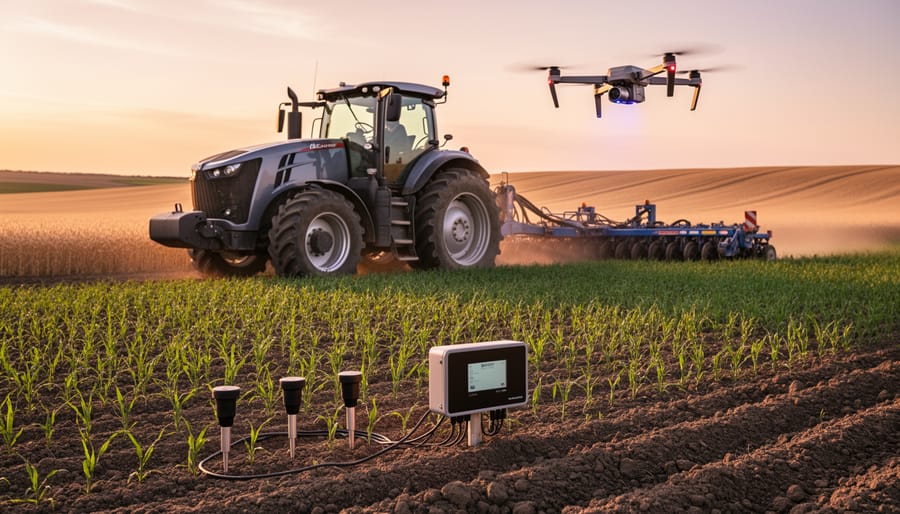
Set economic thresholds based on pest density and crop value. These action levels tell you when intervention pays off versus when minor damage is tolerable. Technology like smart sensors and image-based monitoring tools now supplement field walks, sending alerts when conditions favour outbreaks. Keep dated records of what you find; patterns emerge over seasons, sharpening your timing and reducing guesswork.
Prevention and Cultural Controls

Prevention is the most cost-effective component of any integrated pest management strategy. By creating conditions that discourage pest establishment and population growth, farmers reduce the need for reactive interventions and strengthen overall crop resilience.
Crop rotation breaks pest life cycles by interrupting host availability. A three- to four-year rotation that alternates crop families prevents soil-dwelling insects and pathogens from building up to damaging levels. Alberta growers often rotate cereals with pulses and oilseeds, which disrupts wireworm, root maggot, and disease cycles while improving nitrogen availability.
Selecting pest-resistant crops and varieties adapted to local conditions provides another prevention layer. Varieties bred for disease tolerance or insect resistance reduce vulnerability without additional inputs. Matching variety selection to regional pest pressure and climate reduces the likelihood of severe outbreaks.
Building robust soil health through organic matter additions, cover cropping, and minimal tillage supports vigorous plants better able to withstand pest pressure. Healthy soil fosters beneficial microbial communities that compete with pathogens and improves plant nutrient uptake, which strengthens natural defences.
Sanitation practices such as removing crop residues, cleaning equipment between fields, and managing weeds eliminate pest harborage and overwintering sites. Destroying volunteer plants and controlling alternate hosts reduces the bridge populations that allow pests to survive between growing seasons. Together, these cultural controls form the foundation that makes all other program components more effective.
Decision-Making and Intervention Timing
Effective pest management hinges on knowing when to act, not just what tools are available. Farmers use economic thresholds, the pest population level at which control measures become financially justified, to avoid unnecessary interventions that waste time and money while potentially harming beneficial organisms.
Setting these thresholds requires understanding crop value, treatment costs, and the pest’s potential damage at different growth stages. A canola field, for instance, tolerates higher flea beetle pressure after the four-leaf stage than during vulnerable seedling emergence. Alberta growers track accumulated growing degree days alongside pest counts to predict when populations will reach damaging levels.
Action levels factor in response time. Because microbial products like Bacillus thuringiensis work best on young larvae, farmers must intervene before populations explode. Weekly scouting provides the data needed to time applications when pests are most vulnerable and damage is still preventable.
Weather forecasts also inform decisions. Humid conditions favour disease spread, prompting earlier fungicide applications, while dry spells may delay certain interventions. This strategic timing maximizes efficacy while minimizing inputs and environmental impact.
Core Components a Pest Management Program May Include
Biological Control Agents
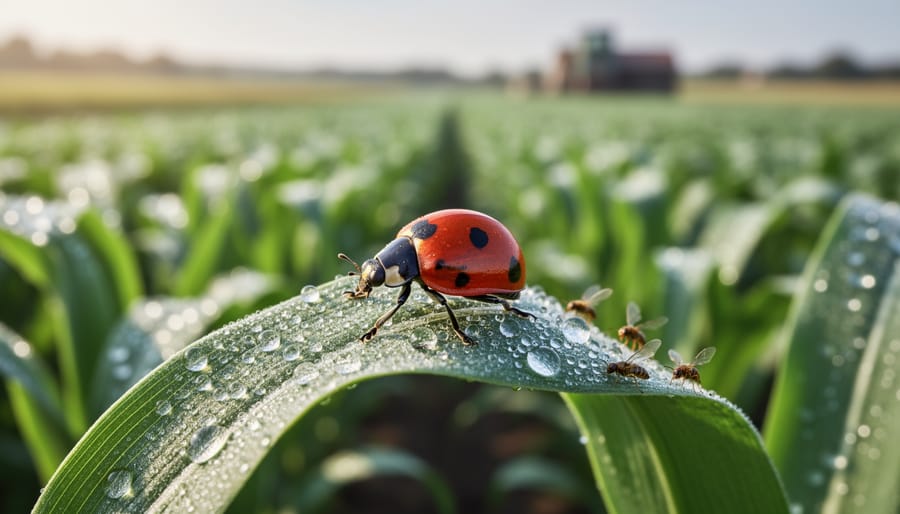
Biological control harnesses living organisms to manage pest populations naturally, reducing reliance on synthetic inputs while supporting farm biodiversity. This approach works particularly well in organic systems where building ecosystem resilience is as important as immediate pest suppression.
Predatory insects form the frontline of many biological control programs. Lady beetles consume hundreds of aphids throughout their life cycle, making them invaluable for controlling infestations in canola, cereals, and vegetable crops across Alberta. Lacewings offer similar benefits, with their larvae feeding voraciously on aphids, mites, and small caterpillars. Ground beetles patrol the soil surface at night, preying on cutworms, root maggots, and weed seeds.
Parasitoids provide another layer of control by laying eggs inside or on pest insects. Trichogramma wasps parasitize the eggs of numerous crop pests including cabbage loopers, corn borers, and armyworms, all common challenges on prairie farms. These tiny wasps can be purchased commercially and released at specific crop stages to intercept pest populations before economic damage occurs.
Beneficial nematodes target soil-dwelling and burrowing pests that escape other control methods. Species like Steinernema carpocapsae hunt cutworms, root weevils, and wireworms in the root zone, entering their hosts and releasing bacteria that kill within 48 hours. They require moist soil and careful handling but offer effective control for persistent underground pests.
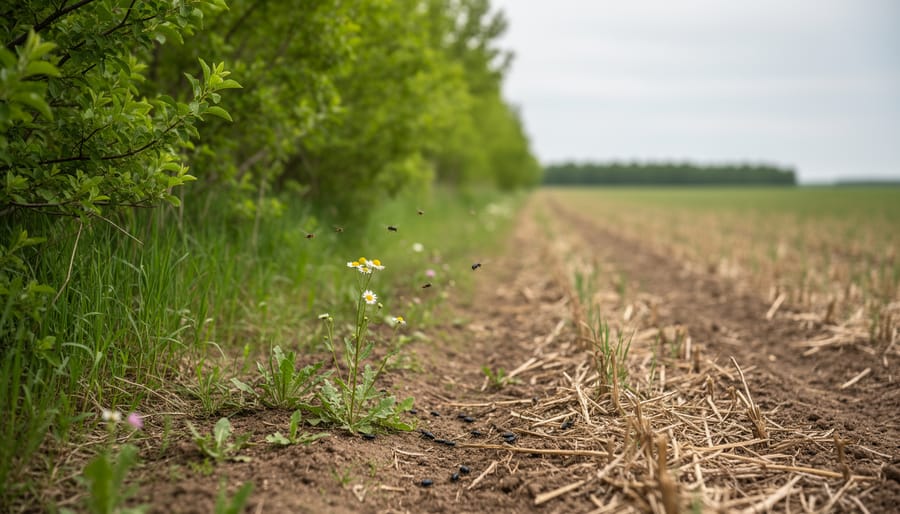
Success with biological agents depends on proper identification, timely release, and creating habitat that supports their establishment. Many farms maintain insectary strips or hedgerows to provide nectar, pollen, and overwintering sites that keep beneficial populations active throughout the season.
Microbial Solutions for Pest and Disease Management
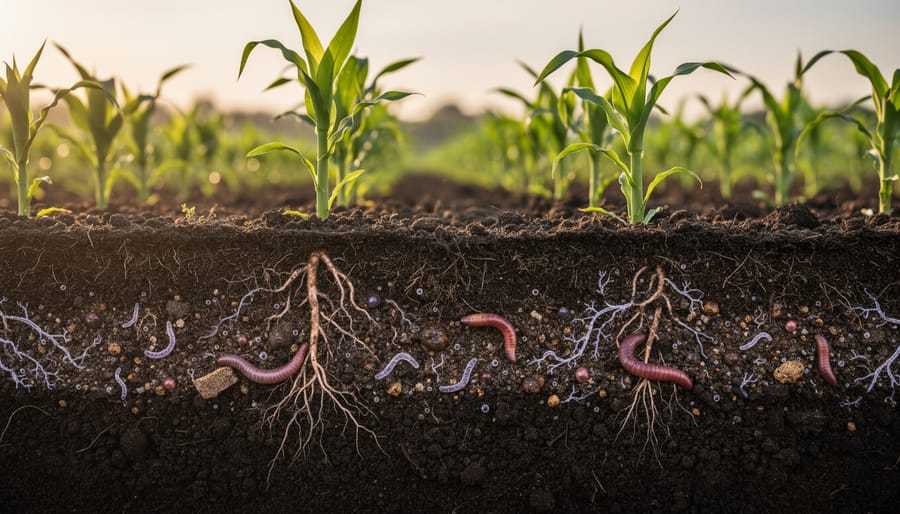
Microbial solutions harness living organisms to suppress pests and diseases, offering Canadian organic farmers powerful tools for pest control without chemicals. These beneficial bacteria, fungi, and other microorganisms work through multiple mechanisms: parasitizing pest insects, producing toxins that target specific pests, outcompeting pathogens for nutrients, and triggering plant defense responses.
Bacillus thuringiensis (Bt) remains one of the most widely used microbial insecticides in organic systems. Different Bt strains produce crystalline proteins toxic to specific insect groups, Bt kurstaki controls caterpillars like cabbage loopers and diamondback moths, while Bt tenebrionis targets Colorado potato beetles. Applied as a foliar spray when larvae are young, Bt disrupts their gut function within hours, causing feeding to stop before death occurs days later. Timing matters: applications must coincide with hatching periods for maximum effectiveness.
Bacillus subtilis and related bacteria suppress fungal diseases by colonizing plant surfaces and root zones, secreting antifungal compounds and competing with pathogens for space. These bacteria can reduce powdery mildew, early blight, and damping-off when applied preventatively or at disease onset. Soil drenches establish root colonization, while foliar sprays protect above-ground tissues.
Entomopathogenic fungi like Beauveria bassiana and Metarhizium anisopliae infect insects through direct contact, penetrating the exoskeleton and proliferating inside the host body. These fungi control aphids, thrips, whiteflies, and root weevils in Alberta vegetable and pulse crops. Effectiveness depends on humidity and temperature, applications work best during morning dew periods or under irrigation.
Trichoderma species colonize plant roots and suppress soil-borne pathogens including Fusarium, Pythium, and Rhizoctonia. These fungi enhance nutrient uptake and stimulate systemic resistance, making plants more resilient to stress and disease pressure throughout the growing season.
Mechanical and Physical Controls
Mechanical and physical controls form the hands-on backbone of many organic pest management programs, particularly for farmers who want to reduce reliance on inputs altogether. These methods physically prevent pests from reaching crops or remove them once they arrive.
Row covers and insect netting create physical barriers that exclude flying pests like flea beetles, cabbage moths, and carrot rust flies, common challenges across Alberta vegetable operations. Sticky traps and pheromone traps monitor populations and catch adults before they lay eggs. Mulches serve double duty: organic materials like straw suppress weeds that harbour pests, while reflective mulches disorient aphids and thrips.
Tillage disrupts overwintering sites for cutworms and wireworms, though timing matters. Fall tillage exposes larvae to predators and freezing temperatures, but excessive tillage degrades soil structure. Hand-removal works for low-level infestations, picking Colorado potato beetles off small plantings or crushing egg masses takes time but eliminates pests with zero environmental impact.
Flame weeding targets weed seedlings in vegetable rows without disturbing soil biology. Water jets dislodge aphids and spider mites from greenhouse crops. These techniques require labour and attention, but they fit seamlessly into organic certification requirements and give farmers direct control over pest pressure.
Botanical and Organic-Approved Inputs
Naturally derived pesticides fill critical gaps in organic pest management when prevention and biological controls need reinforcement. These inputs, extracted from plants, minerals, or microbial fermentation, offer targeted action against pests and diseases while maintaining compliance with Canadian organic certification standards.
Neem oil, pressed from the seeds of the neem tree, disrupts insect feeding and growth cycles. It works against aphids, whiteflies, and spider mites common on greenhouse tomatoes and brassicas across Alberta. Apply as a foliar spray during cooler morning hours to avoid leaf burn, and reapply after rain since neem breaks down quickly in sunlight.
Pyrethrin, derived from chrysanthemum flowers, delivers fast knockdown of soft-bodied insects like thrips and cucumber beetles. Its rapid degradation, often within 24 hours, makes it suitable for late-season use near harvest, though beneficial insects remain vulnerable during application windows.
Insecticidal soaps disrupt pest cell membranes on contact, effectively controlling aphids, mealybugs, and young caterpillars without residual toxicity. Direct spray coverage matters; missed pests survive treatment. Avoid use during hot afternoons or on drought-stressed plants.
Sulfur-based fungicides prevent powdery mildew, apple scab, and other fungal diseases by inhibiting spore germination. Dust or wettable formulations suit different crops and equipment. Never apply sulfur within two weeks of oil sprays, the combination causes severe phytotoxicity.
Check product labels for Canadian Organic Regime compliance and provincial registration requirements. Effective use requires matching the right input to pest life stage, crop tolerance, and weather conditions during your narrow application window.
How Farmers Use Pest Management Programs in Practice
Seasonal Planning and Scouting Schedules
Successful pest management in Alberta begins months before seeding. Farmers typically start planning in late winter, reviewing the previous season’s scouting records and soil test results to identify recurring problem areas. This historical data shapes decisions about crop rotation patterns, seed selection, and which biological or microbial products to order early.
As spring arrives, scouting schedules intensify. Weekly field walks become the norm once crops emerge, with farmers checking for early-season pests like flea beetles, cutworms, and disease symptoms tied to cool, damp conditions. Many producers scout twice weekly during critical growth stages, tillering in cereals, flowering in canola, when pest pressure can escalate rapidly and intervention windows narrow.
Summer scouting shifts focus to insect populations, weed competition, and fungal diseases favored by Alberta’s variable weather. Farmers track degree-days to predict pest life cycles: for example, knowing when grasshopper eggs will hatch or when bertha armyworm moths typically arrive allows timely application of Bacillus thuringiensis products before economic thresholds are reached.
Record-keeping is essential throughout. Detailed notes on pest counts, weather conditions, and intervention outcomes inform next year’s calendar. Experienced farmers also connect with neighbors and extension services to compare observations, especially during outbreak years, ensuring their schedules adapt to regional patterns rather than relying solely on generic recommendations.
Integrating Microbial Products into Field Operations
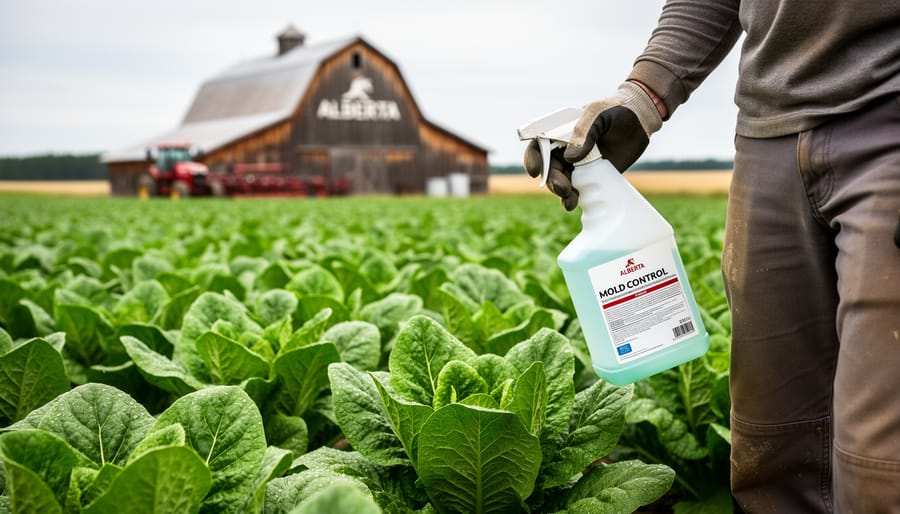
Bringing microbial products like Bacillus thuringiensis, Beauveria bassiana, or Trichoderma species into your field strategy takes careful timing and handling to achieve the best results. For most microbial biopesticides, it’s essential to apply when pests or diseases are active but before infestations reach damaging levels. Early-morning or evening applications are preferred, as lower light and temperatures help keep beneficial microbes viable. Avoid spraying before rain or during high winds, to limit off-target movement and reduce UV breakdown of living organisms.
Choose sprayers and nozzles that provide even coverage while minimizing pressure and agitation, as excess turbulence can harm microbial spores or cells. For seed or soil inoculants, use drills or planters with dedicated inoculant boxes, and mix only as much as needed for that day, since most products are sensitive to heat and moisture once opened.
Proper storage is non-negotiable. Keep microbials in their original packaging, the fridge or a cool dark area, never in a hot equipment shed or truck. Always heed expiry dates and batch codes, as effectiveness drops quickly once the product degrades.
Track efficacy by monitoring target pest or disease levels before and after application through regular scouting. Document results, weather, and timing to reveal patterns and fine-tune your program. Consistent records help demonstrate compliance with organic standards and validate the investment in microbial pest management.
Common Questions About Pest Management Programs
Farmers exploring integrated pest management for the first time often have practical questions about implementation, costs, and compatibility with organic systems. Here are answers to the most common concerns we hear from producers across the Canadian prairies.
Are microbial products approved for organic certification in Canada?
Yes, most microbial biopesticides and inoculants are permitted under Canadian organic standards, but you must verify that specific products appear on the Permitted Substances List maintained by the Canadian Food Inspection Agency or your certifying body before purchase.
How does the cost of a pest management program compare to conventional chemical approaches?
Initial investment in monitoring equipment, beneficial organisms, and microbial products can be higher, but most farmers see reduced input costs over three to five years as soil health improves and pest pressure decreases. The long-term economic benefits include premium pricing for organic crops and lower environmental remediation risks.
How long do microbial products remain effective after purchase?
Shelf life varies by product, most liquid bacterial formulations last six to twelve months when refrigerated, while dry spore-based products can remain viable for two years or more if stored cool and dry. Always check expiration dates and storage instructions on the label.
Can I use microbial controls alongside other organic practices like crop rotation?
Absolutely. Microbial solutions work best when integrated with cultural practices such as crop rotation, cover cropping, and soil amendments, since healthy soil ecosystems support microbial establishment and activity.
Another question producers raise concerns sourcing reliable products. In Alberta and across western Canada, most agricultural suppliers now stock a range of biological control agents and microbial formulations, though availability can vary seasonally. Building relationships with local distributors who understand organic systems helps ensure you have access to products when you need them, particularly during critical application windows in spring and early summer.
Effectiveness also depends on proper application. Microbial products require specific conditions, appropriate temperature, humidity, and UV protection, to work well. Unlike synthetic pesticides that kill on contact, beneficial microorganisms need time to colonize, reproduce, and exert control, so patience and realistic expectations are essential. Most farmers report noticeable results within one to two growing seasons as microbial populations establish and complement other program components.
A comprehensive pest management program is more than a set of tactics, it’s a commitment to working with natural systems rather than against them. For Canadian organic farmers, particularly those on the prairies, these programs offer a pathway to resilient, economically viable operations that protect both yield and ecosystem health.
The integration of microbial solutions alongside cultural, mechanical, and biological controls creates layered defenses that pests and diseases struggle to overcome. These programs don’t promise perfection, but they deliver consistent results when built on accurate monitoring, timely intervention, and a deep understanding of your specific farm conditions.
Success comes from treating pest management as an ongoing learning process. Each season brings new insights about which tactics work best in your soil, climate, and crop rotations. Keeping detailed records, connecting with other farmers through producer groups and extension networks, and staying current on research helps you refine your approach year after year.
The investment pays off in multiple ways: reduced input costs over time, certification compliance, improved soil health, and the satisfaction of farming in harmony with the microbial and insect communities that sustain agriculture. You’re building a system that supports not just this year’s crop, but the long-term productivity of your land.
Your fields are already home to countless beneficial organisms ready to work alongside you. A well-designed pest management program simply gives them, and you, the best chance to succeed.