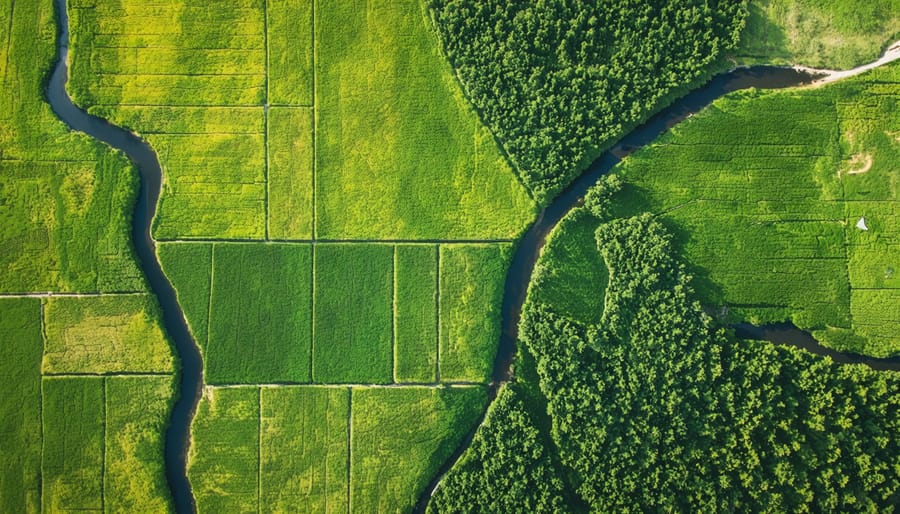
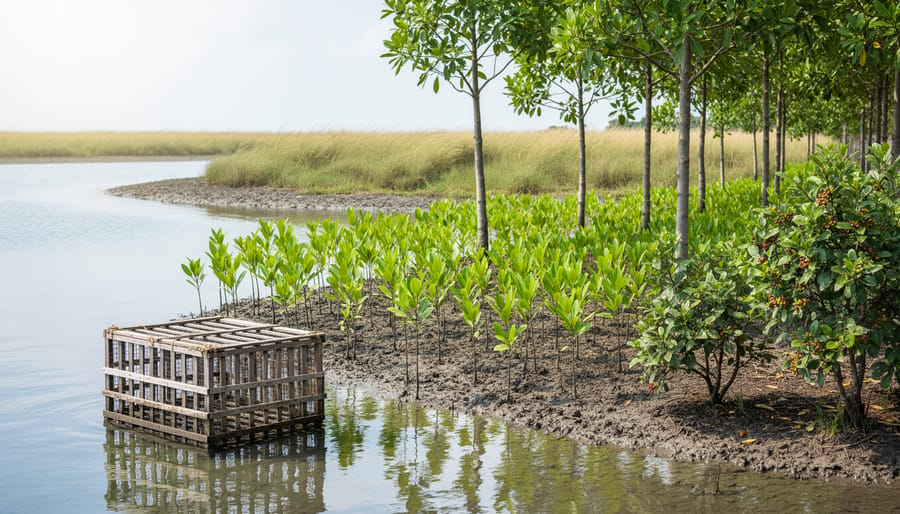
An agroforestry coalition brings together farmers, aquaculture producers, researchers, and conservation groups to integrate trees, crops, and water-based food production in a single coordinated framework. These collaborative networks are especially valuable in coastal and wetland regions where land meets water, creating opportunities for silvofishery systems that combine mangrove or riparian forest management with fish farming, shellfish cultivation, or other aquatic enterprises.
For Canadian producers working near lakes, rivers, and coastal zones, these coalitions offer more than environmental benefits. They provide access to shared knowledge about buffer zone management, technical support for designing productive riparian systems, and connections to markets that value sustainably produced food. In Alberta, where wetlands and riparian areas face pressure from both agricultural intensification and climate variability, the coalition model adapts to support productive buffer systems that protect water quality while generating revenue from timber, berries, and grazing.
The real power of an agroforestry coalition lies in its ability to pool expertise that no single farm operation could maintain alone. A shellfish producer in British Columbia might share coastal buffer designs with a trout farmer in Saskatchewan, while a research station contributes data on optimal tree species for nutrient filtration. This cross-pollination of practical experience accelerates adoption and reduces the trial-and-error phase that typically slows innovation.
This article explains how agroforestry coalitions function in aquatic-terrestrial systems, the different types of collaborative structures you might encounter, and concrete steps to join or benefit from these networks in 2026.
What an Agroforestry Coalition Means for Canadian Farmers
An agroforestry coalition is a formal or informal network that brings together multiple groups, farmers, university researchers, provincial and federal agricultural agencies, environmental NGOs, and sometimes Indigenous communities, to advance tree-based farming systems across a shared region or ecosystem. Rather than individual landowners experimenting in isolation, a coalition pools expertise, coordinates demonstration projects, shares equipment and technical knowledge, and advocates collectively for policy changes and funding programs that support agroforestry adoption.
The distinction matters because individual agroforestry projects, while valuable, often face barriers that no single farmer can overcome alone: high upfront costs for tree stock, uncertainty about best management practices for local conditions, lack of established markets for diverse products, and limited access to specialized equipment like tree planters or pruning tools. A coalition addresses these challenges at scale. When twenty farms in a watershed work together through a coalition to establish riparian buffers, for instance, they can negotiate better seedling prices, hire a consulting forester to design systems for all properties at once, and collectively market timber or non-timber forest products.
- Agroforestry Coalition
- A collaborative network of farmers, researchers, government agencies, and NGOs working together to implement and expand tree-based farming practices across a region.
- Silvofisheries
- Integrated systems that combine tree cultivation with fish or shellfish farming, typically in coastal tidal zones or wetland edges where aquatic and terrestrial environments meet.
- Coastal Agroecosystem
- A farming or aquaculture landscape influenced by proximity to oceans, estuaries, or large lakes, where saltwater intrusion, tidal patterns, and marine nutrient cycles shape agricultural practices.
- Collaborative Land Management
- Coordinated stewardship approaches where multiple landowners or stakeholders manage resources jointly to achieve landscape-level environmental, economic, or social outcomes.
For Canadian farmers, particularly those in Alberta and the prairies, the coalition model offers a pathway to adapt agroforestry principles even far from the coast. Riparian zones along rivers, edges of prairie potholes, and shelter belt networks function as inland analogues to coastal systems, and collaborative approaches help farmers implement these practices with less risk and greater support.
How Agroforestry Coalitions Work in Practice
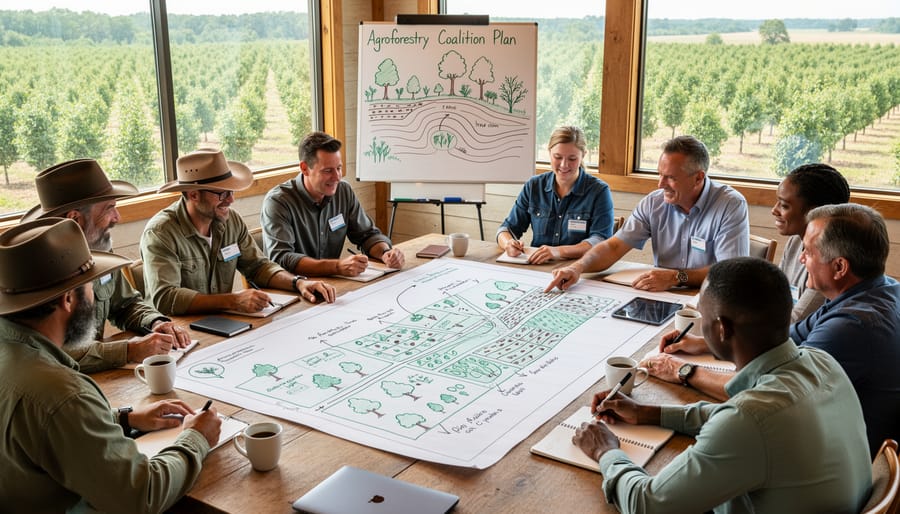
Building Blocks of Coalition Success
Successful coalitions rest on four interlocking foundations that determine whether collaboration translates into lasting impact on the ground.
Governance structures provide the decision-making framework. Most Canadian agroforestry coalitions adopt a steering committee model, with representatives from each stakeholder group, farmers, researchers, conservation organizations, and government agencies. The British Columbia Agricultural Research & Policy Council uses rotating chair positions to ensure no single interest dominates, while maintaining working groups focused on technical issues like silvopasture design or riparian management. Clear terms of reference and transparent voting procedures prevent gridlock when priorities clash.
Membership models balance inclusivity with operational efficiency. Open membership invites any interested farmer or organization to participate in meetings and access resources, while core working groups handle day-to-day implementation. Alberta’s Chinook Applied Research Association demonstrates this approach: hundreds receive newsletters and attend annual gatherings, but fifteen active members drive project selection and partnership development. Tiered membership levels let participants contribute according to their capacity.
Funding mechanisms typically combine public grants, private foundation support, and member contributions. Successful coalitions secure multi-year funding rather than project-by-project support, enabling long-term planning. The Quebec Groupements Forestiers model pools member dues to hire coordinators and purchase shared equipment, supplemented by federal Growing Forward and provincial agricultural innovation funds.
Communication networks keep geographically dispersed members aligned. Regular field days, monthly video calls, and shared digital platforms distribute knowledge effectively. Manitoba’s Keystone Agricultural Producers uses both regional gatherings and online forums to connect prairie farmers exploring shelterbelt agroforestry with coastal researchers studying windbreak systems adapted from maritime provinces.
Types of Agroforestry Coalitions in Coastal Regions
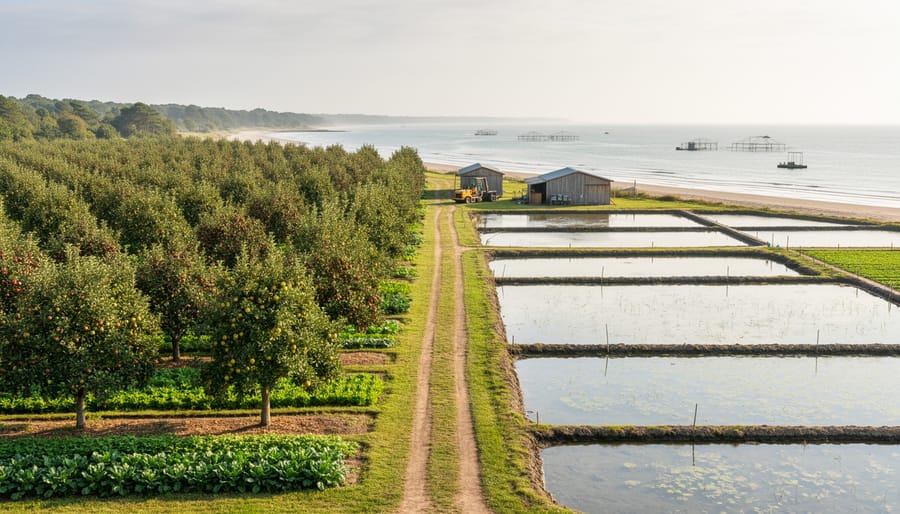
Agroforestry coalitions in coastal regions organize themselves around distinct ecological and economic priorities, each addressing particular challenges in the interface between land and water systems.
Silvofishery-focused groups concentrate on integrating tree cultivation with aquaculture operations in tidal zones and estuaries. These coalitions bring together fish farmers, forestry experts, and marine biologists to develop systems where mangroves, willows, or salt-tolerant species grow alongside fish ponds or shellfish beds. In British Columbia’s Fraser River estuary, for instance, a coalition has been working with coastal First Nations to restore riparian forests that support salmon habitat while maintaining economic productivity through sustainable harvesting. The trees provide shade to regulate water temperature, filter runoff before it enters fish habitats, and stabilize shorelines against tidal erosion.
Watershed management coalitions take a broader view, coordinating tree planting and land use across entire drainage basins. Their members typically include upstream farmers, downstream aquaculture operators, municipal water authorities, and conservation groups. These networks tackle problems like sediment flow, nutrient loading, and seasonal flooding by establishing strategic tree buffers at critical points throughout the watershed. A coalition operating in Nova Scotia’s Annapolis Valley, for example, coordinates riparian tree planting across dozens of farms to reduce agricultural runoff reaching shellfish growing areas in the Bay of Fundy.
Carbon sequestration networks focus on maximizing the climate mitigation potential of coastal tree systems. Members collaborate on measurement protocols, carbon credit aggregation, and access to climate finance programs. Coastal mangroves and tidal wetland forests sequester carbon at exceptionally high rates, making these coalitions attractive to farmers seeking additional revenue streams.
Biodiversity conservation alliances prioritize habitat restoration and species protection, often working with endangered migratory birds, anadromous fish, or threatened plant communities. These groups coordinate tree species selection, planting timing, and land management practices to create connected habitat corridors along coastlines.
Applications in Coastal Agroecosystems and Silvofisheries
Silvofishery Integration Models
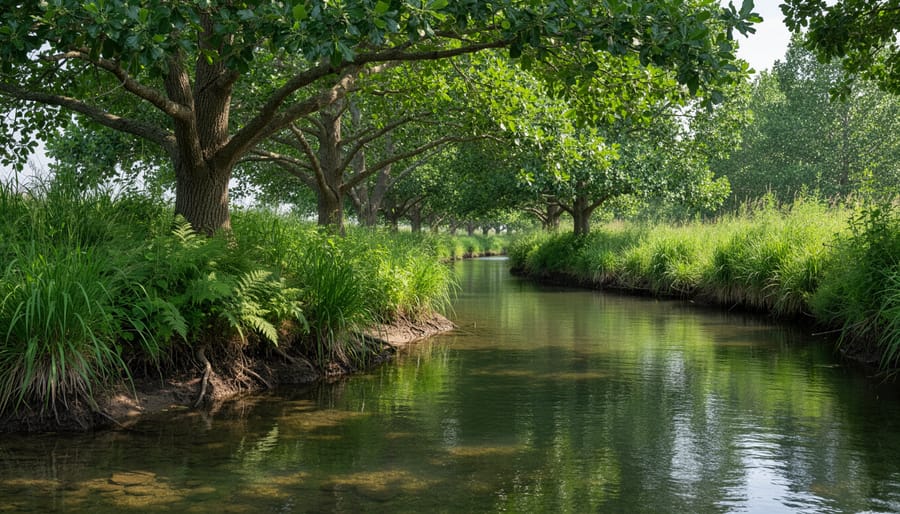
Silvofishery coalitions operate by connecting tree growers with aquaculture producers to create integrated coastal systems where mangroves, salt-tolerant trees, or riparian species grow alongside fish ponds, oyster beds, or shrimp farms. In British Columbia’s coastal inlets, coalitions have piloted models where red alder and willow buffer strips frame salmon hatchery operations, stabilizing pond edges while filtering nutrient runoff before it reaches tidal zones. The trees provide shade that regulates water temperature, drop organic matter that feeds invertebrates in the aquatic food chain, and build root networks that prevent erosion during storm surges.
On Prince Edward Island, a coalition working with shellfish farmers has established Sitka spruce windbreaks around mussel operations. These trees reduce wind-driven wave action that damages rafts and lines, while their leaf litter contributes to better soil health in adjacent upland fields where farmers grow hay. The coalition coordinates planting schedules, shares nursery stock, and trains members in tree maintenance techniques suited to salt spray exposure.
Coalitions also address the technical challenge of matching tree species to tidal flooding patterns and salinity gradients. They compile regional planting guides, run demonstration plots, and negotiate group purchases of adapted seedlings. This collaborative infrastructure makes silvofishery systems feasible for individual operators who lack the resources to experiment alone, applying lessons from coastal integration to inland contexts like farm water management around prairie dugouts and wetland edges.
Canadian Case Study: Coastal British Columbia’s Collaborative Approach
The Coastal Agroforestry Collaborative, active across Vancouver Island and the Lower Mainland since 2019, brings together 47 farm operations, the University of British Columbia’s Faculty of Forestry, Fisheries and Oceans Canada, and three Indigenous communities to integrate tree systems with small-scale aquaculture and market gardens. Partners include the BC Ministry of Agriculture, Pacific Salmon Foundation, and local food cooperatives that handle marketing for coalition members.
One pilot project established hybrid poplar and Sitka spruce windbreaks along 12 hectares of tidal marsh edges near Comox Valley, where farmers were losing topsoil to winter storms. The trees now shelter raised beds of kale and root vegetables while their roots stabilize banks above oyster cultivation plots. After three growing seasons, soil retention improved by 68%, and farmers reported 22% higher winter yields in sheltered areas compared to exposed plots.
A second initiative paired red alder plantings with recirculating salmon hatcheries on three Cowichan Valley properties. Alder roots draw excess nitrogen from fish waste runoff before it reaches streams, while leaf litter feeds beneficial insects. Water quality testing showed nitrate levels dropping 41% downstream of alder buffers, and farmers harvested alder poles for farm infrastructure after four years.
Sarah Chen, the coalition’s coordinator and a restoration ecologist, notes practical challenges: “Coastal farmers work narrow margins between forests and water. We had to design systems that don’t shade out vegetables or interfere with tidal access. The coalition gave us space to test, fail, and share what actually works in salt air and winter rain.”
Members access free seedlings, soil testing, and technical visits through pooled grant funding. The model influenced similar networks forming in Nova Scotia and Prince Edward Island, where farmers are adapting these principles to build climate-resilient farms in Atlantic coastal conditions.
Getting Involved: Steps for Alberta and Prairie Farmers
Alberta and Prairie farmers can participate in agroforestry coalition work even without direct coastal access by focusing on analogous systems in riparian zones, wetland edges, and shelterbelts.
Start by connecting with existing provincial networks. The Alberta Agroforestry and Woodlot Extension Society offers introductory workshops and links to regional working groups. Contact your local agricultural fieldman or district agriculturist to learn about active coalitions in your area. Many municipalities maintain lists of environmental farm planning groups that incorporate agroforestry elements.
If no coalition exists nearby, consider forming a small working group with three to five neighbouring farmers facing similar land management challenges. Begin with informal meetings to share observations about riparian health, windbreak performance, or wildlife interactions with shelterbelts. Once you identify common goals, reach out to University of Alberta extension specialists or prairie conservation organizations for technical guidance.
Prairie farmers can apply coastal silvofishery principles to inland contexts by viewing wetland and stream edges as transitional zones similar to coastal margins. Plant native willow or poplar along waterways to stabilize banks while creating habitat corridors. Integrate perennial forage strips with tree rows around sloughs to improve water quality and reduce erosion, mirroring how coastal systems combine vegetation layers.
Access funding through Growing Forward programs, the Environmental Stewardship and Climate Change program, and local watershed stewardship groups. These sources often prioritize collaborative applications from farmer networks over individual projects.
Document your experiences with photographs and simple yield or wildlife observations. This record-keeping strengthens future grant applications and provides valuable knowledge for other coalition members, building the collaborative learning that makes coalitions effective across diverse landscapes.
Common Questions About Agroforestry Coalitions
Where do agroforestry coalitions get their funding?
Most Canadian coalitions blend government grants (federal and provincial environmental programs), membership dues from participating farms, and project-specific funding from conservation organizations or carbon credit initiatives. Some also secure private foundation support for research and demonstration projects.
How much time do I need to commit as a coalition member?
Active participation typically requires 5-10 hours monthly for meetings, field days, and coordinated activities, though many coalitions offer flexible involvement levels. You can start with observer status and increase engagement as your schedule allows.
Will joining a coalition work with my current farm operation?
Coalitions are designed to complement existing operations, not replace them. Members implement agroforestry components gradually, adding shelter belts, riparian buffers, or silvopasture zones, while maintaining their primary enterprises like grain, livestock, or horticulture.
What measurable benefits can I expect from coalition membership?
Beyond ecosystem services like natural pest control and soil improvement, members typically access cost-sharing for tree planting, shared equipment, technical expertise, and collective marketing opportunities. Coalitions also help navigate the real agroforestry costs through bulk purchasing and grant applications.
Unlike commodity groups or general farm organizations that focus on market advocacy and political representation, agroforestry coalitions concentrate specifically on integrating trees with agricultural production systems. They provide hands-on technical support, coordinated landscape planning, and direct implementation assistance that general farm groups typically don’t offer. Many farmers belong to both types of organizations, using coalitions for agroforestry-specific guidance while relying on traditional farm organizations for broader advocacy and business services.
Coalition membership also differs from simply hiring a consultant. You gain ongoing peer learning, shared risk through group trials, and collective negotiating power for inputs and markets. For Alberta farmers interested in riparian management or shelter belt enhancement, coalitions offer community-backed approaches rather than isolated problem-solving.
Agroforestry coalitions represent more than an organizational structure, they’re a pathway to transforming how we approach land and water management in Canada’s diverse agricultural landscapes. While coastal applications showcase the power of integrating trees with aquatic systems, the collaborative principles behind these networks apply just as effectively to Alberta’s riparian zones, prairie wetland edges, and transitional ecosystems across the country.
The evidence from British Columbia and maritime provinces demonstrates what becomes possible when farmers, researchers, and communities pool their knowledge and resources. These partnerships don’t just make individual operations more resilient; they create landscape-level change that no single farm could achieve alone. Climate adaptation, economic diversification, and ecological restoration accelerate when people work together rather than in isolation.
For Alberta farmers, the opportunity lies in adapting these coastal lessons to inland contexts. Your riparian buffers, shelterbelts, and wetland restoration projects gain momentum when connected to a broader network. Coalition membership provides access to technical expertise, funding opportunities, and peer support that make ambitious projects feasible.
Start small. Connect with existing agricultural networks in your region, attend agroforestry workshops, or reach out to conservation districts already working on tree-based systems. The path from individual interest to collective action begins with a single conversation.
The future of Canadian agriculture depends on our willingness to collaborate across boundaries, geographic, disciplinary, and operational. Agroforestry coalitions offer that bridge, turning sustainable practices from isolated experiments into widespread transformation.