A xeric soil moisture regime describes conditions where soil remains dry for extended periods during the growing season, typically receiving less than 250 mm of precipitation annually and experiencing moisture availability for fewer than 90 consecutive days. For Alberta farmers, this means managing land where water is the limiting factor for crop production and where conventional agricultural practices often fail without significant adaptation.
Understanding xeric regimes has become critical across southern Alberta, where intensifying drought cycles and declining snowpack have pushed previously marginal lands into chronic water deficit. These soils warm quickly in spring, dry out by mid-summer, and remain parched through fall. The Mediterranean climate pattern, wet winters followed by bone-dry summers, defines the classic xeric regime, but Alberta’s version adds extreme temperature swings and unpredictable precipitation timing.
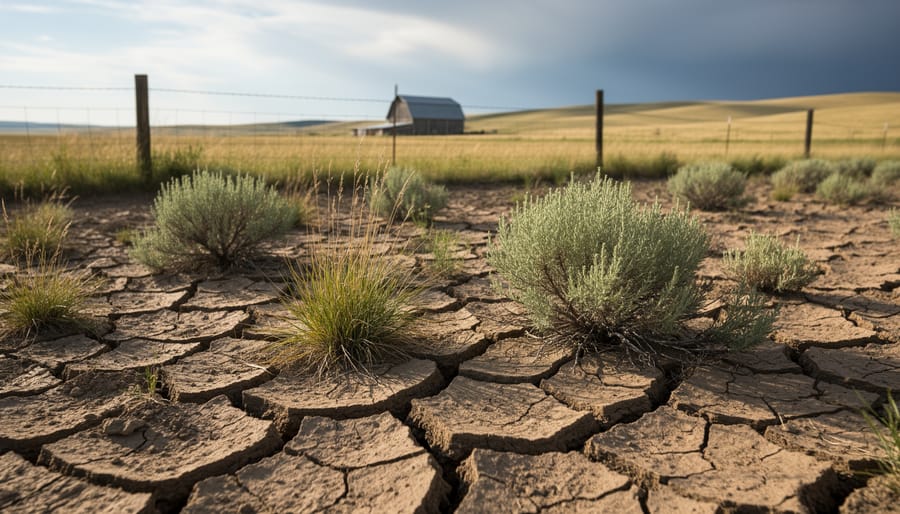
The practical reality is stark. Conventional wheat, canola, and barley struggle without irrigation. Native vegetation shifts to species like blue grama grass, prickly pear cactus, and sagebrush. Soil organic matter declines because microbial activity slows without moisture. Wind erosion accelerates on bare ground.
Yet xeric lands aren’t unproductive wastelands. Ranchers across southeastern Alberta have sustained cattle operations for generations by matching stocking rates to forage capacity. Innovative growers are testing drought-tolerant crops like kernza, chickpeas, and specific heritage grains. The key is accurate identification of xeric conditions and implementation of management strategies designed for scarcity, not abundance.
Understanding Xeric Soil Moisture Regimes in Alberta
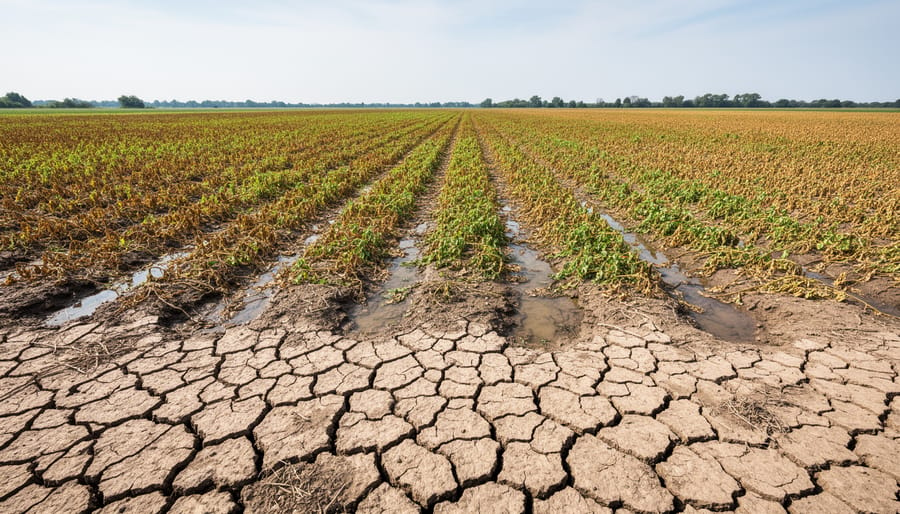
Identifying Xeric Conditions on Your Land
You can recognize xeric soil conditions through a combination of direct field observations and measured environmental patterns. The most straightforward indicator is annual precipitation below 400 millimetres, with southern Alberta regions like Lethbridge and Medicine Hat consistently recording totals in the 300-350 mm range. However, precipitation alone doesn’t tell the complete story, you need to examine how water behaves once it reaches your soil.
Start by observing soil texture through a simple hand test. Dig down 15-20 centimetres and grab a handful of moist soil. Xeric soils in Alberta typically feel gritty or sandy, with limited ability to form a ball when squeezed. If the soil crumbles immediately when you open your hand, you’re likely dealing with coarse-textured material that drains rapidly and holds minimal plant-available water. Clay loams can also exhibit xeric regimes if precipitation is insufficient, but sandy loams and loamy sands are most common in southern Alberta’s xeric zones.
Several field indicators confirm xeric moisture regimes:
- Surface soil dries within 48 hours after moderate rainfall events (10-15 mm)
- Visible soil cracks appear by early July, even in non-clay soils
- Crop stress symptoms emerge during mid-summer despite normal planting dates
- Shallow-rooted weeds dominate over deep-rooted perennials
- Morning dew evaporates within 30-45 minutes of sunrise during growing season
Native vegetation provides reliable confirmation. Look for species adapted to persistent dryness: spear grass, blue grama, June grass, and prickly pear cactus dominate xeric sites across southern Alberta. If your land historically supported fescue grasslands or aspen parkland, you’re not in a xeric regime. The boundary between these vegetation zones roughly follows the 400 mm precipitation isoline running northwest from the Montana border through Brooks and north of Drumheller.
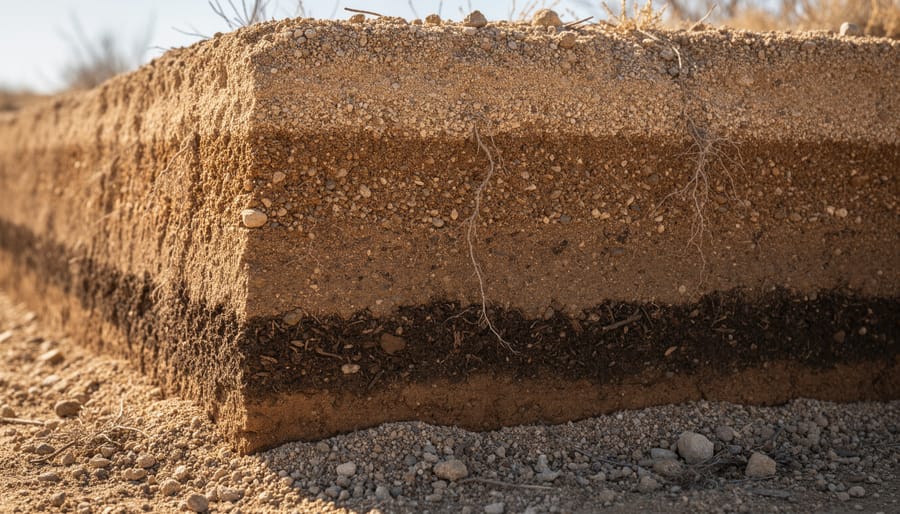
What You’ll Need: Tools and Resources for Xeric Soil Management
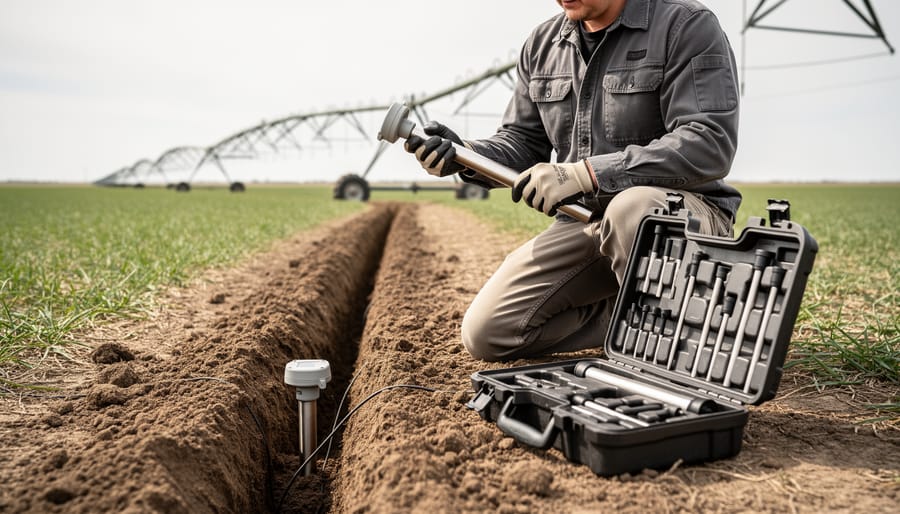
Managing xeric soil moisture regimes effectively requires specific tools for monitoring conditions and implementing adaptive practices. Start with accurate measurement equipment: a soil moisture probe or tensiometer to track water availability at root depth, a rain gauge for precise precipitation records, and a penetrometer to assess soil compaction that restricts infiltration. Many Alberta producers find hand-held moisture meters adequate for field-scale monitoring, with units available from Canadian suppliers like Gempler’s Canada or through local UFA Farm & Ranch Supply stores.
For soil improvement, you’ll need organic amendments suited to xeric conditions. Compost is your primary tool for building water-holding capacity, plan on sourcing 10-20 tonnes per hectare for initial applications. Alberta Recycling and Agricultural By-Products Management (ARABPM) maintains a directory of certified compost producers across the province. You’ll also want access to cover crop seed mixes formulated for dry conditions, available through specialty suppliers such as Hairy Hill Seed Cleaning or SeedNet.
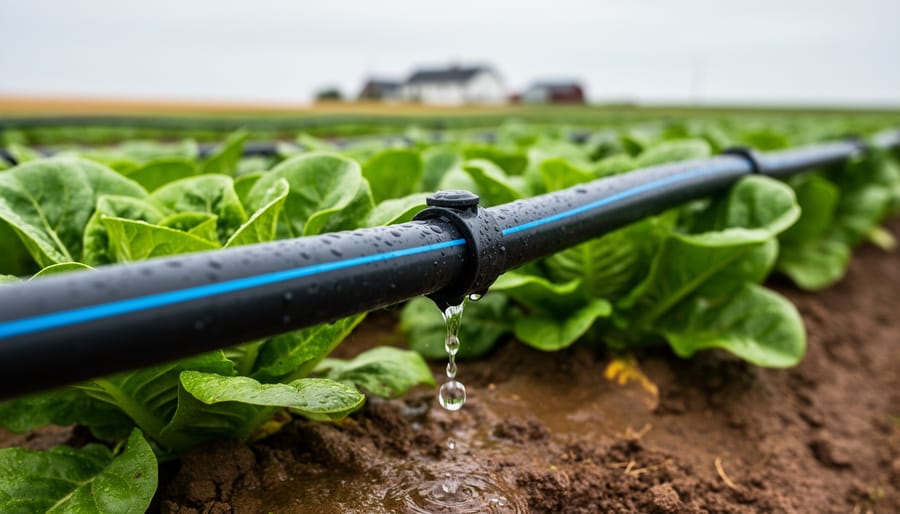
Irrigation equipment represents a larger investment but proves essential in xeric regimes. Drip tape systems offer the highest efficiency, delivering water directly to root zones with minimal evaporation loss. T-L Irrigation in southern Alberta provides equipment tailored to prairie conditions. Alternatively, micro-sprinkler systems work well for perennial crops. Budget for filtration equipment, pressure regulators, and automation controllers that allow precise scheduling based on soil moisture readings rather than calendar dates.
Information resources matter as much as physical tools. Alberta Agriculture and Irrigation maintains regional specialists who provide site-specific guidance for xeric soil management at no cost. The Alberta Soil Information Viewer online tool maps soil moisture regime classifications across the province, helping you confirm xeric conditions on your land. For crop selection, request the Alberta Irrigation Management Manual and drought-tolerant variety trials published annually by Alberta Agriculture research stations.
Documentation tools complete your kit: a field notebook or smartphone app for tracking rainfall, irrigation applications, and crop responses over multiple seasons. This data becomes invaluable for refining your management approach as you learn how your specific soil responds to different interventions under varying weather patterns.
Safety Warnings and Risk Considerations
Working with xeric soils demands careful attention to prevent making dry conditions worse. Many well-intentioned interventions can backfire if applied incorrectly, turning marginal land into unproductive soil.
When introducing new irrigation systems, start with smaller test areas rather than field-wide installations. A poorly designed drip system can create uneven moisture patterns that stress crops more than no irrigation at all. Calculate your water budget realistically, many Alberta producers overestimate available groundwater and face shortfalls mid-season when crops are most vulnerable.
Soil amendments require proper handling and application rates. Adding too much uncomposted manure to dry soil can create nitrogen volatilization losses and salt accumulation. Work amendments into the top fifteen centimetres when moisture is present, never onto bone-dry ground where they’ll sit inert or blow away. Heavy equipment operation on xeric soils during dry periods causes severe compaction that reduces infiltration for years. The rock-hard surface you create will shed rainfall instead of absorbing it, the opposite of doubling soil moisture retention.
Financial risk deserves equal attention. Drought-adapted varieties and precision irrigation systems require upfront investment that may not pay back in a single season. Phase implementation over two to three years, prioritizing the practices with immediate impact on water retention. Don’t gamble your operating budget on unproven techniques, stick with methods validated by Alberta research stations and experienced neighbours managing similar xeric conditions.
Step-by-Step: Implementing Climate-Resilient Practices for Xeric Soils
Step 1: Conduct a Baseline Soil-Water Assessment
Start by establishing your field’s current moisture baseline before the growing season begins, ideally in late April or early May when soils have thawed but spring moisture hasn’t yet depleted. This timing captures your starting point before crop water demand intensifies.
Use a soil probe to collect samples at three depths: 0-15 cm, 15-30 cm, and 30-60 cm. Take samples from at least five representative locations across each field, avoiding obvious wet or dry spots. Send these to a lab for gravimetric moisture content analysis, which gives you precise water percentages by weight.
Conduct a simple infiltration test by driving a 15 cm diameter metal ring 5 cm into the soil. Pour in exactly one litre of water and time how long it takes to completely infiltrate. Repeat this at multiple sites. Rates below 2.5 cm per hour indicate compaction or poor structure that limits water storage.
Document everything in a field notebook: sample locations using GPS coordinates, dates, weather conditions during sampling, and visual observations of soil texture and structure. Take photos of soil cores showing layering and root penetration. This baseline data becomes your reference point for measuring improvement after you implement soil health practices and water conservation techniques. Without accurate baseline measurements, you can’t verify whether your xeric soil management strategies are working.
Step 2: Build Organic Matter and Soil Structure
Improving soil organic matter is the cornerstone of water retention in xeric regimes. Target a minimum 3% organic matter content, each 1% increase holds roughly 25,000 additional litres of water per hectare. Apply well-finished compost at 10-20 tonnes per hectare in early spring or late fall when moisture is present. For field-scale application, spread evenly and incorporate shallowly to avoid disturbing established soil structure.
Cover crops are essential between cash crops. Plant drought-tolerant species like fall rye or hairy vetch immediately after harvest in August or early September to capture residual moisture. These crops add 2-4 tonnes of organic matter per hectare when terminated in spring, while their roots create channels that improve infiltration and prevent compaction sabotages water movement.
Reduced tillage preserves existing soil aggregates. Switch to no-till or strip-till systems that disturb less than 30% of the soil surface. This maintains the pore network that holds water during Alberta’s intense spring evaporation period, when xeric soils lose moisture fastest.
Step 3: Select Drought-Adapted Crops and Varieties
Crop selection forms the foundation of successful farming in xeric conditions. Focus on species with proven drought tolerance and deep root systems that can access moisture below the dry surface layer.
For Alberta’s xeric zones, consider these field-tested options: winter wheat and fall rye establish roots before summer heat, accessing stored winter moisture. Spring crops like field peas, lentils, and chickpeas typically outperform cereals in dry years due to their nitrogen-fixing ability and earlier maturity. Among cereals, barley shows better drought recovery than wheat in most Alberta trials.
Variety selection matters as much as crop choice. Work with seed suppliers to identify cultivars specifically tested in semi-arid Prairie conditions. Look for ratings on drought tolerance, early maturity, and standability, stressed plants are more prone to lodging.
Build resilience through strategic rotation. Alternate deep-rooted crops (like alfalfa or sweet clover) with shallow-rooted annuals to break up compaction layers and improve water infiltration. Include a pulse crop every three years to reduce nitrogen inputs while adding organic matter. This diversity spreads risk across different moisture patterns and creates more stable soil structure that holds water more effectively season after season.
Step 4: Install Efficient Irrigation Systems
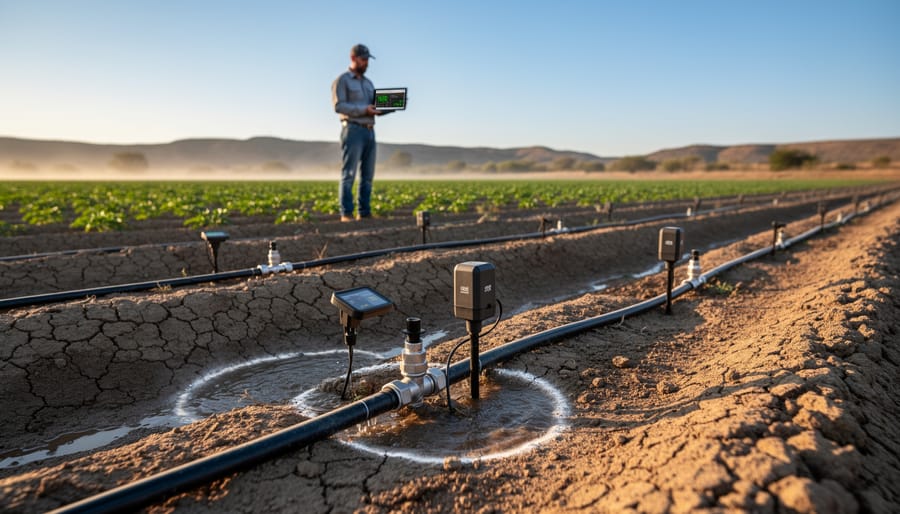
In xeric conditions, every drop counts, making efficient irrigation systems your most powerful tool for crop survival. Drip irrigation delivers water directly to plant roots with up to 95% efficiency compared to 65-75% for conventional sprinklers. For Alberta’s xeric soils, install drip tape along crop rows at 15-30 cm depth, spacing emitters 20-40 cm apart depending on soil texture and crop spacing. This targets the limited water exactly where plants need it while minimizing evaporation loss.
Micro-sprinkler systems offer a middle ground for crops requiring broader coverage, operating at 80-85% efficiency. Position micro-sprinklers 1.5-3 metres apart to create overlapping patterns without runoff on your sandy or coarse-textured xeric soils. Both systems integrate with soil moisture sensors that trigger irrigation only when readings drop below crop-specific thresholds.
Schedule irrigation during early morning hours (4-8 AM) when evaporation rates are lowest and winds typically calm. Precision irrigation controllers paired with weather station data can reduce water application by 20-40% while maintaining yields, critical when you’re working with the 25-40 cm annual precipitation typical of Alberta’s xeric zones.
Step 5: Apply Surface Management Techniques
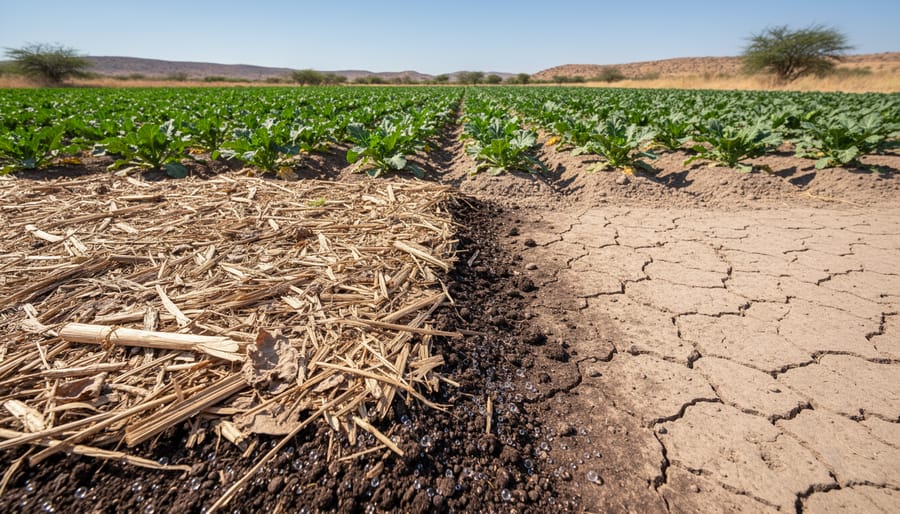
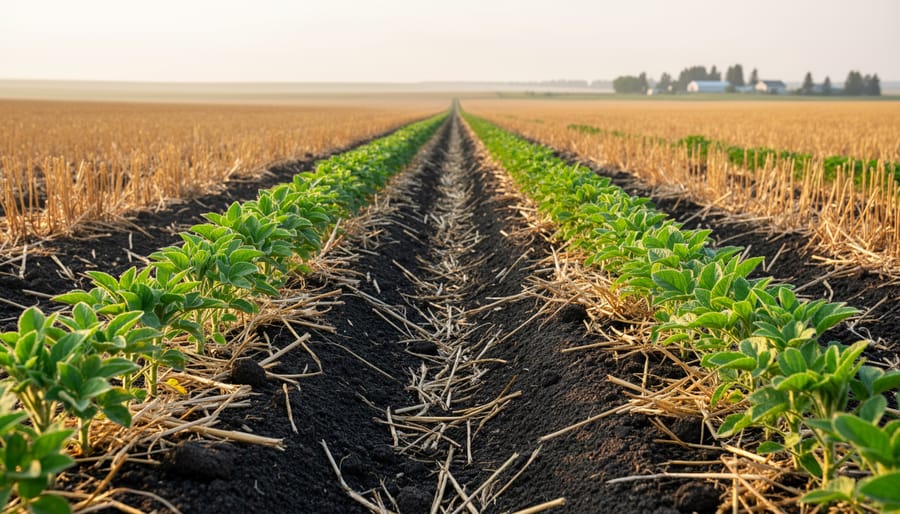
Surface residue is your frontline defence against evaporative loss in xeric conditions. Leave standing stubble at 20-30 cm height after harvest, or spread straw mulch at 5-8 tonnes per hectare across bare soil. This protective layer cuts evaporation by 30-40% while moderating soil temperature swings that stress drought-adapted crops.
For field-scale implementation, use a combine setting that distributes chaff evenly rather than windrows it. Where wind erosion threatens exposed soil, establish perpendicular windbreaks using drought-hardy shrubs like caragana or silverberry, spacing rows 15-20 metres apart. These barriers reduce wind speed across fields by 50%, directly lowering moisture loss. In vegetable operations, apply wood chip or grass clipping mulch 5-10 cm deep around plants, keeping it 5 cm away from stems to prevent rot while maximizing water retention where roots need it most.
Step 6: Implement Water Capture and Storage
Every litre that falls on your farm represents potential moisture for the future. In xeric conditions, capturing and storing runoff transforms brief precipitation events into sustained water resources.
Start by optimizing existing dugouts: clear accumulated sediment annually to restore storage capacity, and install silt fences at inflow points to trap soil before it reduces volume. A 10-metre by 10-metre dugout deepened by just one metre adds 100 cubic metres of storage, enough to supplement irrigation for several hectares during critical growth stages.
Construct on-contour swales in sloped fields to intercept runoff before it leaves your property. Space these shallow channels 20 to 30 metres apart across the slope, shaping them to slow water movement and encourage infiltration into the root zone. The excavated soil forms a berm on the downslope side, creating a water-spreading feature that charges deeper soil layers.
Direct barn roof runoff and other clean water sources into purpose-built cisterns or lined ponds rather than letting them drain away. A 200-square-metre metal roof yields approximately 180,000 litres annually at 900 millimetres of precipitation, water you’ve already paid to collect through your building investment.
Grade field approaches and headlands to channel concentrated runoff toward vegetated buffer areas or storage points instead of allowing it to erode soil and exit the farm. Simple land forming with a blade or scraper redirects water from liability to asset without expensive infrastructure.
Verification and Monitoring: Confirming Your Results
Tracking progress in xeric soil management requires consistent measurement against clear benchmarks, starting within the first growing season and continuing for several years to capture true soil improvement trends.
Begin monitoring soil moisture levels every two weeks during the growing season using a soil probe at multiple depths, 15 cm, 30 cm, and 60 cm. Compare readings against your baseline assessment from Step 1. Successful water retention improvements typically show 10-20% higher moisture content at the 30 cm depth four to six months after implementing organic matter additions. Take measurements at the same time of day, ideally early morning before evapotranspiration peaks, and log them in a simple spreadsheet with rainfall data for context.
Your key performance indicators should include:
- Soil moisture retention, comparing current readings to baseline at equivalent precipitation levels
- Crop stress reduction, fewer wilting episodes and delayed stress onset during dry periods
- Yield stability, consistent or improved production despite variable rainfall years
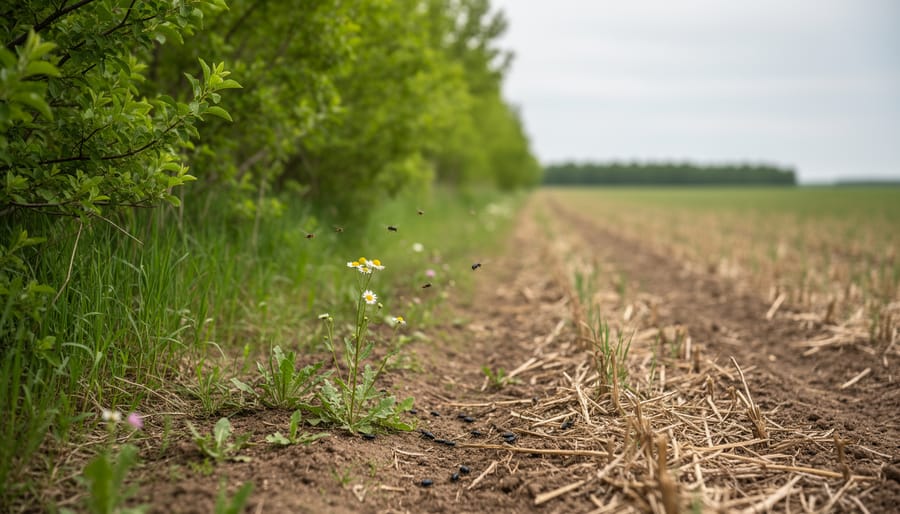
Visual field observations complement technical measurements. Watch for deeper green foliage, extended flowering periods, and improved plant vigour compared to previous seasons under similar weather conditions. Native vegetation returning to field margins, particularly deeper-rooted perennials, signals improving water-holding capacity. Document these changes with dated photographs from fixed reference points.
Conduct annual soil salinity testing each spring before seeding, as irrigation in xeric conditions can concentrate salts without proper management. Electrical conductivity readings should remain stable or decrease if your practices are maintaining proper water movement through the profile.
Adjust strategies when measurements plateau or decline. If moisture retention stops improving after 18 months, increase organic matter application rates or diversify cover crop species. When yields stagnate despite better moisture readings, your soil structure may need additional biological activity, consider introducing livestock integration or compost tea applications. The goal is continuous improvement, not perfection in the first season.
Real-World Application: Alberta Farmers Managing Xeric Soils
Tom Reimer operates a 1,200-acre mixed grain and cattle farm near Bow Island in southeastern Alberta, where annual precipitation averages just 320 millimetres. Five years ago, consecutive drought seasons left his sandy loam fields producing barely 20 bushels per acre. “I watched my topsoil literally blow away in spring windstorms,” he recalls. “Something had to change.”
Working with Alberta Agriculture extension specialists, Reimer implemented a three-pronged strategy targeting his xeric soil conditions. First, he transitioned to no-till farming across all grain acres, leaving crop residue on the surface year-round. Second, he integrated drought-adapted pulse crops like chickpeas and lentils into his wheat rotation. Third, he applied composted cattle manure at 10 tonnes per acre to boost organic matter from 1.8 percent to 2.6 percent over four seasons.
The results have been measurable. Soil infiltration rates improved from 12 millimetres per hour to 22 millimetres per hour. Water-holding capacity in the top 30 centimetres increased by approximately 18 percent. Most significantly, his wheat yields stabilized at 32 to 38 bushels per acre even in dry years, and chickpea crops now generate $15,000 to $20,000 additional annual revenue.
Dr. Angela Chen, a soil scientist at the Lethbridge Research and Development Centre, has documented similar success across southern Alberta. “Producers managing xeric regimes who build organic matter and reduce soil disturbance consistently see 15 to 25 percent yield improvements in drought years compared to conventional tillage systems,” she notes. Her team’s field trials show that each one percent increase in soil organic matter can hold an additional 25,000 litres of water per acre.
Sarah Kovacs, who farms 800 acres near Foremost, took a different approach by installing subsurface drip irrigation on 160 acres of high-value vegetable crops. While the initial investment reached $175,000, she recouped costs within three years through premium organic carrot and beet production. “In xeric soils, precision water delivery makes every drop count,” she explains. “I’m using 40 percent less water than overhead irrigation would require.”
The common thread among these producers is patience and systematic implementation. Chen emphasizes that rebuilding soil function in xeric conditions takes three to five years of consistent management before farmers see the full benefits reflected in their yields and water efficiency.
Common Questions About Xeric Soil Management
What upfront costs should I expect for xeric soil management?
Initial investments vary widely based on farm size and chosen practices, ranging from $500 for basic soil testing and organic amendments to $15,000+ for precision irrigation systems. Many farmers start with low-cost improvements like cover cropping and residue management (under $2,000) before adding irrigation infrastructure. Cost-shared programs through Growing Forward and provincial initiatives can offset 25-40% of eligible expenses.
How long before I see measurable improvements in soil moisture retention?
Some practices deliver quick wins: mulching and efficient irrigation show benefits within the first season. Building soil organic matter takes longer, expect modest improvements after two years and significant changes in water-holding capacity after four to five years of consistent management. Most Alberta producers report noticeable resilience to dry spells by year three.
Are these practices compatible with organic certification requirements?
Yes, nearly all recommended soil-water practices align with organic standards. Cover crops, compost application, reduced tillage, and efficient irrigation are certified-organic approved. Check specific soil amendments against the Permitted Substances List, and ensure irrigation water sources meet organic standards.
What government support programs help with xeric soil improvements?
Canadian Agricultural Partnership programs offer cost-share funding for beneficial management practices including water conservation infrastructure and soil health improvements. Alberta’s Environmental Stewardship and Climate Change program supports projects that enhance drought resilience. Contact your regional agricultural fieldman or provincial agriculture office for current program availability and application deadlines.
Will implementing these practices affect my crop insurance eligibility or premiums?
Improved soil-water management typically maintains or enhances insurance eligibility because it reduces production risk. Some insurers recognize drought-mitigation practices with premium adjustments. Document all improvements and notify AgriInsurance when you implement irrigation systems or significant management changes to ensure proper coverage.
Do I need additional water rights or licenses for efficient irrigation systems?
Switching to more efficient irrigation on existing water licenses generally does not require new allocations, but regulations vary by watershed. Alberta Environment and Protected Areas requires notification for new dugouts or irrigation systems. Consult your local irrigation district or provincial water management office before installing infrastructure to confirm licensing requirements and allocation availability in your region.
Beyond the practical questions above, farmers often wonder whether xeric soil management requires abandoning conventional equipment. The answer is no, most standard farm machinery works fine with these practices, though you might adjust timing or settings. For instance, reduced tillage uses your existing cultivator less frequently rather than requiring specialized equipment. That said, precision application tools like variable-rate controllers can maximize the return on limited water, making them worthwhile investments as your system matures.
Financial payback depends heavily on your baseline conditions and water costs. Producers starting with severely degraded soils see faster economic returns because each increment of improved water retention directly translates to better crop establishment and yield stability. Those with moderately functional soils might invest primarily for risk reduction rather than immediate yield gains. Either way, tracking moisture levels and crop performance year over year helps justify continued investment in practices that build long-term farm resilience.
Managing xeric soil moisture regimes isn’t just possible, it’s becoming essential for long-term agricultural success in Alberta’s semi-arid regions. The step-by-step practices outlined here work because they address the fundamental challenge: making every drop of moisture count in water-limited soils.
The economic benefits show up season after season. Improved soil water-holding capacity reduces irrigation costs and buffers against dry spells that devastate unprepared fields. Better organic matter levels mean more efficient nutrient cycling and lower input costs over time. Drought-adapted crop varieties deliver stable yields when conventional options fail. These aren’t theoretical advantages, they’re measurable returns that Alberta farmers are already documenting.
The environmental gains matter too. Healthier soil structure reduces erosion during wind events and captures more of the limited precipitation we receive. Enhanced organic matter management sequesters carbon while building resilience. Water conservation techniques protect local aquifers and streams for future generations.
You don’t have to implement everything at once. Start with one or two practices this season, measure the results, and expand from there. Connect with your local agricultural extension office for soil testing support and region-specific recommendations. Join organic farming networks to learn from neighbours who’ve already adapted their operations to xeric conditions. The knowledge base exists, the techniques work, and the community support is there. Your land will respond to these investments in ways that compound year after year, building the foundation for farming that endures through whatever climate patterns lie ahead.