Volatile organic compounds (VOCs) in drinking water require testing when your farm relies on well water or private sources, particularly if you’re near fuel storage, industrial sites, or areas with historical pesticide use. Testing involves collecting samples through an accredited laboratory, comparing results against Health Canada’s drinking water guidelines (which set maximum acceptable concentrations for 19 common VOCs as of 2026), and implementing treatment if contaminants exceed safe thresholds. Most Alberta farmers can complete the process in two to four weeks from sample collection to results, though mitigation timelines vary based on contamination severity.
VOCs are carbon-based chemicals that evaporate easily at room temperature. Common agricultural sources include gasoline and diesel from fuel storage, solvents from equipment maintenance, and certain pesticides. Unlike bacteria or sediment, these compounds dissolve in water without changing its appearance, taste, or smell, making laboratory testing the only reliable detection method. For organic operations, contaminated water in organic farming can jeopardize certification and pose health risks to families, workers, and livestock.
The stakes are straightforward. Prolonged exposure to certain VOCs, even at low concentrations, has been linked to liver damage, kidney problems, and increased cancer risk. Canadian drinking water standards exist to protect human health, but well owners bear responsibility for monitoring their own supplies. Municipal systems test regularly; private wells do not.
This guide walks through who needs to test, how to collect and submit samples properly, what your results mean, and where to find treatment solutions and financial support for remediation.
What Are Volatile Organic Compounds in Drinking Water?
Volatile organic compounds, or VOCs, are carbon-based chemicals that evaporate easily at room temperature and can dissolve into water supplies. On Alberta farms, these contaminants include gasoline components like benzene and toluene, solvents such as trichloroethylene, and industrial chemicals that seep into groundwater through soil and rock layers. While farmland plays a vital role in filtering groundwater naturally, VOCs can bypass these protective processes when introduced in concentrations that overwhelm soil filtration capacity.
Common sources around farming operations create multiple pathways for VOC contamination. Diesel and gasoline storage tanks, whether above or below ground, develop leaks over time that allow fuel to percolate downward into aquifers. Pesticide drift from neighbouring conventional farms introduces compounds that weren’t applied on your organic land but still reach your wells. Industrial facilities within several kilometres, old waste disposal sites, and highway corridors contribute VOCs that travel through groundwater flow patterns, sometimes appearing in wells far from the original source.
Septic systems and improper disposal of farm chemicals add another layer of risk. Household cleaning products, vehicle maintenance fluids, and agricultural solvents contain VOCs that septic tanks aren’t designed to treat effectively. These chemicals pass through drain fields into the water table, particularly in sandy or gravelly soils that offer minimal filtration.
The health risks matter for everyone drinking your farm’s water. Short-term exposure to VOCs causes headaches, dizziness, and nausea, while long-term consumption of contaminated water links to liver and kidney damage, nervous system problems, and increased cancer risk. For organic farmers, VOC contamination threatens certification status because organic standards require clean water for irrigation, livestock, and processing. A single contamination event can compromise years of organic management work and force costly remediation before you can return to certified production.
Health and Regulatory Standards: What Alberta Organic Farmers Need to Know
Health Canada establishes national drinking water quality standards through its Guidelines for Canadian Drinking Water Quality, which set maximum acceptable concentrations for contaminants including dozens of VOCs. These guidelines apply nationwide, but enforcement and monitoring vary by water system type.
In Alberta, public water systems must comply with provincial standards administered by Alberta Environment and Protected Areas. Private farm wells and small water systems serving fewer than fifteen people fall under different rules. Private systems requirements do not mandate routine VOC testing, but strongly recommend it when contamination sources exist nearby. Farm operators remain responsible for their own water safety.
Several VOCs commonly appear near agricultural operations, each with specific health-based limits:
| VOC | Health Canada MAC (µg/L) | Common Farm Sources |
|---|---|---|
| Benzene | 1.0 | Gasoline, fuel storage |
| Toluene | 24 | Diesel fuel, solvents |
| Tetrachloroethylene | 30 | Industrial sites, dry cleaning |
| Trichloroethylene | 5.0 | Metal degreasing, contaminated sites |
Organic certification bodies add another layer of expectations. Canadian organic standards require farms to demonstrate that irrigation and processing water does not compromise product integrity. While the standards do not specify VOC testing frequency, certification auditors may request water quality documentation when risk factors exist. Farms with fuel storage, neighbouring industrial activities, or histories of contamination should maintain recent test results. Detection of VOCs above Health Canada limits can trigger corrective action requirements before the next audit cycle, particularly if water contacts organic crops or products.
Who Needs to Test: Eligibility and Requirements for Farm Water Testing
While all Alberta farms can benefit from water testing, certain operations face higher VOC exposure risks and stronger testing obligations. Understanding your situation helps you prioritize testing and meet both regulatory and certification expectations.
Private Well Users: Your Testing Responsibility
If your farm relies on a private well or dugout for drinking water, testing falls entirely on you as the property owner. Unlike municipal water systems that undergo mandatory continuous monitoring, private water sources receive no government oversight. Health Canada and Alberta Health Services strongly recommend annual testing for bacterial contamination, with VOC screening every two to three years at minimum. However, this is guidance rather than enforcement, private well owners make their own decisions about testing frequency and parameters.
High-Risk Scenarios Requiring Immediate Attention
Certain conditions dramatically increase your VOC contamination risk and warrant testing regardless of your last test date:
- Wells located within 500 metres of highways, railways, or industrial facilities where fuel spills or chemical releases may occur
- Farms with on-site fuel storage tanks (diesel, gasoline, propane), especially older tanks without secondary containment
- Properties adjacent to conventional farms using synthetic pesticides that may drift or leach into groundwater
- Operations with septic systems or waste lagoons near water sources
- Farms in areas with known groundwater contamination from historical industrial activity or landfills
- Wells showing sudden changes in water taste, odour, or appearance
Organic Certification Requirements
Farms pursuing or maintaining organic certification face explicit water quality expectations. While certification bodies don’t universally mandate VOC testing as a prerequisite, they require you to demonstrate that your water source doesn’t compromise organic integrity. Testing provides documentation that your water meets safety standards and won’t introduce prohibited substances into organic production or processing. Some certifiers require baseline testing at initial certification, then periodic retesting based on risk assessment.
On-Site Processing Facilities
If you process products on-farm, whether bottling milk, washing vegetables, or manufacturing value-added goods, your water quality obligations intensify. Provincial food safety regulations require potable water for all processing activities. Regular VOC testing becomes part of your food safety plan and HACCP protocols, protecting both consumer health and your business liability.
How to Test Your Farm’s Drinking Water for VOCs
Choosing an Accredited Laboratory in Alberta
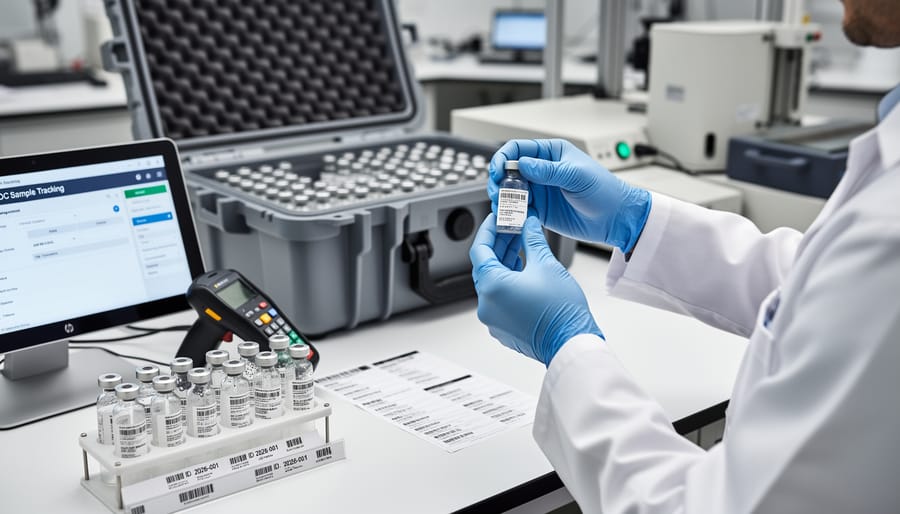
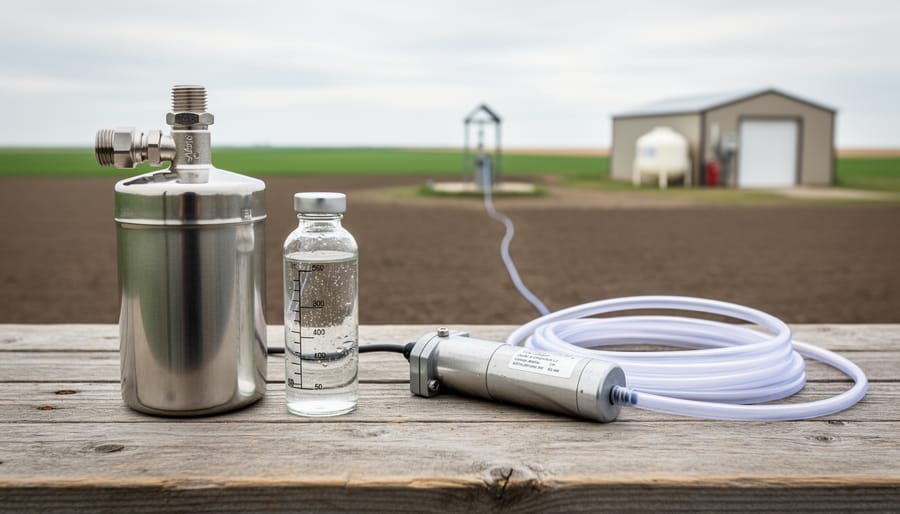
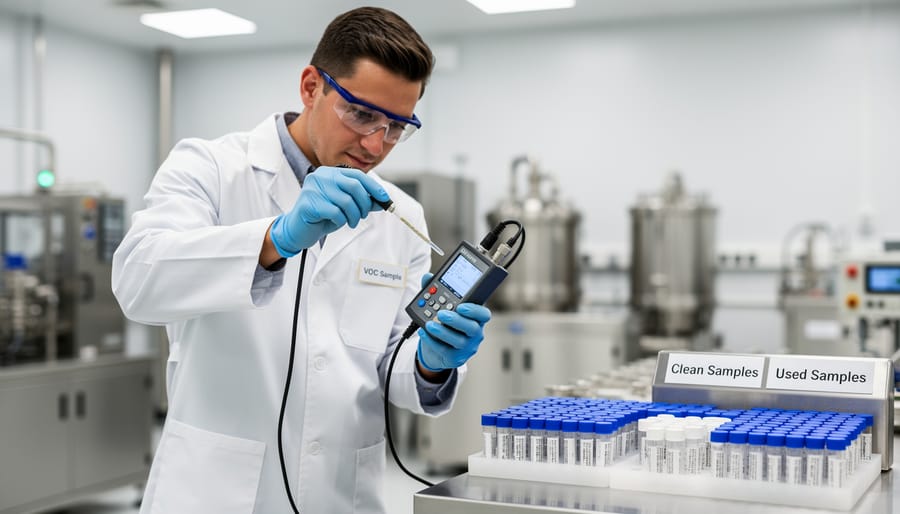
Finding a qualified laboratory is your first step toward reliable VOC test results. In Alberta, look for labs accredited by the Canadian Association for Laboratory Accreditation (CALA) or holding ISO/IEC 17025 certification. These credentials confirm the lab follows strict quality control protocols and uses validated testing methods.
Start by checking Alberta Environment and Protected Areas’ list of approved laboratories, or search the CALA directory online. Most accredited labs serving Alberta farms include ALS Environmental, Bureau Veritas, and Maxxam Analytics, though regional options may be available closer to your operation.
When contacting labs, ask these essential questions: Do you test specifically for agricultural VOC panels? What’s your turnaround time? Can you provide sampling instructions and sterile containers? Do you report results against Health Canada’s Maximum Acceptable Concentrations?
Expect to pay $150 to $400 for a standard VOC panel, depending on the number of compounds tested. Basic screening packages start around $150, while comprehensive agricultural panels run $300 to $400. Turnaround times typically range from 10 to 15 business days after the lab receives your sample.
Many labs ship sampling kits directly to your farm with detailed instructions, making the process straightforward even for first-time testers.
Understanding Your Test Results
Lab reports for VOC testing typically list each compound tested alongside its concentration in micrograms per litre (µg/L) and the method detection limit (MDL). The MDL represents the lowest amount the lab can reliably measure. If a result shows “<0.5 µg/L”, the compound was either absent or present below that threshold.
Compare each detected compound against Health Canada’s Maximum Acceptable Concentrations (MACs). For example, benzene has a MAC of 1 µg/L, while toluene’s is 24 µg/L. Any result at or above the MAC requires immediate action. Results below the MAC but above the MDL indicate presence at low levels, track these over time.
Keep all test reports to spot trends. A single low reading might be insignificant, but rising concentrations over successive tests signal a developing contamination problem requiring investigation. Test frequency matters: annual testing catches gradual changes, while quarterly sampling reveals seasonal variations linked to recharge patterns or snowmelt.
If any VOC exceeds its MAC, stop using that water source immediately for drinking and cooking. Contact Alberta Health Services Environmental Public Health within 48 hours and arrange follow-up testing to confirm results before planning remediation.
Your Rights and Obligations as a Farm Water User
As an Alberta farm operator with a private water system, you bear primary responsibility for ensuring your drinking water meets safety standards, including VOC limits, for everyone who lives or works on your property. Unlike municipal water users, you don’t have a utility monitoring your supply, which means regular testing and maintenance fall squarely on you. Alberta Health Services Environmental Public Health can provide guidance and support, but the legal obligation to supply safe water rests with the property owner.
You have the right to access expert advice and testing services at any time. Test your drinking water through any accredited laboratory without needing permission or a referral, and you can contact Alberta Agriculture and Irrigation extension staff for interpretation help. If you’re farming organically, your certification body may offer water quality resources as part of their member support services.
When testing reveals VOCs above Health Canada’s maximum acceptable concentrations, you must inform anyone who regularly consumes that water, family members, employees, seasonal workers, and tenants. Failing to disclose known contamination exposes you to liability if someone becomes ill. You’re also required to notify your organic certification body promptly, as water quality affects your compliance status. Most certifiers require documentation of the contamination source, your response plan, and follow-up testing results before they’ll confirm continued certification.
Your obligations extend beyond testing. Maintaining prevent farm water pollution measures, proper fuel storage, well-head protection, setback distances from potential contamination sources, demonstrates due diligence if contamination occurs from off-site sources. These proactive steps, combined with soil and water conservation practices and properly designed water infiltration systems show you’ve taken reasonable care to protect your water supply, which can matter significantly if liability questions arise.
Mitigation Strategies: Protecting Water Quality on Your Organic Farm
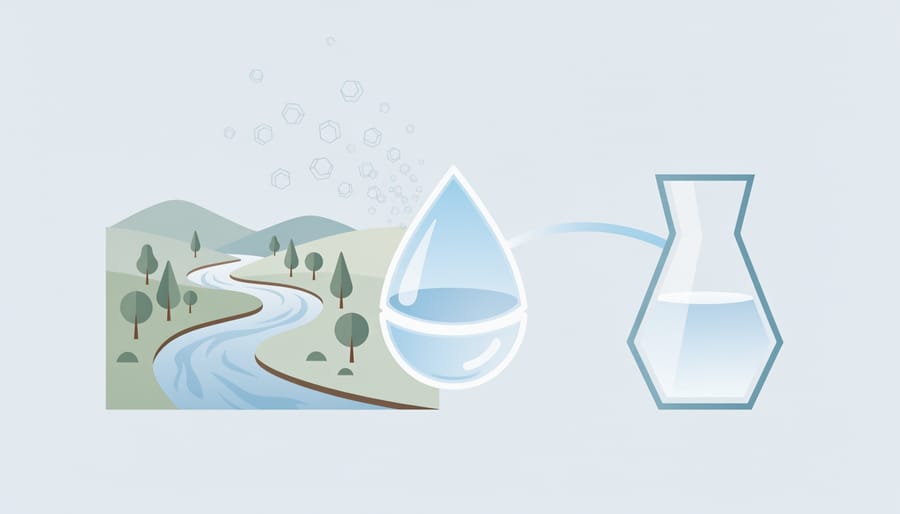
Protecting your farm’s water from VOC contamination starts with smart prevention practices, because treating contaminated water is far more expensive and complicated than stopping pollutants from reaching it in the first place. Organic farms have a particular stake in water quality, your certification depends on it, and your market reputation relies on demonstrating genuine environmental stewardship.
Start by evaluating every potential contamination source on your property. Fuel storage tanks require concrete pads with berms or secondary containment that can hold 110% of the tank’s volume, positioned at least 30 metres from wells and surface water. Aboveground tanks are easier to monitor for leaks than buried ones, and regular visual inspections catch problems before they become crises. If you’re storing any approved inputs like botanical pesticides or cleaning agents, even those permitted under organic standards, keep them in a separate, covered area with impermeable flooring.
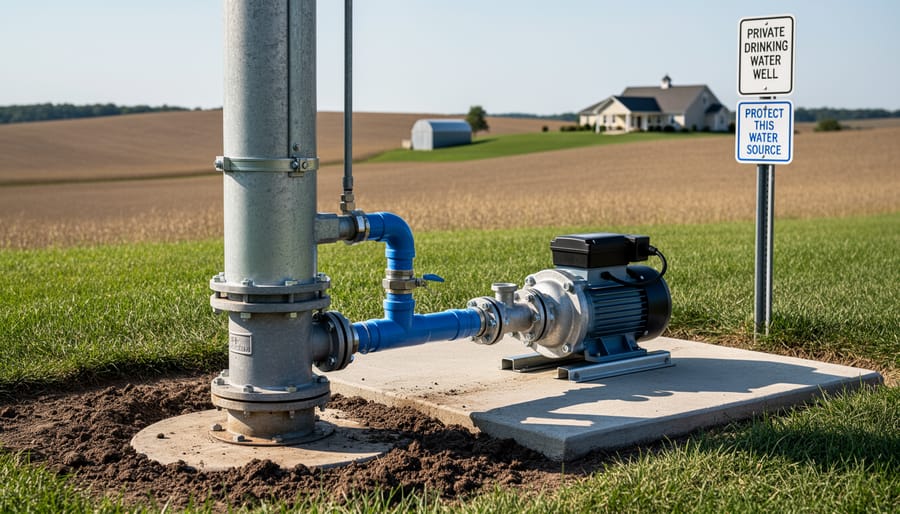
Your well’s physical condition matters enormously. A properly constructed well has a sealed casing extending at least six metres below ground, a sanitary cap, and a concrete pad sloped away from the wellhead to prevent surface water infiltration. Inspect the casing annually for cracks, and maintain at least a 15-metre radius around the well where no chemicals, fuel, or livestock waste are stored or applied.
For farms that have detected VOCs or operate in high-risk areas, these best management practices offer additional protection:
- Install monitoring wells between potential contamination sources and your drinking water well to detect problems early
- Use drip pans and absorbent mats under all equipment during fueling and maintenance operations
- Route surface runoff away from well sites using berms, swales, or vegetated buffer strips
- Replace aging underground fuel tanks before they fail, not after contamination occurs
- Maintain detailed records of all chemical and fuel use, including storage locations and disposal methods
- Establish equipment wash areas with proper drainage that doesn’t flow toward wells or surface water
If testing reveals VOC contamination, your options depend on concentration levels and the specific compounds detected. Point-of-use activated carbon filters effectively remove many VOCs and are generally compatible with organic operations for household drinking water, though they require regular cartridge replacement based on water volume treated. Granular activated carbon systems handle larger volumes for farm processing facilities. Some farms install dedicated treatment systems just for drinking water taps while using untreated well water for irrigation and livestock, reducing treatment costs while protecting human health.
Alternative water sources offer another path forward. Rainwater harvesting systems provide high-quality water for household use if your roof materials and collection system avoid contaminants. Some farmers drill new wells in different aquifers or locations farther from contamination sources, though this requires hydrogeological assessment to ensure you’re accessing cleaner water. Connecting to municipal water systems is feasible for farms near town boundaries, though it brings ongoing costs and removes the independence many farmers value.
Source water protection planning takes a whole-farm view, mapping all potential risks and implementing layered defenses. Work with watershed management support programs available through Alberta Agriculture and regional agricultural service boards, they offer technical assistance and sometimes cost-sharing for protection measures. These plans identify your most vulnerable water resources, prioritize protection actions based on risk and cost, and create a maintenance schedule to keep safeguards working over time.
Remember that organic certification auditors will review your water quality practices. Document your testing schedule, maintain records of all prevention measures, and demonstrate that you’ve taken reasonable steps to protect water sources from contamination. This documentation proves your commitment to organic principles and provides legal protection if questions arise about your farm’s environmental practices.
Where to Get Help: Resources and Support for Alberta Farmers
Alberta farmers concerned about VOCs in their drinking water have access to multiple government agencies, industry organizations, and professional services across the province.
Government Agencies and Extension Services
Alberta Health Services Environmental Public Health operates regional offices throughout the province. Contact your local office through the AHS main line at 1-866-408-5465 for guidance on interpreting water test results and health risk assessments. They provide free consultations on private water system safety and can recommend next steps when contamination is detected.
Alberta Environment and Protected Areas manages groundwater protection programs and maintains the provincial groundwater observation well network. Reach their Environmental Information Centre at 310-0000 (toll-free within Alberta) for information on source water protection, contamination reporting requirements, and regulatory standards. Their website offers detailed technical guidance documents on well construction and maintenance.
Alberta Agriculture and Irrigation employs water quality specialists and agricultural engineers who provide extension support to farmers. Call 310-FARM (3276) to connect with regional agrologists who understand organic farming systems and can help develop farm-specific water protection plans. Many districts offer subsidized water testing programs during spring testing windows.
Organic Certification Bodies
The Canada Organic Trade Association (COTA) connects farmers with certification bodies and water quality resources specific to organic standards. Contact them at info@ota.com or visit their member directory for Alberta-based certifiers who can clarify how water testing fits within your certification maintenance requirements.
Organic Alberta provides peer support through their member network and hosts workshops on environmental compliance for organic operations. Reach them at 780-456-7513 or through their website at for connections to farmers who have navigated similar water quality challenges.
Accredited Testing Laboratories
Several CALA-accredited labs serve Alberta farms with VOC testing services. ALS Environmental in Edmonton (780-413-5227) and Maxxam Analytics in Calgary (403-245-5555) both offer agricultural water testing packages with VOC panels ranging from 350 to 650 dollars. Exova in Red Deer provides mobile sampling services for remote operations.
Case Study: An Alberta Organic Farm’s Water Testing Journey
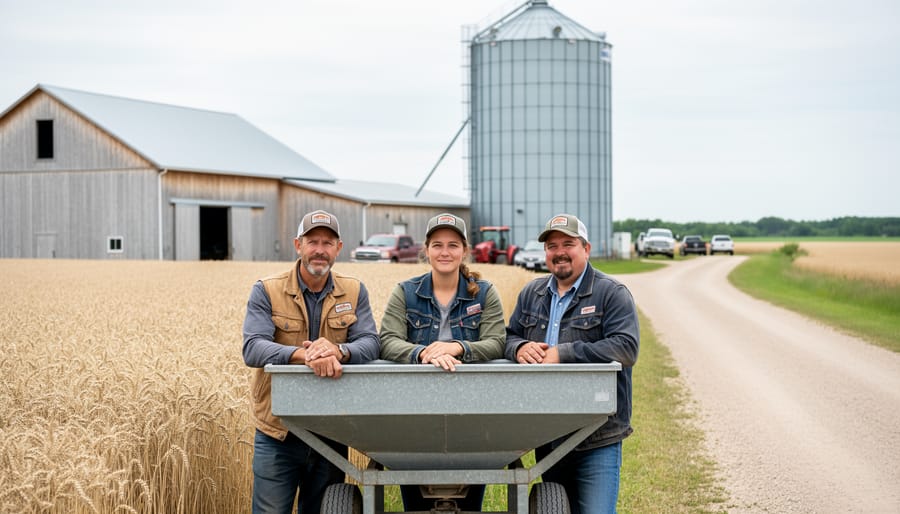
When Sarah Chen took over her family’s 160-hectare certified organic grain operation near Leduc in 2024, routine well testing wasn’t on her radar. That changed during her organic certification renewal when the auditor recommended water quality testing for the on-farm processing shed where they cleaned and packaged heritage wheat varieties.
Sarah contacted a CALA-accredited lab in Edmonton and ordered a full VOC panel for $385. The results flagged benzene at 6.2 µg/L, above Health Canada’s maximum acceptable concentration of 5 µg/L. A neighbouring property had recently demolished old farm buildings, and Sarah suspected contamination from buried fuel tanks.
She immediately switched the processing facility to bottled water and notified her certification body. Alberta Health Services Environmental Public Health visited within a week, conducting a site assessment and recommending follow-up testing at multiple locations. Three additional samples confirmed the contamination was isolated to the main farmhouse well, not the newer livestock watering system.
Working with Alberta Agriculture extension services, Sarah accessed provincial cost-share funding that covered 50% of the $12,000 remediation cost. The farm installed a granular activated carbon filtration system and drilled a replacement well 30 metres from the original location, upslope from potential contamination sources.
Six months of quarterly testing showed benzene levels below detection limits. Sarah now tests annually and has incorporated well monitoring into her farm’s environmental management plan. Her certification body approved the response, and she’s shared her experience at local organic grower meetings, encouraging others to test proactively rather than wait for problems to surface.
How to Apply or Complete the Process
Testing your farm’s water for VOCs doesn’t require formal applications or government approvals in most cases. The process is straightforward: contact an accredited laboratory, request a VOC testing package, and arrange sample collection.
Start by calling or emailing a CALA-certified lab, most accept direct requests from farm operators without referral. Ask for a standard VOC panel suitable for private well testing. The lab will provide sterile sample bottles, specific collection instructions, and chain-of-custody forms.
Collect your sample following the lab’s protocol exactly. Most require a first-draw sample from an untreated tap, filling bottles to the specified level without introducing air bubbles. Label containers immediately with date, time, location, and your contact information.
Submit samples within the timeframe specified by the lab, typically 24 to 48 hours. Keep samples chilled during transport using ice packs, not direct ice contact.
Once results arrive, compare VOC concentrations against Health Canada’s Maximum Acceptable Concentrations. If levels exceed guidelines, contact Alberta Health Services Environmental Public Health for guidance on next steps, which may include confirmatory testing, source investigation, or interim water supply measures.
For organic certification compliance, forward test results to your certification body as required by their standards.
Frequently Asked Questions
How much does VOC testing cost for a farm well in Alberta?
A comprehensive VOC panel from an accredited laboratory typically costs between $250 and $450, depending on the number of compounds tested and the lab you choose. Some Alberta programs offer cost-share assistance for agricultural water testing, which can reduce your out-of-pocket expense by 50% or more.
How often should I test my farm’s drinking water for VOCs?
Test annually if your farm is near potential contamination sources like highways, industrial sites, or conventional farms using pesticides. If initial tests show no detection and your farm is in a low-risk area, testing every two to three years is reasonable for ongoing monitoring.
Can I still use my water while waiting for test results?
Yes, if you have no reason to suspect immediate contamination. Lab results typically arrive within 7 to 14 business days. If you smell fuel odours or notice unusual tastes, use bottled water for drinking and cooking until you receive your results.
Will VOC contamination affect my organic certification?
It depends on the source and severity. Contamination from your own operations could affect certification, but contamination from neighbouring properties or historical sources beyond your control typically won’t disqualify you if you’re taking reasonable mitigation steps and documenting the issue with your certification body.
Beyond these common questions, farmers often wonder about treatment systems compatible with organic operations. Point-of-use carbon filtration systems and reverse osmosis units can effectively remove most VOCs without introducing synthetic chemicals that would conflict with organic standards. These systems range from simple under-sink filters ($200 to $800) to whole-house treatment installations ($2,000 to $6,000), depending on your water volume needs and the specific contaminants present.
Insurance coverage for VOC contamination varies significantly. Most farm liability policies don’t cover gradual environmental contamination or pollution from your own storage tanks. Review your policy carefully and consider pollution liability coverage if you store significant fuel volumes or operate near known contamination risks. Your insurance broker can explain options specific to agricultural operations.
If test results show VOC detection above Health Canada’s maximum acceptable concentrations, don’t panic. Document the results, notify anyone who regularly drinks the water, and contact Alberta Health Services Environmental Public Health for guidance. They’ll help you understand the health implications, identify potential sources, and develop an action plan. Many farms successfully address VOC issues through improved storage practices, alternative water sources, or targeted treatment systems while maintaining full organic certification.
Testing your farm’s drinking water for volatile organic compounds isn’t just about ticking a compliance box, it’s foundational to protecting your family, your workers, and the integrity of your organic operation. Clean water is non-negotiable in sustainable agriculture, and proactive monitoring puts you in control before problems escalate.
Start by arranging testing through an accredited Alberta laboratory, especially if you rely on a private well or operate near potential contamination sources. Understand the standards that apply to your situation, interpret your results with care, and act quickly if VOCs appear. Proper fuel storage, well maintenance, and source water protection are practical steps every organic farmer can take today.
You’re not navigating this alone. Alberta Agriculture extension staff, Environmental Public Health officers, and certified organic associations are ready to guide you through testing, interpretation, and mitigation. Cost-share programs can ease the financial burden, and expert support is available when you need it.
Water quality stewardship strengthens our entire farming community. By monitoring VOCs and addressing risks head-on, you’re safeguarding not only your operation’s future but also contributing to the broader movement toward resilient, sustainable Canadian agriculture. Test your water, know your rights, and protect what matters most.