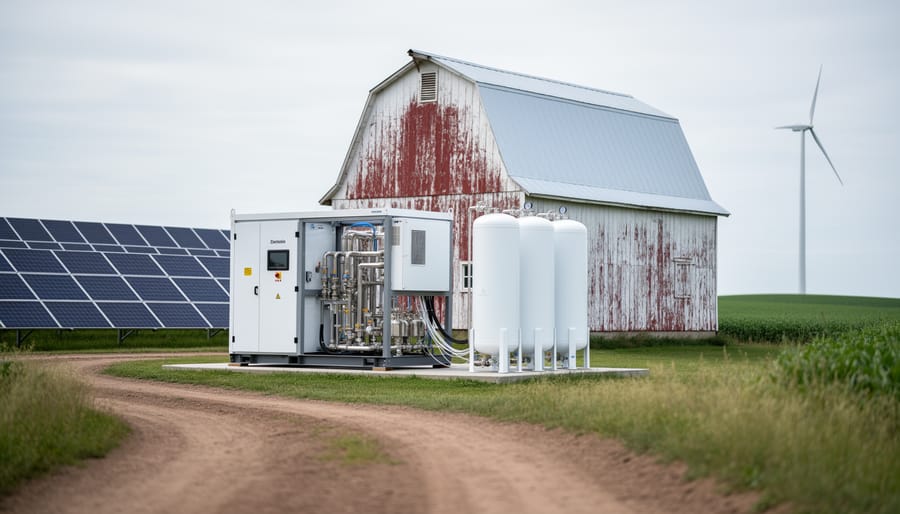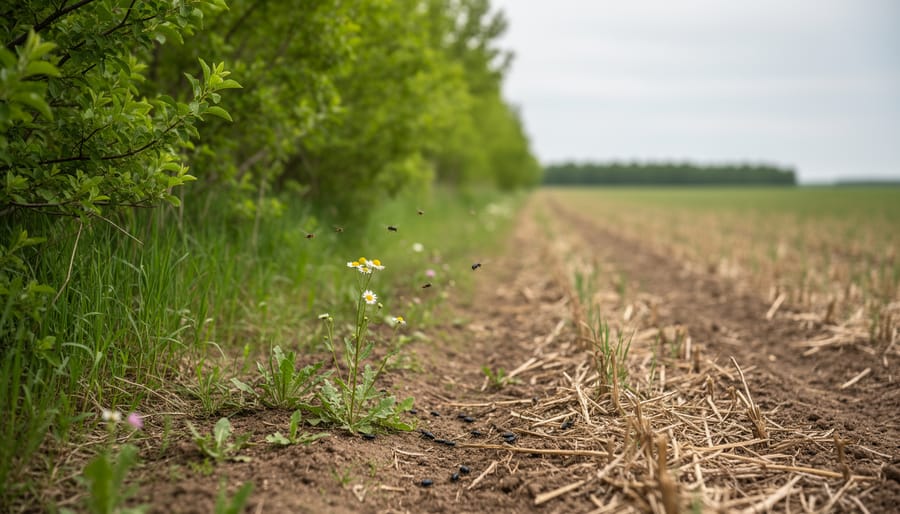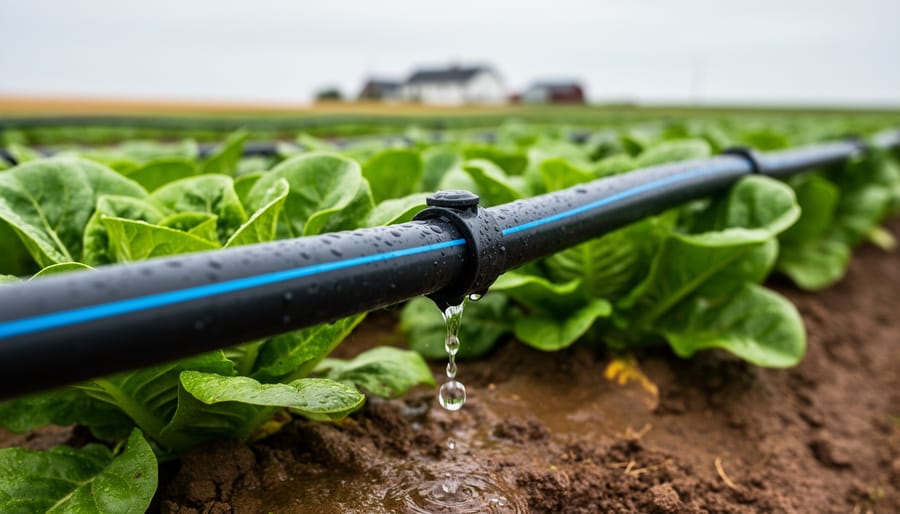
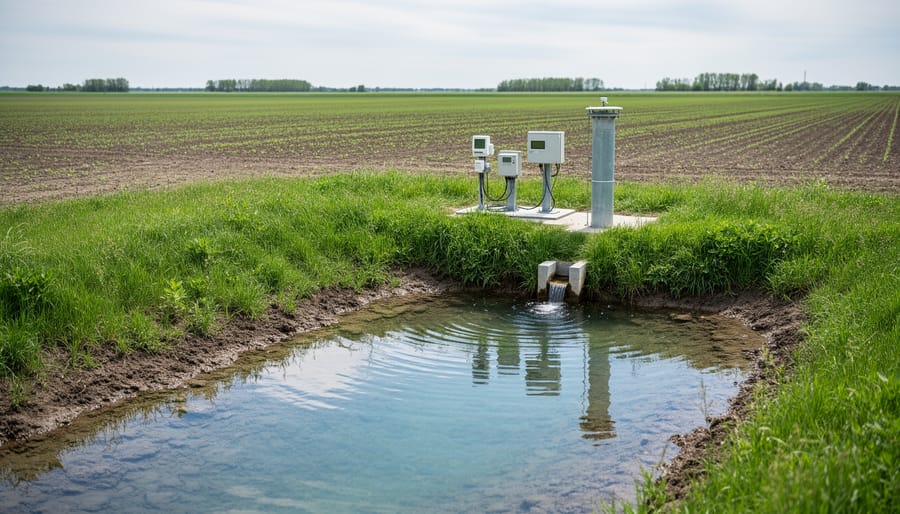
A groundwater replenishment system captures and treats surface water or water recovery flows, then directs them into underground aquifers to restore water tables depleted by irrigation and drought. For organic farmers in Alberta and across the Canadian Prairies facing declining well levels and tighter water allocations, these systems offer a practical path to securing long-term water access while maintaining certification compliance. The approach combines engineered infiltration basins, pre-treatment filters, and monitoring wells to turn seasonal runoff and treated greywater into stored groundwater you can tap during peak growing months.
The reality for many producers is stark. Water tables across southern Alberta have dropped between 2 and 8 metres in the past two decades, and licence restrictions mean traditional irrigation expansion isn’t an option. But the same spring snowmelt and summer storms that overwhelm drainage systems represent millions of litres of potential storage if you can capture and redirect them below ground. Unlike surface reservoirs that lose 30 to 50 percent of stored water to evaporation in our climate, aquifer storage protects every litre while naturally filtering out sediments and pathogens.
Canadian organic standards permit groundwater recharge when source water meets quality thresholds and system components avoid prohibited substances. That means careful selection of basin liners, filter media, and conveyance materials, plus documentation that satisfies both your certifying body and provincial water regulators. This guide walks through the complete implementation sequence, from site assessment and permit applications to basin construction and performance verification, with specific attention to the unique requirements organic operations face.
Understanding How Groundwater Replenishment Works on Organic Farms
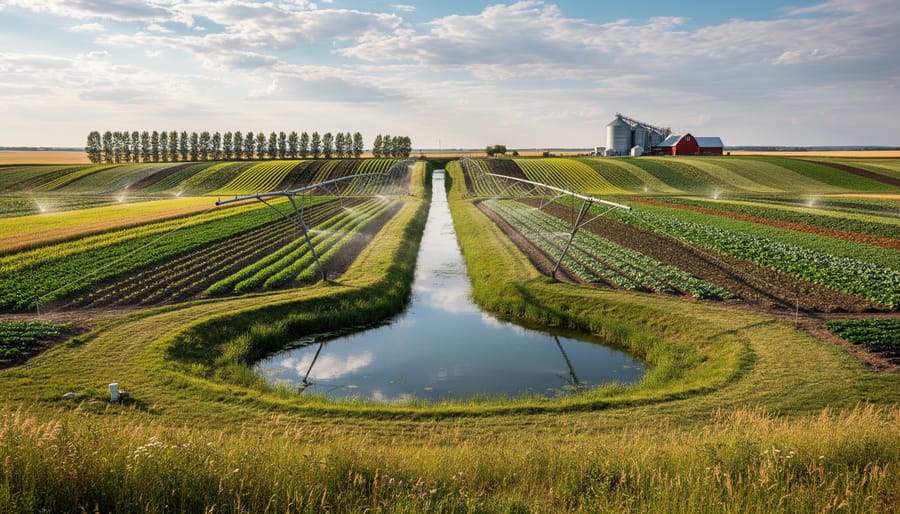
Groundwater replenishment on organic farms operates as a closed-loop precision water recovery system that captures farm water, treats it to organic standards, and returns it to underground aquifers. Unlike conventional systems that may rely on chemical disinfection or synthetic filtration media, organic operations must use naturally-derived treatment methods that preserve certification eligibility while protecting aquifer quality.
The process begins with water capture from on-farm sources. Organic groundwater replenishment systems collect water from multiple points across your operation:
- Irrigation tailwater and field runoff, requiring sediment removal and pathogen reduction before recharge
- Processing water from washing stations and packing facilities, needing organic matter filtration and biological treatment
- Cleaned greywater from non-chemical farm operations, demanding careful screening to prevent soil contaminants
- Roof catchment and clean drainage, often requiring minimal treatment beyond basic filtration
Each source demands different pre-treatment intensity, but all must meet the same aquifer protection standards before recharge.
Treatment stages for organic systems rely on biological and physical processes rather than synthetic chemicals. Water flows through settling basins where gravity removes suspended solids, then passes into constructed wetlands or sand filters where beneficial microorganisms break down organic matter and pathogens. UV treatment or extended retention times in aeration ponds provide final disinfection without introducing prohibited substances. The key distinction from conventional systems is eliminating chlorine, ozone generators with synthetic components, or any filtration media treated with non-organic antimicrobials.
The recharge phase moves treated water back into aquifers through infiltration basins, injection wells, or distributed percolation fields. Water percolates through soil layers that provide additional natural filtration before reaching the water table. This mimics natural groundwater recharge but at accelerated rates and controlled locations. For farms already using groundwater irrigation replenishment creates a sustainable cycle that maintains aquifer levels rather than depleting them.
Organic certification bodies require documented water quality testing and treatment verification at each stage. Your system must demonstrate that recharged water meets drinking water standards for most parameters and contains no synthetic residues. This means more frequent monitoring and longer treatment retention times compared to conventional systems, but the result is aquifer protection that aligns with organic principles of environmental stewardship.
Equipment and Materials You’ll Need
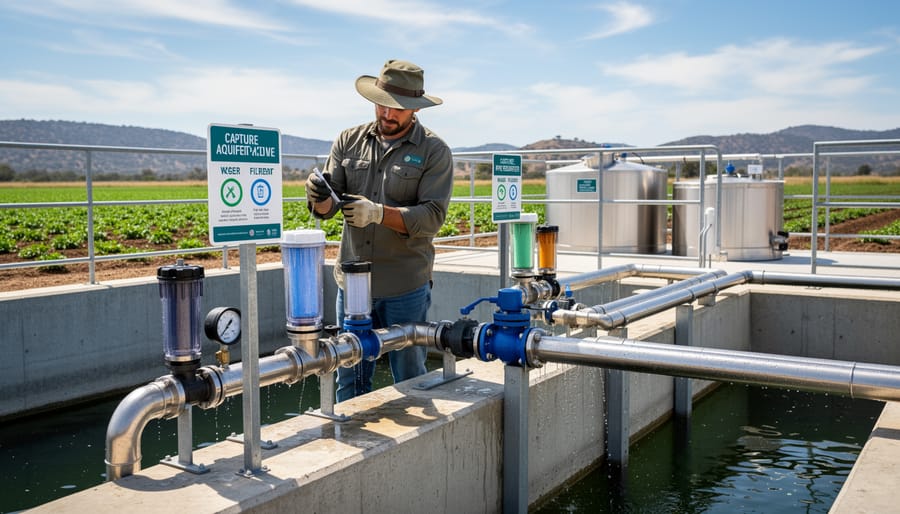
Building a groundwater replenishment system requires specific infrastructure that meets both organic certification standards and provincial water quality regulations. Here’s what you’ll need to establish a functional capture-treat-recharge operation.
Collection Infrastructure
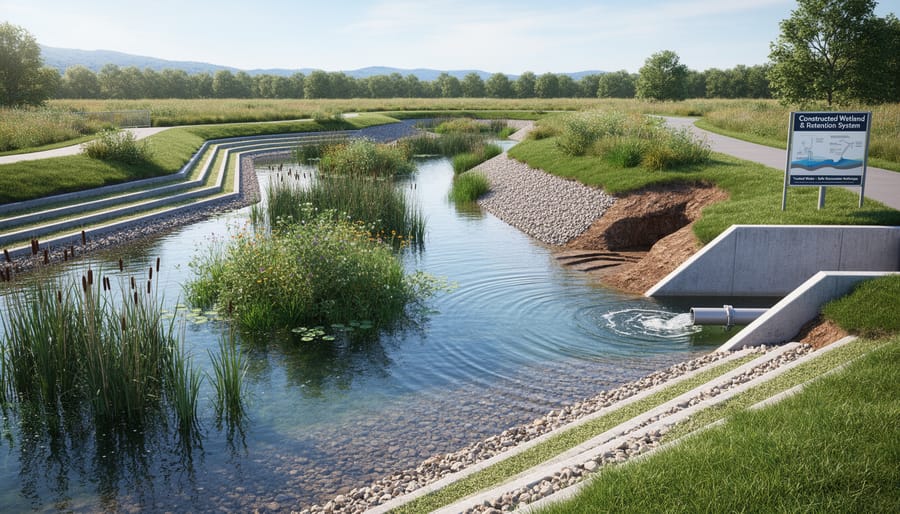
Start with settling tanks sized at 2-4 cubic metres per hectare of irrigated cropland. HDPE or concrete tanks work well; avoid galvanized metal that can leach zinc into organic systems. Bioswales should run 1.5-2 metres wide with a 2-5% grade, lined with native grasses and sedges that tolerate periodic flooding. For larger operations, excavate retention ponds at 0.5-1 metre depth with 3:1 side slopes, using compacted clay liners rather than synthetic membranes to maintain organic compliance.
Filtration and Treatment Equipment
Multi-stage sand filters form the backbone of organic water treatment. You’ll need graded filter media: coarse gravel (15-25 mm) for the base layer, medium sand (0.5-2 mm) for primary filtration, and fine sand (0.25-0.5 mm) for polishing. Plan for 10-15 cubic metres of total filter bed per 100 cubic metres daily throughput. Constructed wetlands provide biological treatment; allocate 50-75 square metres per 10 cubic metres daily flow, planted with cattails, bulrush, and water smartweed suited to Alberta’s growing zone.
UV treatment units rated for agricultural water disinfection (minimum 40 mJ/cm² dose) ensure pathogen reduction without chemical additives. Choose systems with automated quartz sleeve cleaning to reduce maintenance in turbid water conditions.
Recharge Infrastructure
Passive infiltration basins require less equipment but more land: 100-200 square metres per 10 cubic metres daily recharge capacity, depending on soil permeability. Line basins with 30 cm of washed river gravel to prevent surface sealing. For active injection, consult licensed well drillers to install 15-20 cm diameter recharge wells to depths matching your target aquifer. PVC casing rated for potable water applications maintains organic standards; include gravel pack and bentonite seals per Alberta Environment guidelines.
Monitoring Tools
Install inline turbidity meters (0-100 NTU range), conductivity sensors (0-2000 µS/cm), and flow totalizers on treatment output lines. Portable water quality meters testing pH, dissolved oxygen, and temperature cost $800-1,500 and verify treatment effectiveness. Budget for monthly lab analysis of microbial indicators and nutrient levels, documentation required for organic certification audits.
Keep installation manuals and material safety data sheets for all components; auditors will verify that every material touching reclaimed water meets organic production standards.
Permits, Regulations, and Safety Considerations
Before you break ground on any groundwater replenishment infrastructure, securing the right permits protects both your operation and Alberta’s water resources. Your first stop is Alberta Environment and Protected Areas (AEPA), where you’ll need to apply for a Water Act authorization that covers both the withdrawal of source water and the injection or infiltration of treated water back into the aquifer. Depending on your system’s scale and location, you may require a full environmental impact assessment, particularly if your farm sits near designated sensitive areas like wetlands or municipal wellfields. The application process typically takes 90 to 180 days, so start early in your planning phase.
Setback distances are non-negotiable. Alberta regulations require at least 30 metres between recharge points and any existing water wells, with some jurisdictions mandating 100 metres or more if you’re near a domestic or municipal supply. Property line setbacks vary by region but commonly range from 15 to 30 metres, and you’ll need written consent from adjacent landowners if your recharge plume could migrate across boundaries. Your organic certifier will also scrutinize your system design: all treatment components must use materials approved for organic use, and you cannot introduce synthetic chemicals or prohibited substances into the recharge water.
Safety protocols start with redundant treatment verification. Install inline turbidity sensors and establish monthly lab testing for pathogen indicators, following reclaimed water monitoring requirements as a baseline. Every recharge system must include an emergency shutoff valve accessible within 10 seconds of your monitoring station, programmed to close automatically if water quality parameters fall outside acceptable ranges. Groundwater contamination is nearly impossible to reverse, so err on the side of caution: if you’re uncertain about treatment effectiveness during commissioning or after maintenance, halt recharge operations until you confirm safe water quality through independent lab analysis.
Step-by-Step: Installing Your Groundwater Replenishment System
Phase 1: Site Assessment and System Design
Start your assessment by testing how quickly water moves through your soil. Dig test holes at three proposed infiltration sites, each 30 cm deep, and fill them with water. Measure the drop in water level every 30 minutes for three hours. You need a percolation rate above 2.5 cm per hour for effective recharge; slower rates mean you’ll require larger infiltration areas or alternative recharge methods.
Next, determine your aquifer characteristics. Contact Alberta Environment and Parks for well logs from neighbouring properties, or hire a hydrogeologist to conduct test drilling. You need to know the depth to the water table (ideally 3 to 15 metres for gravity-fed systems), aquifer thickness, and general groundwater flow direction. This information determines whether you’ll use infiltration basins or injection wells.
Calculate your recharge capacity by multiplying your available land area by soil percolation rate and a safety factor of 0.6. A five-hectare organic vegetable operation might generate 2,000 cubic metres of recoverable irrigation runoff per season. If your percolation tests show 4 cm/hour infiltration across a proposed 500-square-metre basin, your theoretical capacity is 20 cubic metres per hour, easily handling typical daily flows with proper precision water control.
Size your collection tanks to hold at least 48 hours of peak-season runoff, and design treatment stages to process your daily average volume with 50 percent spare capacity. This buffer accommodates storm events and maintenance downtime without system failure.
Phase 2: Installing Collection and Treatment Infrastructure
With your site prepared and design finalized, construction begins with the retention pond or collection basin. Excavate to the specified depth, typically 2-3 metres for a farm-scale system, ensuring sidewalls slope at a stable 3:1 ratio to prevent erosion. Line the basin with compacted clay (minimum 300 mm thick) or an approved geomembrane if your soil lacks natural impermeability. Install inlet structures with energy dissipation baffles to slow incoming runoff and allow sediment to settle before water enters the treatment train.
Next, build your filtration stages in sequence. Start with the primary sand filter: construct a concrete or timber-framed box filled with graded silica sand (effective size 0.35-0.55 mm) to a depth of 900-1200 mm. Install underdrain piping at the base, perforated PVC set in a gravel bed, to collect filtered water without disturbing the sand layer. Connect this to your secondary treatment, whether that’s a constructed wetland with specified plant species or additional biofilters. Each stage needs overflow provisions and sample ports for testing.
Pipe networks require careful attention to prevent contamination. Use food-grade PVC or HDPE rated for buried service, with joints solvent-welded or heat-fused, no threaded connections that can leak. Maintain a minimum 1% slope throughout for gravity flow, and bury lines below frost depth (1200 mm minimum in Alberta). Install cleanouts every 15 metres and at each directional change.
Integrate monitoring equipment as you go. Mount turbidity sensors and flow meters at the inlet, between treatment stages, and before recharge. Run electrical conduit alongside piping to centralize data collection. Test each component before backfilling, pressurize pipes to 150% operating pressure for 24 hours, verify sensor readings against manual measurements, and photograph all connections for future reference.
Phase 3: Setting Up the Recharge Point
With your collection and treatment systems operational, you’re ready to build the point where cleaned water returns to the aquifer. The recharge method you choose, passive infiltration or active injection, depends on your soil conditions and aquifer depth.
For passive infiltration basins, excavate a depression 1.2-1.8 metres deep in naturally permeable soil. Line the bottom with 30-45 cm of washed gravel to prevent fine sediment from clogging infiltration surfaces. Install perforated distribution piping across the basin floor before adding the gravel layer, spacing pipes 1.5-2 metres apart to ensure even water dispersal. The basin footprint should match your calculated infiltration rate, typically 15-30 square metres per cubic metre of daily recharge volume.
If soil permeability is poor or the aquifer sits deeper than 15 metres, you’ll need an injection well. Hire a licensed driller to bore to the target aquifer depth, installing slotted casing in the recharge zone and solid casing through upper soil layers. The wellhead must include a backflow preventer, pressure gauge, and flow meter, all required for permit compliance and system monitoring.
Both methods need overflow protection. Route excess water to a secondary basin or connect to existing drainage systems with a float-activated valve that triggers at 80% capacity. Install lockable access hatches or fencing around injection wells, and grade approach areas to support maintenance vehicles year-round.
Phase 4: System Commissioning and Initial Testing
Before turning your system on full-time, you need to verify it’s actually working as designed and won’t contaminate the aquifer you’re trying to help.
Start with a first-flush sequence: run clean water through your entire treatment train to rinse out construction debris, then test the output for suspended solids and turbidity. Your readings should match drinking water standards, anything cloudier indicates filter media needs additional cleaning.
Next, conduct a tracer test using food-grade dye or salt solution. Introduce it at your collection point and monitor downstream treatment stages with timed samples. This confirms flow paths, residence times, and whether any short-circuiting is bypassing treatment. For organic certification, document that tracer materials are approved substances.
Take baseline water quality measurements at three points: source water entering the system, treated water leaving filtration, and groundwater from a nearby monitoring well. Test for total dissolved solids, nitrates, E. coli, and pH. These numbers become your reference for ongoing monitoring, sudden changes signal system problems.
Run a controlled infiltration test over 48 hours, measuring input volume against aquifer response in your monitoring well. Rising water levels confirm recharge is occurring; stable levels may indicate clogging or incorrect percolation assumptions requiring system adjustments before you declare it operational.
Testing Results and System Verification
Once your groundwater replenishment system is operational, verification becomes your priority. You need documented proof that treated water meets organic standards and actually reaches the aquifer at the intended rates. Start by testing key parameters weekly during the first month, then monthly once the system stabilizes.
Monitor turbidity first. Your treated water should register below 2 NTU (nephelometric turbidity units) before it enters the recharge point. Cloudy water indicates filter breakthrough or sediment carryover that will clog your infiltration basin. Use a handheld turbidity meter at the final treatment stage outlet.
E. coli counts must stay at zero CFU per 100 mL to protect groundwater quality and maintain organic certification. Test weekly using field kits or send samples to a certified lab. Any positive result requires immediate system shutdown until you identify and fix the contamination source, usually a failed UV unit or biofilm buildup in holding tanks.
Nitrate levels matter for both groundwater protection and organic compliance. Keep nitrate-nitrogen below 10 mg/L, the drinking water standard. Higher readings suggest incomplete treatment of irrigation runoff or manure-contaminated source water. Total dissolved solids should remain under 500 mg/L to prevent aquifer salinization. These water quality testing parameters form your baseline compliance dataset.
Track recharge rates by measuring water level drop in your infiltration basin. A properly functioning system should drain 15 to 30 cm per day in sandy loam soils, slower in heavier clay. Declining rates signal clogging. Scrape and replace the top 5 cm of basin sediment every three to six months to restore infiltration capacity.
Monitor nearby observation wells monthly to confirm aquifer response. Water levels should stabilize or rise during active recharge periods. Integrating water analytics can help you identify trends and optimize injection timing.
Keep detailed logs of all testing results, maintenance activities, and treatment adjustments. Your organic certifier will review these records during annual audits to verify you’re protecting groundwater quality while recovering water resources responsibly.
Canadian Farm Case Study: Precision Water Recovery in Action
At Green Valley Organics near Lethbridge, Alberta, owner Sarah Chen converted a struggling 120-hectare vegetable operation into a water-secure farm by installing a groundwater replenishment system in spring 2024. Facing declining well yields and frequent irrigation restrictions during drought years, Chen invested $47,000 in a capture-and-recharge system that now returns 2.8 million litres of treated water to her farm’s aquifer annually.
The system collects irrigation tailwater and vegetable washing runoff in a 50,000-litre settling tank, passes it through a three-stage sand and gravel biofilter, then UV treatment before directing it to two infiltration basins positioned 200 metres from the main production wells. Chen sized the system to handle peak processing flows during carrot and potato harvest while maintaining organic certification requirements for water reuse.
Initial results exceeded expectations. By late 2025, monitoring wells showed aquifer levels had stabilized 1.2 metres higher than pre-installation baselines, and Chen reduced municipal water purchases by 40 percent. The system paid for itself in 18 months through lower water costs and increased production capacity during critical mid-summer periods when irrigation restrictions previously forced her to idle 30 hectares.
“The biggest surprise was winter performance,” Chen notes. “We modified the infiltration basins with deeper gravel layers and insulating cover, keeping the system functional through Alberta’s cold months and capturing snowmelt that previously ran off.” She integrated the replenishment system with other proven water conservation tactics, creating a comprehensive water management approach that reduced total farm water use by 35 percent while supporting expansion into higher-value organic greens.
Chen now mentors neighbouring farms through the installation process, emphasizing that accurate site assessment and proper filtration sizing are non-negotiable for long-term success in organic groundwater replenishment.
Ongoing Maintenance and Next Steps
Your groundwater replenishment system will deliver consistent performance only with regular attention. Establish a maintenance calendar that aligns with your farming operations and the seasons.
Routine Monitoring and Inspection
Check water quality parameters weekly during active recharge periods. Test turbidity, pH, and dissolved solids at collection points and before recharge. Monthly bacterial counts (E. coli, total coliforms) ensure treatment stages are working properly. Flow meters and level sensors need visual inspection every two weeks to catch calibration drift or sensor fouling early.
Filter and Treatment Maintenance
Sand filters require backflushing every four to six weeks depending on sediment load. Constructed wetlands need seasonal vegetation management, remove dead plant matter in late fall and divide overgrown root systems every three years. UV treatment systems demand lamp replacement annually, even if they appear functional, because UV output degrades below effective sterilization thresholds. Clean sediment traps and settling tanks when accumulated material reaches one-third of capacity, typically every two to three months during peak runoff seasons.
Maintenance Checklist by Season
- Spring: Inspect all piping for freeze damage, test emergency shutoffs, calibrate flow sensors, sample aquifer water quality to establish growing season baseline
- Summer: Clean bioswale vegetation debris, check recharge basin infiltration rates, verify pump operation under full load
- Fall: Flush all lines before freeze-up, drain exposed piping, inspect structural integrity of retention ponds, document annual treatment performance
- Winter: Review monitoring data quarterly, plan component upgrades, attend precision agriculture workshops
As your farm expands, revisit your initial water budget calculations. Adding irrigated acres or new processing facilities changes input volumes and may exceed your current system capacity. Scaling up often means duplicating treatment trains rather than enlarging single components, parallel filtration paths provide redundancy and allow maintenance without full shutdowns.
The Alberta Irrigation Projects Association offers technical workshops on advanced water management. Organic Alberta connects farmers with experienced peers who have implemented similar systems. Keep manufacturer contacts for specialized components like UV units and submersible pumps, many provide remote diagnostics that save service call costs.
Document everything. Detailed logs prove organic compliance during audits and reveal performance patterns that guide optimization. When infiltration rates decline or treatment efficiency drops, your records pinpoint exactly when conditions changed, making troubleshooting straightforward rather than speculative.
Frequently Asked Questions
Organic farmers in Alberta evaluating groundwater replenishment often have similar questions about practical implementation and regulatory compliance. These answers address the most common concerns we hear from producers across western Canada.
How does the cost compare to expanding conventional irrigation?
Initial installation typically runs $15,000-$45,000 depending on scale, which is comparable to adding new pivots or drip lines, but operating costs drop significantly after year two since you’re recycling water rather than continuously pumping fresh groundwater. Most Alberta operations see payback within 4-6 years through reduced pumping and improved drought resilience.
Will this affect my organic certification?
Groundwater replenishment systems are permitted under Canadian organic standards as long as you use approved treatment methods and don’t introduce prohibited substances during filtration. Your certifier will want documentation of your treatment process and water quality testing, but the practice itself supports organic principles of resource stewardship.
Can I integrate this with my existing tile drainage system?
Yes, tile drains make excellent collection points for clean field runoff that can feed your replenishment system. You’ll need to add settling and filtration stages before recharge, but the existing infrastructure significantly reduces installation costs and provides a consistent water source.
How do I handle winter operation in Alberta’s climate?
Most systems operate seasonally from April through October when water demand peaks and soil isn’t frozen. Winterize by draining all above-ground components before freeze-up, and plan maintenance for the off-season when equipment is idle.
Do I need separate water rights for recharging my aquifer?
Alberta Environment requires a groundwater recharge approval, but since you’re returning water to the same aquifer you’re licensed to withdraw from, it’s usually processed as a modification to your existing allocation rather than a new allocation. The process takes 3-6 months and involves demonstrating water quality protection.
Is this too technically complex for a mid-size farm operation?
The core system is simpler than it sounds: you’re essentially building a series of settling and filtering steps that lead to an infiltration basin. If you can manage irrigation scheduling and basic equipment maintenance, you have the skills needed, and several Alberta consultants specialize in supporting organic producers through setup.
What climate resilience benefits should I expect?
Farms with replenishment systems maintain more stable shallow groundwater levels during drought years, which supports both your wells and neighbouring properties. You’ll also capture water during wet periods when it would otherwise leave your land, making it available when rainfall drops below normal.
The regulatory landscape continues to evolve as more producers adopt precision water recovery practices. Stay connected with your provincial organic association and regional watershed groups, as they often share updates on permitting changes and can connect you with experienced farmers who have navigated the approval process. Your local agricultural fieldman can also help interpret how provincial water policy applies to your specific situation and point you toward technical resources tailored to Alberta conditions.
Building a groundwater replenishment system represents more than an infrastructure investment, it’s a commitment to long-term water security for your organic operation. Alberta farmers who implement precision water recovery systems today are positioning themselves to weather drought cycles and regulatory changes while maintaining the soil health and certification standards that organic farming demands.
The technical steps outlined in this guide provide a roadmap, but every farm’s geology, water budget, and operational constraints are unique. Start with a thorough site assessment to understand your aquifer characteristics and recharge potential. This initial data will determine whether passive infiltration or active injection makes sense for your operation, and it will inform realistic cost projections.
You don’t have to navigate this process alone. Connect with your provincial irrigation district, consult with hydrogeologists familiar with prairie aquifers, and reach out to farmers in your region who have already implemented groundwater systems. Their practical experience, the troubleshooting lessons and seasonal adjustments they’ve made, will accelerate your learning curve and help you avoid costly mistakes.
Water scarcity isn’t a distant threat. It’s reshaping farming economics across western Canada right now. Groundwater replenishment gives you control over your most critical input, turning water management from a vulnerability into a competitive advantage that strengthens your farm for generations.