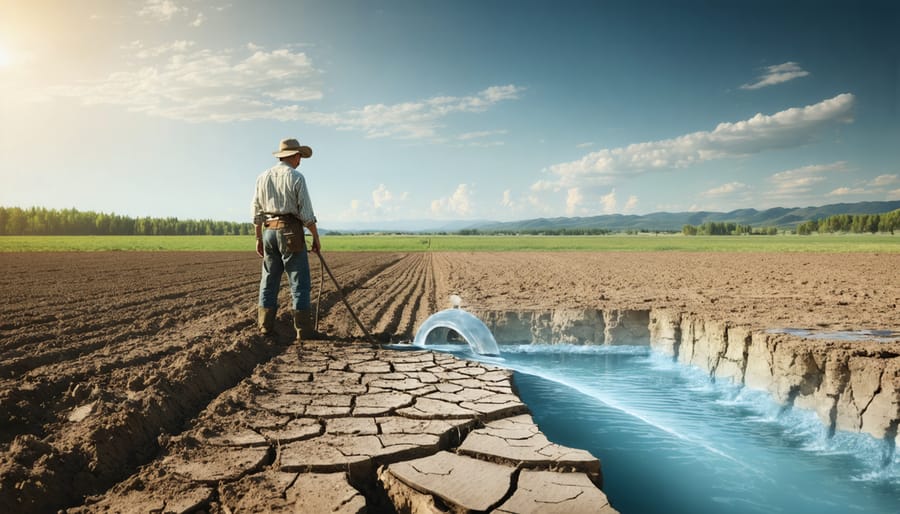
Beneath your fields lies one of agriculture’s most underutilized assets: the groundwater stored in aquifers that can mean the difference between a thriving farm and a failed season. Aquifer recharge is the process of replenishing these underground water reserves, either through natural precipitation or managed practices that direct water back into the ground. For Alberta farmers facing increasingly unpredictable precipitation patterns, understanding and implementing recharge strategies has shifted from optional to essential.
The challenge is real and immediate. Groundwater levels across the prairies have declined in many regions, while drought years arrive with alarming frequency. Yet here’s what many producers don’t realize: farms can actively participate in recharging aquifers while simultaneously improving soil health, reducing runoff, and building long-term water security. This isn’t about massive infrastructure projects or prohibitive costs. It’s about working with your land’s natural hydrology in ways that make economic and environmental sense.
Think of aquifer recharge as a water savings account for your operation. Every drop that infiltrates during wet periods becomes available capital during dry spells. The techniques range from simple modifications to existing practices, like adjusting tillage methods to increase infiltration, to more deliberate interventions such as constructed wetlands or retention basins. These approaches complement broader drought resilience strategies that forward-thinking producers are already implementing.
Southern Alberta farmer James Kowalchuk discovered this firsthand when he converted 12 hectares of marginal land into seasonal wetlands. Within three years, his monitoring wells showed measurable improvements in water table levels, and his irrigation needs dropped by 18% during the growing season. His experience illustrates a broader truth: aquifer recharge isn’t just environmental stewardship. It’s practical risk management that protects your operation’s future productivity and market value.
Understanding Groundwater Aquifer Recharge: The Basics for Alberta Farmers
Think of your aquifer like a massive underground savings account for water. Every time rain falls or snow melts, some of that precipitation doesn’t just run off into rivers and streams. Instead, it soaks into the ground, filtering through layers of soil and rock until it reaches the saturated zone we call an aquifer. This natural process, groundwater recharge, is how those underground reserves get replenished, season after season.
In Alberta, where droughts can stretch irrigation budgets thin and surface water rights remain complicated, understanding this underground system isn’t just academic. It’s practical knowledge that affects your operation’s long-term viability.
Here’s how it works: when water moves downward to groundwatergravity pulls it through porous materials like sand and gravel. The speed depends on soil type, sandy soils let water pass quickly, while clay acts like a slow filter. Eventually, the water reaches a point where all the spaces between soil particles are filled. That’s your water table, and the rock or sediment below it that stores this water is your aquifer.
- Aquifer
- An underground layer of permeable rock, sediment, or soil that holds and transmits groundwater. Think of it as nature’s water storage tank.
- Recharge Zone
- The area on the surface where water can infiltrate downward to replenish an aquifer. These zones are critical to protect from contamination and over-development.
- Infiltration Rate
- The speed at which water soaks into the soil, measured in millimeters or centimeters per hour. Higher rates mean faster recharge potential.
- Water Table
- The upper surface of the saturated zone where soil and rock are completely filled with water. This level rises and falls with recharge and withdrawal.
- Confined vs Unconfined Aquifers
- Unconfined aquifers sit directly below a recharge zone with no impermeable layer above them. Confined aquifers are sandwiched between layers of clay or rock, making them harder to recharge but better protected from surface contamination.
For your farm, this matters because aquifer health directly impacts well productivity. When recharge rates fall behind pumping rates year after year, water tables drop. Wells run dry or require expensive deepening. But when you understand how recharge works, you can make management decisions that support it, choosing cover crops that improve infiltration, managing tillage to reduce soil compaction, or even designing field drainage that encourages percolation rather than rapid runoff.
The science sounds complex, but the principle is straightforward: what goes down must have come from above, and managing that relationship is becoming essential for climate-resilient agriculture.
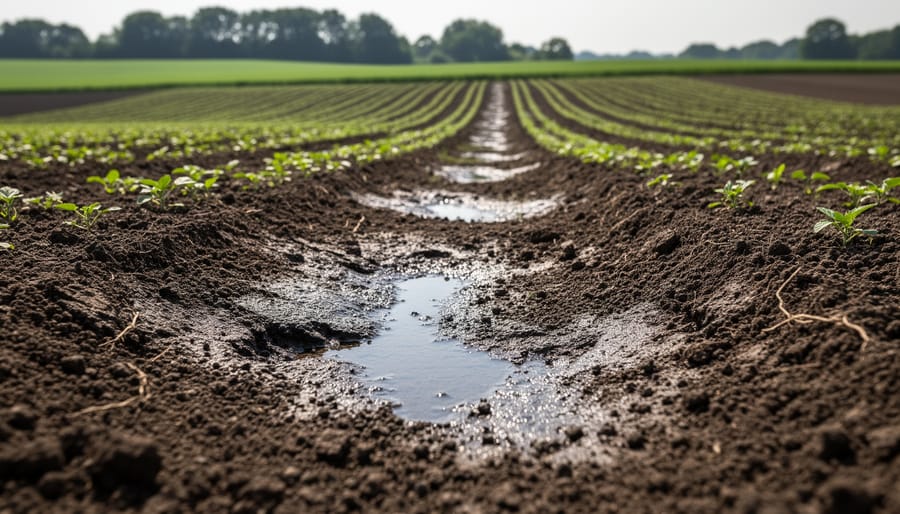
Why Aquifer Management Matters More Than Ever in a Changing Climate
Alberta’s agricultural landscape is facing a water reality that would have seemed impossible a generation ago. The reliable snow-melt cycles and summer rains that farmers counted on for decades are becoming less predictable. Some years bring too much water at the wrong time, while others deliver prolonged dry spells that stress crops and strain dugouts.
Recent extreme drought in Alberta has pushed many operations to tap groundwater resources more heavily than ever before. When surface water runs short, aquifers become the backup plan. But what happens when that backup gets drawn down faster than nature can replenish it?
That’s where managed aquifer recharge enters the picture. Rather than passively hoping for adequate precipitation, this approach actively captures and stores water during wet periods for use during dry ones. Think of it as building a rainy-day fund, but for water.
The climate change impacts we’re seeing aren’t just about total rainfall amounts. It’s the timing that’s shifting. Spring runoff arrives earlier. Summer storms become more intense but less frequent. These changes mean water runs off fields before it can soak in, while longer dry stretches increase irrigation demands.
For livestock operations, reliable groundwater means secure drinking water for animals year-round. For crop producers, it provides irrigation backup when surface allocations get curtailed. The security isn’t just operational; it’s financial. Water-stressed crops mean reduced yields, and in tight-margin years, that can make or break a farm’s viability.
Managed recharge doesn’t fight climate variability. It works with it, capturing the abundance when it comes and banking it for the inevitable shortfalls. That shift from reactive management to proactive storage is becoming less of a luxury and more of a necessity for long-term farm resilience.
Natural vs. Managed Aquifer Recharge: What’s the Difference?
Groundwater recharge happens whether we intervene or not. Natural recharge occurs when precipitation, snowmelt, or surface water infiltrates through soil and rock layers to reach underground aquifers. This process has sustained groundwater supplies for millennia, with rates varying dramatically based on soil type, land cover, and precipitation patterns. In Alberta’s agricultural regions, natural recharge typically ranges from 10 to 50 millimetres annually, though this fluctuates significantly with seasonal conditions.
Managed aquifer recharge represents intentional human intervention to accelerate or supplement these natural processes. Also called artificial recharge, it involves techniques that deliberately direct water underground to replenish depleted aquifers or store water for future use. The distinction isn’t always clear-cut. Practices like reducing tillage or maintaining perennial vegetation enhance natural infiltration, while constructed infiltration basins or injection wells represent more engineered approaches.
| Method | Recharge Type | Typical Rate (mm/year) | Best Suited For |
|---|---|---|---|
| Precipitation infiltration | Natural | 10-50 | Areas with sandy/loam soils, adequate rainfall |
| Riparian zone restoration | Enhanced natural | 50-150 | Land adjacent to streams, moderate slope |
| Constructed wetlands | Managed | 200-500 | Low-lying areas, seasonal water availability |
| Infiltration basins | Managed | 500-2000 | Highly permeable soils, controlled water source |
For most farmers, enhancing natural recharge offers the most practical starting point. Simple changes to land management can boost infiltration without major infrastructure investment. Consider managed recharge when you’re facing specific challenges: declining well levels, seasonal water shortages, or opportunities to capture excess runoff from snowmelt or irrigation returns.
The choice depends on your operation’s scale, available water sources, and soil characteristics. A quarter section with clay soils might benefit more from wetland restoration than from infiltration basins requiring sandy substrates. Understanding these differences helps you match the approach to your landscape and water security goals.
Practical Aquifer Recharge Methods for Canadian Farms
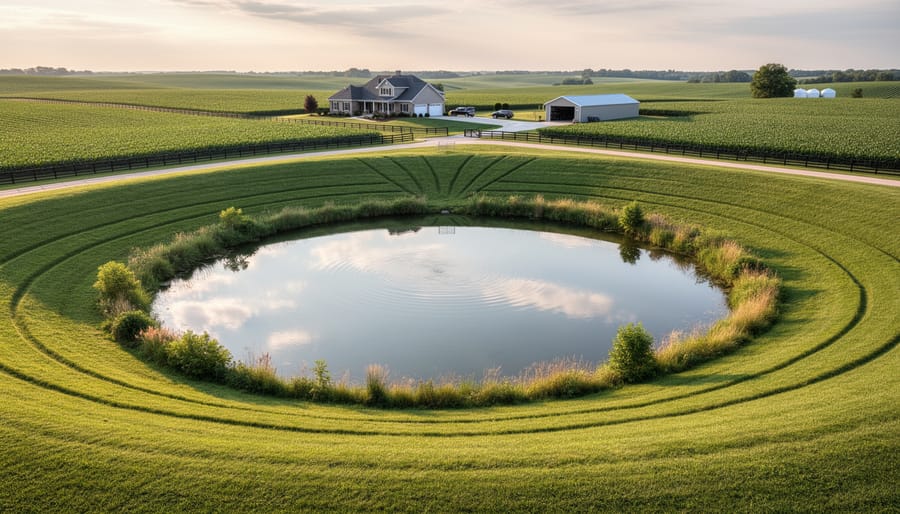
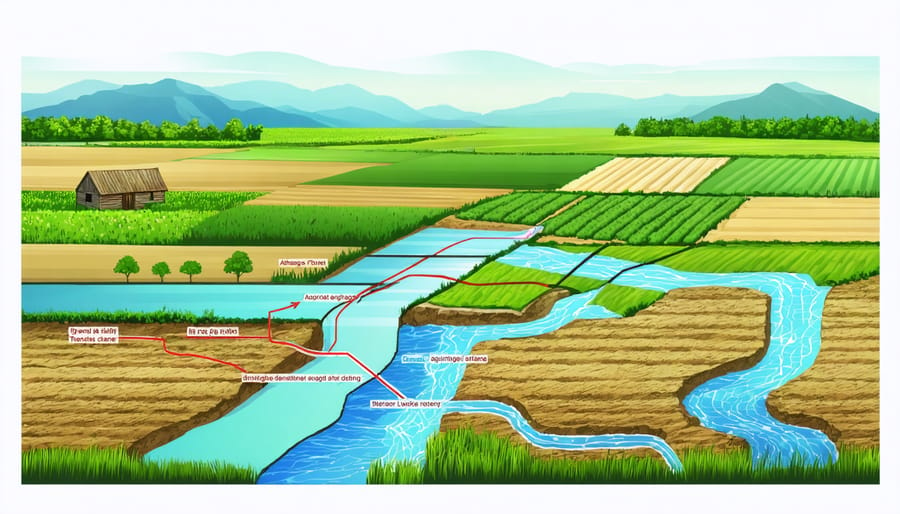
Infiltration Basins and Ponds
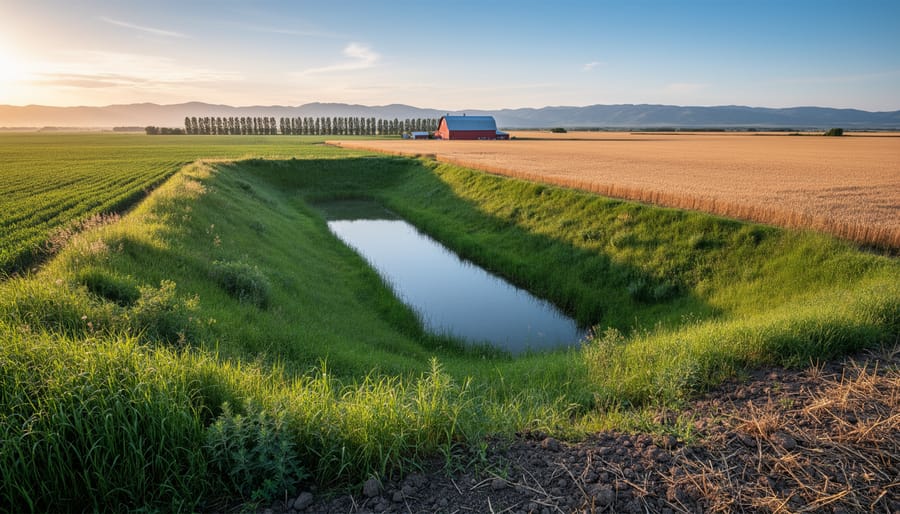
Infiltration basins and ponds work like giant sponges in the landscape, capturing surface runoff during snowmelt and heavy rain events before allowing it to slowly soak into the ground. These structures are particularly relevant for Alberta operations dealing with spring flooding or concentrated runoff from hardpan soils.
The basic design involves excavating a shallow depression in a strategic location where water naturally accumulates. The basin bottom should reach permeable soil layers, typically at least 1.2 to 1.5 metres deep, though local geology determines the ideal depth. You’ll want to avoid clay-dominated areas where infiltration rates are too slow to be practical.
Location matters enormously. Position basins at least 30 metres from buildings and 100 metres from water wells to prevent contamination risks. The contributing drainage area should be primarily agricultural land rather than feedlots or chemical storage areas. A single basin can typically handle runoff from 10 to 40 hectares, depending on soil conditions and precipitation patterns.
Maintenance isn’t complicated but it’s essential. Sediment accumulates over time, reducing infiltration capacity. Plan to remove built-up material every three to five years, or when sediment exceeds 15 centimetres. Vegetation management around the edges prevents erosion while allowing access for equipment.
In Alberta’s climate, expect these systems to work hardest during spring melt. They won’t function during frozen periods, so design capacity around peak flow events rather than year-round operation. Most producers see basins drain within 48 to 72 hours after a rainfall event if soils are suitable.
Injection Wells and Bore Recharge
Injection wells deliver water directly into aquifers through boreholes that penetrate to the target water-bearing formation. Unlike surface spreading methods, this approach bypasses the soil filtration layer entirely and pumps treated water straight into the aquifer at depth.
This method works best when surface soils have poor infiltration rates or when you need to recharge deeper confined aquifers that don’t readily connect with surface water. You’ll typically see injection wells used where land availability is limited or where surface methods simply won’t reach the target formation.
In Alberta, drilling any well that penetrates an aquifer requires approval from Alberta Environment and Protected Areas under the Water Act. For injection specifically, you’re looking at additional regulatory hurdles. The water you inject must meet strict quality standards because you’re introducing it directly into a drinking water source. This means treatment costs and ongoing water quality monitoring become non-negotiable parts of your operation.
The economics rarely favour injection wells for most farm operations. Drilling costs start around $50,000 and climb quickly depending on depth and geology. Add treatment systems, monitoring equipment, and ongoing compliance costs, and you’re looking at a substantial investment that’s hard to justify unless you’re managing a large irrigation district or commercial operation with severe water scarcity issues.
For individual producers, surface spreading or enhanced infiltration methods typically deliver better return on investment with fewer regulatory complications.
Conservation Tillage and Cover Cropping for Enhanced Infiltration
Your farming practices directly shape how much water actually reaches underground aquifers. When rainwater hits bare, compacted soil, most runs off the surface rather than soaking in. The solution? Many Alberta producers are discovering that techniques they’re already using for soil health double as powerful recharge strategies.
Conservation tillage preserves soil structure by minimizing disturbance. Those networks of pores, worm channels, and root pathways you’ve built up over years? They’re natural infiltration highways. A no-till field absorbs water roughly twice as fast as conventionally tilled ground, meaning spring snowmelt and summer rains move downward instead of sideways into ditches.
Cover crops amplify this effect dramatically. Research shows cover crops increase water infiltration rates by 30-70% compared to bare soil. Those living roots create continuous macropores while feeding earthworms that drill their own tunnels. A winter rye or oat cover doesn’t just prevent erosion, it’s actively building infrastructure for recharge.
The payoff extends beyond aquifer benefits. Higher infiltration means less ponding during wet springs and more plant-available moisture during dry stretches. You’re essentially banking water underground during surplus periods. Practices that improve soil and water conservation work in tandem: healthier soil stores more water near the surface for crop use while channeling excess deeper to replenish aquifers.
Start by assessing infiltration rates across your fields. Pour water into a cylinder pushed into the soil and time how fast it drains. Areas where water sits for hours are prime candidates for cover cropping or reduced tillage interventions.
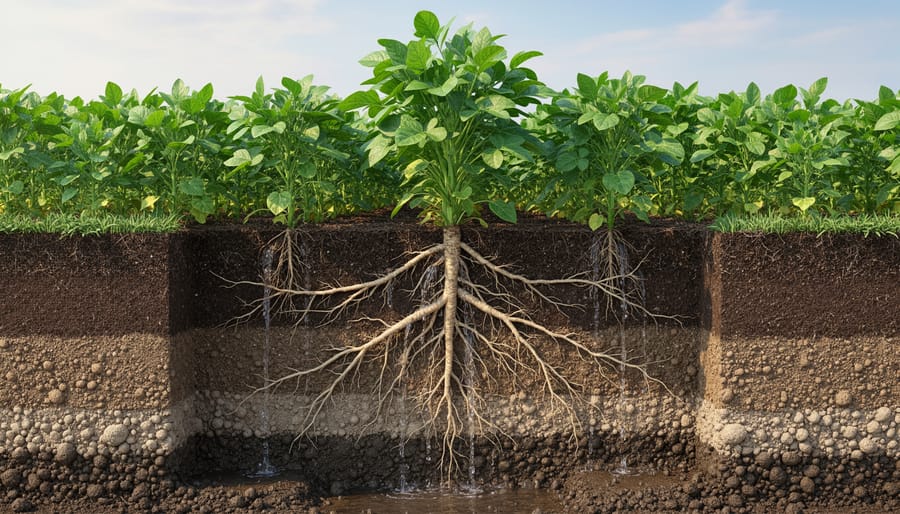
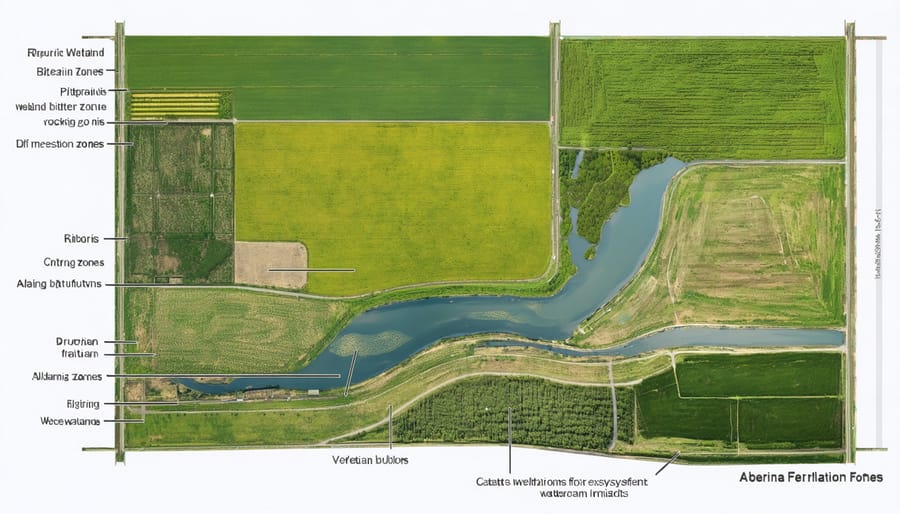
Wetland Restoration and Riparian Buffer Management
Wetlands act as nature’s sponge, slowly filtering and releasing water into underground aquifers while reducing flood risk during heavy precipitation events. For Alberta farmers, protecting existing wetlands and restoring degraded ones creates a natural water storage system that continues working even during dry spells.
Riparian buffers, the vegetated zones along streams and wetland edges, enhance infiltration by slowing water movement and increasing soil contact time. These buffers also trap sediment and nutrients before they reach water bodies, improving both surface and groundwater quality. A buffer width of 10-30 meters typically provides optimal recharge benefits while maintaining agricultural productivity on surrounding land.
The wetland ecosystem benefits extend beyond water management. Restored wetlands support biodiversity, provide wildlife habitat, and can create additional revenue through carbon credit programs or recreational leasing. Some farmers have successfully integrated small wetland restoration projects into their overall water strategy, using them as part of a larger recharge system.
Before starting restoration work, consult with local watershed groups and provincial programs. Alberta’s Wetland Policy provides guidance, and several grant programs help offset restoration costs. Start small, even a quarter-acre wetland can make measurable contributions to local aquifer levels while you learn what works best for your operation.
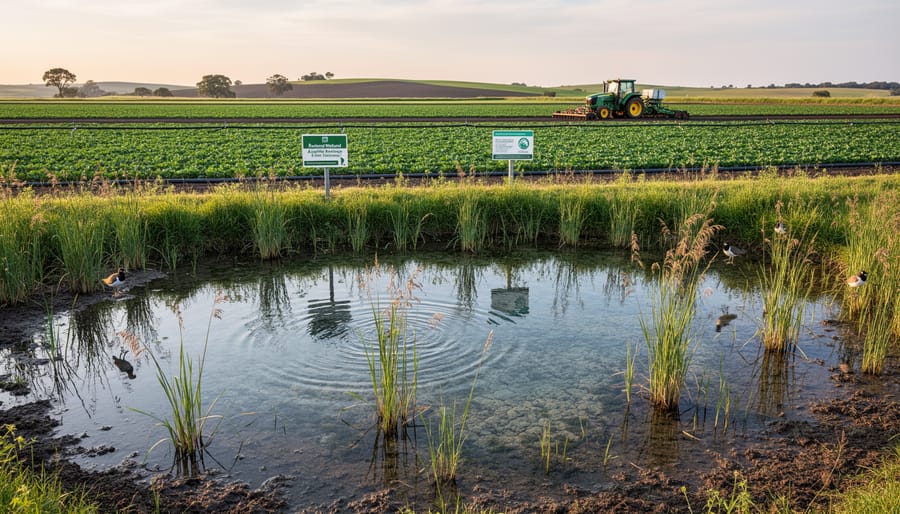
Case Study: Alberta Farm Successfully Implements Aquifer Recharge
The Andersons’ 2,400-acre grain and cattle operation near Lacombe faced a familiar problem in 2019. Their irrigation wells were showing declining yields, and drought years were becoming more frequent. Rather than drill deeper or invest in costly new wells, they decided to work with their watershed instead.
“We started simple,” recalls Jim Anderson. “We identified three natural low spots on our land where runoff collected during spring melt and after heavy rains. Instead of draining these areas quickly, we adapted them to hold water longer.”
Their approach combined low-tech solutions with strategic planning. They constructed shallow berms around these collection areas using existing equipment, creating basins that could hold approximately 15 centimetres of water. They planted native grasses and shrubs around the perimeter to prevent erosion and filter sediment. During periods of high runoff, water would pool in these areas for several weeks before gradually infiltrating into the soil.
The initial investment was modest, around $8,000 for earthmoving, materials, and native plantings across all three sites. The family did most of the work themselves over two spring seasons.
Challenges emerged quickly. Their first basin design drained too rapidly because they underestimated the soil’s permeability. They had to add a thin clay layer to slow infiltration rates. Wildlife, particularly geese, discovered the new wetland areas, which created both benefits and complications. “We weren’t expecting to become a duck hotel,” Jim laughs, “but the increased biodiversity has been a bonus we didn’t anticipate.”
After four years, monitoring wells 200 metres downslope showed measurable improvement. Water table levels stabilized, and their irrigation wells recovered roughly 30% of their previous capacity decline. Spring recharge now contributes an estimated 2.5 million litres annually to their local aquifer.
Perhaps more valuable than the numbers are the operational insights. The Andersons learned that timing matters enormously. Capturing early spring melt proved far more effective than summer storm runoff. They also discovered their recharge basins serve multiple functions, providing livestock water in dry periods and acting as firebreaks during wildfire season.
“Start smaller than you think you need to,” Jim advises other farmers. “Learn what works on your specific land before scaling up. Our soil, our slopes, our rainfall patterns, they’re all unique. What worked for us might need adjustment on your operation, and that’s perfectly normal.”
Measuring Success: How to Monitor Your Aquifer Recharge Efforts
You’ve implemented recharge practices on your land, but how do you know if they’re actually working? Monitoring doesn’t need to be complicated or expensive. Here’s what you can track to measure your progress.
Start with your observation wells. If you don’t have dedicated monitoring wells, existing farm wells can provide valuable baseline data. Record water levels monthly during the growing season and quarterly in winter. Use a simple weighted tape measure or chalk line, when lowered into the well, the chalk changes color at the water line. Note the depth from a consistent reference point (like the top of the well casing) and track changes over time.
For a systematic approach to tracking your recharge efforts:
- Establish baseline measurements by recording well depths at the same time each month for one full year before implementing recharge practices
- Document seasonal patterns and note any correlation with precipitation events or irrigation schedules
- After installing recharge features, continue monthly measurements using the same reference points and timing
- Compare year-over-year data during similar seasonal periods to account for natural precipitation variations
- Create a simple spreadsheet or logbook with dates, depths, recent rainfall, and any observations about nearby recharge activities
Beyond well levels, watch for field indicators. Are low spots staying saturated longer after rain? That’s infiltration at work. Does vegetation near your recharge basins look healthier during dry spells? You’re likely seeing the benefit of elevated groundwater.
Simple infiltration tests help too. Dig a hole about 30 centimeters deep, fill it with water, and time how long it takes to drain. Repeat this test in the same location seasonally. Faster drainage over time suggests improved soil structure and infiltration capacity.
Keep records of rainfall and compare them against your water table response. Even rough correlations help you understand how your aquifer responds to recharge opportunities and which practices deliver the best results for your specific conditions.
Navigating Regulations and Accessing Support in Alberta
Starting an aquifer recharge project in Alberta means working within a clear regulatory framework designed to protect water resources while encouraging sustainable practices.
The Alberta Water Act governs all water-related activities in the province. If you’re planning to divert, store, or manage water for recharge purposes, you’ll need a water licence or registration from Alberta Environment and Protected Areas. The licensing process examines your water source, proposed volume, timing of use, and potential impacts on other water users and aquatic ecosystems. For smaller-scale projects using only surface runoff from your own land, you might qualify for a registration rather than a full licence, which simplifies the approval process.
Agricultural Operations Practices Act (AOPA) permits may also apply, particularly if your recharge system connects to livestock operations or manure management. The Natural Resources Conservation Board or municipal authorities handle these approvals depending on your operation’s size.
Several funding programs can offset initial costs. The Canadian Agricultural Partnership offers environmental stewardship funding through various streams, including water management infrastructure. The On-Farm Climate Action Fund periodically opens applications for projects that enhance climate resilience. Watershed stewardship groups across Alberta sometimes provide technical assistance and cost-sharing for groundwater projects.
Your local watershed planning and advisory council is an excellent starting point. These organizations understand regional water priorities and can guide you through regulatory requirements while connecting you to relevant programs. Many have helped farmers navigate the approval process and identify funding sources specific to their watershed’s needs.
Don’t overlook agricultural service boards in your county or municipal district. They frequently have information about local initiatives, demonstration projects, and potential partnerships that make recharge projects more feasible and affordable.
Common Challenges and How to Overcome Them
Starting aquifer recharge on your farm isn’t without its hurdles. Understanding these challenges upfront, and learning from those who’ve already navigated them, can save you considerable time and frustration.
**Cost and Initial Investment**
The upfront expense is often the first barrier. Installing recharge basins, modifying irrigation systems, or constructing retention ponds requires capital that many operations simply don’t have sitting around. However, several Alberta farmers have found creative solutions. Dale Pretorius, a mixed farmer near Lethbridge, started small with a single half-acre basin rather than overhauling his entire water management system at once. “We proved the concept worked, then expanded over three years as cash flow allowed,” he explains. Provincial cost-share programs through Growing Forward Plus and municipal agricultural service boards sometimes offer support for water conservation infrastructure, it’s worth asking before you assume you’re on your own financially.
**Technical Complexity and Knowledge Gaps**
Many farmers feel uncertain about whether their land is even suitable for recharge. The geology matters, you need permeable soils and an aquifer beneath that can actually accept and store the water. Provincial agriculture extension offices can connect you with hydrogeologists who assess suitability, often at reduced rates for agricultural operations. Don’t try to guess; a proper assessment prevents wasted effort on unsuitable sites.
How do I know if my land is suitable for aquifer recharge?
Contact your provincial agriculture office or a hydrogeologist to assess your soil permeability and aquifer characteristics. Many extension services offer this evaluation at reduced cost for farmers.
What’s the typical payback period for recharge infrastructure?
Most farmers see returns within 5-10 years through reduced irrigation costs and improved drought resilience, though this varies widely based on system scale and local conditions.
Can I implement recharge practices during winter?
Winter construction is challenging, but some farmers use snowmelt capture as a recharge opportunity. Planning and design work can certainly happen during off-season months.
Do I need permits to recharge groundwater on my own land?
Requirements vary by province and municipality. In Alberta, contact your local water management authority before beginning any recharge project to understand regulatory requirements.
**Seasonal and Operational Limitations**
Recharge basins work best during spring runoff, but that’s exactly when you’re busiest with seeding. This timing conflict has derailed more than a few well-intentioned plans. Successful operations address this by automating water diversion with simple gate systems that require minimal daily attention, or by designating a family member or employee specifically to manage water during peak runoff periods. The key is acknowledging the labour reality rather than pretending it doesn’t exist.
Groundwater aquifer recharge isn’t just another practice to add to your operation, it’s an investment in the long-term viability of Alberta agriculture. As weather patterns become less predictable and drought periods stretch longer, securing reliable water sources becomes foundational to farm resilience. The farmers already implementing recharge strategies aren’t just protecting their own operations; they’re contributing to watershed health that benefits entire rural communities.
Starting doesn’t require a massive overhaul. Begin by understanding your land’s hydrology. Walk your property after spring melt or heavy rains and notice where water naturally accumulates or flows. These observations reveal recharge opportunities you might enhance with simple adjustments. A conversation with your local watershed stewardship group can connect you with technical expertise and potential funding programs.
The water management benefits extend beyond drought insurance. Recharged aquifers support base flows in streams during dry periods, maintaining habitat and supporting livestock water needs. They can reduce erosion by capturing runoff that would otherwise carve channels through fields.
Consider reaching out to Alberta Environment and Protected Areas or local conservation districts. Many offer site assessments and can help identify practices suited to your specific soil types and terrain. Climate resilience grows from collective action, your efforts to recharge groundwater today create ripple effects that strengthen the agricultural community for decades ahead.