Agricultural practices are the techniques and methods farmers use to produce crops and livestock, from preparing soil and planting seeds to managing pests and harvesting yields. These practices form the backbone of food production and land stewardship, shaping everything from the quality of what we grow to the health of our soil, water, and broader ecosystems.
For Canadian farmers working the diverse landscapes of Alberta and beyond, understanding the full range of agricultural practices isn’t academic. It’s the difference between a field that thrives year after year and one that struggles with declining fertility or mounting pest pressure. Each decision, whether it’s choosing between conventional tillage and no-till seeding or deciding how to manage crop residue, ripples through seasons of production.
Agricultural practices span an enormous territory. They include soil management techniques that build organic matter and prevent erosion, crop rotation systems that break pest cycles, irrigation methods that conserve water, and integrated pest management approaches that reduce chemical reliance. Some practices have roots stretching back thousands of years, refined by generations of farmers. Others, like precision agriculture technologies now mapping field variability down to the square metre, represent the cutting edge of agricultural innovation in 2026.
This article breaks down what agricultural practices actually are, how they function in real farm operations, and the main categories every farmer should understand. You’ll find practical examples drawn from Canadian farms, insights from agricultural professionals working in the field today, and clarity on how traditional methods connect with modern innovations. Whether you’re managing a century farm or exploring more sustainable approaches to production, this guide provides the foundational knowledge to make informed decisions about the practices that shape your operation.
What Agricultural Practices Mean for Modern Farming
Agricultural practices represent the full spectrum of techniques, methods, and management decisions farmers rely on to operate their land and produce food. At the most fundamental level, these practices determine how you prepare soil, plant seeds, manage nutrients, control pests, harvest crops, and care for livestock. They encompass everything from the timing of field operations to the choice of machinery, from water management strategies to the specific varieties you plant.
These practices never exist in isolation. Each decision connects to others in a complex web of cause and effect that plays out across your operation. The tillage method you choose influences soil moisture retention, which affects when you can plant, which in turn shapes your fertilizer timing and pest pressure throughout the season. Your crop rotation affects nutrient availability, disease cycles, and even the effectiveness of your weed control program.
Understanding common agricultural terminology helps clarify how these practices function:
- Tillage
- The mechanical manipulation of soil through plowing, disking, or cultivation to prepare seedbeds, incorporate residues, or control weeds. Methods range from intensive conventional tillage to zero-till systems that leave soil undisturbed.
- Crop Rotation
- The planned sequence of different crops grown on the same field over multiple years to break pest cycles, improve soil health, and optimize nutrient use. A typical Prairie rotation might alternate canola, wheat, and pulses.
- Integrated Pest Management (IPM)
- A comprehensive approach combining biological, cultural, and chemical methods to control pests while minimizing environmental impact and economic cost. IPM relies on monitoring and threshold-based interventions rather than calendar-based spraying.
- Soil Amendments
- Materials added to soil to improve its physical properties, nutrient content, or pH level, including compost, manure, lime, and gypsum.
- Irrigation Methods
- Systems for applying water to crops, ranging from flood and furrow irrigation to precision technologies like drip lines and centre-pivot systems that deliver water with minimal waste.
The specific practices that work on your farm depend heavily on regional context. Alberta grain farmers face different challenges than British Columbia fruit growers or Ontario dairy operations. A 5,000-acre canola operation near Lethbridge operates under completely different constraints than a 50-acre market garden outside Calgary. Climate, soil type, available equipment, market access, and local expertise all shape which practices make sense for your situation. What remains constant is the need for informed decision-making based on your unique conditions and goals.
How Agricultural Practices Work in Real Farm Operations
The Decision-Making Framework
Choosing which agricultural practices to implement isn’t a one-size-fits-all decision. Farmers weigh multiple factors simultaneously, starting with what their land can support right now. Soil tests reveal nutrient levels, pH, and organic matter content, shaping fertilizer strategies and determining whether practices like no-till or cover cropping make sense for that field. A farmer working heavy clay soils near Edmonton faces different constraints than someone managing sandy loam in southern Alberta.
Weather patterns drive the timeline and feasibility of every practice. Spring planting windows shift with moisture levels and frost dates. A wet fall might rule out heavy field work, pushing a producer toward lighter equipment or delaying tillage until spring. Long-term climate trends also matter: increasing drought frequency in southeastern Alberta has accelerated adoption of moisture-conserving practices like reduced tillage and pulse crop rotations.
Economic realities shape every choice. Fuel costs, fertilizer prices, and grain markets determine what’s affordable this season. A practice that boosts yields by 10% but requires $100 per acre in new equipment may not pencil out for a 500-acre operation, even if it works beautifully on research plots.
Equipment availability matters too. Farmers often work with what they own or can rent locally. Adopting precision seeding or variable rate application depends on accessing compatible machinery, whether through purchase, custom hire, or cooperative sharing arrangements common in rural Alberta communities.
Environmental goals increasingly influence decisions, especially for producers pursuing carbon credits or working toward organic certification.
Seasonal Practice Integration
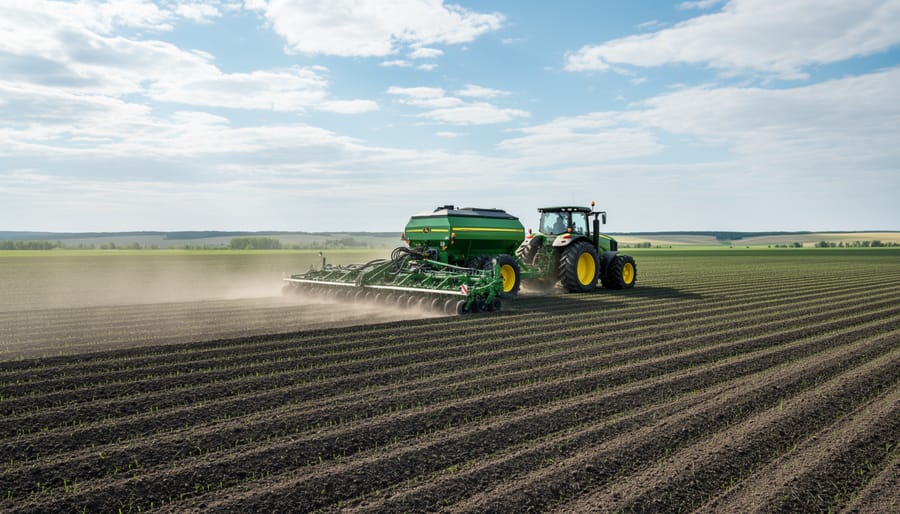
Across the growing season, agricultural practices layer and cascade in a rhythm Canadian farmers know by instinct. Spring decisions set the trajectory: you’re soil testing before seeding, selecting seed varieties based on last year’s performance and this year’s price outlook, and calibrating your air drill to hit precise depth and spacing. A grain farmer near Lethbridge might time pre-emergent herbicide application to soil temperature and moisture, while a mixed operation in central Alberta coordinates spring grazing rotations so pastures recover before summer heat.
Summer brings the intensification phase. You’re scouting fields weekly for pest pressure, adjusting irrigation schedules as heat units accumulate, and topdressing nitrogen on canola if tissue tests indicate deficiency. Livestock producers rotate cattle through paddocks to prevent overgrazing, timing moves to maximize forage quality while maintaining root reserves for regrowth. Every practice connects: your spring tillage choice affects summer weed pressure, which influences herbicide timing, which impacts harvest timing in fall.
Fall closes the loop with harvest coordination, residue management decisions, and soil sampling that informs next spring’s fertility plan. A no-till operation might seed winter cereals or cover crops immediately after combining wheat, banking on fall moisture. Livestock farmers wean calves, sell finished animals, and plan winter feeding strategies based on stored feed inventory and market conditions. Each season’s practices inform the next, creating a continuous cycle where timing, weather response, and resource allocation separate thriving operations from struggling ones.
Categories of Agricultural Practices Used Today
Soil Management Practices
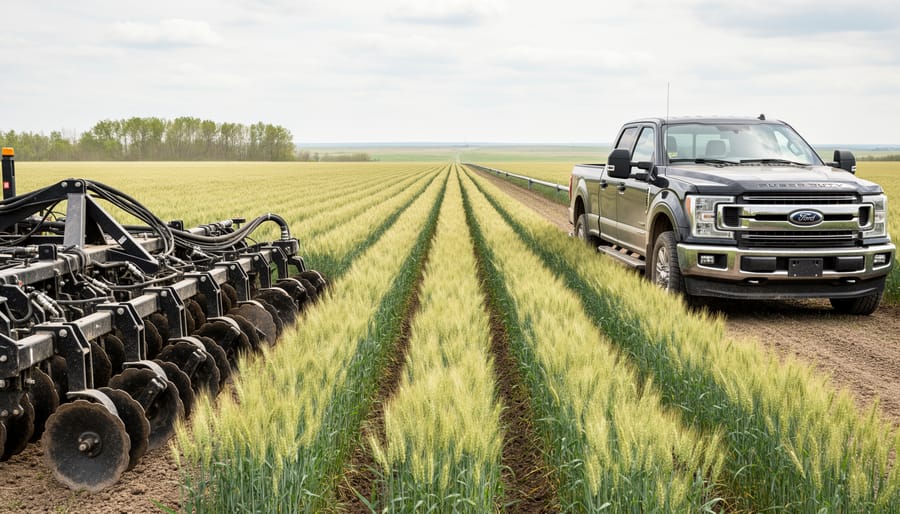
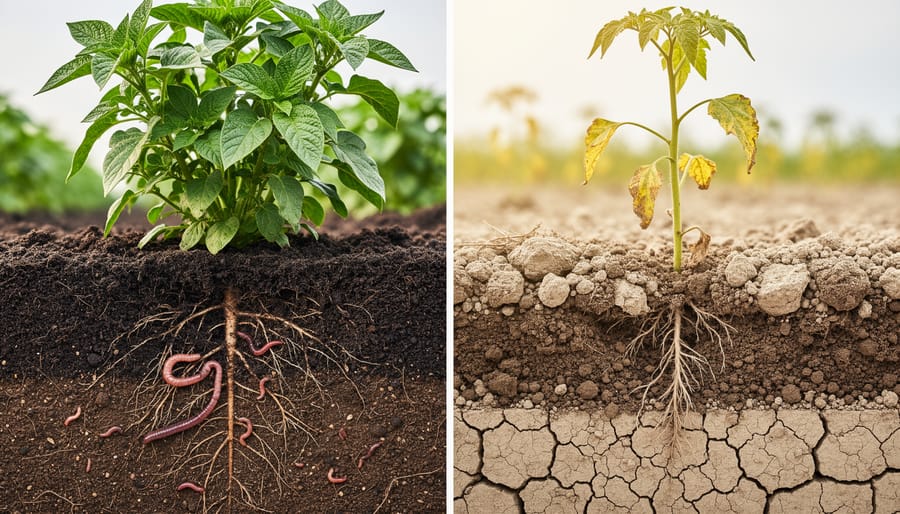
Soil management sits at the core of productive farming because healthy soil drives everything from nutrient availability to water retention. Tillage approaches vary widely: conventional tillage turns the soil completely, incorporating residue and controlling weeds but often increasing erosion and carbon loss. Reduced tillage minimizes soil disturbance while still breaking up compacted layers, and no-till systems leave crop residue on the surface, preserving soil structure and moisture while building organic matter over time. Alberta producers increasingly adopt no-till to combat wind erosion and cut fuel costs.
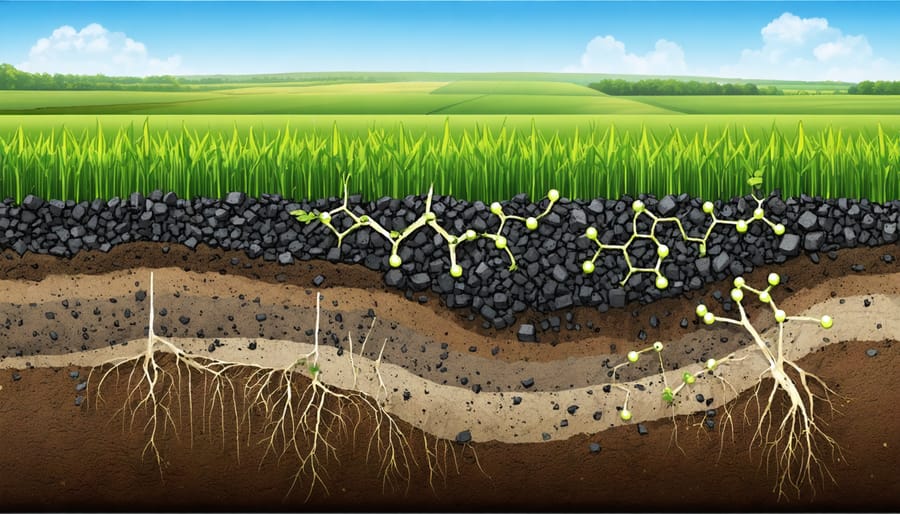
Cover cropping between cash crops protects bare soil, adds nitrogen through legumes like clover or peas, breaks pest cycles, and feeds soil biology. A winter rye cover suppresses weeds and prevents nutrient leaching, then provides residue for the next crop. Composting livestock manure or crop waste transforms raw organic matter into stable humus rich in nutrients, improving soil tilth and water-holding capacity without the nutrient runoff risk of fresh manure.
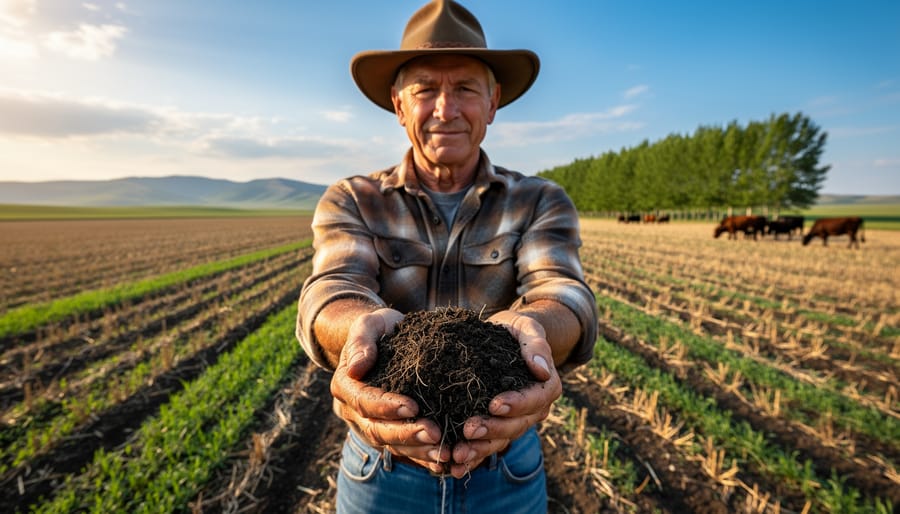
Regular soil testing reveals pH, nutrient levels, and organic matter content, guiding fertilizer decisions and tracking progress. Together, these practices revitalize your land by rebuilding the living soil ecosystem, sequestering atmospheric carbon in stable organic compounds, and creating resilient fields that perform through variable Prairie weather.
Crop Management Practices
Crop rotation remains the cornerstone of effective crop management across the Prairies, breaking disease cycles and spreading nutrient demands over multiple seasons. A typical Alberta rotation might run canola-wheat-barley-pulse crop, with each species targeting different soil depths and disrupting pest life cycles. Farmers who stick to continuous canola or wheat face yield declines of 10-15% within three years due to disease buildup and depleted soil biology.
Precision seeding has transformed establishment practices since 2020. Variable rate seeders adjust plant populations based on soil type and moisture zones within a single field, placing more seeds in productive areas and fewer in marginal spots. This targeted approach cuts seed costs while maximizing yield potential where conditions support it.
Variety selection now involves more than yield potential alone. Farmers evaluate disease resistance packages, maturity ratings matched to local heat units, and herbicide tolerance traits. A variety resistant to fusarium head blight might sacrifice two bushels per acre in pure yield but avoid devastating infection in wet years.
Intercropping practices are gaining traction in organic and regenerative systems. Planting field peas with oats provides structural support for the legume while the oat suppresses weeds, demonstrating how complementary crops can reduce inputs and stabilize returns across variable growing seasons.
Nutrient and Fertilizer Practices
Fertilizer application timing and placement can make the difference between a bumper crop and disappointing yields. Canadian farmers increasingly follow the 4R nutrient stewardship framework: applying the right source at the right rate, at the right time, and in the right place. This approach matches nutrient availability to crop demand throughout the growing season while minimizing losses to the environment.
Spring banding of nitrogen near seed rows gives crops immediate access without the leaching risk of fall application. Split applications, delivering nitrogen in stages as plants grow, prevent luxury consumption and reduce runoff during heavy Prairie rains. Side-dressing allows mid-season adjustments based on tissue testing and weather conditions.
Organic amendments like composted manure and green manure crops build nutrient reserves gradually while improving soil structure. These materials release nutrients slowly, feeding soil biology that makes phosphorus and micronutrients more available to plant roots.
Precision nutrient management technologies now let farmers vary fertilizer rates within a single field based on soil test maps, yield data, and satellite imagery. Variable rate spreaders apply more product to hungry zones and less to areas that don’t need it, cutting costs and environmental impact simultaneously.
Water Management Practices
Water availability defines success or failure for many Canadian crops, making water management practices critical across the Prairies where moisture swings from drought to deluge within a single season. Farmers choose irrigation methods based on crop needs, water source, field size, and budget. Centre pivot systems dominate large grain operations in southern Alberta, delivering consistent moisture across hundreds of acres. Drip irrigation, though more expensive to install, conserves water by targeting root zones directly, a growing choice for vegetable and specialty crop producers. Flood irrigation remains common in established districts with canal infrastructure, though efficiency improvements through land leveling and timing adjustments reduce waste.
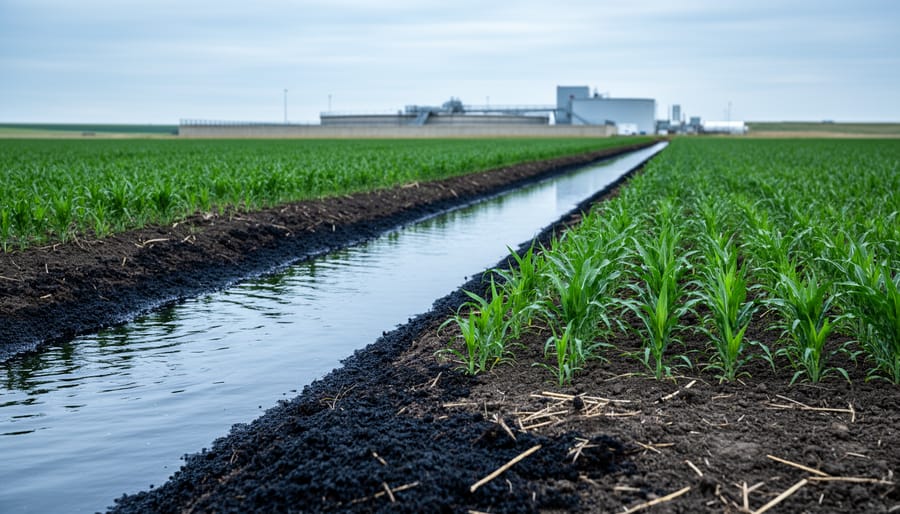
Managing excess water matters as much as irrigation. Controlled drainage systems with adjustable outlets let farmers raise water tables during dry periods and lower them after heavy rain, protecting crop roots from saturation. Field drainage tile networks remove standing water that suffocates plants and delays spring field work. Water conservation practices, mulching, reducing tillage to preserve soil moisture, selecting drought-tolerant varieties, extend limited water supplies. Many Prairie farmers now integrate soil moisture monitoring tools to irrigate only when needed, cutting water use by 20 to 30 percent while maintaining yields.
Pest, Weed, and Disease Management Practices
Controlling pests, weeds, and diseases without compromising soil health or profitability is a balancing act. Integrated pest management (IPM) combines scouting and IPM monitoring economic thresholds, and multiple control tactics, cultural, biological, mechanical, and when necessary, chemical, to manage threats with minimal environmental impact. Many farmers now ask does IPM use pesticides, and the answer is yes, but strategically and as a last resort after other methods have been employed.
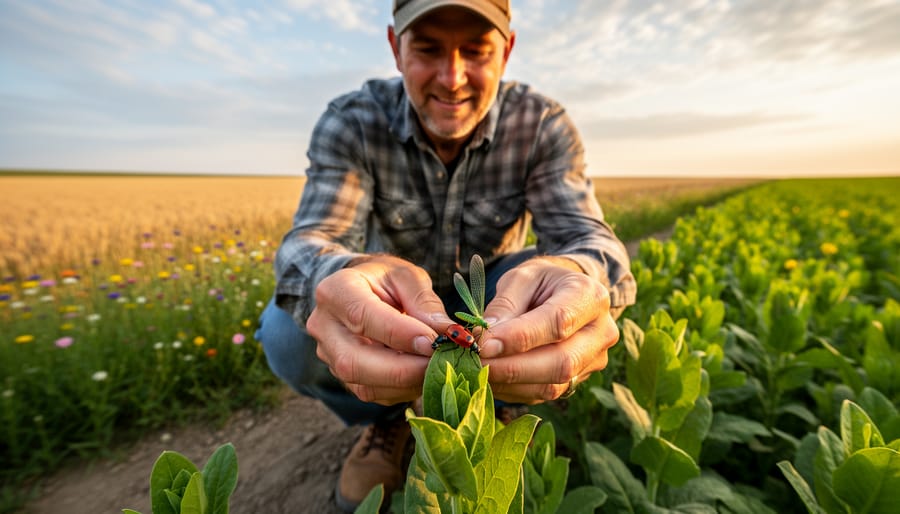
Biological controls introduce natural predators or pathogens, such as releasing beneficial insects to suppress aphid populations. Crop rotation disrupts pest cycles, while trap crops or resistant varieties reduce pressure before problems escalate. Herbicide resistance management rotates modes of action and incorporates mechanical or thermal weed control to slow the evolution of resistant biotypes. Regular field scouting identifies issues early, allowing targeted intervention rather than blanket spraying. Reduced-chemical approaches, cover crops that outcompete weeds, diverse rotations that break disease cycles, are gaining traction in both organic and conventional systems across the Prairies, driven by economics, environmental stewardship, and consumer demand.
How Agricultural Practices Are Applied Across Farm Types
Agricultural practices don’t apply uniformly across Canada’s diverse farming landscape. A grain operation on Alberta’s prairies manages its land fundamentally differently than a dairy farm in Quebec or a vegetable producer in the Fraser Valley. Understanding how practices adapt to different farm types reveals why flexibility and context matter more than prescriptive formulas.
Grain farms dominate the Prairie provinces, where practitioners focus heavily on soil conservation, crop rotation, and efficient seeding. A typical 2,000-acre wheat and canola operation near Red Deer might employ no-till practices to preserve moisture, use GPS-guided equipment for precise seeding rates, and apply the 4R nutrient stewardship approach to maximize fertilizer efficiency. These farms integrate weed management through herbicide rotation and pre-seed burn-off timing, with decisions driven by short growing seasons and the economic reality of tight margins on commodity crops.
Livestock operations prioritize pasture management, manure handling, and feed production. A cow-calf ranch in southern Alberta rotates cattle through multiple paddocks to prevent overgrazing, manages watering systems to protect riparian areas, and times calving to match forage availability. Winter feeding requires stored hay or silage, which connects directly to crop management practices on the feed-growing portions of the operation. Many ranchers now incorporate groundbreaking innovations like virtual fencing and remote livestock monitoring to improve grazing distribution and reduce labor demands.
Mixed farms combine crop and livestock enterprises, creating opportunities for integrated nutrient cycling. A central Alberta operation growing barley and raising hogs can apply manure to fields as organic fertilizer, reducing synthetic inputs while improving soil structure. These farms often manage more complex rotations and face tighter timing windows, but the synergy between enterprises can improve both economic resilience and environmental outcomes when practices align properly.
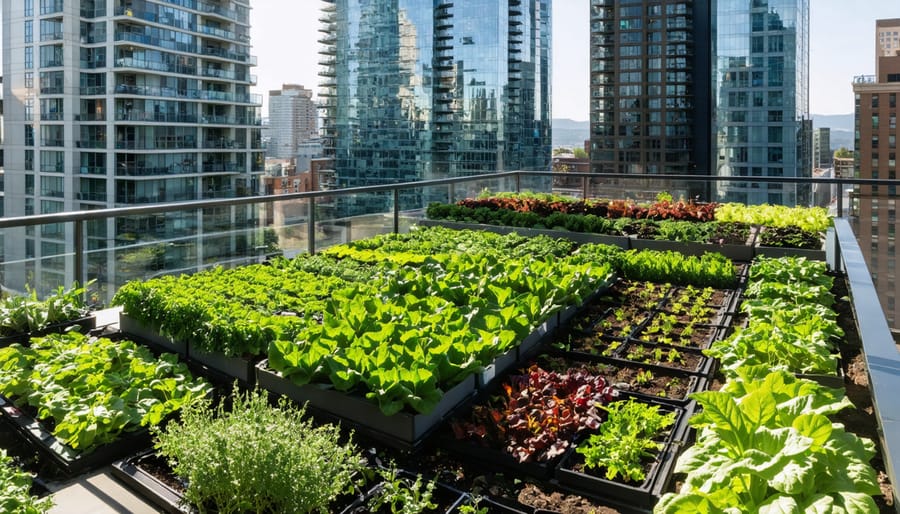
Specialty crop producers, whether growing potatoes, vegetables, berries, or organic grains, typically employ more intensive management. A certified organic vegetable grower near Edmonton might use flame weeding, hand cultivation, cover crop cocktails, and drip irrigation, investing more labor per acre than commodity grain farmers but commanding premium prices. These operations frequently adopt innovative technologies like soil moisture sensors and season extension structures to maximize yield and quality in shorter growing windows.
The common thread across farm types isn’t the specific practices chosen, but the decision-making process: assess your soil, climate, market, and available resources, then select and refine practices that move your operation toward defined goals.
Innovative Agricultural Practices Shaping Canadian Farming
Canadian farmers are embracing a new wave of agricultural practices that combine environmental benefits with practical farm management, many driven by advances in technology and a deeper understanding of soil biology. These innovative approaches are reshaping how producers manage land, inputs, and data across the Prairies and beyond.
Regenerative agriculture has moved from concept to practice on thousands of Canadian farms. This approach focuses on rebuilding soil organic matter through minimal disturbance, keeping living roots in the ground year-round, and increasing plant diversity. Alberta grain producers are seeing measurable improvements in water infiltration and nutrient cycling after just three to five years of regenerative practices. The principles work equally well in livestock systems, where adaptive multi-paddock grazing allows cattle to stimulate plant growth while building soil carbon, turning pastures into carbon sinks rather than sources.
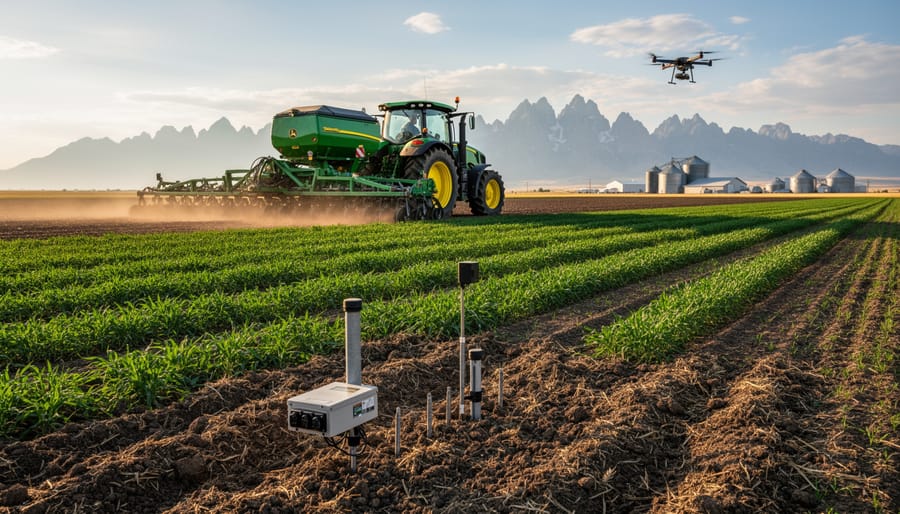
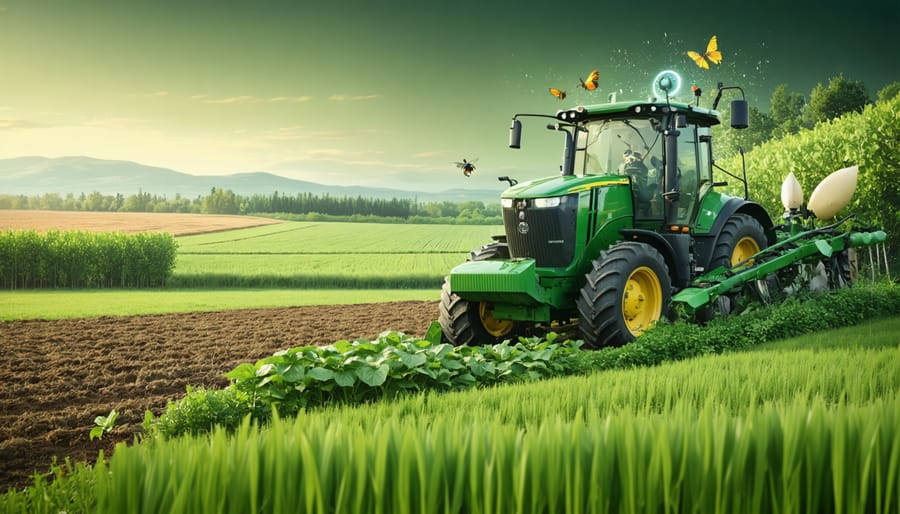
Precision agriculture technologies have become more affordable and user-friendly in 2026, putting powerful tools within reach of mid-sized operations. GPS-guided equipment now operates with centimetre-level accuracy, reducing overlap and input waste. Variable rate technology lets farmers apply fertilizer, seed, and crop protection products at different rates across a single field based on soil maps and yield data. Drones equipped with multispectral cameras can spot nutrient deficiencies, pest pressure, and disease outbreaks days before they’re visible from the ground, allowing targeted interventions instead of blanket applications.
Several innovative practices gaining traction include:
– Regenerative grazing systems using planned rest periods and higher stock density
– Precision nutrient management with real-time soil sensors and tissue testing
– Carbon credit programs that pay farmers for sequestering carbon through practice changes
– Biodiversity strips planted with native species to support pollinators and beneficial insects
– AI-powered pest prediction models that forecast outbreaks based on weather and crop stage
– Electric and autonomous equipment trials reducing fuel costs and labour requirements
Carbon farming represents a significant shift in how producers think about their land’s value. Canadian farmers are now enrolling fields in carbon offset programs that provide payments for practices like no-till conversion, cover cropping, and enhanced rotations. These programs create a revenue stream separate from crop sales while aligning with soil health goals.
Agroforestry is gaining renewed interest, particularly in areas dealing with wind erosion or looking to diversify income. Shelterbelts provide livestock protection and wildlife habitat, while alley cropping systems allow grain production between rows of trees or shrubs. Saskatchewan and Manitoba farmers are experimenting with hybrid poplar plantings that can be harvested for biomass while improving microclimates for adjacent crops.
Data-driven decision tools now integrate weather forecasts, satellite imagery, soil moisture sensors, and historical yield maps into single platforms accessible from a smartphone. These systems help farmers time field operations, adjust irrigation schedules, and predict optimal harvest windows with unprecedented accuracy. The shift from experience-only decision-making to experience plus real-time data is helping producers manage increasingly variable growing conditions while reducing input waste and environmental impact.
Learning and Implementing Better Practices on Your Operation
Adopting new agricultural practices doesn’t require a complete operational overhaul. Most successful farmers start small, test carefully, and expand what works for their specific conditions.
Begin with a single field or a portion of your operation as a trial area. If you’re curious about cover cropping, dedicate 10 to 20 acres to compare results against your standard practice. This approach limits risk while generating real data from your own soil, climate, and equipment. Track inputs, labour time, yields, and soil changes over at least two seasons before making farm-wide decisions.
Extension services remain one of the most valuable resources for Canadian farmers. Provincial agricultural departments offer workshops, field days, and one-on-one consultations, often at no cost. In Alberta, specialists can help you interpret soil tests, assess irrigation efficiency, or develop an integrated pest management plan tailored to your crops and budget. Many extension programs now include precision agriculture training and carbon sequencing guidance.
Peer networks provide knowledge that textbooks can’t. Join local producer groups or commodity associations where farmers share what’s actually working in your region. These conversations reveal practical details: which no-till drill performs best in heavy clay, how neighbours manage herbicide resistance, or what cover crop mixes survive harsh winters. Winter workshops and farm tours let you see new practices in action before committing.
Online platforms like Organic Farming, The Canadian Way offer ongoing education, case studies from fellow Canadian farmers, and updates on innovative practices gaining traction across the Prairies. These resources help you stay current without leaving the farm during busy seasons.
Start with practices that address your most pressing challenge, whether that’s soil erosion, input costs, or labour efficiency. Gradual adoption builds confidence and fits within cash flow constraints. Document your trials with photos, notes, and yield maps. What you learn benefits not just your operation but the broader farming community working toward more resilient, profitable agriculture.
Common Questions About Agricultural Practices
What’s the main difference between conventional and organic agricultural practices?
Conventional practices allow synthetic fertilizers, pesticides, and herbicides to manage crops efficiently at scale, while organic practices rely on natural inputs like compost, biological pest control, and mechanical weed management. Both approaches can incorporate soil health principles like crop rotation and cover cropping, but organic systems face stricter certification requirements and often require more intensive labour and planning.
How do I know which practices are right for my farm?
Start by assessing your soil type, climate patterns, water availability, and existing equipment, then consider your production goals and market opportunities. Test new practices on small trial plots before scaling up, and connect with local agronomists or extension services who understand regional conditions across Alberta and the Prairies.
Can small farms afford to implement innovative practices?
Many innovative practices like cover cropping, reduced tillage, and basic crop rotation require minimal upfront investment and can actually lower input costs over time. Precision agriculture technologies have become more accessible through equipment-sharing cooperatives, custom applicator services, and scaled-down tools designed for smaller operations.
How do agricultural practices affect both profitability and environmental outcomes?
Practices that build soil health typically reduce long-term input costs while increasing resilience to drought and disease, improving profitability over multiple seasons. Environmental benefits like carbon sequestration, reduced erosion, and improved water quality often align with economic gains, though some conservation practices may require patience as soil biology and structure rebuild.
Are there financial supports for adopting new practices in Canada?
Federal and provincial programs offer cost-share funding for beneficial management practices, including the Canadian Agricultural Partnership and various carbon credit programs that pay farmers for adopting practices like cover cropping or reduced tillage. Check with your provincial agriculture department or local agricultural service boards for current program details and application deadlines specific to your region.
What if a new practice doesn’t work on my land?
Not every practice suits every farm, and adaptation takes time. Farmers often modify techniques to fit local conditions, adjust timing based on weather patterns, or combine elements from different approaches until they find what works for their specific operation and goals.
These questions reflect the real concerns farmers face when evaluating changes to their operations. The decision to adopt new agricultural practices isn’t just about following trends or meeting environmental targets. It comes down to what makes sense for your land, your resources, and your long-term vision for the farm. Most successful farmers approach practice changes incrementally, learning as they go and adjusting based on results rather than overhauling everything at once.
The diversity of Canadian agriculture means there’s no universal prescription. A grain producer in southern Alberta working with irrigation faces different constraints and opportunities than a dryland farmer in Saskatchewan or a mixed operation in Manitoba. What matters is matching practices to context, staying open to new information, and building relationships with other farmers and advisors who can share practical experience from similar conditions.
Agricultural practices are the cornerstone of every successful farming operation, shaping yields, soil health, economic returns, and environmental outcomes for generations to come. Whether you’re managing a grain farm on the Prairies, raising livestock in Alberta’s foothills, or experimenting with regenerative techniques, the practices you choose today determine the resilience and productivity of your land tomorrow.
The journey toward better farming practices isn’t about perfection or overnight transformation. It’s about incremental improvements, thoughtful experimentation, and learning from both successes and setbacks. Canadian farmers have always adapted to challenges, variable weather, shifting markets, evolving consumer expectations, and that adaptability remains your greatest strength as you refine your approach.
You don’t need to navigate this path alone. Extension services, research stations, peer networks, and platforms dedicated to sustainable agriculture offer proven guidance tailored to Canadian conditions. Connect with fellow farmers testing new methods, attend workshops focused on soil health or precision technology, and share your own experiences with the broader community. Every conversation, every trial plot, and every season adds to the collective knowledge that moves our industry forward.
Commit to practices that balance profitability with stewardship, knowing that economic viability and environmental health aren’t opposing goals, they’re interdependent. Your farm’s future depends on soil that’s richer, systems that are more efficient, and decisions grounded in both tradition and innovation. Keep learning, keep adapting, and keep building a farming legacy that serves your family, your community, and the land itself.