Farm-to-table is a food system where restaurants, retailers, and consumers source ingredients directly from local farms, eliminating or reducing intermediary distributors between harvest and plate. This model prioritizes freshness, traceability, and direct economic relationships between producers and buyers.
For Alberta farmers, understanding this definition matters because it represents a growing market channel that can deliver higher margins and stronger community ties than conventional wholesale routes. A 2025 survey of Edmonton-area restaurants found that 68% actively seek local suppliers, yet many struggle to find consistent farm partners who understand the logistics and volume requirements these relationships demand.
Farm-to-table isn’t simply selling at farmers’ markets. It encompasses structured supply agreements with chefs, subscription-based community-supported agriculture programs, institutional purchasing by schools and hospitals, and retail partnerships with independent grocers. Each channel has distinct delivery schedules, quality standards, and pricing structures that require planning beyond what field production alone teaches you.
The real opportunity lies in urban farm-to-table networks, where proximity to Calgary, Edmonton, and Lethbridge creates logistical advantages that distant suppliers can’t match. Chefs value same-day harvest capabilities. Consumers increasingly want to know the name and location of the farm that grew their carrots. These preferences translate into premium pricing, but only when you can reliably deliver.
This article breaks down how farm-to-table systems operate in practice, the different models Alberta producers are using successfully, and the infrastructure decisions that separate profitable ventures from well-intentioned experiments that drain time without returning value.
What Farm-to-Table Means: A Clear Definition
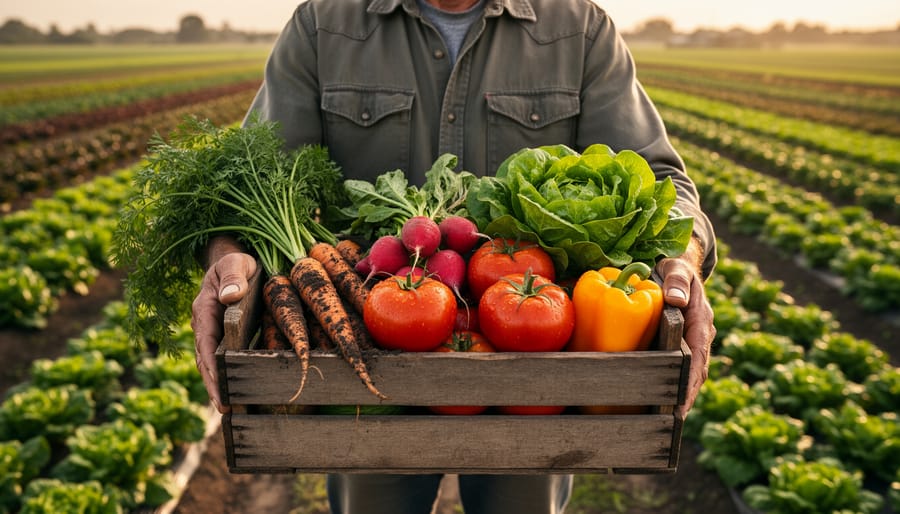
Farm-to-table describes a food system in which ingredients move directly from local farms to restaurant kitchens, institutional cafeterias, or consumers’ tables with minimal intermediaries. The term emerged in the 1970s alongside growing interest in organic agriculture and local food movements, particularly in California, though the practice itself has roots in traditional agricultural communities worldwide. At its core, farm-to-table prioritizes transparency, freshness, and direct relationships between producers and those who prepare or consume the food.
Three principles define authentic farm-to-table practices. First, local sourcing reduces the distance food travels, typically emphasizing producers within a defined region, in Alberta, this might mean sourcing from within the province or surrounding areas. Second, seasonal eating aligns menus and purchasing with what’s currently harvestable, respecting natural growing cycles rather than relying on imported out-of-season produce. Third, minimal intermediaries create direct connections between farmers and buyers, cutting out multiple distribution layers that characterize conventional food systems.
- Direct Sourcing
- Purchasing ingredients straight from the farm rather than through wholesale distributors or large supply chains. This practice builds relationships between producers and chefs or consumers while ensuring product freshness.
- Food Miles
- The distance food travels from farm to plate, a key metric in farm-to-table systems. Lower food miles typically mean fresher products and reduced environmental impact from transportation.
- Seasonal Menus
- Dishes designed around ingredients currently available from local farms. This approach honors natural harvest cycles and showcases produce at peak ripeness and flavour.
- Traceability
- The ability to track exactly where food originates, how it was grown, and who produced it. Farm-to-table systems make this transparency possible through direct relationships.
What sets farm-to-table apart from conventional distribution is the elimination of multiple handlers and storage points. In typical food systems, produce might pass through brokers, processing facilities, regional warehouses, and distribution centres before reaching retailers. This journey can take weeks and involves significant handling, refrigeration, and transportation. Farm-to-table collapses this chain, often delivering harvested ingredients within days or even hours.
A common misconception treats “farm-to-table” as a certification or regulated standard. In reality, it’s a philosophy and approach without official oversight in Canada. Another misunderstanding assumes all restaurant claims are genuine, when some establishments use the label loosely for marketing while sourcing conventionally. True farm-to-table operations can name their suppliers, adjust menus with harvest availability, and demonstrate ongoing producer relationships, not just occasional local purchases.
How Farm-to-Table Systems Work
Direct Sales and Shortened Supply Chains
Direct sales eliminate middlemen between producer and consumer, creating the shortest possible supply chains central to the farm-to-table definition. Alberta farmers connect with buyers through several proven channels. Farmers’ markets provide weekly face-to-face transactions with consumers who value freshness and local provenance. CSA (Community Supported Agriculture) programs establish season-long commitments where members purchase shares of the harvest upfront, providing farmers with working capital and guaranteed markets. Direct sales to restaurants and institutions represent a growing opportunity: chefs phone orders directly to farms, and procurement managers at hospitals or universities contract with nearby producers for regular deliveries.
These shortened supply chains increase producer revenue, farmers retain the retail margin rather than splitting it with distributors, while delivering superior product quality to buyers. Research on direct local food sales confirms that diverse business models work, from roadside stands to pre-arranged wholesale accounts. The trade-off is time: farmers handle marketing, delivery, and relationship management themselves, which requires planning but builds loyal customer bases that weather market fluctuations.
The Role of Aggregation and Distribution
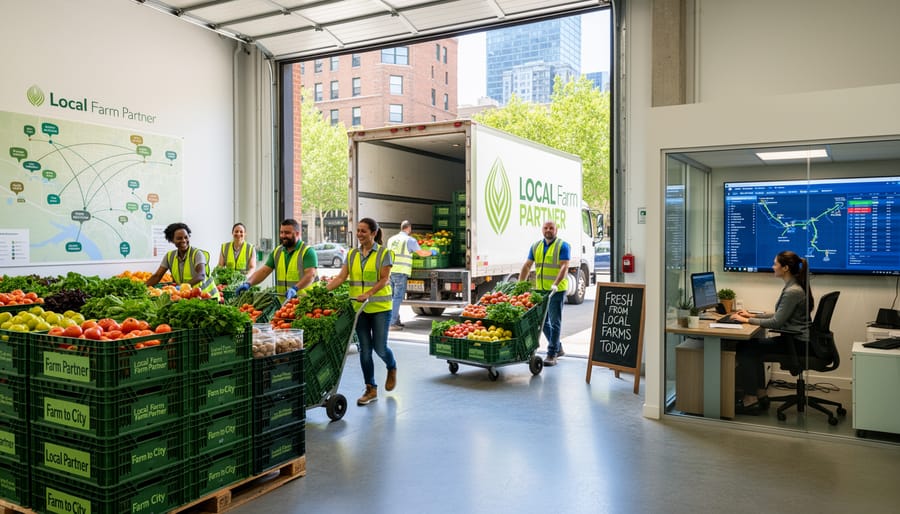
Food hubs and cooperative distribution networks solve a critical challenge for small-scale producers: how to deliver consistent volume to urban buyers without sacrificing the direct relationships that define farm-to-table. Rather than each farm making multiple city runs weekly, food hubs aggregate products from several producers, coordinate logistics, and deliver consolidated orders to restaurants, institutions, and retailers. This shared infrastructure cuts transportation costs, reduces carbon emissions, and lets farmers spend more time farming instead of driving.
In Alberta, cooperative models pool resources while maintaining transparency about product origins. Each item retains its farm identity through labeling and direct communication channels between producers and chefs. Unlike conventional distributors who obscure sourcing, these hubs function as matchmakers, connecting specific farms with buyers seeking their exact products. Some hubs handle invoicing, cold storage, and quality control, streamlining farm-to-table distribution while preserving the personal connections and seasonal flexibility that urban buyers value. This middle-ground approach expands market access for producers who lack the scale to supply large institutions alone, yet want the price premiums and relationships that come from identified, local sourcing.
Components of Urban Farm-to-Table Networks

Urban farm-to-table networks function through interconnected components that create sustainable food systems within Canadian cities. Understanding how these elements work together helps producers identify entry points and opportunities.
Urban Farms and Rooftop Growing Operations
These operations produce fresh vegetables, herbs, and specialty crops within city limits. Urban farms range from commercial greenhouse operations to community gardens that supply nearby restaurants and institutions. They minimize transportation time and offer year-round growing potential in controlled environments, particularly valuable in Alberta’s climate.
Peri-Urban Producers
Farms located within 50 to 100 kilometers of urban centres form the backbone of most farm-to-table networks. These producers maintain closer proximity than traditional rural operations while retaining the land base for diverse production. Peri-urban farms supply the volume and variety that urban operations cannot match alone.
Food Hubs and Aggregation Centres
Food hubs collect products from multiple small and mid-size farms, consolidate them into larger orders, and coordinate distribution to urban buyers. This aggregation solves the logistical challenge restaurants and institutions face when sourcing from many individual farms. Calgary and Edmonton both operate food hubs that connect Alberta producers with urban markets efficiently.
Institutional Buyers
Hospitals, universities, school districts, and corporate cafeterias increasingly source local food through farm-to-table networks. These institutions offer consistent, large-volume demand and often commit to long-term purchasing agreements. Their predictable orders help farmers plan production and secure steady income streams.
Independent Restaurants and Chef-Driven Establishments
Restaurants committed to local sourcing drive significant demand within farm-to-table networks. Chefs build relationships directly with farmers, design seasonal menus around available products, and communicate the farm connection to customers. These partnerships often command premium prices and provide marketing value for both parties.
Community Programs and Farmers’ Markets
CSA programs, farmers’ markets, and community-supported agriculture initiatives connect producers directly with consumers. These programs build community relationships, educate urban residents about food production, and create reliable weekly revenue for participating farms.
These components interact through formal and informal relationships. A single Alberta farm might sell to a food hub that supplies institutional buyers, maintain direct accounts with three restaurants, and operate a farmers’ market booth on weekends. This diversified approach reduces risk while maximizing market access within urban farm-to-table networks.
Where Farm-to-Table Is Applied in Canadian Urban Settings
Farm-to-table networks have moved beyond high-end restaurants to become embedded across Canadian urban food systems, creating diverse revenue streams for regional producers. In Alberta cities, these connections now span institutional buyers, public programs, and commercial food services that prioritize local sourcing as both a values statement and an operational strategy.
Restaurants remain the most visible entry point, with independent establishments in Calgary, Edmonton, and Lethbridge building menus around seasonal availability from nearby farms. Many chefs visit farms directly, forming relationships that shape their culinary direction and guarantee producers a consistent buyer willing to pay premium prices for quality and flexibility.
Urban farm-to-table applications extend into several institutional sectors, each offering distinct opportunities:
- Hospitals and healthcare facilities improve patient outcomes while supporting local agriculture through procurement policies that prioritize fresh, minimally processed food
- University and college dining services create steady, high-volume demand that helps farms scale production while educating students about regional food systems
- Corporate cafeterias differentiate employee benefits and meet sustainability targets by sourcing from producers within 200 kilometres
- Senior living communities enhance resident nutrition and quality of life with familiar, seasonal ingredients from recognizable farm sources
- Community kitchens and food banks increase the nutritional value and cultural relevance of emergency food by integrating fresh donations and purchased local produce
Farm-to-table in schools represents one of the fastest-growing sectors, with Alberta districts building procurement relationships that bring greenhouse vegetables, root crops, and proteins into cafeterias while connecting students to the agricultural economy that surrounds them.
Food hubs in Red Deer and Grande Prairie aggregate products from multiple small farms to meet the volume and delivery requirements these institutional buyers need, solving logistics challenges that individual producers struggle to manage alone. This infrastructure turns scattered small-scale production into a reliable supply capable of feeding hundreds or thousands daily.
Benefits for Alberta Farmers and Rural Communities
Participating in urban farm-to-table networks offers Alberta farmers direct financial returns that conventional wholesale channels rarely match. Restaurant and institutional buyers typically pay 15-30% more than commodity prices because they value freshness, traceability, and the story behind the food. These premium margins improve farm profitability while reducing dependence on fluctuating commodity markets. Direct relationships also mean faster payment cycles, often within 30 days rather than the 60-90 day terms common with large distributors, which strengthens cash flow for small and mid-sized operations.
Beyond economics, farm-to-table networks create market stability through relationship-based sales. When a farmer supplies the same restaurant or hospital cafeteria season after season, both parties invest in mutual success. Chefs plan menus around available crops, buyers provide advance orders, and producers gain predictable demand that supports crop planning and reduces waste. This trust-based model contrasts sharply with the uncertainty of commodity auctions or broker-mediated sales.
Environmental benefits align naturally with farm-to-table participation. Shorter supply chains cut transportation distances by an average of 70%, reducing fuel consumption and greenhouse gas emissions per kilogram of food delivered. Many urban buyers actively seek organic or low-input produce, which incentivizes sustainable growing practices and supports Alberta’s agricultural transition toward regenerative methods. Farmers adopting these practices often find premium market access becomes easier as their environmental credentials strengthen.
Rural communities benefit when local farms thrive through urban partnerships. Farm-to-table income keeps agricultural operations viable, preserves farmland from development pressure, and supports rural employment. These connections also build social capital: urban consumers visiting farm stands or participating in harvest events develop appreciation for rural Alberta, strengthening the cultural and economic bridge between city and countryside.
Expert Insight: Alberta Farm-to-Table in Practice
Sarah Chen has run Green Circle Farm, a 40-hectare mixed vegetable operation near Leduc, for eight years. Three years ago, she made the shift from selling primarily at weekend farmers’ markets to partnering with Edmonton’s Urban Harvest Food Hub, which now distributes her produce to twelve restaurants, two hospitals, and a university cafeteria.
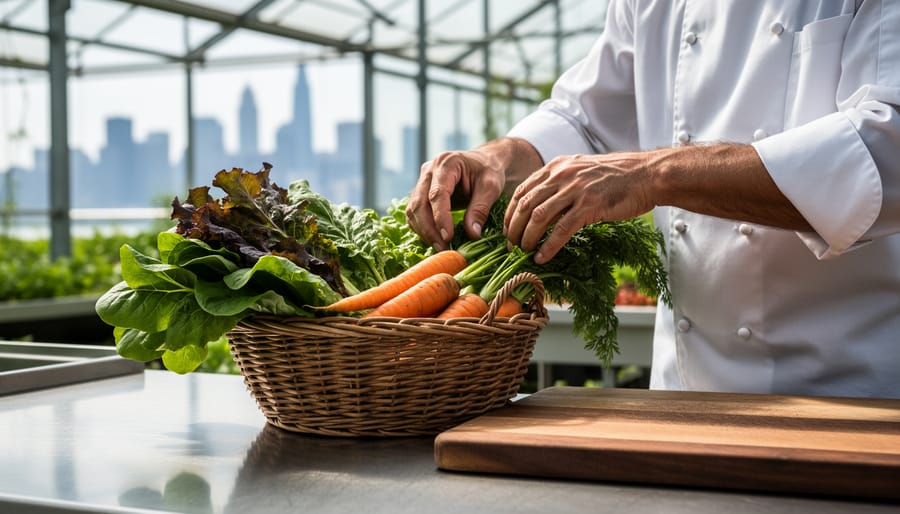
“The definition of farm-to-table that matters to me is simple: my carrots go from my field to a kitchen in the city within 48 hours, and I know exactly where they’re going,” Sarah explains. “That direct connection changes everything about how I plan my season and how I price my work.”
The transition wasn’t without friction. Sarah had to adjust her harvest schedule to meet Tuesday and Friday delivery windows, invest in a commercial cooler to maintain cold chain integrity, and learn to communicate crop availability weeks in advance. “Restaurants need consistency. I can’t just show up with whatever I feel like growing,” she says. “But once I understood their planning cycles, I could grow what they actually wanted instead of hoping someone would buy my excess zucchini.”
The economic shift proved significant. By moving away from retail markets where she competed on price with imported produce, Sarah now receives prices that reflect her production costs plus a fair margin. “I’m not getting rich, but I’m making a living wage farming, which seemed impossible when I started.”
Her advice to other Alberta producers considering farm-to-table networks: start small with one or two reliable buyers, communicate clearly about what you can and cannot deliver, and find an aggregation partner if direct sales feel overwhelming. “The food hub handles invoicing, logistics, and customer relationships. I focus on growing good food. That division of labour makes the whole system work.”
Common Questions About Farm-to-Table
Do I need certification to participate in farm-to-table networks?
No formal farm-to-table certification exists in Canada. Most buyers prioritize direct relationships, transparent growing practices, and local sourcing over third-party labels, though some may prefer organic certification or food safety credentials depending on their institutional requirements.
How should I price my products for restaurants and institutions?
Farm-to-table pricing typically falls between farmers’ market retail and conventional wholesale rates. Factor in your production costs, harvest labor, and delivery expenses, then research what local restaurants pay for similar quality products. Many buyers accept premium pricing for consistent supply and superior freshness.
What volumes do urban buyers actually need?
Volume requirements vary widely. Small independent restaurants might order 5-10 kg weekly, while institutional kitchens need hundreds of kilograms per delivery. Start with restaurants that highlight local menus or join a food hub that aggregates orders from multiple small producers to meet larger buyer needs.
How do I manage sales during Alberta’s short growing season?
Many farmers extend their season with season extension techniques like high tunnels, offer storage crops through winter months, or develop preserved products. Building relationships with multiple buyer types (restaurants, institutions, CSA members) creates diverse revenue streams that adapt to seasonal availability.
Beyond these common concerns, new farmers often wonder about logistics coordination. Most urban buyers prefer scheduled deliveries on specific days rather than random drop-offs, and many appreciate advance notice of what will be available each week. Text or email updates about harvest timing help restaurants plan menus around your crops rather than forcing you to grow what they want when they want it.
The question of starting small comes up frequently. You do not need to supply a dozen restaurants immediately. Begin with one or two reliable buyers, learn their preferences and communication style, then expand as you gain confidence in production planning and delivery logistics. Many successful farm-to-table relationships started with a chef visiting the farm, tasting samples, and committing to a single crop before the partnership grew into year-round collaboration.
Farm-to-table isn’t just a restaurant trend or marketing phrase, it’s a practical approach to food distribution that shortens the distance between producers and consumers, keeping more value in the hands of farmers while delivering fresher food to Canadian cities. For Alberta’s agricultural community, urban farm-to-table networks represent a growing market opportunity that aligns with sustainable farming practices and strengthens connections between rural producers and urban eaters.
These networks are already operating across Alberta, from Calgary’s food hubs to Edmonton’s institutional buyers, and they’re proving that direct-market channels can be economically viable and scalable. Whether you’re a small-scale vegetable grower, a livestock producer exploring direct sales, or a farm operation looking to diversify revenue streams, farm-to-table systems offer a pathway to better margins, stronger customer relationships, and greater control over your product’s story.
The infrastructure is developing, the demand is real, and the community support exists. If you’re curious about how your farm might fit into these urban networks, start by connecting with local food hubs, reaching out to chefs and institutional buyers in nearby cities, or attending farmers’ market networking events. Alberta’s farm-to-table movement grows stronger when more producers participate, and your contribution matters.