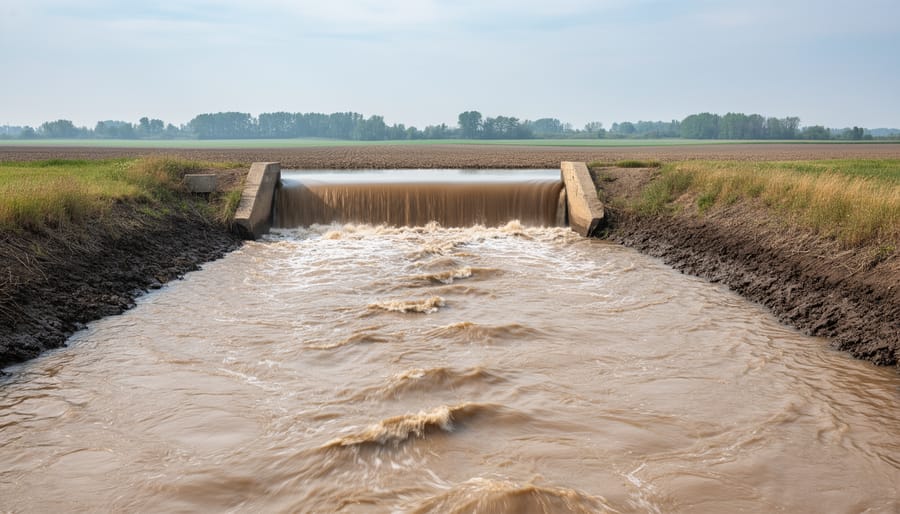
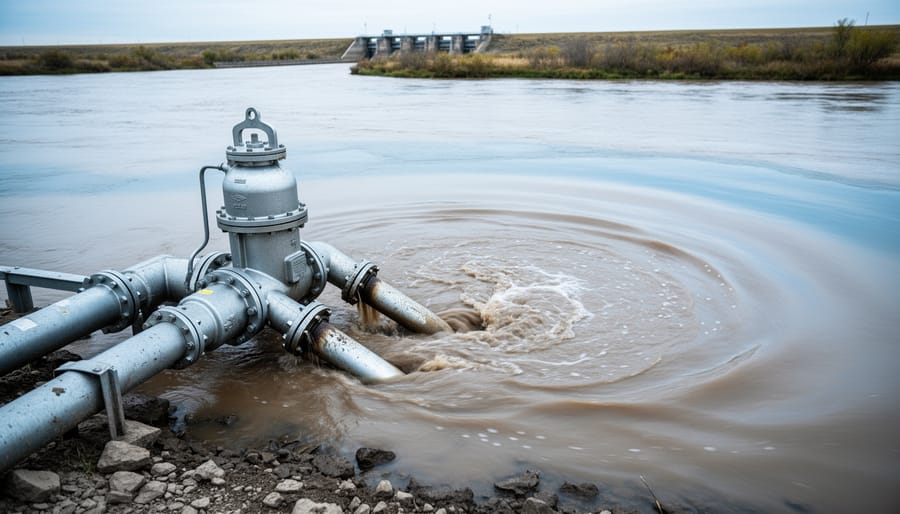
Monitor downstream water quality within 48 hours of any announced dam release affecting your irrigation sources. Sediment loads can spike to 10 times normal levels during controlled releases, clogging intake systems and damaging pumps if you’re not prepared.
Contact your local watershed authority before planting season to learn the release schedules for upstream dams in your region. Alberta’s Oldman River system, for example, follows predictable seasonal patterns that directly impact available water volumes and timing for agricultural users. Understanding these schedules lets you adjust irrigation plans and avoid costly surprises during critical growing periods.
Dam water releases reshape the rivers that sustain prairie agriculture. Whether it’s a planned seasonal discharge or part of a larger dam removal project, the water cascading downstream carries more than just volume. It transports years of accumulated sediment, alters nutrient concentrations, and shifts temperature patterns that affect everything from your irrigation intake to downstream fish populations that indicate overall watershed health.
For farmers drawing water from river systems, these releases represent both opportunity and challenge. The science behind what happens during a release is complex, involving sediment transport dynamics, dissolved oxygen levels, and carbon cycling processes that researchers are still working to fully understand. But the practical implications are immediate. Your equipment, your water access, and your crop planning all depend on knowing what to expect.
This isn’t abstract environmental theory. Dam releases in Alberta have shown measurable impacts on agricultural operations, from temporary turbidity spikes that require filtration adjustments to longer-term changes in river morphology that alter established intake locations. The good news? With proper preparation and understanding, you can adapt your operations to work with these dynamics rather than against them.
Understanding Dam Water Releases: The Basics for Agricultural Communities
Types of Water Releases Alberta Farmers Encounter
Alberta farmers encounter four main types of dam water releases, each with distinct characteristics and agricultural implications.
**Spring runoff releases** occur annually as snowmelt swells reservoirs. Operators at facilities like the Oldman River Dam gradually increase outflows from March through June to prevent overflow while maintaining downstream flow targets. These releases are predictable and typically pose minimal disruption, though they can temporarily increase turbidity in irrigation canals.
**Irrigation releases** represent the most familiar type for Alberta’s agricultural communities. From May through September, dams like the St. Mary and Waterton systems release stored water on scheduled cycles to supply irrigation districts. These controlled releases follow predetermined volumes and timing, allowing farmers to plan water usage. However, draw-down rates can vary based on reservoir levels and downstream demand.
**Flood prevention releases** happen when rapid precipitation or accelerated snowmelt threatens dam capacity. The 2013 floods demonstrated this scenario when operators at the Glenmore and Ghost dams increased releases to prevent overtopping, despite knowing downstream consequences. These releases often occur with limited notice and can deliver higher sediment loads than routine operations.
**Emergency discharges** are unplanned releases due to equipment failure, structural concerns, or extreme weather exceeding design parameters. While rare, they can release large volumes quickly with virtually no advance warning. The Dickson Dam’s emergency spillway activation during intense rainfall events illustrates how rapidly conditions can change, requiring downstream communities to respond within hours rather than days.
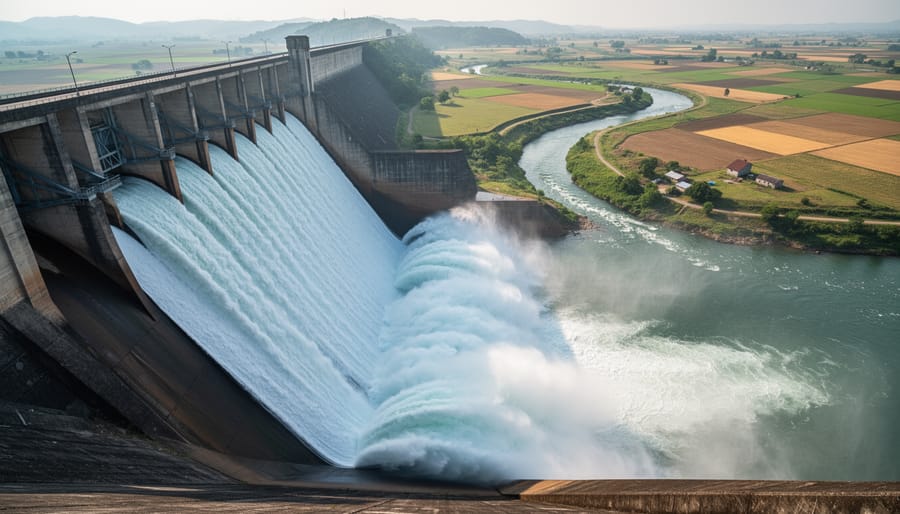
How Dam Removal Differs from Regular Releases
When a dam is removed rather than simply releasing water through controlled gates, the downstream impacts shift from temporary disturbances to fundamental, permanent changes in your watershed.
Regular water releases, whether for flood control, irrigation, or seasonal flow management, involve opening gates or spillways while the dam structure remains intact. The reservoir continues to trap sediment upstream, and water flows can return to baseline levels once operators close the gates. These releases follow predictable patterns that most Alberta farmers have learned to anticipate and manage around.
Dam removal projects operate on an entirely different scale. Once demolition begins, decades worth of accumulated sediment, sometimes containing 50 to 100 years of trapped material, mobilizes all at once. Unlike a controlled release where operators can adjust flow rates, dam removal creates a one-time “sediment pulse” that can take months or even years to fully work through the river system. The Elwha River dam removals in Washington State released 20 million cubic yards of sediment, fundamentally reshaping the downstream channel and floodplain.
The changes are permanent because the reservoir itself disappears. Rivers return to their historical flow patterns, including natural seasonal fluctuations and sediment transport that the dam previously suppressed. Water temperatures shift as the reservoir’s thermal buffering effect vanishes. For downstream agricultural operations, this means adapting to a fundamentally different river, not just weathering a temporary release event.
These permanent alterations require different preparation strategies than managing routine releases.
Sediment Dynamics: What Flows Downstream to Your Farm
The Sediment Buildup Behind Alberta’s Dams
When a dam goes up, the river behind it slows down. That slower water can no longer carry the sediment load it once moved downstream, so sand, silt, clay, and organic matter settle to the reservoir floor. Over decades, reservoirs trap upstream sediment at rates that vary with watershed geology and land use, but the result is the same: a growing sediment bank that fundamentally changes the reservoir environment.
In Alberta, many dams have been in place for 50 to 100 years. That’s half a century or more of sediment accumulation. The oldest layers at the bottom may hold nutrients and organic carbon from when the landscape above was still native grassland or forest. Middle layers reflect decades of agricultural development, carrying traces of fertilizers, pesticides, and eroded topsoil. The newest deposits at the top mirror current farming practices and upstream land management.
This layered sediment isn’t just dirt. It’s chemically active. Buried organic matter decomposes slowly in low-oxygen reservoir conditions, binding nutrients like phosphorus and nitrogen that would otherwise flow downstream. Heavy metals from natural geology and human activity can concentrate in these sediments. When water levels drop during droughts or irrigation season, some sediment oxidizes and releases stored nutrients back into the water column.
The sediment bank is essentially a historical record of your watershed, and it sits waiting behind the dam.
Impacts on Irrigation Systems and Agricultural Water Intake
When sediment-laden water hits your irrigation system, the effects show up fast. Pumps designed for clear water suddenly work harder, wearing down impellers and seals as abrasive particles grind through moving parts. A pump that normally runs five seasons might need rebuilding after one high-sediment event.
Screen filters and sand separators clog more frequently, sometimes within hours instead of days. You’ll spend more time cleaning or backflushing, and in extreme cases, sediment bypasses filters entirely when pressure builds too high. This sends fine particles into drip lines and sprinkler heads, reducing flow rates and creating uneven water distribution across fields.
For livestock operations drawing directly from rivers or dugouts, turbid water creates its own challenges. Cattle generally won’t refuse moderately cloudy water, but excessive sediment can irritate digestive systems and reduce weight gains. High turbidity also masks other water quality issues you’d normally spot by sight.
Water intakes positioned near riverbanks face the worst sediment loads during releases. Consider temporary intake extensions during high-flow events, or install settling basins to let coarser particles drop out before water enters your system.
The hidden cost isn’t just equipment wear, it’s lost irrigation time. When you’re constantly maintaining clogged systems during peak growing season, crops suffer from inconsistent watering. That productivity hit compounds the direct maintenance expenses.
Soil Deposition: Problem or Opportunity?
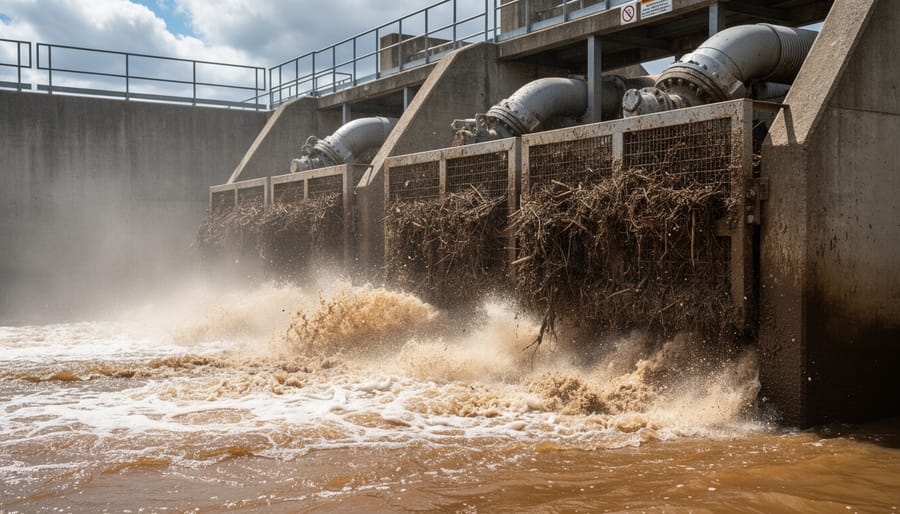
When sediment settles on your land after a dam release, the outcome depends entirely on what arrives and where it lands. In some cases, you receive a fertility boost reminiscent of the Nile’s ancient floods. Fine, nutrient-rich sediments can deposit a layer of organic matter and minerals that enhance soil structure and available phosphorus. Alberta farmers near controlled release sites have reported modest yield improvements on fields that received thin deposits of reservoir sediments during spring floods.
The flip side occurs when heavy sediment loads bury productive topsoil under sterile sand and gravel, or when decades of trapped pollutants arrive with the sediment. Reservoirs accumulate whatever flows into them: agricultural runoff, industrial contaminants, heavy metals from upstream mining. A 2019 analysis of sediments behind older Alberta dams found elevated levels of mercury and arsenic in bottom layers, materials that would reach downstream lands during major releases.
The key is knowing your watershed history and monitoring what arrives. Test deposited sediments before assuming they benefit your soil. Effective soil and water conservation strategies include mapping deposition patterns after releases and using cover crops to stabilize and integrate fresh sediments gradually rather than working unknown materials directly into production fields.
Water Quality Changes Farmers Need to Monitor
Short-Term vs. Long-Term Water Quality Effects
When a dam releases water or undergoes removal, farmers face two distinct timelines of water quality disruption. Understanding both helps you protect your operation today while planning for tomorrow’s watershed.
**Immediate Impacts: Hours to Weeks**
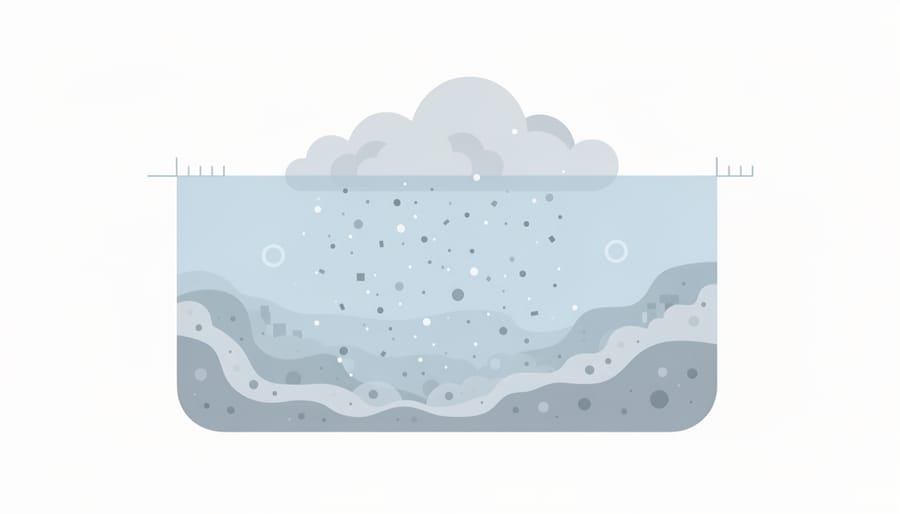
The first surge of released water typically carries a visible sediment plume that can turn clear streams coffee-brown within hours. Turbidity spikes stress fish populations and clog irrigation filters, forcing immediate equipment adjustments. Simultaneously, the disturbed reservoir sediments consume oxygen as organic matter decomposes, and research confirms that small dams reduce dissolved oxygen levels downstream. Alberta livestock producers drawing river water may notice animals refusing murky water during these acute episodes. Water temperatures can also fluctuate sharply as reservoir releases displace ambient stream temperatures, particularly during summer irrigation season when cold bottom-water releases can drop downstream temperatures by several degrees Celsius.
**Long-Term Shifts: Months to Years**
Once the initial sediment settles, subtler changes emerge. Nutrient regimes often shift as decades of accumulated phosphorus and nitrogen redistribute downstream, potentially altering algae growth patterns and affecting water pollution control efforts in your watershed. The restored flow patterns gradually rebuild natural temperature cycles, benefiting cold-water ecosystems but requiring adjustment periods for established irrigation schedules. Fish communities and aquatic insects recolonize at different rates, signaling broader ecosystem recovery that can take three to five years. Farmers who monitor these trends gain valuable insight into stabilizing water quality conditions.
Testing Your Water: Practical Steps for Alberta Farmers
Testing water during and after dam releases isn’t just good practice, it’s essential protection for your operation. The timing matters as much as the testing itself. Start checking your water quality as soon as you receive notice of an upcoming release, establish a baseline before sediment arrives, then test again 24 to 48 hours after the release begins when turbidity typically peaks. Continue monitoring weekly for at least a month, as some parameters like dissolved oxygen can fluctuate for weeks after the initial event.
- Contact your local Alberta Agriculture and Irrigation office or the nearest Provincial Agriculture Service Board to arrange field testing. Many districts offer subsidized or free testing during documented water events.
- Collect samples from your water intake point during early morning hours when conditions are most stable. Use clean containers provided by the testing facility, and fill them directly from your pump or irrigation line rather than from still water.
- Request analysis for turbidity, total suspended solids, dissolved oxygen, pH, and electrical conductivity at minimum. If you’re using the water for livestock, add tests for bacteria and nitrates.
- Compare results against the Canadian Water Quality Guidelines for Agricultural Use. Your irrigation district or local agricultural fieldman can help interpret whether readings require action.
- Document all results with dates and locations. This creates a record if you need to demonstrate water quality issues affected your crops or if you’re filing for assistance programs.
Between scheduled tests, watch for visible changes. Sudden increases in murkiness, unusual odours, or livestock refusing to drink are all signals to test immediately rather than waiting for your next scheduled sample. The Alberta government’s My Wild Alberta app lets you report water quality concerns in real time, connecting you with provincial specialists who can advise on urgent situations.
Most irrigation districts maintain relationships with accredited labs and can fast-track samples during known release events. The Oldman Watershed Council and similar organizations across the province often coordinate group testing that reduces costs for individual farmers while building community-wide data on water impacts.
Carbon Dynamics: The Climate Connection

How Reservoirs Store and Release Carbon
When rivers flow freely, they carry organic matter, leaves, algae, plant debris, that typically decomposes or washes downstream. Behind a dam, everything changes. The slowed water creates a massive settling basin where organic material sinks and accumulates in thick sediment layers on the reservoir bottom. Over decades, these layers can reach several metres deep, creating what scientists call a carbon sink: a storage vault of incompletely decomposed organic matter.
Here’s the catch. Unlike well-oxygenated river bottoms, reservoir sediments often sit in low-oxygen or oxygen-free conditions. This anaerobic environment slows decomposition but allows methane-producing bacteria to thrive. The result? Reservoirs gradually build up both stored carbon and pockets of methane gas trapped in the sediment, essentially creating an underwater carbon battery that’s partially charged with a potent greenhouse gas.
When a dam releases water rapidly or is removed entirely, these long-buried sediments get mobilized. Suddenly exposed to oxygen and moving water, the organic matter that sat stable for years begins decomposing much faster. Methane bubbles escape. Microbes break down carbon compounds, releasing CO2. The magnitude depends on sediment depth, organic content, and how quickly sediments are disturbed, but major releases can temporarily spike greenhouse gas emissions from a river system.
For Alberta farmers downstream, this matters beyond climate considerations. That carbon pulse often coincides with nutrient releases, nitrogen and phosphorus locked in organic sediments, which can temporarily alter water chemistry in ways that affect irrigation and livestock watering decisions.
Connecting Dam Operations to Your Farm’s Carbon Footprint
Understanding how dam operations affect carbon cycling helps you see the bigger picture of your farm’s environmental impact. While you’re focused on reducing emissions from fuel use, fertilizer application, and livestock management, the water flowing onto your fields carries its own carbon story.
When a dam releases water laden with disturbed sediments, you’re receiving carbon that’s been stored in the reservoir for decades. Some of this carbon may settle on your land, potentially enriching soil organic matter. Other forms, particularly methane produced in low-oxygen reservoir conditions, have already entered the atmosphere upstream. The water you draw for irrigation has passed through this carbon-cycling system before it reaches your pumps.
This watershed perspective doesn’t add new tasks to your plate, but it does inform smarter water management decisions. Using water efficiently reduces your overall water carbon footprint by decreasing the total volume you draw from systems affected by reservoir emissions. Maintaining healthy riparian zones along your irrigation canals and drainage ditches creates buffers that can capture sediment-bound carbon, keeping it in the landscape rather than letting it wash downstream.
Provincial carbon offset programs increasingly recognize the full water-to-crop chain. Documenting your water sources and efficiency practices may become valuable as these programs evolve. When you understand that your irrigation water has a carbon history before it reaches your property, you can advocate more effectively for watershed management decisions that support both agricultural needs and climate goals.
Canadian Case Study: Lessons from Recent Dam Projects
In 2023, Manitoba’s Lake Winnipeg watershed experienced a series of controlled releases from the Fairford River Water Control Structure that offered Canadian farmers valuable insights into managing agricultural operations during major water events. The releases, designed to prevent spring flooding in the Red River Valley, mobilized significant sediment loads that affected downstream farming operations for nearly four months.
Farmers near Portage la Prairie reported immediate challenges with irrigation intake systems. Within 48 hours of the release, sediment concentrations increased fivefold, clogging filters and reducing pump efficiency by up to 40%. Those who had invested in adaptive water strategiesincluding backup filtration and alternative water sources, maintained operations with minimal disruption. Farmers without contingency plans faced costly equipment repairs and delayed irrigation schedules during a critical growing period.
The Fairford case demonstrated how proactive communication changed outcomes. Manitoba’s watershed authority provided 72-hour advance notice through text alerts and community meetings. Farmers who attended these sessions adjusted planting schedules, moved livestock to higher pastures, and installed temporary sediment settling ponds. Those who engaged early reported that understanding the release timeline and expected water quality changes helped them protect infrastructure and maintain crop health, which ultimately boosts yields even under challenging conditions.
Water quality monitoring revealed patterns relevant to Alberta’s agricultural context. Turbidity peaked within the first week but returned to near-baseline levels within 30 days. However, nutrient profiles shifted for the entire growing season. Phosphorus concentrations dropped 25% as sediment settled, requiring some farmers to adjust fertilizer applications mid-season. Dissolved oxygen levels dipped temporarily but recovered as water flow normalized.
The most valuable lesson emerged from collaborative monitoring. A group of 15 farms partnered with the University of Manitoba to track water quality weekly. This farmer-led data collection identified localized sediment deposition patterns that wouldn’t have appeared in government monitoring alone. The partnership created a knowledge base that informed infrastructure improvements and helped establish best practices for future releases, proving that farmer expertise combined with scientific monitoring creates resilient agricultural systems.
Preparing Your Farm for Dam Water Releases
Communication Channels and Early Warning Systems
When dam releases happen, hours matter. Alberta farmers can tap into several reliable channels to stay ahead of water level changes and sediment surges.
**Government Alert Systems**
Alberta Environment and Protected Areas operates the River Forecast Centre, which issues advisories for high streamflow and flood conditions. Sign up for email alerts through the Alberta Emergency Alert system, it’s free and delivers notifications directly to your phone during emergency releases. The centre’s website updates daily during spring runoff and more frequently during active events.
**Irrigation District Communications**
If you’re in an irrigation district, your local office is your first line of defense. Districts like the Eastern Irrigation District and St. Mary River Irrigation District send text alerts about operational changes, including dam releases that affect delivery schedules. Many now use apps or automated phone systems for urgent updates.
**Watershed Groups and Local Networks**
Alberta’s watershed stewardship groups monitor conditions and often know about planned releases before official announcements. Join your local group’s email list or Facebook page. The Oldman Watershed Council and Bow River Basin Council regularly share operational updates from upstream dam managers.
Don’t rely on a single source. Cross-reference information, especially during spring when conditions change rapidly.
Infrastructure Protection and Adaptation
When a dam release brings high sediment loads and fluctuating flows, your farm infrastructure faces real risks. Here’s how to protect your investment and keep operations running.
**Protecting Water Intakes**
Start by installing sediment screens or settling basins ahead of your pumps. A simple gravel settling pond, even two metres by three metres, can trap heavy sediment before it reaches intake filters. Position your intake pipe at mid-depth rather than near the bottom where sediment concentrates. During major releases, raise floating intakes if possible or temporarily switch to backup water sources. Check and clean intake filters daily when sediment loads spike. Some Alberta farmers keep spare filter cartridges on hand and set phone reminders to check equipment morning and evening during release periods.
**Preventing Erosion on Riparian Land**
Stabilize vulnerable streambanks before release events when you can. Plant deep-rooted native species like willows and grasses along exposed banks. Install rock riprap or erosion control blankets on steep or bare sections nearest the water. Move livestock away from riparian zones during peak flows. The combined pressure of heavy hooves and high water accelerates bank collapse. Create vegetated buffer strips at least five metres wide between the waterway and cultivated fields to catch sediment and slow runoff.
**Adjusting Irrigation Practices**
Switch to drip or micro-sprinkler systems during high-sediment periods if your operation allows it. These systems handle sediment better than overhead sprinklers. Flush mainlines and laterals more frequently. Reduce irrigation pressure slightly to minimize wear on components exposed to abrasive sediment. Consider applying an extra irrigation cycle with cleaner water once sediment levels drop to flush accumulated particles from the soil root zone.
Understanding dam water releases isn’t just about reacting to events as they happen. It’s about positioning your farm within a watershed that’s constantly evolving, where dams play a central role in how water, sediment, and nutrients move through your landscape. The releases we’ve explored, whether routine seasonal discharges or transformative dam removal projects, reshape the agricultural environment downstream in ways both challenging and potentially beneficial.
The farmers who thrive in this dynamic system are those who stay informed, test their water regularly, and adapt their practices based on actual conditions rather than assumptions. They recognize that decades of sediment accumulation don’t disappear quietly, that water quality fluctuates in predictable patterns around release events, and that carbon dynamics extend far beyond their field boundaries to include the entire watershed.
What sets Canadian agriculture apart is the willingness to engage directly with these challenges. Alberta farmers have unique local knowledge about how their land responds to high flows, where sediment settles, and which crops tolerate turbid irrigation water. This expertise is invaluable to water management authorities planning releases or considering dam modifications. Your observations matter.
The path forward requires collaboration. Reach out to your irrigation district, attend watershed planning meetings, and share what you’ve learned from monitoring your water sources. Connect with neighbouring farms to coordinate responses during major releases. The technical understanding you’ve gained here becomes truly powerful when combined with community action and ongoing dialogue with dam operators.
Your farm sits at the intersection of agricultural productivity and watershed health. By understanding and engaging with dam water releases, you’re not just protecting your operation, you’re helping shape a more resilient agricultural landscape for the next generation.