# Understanding Dam Water Release: What Canadian Farmers Need to Know
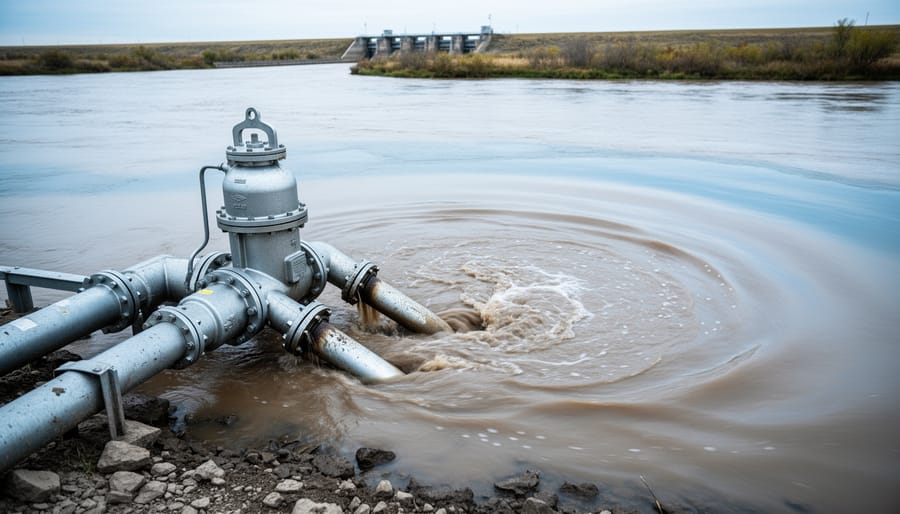
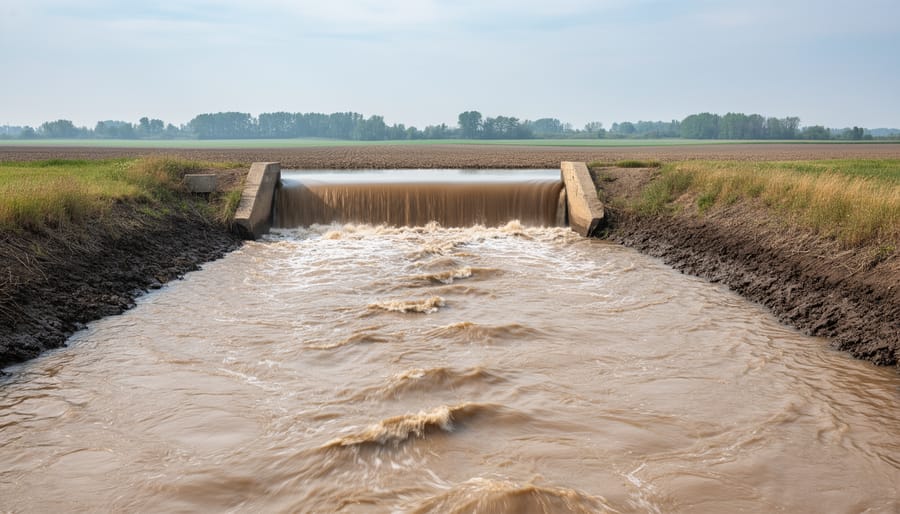
When dam operators open their gates, the water rushing downstream carries more than just H2O. It brings sediment, nutrients, altered water temperatures, and changes in flow patterns that directly impact your irrigation systems, soil health, and crop planning.
Dam water releases occur for several reasons: spring runoff management, flood prevention, reservoir maintenance, or as part of larger dam removal projects. In Alberta, these controlled releases have become increasingly common as watershed managers balance agricultural water needs with environmental restoration goals. The Oldman River Dam, for instance, regularly adjusts its releases based on downstream agricultural demand and fish habitat requirements.
For farmers, the immediate concern isn’t the why but the how. How will this affect your water intake systems? Will sediment levels spike and clog your irrigation equipment? Should you adjust your planting schedule?
Dr. Sarah Chen, a water management specialist at the University of Alberta, has worked with dozens of farming operations preparing for planned releases. She notes that farmers who monitor water quality parameters and maintain communication with dam operators experience far fewer disruptions than those caught off guard. “The sediment pulse can be significant,” she explains, “but it’s predictable if you know what to look for.”
This article breaks down the science behind dam water releases, explores their connection to broader environmental projects, and provides practical steps to protect your operation when releases occur.
Understanding Dam Water Release: The Basics for Agricultural Communities
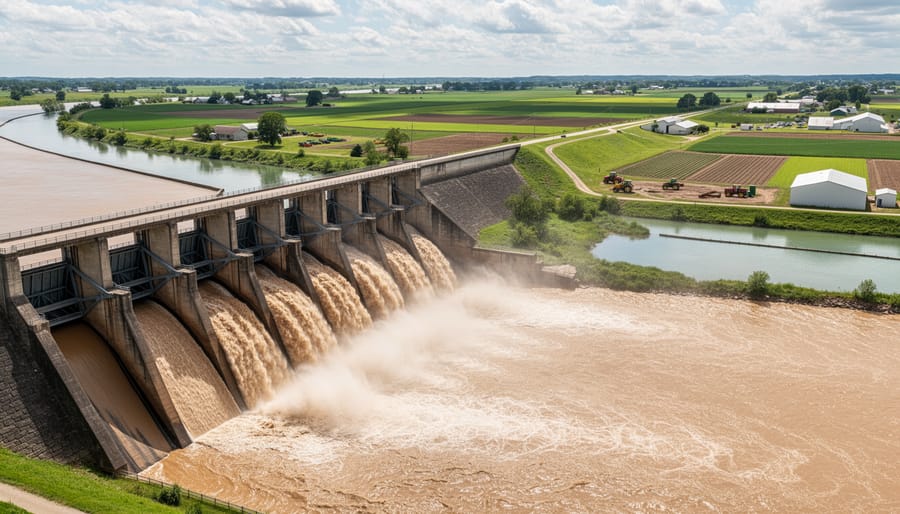
When a dam releases water into downstream systems, it sets off a chain reaction that can reshape agricultural operations for weeks or months. A dam water release occurs when water stored behind a dam structure flows downstream in volumes significantly higher than typical operational levels. These releases happen for several reasons: scheduled maintenance requiring reservoir drawdown, emergency flood prevention when inflows exceed capacity, or as part of planned dam removal projects that permanently dismantle aging infrastructure.
For Canadian farmers downstream of these structures, understanding the mechanics matters. Releases during dam removal projects differ fundamentally from routine operational spills. When a dam comes down, decades of accumulated sediment and altered water chemistry suddenly mobilize. Contrast this with maintenance releases, which typically involve cleaner water from upper reservoir layers and follow predictable seasonal patterns.
- Controlled Release
- The planned discharge of water from a dam at specific flow rates and durations, designed to minimize downstream impacts while meeting operational or environmental objectives.
- Pulse Flow
- A temporary surge of water released to mimic natural flood patterns, often used to transport sediment or benefit aquatic ecosystems downstream of the dam.
- Sediment Load
- The total amount of soil particles, organic matter, and debris carried in released water, measured in kilograms per cubic meter or tonnes per day.
- Turbidity
- The cloudiness of water caused by suspended particles, measured in Nephelometric Turbidity Units (NTU), which affects light penetration and can clog irrigation equipment.
Release volumes vary dramatically. A small maintenance release might add 10 to 20 cubic meters per second to base flows. Dam removal projects in Alberta have triggered releases exceeding 200 cubic meters per second, transforming placid irrigation sources into sediment-laden torrents within hours. Timing depends on project schedules and hydrological conditions, but most planned releases occur during spring runoff or late summer low-flow periods to reduce downstream flooding risks.
Canadian farmers operate under provincial water management frameworks, with Alberta Environment and Parks, Saskatchewan Water Security Agency, and similar bodies overseeing dam operations. These agencies require advance notification of planned releases, typically 48 to 72 hours for maintenance events and weeks to months for dam removal projects. However, emergency releases follow different protocols, sometimes providing just hours of warning.
The immediate impacts hit irrigation systems first. Turbidity spikes can overwhelm intake filters, forcing temporary shutdowns. Water temperature drops of 3 to 5 degrees Celsius are common as deeper, colder reservoir water moves downstream. Dissolved oxygen levels fluctuate unpredictably, affecting livestock watering decisions and aquatic life in farm dugouts.
How Dam Water Release Affects Sediment Movement
Short-Term Sediment Impacts on Irrigation Systems
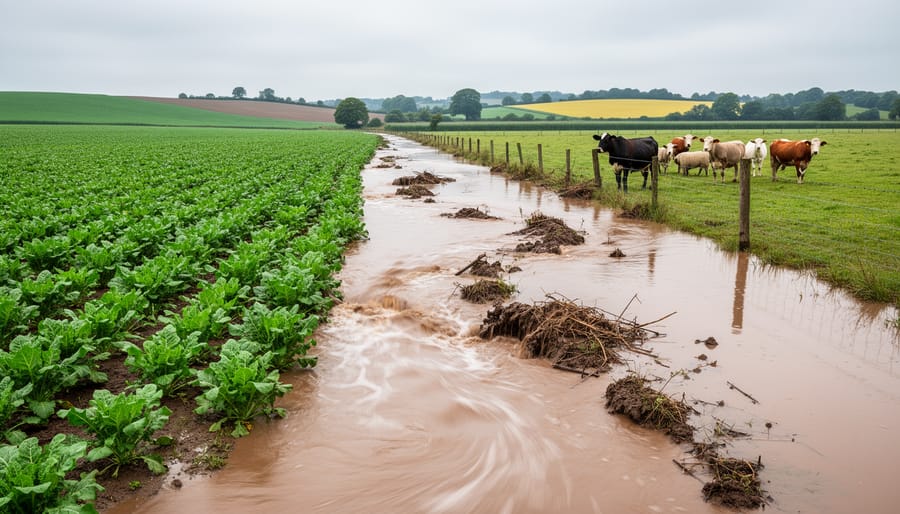
When dam water releases occur, your irrigation system faces immediate challenges from elevated sediment loads. Suspended particles, ranging from fine silts to coarser sand, can quickly overwhelm intake screens, pumps, and distribution networks that weren’t designed for such concentrations.
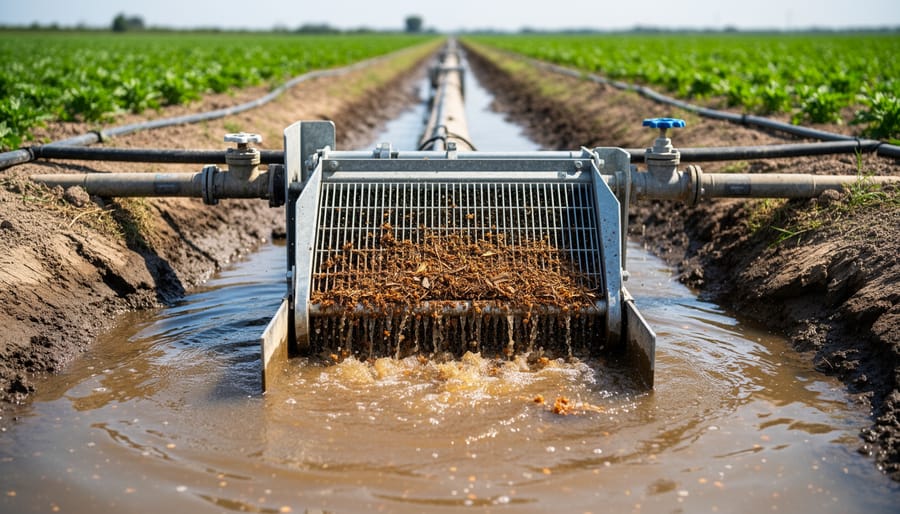
Intake structures are the first line of defense. Floating debris and bedload sediment can block screens within hours during peak releases, requiring multiple daily cleanings instead of weekly maintenance. Without adequate protection, pumps draw in abrasive particles that accelerate wear on impellers and seals, potentially causing costly breakdowns during critical irrigation periods.
Filtration systems designed for normal river conditions struggle with the sudden spike in suspended solids and clogging. Sand filters require backflushing two to three times more frequently, while screen filters may need hourly checks. Drip irrigation systems face particular vulnerability, emitters can plug within days when sediment concentrations exceed design thresholds, even with filtration in place.
Water application uniformity suffers as sediment accumulates in pipelines and lateral lines. Pressure differentials develop across the system, leading to uneven crop watering precisely when consistency matters most. This connection between water quality and infrastructure performance underscores why soil and water conservation practices must account for dam management activities upstream.
Timing compounds these challenges, many dam releases coincide with spring or early summer when irrigation demand peaks and labour is already stretched thin across farm operations.
Long-Term Soil Deposition Benefits and Challenges
Sediment that settles on farmland following dam water release events can dramatically reshape your soil’s character over months and years. The deposits aren’t uniform, lighter organic particles often spread across floodplains first, while heavier sand and silt fractions settle in channels and low spots. This redistribution creates a mosaic of soil conditions that can persist for several growing seasons.
On the positive side, fresh sediment frequently brings nutrient-rich material that’s been accumulating behind the dam for decades. Phosphorus, nitrogen, and trace minerals bound to sediment particles can boost soil fertility without synthetic inputs. Some Alberta farmers near the Bow River system have reported improved crop yields in areas where fine sediment layers added organic matter to sandy soils, essentially creating new topsoil over time.
However, heavy deposition presents real challenges. Thick sediment layers can bury existing topsoil, smothering beneficial soil organisms and disrupting established root zones. Excess sand deposition may reduce water-holding capacity, while too much fine silt can create crusting that prevents seed germination and limits rainfall infiltration. Drainage patterns often shift as sediment fills ditches and natural channels, leading to unexpected ponding or erosion in areas that previously drained well.
The texture changes matter most. If sediment composition differs significantly from your existing soil, say, clay-heavy deposits on light loam, you’ll face years of working that material in before achieving consistent growing conditions. Testing deposited sediment for texture, nutrients, and potential contaminants before the next planting season helps you adapt management practices appropriately.
Water Quality Changes During Dam Water Release
Monitoring Water Safety for Livestock and Irrigation
Testing your water regularly becomes non-negotiable when dam operations upstream affect your water source. During active water releases, establish a baseline by testing daily for the first week, then every three days as conditions stabilize. Focus on turbidity, pH, dissolved oxygen, and nitrate levels, these shift fastest and matter most for livestock health and crop irrigation.
Watch your animals closely. Cattle refusing to drink, increased salivation, or sudden diarrhea signal water quality problems before lab results confirm it. Murky water above 50 NTU (nephelometric turbidity units) clogs irrigation filters and reduces oxygen levels that livestock need. If dissolved oxygen drops below 5 mg/L, find alternative water immediately, compromised oxygen stresses animals and can prove fatal to young stock.
For irrigation, suspended sediment above 100 mg/L damages drip systems and sprinkler nozzles. Test electrical conductivity too; sudden spikes indicate dissolved salts that burn sensitive crops. When pH swings outside the 6.5-8.5 range, nutrient availability in soil changes, and herbicide effectiveness drops.
Contact your provincial water authority before quality deteriorates. Alberta Agriculture maintains rapid-response testing through regional labs during dam release events, with 24-hour turnaround on critical parameters. Keep backup water sources mapped: neighbouring wells, municipal connections, or temporary storage tanks filled before releases start.
Don’t rely on visual assessment alone. Clear water can still carry dissolved contaminants, while muddy water often clears to safe levels within days. Invest in a portable TDS meter and turbidity tube, both cost under $100 and provide instant field readings between professional tests. Your livestock and crops can’t afford guesswork during dam water release periods.
Carbon Dynamics: The Climate Connection
When a dam releases water, whether for removal, maintenance, or environmental management, it sets off a cascade of carbon changes that extend far beyond the immediate water flow. These releases disturb decades of accumulated organic material in reservoir sediments, triggering carbon dioxide and methane emissions as previously submerged organic matter oxidizes upon exposure to air and downstream waters. Canadian researchers have documented significant methane pulses during controlled releases, particularly when bottom sediments rich in decomposed vegetation suddenly enter oxygen-rich downstream environments.
The connection between these releases and your farm’s water carbon footprint becomes clearer when you consider the riparian zones downstream. Established vegetation along riverbanks acts as a carbon sink, but sudden high-flow events from dam releases can scour these areas, uprooting willows, sedges, and other plants that have stored carbon for years. In Alberta’s South Saskatchewan River system, for instance, managed releases have altered riparian vegetation patterns, affecting both carbon storage and bank stability on adjacent farmland.
The flip side deserves attention too. Released sediments carry organic carbon that can enrich downstream soils when deposited on floodplains, potentially improving soil organic matter content in agricultural areas. However, this benefit depends on sediment particle size, nutrient load, and deposition patterns. Fine sediments with high organic content can boost soil carbon stocks, while coarse, nutrient-poor sediments may offer little benefit. Water temperature changes during releases also affect aquatic plants and algae that cycle carbon through photosynthesis, altering the carbon balance in irrigation ditches and on-farm water storage. For farmers drawing water from affected systems, these shifts mean monitoring not just water quality for crops and livestock, but understanding how carbon dynamics influence the broader sustainability of your water sources.
Canadian Case Study: Lessons from Alberta Dam Water Management
The Oldman River Dam in southern Alberta provides a compelling example of how controlled water releases affect downstream farming operations. Since its construction in 1991, the dam has required periodic water management adjustments that directly impact thousands of hectares of irrigated farmland in the Lethbridge region.
During the 2021 spring freshet, water managers released higher-than-average volumes to prevent reservoir overflow, creating immediate challenges for downstream producers. Tom Henderson, who farms 500 hectares of irrigated crops near Taber, recalls the sudden turbidity spike: “Our irrigation intake screens clogged within hours. We had to shut down operations for three days while sediment levels stabilized.” His experience underscores the importance of flexible farm water strategies that account for variable dam operations.
Dr. Sarah Chen, a hydrologist with Alberta Environment and Protected Areas, explains that advance communication proved critical during this event. “We implemented a 72-hour notification system before significant releases, allowing farmers to adjust irrigation schedules and protect intake infrastructure.” However, she acknowledges the initial rollout faced hurdles: “Some farmers didn’t receive notifications due to outdated contact lists, which we’ve since corrected.”
The sediment pulse from the 2021 release deposited an average of 4 centimetres of fine material across 200 hectares of floodplain fields. While this initially concerned producers, soil tests conducted six months later revealed unexpected benefits. Henderson notes, “The new sediment layer actually improved our sandy soil’s water retention. Our irrigation frequency dropped by 15 percent the following season.”
Livestock producers faced different challenges. Rita Kowalski, who runs a cattle operation downstream, found her dugout contaminated with sediment and organic matter. “The water turned brown and stayed that way for two weeks. We trucked in water at considerable expense.” This prompted the irrigation district to establish emergency livestock watering stations for future releases, a proactive measure that demonstrates adaptive management.
The key lesson from Alberta’s experience centres on coordinated planning. The St. Mary River Irrigation District now conducts pre-season meetings where dam operators, farmers, and environmental scientists review release schedules and contingency plans together. This collaborative approach has reduced conflicts and improved preparedness, showing that dam water management works best when all stakeholders share information and responsibilities from the outset.
Preparing Your Farm for Dam Water Release Events
When dam water releases occur in your watershed, the difference between smooth operations and serious disruption often comes down to advance preparation. Canadian farmers near dams should treat water release preparedness as essential as any other aspect of risk management, whether you’re dealing with scheduled releases or unexpected emergency events.
The first step is establishing direct communication channels with your provincial water management authority and the dam operator in your region. Register your operation as a downstream stakeholder and request notification protocols. In Alberta, this means connecting with Alberta Environment and Protected Areas, while farmers in other provinces should contact their respective water ministries. Don’t wait for a crisis to introduce yourself.
Once you’re in the communication loop, develop a farm-specific response plan. Here’s a practical preparation protocol:
- Map all water intake points on your property and identify which are most vulnerable to sediment loads or rapid flow changes during releases.
- Install sediment traps or filtration systems at critical intake points, particularly for irrigation systems and livestock watering infrastructure.
- Document baseline water quality conditions so you can quickly identify changes when releases occur.
- Establish alternative water sources such as dugouts, wells, or temporary storage tanks that can sustain operations for at least 72 hours.
- Create an equipment checklist including pumps, hoses, water testing kits, and backup filtration materials that should be readily accessible.
- Train farm staff on early warning signs of water quality problems and establish clear protocols for switching to alternative sources.
Infrastructure protection extends beyond water systems. Reinforce streambanks where they border your fields, especially in areas where increased flow could trigger erosion. Clear debris from culverts and drainage structures that might become choke points during high-flow events. Consider temporary barriers around low-lying equipment storage areas if flooding is possible.
For livestock operations, plan animal relocation routes if pastures near waterways need to be temporarily vacated. Keep transport vehicles fueled and ready during periods when releases are likely, typically spring and early summer in most Canadian watersheds.
Document everything. Photograph your infrastructure, water systems, and field conditions before releases occur. This record becomes invaluable if you need to demonstrate impacts to authorities or access compensation programs. Keep a log of water quality test results, communication with officials, and any operational changes you implement in response to release events.
Resources and Support for Canadian Farmers
Canadian farmers facing dam water release situations have access to multiple layers of support, though navigating these resources requires knowing where to look.
Start with your provincial water management authority. In Alberta, contact Alberta Environment and Parks’ Water Management and Erosion Control branch. Saskatchewan farmers should reach out to the Water Security Agency, while British Columbia operations connect with the provincial Dam Safety Program. These offices maintain real-time water release schedules, issue advance notices for planned releases, and coordinate emergency communications.
The Canadian Dam Association offers technical guidance and maintains a database of upcoming dam maintenance projects nationwide. Their regional chapters host workshops specifically addressing agricultural impacts from water infrastructure changes.
Federal support comes through Agriculture and Agri-Food Canada’s AgriRecovery program, which provides financial assistance when dam releases cause significant farm losses. Documentation requirements are strict, so photograph any damage immediately and keep detailed records of lost production, infrastructure repairs, and alternative water costs.
The Canadian Irrigation Water Users Association connects farmers dealing with similar water management challenges. Their network includes members who’ve successfully navigated dam release events and can share practical strategies your local extension office might not know.
Water monitoring support is available through provincial environmental monitoring networks. Most provinces offer free or subsidized water quality testing for agricultural operations. The Prairie Farm Rehabilitation Administration provides technical assistance for irrigation system modifications needed after sediment impacts.
Universities with agricultural programs, particularly the University of Alberta and University of Saskatchewan, employ water management specialists who conduct farm visits and provide consultation on adapting to changing water conditions. Many of these services are funded through provincial extension programs at no direct cost to farmers.
Keep contact numbers readily available before releases occur, as response times matter when water quality suddenly shifts.
Understanding dam water release is no longer optional for Canadian farmers, it’s essential knowledge for protecting your operation and contributing to the broader shift toward sustainable water management. As dam removal and maintenance projects continue across the country, the impacts on sediment movement, water quality, and carbon dynamics will directly affect your irrigation systems, soil health, and livestock operations.
The good news? Farmers who prepare ahead and stay informed consistently fare better than those caught off guard. You’ve now got the foundation to recognize warning signs, test your water appropriately, and protect your infrastructure during release events. This knowledge connects directly to climate-smart agriculture practices that will define successful farming in the coming decades.
Don’t wait for authorities to knock on your door. Reach out to your provincial water management office today and ask about planned dam water releases in your watershed. Join local agricultural networks where farmers share real-time observations during release events. Your experience matters, and documenting what happens on your land helps everyone downstream.
The connection between dam management, sediment flow, and farm productivity isn’t going away. It’s becoming more prominent as aging infrastructure meets modern environmental needs. Farmers who engage proactively with water authorities, share knowledge with neighbours, and adapt their operations accordingly won’t just survive these changes, they’ll position themselves at the forefront of sustainable agricultural water use in Canada.