
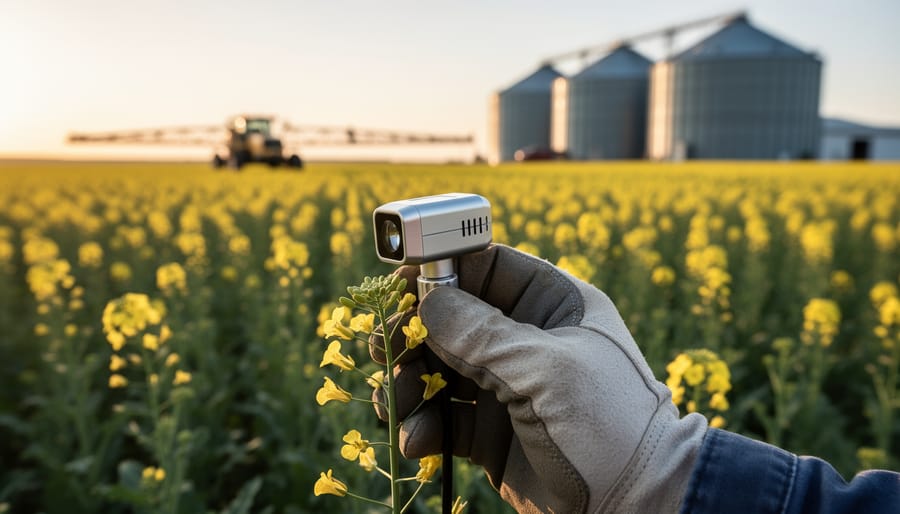
Listen for the sounds you can’t hear. That’s the breakthrough Alberta farmers are using to detect pest infestations weeks before visible damage appears. Ultrasonic predictive maintenance technology, originally developed for industrial equipment monitoring, now identifies insect activity, fungal growth, and structural deterioration in grain storage facilities and standing crops by capturing high-frequency sound waves between 20-100 kHz—well beyond human hearing range.
When grain beetles chew through stored wheat or aphids puncture canola stems, they create distinct ultrasonic signatures. Portable sensors costing $800-$3,500 detect these patterns, allowing you to target treatments precisely rather than blanket-spraying entire fields. A 2023 trial at Lethbridge Research and Development Centre showed farmers reduced insecticide use by 43% while catching infestations seven days earlier than visual inspections alone.
The technology works through simple acoustic monitoring: mount sensors in storage bins or attach handheld units to field equipment during regular scouting. Software analyzes the sound patterns and alerts you to specific pest activity locations. Unlike thermal imaging that shows temperature changes after damage occurs, ultrasonic detection captures the actual feeding or movement sounds as pests arrive.
For Canadian operations managing 500+ acres or storing significant grain volumes, this technology fills the gap between scheduled inspections. You’re not replacing traditional scouting—you’re adding an early warning system that works 24/7, giving you time to respond strategically rather than reactively when pest populations explode.
What Ultrasonic Predictive Maintenance Actually Means for Your Farm
How Sound Waves Detect What Your Eyes Can’t See
Think of ultrasonic monitoring as giving your operation superhuman hearing. While human ears detect sounds between 20 Hz and 20,000 Hz, ultrasonic equipment picks up frequencies from 20,000 Hz up to 100,000 Hz and beyond – the range where many pest activities and equipment malfunctions become audible.
Here’s what makes this technology practical for Alberta farmers: insects like grain beetles, moths, and weevils produce sounds as they chew, move, and communicate within stored grain or structural spaces. These high-frequency sounds travel through materials differently than regular noise, creating distinct patterns. Similarly, failing bearings in irrigation pumps or ventilation systems emit ultrasonic friction sounds long before visible damage occurs.
Modern ultrasonic detectors work by converting these high-frequency sounds into signals you can analyze through a handheld device or smartphone app. The equipment uses specialized microphones and algorithms that filter out background noise from wind, machinery, or daily farm activities. What you’re left with are the specific acoustic signatures that indicate problems.
The real advantage? Early detection means early action. Research from Canadian grain storage facilities shows ultrasonic monitoring can identify pest activity 2-3 weeks before populations reach treatment thresholds. For equipment, detecting bearing wear at the ultrasonic stage gives you time to schedule maintenance during slower periods rather than facing emergency breakdowns during critical operations like harvest or irrigation season.
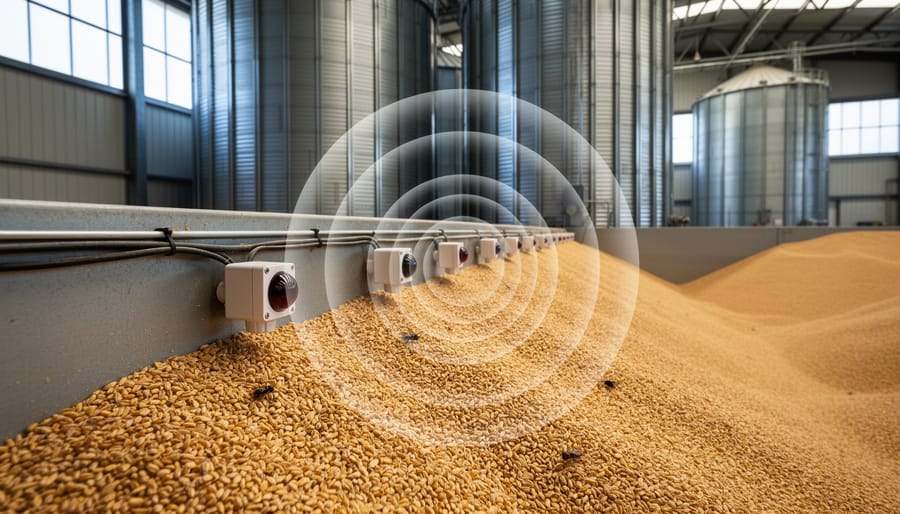
From Factory Floors to Alberta Fields
Predictive maintenance started in manufacturing plants during the 1980s, where engineers used sensors to detect equipment failures before they happened. By monitoring vibrations, temperature, and sound patterns in machinery, factories could prevent costly breakdowns and keep production lines running smoothly. This approach saved manufacturers millions by scheduling repairs based on actual equipment condition rather than arbitrary timelines.
Fast forward to today, and this same proven technology has found a new home in agriculture. Just as factory sensors listened to the hum of motors to predict problems, smart sensor technology now monitors the subtle sounds of insect activity in grain bins and field environments. The principles remain identical – detect early warning signs before damage occurs.
For Alberta farmers, this evolution is particularly relevant. Instead of monitoring ball bearings and conveyor belts, ultrasonic sensors track grain-damaging insects like rusty grain beetles and saw-toothed grain beetles. The technology translates decades of industrial reliability into practical pest management, giving you the same early-warning advantages that have protected factory operations for years. It’s proven technology, simply applied to a different challenge.
Real Pest Problems This Technology Catches Early
Stored Grain Insects Before They Multiply
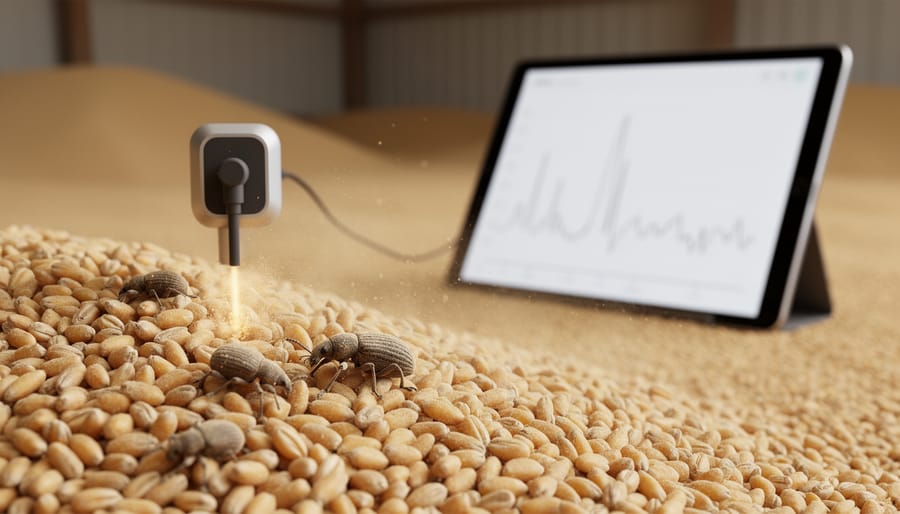
Stored grain protection takes on new precision with ultrasonic sensors that can detect pest activity weeks before visual inspection would reveal a problem. These sensors pick up high-frequency sounds produced by beetle larvae, weevils, and moths as they chew through grain kernels and move through stored product.
The technology works by detecting sounds in the 20-70 kHz range, well above human hearing. When grain-boring insects feed, they create distinct acoustic signatures that sensors can identify even at low infestation levels. Research shows ultrasonic monitoring can detect as few as 2-5 insects per kilogram of grain, compared to traditional sampling methods that typically miss infestations below 10-15 insects per kilogram.
Detection timeframes matter significantly for your bottom line. Ultrasonic sensors typically identify pest activity 3-6 weeks earlier than visual inspection, giving you critical time to implement targeted fumigation or cooling strategies before populations explode. One Alberta grain producer using this technology reported detecting rusty grain beetle activity in a 500-tonne wheat bin within 48 hours of initial infestation, preventing an estimated $8,000 in potential losses.
The sensors monitor continuously, creating data logs that help you understand infestation patterns and optimize your storage management throughout the season.
Wood-Boring Insects in Orchards and Shelterbelts
Wood-boring insects pose a significant threat to Alberta’s fruit orchards and shelterbelt systems, causing hidden damage that often goes unnoticed until trees are severely compromised. Ultrasonic sensors offer orchardists a proactive solution by detecting the feeding sounds of larvae tunneling beneath bark—activity invisible to the naked eye.
Common culprits include bronze birch borers, poplar borers, and various bark beetle species that attack stressed trees in shelterbelts and production orchards. These pests create galleries that disrupt water and nutrient flow, weakening trees and reducing fruit yields. Traditional monitoring relies on visible exit holes or sawdust, but by then, extensive damage has occurred.
Ultrasonic devices detect larval feeding vibrations at frequencies between 20-100 kHz, allowing farmers to identify infested trees weeks or months before external symptoms appear. This early warning enables targeted pesticide applications or removal of heavily infested trees before beetles emerge and spread to healthy specimens.
For Alberta growers managing apple orchards or protective shelterbelts, this technology represents a practical investment. Devices range from 800 to 2,500 dollars depending on features, with many farmers monitoring high-value sections first. The approach integrates seamlessly with existing integrated pest management programs, helping preserve both productive orchards and essential windbreak systems.
Rodent Activity in Storage and Field Margins
Ultrasonic sensors detect the high-frequency sounds rodents make during normal activities—vocalizations between 20-100 kHz that humans can’t hear. When mice or voles move through grain bins or field margins, their communication, gnawing, and movement patterns create distinct acoustic signatures. This technology lets you identify growing populations weeks before you’d notice chewed bags or droppings.
In Alberta grain storage facilities, sensors positioned at 15-metre intervals can map activity hotspots. Increased ultrasonic frequencies during evening hours signal active feeding, while daytime sounds indicate established nesting sites. One Lethbridge-area farmer detected a 400% spike in rodent vocalizations near his canola storage in October 2023, allowing intervention before any grain contamination occurred.
The system tracks changes over time, establishing baseline activity levels for your operation. When readings exceed normal patterns by 30% or more, it triggers alerts for inspection. This early warning approach prevents the exponential population growth that happens once rodents establish themselves, protecting both stored crops and field-edge habitats where they often overwinter before spring field invasion.
Canadian Case Study: Alberta Grain Storage Success
When Trevor Morrison decided to implement ultrasonic monitoring at his 8,000-tonne grain storage facility near Lethbridge, Alberta, he was skeptical but desperate. Two consecutive years of pest-related grain downgrades had cost him nearly $47,000, and traditional inspection methods weren’t catching problems early enough.
Morrison partnered with Prairie Grain Solutions in September 2021 to install an ultrasonic pest detection system across his facility’s six storage bins. The implementation timeline proved surprisingly straightforward. Initial assessment and sensor placement planning took just three days, with the actual installation completed within a week. The system became fully operational by early October, just as harvest was wrapping up.
The technology works by detecting high-frequency sounds that insects produce during movement and feeding, sounds completely inaudible to the human ear. Morrison’s facility now has sensors positioned strategically throughout each bin, monitoring 24/7 and sending alerts directly to his smartphone when activity levels exceed preset thresholds.
The results speak for themselves. During the 2021-2022 storage season, Morrison’s system detected early-stage pest activity in Bin 3 within just 11 days of infestation beginning. Traditional methods would have likely missed this for weeks. Quick intervention with targeted fumigation contained the problem to approximately 200 tonnes rather than potentially spreading throughout the entire 1,400-tonne bin.
By the numbers, Morrison’s investment has proven worthwhile. The complete ultrasonic system cost $18,500 for installation, with annual monitoring service fees of $2,400. In return, he’s documented savings of $31,200 in prevented grain downgrades during the first 18 months alone. Beyond direct financial benefits, Morrison reports spending 60 percent less time on manual inspections, freeing him up for other farm operations.
Perhaps most impressive is the peace of mind factor. Morrison can now monitor his entire facility from his kitchen table or while attending his daughter’s hockey games in Calgary. The system has detected three separate pest emergence events before they became serious problems, maintaining his Grade 1 wheat designation throughout two complete storage cycles.
For Morrison, the technology transformed grain storage from constant worry into manageable routine, proving that precision agriculture tools can deliver measurable returns even for mid-sized operations.
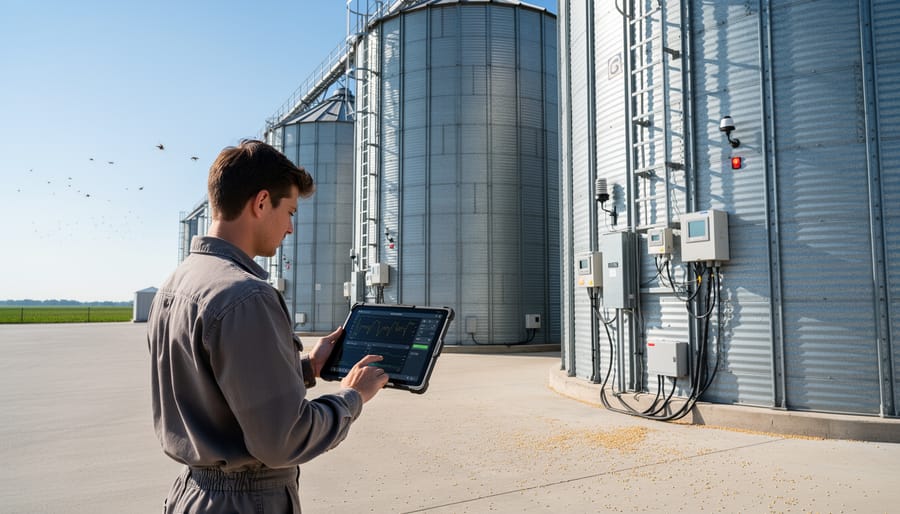
How It Works on Your Operation
Equipment Options and What They Cost
Ultrasonic monitoring equipment varies widely in price and capability, helping you find the right fit for your operation size and budget. Entry-level handheld ultrasonic detectors start around $1,500 to $3,000 CAD and work well for smaller farms or those testing the technology. These portable units detect airborne ultrasonic frequencies and help identify insect activity in grain storage or specific crop areas.
Mid-range systems, priced between $5,000 and $15,000 CAD, offer enhanced features like data logging, wireless connectivity, and multiple sensor heads. These suit medium-sized operations wanting to monitor several locations simultaneously. Many Alberta producers find this range provides excellent value for monitoring grain bins and processing facilities.
Advanced systems with permanent installations, cloud-based analytics, and automated alerts range from $20,000 to $50,000 CAD. Large commercial operations benefit most from these comprehensive solutions that integrate with existing farm management software.
Key features to prioritize include battery life for portable units, sensitivity adjustments for different pest types, and user-friendly interfaces. Weather resistance matters for outdoor applications, while data storage capacity becomes essential when monitoring multiple sites. Consider starting with a basic handheld unit to familiarize yourself with ultrasonic detection before investing in permanent infrastructure. Many suppliers offer demonstration units, allowing you to test equipment under your specific conditions before purchasing.
Where to Place Sensors for Best Results
Proper sensor placement makes the difference between catching issues early and missing them entirely. In grain storage facilities, position ultrasonic sensors at points where warm air meets cooler surfaces, typically near ventilation systems, wall junctions, and roof areas where condensation encourages pest activity. Mount sensors 1.5 to 2 metres above grain level for optimal detection range.
For field monitoring, place sensors along field edges and near known wildlife corridors where rodents and larger pests typically enter. In Alberta’s climate, focus on south-facing areas that warm first in spring, as these attract pest activity earlier in the season.
Equipment monitoring requires sensors near motor bearings, hydraulic systems, and gearboxes where friction generates ultrasonic signatures before visible damage occurs. In cold Alberta winters, pay special attention to equipment that cycles between heated storage and outdoor temperatures, as thermal stress accelerates wear patterns.
Alberta producer James Kowalski from Leduc County found success placing sensors every 30 metres in his 50,000 bushel storage facility. “We caught a hot spot developing near our aeration fan within 48 hours, preventing what could have been significant grain loss,” he explains. Position sensors away from direct airflow and ensure clear sight lines free from dust accumulation for consistent readings throughout the season.
Reading the Data Without a PhD
Modern ultrasonic systems are designed with farmers in mind, not engineers. Most platforms display data through simple traffic light indicators: green means equipment is running normally, yellow signals early warnings requiring attention within days or weeks, and red demands immediate action. You’ll receive alerts directly to your smartphone or computer, similar to weather notifications you already use.
Typical threshold readings work like this: baseline decibel levels under 35 dB indicate normal operation, 35-50 dB suggests developing issues like bearing wear or belt looseness, while readings above 50 dB signal serious problems requiring prompt maintenance. Many Alberta producers integrate these systems with existing farm management software, allowing ultrasonic data to sync alongside grain moisture readings and equipment logs.
Ryan Kowalchuk from Camrose notes, “The system learns your equipment’s normal patterns within two weeks. After that, it only flags genuine concerns, not false alarms.” Most platforms offer mobile apps with clear explanations for each alert, including recommended actions and urgency levels. You don’t need technical training to understand when your grain dryer bearing needs replacement before harvest begins.
Expert Perspective: What Agronomists Are Saying
Dr. Sarah Chen, an agricultural technology specialist with Alberta Agriculture and Irrigation, has been working closely with producers implementing ultrasonic monitoring systems across the province. “What we’re seeing is a fundamental shift in how farmers approach pest detection,” she explains. “Instead of relying on weekly visual inspections that might miss early infestations, ultrasonic sensors provide continuous monitoring that catches problems when populations are still manageable.”
Dr. Chen emphasizes that ultrasonic technology fits naturally into integrated pest management strategies. “The real value isn’t just detection – it’s the timing. When you know exactly when pest activity begins, you can make more strategic intervention decisions, whether that’s releasing beneficial insects, applying targeted treatments, or adjusting storage conditions.”
From her field observations, the technology proves particularly valuable in Alberta’s grain storage facilities. “We documented one producer who reduced pesticide applications by 60 percent while actually improving pest control outcomes. The sensors detected rusty grain beetle activity three weeks earlier than traditional monitoring methods would have, allowing for precise intervention before population explosion.”
She notes that successful implementation requires understanding the system’s capabilities and limitations. “This isn’t a replacement for agronomic knowledge – it’s a tool that enhances decision-making. Farmers still need to interpret the data within the context of their specific operation, crop types, and environmental conditions.”
For producers considering adoption, Dr. Chen recommends starting with high-value storage areas. “Begin where the economic impact of pest damage is greatest. Learn the system’s patterns, build confidence with the data, then expand coverage as you see results.”
Making It Work in Alberta’s Climate
Alberta’s climate presents unique considerations for ultrasonic monitoring systems, but with proper planning, these tools can thrive in prairie conditions. Temperature extremes require careful equipment selection, as sensors must withstand winter lows reaching -40°C and summer highs exceeding 30°C. Many modern ultrasonic devices feature weatherproof housings rated for Canadian conditions, though storing portable units indoors during the harshest months extends their lifespan.
Timing your monitoring season strategically maximizes effectiveness. Begin installations in early May once soil temperatures warm and insect activity resumes. Focus efforts from June through September when pest populations peak and crop damage potential is highest. In southern Alberta, warmer microclimates may warrant extended monitoring into early October, particularly for stored grain facilities.
Regional pest pressures shape monitoring priorities. Bertha armyworm, wheat midge, and grasshoppers create distinct acoustic signatures that ultrasonic systems can detect early. Understanding your specific pest calendar helps you anticipate threats and adjust sensor sensitivity accordingly. For example, wheat midge monitoring intensifies during late June flowering periods.
Integration with existing climate-resilient farming practices strengthens overall farm health. Combine ultrasonic data with weather station information and soil moisture readings for comprehensive decision-making. Local agricultural extension offices can provide guidance on calibrating systems for Alberta-specific conditions, ensuring your investment delivers reliable pest intelligence throughout the growing season.
Beyond Pest Control: Other Farm Applications
While ultrasonic predictive maintenance excels at pest detection, the equipment delivers significant additional value across your entire farming operation. This versatility makes the technology investment more practical for Canadian producers looking to maximize their precision agriculture tools.
Equipment monitoring represents one of the most valuable secondary applications. Ultrasonic sensors detect early signs of bearing failure in motors, pumps, and irrigation systems by identifying friction patterns before catastrophic breakdowns occur. Alberta farmers using this technology report catching problems in grain handling equipment weeks before visible damage appears, potentially saving thousands in emergency repairs during critical harvest periods.
Irrigation system leak detection offers another practical benefit. Ultrasonic devices identify pressurized leaks in underground lines and pivot systems that waste water and energy. Given Alberta’s water management regulations and rising utility costs, early leak detection protects both your operating budget and compliance status.
Structural integrity monitoring extends the technology’s usefulness to buildings and storage facilities. The sensors detect stress fractures in grain bins, barn structures, and equipment sheds before they compromise safety or contents. This preventative approach integrates well with natural pest control solutions by ensuring your storage facilities remain secure against both structural failure and pest infiltration.
By leveraging ultrasonic technology across multiple applications, you transform a single-purpose pest monitoring investment into a comprehensive farm management tool that enhances operational efficiency throughout your entire agricultural system.
Ultrasonic predictive maintenance represents a practical leap forward for Canadian farmers committed to protecting their operations while embracing sustainable practices. By detecting pest activity and equipment issues days or weeks before visible damage occurs, this technology delivers real economic value through reduced crop losses, lower chemical inputs, and optimized maintenance schedules. Alberta farmers who’ve adopted ultrasonic monitoring report significant savings on both pesticide applications and emergency equipment repairs, demonstrating clear return on investment within a single growing season.
The early detection advantage aligns perfectly with integrated pest management strategies, allowing you to make informed decisions about interventions and potentially reducing reliance on broad-spectrum treatments. When combined with other precision agriculture tools like pest-resistant crop varieties, ultrasonic systems strengthen your overall farm resilience.
If you’re considering ultrasonic monitoring for your operation, start by connecting with agricultural extension offices, equipment dealers offering demonstration programs, or neighbouring farms already using the technology. Many suppliers provide trial periods or case-specific consultations to help you determine the right system configuration. This investment in precision technology positions your farm for long-term sustainability and profitability in an increasingly competitive agricultural landscape.