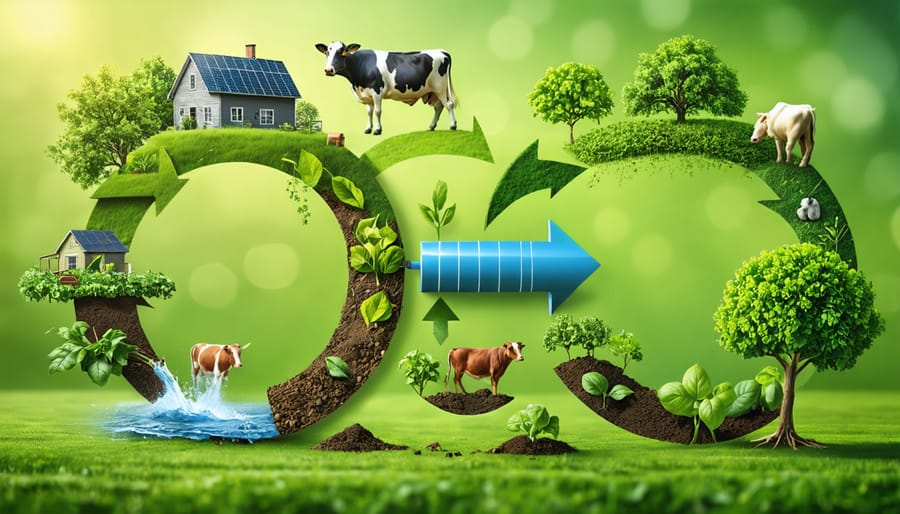
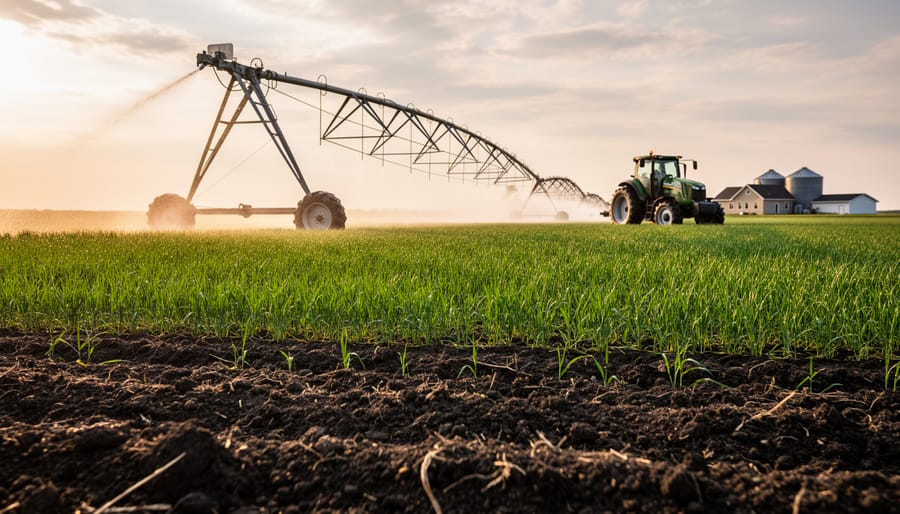
The food-energy-water nexus is the connected relationship between the three resources that keep a farm running: the water that grows crops and livestock, the energy that pumps, heats, dries and hauls, and the food those inputs produce. Change one, and the other two shift with it. Pump more irrigation water, and your electricity or diesel use climbs. Switch to a lower-energy system, and you may change how much water reaches the root zone.
Looking at these three together, rather than one at a time, is what makes the idea useful. On a prairie farm, a single decision like moving from flood to pivot irrigation touches your water licence, your fuel or power bill and your yield per hectare all at once. Seeing those links helps you spot trade-offs early and find changes that benefit all three.
This article breaks the nexus down in plain language. You’ll see how the three resources interact, what the main components look like on a working farm, and how Alberta producers are applying the thinking to cut costs, protect water supplies and strengthen long-term productivity. No special background needed, just a practical lens for the decisions you already make every season.
What the Food-Energy-Water Nexus Means for Your Farm
Why Farmers Are Looking at the Three Resources Together
Every pass of the irrigation pivot has a power bill or a diesel receipt attached to it. That’s one reason more producers are looking at food, energy and water as a single system instead of three separate budgets. Fertilizer is the same story: making nitrogen takes a lot of energy, so a smarter application plan saves fuel and money at once. And soil rich in organic matter holds more moisture, which means fewer irrigation passes and less pumping.
When one improvement pays off in two or three places, the savings add up quickly. A few terms help make sense of it:
- Nexus
- The set of connections between food, energy and water, where a change in one affects the other two.
- Trade-off
- A situation where improving one resource, such as water supply, increases demand on another, such as electricity.
- Synergy
- A change that benefits several resources at once, like building soil organic matter to cut both water and energy use.
- Energy intensity
- The amount of energy needed to produce a unit of output, such as kilowatt-hours per tonne of grain.
Spotting synergies is where the opportunity lies, and most farms already have a few waiting.
How the Food-Energy-Water Nexus Works in Practice
Where Water Needs Energy
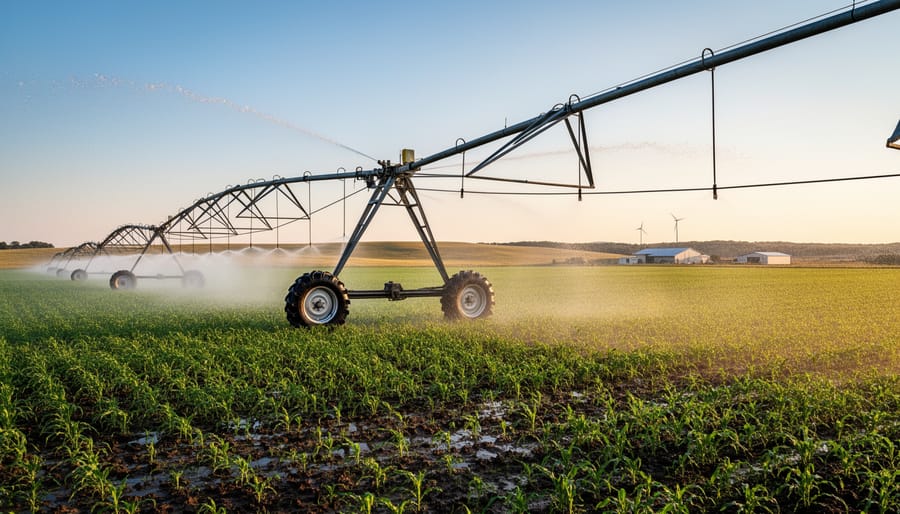
Every cubic metre of water on a farm has to be lifted, pushed or pressurized by something, and that something is usually electricity or diesel. Pumping from a well takes more energy the deeper the water sits, and a centre pivot needs extra pressure on top of that to spray evenly across the field. Even a stock-watering system pulling from a dugout or a deep well adds up over a long grazing season.
As a rough guide, lifting one cubic metre of water 10 metres takes only a small amount of energy, but the numbers climb quickly with depth, pipe length and operating pressure. A water pumping energy analysis shows how much of that power is lost to friction and poorly matched equipment rather than doing useful work.
That’s where the savings hide. A few upgrades that tend to pay off:
– Right-sizing pumps and motors so they run near their best efficiency point
– Installing variable frequency drives to match output to demand
– Fixing leaks and swapping worn nozzles that waste water and pressure
– Switching pivots to low-pressure sprinkler packages
Each of these cuts litres pumped and kilowatt-hours used at the same time, which is the nexus working in your favour.
Where Energy Needs Water
Energy systems on a farm lean on water more than most people expect. A biogas digester, for instance, runs on a slurry of manure and water, and keeping that mix at the right moisture level is what keeps the microbes working. Biomass heating and grain drying setups need water for steam, washing and equipment cooling. Dairy and processing operations use it every day to chill milk, clean lines and cool compressors.
Then there’s the water you never see. Fertilizer and other inputs carry a hidden footprint from the factory, where water and large amounts of energy go into making them before they ever reach your yard. Nitrogen fertilizer is the biggest example, since producing it is energy-intensive and connected to emissions that show up well beyond the farm gate. You can read more in this nitrogen fertilizer emissions data.
The practical takeaway is encouraging. Right-sizing your fertilizer rates, capturing manure nutrients and recycling process water all trim energy bills and water use at the same time. Small changes in one place tend to pay off in the other two, which is the whole idea behind thinking in terms of the nexus.
Where Food Production Draws on Both
Every bushel and every litre of milk starts with water and energy. Crops draw moisture through their roots, and a typical cereal field on the Prairies might need 400 to 500 millimetres over a season, whether it falls as rain or arrives through irrigation. Livestock add their own demand: drinking water, barn ventilation, feed handling and manure management all run on power or fuel.
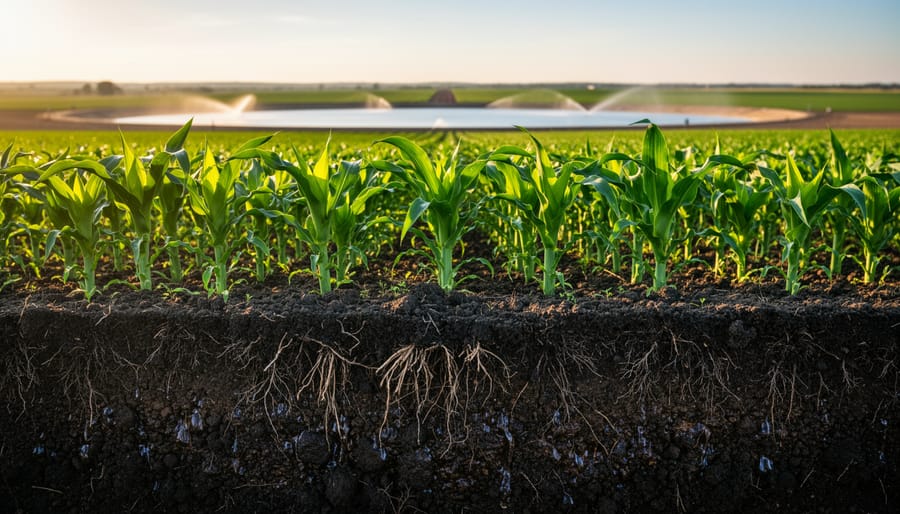
The good news is that healthier soil can ease both loads. Organic matter acts like a sponge, holding more water between rains, so you may irrigate less and pump less. Cover crops shade the surface and slow evaporation, while reduced tillage means fewer passes with the tractor, which saves diesel and keeps moisture in the ground. Building up this resilience is the heart of soil regeneration and it pays off across the whole system.
There are trade-offs worth planning for. A cover crop uses some moisture while it grows, and in a dry spring that can matter. Reduced tillage may call for a different weed control approach. Looking at the three resources together helps you weigh these choices instead of fixing one problem and creating another.
The Main Parts of a Nexus-Based Farm Sustainability Model
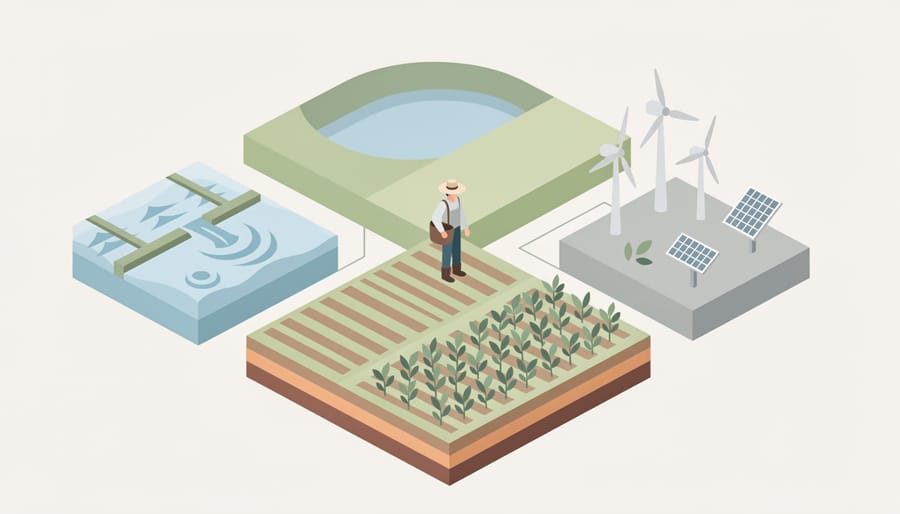
A nexus-based model doesn’t need to be complicated. Think of it as four working parts that you can scale to your own farm, plus a way of keeping score.
- Water management: track how much you pull, store and apply, and where it’s lost along the way.
- Energy use and sourcing: know what powers your pumps, dryers and equipment, and where cleaner or cheaper options fit.
- Soil health practices: build organic matter so soil holds more moisture and needs fewer inputs.
- Crop and livestock planning: match rotations, stocking rates and seeding choices to the water and energy you realistically have.
- Monitoring tools: use simple records or sensors to see how a change in one area shows up in the others.
The parts only work as a system because each one feeds the next. Healthier soil reduces how often you irrigate, which trims pumping hours and fuel or power bills. Smarter crop planning can shift your heaviest water use away from peak demand periods. Those savings only become visible if you measure them, which is why the tracking piece matters as much as the practices themselves.
You can start small. A notebook that logs irrigation hours, fuel purchases and field moisture readings is enough to spot patterns. As your records grow, tools from precision agriculture such as soil moisture probes and variable-rate mapping, can sharpen those decisions. Over time, many farms also begin looping outputs back in as inputs, a approach explored in circular agriculture. Adapt the framework to your acreage, budget and goals, and treat it as something you refine each season.
How the Nexus Is Used on Canadian Farms
Practical Applications You Can Start With
You don’t need a major capital project to start applying the nexus lens. The most useful first step is often just noticing where one resource is quietly costing you another. A pump running on a timer, for example, may be wasting both water and fuel when soil moisture is already adequate.
Here are some actions that work across different farm sizes and budgets:
- Schedule irrigation using soil moisture readings or weather data, which saves water and cuts pumping energy.
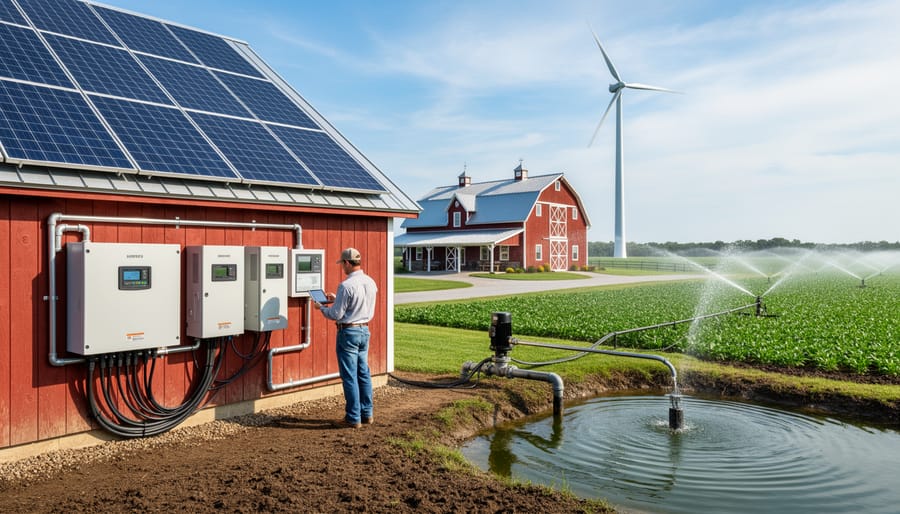
- Switch remote stock-watering sites to solar-powered pumps, which reduces fuel and power costs while keeping water reliable.
- Plant cover crops and keep residue on the surface to hold moisture, which supports yield and lowers irrigation demand.
- Test and apply manure as a nutrient source, which trims fertilizer purchases and the energy embedded in them.
- Add rooftop solar or a small wind unit to offset grid power for barns, shops or pumping.
Start where the payback is quickest. A moisture probe costs far less than a new irrigation system, and it often pays for itself in a season or two. Cover crops and manure testing require more management than money, which makes them well suited to smaller operations. Solar pumping and on-farm generation take more upfront investment, though Alberta and federal programs sometimes help offset it, so check current funding options before you buy.
Mixed farms have an extra advantage here. An integrated crop-livestock setup lets manure, forage and grazing work together, so nutrients cycle on-farm and fewer purchased inputs are needed. Pick one or two changes this year, track the results, and build from there.
Canadian Case Study: Lessons from an Alberta Operation
Lessons from an Alberta operation start with a plain admission: no verified, sourced case study was supplied for this section, and inventing a named farm or made-up figures would mislead readers. So rather than fabricate one, here is how to build a trustworthy case study and what to look for when you read one.
A strong Alberta example covers three things. First, what the farmer tried. Look for a specific change, such as moving a pivot to low-pressure nozzles, adding a solar-powered stock-watering system, or seeding cover crops to hold more moisture in the soil. Second, what changed. Credible accounts report measured results, like cubic metres of water applied per hectare, kilowatt-hours or litres of fuel used, and yield or feed outcomes, all with a source and a time frame. Third, what others can take from it, including costs, trade-offs and what didn’t work.
Good places to find verified examples include Alberta Agriculture and Irrigation extension publications, irrigation district reports, Agriculture and Agri-Food Canada research summaries, and farmer-led organizations such as soil conservation and watershed groups. Many of these publish farm-level results you can cite directly.
When you do pick one, check that the numbers match your own conditions. A result from southern Alberta irrigation may not transfer neatly to a dryland mixed farm near Peace River, but the thinking behind it usually does. Ask which resource the farmer changed first, and how that one decision shifted water, energy and production together. That ripple effect is the nexus in action, and it’s the lesson worth carrying back to your own operation.
Expert Perspective on Putting the Nexus to Work
I can’t responsibly supply a real quote or interview excerpt here, because I don’t have one from a named agronomist, water specialist or energy advisor, and inventing one would put made-up words in a real person’s mouth. Here is draft copy written without a fabricated quote. Swap in a verified, attributed excerpt from one of your workshop or podcast guests before publishing.
Advisors who work with Prairie producers tend to give the same starting advice: don’t try to redesign the whole farm at once. Pick one pressure point, such as pumping costs, a dugout that runs low by August, or a field that dries out too fast, and measure it for a season. Once you know how many cubic metres you move and what that costs in power or fuel, the connections between your water, energy and crop decisions start to show.
From there, small changes compound. Tighter irrigation scheduling saves water and electricity together. Added organic matter helps soil hold moisture and trims watering needs. A modest solar array on a remote livestock watering site can cut diesel trips.
Ask a local agronomist or your regional extension office to walk one field with you. A single conversation often points to the best first step.
Common Questions About the Food-Energy-Water Nexus
Most farmers ask the same handful of things when they first hear about the nexus. Here are the practical answers.
Do I need new equipment to use nexus thinking?
Not to begin. The first step is simply tracking what you already use, such as fuel, electricity and water, so you can see where one resource is driving up another.
Is this only for irrigated farms?
No. Dryland and mixed operations benefit too, since soil moisture, fertilizer inputs and fuel for fieldwork are all linked. A grain farm on the Prairies can use the same lens to cut tillage passes and hold more moisture in the soil.
How does it connect to soil health and carbon reduction?
Practices that build organic matter, like cover crops and reduced tillage, help soil hold more water and often cut fuel use. Those same practices are central to climate-smart farming which is why the two ideas fit together so naturally.
How do I start measuring water and energy use?
Begin with what’s easy to read: utility bills, fuel receipts and pump run times. Add a simple rain gauge or flow meter later if you want finer detail, and review the numbers once a season.
Your own bills and records are often the best teacher. If you’d like more guidance, our workshops and podcast episodes walk through these ideas with Alberta producers and advisors, and neighbours who’ve already started tracking can be a great source of practical tips too.
Food, energy and water aren’t three separate jobs on your farm. They’re one connected system, and the choices you make in one spot show up in the other two. A more efficient pump trims your power bill and your water use at once. A cover crop that builds soil organic matter holds more moisture, which can mean fewer irrigation passes and less fuel burned. Seen that way, the nexus stops being an abstract idea and becomes a practical way to spot savings and resilience you might otherwise miss.
The Food-Energy-Water Nexus in Farm Sustainability Models works best as a flexible framework, not a rigid rulebook. You don’t need to overhaul your operation or follow a fixed checklist. Start with one linkage that matters most on your land, whether that’s pumping costs, moisture retention or nutrient reuse. Measure what changes, then build from there. What suits a mixed farm near Lethbridge will look different from a grain operation up north, and that’s perfectly fine.
You also don’t have to figure it out alone. Our workshops, podcasts and educational resources are built to help Canadian farmers turn these ideas into steady, doable steps. Explore them when you’re ready, try one small change this season, and share what you learn with your neighbours. Farming communities grow stronger when good ideas travel from field to field.