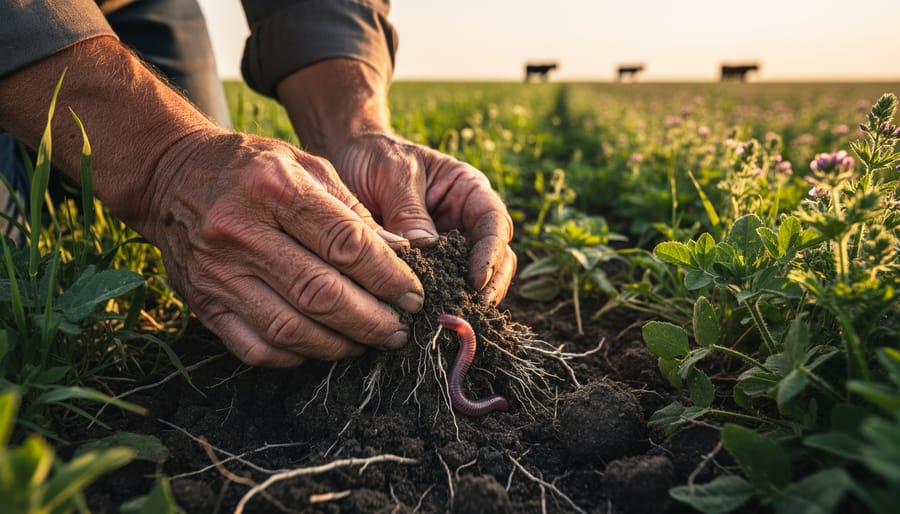
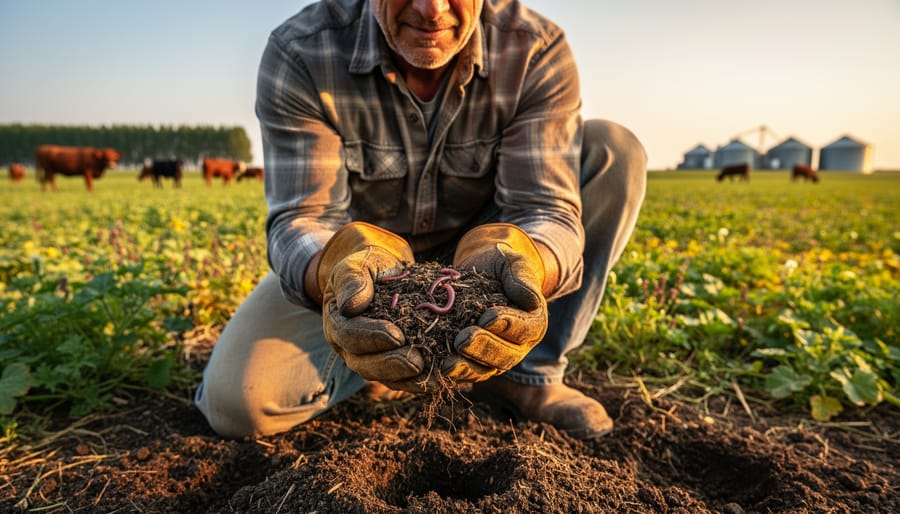
The soil beneath your feet holds more life than all the animals on Earth combined—yet decades of conventional farming practices have stripped Canadian agricultural land of up to 30% of its organic matter. Regenerative agriculture offers a proven path to reverse this damage while building more profitable, resilient farming operations.
These five core principles work together as an interconnected system: minimize soil disturbance, keep soil covered year-round, maintain living roots in the ground, maximize crop diversity, and integrate livestock strategically. Rather than fighting against natural processes, regenerative methods harness them to rebuild soil health, sequester carbon, increase water retention, and reduce input costs.
Alberta farmers like John Smith from Lacombe have documented 15% yield increases within three years of transitioning, alongside dramatic reductions in fertilizer expenses. Saskatchewan operations report improved drought resilience after just two growing seasons of implementing cover crops and reduced tillage. These aren’t isolated successes—they’re predictable outcomes when you align farming practices with ecological principles.
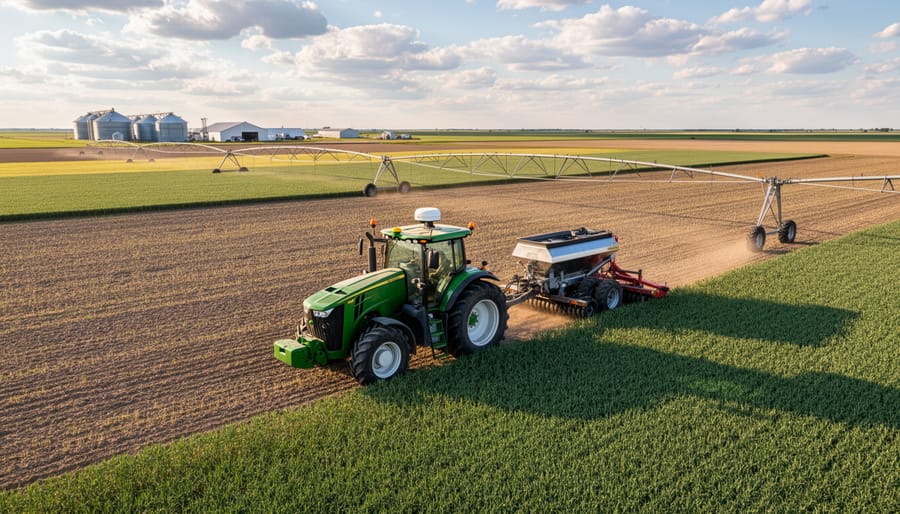
The shift doesn’t require abandoning modern equipment or accepting lower productivity. It means strategically adapting proven techniques to your specific operation, climate zone, and market realities. Whether you farm 160 acres or 16,000, these principles scale to fit your context while delivering measurable improvements in soil biology, water infiltration, and long-term land value.
Understanding how each principle functions—and more importantly, how they interact—empowers you to make informed decisions about implementation timing, equipment modifications, and crop selection. This knowledge transforms regenerative agriculture from an abstract concept into a practical framework for building agricultural systems that work with nature rather than against it.
What Makes Regenerative Organic Agriculture Different
You’ve likely heard about organic farming – avoiding synthetic pesticides and fertilizers, protecting soil health, and working with natural systems. It’s an important step forward from conventional agriculture. But regenerative organic agriculture takes this foundation further, moving beyond simply avoiding harm to actively improving the land.
Think of it this way: conventional organic farming maintains the status quo, keeping your soil healthy without depleting it. Regenerative organic agriculture, however, aims to leave your land better than you found it – building soil carbon, increasing biodiversity, and strengthening ecosystem resilience with every growing season.
This distinction matters especially here on the Canadian prairies, where our soils face unique challenges. We deal with short growing seasons, temperature extremes, variable precipitation patterns, and the legacy of decades of intensive tillage that has depleted organic matter in many fields. Our ecosystems need more than maintenance; they need restoration.
Regenerative practices address these challenges through a holistic approach. Rather than viewing your farm as separate components – soil here, livestock there, crops in another field – regenerative agriculture recognizes everything as interconnected. Healthy soil supports diverse plant life, which feeds beneficial insects and microorganisms, which in turn build more soil fertility. It’s a positive feedback loop.
For Alberta farmers specifically, this approach offers practical benefits beyond environmental stewardship. Farms using regenerative methods often see improved water retention during dry spells, better soil structure that withstands spring flooding, and increased resilience against our increasingly unpredictable weather patterns.
The five core principles of regenerative agriculture provide a framework for creating these improvements. They’re not rigid rules but flexible guidelines you can adapt to your specific operation, whether you’re managing 160 hectares or 1,600, growing grain or raising cattle. Understanding these principles helps you make decisions that build long-term farm health and productivity.
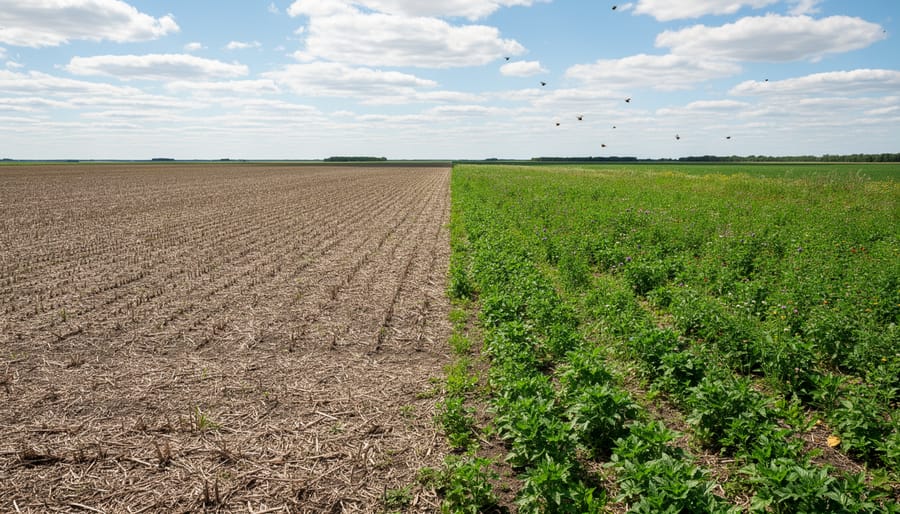
The Five Core Principles of Regenerative Agriculture
Principle 1: Minimize Soil Disturbance
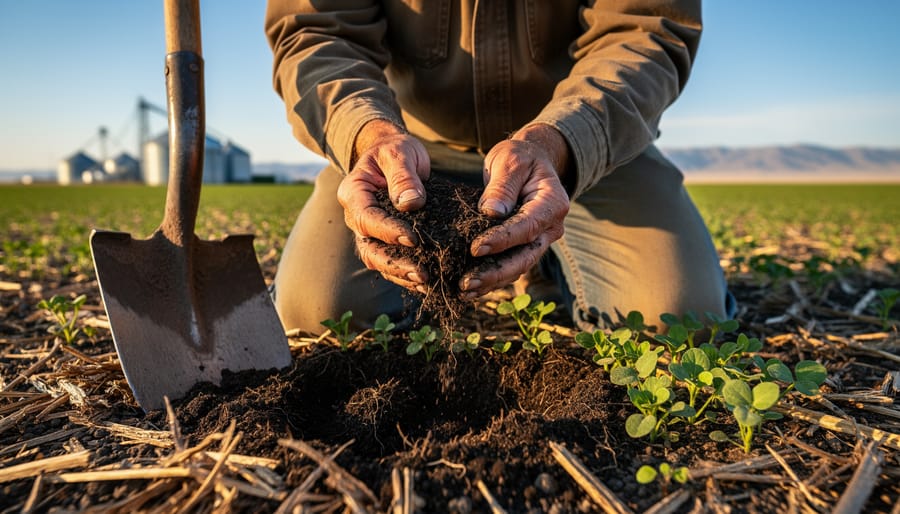
The foundation of regenerative agriculture starts with how we treat the soil itself. Minimizing soil disturbance through reduced or no-till farming helps preserve the intricate underground ecosystem that keeps our land productive for generations to come.
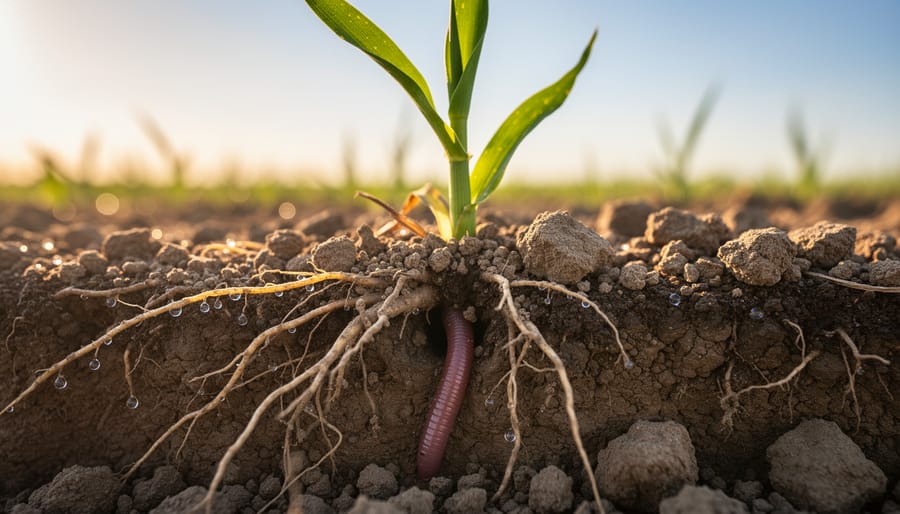
Traditional tillage breaks apart soil structure, releasing stored carbon into the atmosphere and disrupting the fungal networks that help plants access nutrients and water. When we flip or churn the soil repeatedly, we’re essentially destroying the neighborhood where billions of beneficial microorganisms live and work. No-till practices keep this underground community intact, allowing natural processes to build soil health over time.
For Alberta farmers, transitioning to reduced tillage presents unique considerations. Our shorter growing season and periodic drought conditions mean soil moisture retention becomes critical. The good news? Undisturbed soil with improved structure holds water more effectively, helping crops withstand dry spells.
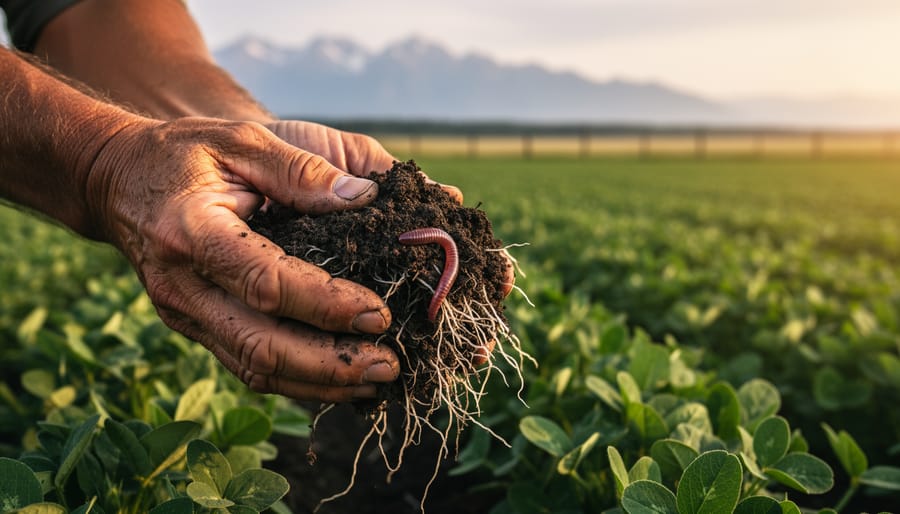
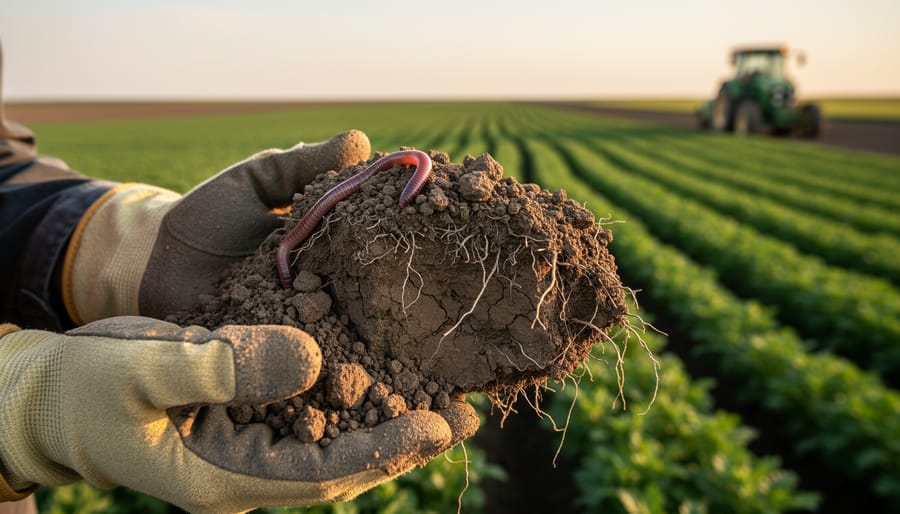
Kevin Elmy, who farms 1,200 hectares near Lethbridge, made the switch to no-till operations twelve years ago. “The first two years were honestly tough,” Kevin shares. “We dealt with increased weed pressure and had to learn new management strategies. But by year three, we noticed our soil holding moisture better during those critical July weeks. Now our fuel costs are down 60 percent, and we’re seeing earthworms in fields where I hadn’t spotted them in decades.”
Starting small makes sense for most operations. Consider beginning with one quarter section, learning as you go. Direct seeding equipment has improved dramatically, and many dealerships offer demos. The adjustment period typically spans three to five years as soil biology rebuilds, but the long-term benefits include reduced erosion, lower input costs, and improved water infiltration—advantages that directly impact your bottom line while building soil carbon reserves.
Principle 2: Maximize Soil Cover
Keeping your soil covered throughout the year is like giving it a protective blanket against Alberta’s challenging climate. Bare soil faces serious threats from wind erosion, temperature extremes, and moisture loss – issues that are particularly acute across the Prairies during our harsh winters and dry periods.
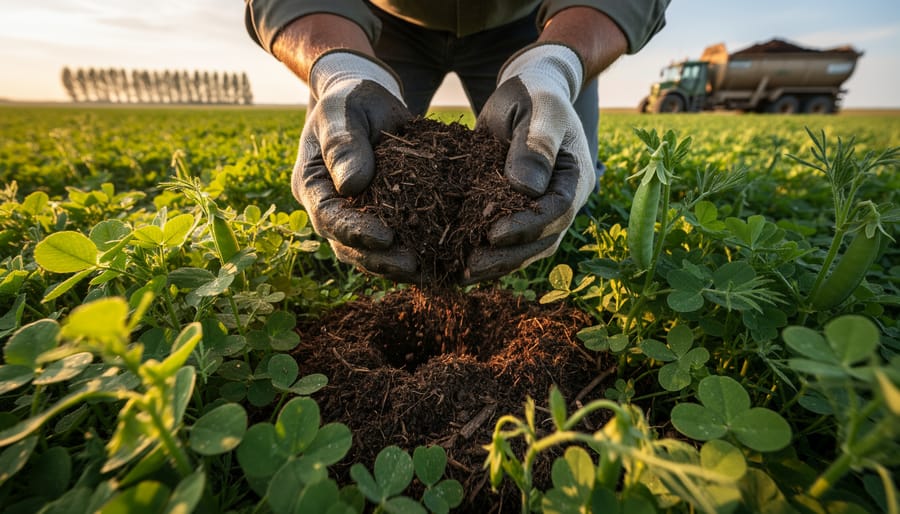
The concept is straightforward: cover crops, mulching, and maintaining crop residue create a physical barrier that shields soil from the elements. This protection prevents topsoil from blowing away during those strong chinook winds and helps retain precious moisture during dry spells. The organic matter from cover crops also feeds soil microorganisms, building the biological health that’s essential for nutrient cycling.
For Alberta’s short growing season, selecting the right cover crops requires strategic planning. Winter-hardy options like fall rye and winter wheat can be seeded after harvest and survive our cold temperatures, providing early spring coverage. For faster establishment, consider annual ryegrass, oats, or field peas, which can produce significant biomass in just 60 to 90 days. Many producers are finding success with multi-species blends that combine legumes for nitrogen fixation with grasses for biomass production.
Jason Lenz, a regenerative farmer near Red Deer, shares his approach: “We seed our cover crop mix immediately after wheat harvest in August. Even with our first frost hitting in September, we still get enough growth to protect the soil through winter. Come spring, that residue helps warm the soil faster and reduces our need for tillage.”
When selecting cover crops, consider your primary crop rotation, equipment availability, and termination timing. Start small with a test plot to understand what works for your specific conditions. The investment in seed pays dividends through improved soil structure, reduced erosion, and increased water infiltration – benefits that compound year after year.
Principle 3: Increase Plant Diversity
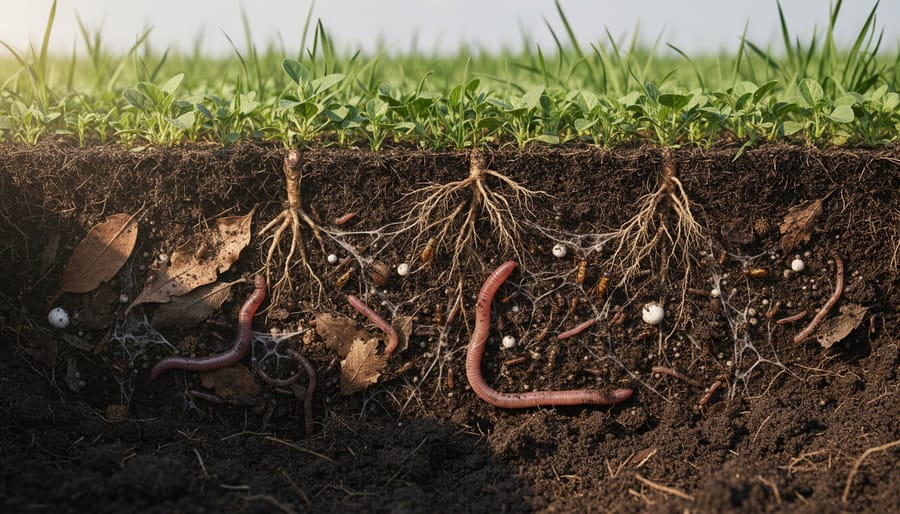
Building plant diversity into your operation creates a more resilient and productive farm ecosystem. Rather than relying on monocultures that deplete specific nutrients and invite pest problems, diverse plantings work together to strengthen soil health and reduce input costs.
Crop rotation remains one of the most effective diversity strategies for prairie farmers. Alternating cereal crops like wheat or barley with nitrogen-fixing legumes such as field peas or lentils breaks pest and disease cycles while naturally replenishing soil nutrients. Many Alberta producers have successfully implemented three- or four-year rotations that include canola, wheat, peas, and a cover crop phase, resulting in improved yields and reduced fertilizer expenses.
Intercropping takes diversity a step further by growing two or more crops together in the same field. Saskatchewan farmer Jennifer Hayes reports excellent results intercropping oats with field peas, noting that the oats provide structural support for the peas while both crops benefit from complementary root structures that access different soil nutrients. This approach has reduced her need for chemical inputs by 40 percent while maintaining strong yields.
Integrating livestock with cropping systems amplifies these benefits. Cattle grazing cover crops or crop residues return nutrients directly to the soil while their hooves create beneficial soil disturbance that promotes water infiltration. Trevor Morrison’s mixed operation near Red Deer demonstrates this integration beautifully, rotating sheep through his grain fields after harvest to control weeds and fertilize simultaneously.
The beauty of increased diversity lies in its self-reinforcing nature. More plant species support more beneficial insects and soil microorganisms, creating natural pest management systems. Different root depths and structures improve soil structure at multiple levels, enhancing water retention critical during Alberta’s dry spells. Start small by adding one new crop to your rotation or experimenting with companion planting in a test plot. The ecosystem benefits compound over time, building long-term resilience into your operation.
Principle 4: Keep Living Roots in the Soil Year-Round
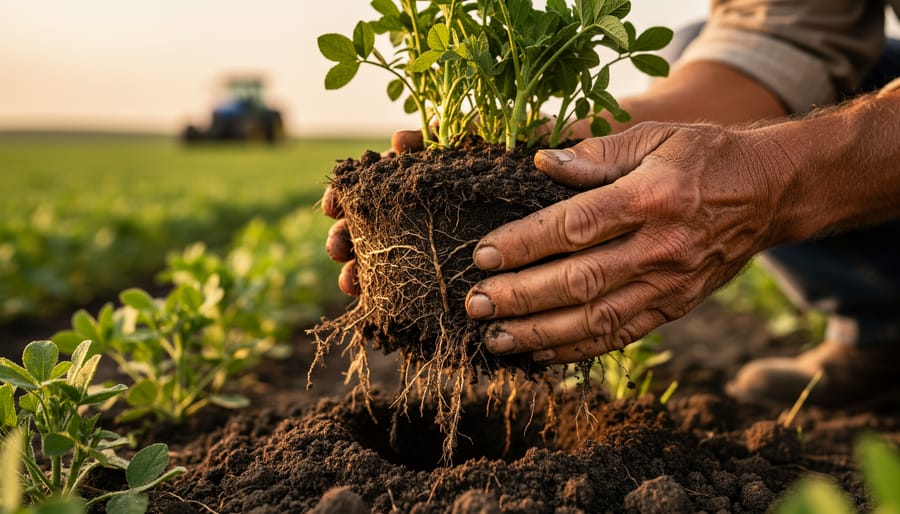
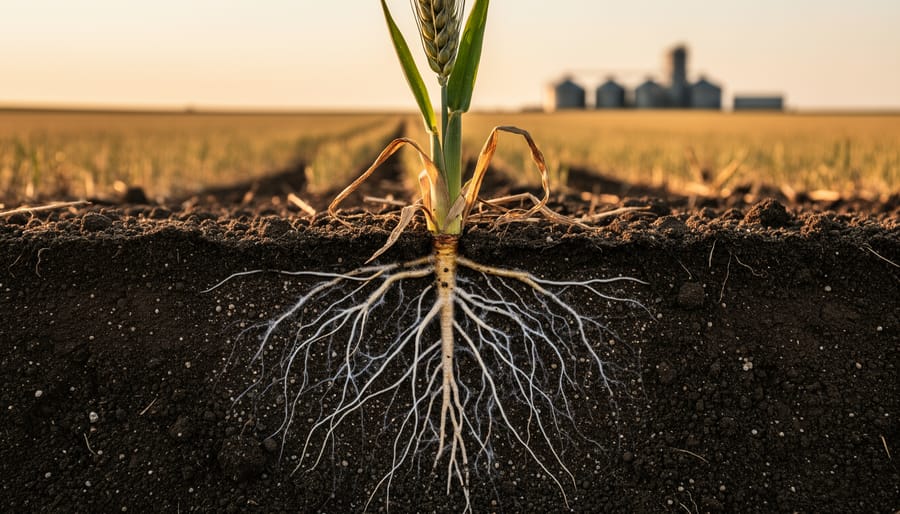
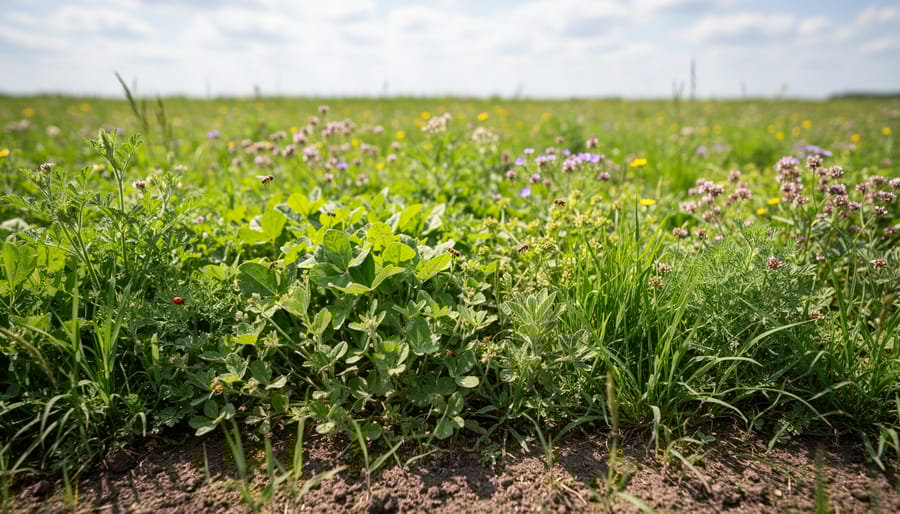
Living roots act as the underground workforce of healthy soil, constantly feeding beneficial microorganisms and building the foundation for productive farmland. When roots remain active in the soil throughout the year, they create channels that improve water infiltration, reduce erosion, and sequester carbon deep below the surface.
In Canadian climates, particularly across Alberta’s diverse growing zones, maintaining living roots year-round requires strategic planning. The key is understanding that roots don’t need to be above-ground green plants to provide benefits. Winter-hardy cover crops like winter rye, hairy vetch, and Austrian winter peas can survive harsh prairie winters while their roots continue supporting soil life beneath the snow.
Many progressive producers are incorporating perennial crops into their rotations. Deep-rooted perennials like alfalfa, sainfoin, and kernza wheat maintain active root systems for multiple years, dramatically increasing organic matter while providing valuable forage or grain. These systems work especially well in rotation with annual crops, giving soil biology consistent food sources.
For annual crop systems, the transition period between harvest and planting presents the biggest challenge. Successful farmers address this by planting cover crops immediately after harvest, using frost-seeding techniques in early spring, or inter-seeding covers into standing crops before harvest. Some Alberta producers have found success with relay cropping, where cover crops establish under the canopy of cash crops.
Extended grazing using swath grazing or bale grazing also keeps living roots engaged longer into winter. Animals concentrate nutrients while allowing plant roots to continue their work.
The investment in keeping living roots active pays dividends through improved soil structure, increased moisture retention, and reduced input costs. Even maintaining 60 to 70 percent ground cover with living roots during shoulder seasons creates measurable improvements in soil health.
Principle 5: Integrate Livestock
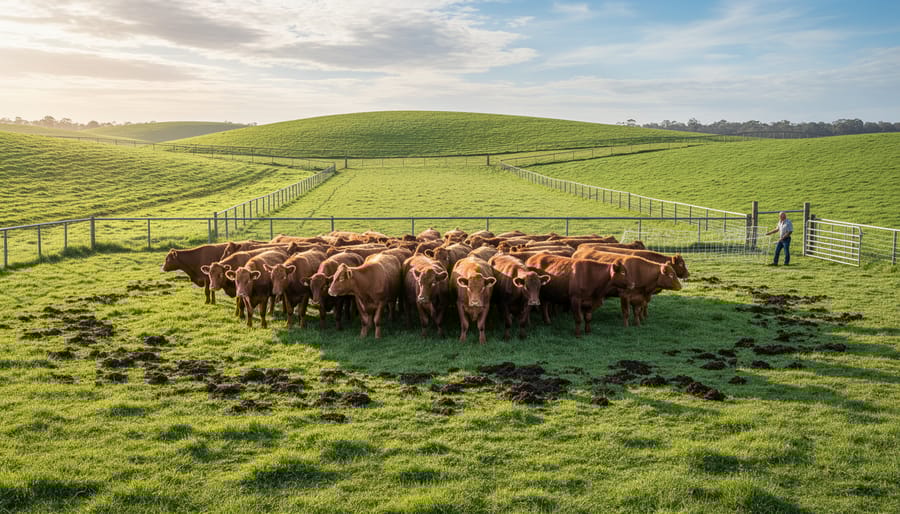
Livestock integration represents one of regenerative agriculture’s most powerful tools for building soil health and farm resilience. When managed properly, grazing animals mimic the natural relationship between herbivores and grasslands that historically created some of the world’s most fertile soils, including the Canadian prairies.
The key lies in strategic movement. Managed grazing systems involve moving livestock through paddocks before overgrazing occurs, allowing plants adequate recovery time. This approach stimulates root growth, increases organic matter deposition, and distributes manure evenly across the landscape. The result is improved nutrient cycling, enhanced soil structure, and significant carbon sequestration as healthy grasslands store atmospheric carbon below ground.
For Alberta farmers, rotational grazing offers practical advantages beyond soil health. Producers report reduced feed costs as pasture quality improves, decreased veterinary expenses due to healthier animals, and extended grazing seasons that lower winter feeding requirements. Mixed operations that integrate crops and livestock benefit from natural fertilization, breaking pest cycles, and diversified income streams that buffer against market volatility.
Consider the Turner family operation near Lacombe, Alberta, which transitioned to intensive rotational grazing in 2017. By subdividing pastures and implementing a planned grazing schedule, they increased stocking rates by 35 percent while improving soil organic matter from 3.2 to 4.8 percent within four years. Their cattle health improved measurably, and reduced input costs boosted their bottom line significantly.
Starting small makes integration manageable. Begin with a portion of your land, invest in temporary fencing for flexibility, and monitor pasture recovery carefully. Many Alberta producers find that even modest livestock integration enhances their operation’s ecological function and financial stability.
The Real-World Benefits for Canadian Farms
Canadian farmers who’ve embraced regenerative practices are seeing tangible improvements that translate directly to their bottom line and farm resilience. The results aren’t just theoretical—they’re measurable and financially significant.
Soil health improvements stand out as the most immediate benefit. Alberta producers transitioning to regenerative methods typically see organic matter increases of 0.5% to 1% within three to five years. This might sound modest, but each 1% increase in organic matter helps soil hold an additional 150,000 litres of water per hectare. For Prairie farmers facing increasingly unpredictable rainfall patterns, this enhanced water retention can mean the difference between a successful harvest and crop failure during dry spells.
The financial advantages are equally compelling. Farmers implementing cover cropping and reduced tillage report input cost reductions ranging from $50 to $125 per hectare annually through decreased fertilizer and fuel expenses. A 2022 study tracking Manitoba and Saskatchewan operations found that farms three years into regenerative transitions reduced synthetic nitrogen applications by 30% while maintaining or improving yields.
Carbon sequestration creates new revenue streams through carbon credits. Canadian farms practicing regenerative agriculture can sequester between 0.5 and 1.5 tonnes of carbon per hectare annually. With carbon credit programs becoming more accessible, this represents potential additional income of $20 to $60 per hectare depending on market conditions.
Biodiversity returns naturally as regenerative systems mature. Ontario farms implementing diverse crop rotations and minimizing chemical inputs documented 40% increases in beneficial insect populations within two growing seasons. These natural pest predators reduce the need for interventions while supporting pollinator health.
Climate resilience extends beyond water retention. Farms with higher organic matter and living root systems throughout the year show better recovery from extreme weather events. Alberta producers report improved soil structure that resists both wind erosion during dry periods and water erosion during heavy rains.
Premium market access provides another economic advantage. Regeneratively-grown products increasingly command price premiums of 10% to 25% from buyers prioritizing sustainability. Several Canadian grain buyers and processors now actively seek regeneratively-produced crops, creating market differentiation opportunities for forward-thinking producers.
Getting Started: First Steps for Alberta Farmers
Transitioning to regenerative agriculture doesn’t mean overhauling your entire operation overnight. The most successful Alberta farmers who’ve made this shift recommend starting small and building momentum gradually.
Begin by choosing just one or two principles that align with your current operation and address your most pressing challenges. If soil compaction is an issue, focus on minimizing tillage. Dealing with drought stress? Start incorporating cover crops to improve water retention. This incremental approach reduces financial risk while allowing you to learn and adapt.
The transition costs are real but manageable. Many Alberta farmers report that reduced input expenses begin offsetting initial investments within two to three years. Cover crop seeds might cost between $50 to $125 per hectare initially, but savings on fertilizer and improved yields often balance the equation quickly.
You’re not alone in this journey. Alberta Agriculture and Irrigation offers workshops and field days specifically focused on regenerative practices. Organizations like the Soil Conservation Council of Canada provide networking opportunities where you can connect with farmers already implementing these methods. Local agronomists experienced in regenerative systems can offer site-specific guidance tailored to Alberta’s diverse growing regions.
The learning curve exists, but Saskatchewan farmer John Hebert notes that “the soil teaches you what it needs if you’re willing to observe.” Start by attending a few workshops, joining online farming communities, and visiting neighbours who’ve already transitioned. Many experienced regenerative farmers welcome visits to their operations.
Government programs through Growing Forward and various provincial initiatives can help offset transition costs. Research available funding for soil health improvements, beneficial management practices, and conservation projects.
Remember, regenerative agriculture is a philosophy of continuous improvement rather than a destination. Your fellow Alberta farmers have walked this path successfully, and their collective knowledge strengthens the entire community. Start where you are, use what you have, and take that first step.
The journey toward regenerative agriculture represents more than a shift in farming practices—it’s an investment in the long-term health of your land, your livelihood, and the broader agricultural community. Whether you’re managing 40 hectares in Southern Alberta or 400 hectares in Saskatchewan, these five principles offer a proven pathway to building soil health, improving farm resilience, and creating sustainable profitability.
The encouraging reality is that you’re not alone in this transition. Across Canada, a growing network of farmers, agricultural advisors, and organizations are actively supporting regenerative practices. From regional workshops to peer learning groups, resources are increasingly accessible to help you navigate each step of the journey. Farmers who’ve adopted these principles report not just environmental benefits, but tangible economic improvements—reduced input costs, better drought resilience, and enhanced productivity over time.
Success stories from Canadian operations demonstrate that regenerative agriculture works in our climate and conditions. These aren’t experimental theories but practical strategies being implemented successfully on working farms today. The learning curve exists, but so does a supportive community ready to share knowledge and experience.
Start small if needed. Perhaps begin with cover cropping on a portion of your land or reduce tillage in one field. Each step forward contributes to regenerating your soil and building momentum for broader changes.
Take advantage of available resources, connect with local regenerative agriculture groups, and consider reaching out to farmers already practicing these principles. Your questions have likely been answered by someone who’s walked this path before. The transformation of Canadian agriculture toward regenerative practices is underway—and your farm can be part of this positive movement.