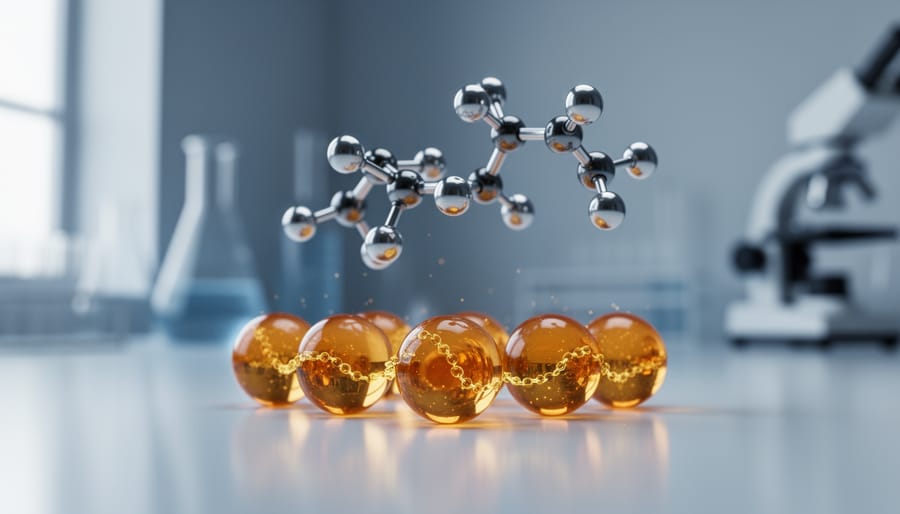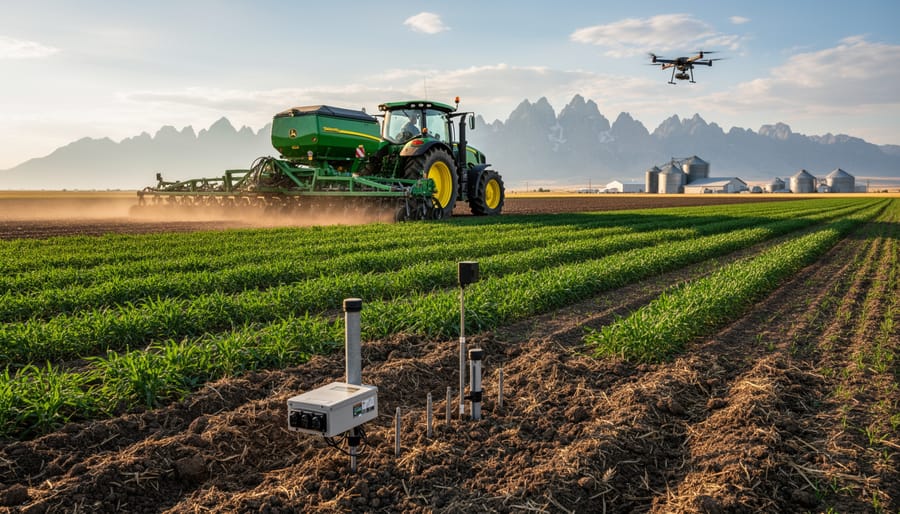
Tissue repair research in livestock is the study of how cattle, sheep, hogs and poultry heal after injury, and how lab-made peptides, such as those in the Researched Peptides Wolverine Stack (short chains of amino acids that act as chemical messages between cells), might support that healing. Sustainable farming research uses it to ask practical questions: can animals recover faster, lose less productivity and need fewer interventions along the way?
Healing isn’t one event. It moves through stages, from inflammation to new tissue growth to remodelling, and peptides are studied for the signals they send at each step. Compounds like these are examples of what lab researchers examine when they look at cell signalling and repair pathways. That work sits firmly in the research setting, and this article treats it that way.
For Alberta producers, the appeal is easy to see. A lame animal, a slow-healing wound or a post-surgical setback costs time, feed and labour, and fewer losses mean less waste per kilogram produced. Good research can help answer those questions without overpromising.
Key Takeaway: Healing research moves in stages, from lab cells to livestock models to farm-like conditions. Each stage answers a different question about safety and usefulness, so no single result tells the whole story.
Below, we’ll walk through how that pipeline works, the kinds of models researchers use, and where the science connects to everyday farm sustainability.
What Tissue Repair and Peptide Science Mean in Plain Language
Tissue repair is the body’s built-in way of fixing itself. When skin is cut, a tendon is strained, or the gut lining is irritated, cells move in to close the gap, lay down new tissue and rebuild strength. The same basic job happens in hoof horn, muscle and udder tissue, though each heals at its own pace. Hoof tissue, for example, grows out slowly over months, while skin can close in days to a couple of weeks.
Peptides come into the picture because healing runs on signals. A peptide is a short chain of amino acids, smaller than a full protein, that carries a message from one cell to another. Think of it as a short text message rather than a long letter. Researchers study these messages to understand what tells cells to grow, calm down or rebuild.
Here are the key terms in one place:
- Tissue repair
- The process by which damaged skin, muscle, tendon, gut lining or hoof tissue closes, rebuilds and regains strength.
- Peptide
- A short chain of amino acids that acts as a signal between cells, smaller than a protein.
- Livestock model
- A species of farm animal, such as cattle, sheep, pigs or poultry, used in a controlled study to learn how healing works.
- Inflammation
- The body’s early response to injury, which clears debris and fights infection before new tissue is built.
- Collagen
- The tough, fibrous protein that gives healed tissue its strength and structure.
- In vitro study
- Research done on cells or tissue in a lab dish, before any animal is involved.
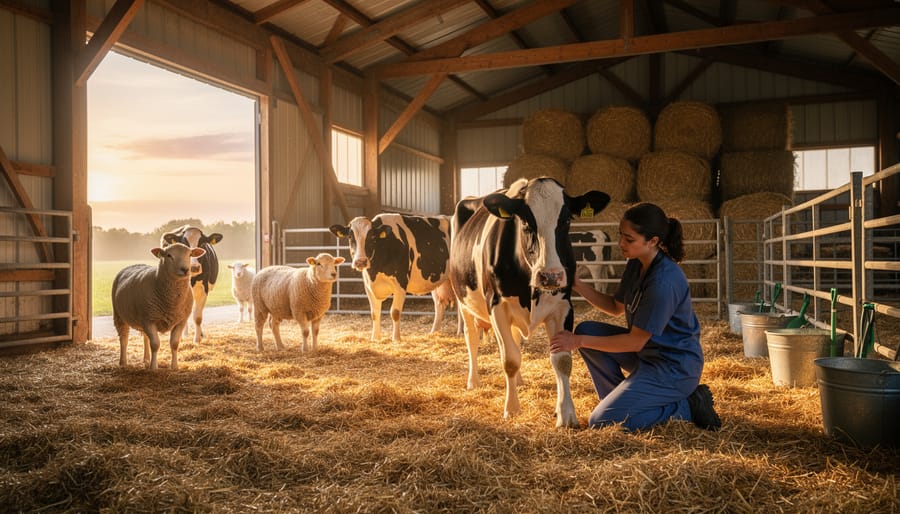
A livestock model simply means researchers study healing in the animal that matters most to the question. Cattle help with hoof, udder and hide problems. Sheep are useful for tendon and wound work. Pigs have skin that behaves much like human skin, and poultry offer insight into gut and skin health.
It helps to keep this work separate from everyday treatment on your farm. Research studies run under controlled conditions, with careful measurement and ethical oversight, to answer specific questions. They are not the same as a treatment plan from your vet, and the findings are knowledge, not ready-made farm products.
How Tissue Repair Studies Work, From the Lab Bench to the Barn
The Stages of Healing Researchers Watch
Healing follows a rough sequence, and researchers track each phase with its own set of measurements. A good overview of how tissue moves from the inflammation to remodelling phases shows why timing matters so much.
The first phase is inflammation. The body clears debris and fights off infection in the first days after injury. Researchers look for swelling, redness, heat and the types of immune cells arriving at the wound. Too little or too much inflammation can both slow recovery.
Next comes new tissue growth. Fresh blood vessels and connective tissue fill the gap. Here researchers measure how quickly a wound closes, often tracking the wound edge in millimetres over several days, along with how much new tissue has formed.
The last phase is remodelling, which can run for weeks or months. The new tissue reorganizes and gains strength. Scientists test tensile strength, meaning how much force, in newtons, the healed area can take before it gives way, and they check how closely it resembles the original tissue.
Where Peptides Fit In
Peptides are short chains of amino acids, and in the body they work a bit like text messages between cells. A cell releases a peptide, another cell picks it up, and that cell responds. Depending on the signal, the response might be to divide, to ramp up or calm down inflammation, or to produce more collagen, the protein that gives healing tissue its strength.
Their small size is a big part of why researchers like them. Because peptides are simple, scientists can study them one at a time in a dish, and learning how peptides are made shows why they can be built with precision for experiments.
This remains an active research area. Findings in cell cultures and controlled studies are early steps, not proven results for the barn.
From Cell Cultures to Livestock Models
Most tissue repair research follows a gradual path, with each step answering a narrower question before the next one begins.
It usually starts in the lab dish. Researchers grow cells, such as the ones that build skin or connective tissue, and watch how they respond to a peptide. This shows whether a signal speeds up cell growth or calms inflammation, without involving a live animal.
Promising results then move to small, controlled animal studies. A handful of animals, often sheep or pigs, let researchers see how healing plays out in a whole body, including how long a wound takes to close and how strong the new tissue is.
Only after that do larger, more realistic trials come into play, using conditions closer to a working farm.
Throughout, animal welfare oversight and ethical review are built into every step. Research committees must approve each study, confirm the work is justified, and require that animals are handled with care and kept as comfortable as possible.
Types of Livestock Models and Research Approaches
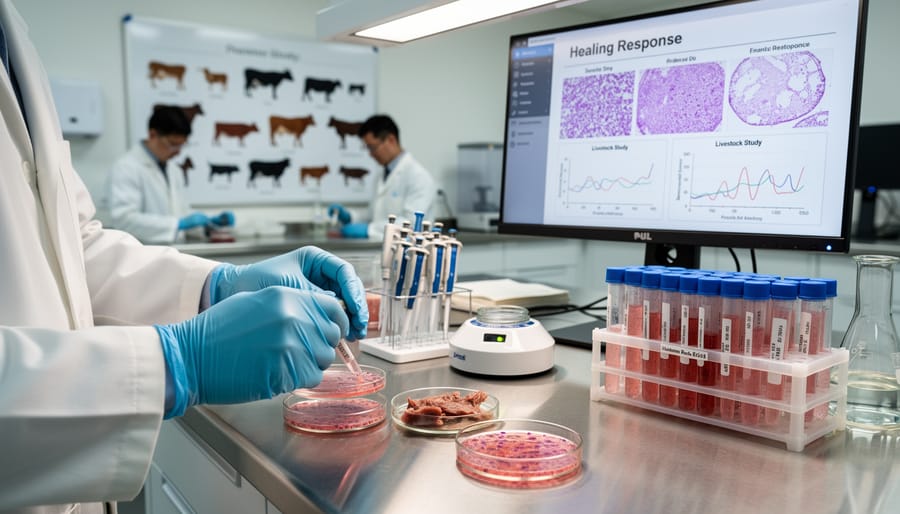
Researchers don’t use one animal for every question. Each model shows something a bit different, so the choice depends on what kind of tissue they want to understand.
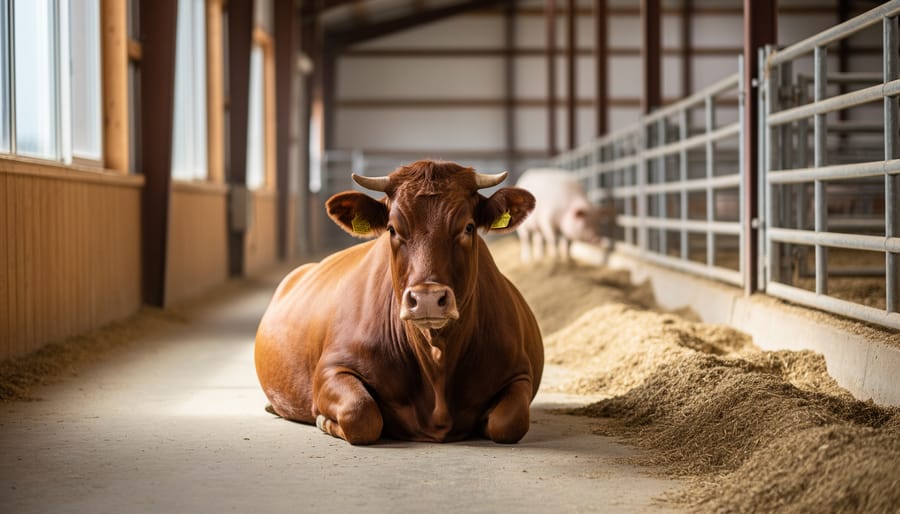
Cattle are the natural fit for questions that matter directly to beef and dairy herds. Studies on cattle often look at hoof lesions, udder tissue and hide wounds, because these are the injuries that cost producers the most in lost production and early culls. A large animal like a cow also lets researchers watch healing under conditions close to a working farm, with real weight, movement and bedding in play.
Sheep are a common choice for tendon and wound studies. Their legs bear load in ways that resemble cattle, and they are easier to house and handle in a research setting. That makes them useful for seeing how stronger, better-organized tissue forms after an injury, and how long that process takes in weeks rather than days.
Pigs stand out for skin work. Pig skin has a thickness, structure and healing pattern that closely resembles human skin, which is why wound-healing researchers lean on swine so heavily. Findings can inform both animal care and wider medical science, and they give a clear picture of how a wound closes from the edges inward.
Poultry help researchers study gut lining and skin health. Birds grow quickly and reproduce fast, so changes show up in a short time. That speed is handy when the goal is to understand how stressed gut tissue recovers or how skin heals after damage.
Before any animal is involved, much of the early work happens in the lab with cell and tissue models. Cells grown in a dish let scientists test how a peptide affects growth or inflammation under tightly controlled conditions, using far fewer animals.
Put simply, lab models are best for early, narrow questions, while livestock models show how healing plays out in a whole living animal. Together they build a fuller picture than either could alone.
How Healing Research Connects to Sustainable Farming
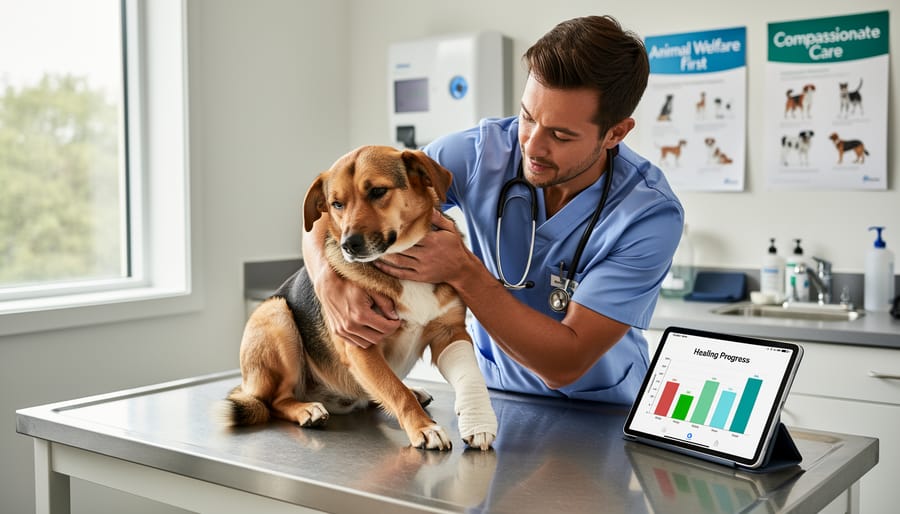
Sustainability on a farm often comes down to one simple idea: get more good outcomes from every animal, acre and input you already have. That’s where healing research fits in. When tissue repairs well and quickly, fewer animals are lost to injury or infection, and fewer have to be culled before their productive years are done. Every animal that stays healthy and productive carries the feed, water, land and labour already invested in it, so less of that effort goes to waste.
Faster, more complete healing can also mean fewer repeat treatments. A wound that closes cleanly or a stressed gut lining that recovers sooner may ask less of your time, your veterinary budget and your handling of the animal. It also tends to be easier on the animal itself, which supports welfare as well as productivity.
Here are some of the ways this research may support sustainability goals as it develops:
- Reduced animal losses from injury, infection and slow recovery.
- Lower feed, water and treatment inputs per animal raised.
- Improved welfare through quicker, less stressful recovery.
- Less waste from animals culled earlier than planned.
- Better data to guide herd-health planning and management decisions.
These links are encouraging, but it’s worth keeping them in proportion. Much of the peptide work is still at the research stage, so these are possibilities being explored, not guaranteed results on your operation. Still, the direction fits the way many Alberta producers already think: cut waste, build resilience and make good use of what you have.
Healing research is also just one piece of a bigger picture. Healthy soil, thoughtful grazing, efficient energy use and low-carbon practices all work alongside animal health to make a farm more resilient over the long haul. A herd that recovers well from the bumps of a hard winter or a rough season is part of that same resilience, helping an operation stay steady when conditions change. Seen that way, tissue repair studies aren’t a stand-alone fix. They’re one more tool in the sustainable-agriculture toolkit, working best when paired with the everyday practices you already trust.
How This Research Is Used, and What Alberta Producers Can Do Now
Researchers are exploring tissue repair in several practical areas. Wound care is the most familiar one, with studies looking at how different approaches affect closure time and scar strength. Gut health is another, since the intestinal lining is constantly repairing itself and a healthier gut can mean better feed use. Researchers also look at recovery after stress or injury, such as transport, calving or lameness, and at breeding and management insights that might lower injury risk in the first place.
Here’s the honest picture, though. Many peptide applications are still at the research stage. Findings from a lab or a controlled animal study don’t automatically become a dependable farm product, and it takes time to learn what works under real barn and pasture conditions. That’s no reason to tune out. It’s a reason to stay informed and keep your expectations grounded.
There’s plenty you can do today that supports healing and animal recovery, whatever the research eventually delivers:
- Talk with your large-animal veterinarian about emerging research and what it could mean for your herd or flock.
- Keep clear records of injuries, treatments and recovery times for each animal.
- Follow Canadian regulatory and withdrawal-period requirements for any product you use.
- Watch for findings from Canadian universities and provincial extension services.
Good records are where most producers can make the quickest gains. If you track farm records with software, patterns like repeat injuries, slow-healing cases or stress-related setbacks become much easier to spot, and your vet gets a clearer picture to work from. Those notes also make it simpler to show that withdrawal periods were respected.
Keep welfare front and centre too. Healing research is only useful if it sits alongside sound handling, housing and care, and if you farm organically, it pays to know how your practices line up with Alberta’s animal welfare standards. Your vet is the best person to help you weigh any new option against those requirements.
Common Questions About Tissue Repair and Peptide Research in Livestock
Are peptides the same as antibiotics?
No. Antibiotics are medicines used to fight bacterial infections, while peptides are short chains of amino acids that act as signals between cells. Researchers study peptides for how they may influence healing, though some peptides also have antimicrobial properties, so the two groups can overlap.
Are peptide products available for farm use now?
Many peptide applications are still at the research stage. If you hear about a product, ask your large-animal veterinarian whether it is approved in Canada and whether it suits your herd or flock.
Why are livestock used in healing research?
Cattle, sheep, pigs and poultry heal in ways that cell cultures can’t fully show, since a living body involves blood flow, immune response and movement. Studying healing in the species farmers actually raise also helps keep the findings relevant to real farm conditions.
How is animal welfare protected in these studies?
Research involving animals in Canada typically goes through ethical review by an animal care committee before work begins. Studies are expected to use the fewest animals needed, reduce pain and distress, and follow recognized care standards.
Where can farmers keep up with new findings?
University agriculture and veterinary programs, provincial extension services and commodity group newsletters are good starting points. Your vet can also help you sort early research from practical, proven options.
Keep in mind that these answers are general and aren’t a substitute for animal-specific advice. When it comes to treatment decisions, withdrawal periods or anything involving your own animals, your veterinarian is the right person to ask.
Tissue repair research is still a young and growing corner of sustainable farming science, but the idea behind it is simple. When animals heal faster and more fully, farms lose fewer animals, waste fewer resources and spend less on repeat treatments. Livestock models and lab peptide science are two of the tools researchers use to understand how that healing works, step by step.
Most of this work is still at the research stage, so patience is part of the picture. Findings move slowly from the lab bench to the barn, and that care protects both animals and producers. What you can do today is stay curious. Keep clear records of injuries and treatments, ask your large-animal veterinarian what they’re seeing, and follow updates from universities and extension services.
Farming has always been a community effort, and that’s true for research too. Every question you ask, every observation you share with a neighbour and every new idea you follow up on helps the whole industry learn. Keep learning, keep talking, and keep building a more resilient, sustainable operation, one informed decision at a time.