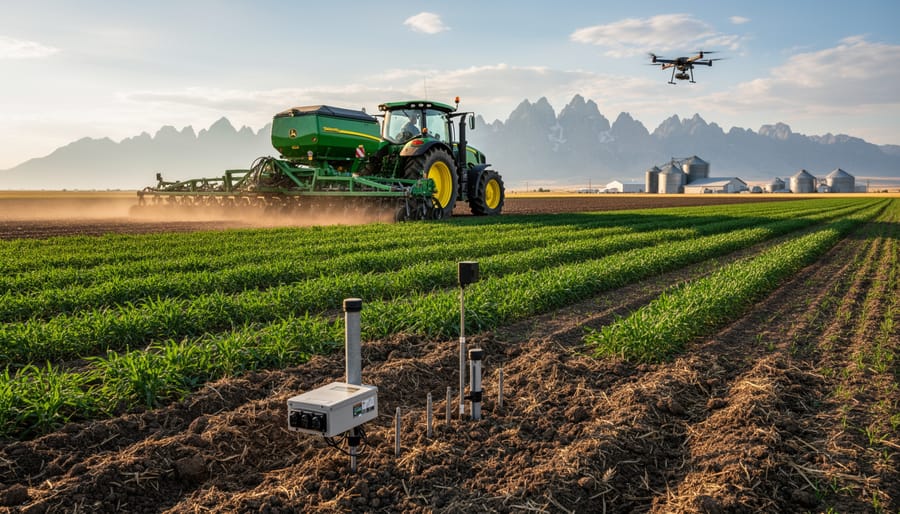
Organic farming is a way of producing food, feed and seed that follows a defined set of standards and relies on certification to prove it. Rather than leaning on a loose idea of “natural” growing, organic production works within a rulebook, with independent verification that the rules are being met. In Canada, that rulebook is the Canadian Organic Standards, and the system that enforces it is called the Canada Organic Regime, overseen by the Canadian Food Inspection Agency (CFIA).
Why does the definition matter so much? Because the word “organic” on a label carries legal weight. If a product is sold between provinces or territories, imported, or carries the Canada Organic Logo, it must be certified to those standards under Part 13 of the Safe Food for Canadians Regulations.
For Alberta producers weighing a transition, and for anyone curious about what sits behind the label, understanding this framework comes first. This article explains what organic farming is, how production and certification fit together, where the regime applies, and what falls outside it. We’ll also answer the questions farmers and consumers ask most.
What Organic Farming Means: A Plain-Language Definition
At its simplest, organic farming is a way of growing food, feed and seed that works with natural processes and healthy soil instead of leaning on synthetic inputs. So when people ask “what does organic mean?” or “what is organic?”, the short answer is that it describes a whole approach to farming, not just a single product or technique.
In Canada, though, the word carries more weight than it does in casual conversation. It’s both a farming philosophy and a regulated claim. A farmer can say they grow “organically” over coffee, meaning they care about soil, avoid shortcuts and think long term. That’s a perfectly good description of their values. Being certified organic is something different. It means an operation has met the Canadian Organic Standards and been verified under the Canada Organic Regime, and it’s what allows a product to carry an organic claim in many situations.
That legal backing is what lets shoppers and buyers feel confident when they know it’s organic. Under the Safe Food for Canadians Regulations, any food, seed or animal feed labelled organic, including aquaculture products such as a seaweed product, is regulated by the Canadian Food Inspection Agency (CFIA).
If you’re an Alberta farmer thinking about making the shift, that’s good news. The rules give your hard work a clear, recognized standard, and a community of producers and certification bodies is there to help you meet it.
How Organic Farming Works on a Canadian Farm
Soil Health at the Centre
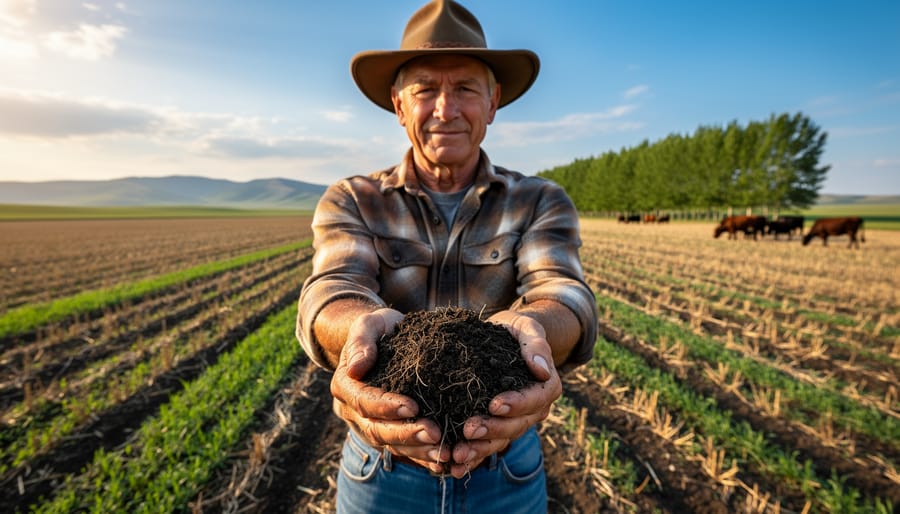
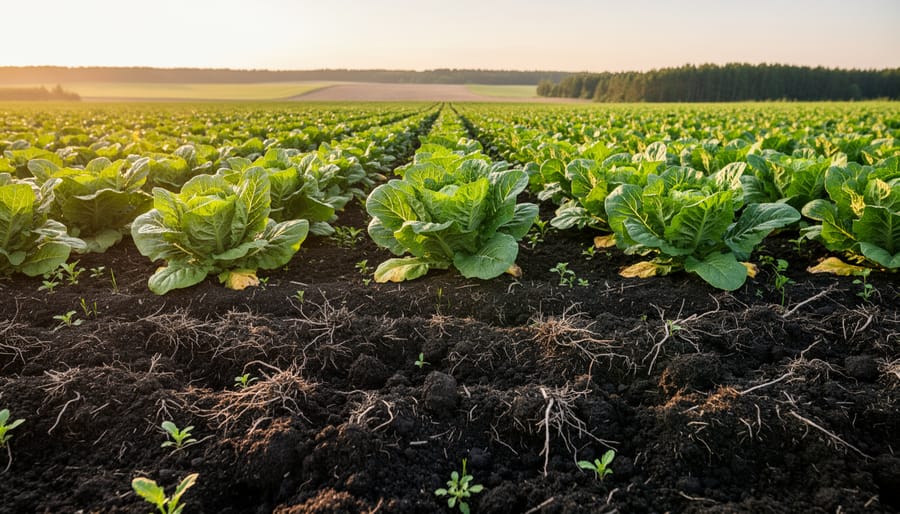
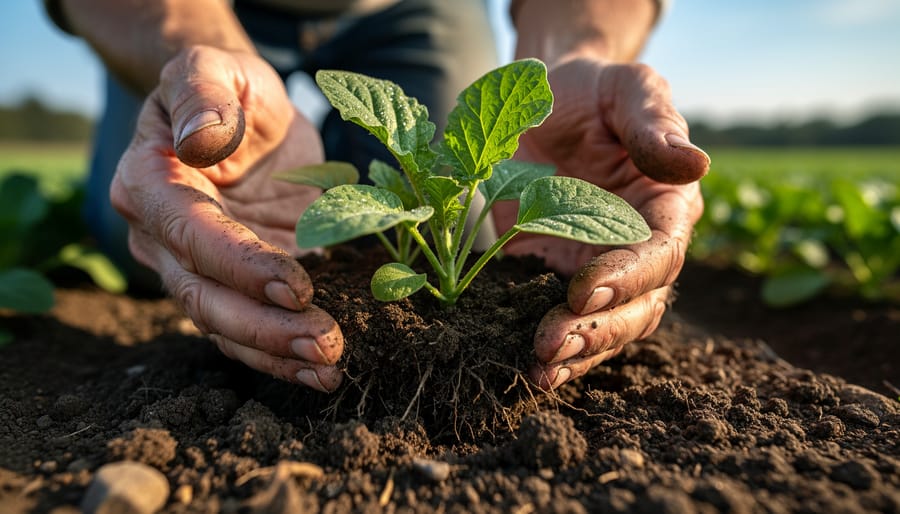
Ask an organic farmer where it all starts, and most will point to the ground beneath their boots. Healthy soil is the foundation of organic systems, because a living, well-cared-for soil supports strong crops without leaning on synthetic inputs. It’s also where soil health and carbon meet, which is the heart of what we care about here: soils that are looked after tend to hold onto carbon rather than lose it.
Organic farmers generally concentrate on a few big ideas:
- Building and protecting the health of the soil over many seasons.
- Planning ahead so the whole farm works with natural cycles.
- Keeping clear, honest records that support certification.
- Staying informed about the standards that apply to their operation.
None of this happens overnight, and that’s okay. Soil improves gradually, and every Alberta producer starts from where their own land is today. The encouraging part is that small, steady choices add up, and you’re not doing it alone. There’s a whole community of farmers learning from one another along the way.
Planning, Records and Verification
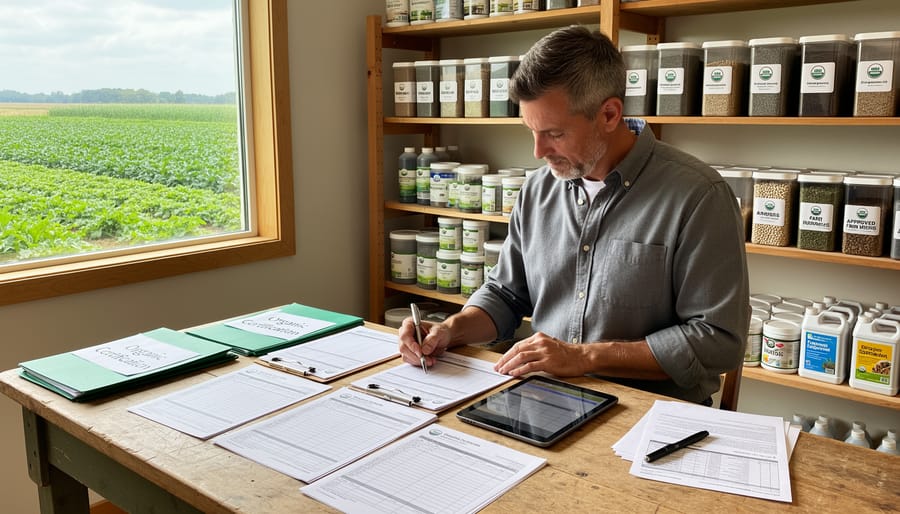
Organic farming runs on paperwork as much as on soil. Because the label carries legal weight in Canada, an organic operation isn’t simply taken at its word. It documents what it does and has that information checked as part of organic certification.
In general terms, that means planning your production ahead of time, keeping clear records, and being open to verification. Certification bodies and conformity verification bodies exist to confirm that the applicable requirements and standards are being met. Think of good records as a habit that protects both your farm and the trust buyers place in your product. Next, we’ll look at the regulatory framework that sets these expectations.
The Canada Organic Regime and the Canadian Organic Standards
Who Regulates the Organic Label
In Canada, the Canadian Food Inspection Agency (CFIA) is the body that regulates the organic label. Under the Safe Food for Canadians Regulations (SFCR), any food, seed, and animal feed labelled organic falls under its oversight, and that includes aquaculture products such as a seaweed product.
A few terms come up again and again:
- CFIA
- The federal agency that regulates organic claims on food, seed and animal feed.
- Canada Organic Regime
- The organic certification system outlined in the SFCR.
- Canadian Organic Standards
- The standards that organic products must be certified to.
- Certification Body and Conformity Verification Body
- Two of the parties the regime regulates, alongside the operators who produce organic products.
Part 13 of SFCR covers organic products. Some things sit outside the regime, including cannabis plants and their cultivation, cosmetics, pet food and natural health products. They can’t be certified under it or carry the Canada Organic Logo.
When Certification Is Required
Certification isn’t always required, and that surprises a lot of farmers. Whether you need it comes down to how your product is labelled and where it’s sold.
The regulations require mandatory certification to the revised Canadian organic standards for food, feed or seed products represented as organic in import, export and inter-provincial trade. The same applies to products that bear the federal organic logo.
Here’s how that plays out under Part 13 of the Safe Food for Canadians Regulations:
– If your label makes an organic claim and the product is sold between provinces or territories, or imported, Part 13 compliance applies.
– If your label displays the Canada Organic Logo, Part 13 compliance applies whether the product is sold within Canada or outside it.
Think of it as a simple test: where is the product going, and what does the label say? If an organic claim or the logo is on the package and the product crosses a provincial or national border, certification comes into play.
This is a plain-language overview, not legal advice, and every operation is a little different. Before you label or ship anything, confirm the specifics for your situation with the CFIA or a certification body. A quick conversation now can save you headaches later.
How Organic Farming Is Used: From Certified Production to the Canada Organic Logo
Products Outside the Organic Regime
Not everything that grows or gets sold can carry an organic label, and it helps to know where the line sits. Under the Canada Organic Regime, a few product categories are outside its scope: cannabis plants and their cultivation, cosmetics, pet food and natural health products.
What does that mean in practice? These products can’t be certified under the regime, and they can’t bear the Canada Organic Logo. A producer who works with natural methods in one of these areas still can’t use the federal organic claim.
That’s not a judgment on quality. It simply reflects how the regime is built around food, seed and animal feed, which is the territory the CFIA oversees.
A Canadian Farm Perspective
Every organic farm in Canada has its own story, and those stories are some of the best ways to see what the Canadian Organic Standards look like in a real field. Alberta producers in particular bring a lot of practical know-how about managing soil, planning rotations and keeping the paperwork that certification depends on.
When you speak with a certified organic producer, a few questions are worth asking:
– How did they decide to pursue certification, and who verified their operation?
– What changed first on the farm: the soil, the planning or the record keeping?
– What would they tell someone just starting to explore organic production?
Hearing directly from neighbours who have made the shift is often the most encouraging next step.
Organic Farming FAQs
What does organic mean?
In everyday talk, organic describes food, feed and seed grown with natural processes and healthy soil in mind. In Canada, though, the word on a label is regulated, so a product marketed as organic has to meet the Canadian Organic Standards.
What are the Canadian Organic Standards?
They’re the standards that organic products must be certified to under Part 13 of the Safe Food for Canadians Regulations. Mandatory certification to the revised standards applies to food, feed or seed products represented as organic in import, export and inter-provincial trade, or those carrying the federal organic logo.
What do organic farmers do?
They manage their land and crops in ways that follow the organic standards, with a strong focus on soil health and careful planning. They also keep records, since certified operations are documented and verified as part of the process.
What is the Canada Organic Regime?
It’s the organic certification system outlined in the Safe Food for Canadians Regulations. Its purpose is to regulate everyone involved in certification, including operators, Certification Bodies and Conformity Verification Bodies, and to verify that the applicable requirements are being met.
If you’d like to go a step further than these quick answers, connecting with Canada’s organic organizations is a good next move. For anything specific to your own operation or products, the CFIA and certification bodies can confirm what applies to you.
Organic farming, at its heart, is a soil-focused way of growing food, feed and seed, and in Canada it comes with real rules behind the label. Products sold as organic across provincial or international lines must be certified to the Canadian Organic Standards, and the CFIA oversees the whole system. That’s good news for farmers and shoppers alike, because it means the word carries weight.
Whether you’re an Alberta producer weighing a change or simply curious about where your food comes from, you don’t have to figure it out alone. Our workshops, podcasts and expert resources are a good next step, and they’re built around the same goals we care about most: healthier soil and a smaller carbon footprint. Better yet, talk with other farmers in your community. They’ve asked the same questions you have.
When you’re ready to look at certification itself, check the details directly with the CFIA or a certification body so you know exactly what applies to your operation.