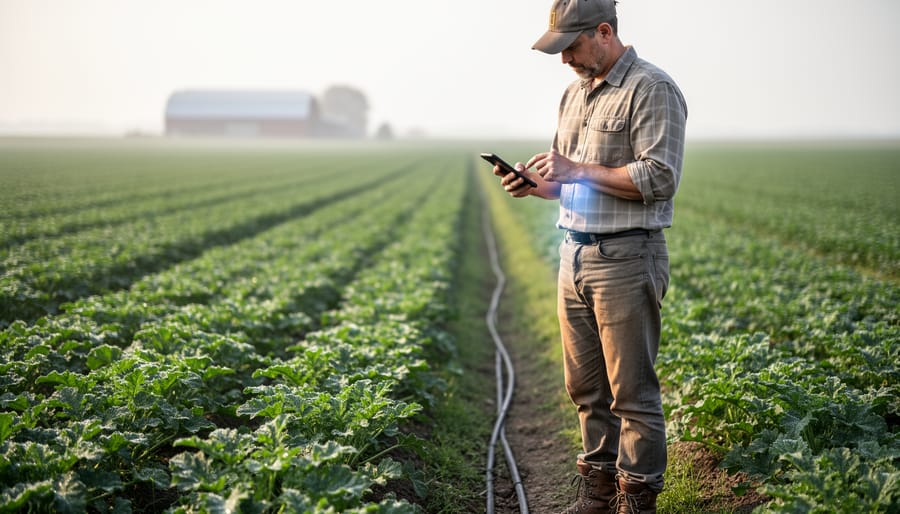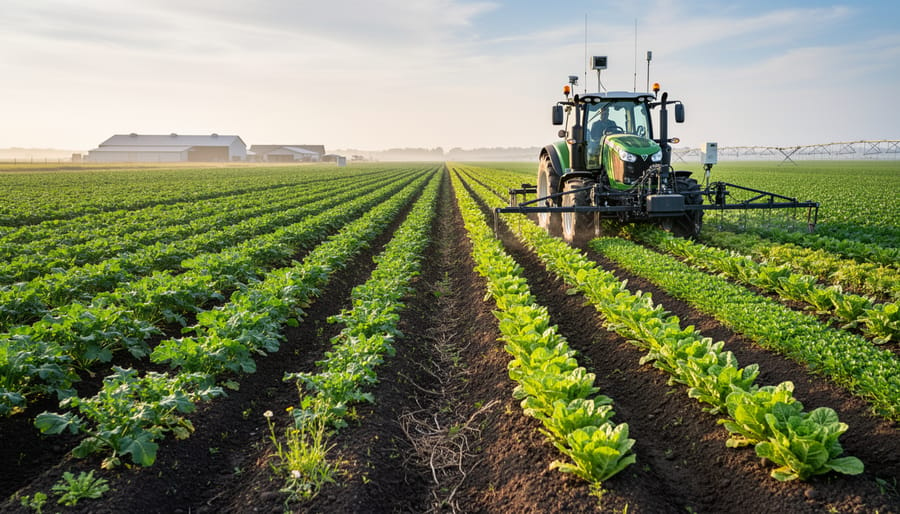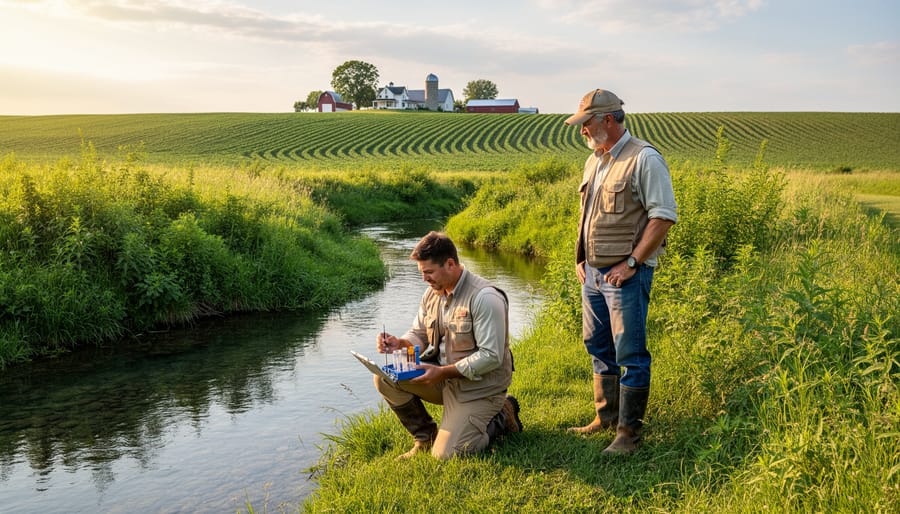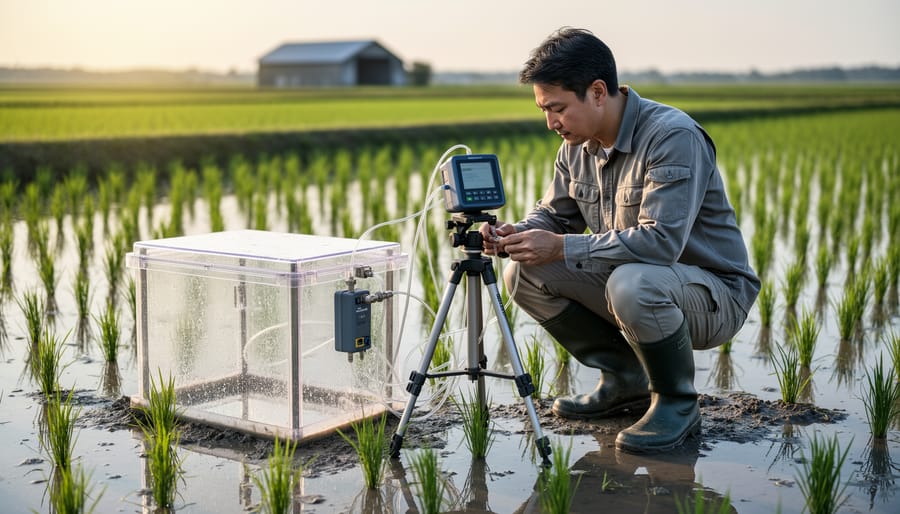
The NC Ag Chemicals Manual is your roadmap for documenting pesticide and fertilizer use to meet organic, sustainable, and export certification standards required across Canada in 2026. When auditors review your operation, they’re verifying that every chemical application aligns with permitted substance lists, respects buffer zones, and follows label restrictions. This manual, developed by North Carolina State University but widely adopted by Canadian certifiers as a reference framework, provides standardized record-keeping templates and residue monitoring protocols that translate complex regulatory requirements into farm-level compliance steps.
For Alberta producers pursuing organic certification or regenerative agriculture verification, mastering this manual goes hand-in-hand with building a comprehensive MRV plan that tracks inputs, soil health, and environmental outcomes. The challenge isn’t just knowing which products are allowed. It’s creating a paper trail that survives third-party audits and demonstrates your commitment to reducing chemical dependency over time.
This guide walks you through the tools you need, the safety protocols that protect your crew and certification status, and the step-by-step process for integrating the manual into your seasonal workflow. You’ll learn how to cross-reference Canadian Organic Standards with the manual’s substance database, maintain field-level application logs that satisfy inspectors, and troubleshoot common discrepancies before they derail your certification. Whether you’re preparing for your first audit or refining an established system, these strategies will help you turn compliance from a burden into a competitive advantage.
What You’ll Need: Tools and Resources for Effective Chemical Management
Before you can apply the NC Ag Chemicals Manual to your certification program, you’ll need the right toolkit assembled and ready. Getting these resources in place now will save you headaches during audits and make daily record-keeping far more manageable.
Start with the manual itself. You can access the NC Ag Chemicals Manual through your certification body or directly from North Carolina State University’s extension resources. While it’s designed for U.S. operations, Canadian farmers use it as a reference framework alongside local standards. Download the most recent version and keep both a digital copy on your phone or tablet for field access and a printed copy in your farm office.
Essential tools and materials you’ll need include:
- Current NC Ag Chemicals Manual (digital and printed versions)
- Record-keeping templates or farm management software with chemical tracking modules
- Contact information for accredited Canadian residue testing laboratories
- Certification standard documents from your certifying body (Canadian Organic Standards, GlobalG.A.P., provincial requirements)
- Application equipment calibration tools (scales, measuring cylinders, pressure gauges)
For record-keeping, simple spreadsheet templates work fine if you’re managing a small operation, but dedicated farm management software like AgExpert or FarmLogs streamlines the process and reduces errors. These platforms let you log applications immediately from the field and generate audit-ready reports with a few clicks.
You’ll also need relationships with testing labs before you need them. Canadian Food Inspection Agency-accredited labs can analyze residues against certification thresholds. Get quotes and turnaround times from at least two labs now, not when you’re scrambling before harvest. Labs in Alberta and Saskatchewan typically offer regional pricing and faster sample processing for local growers.
Keep your certification body’s current standards document handy, whether that’s the Canadian Organic Standards or your specific certifier’s requirements. These documents change periodically, and cross-referencing them against the manual ensures you’re tracking the right parameters.
Understanding Safety and Compliance Warnings
Before you apply a single spray or open a container, you must understand the safety and regulatory boundaries that govern agrochemical use in certification-ready systems. Missteps here can disqualify your crops, endanger workers, or trigger environmental violations that take years to resolve.
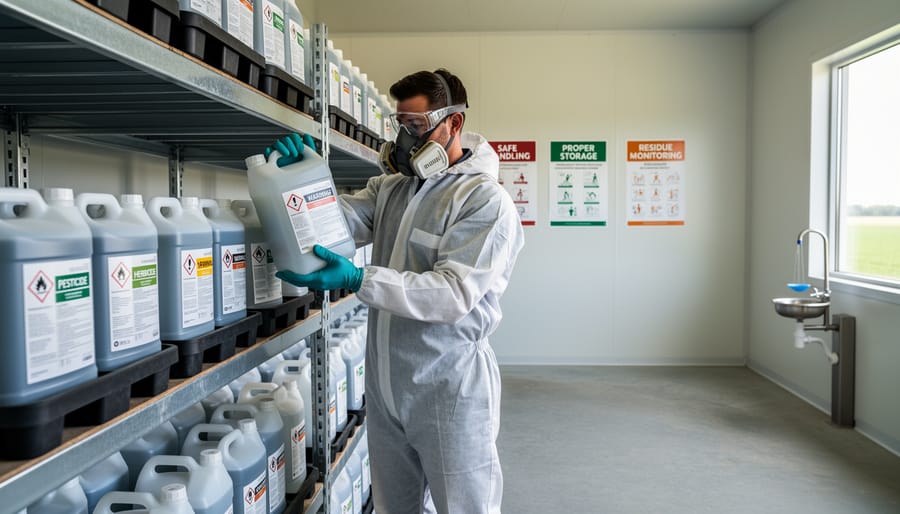
Start with personal protective equipment. The NC Ag Chemicals Manual specifies minimum PPE requirements for each substance class, but Canadian certification bodies often expect stricter standards. Wear chemical-resistant gloves, respirators with appropriate cartridges, face shields, and coveralls rated for the active ingredients you are handling. Store all PPE in a clean, accessible location away from contaminated areas, and train every operator on proper donning and doffing procedures. Replace filters and damaged gear immediately; compromised equipment is a health risk and a red flag during audits.
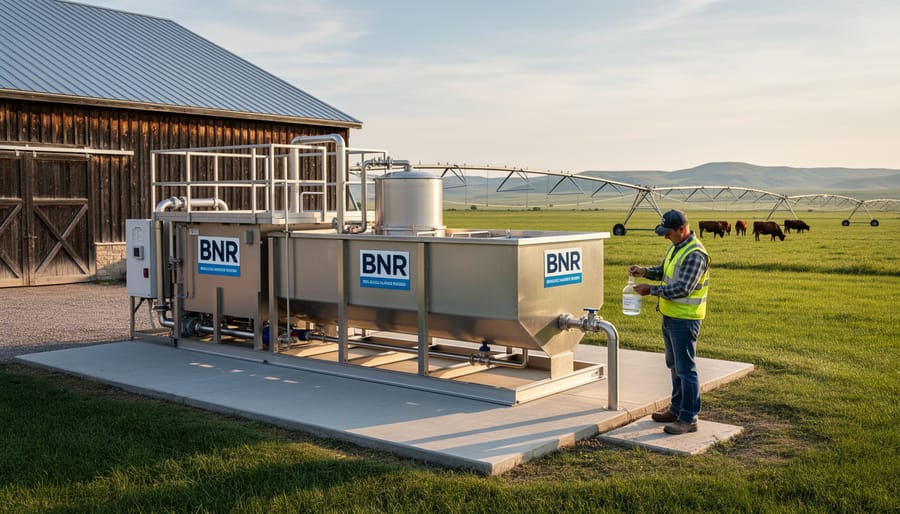
Handling and storage protocols demand equal attention. Store agrochemicals in a locked, ventilated space with secondary containment to catch spills. Keep products in original containers with intact labels, segregated by chemical class to prevent cross-contamination. Mixing and loading zones should be equipped with spill kits, eyewash stations, and access to water treatment systems that prevent runoff from entering waterways. Maintain a clear log of inventory movements so auditors can trace every litre from purchase to application.
Environmental protection measures extend beyond spill prevention. Respect buffer zones around water bodies, which Canadian organic standards typically set at 10 metres or more depending on the product and application method. Monitor water quality MRV indicators downstream if your operation is near sensitive habitats, and avoid applying chemicals when rain or high winds are forecast.
Maximum Residue Limits and Pre-Harvest Intervals are non-negotiable. The manual lists MRLs for each crop-chemical pairing; exceeding these thresholds will fail your certification and block market access. PHIs tell you the minimum days between application and harvest. Violating a PHI compromises worker safety and leaves detectable residues that testing will catch. Cross-check every product against your certification body’s allowed substances list before purchase, and build calendar reminders for each PHI deadline.
Step-by-Step: Applying the NC Ag Chemicals Manual to Your Operation
Step 1: Review Certification Standards and Manual Guidelines
Before you apply a single product, pull out three documents: the NC Ag Chemicals Manual, your certification body’s standards, and the Canadian Organic Standards (COS) or your sustainability program’s permitted substances list. Lay them side by side. Your goal is to confirm that every chemical you plan to use appears on your certifier’s approved list and that the manual’s application guidelines meet their documentation requirements.
Start by checking the active ingredient, not just the product name. Many formulations share ingredients but differ in adjuvants or concentrations that may affect approval status. Cross-reference each product’s maximum residue limit and pre-harvest interval against your certification’s thresholds. For example, GlobalG.A.P. and provincial organic programs often set stricter limits than federal baselines.
Next, identify what records your certifier expects. Most require product labels, application logs with dates and rates, operator names, and field locations. The NC manual provides template forms, but verify these match your auditor’s format. Some certifiers demand signed applicator declarations or weather condition notes at the time of spraying.
Flag any discrepancies now. If a chemical is manual-approved but not certification-approved, remove it from your plan. This cross-check prevents costly audit failures and ensures your residue monitoring targets the right compounds from day one.
Step 2: Select Approved Chemicals and Verify Residue Limits
Getting your chemical choices right starts with confirming that every product is both listed in the NC Ag Chemicals Manual and permitted under your certification body’s substances list. For most Canadian certification programs, especially organic or sustainable standards, this step is non-negotiable: many commonly used pesticides or fungicides do not meet the stricter requirements, and accidental application risks costly residue monitoring failures or outright loss of accreditation. Carefully cross-reference each potential agrochemical using the manual’s updated tables. Verify that it’s allowed for your specified crop and that you fully understand all relevant Maximum Residue Limits (MRLs) set by the certification authority and, where applicable, by national regulations.
Check the Pre-Harvest Interval (PHI) to confirm it fits your harvest schedule, ignoring this detail can lead to residue issues at audit time. If you’re unsure, reach out to your certifier or consult public resources on residue monitoring and chemical approvals. Always update your records with the product’s registration number, date of lookup, and any specific MRL or PHI notes for later reference.
Step 3: Document Application Timing, Rates, and Conditions
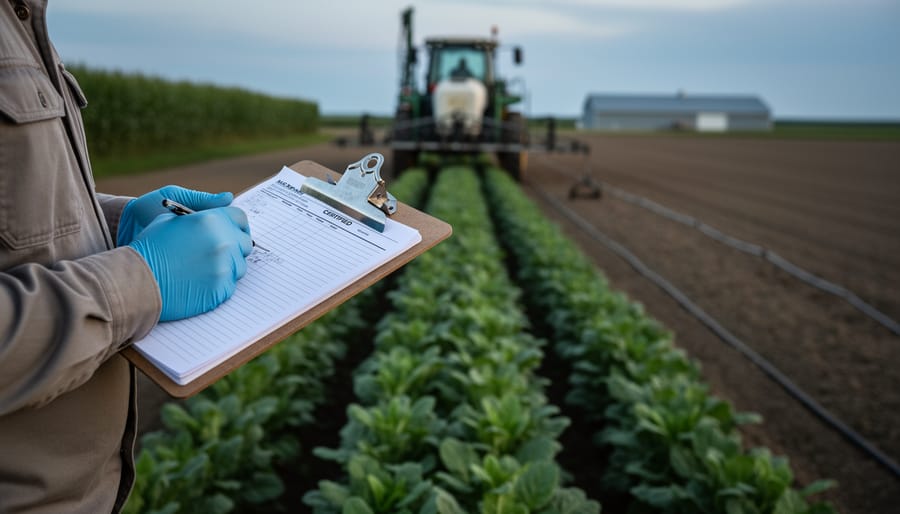
Every agrochemical application you make must be documented the moment it happens, not days later when details blur. Your record should capture the date and exact time of application, the complete product name and registration number, active ingredients with concentrations, the dosage applied per hectare, and the precise area treated. Note the application method, whether broadcast, banded, or foliar spray, and equipment used, including nozzle type and pressure settings if relevant.
Weather conditions matter enormously for residue behaviour. Record temperature, wind speed and direction, humidity, and any precipitation within 24 hours before or after application. These factors influence how chemicals degrade, drift, or absorb into plant tissue. Include the operator’s name and any observations about crop stage or soil conditions at application time.
This documentation creates an unbroken chain connecting each chemical input to your final harvest. When residue tests come back, auditors can trace any detected compound to a specific field event, verify it was applied correctly, and confirm Pre-Harvest Intervals were respected. Missing or vague records raise red flags during certification inspections. A well-maintained log protects you if residues approach thresholds, proving you followed protocols and giving you leverage to contest questionable results. Keep these records for at least three years, most Canadian certification bodies require retention beyond the current crop cycle.
Step 4: Conduct Pre-Harvest Residue Sampling and Testing
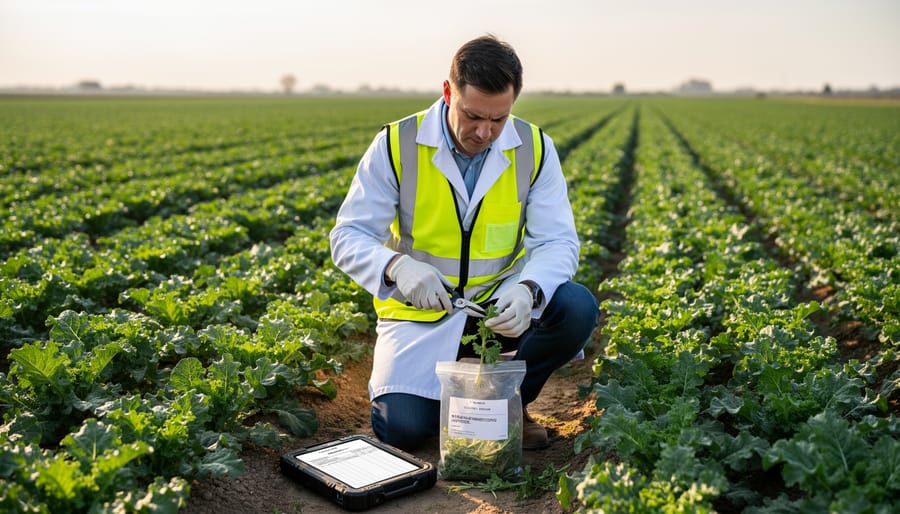
Timing your residue sampling correctly makes the difference between passing certification and facing delays. The NC Ag Chemicals Manual recommends collecting samples 7 to 14 days before your planned harvest date, giving you enough time to address any issues if residues exceed limits. Don’t wait until the day before cutting, you need a buffer.
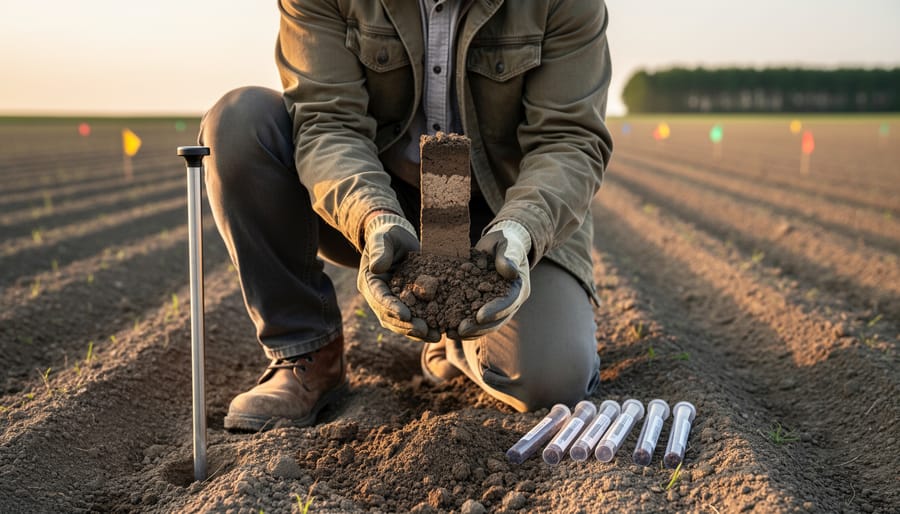
When sampling, follow the manual’s representative sampling protocol: collect small portions from multiple locations across the field (at least 10 to 15 spots for uniform fields), combining them into one composite sample. This approach captures variability and gives auditors confidence in your data. Include samples from field edges where spray drift may concentrate residues.
Ship samples immediately to an accredited Canadian laboratory, look for facilities certified under ISO/IEC 17025 or listed by your certification body. Request analysis for the specific active ingredients you applied, not just generic pesticide screening. Lab reports will show detected residue levels in parts per million (ppm) or parts per billion (ppb).
Compare these numbers directly against the Maximum Residue Limits (MRLs) listed in your certification standards. If any result exceeds the threshold, delay harvest and contact your certifier immediately. Document everything: sampling date, locations, lab report, and your interpretation.
Step 5: Maintain Traceable, Audit-Ready Records
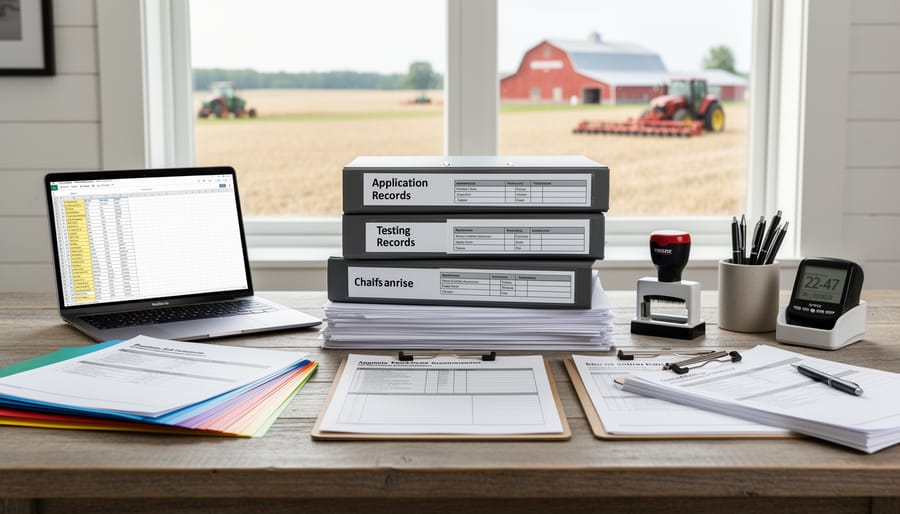
Auditors expect records they can follow from field to final product. Store all application logs, product labels, safety data sheets, test results, and field maps together in one location, physical binders or digital folders both work, but consistency matters more than format. Chronological organization is critical: date every entry, file documents sequentially, and cross-reference application dates with sampling dates and test reports. Digital systems allow faster searches and backup copies, while paper logs require secure, dry storage and photocopying for redundancy. Canadian certification bodies typically mandate three to five years of record retention so label archive boxes or folders by year and crop. Keep product labels and receipts stapled to their corresponding log entries, auditors verify that what you applied matches what you documented. Review your file quarterly to catch missing signatures, incomplete dates, or gaps before an inspector arrives.
Verification and Next Steps: Confirming Compliance and Preparing for Audits
Before an official certification inspection, run a comprehensive self-audit of your agrochemical records. Work through a checklist that mirrors your certifier’s requirements: confirm every application is documented with date, product, rate, and operator; verify all residue test results fall below Maximum Residue Limits; check that Pre-Harvest Intervals were observed; and ensure product labels and safety data sheets are attached to corresponding application logs. Compare your records against the NC Ag Chemicals Manual’s protocols and your certification body’s standards, Canadian Organic Standards if you’re organic, or GlobalG.A.P. requirements if pursuing sustainable certification. Flag any gaps or inconsistencies now rather than during the audit.
Review all lab reports carefully. If any residue levels approach or exceed MRLs, determine the cause immediately. Was the chemical approved for use? Did you respect the PHI? Could drift from a neighbouring operation be responsible? Document your investigation and corrective actions, switching products, adjusting application timing, installing buffer zones, or testing more frequently. Certifiers expect transparency and a plan to prevent recurrence, not perfection. Demonstrating that you caught and corrected an issue strengthens your credibility.
Organize your documentation package for easy auditor access. Group records chronologically by field or crop block, with application logs, test results, and product labels together. Include field maps showing treatment areas, weather logs if relevant, and calibration records for spray equipment. Digital systems work well if you can generate clear, dated reports; paper systems are acceptable if they’re legible and organized in binders with tabs. Retain records for the period your certifier requires, often three to five years.
Consider scheduling a third-party pre-assessment. Many certification bodies offer consultative reviews, and independent agronomists familiar with certification standards can spot weak points you might overlook. They’ll simulate the audit process, ask the same questions inspectors will, and suggest improvements to your record-keeping or sampling protocols. This investment pays off by reducing the risk of non-compliance findings during the official inspection.
Prepare to walk the auditor through your operation. Be ready to explain your chemical selection rationale, show where and how you store products, demonstrate your application equipment, and describe your sampling procedures. Auditors appreciate farmers who understand their own systems and can articulate how they follow the manual’s guidance. Confidence comes from thorough preparation, not from having avoided every challenge, it’s how you manage and document those challenges that matters.
Expert Insight: Canadian Agronomist on Residue Monitoring Best Practices
We spoke with Dr. Sarah Chen, a certified crop advisor and agronomist based in Red Deer, Alberta, who has guided over 150 farms through organic and sustainable certification processes. She shared her perspective on how farmers can use residue monitoring manuals effectively.
“The biggest mistake I see is treating the manual as a one-time reference rather than an ongoing management tool,” Dr. Chen explains. “Farmers will check it when choosing a product, but they don’t revisit it when conditions change, like an unexpected rain event that might require adjusting Pre-Harvest Intervals.”
She emphasizes that Alberta’s short growing season creates unique pressure. “You’re racing against frost dates, so there’s temptation to cut corners on waiting periods. I’ve seen farmers lose certification over residues that were just slightly elevated because they harvested two days early. The manual gives you the science; you need the discipline to follow it.”
Dr. Chen recommends quarterly record reviews rather than waiting until audit time. “Pull your logs every three months and compare them against your certification body’s requirements. Look for patterns, are you always applying at maximum rates? Are certain products consistently requiring retests? These are red flags you can address proactively.”
Her final advice: “Build relationships with your testing lab and certification inspector before you need them. When you hit an issue, you want trusted advisors, not strangers reviewing your records for the first time.”
Frequently Asked Questions
What is the NC Ag Chemicals Manual and can I use it for Canadian organic certification?
The NC Ag Chemicals Manual is a reference guide for agrochemical applications and residue monitoring, originally developed for North Carolina growers. While it provides useful protocols for residue tracking and chemical management, Canadian farmers must cross-reference it with the Canadian Organic Standards and their specific certification body’s requirements, as approved substances and MRLs can differ between jurisdictions.
How often should I test for residues during the growing season?
Testing frequency depends on your certification body’s requirements and your crop cycle, but most Alberta farmers conduct residue testing at least once before harvest, typically 7-14 days prior to the expected harvest date. High-risk crops or operations transitioning to organic status may require additional mid-season testing to verify compliance with pre-harvest intervals.
What happens if my residue test results exceed the Maximum Residue Limits?
Exceeding MRLs can lead to certification denial, loss of organic status, or market rejection of your crop. If this occurs, immediately notify your certification body, isolate the affected crop, and document corrective actions such as extended waiting periods or disposal protocols. Some certifiers allow remediation if you can demonstrate the violation was unintentional and you’ve implemented preventive measures.
How long must I keep application records and residue test reports?
Canadian certification bodies typically require you to maintain chemical application records and lab reports for a minimum of three to five years. Keep both digital backups and paper copies organized chronologically, along with product labels, invoices, and field maps, as auditors may request historical data to verify consistent compliance patterns over multiple growing seasons.
These questions reflect concerns that arise during on-farm audits and pre-certification assessments across Alberta. Certification coordinators report that record-keeping gaps and confusion about which reference standards apply cause more audit failures than actual residue exceedances. Clarifying these points before your inspection saves time and reduces stress during the certification process.
If your question isn’t covered here, contact your certification body directly for guidance specific to your operation and crops. Many provincial agricultural extension offices also offer workshops on chemical management and residue monitoring tailored to Canadian certification requirements.
Disciplined agrochemical management backed by systematic residue monitoring isn’t just paperwork, it’s your pathway to certification security and sustained market access. Canadian farmers who treat the NC Ag Chemicals Manual as a living operational tool, rather than a compliance afterthought, position themselves to meet evolving certification standards, avoid costly audit failures, and maintain the premium pricing that organic and sustainable labels command.
The manual’s protocols, from chemical selection through pre-harvest testing and traceable record-keeping, create a defensible audit trail that certification bodies trust. This transparency protects your operation during inspections and signals professionalism to buyers who demand verifiable residue compliance.
Integrating these principles requires commitment, but you don’t have to navigate it alone. Agronomists, certification consultants, and fellow farmers who’ve successfully implemented these systems offer invaluable guidance tailored to Alberta’s growing conditions and regulatory landscape. Start by auditing your current practices against the manual’s framework, identify gaps, and build the documentation habits that turn certification from a hurdle into a competitive advantage. Your land, your markets, and your long-term viability all benefit when agrochemical stewardship becomes standard practice rather than emergency preparation.