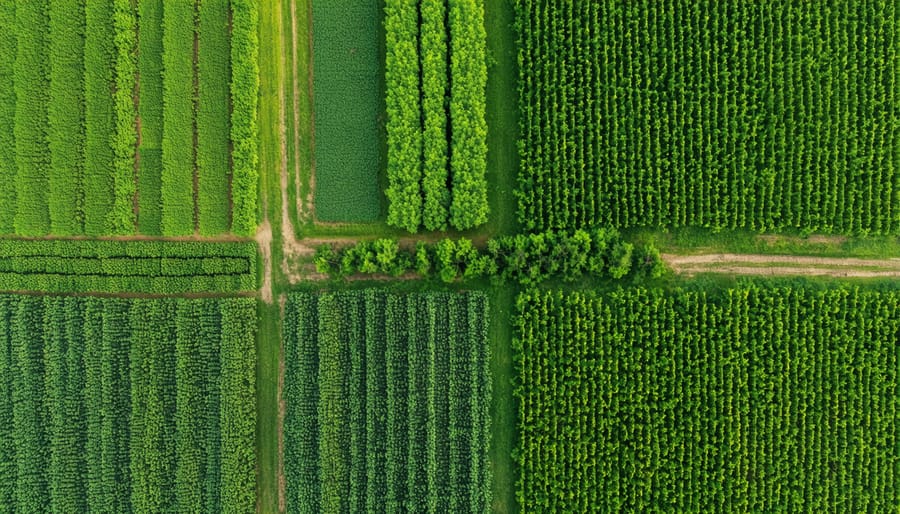
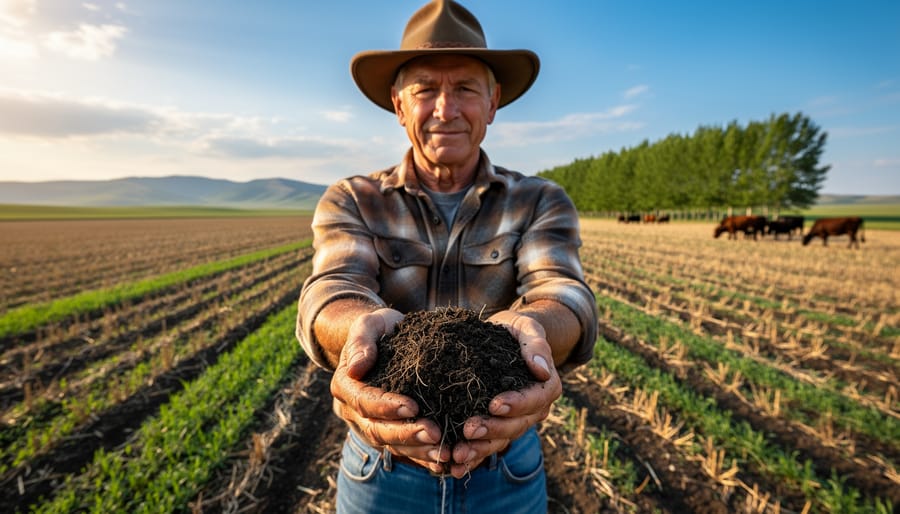
Carbon sequestration transforms your farm into a powerful tool against climate change while opening doors to new revenue streams through carbon credit programs. Alberta’s agricultural landscape holds immense potential to capture and store atmospheric carbon dioxide in soil and plant biomass, with practices that simultaneously improve soil health, boost yields, and increase drought resistance.
The methods available to Canadian farmers range from simple adjustments to existing operations—like reducing tillage or extending crop rotations—to more significant changes such as establishing perennial cover crops or integrating agroforestry systems. Each approach captures carbon differently, and many complement existing farm activities without requiring complete operational overhauls. Understanding which techniques align with your land, climate zone, and production goals determines both your environmental impact and economic return.
Recent data from Canadian farms shows measurable results: direct seeding operations can sequester 0.5 to 1.0 tonnes of carbon per hectare annually, while well-managed grazing systems capture even more. These aren’t theoretical numbers but documented outcomes from farms across the Prairies, proving that climate solutions for Alberta farmers deliver tangible benefits.
This guide examines proven carbon sequestration methods through the lens of practical implementation. You’ll find clear explanations of how each technique works, realistic assessments of what’s required to adopt them, insights from farmers already succeeding with these practices, and guidance on accessing carbon offset programs that compensate you for environmental stewardship. The path forward combines agronomic wisdom with climate action, creating resilient farms for generations ahead.
What Carbon Sequestration Actually Means for Your Farm
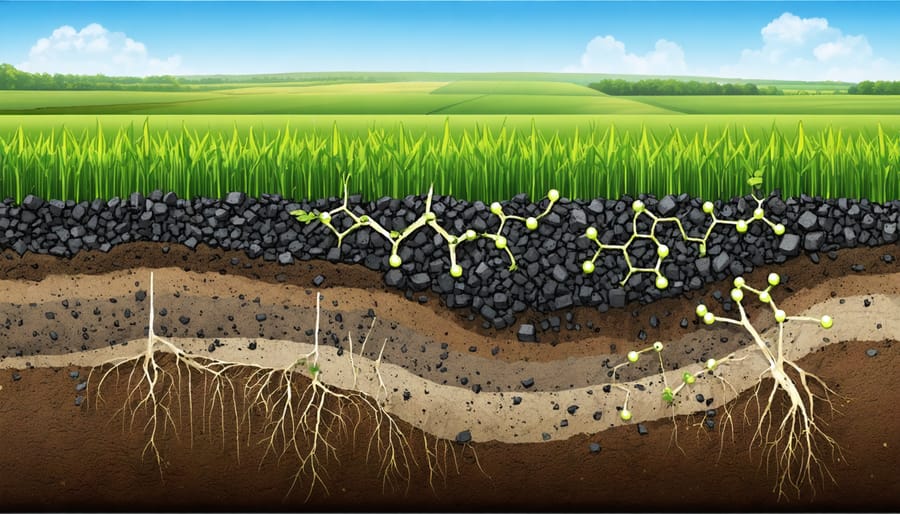
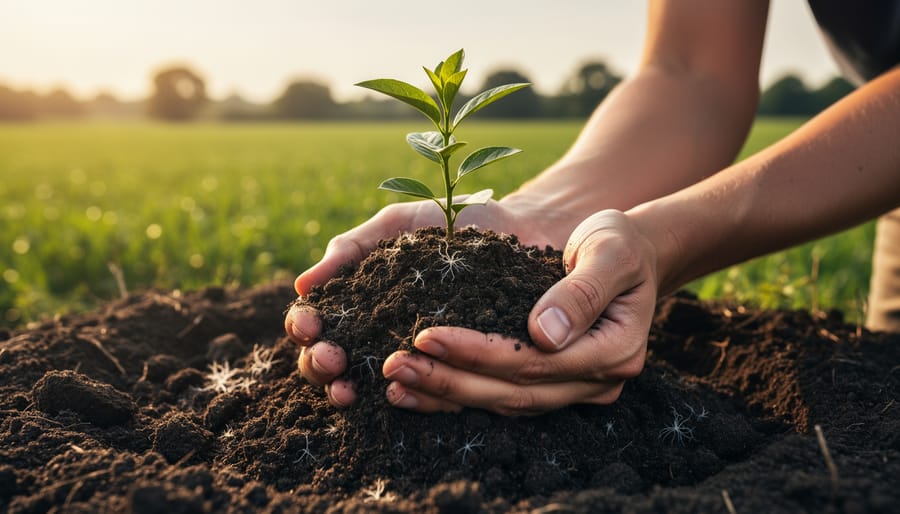
Think of your soil as a massive savings account for carbon. Every time your plants photosynthesize, they pull carbon dioxide from the atmosphere and convert it into sugars. Some of those sugars feed the plant itself, but a significant portion travels down through the roots and into the soil, where it can be stored for decades or even centuries.
This process is carbon sequestration, and your farmland is exceptionally good at it. When plants die and decompose, or when roots shed organic matter, soil microorganisms break down these materials and incorporate the carbon into soil organic matter. The healthier your soil ecosystem, the more carbon it can hold onto.
Here’s what makes this powerful: Canadian agricultural lands cover approximately 68 million hectares. Even small improvements in soil carbon storage across this landscape translate to millions of tonnes of CO2 removed from the atmosphere annually. Your fields aren’t just producing crops; they’re potentially acting as climate change solutions.
The science is straightforward. Atmospheric carbon dioxide enters your soil through plant roots and organic matter, where it binds with soil particles and becomes stable. This stored carbon improves your soil health and biodiversity, increases water retention, and enhances nutrient availability for future crops. It’s a genuine win-win: better soil performance and environmental benefit.
Alberta farmer James Morrison from Leduc County saw his soil organic matter increase from 3.2% to 4.8% over seven years using regenerative practices. That difference represents approximately 40 tonnes of carbon sequestered per hectare, equivalent to taking eight cars off the road annually per hectare.
The potential is substantial because agricultural soils that have been intensively tilled often sit well below their carbon storage capacity. By adopting practices that build soil carbon, you’re essentially refilling that storage account while strengthening your farm’s productivity and resilience. Understanding this foundation helps you evaluate which specific sequestration methods will work best for your operation.
Cover Cropping: Your First Step to Capturing Carbon
Best Cover Crop Species for Alberta Conditions
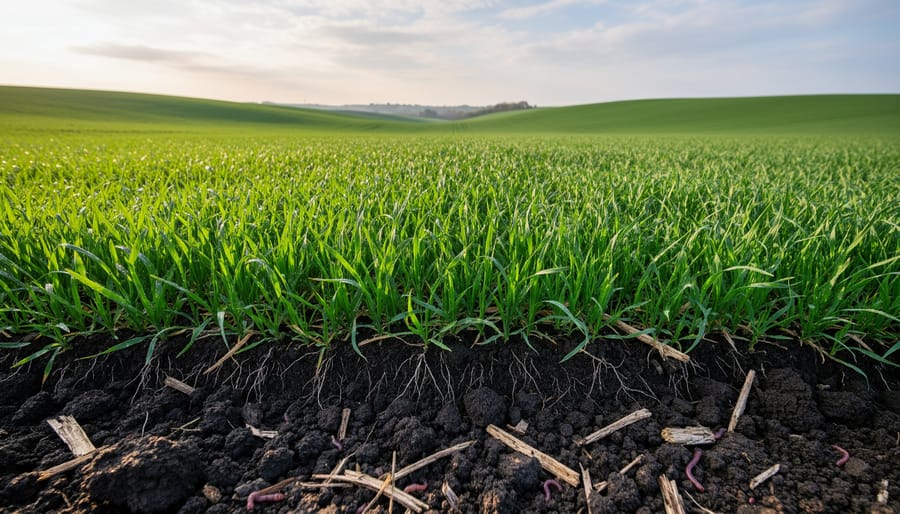
Selecting the right cover crop species makes all the difference in Alberta’s challenging climate. Your short growing season, which typically runs from May to September, requires cold-hardy varieties that establish quickly and can withstand early frosts.
Winter-hardy cereals like fall rye and winter wheat are excellent choices for Alberta producers. These species germinate in late August through mid-September, establish robust root systems before winter, and resume growth early in spring. Fall rye, in particular, tolerates temperatures down to -30°C and develops extensive roots that enhance soil structure while capturing carbon.
For spring seeding, consider oats and field peas in combination. This pairing works well because oats provide structural support while peas fix nitrogen, reducing your fertilizer costs. Plant this mix as soon as soil temperatures reach 5°C, typically in early May.
Annual ryegrass and hairy vetch offer another proven combination, though they require careful timing. Seed them by mid-August to ensure adequate establishment before freeze-up.
According to agronomist Dr. Melissa Arcand from the University of Saskatchewan, who has studied prairie cover cropping extensively, “The key to success in Alberta is selecting species adapted to your specific zone and seeding at the optimal time. A week’s delay can mean the difference between establishment success and failure.”
For establishment, aim for good seed-to-soil contact using light harrowing or direct seeding equipment. Seed depth should be 2 to 4 centimetres for most species, with adequate soil moisture being critical for germination in our often-dry prairie conditions.
Real Results from Alberta Farmers
When Dale Richardson decided to implement cover cropping on his 800-hectare grain operation near Lethbridge in 2019, he wasn’t sure what to expect. Four years later, the results speak for themselves.
“We started with a 100-hectare trial plot, planting a mix of winter rye and hairy vetch after our wheat harvest,” Dale explains. “The first year was mostly a learning curve, but by year three, we were seeing real changes in our soil.”
Independent soil testing conducted in 2023 revealed that Dale’s cover-cropped fields had sequestered an average of 1.2 tonnes of carbon per hectare annually. Over his entire operation, that translates to significant carbon capture potential.
The financial picture proved equally compelling. Dale’s initial investment included approximately $45 per hectare for seed and planting. “The termination costs added another $20 per hectare, so we’re looking at around $65 total in the first year,” he notes. However, enrollment in Alberta’s carbon offset program generated credits worth approximately $35 per tonne, helping offset the transition costs.
Beyond carbon credits, Dale noticed unexpected benefits. “Our soil moisture retention improved noticeably. During the 2021 drought, our cover-cropped fields showed better resilience than conventional plots. We also reduced our synthetic fertilizer use by about 15 percent thanks to the nitrogen-fixing properties of the hairy vetch.”
His biggest lesson? Start small and adapt to your specific conditions. “Don’t try to convert your entire operation overnight,” Dale advises. “Test different cover crop species, track your costs carefully, and connect with other farmers doing this work. The learning community made all the difference for us.”
Today, Dale has expanded cover cropping to 400 hectares and continues to refine his approach each season.
No-Till and Reduced Tillage: Keep Carbon Where It Belongs
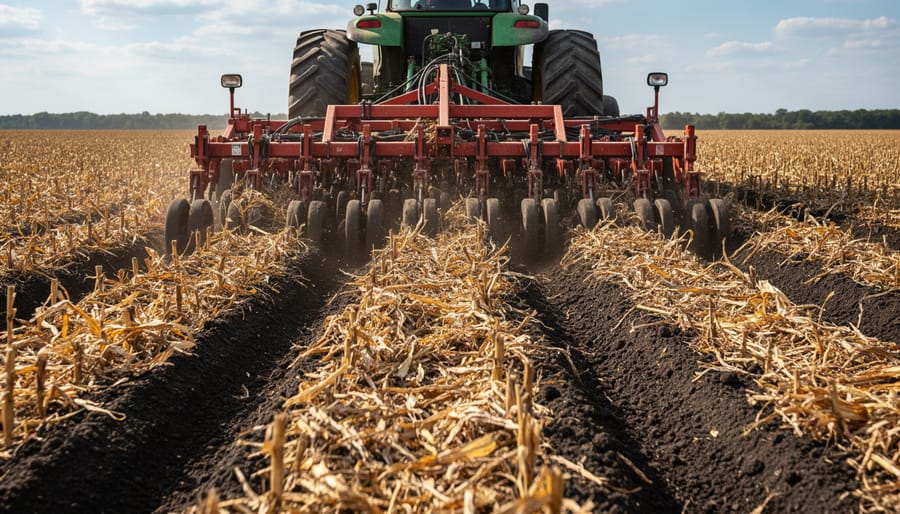
Making the Transition Without Sacrificing Yields
Making the shift to carbon-sequestering practices doesn’t mean turning your operation upside down overnight. Many successful Alberta farmers have found that gradual adoption works best, allowing you to learn as you go while maintaining productive yields.
Start by transitioning one field at a time. This approach lets you compare results directly and build confidence before expanding. Larry Henderson, a grain farmer near Red Deer, began with his poorest-performing quarter section. “I figured if it worked there, it would work anywhere,” he explains. Within three years, that field matched his conventional yields while requiring less fuel and labour.
Managing crop residue becomes crucial when reducing tillage. Rather than viewing residue as an obstacle, think of it as protective mulch that feeds soil biology. For even distribution, consider upgrading to chaff spreaders on your combine. In heavy residue situations, a single-pass vertical tillage tool in spring can incorporate enough residue to allow good seed-to-soil contact without full inversion.
Weed pressure often tops the concern list for farmers considering reduced tillage. The reality? Your strategy shifts rather than disappears. Successful practitioners rely on diversified crop rotations to break weed cycles naturally, strategic use of cover crops to outcompete weeds, and precision herbicide application when needed. University of Alberta research shows that after two to three years, weed pressure in no-till systems often decreases as the soil seed bank depletes.
Equipment modifications don’t necessarily mean major investments. Many farmers successfully adapt existing drills with row cleaners and updated openers. Some Alberta equipment dealerships now offer demo programs specifically for conservation equipment, letting you test before committing. The key is matching your equipment choices to your specific soil type and crop rotation.
Expert Insight: Agronomist Perspective
We spoke with Dr. Jennifer Walsh, an agronomist with over 15 years of experience working with prairie farms across Alberta and Saskatchewan, about practical approaches to carbon sequestration.
“The beauty of soil carbon retention on prairie farms is that we’re building on what already works,” Dr. Walsh explains. “In our region, farms implementing cover cropping and reduced tillage typically see measurable increases in soil organic carbon within three to five years. We’re talking about 0.3 to 0.8 tonnes of carbon per hectare annually, depending on your starting point and management practices.”
When asked about measuring success, Dr. Walsh emphasizes starting simple. “Many producers begin with baseline soil testing at multiple depths. Track your organic matter percentage over time—it’s straightforward and tells you if you’re moving in the right direction.”
Regional adaptation matters significantly. “What works near Edmonton might need adjustment for Lethbridge farms due to moisture differences. I encourage producers to connect with their local agricultural fieldmen and participate in regional carbon monitoring programs. You’re not figuring this out alone—there’s tremendous knowledge-sharing happening across Alberta right now, and that community approach makes implementation much more achievable.”
Rotational Grazing and Livestock Integration
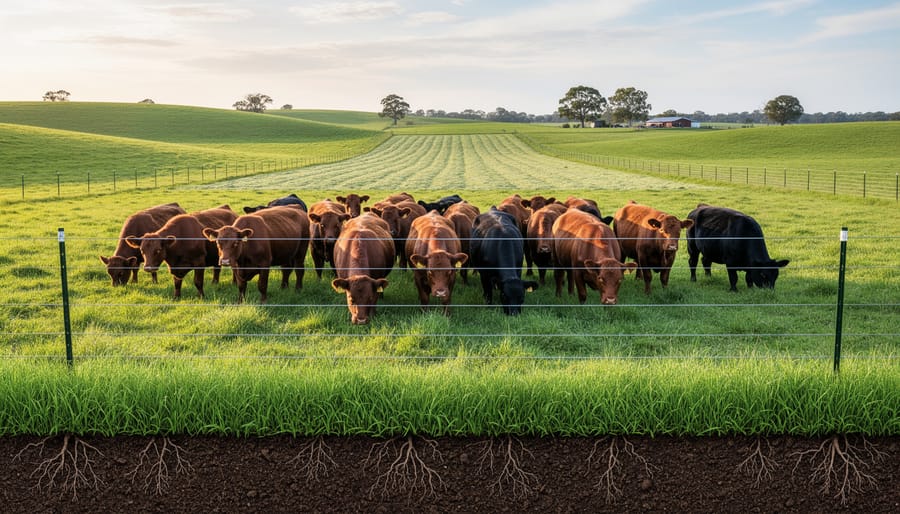
Setting Up Your Rotational Grazing System
Implementing a rotational grazing system requires careful planning but delivers significant carbon sequestration results. Start by dividing your pasture into smaller paddocks using temporary or permanent fencing. For Alberta conditions, aim for 8-12 paddocks initially, allowing adequate rest periods between grazing cycles.
Calculate your stocking rate based on available forage and soil health goals. A general guideline is 1-2 animal units per hectare, adjusted seasonally. High-density, short-duration grazing works best for building soil carbon. Move livestock when they’ve consumed 50-60% of available forage, typically every 1-3 days depending on paddock size and animal numbers.
Rest periods are crucial for plant recovery and root development. During the growing season, allow 30-45 days of rest between grazing events. This extended recovery time enables plants to photosynthesize longer, pushing more carbon into the soil through their root systems. In Alberta’s shorter growing season, you may need to adjust these periods based on spring moisture and fall frost dates.
Water infrastructure is essential for sustainable livestock management. Install portable water systems or strategically placed permanent troughs to ensure animals access water in each paddock without overgrazing riparian areas. Consider solar-powered water pumps for remote paddocks.
Monitor soil health indicators like aggregate stability and organic matter content annually. Track forage productivity and adjust your rotation schedule as conditions improve. Many Alberta producers report noticeable improvements within 2-3 years of implementing managed grazing systems.
Carbon Gains from Alberta Ranch Operations
A central Alberta ranch demonstrates the real-world potential of adaptive multi-paddock grazing for carbon sequestration. The Rocking R Ranch, operating on 2,000 hectares near Lacombe, implemented rotational grazing practices in 2018 after years of continuous grazing had degraded their pastureland.
Within three years, soil testing revealed remarkable improvements. Soil organic matter increased from 3.2% to 4.8% in the top 15 centimetres—a gain representing approximately 45 tonnes of carbon sequestered per hectare. Ranch manager Tom Henderson explains, “We moved from leaving cattle on pastures for weeks at a time to rotating them every three to five days. The difference in plant diversity and soil health is like night and day.”
Beyond carbon gains, the ranch documented ecosystem-wide benefits. Native grass species returned, water infiltration rates doubled, and forage production increased by 35%. The operation now supports 20% more cattle while requiring less supplemental feed during shoulder seasons.
Henderson credits success to careful monitoring and flexibility. “We adjust paddock sizes and rest periods based on precipitation and growth rates. It’s not a set-it-and-forget-it system, but the environmental and economic returns make it worthwhile for our family’s future.”
Composting and Organic Amendments: Building Soil Carbon Directly
Making Quality Compost On-Farm
Creating quality compost on your farm captures carbon while building soil health, and it’s more straightforward than many producers think. The key is balancing your carbon-to-nitrogen ratio at roughly 30:1. Mix brown materials like straw, wood chips, or corn stalks (carbon sources) with green materials such as manure, crop residues, or food waste (nitrogen sources).
For Alberta’s climate, timing matters. Start your compost pile in late spring when temperatures rise, as you’ll need to maintain internal temperatures between 55-65°C to break down materials effectively and eliminate weed seeds. Turn your pile every two to three weeks during active composting, which typically runs from May through September. Monitor moisture levels—your compost should feel like a wrung-out sponge.
“We’ve found that windrow composting works exceptionally well for farms in southern Alberta,” shares Dr. Tim McAllister from Agriculture and Agri-Food Canada’s Lethbridge Research Centre. “Producers can process significant volumes while maintaining the temperature and aeration needed for carbon stabilization.”
Consider insulating your piles with extra straw before winter to extend the composting season. Well-finished compost, ready in four to six months during warmer periods, stores carbon long-term while improving your soil’s water retention and structure—a practical win for both your operation and the environment.
Biochar: An Emerging Tool for Canadian Farmers
Biochar is gaining attention as a powerful carbon storage solution well-suited to prairie conditions. This charcoal-like material is produced by heating agricultural residues, wood waste, or manure in low-oxygen environments through a process called pyrolysis. When incorporated into soil, biochar for carbon sequestration can lock away carbon for hundreds to thousands of years while improving soil health.
Recent University of Alberta research shows biochar application on prairie soils can increase water retention by up to 18 percent and boost nutrient availability, particularly beneficial during our increasingly variable growing seasons. The porous structure acts like a sponge, helping sandy soils hold moisture and improving structure in heavier clay soils common across the region.
Currently, accessibility remains a challenge for Alberta producers. While some farmers are experimenting with on-farm biochar production using crop residues, commercial biochar remains costly at approximately 400 to 800 dollars per tonne. However, several pilot programs through agricultural extension offices are testing cost-sharing arrangements. Local producer networks in central Alberta have begun coordinating bulk purchases to reduce costs, making this carbon sequestration method more economically viable for medium and large-scale operations.
Agroforestry and Shelterbelts: Long-Term Carbon Storage
Species and Design for Prairie Climates
Selecting the right species makes all the difference in Alberta’s prairie climate. Hardy native trees like trembling aspen, white spruce, and balsam poplar thrive in our conditions while sequestering significant carbon. For shrub layers, consider caragana, willow species, and buffaloberry, which establish quickly and provide multiple benefits beyond carbon capture.
Spacing matters for long-term success. Plant trees 2 to 3 metres apart in rows, with 4 to 5 metres between rows for equipment access. This density balances carbon sequestration potential with practical farm management. Shrubs can be planted more densely at 1 to 2 metre intervals when creating windbreaks or shelterbelts.
During the establishment phase, typically the first three years, young plantings need attention. Water newly planted trees weekly during dry periods in the first season, then bi-weekly in year two. Mulching around the base helps retain moisture and suppress competing vegetation. Protection from wildlife browsing using tree guards or fencing is essential in many areas.
Dr. Sarah Mitchell from the University of Alberta’s Department of Renewable Resources notes that “properly established shelterbelts in Alberta can sequester 2 to 4 tonnes of carbon dioxide per hectare annually once mature.” Growth rates vary by species, but expect modest carbon capture in years one through five as trees establish root systems. Carbon sequestration accelerates significantly from years six through twenty as canopy density increases. White spruce, for example, reaches peak carbon storage rates around age fifteen to twenty-five, while faster-growing poplars capture carbon more quickly but have shorter lifespans.
Beyond Carbon: Co-Benefits for Your Operation
Carbon sequestration practices deliver far more than climate benefits to your operation. When you establish shelterbelts or hedgerows, you’re creating natural windbreaks that protect crops from desiccation and reduce soil erosion during Alberta’s notorious wind events. These same features provide essential shelter for livestock during harsh winters, reducing cold stress and feed requirements by up to 15 percent according to Agriculture and Agri-Food Canada research.
Enhanced biodiversity follows naturally. Trees and perennial plantings attract beneficial insects that control pests, while providing habitat for pollinators crucial to canola and other crops. Strategic snow management is another practical advantage—properly positioned shelterbelts trap snow where you want it, increasing spring soil moisture in fields rather than letting it blow into ditches. Many Alberta producers report these co-benefits often outweigh the carbon credit revenue, making sequestration practices worthwhile even without payment programs.
Measuring and Verifying Your Carbon Impact
Carbon Credit Programs Open to Alberta Farmers
Alberta farmers have several pathways to monetize their carbon sequestration efforts through established credit programs. The Canadian Agricultural Partnership and private market programs like Nutrien’s program offer opportunities for producers already implementing sustainable practices.
Most programs require baseline documentation showing your farm’s carbon emissions before implementing new practices. Eligibility typically includes farms with minimum acreages (often 100 acres or more) and the ability to demonstrate additionality—meaning you’re adopting new practices specifically for carbon reduction rather than continuing existing ones.
Payment structures vary considerably. Some programs offer upfront payments of $15-25 per tonne of CO2 equivalent sequestered, while others provide annual payments over multi-year contracts. The Canadian Grassland Protocol, for example, compensates producers for converting annual cropland to perennial forage, with payments averaging $20-30 per acre annually depending on soil types and management practices.
The enrollment process generally involves soil testing, historical land use verification, and signing agreements lasting 15-25 years. Programs like CSA Group’s protocol require third-party verification of your practices and annual reporting.
Lethbridge producer James Morrison notes, “The paperwork seemed daunting initially, but working with an aggregator simplified everything. We’re now earning additional revenue from no-till practices we’d already adopted.”
Start by contacting agricultural carbon credit aggregators who can guide you through program selection and enrollment suited to your operation’s specific practices.
Simple Tracking Methods You Can Start Today
You don’t need expensive equipment to start tracking carbon sequestration on your farm. Begin by establishing a baseline with simple soil sampling—collect samples from consistent locations across your fields each spring at 15-centimetre depths. Keep a basic field notebook or spreadsheet documenting crop rotations, cover crop plantings, and tillage practices with dates and locations. Take annual photos from the same spots to visually track changes in soil health and vegetation. Many Alberta farmers use free smartphone apps to log practices and GPS coordinates. Partner with your local agricultural fieldman or conservation group—they often provide free soil testing and can help interpret results. This straightforward record-keeping creates the documentation needed for carbon credit programs while helping you understand which practices deliver the best sequestration results on your specific land.
Getting Started: Your Carbon Sequestration Action Plan
Starting your carbon sequestration journey doesn’t require transforming your entire operation overnight. The beauty of these methods is that they’re adaptable to farms of any size and can be implemented gradually based on your unique context, resources, and goals.
Begin by assessing what you’re already doing well. Many Alberta farmers are already practicing some form of carbon sequestration without realizing it. Perhaps you’ve reduced tillage in certain fields or maintained shelterbelts around your property. These existing practices are your foundation to build upon.
Choose one or two methods that align naturally with your operation. A cattle producer might start with rotational grazing improvements on a single pasture, while a grain farmer could experiment with cover crops on a portion of their land. Starting small allows you to learn, adjust, and demonstrate results before scaling up. Brad Kimmel from central Alberta began with just 40 hectares of cover crops and now applies the practice across his entire 1,200-hectare operation after seeing the soil health improvements firsthand.
You’re not alone in this transition. Agriculture and Agri-Food Canada offers technical support and educational resources specifically for carbon-reducing practices. Local agricultural extension services provide region-specific guidance, while organizations like the Alberta Conservation Tillage Society connect farmers with peers who’ve successfully implemented these methods.
Consider joining a carbon credit program early, even if you’re starting small. These programs often provide free soil testing, agronomic support, and financial incentives that can offset implementation costs. Many offer flexible enrollment options that grow with your participation.
Remember, every hectare matters. Whether you farm 50 or 5,000 hectares, your contribution to carbon sequestration makes a measurable difference to both your farm’s resilience and our collective environmental future.
Carbon sequestration isn’t just about environmental stewardship—it’s a practical pathway to building resilience and profitability into your farming operation. The methods we’ve explored, from cover cropping and reduced tillage to agroforestry and rotational grazing, offer Alberta farmers real opportunities to improve soil health, boost productivity, and access new revenue streams through carbon credit programs.
What makes this moment particularly exciting is that you don’t have to tackle everything at once. Start with one practice that fits your operation. Maybe it’s planting a simple cover crop mix this fall, or designating a portion of your land for reduced tillage trials. Each small step contributes to meaningful change while you learn what works best for your specific conditions.
The farmers across Alberta who are already implementing these practices aren’t just reducing emissions—they’re seeing tangible benefits in soil structure, water retention, and long-term productivity. Their experiences demonstrate that climate action and farming success aren’t competing priorities; they’re deeply interconnected.
Connect with your local agricultural extension offices, attend workshops, and talk with neighbours who’ve begun their carbon sequestration journey. The knowledge and support within Alberta’s farming community is one of your greatest resources. Share what works, learn from setbacks, and recognize that every acre managed with carbon sequestration in mind is an investment in your farm’s future.
The time to start is now. Your soil, your operation, and future generations will benefit from the choices you make today.