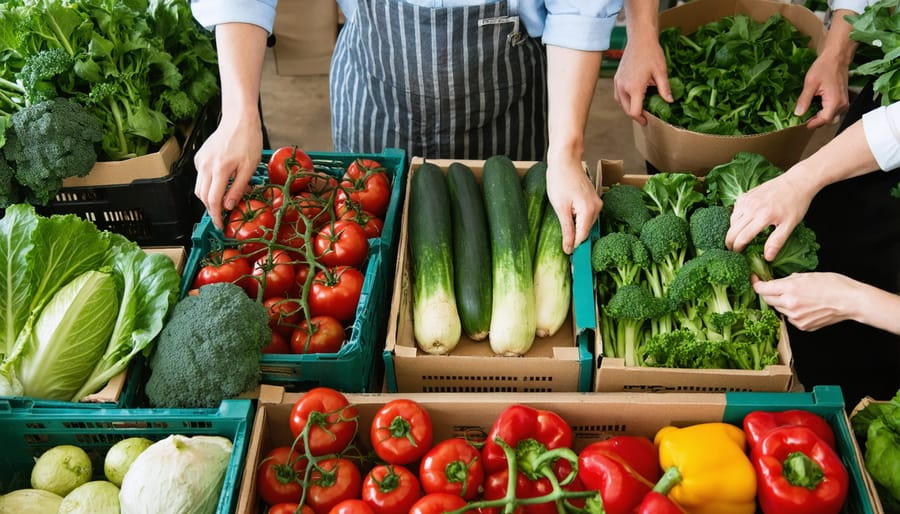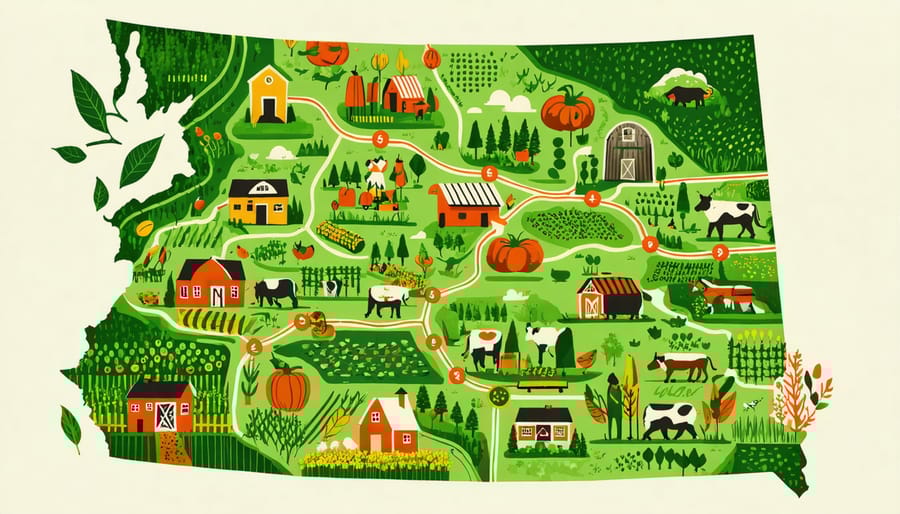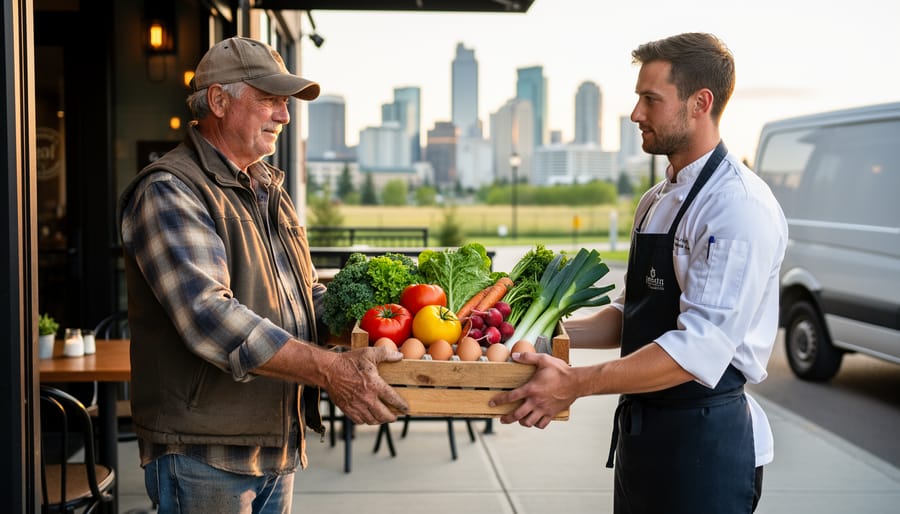
The farm to table movement is reshaping how Canadian farmers connect with consumers, creating direct market opportunities that bypass traditional wholesale channels and deliver premium prices for quality products. This shift toward local food systems now represents a $2.3 billion market in Canada, with Alberta farmers particularly well-positioned to capitalize on growing urban demand for traceable, fresh produce and proteins.
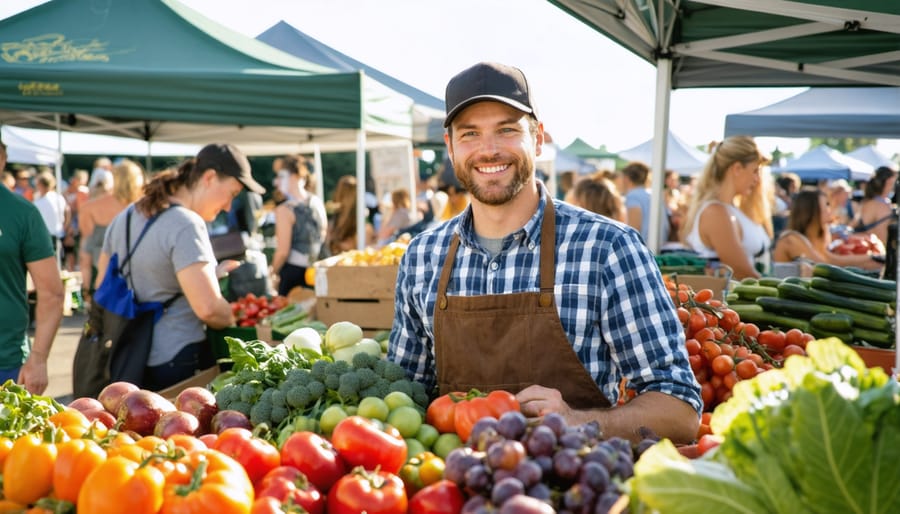
Understanding this movement means recognizing it as more than a dining trend. It’s a fundamental restructuring of food distribution that puts farmers in direct conversation with chefs, restaurant owners, and consumers who value knowing exactly where their food originates. For Alberta producers, this translates into concrete opportunities: restaurants willing to pay 30-40% premiums for locally-sourced ingredients, farmers’ markets generating average revenues of $15,000-$25,000 per season, and community-supported agriculture programs providing guaranteed income before harvest.
The movement’s growth stems from converging consumer priorities around food safety, environmental sustainability, and community economics. Urban Canadians increasingly question industrial food systems, seeking transparency that only direct relationships can provide. This creates advantages for smaller and mid-sized operations that might struggle competing on volume alone but excel in quality, variety, and the authentic farm story that resonates with today’s conscious consumers.
For farmers considering this transition, success requires strategic planning beyond simply growing good food. It demands understanding urban market logistics, building relationships with food service buyers, navigating food safety requirements, and developing marketing skills that communicate your farm’s unique value. The following exploration examines how Alberta farmers are successfully navigating these challenges, what infrastructure supports their efforts, and practical steps for entering or expanding within farm to table markets.
The Urban Shift: Why Cities Are Planning Around Local Food
Canadian Cities Leading the Change
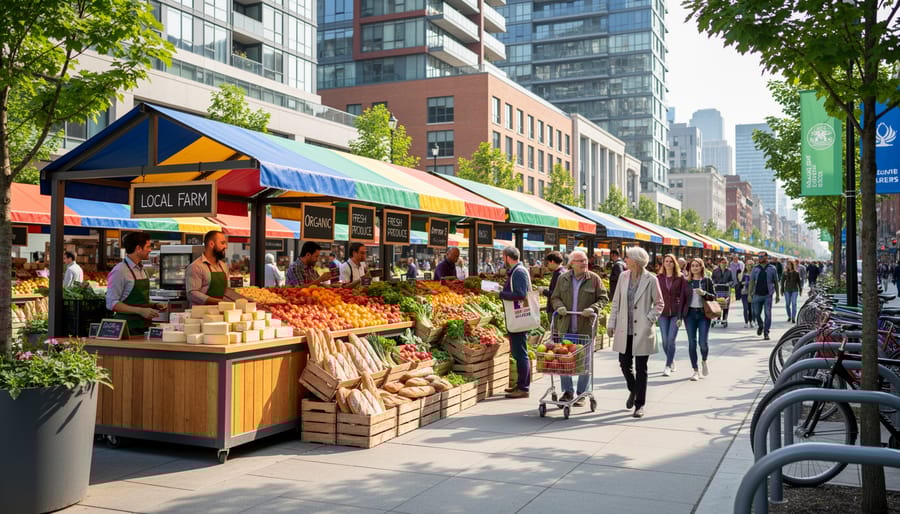
Alberta municipalities are making significant strides in supporting local food systems through progressive policy changes and strategic investments. Calgary has emerged as a frontrunner, with city council approving expanded urban agriculture zoning changes in 2022 that now permit commercial food production in 47 designated zones across the city. This represents a 215% increase from just five years ago.
Edmonton has implemented an innovative municipal procurement policy requiring 30% of food purchased for city facilities to come from Alberta producers within a 300-kilometre radius. Since its launch in 2021, this initiative has redirected over $2.8 million annually to regional farmers and processors. The program includes quarterly supplier meetings where local producers can connect directly with city procurement officers to understand upcoming needs and contract opportunities.
Red Deer has taken a different approach by establishing urban agriculture tax incentives. Property owners who dedicate at least 100 square metres to food production for local markets receive a 15% reduction in municipal property taxes. The program has attracted 83 participating households and small-scale producers in its first two years.
Lethbridge’s community agriculture strategy, developed in partnership with local farmers, has created four municipally-supported farmers’ market locations with reduced vendor fees for producers operating within 160 kilometres of the city. These markets now generate an estimated $1.2 million in annual sales for participating farmers, demonstrating how municipal support translates directly into economic opportunities for Alberta’s agricultural community.
New Market Opportunities in Urban Development
Infrastructure That Connects Farm to City
The physical systems connecting regional farms to urban consumers have evolved significantly in recent years, creating genuine opportunities for Canadian producers. New infrastructure networks are making farm-to-table relationships more practical and profitable than many farmers realize.
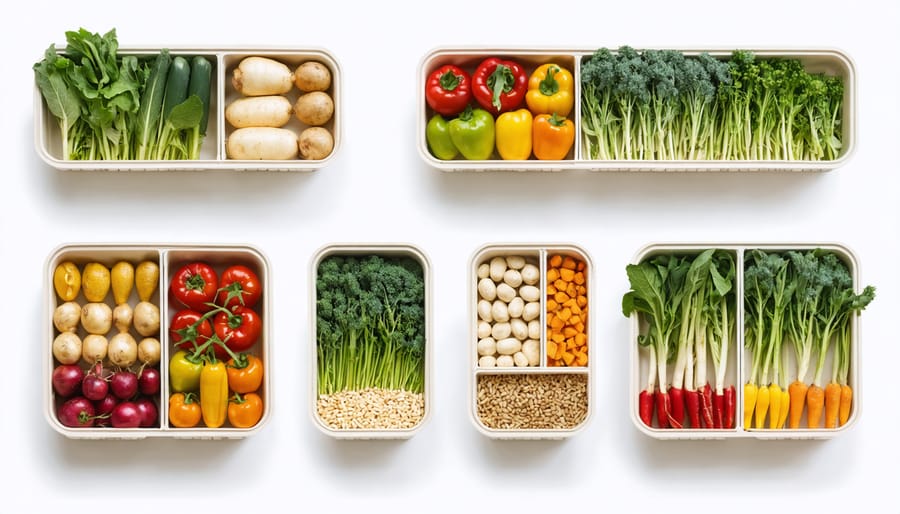
Food hubs and aggregation facilities now serve as crucial middlepoints between farm and city. These shared spaces allow multiple small to mid-size producers to consolidate their products, meeting the volume requirements urban buyers need while maintaining individual farm identity. Rather than each farm making separate deliveries, products flow through a central facility where they’re sorted, stored, and distributed efficiently. This reduces individual transportation costs and opens doors to larger contracts that single farms couldn’t fulfill alone.
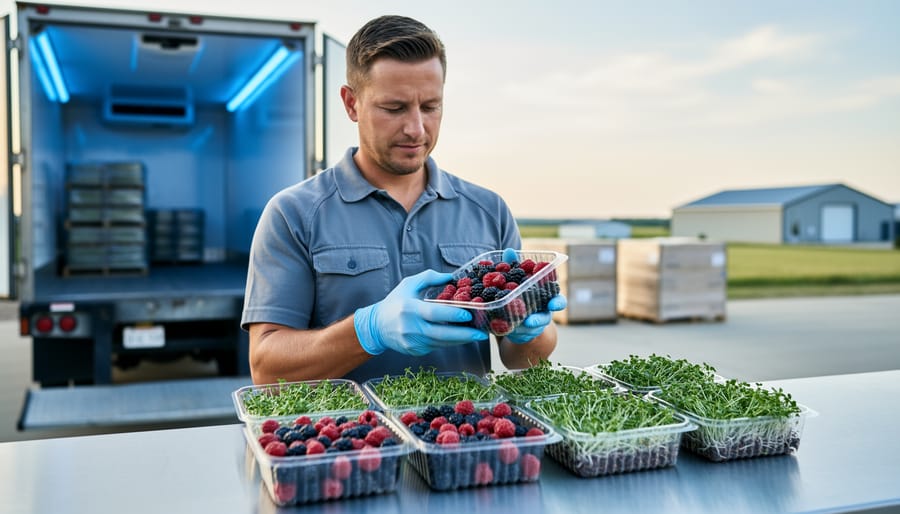
Cold storage networks have expanded beyond traditional wholesale markets. Regional facilities now offer short-term rental options with flexible terms, allowing farmers to store products closer to urban markets without major capital investment. This infrastructure proves particularly valuable for producers growing temperature-sensitive items like leafy greens, berries, or dairy products.
Alberta’s Red Deer Food Hub exemplifies successful farmer-city partnerships. Launched in 2019, this facility connects over 40 regional producers with restaurants, retailers, and institutions across Calgary and Edmonton. “We’re seeing farmers increase their direct-to-consumer sales by 35 to 60 percent within their first year,” explains facility coordinator Maria Chen. “The infrastructure removes the logistical barriers that previously made urban markets impractical for many operations.”
Several municipalities have also established designated delivery zones and loading areas specifically for regional food suppliers. Edmonton’s downtown core now features timed access windows for farm delivery vehicles, eliminating previous parking and access challenges. These practical adaptations acknowledge that supporting local food systems requires rethinking urban logistics, not just marketplace demand.
Direct-to-Consumer Spaces in City Planning
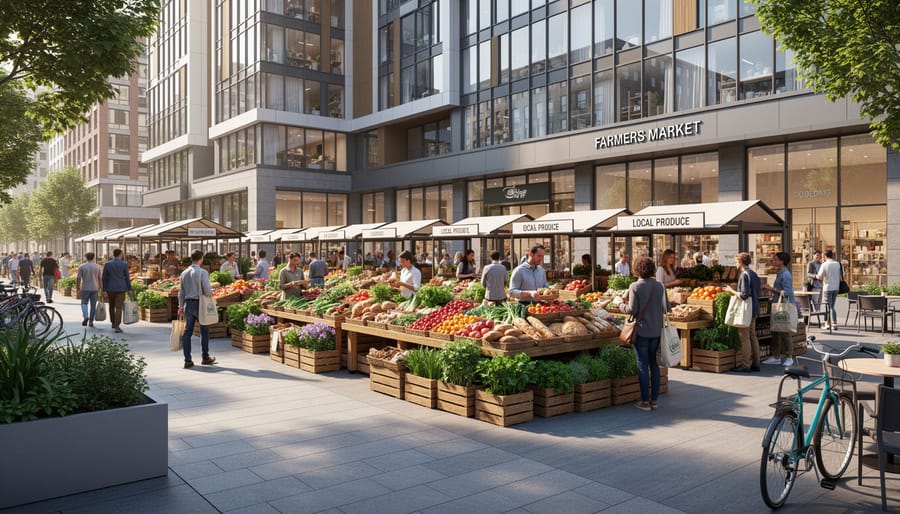
Cities across Canada are rethinking commercial zoning to accommodate the growing farm-to-table movement, creating dedicated direct-to-consumer spaces that benefit both farmers and urban residents. These permanent installations go beyond occasional pop-up markets, offering reliable year-round access points for fresh, local products.
Calgary’s Sunnyside neighbourhood recently incorporated permanent market spaces into its revitalization plan, providing farmers with insulated storage and refrigeration facilities. Similarly, Edmonton’s designated agricultural zones now include dedicated pickup locations where farmers can distribute orders without navigating restrictive commercial regulations.
For Alberta farmers looking to access these opportunities, start by contacting your regional economic development office. Many municipalities maintain databases of available commercial spaces specifically zoned for agricultural sales. The City of Calgary’s Agriculture Business Unit, for example, actively connects farmers with suitable locations.
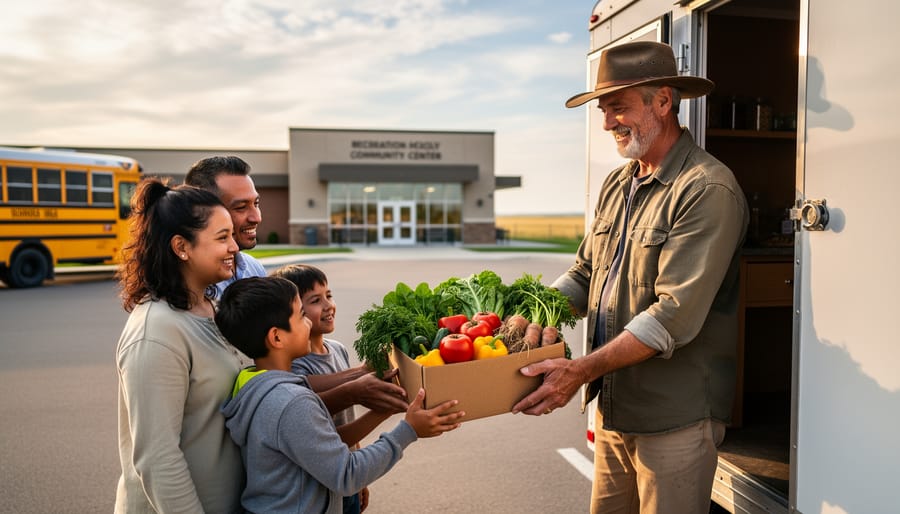
Community-supported agriculture pickup points are particularly popular in new residential developments. Developers increasingly view these amenities as attractive selling features, creating partnerships with local farms during the planning phase.
When considering these spaces, evaluate foot traffic patterns, parking availability, and proximity to your customer base. Most municipal agreements offer flexible lease terms, allowing you to test locations seasonally before committing long-term. Remember to verify insurance requirements and food safety regulations specific to urban retail environments, as these may differ from farm-gate sales regulations you’re already familiar with.
Protecting Farmland Through Smart Urban Growth
What This Means for Peri-Urban Farmers
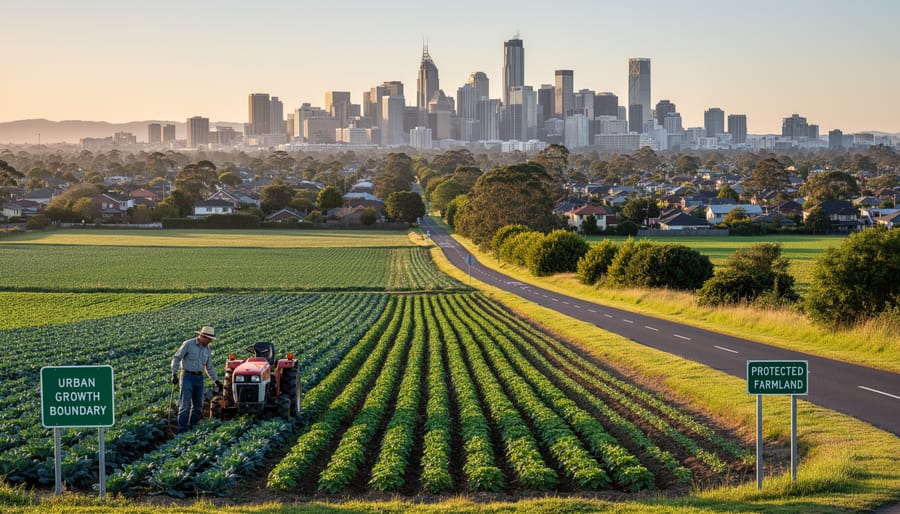
For farmers operating in peri-urban areas, the farm to table movement presents both unique opportunities and complex challenges. Your location between city and countryside puts you in an enviable position to access urban markets, but it also means navigating pressures that more remote farms don’t face.
The most significant challenge is land value. As cities expand, peri-urban farmland becomes increasingly attractive to developers. Property taxes often rise to reflect development potential rather than agricultural value, squeezing profit margins even when your operation thrives. In the Calgary-Edmonton corridor, some farmers have seen their property assessments triple in a decade, making it harder to justify continuing agricultural operations.
However, your proximity to urban consumers offers distinct advantages. Direct-to-consumer sales through farmers’ markets, community supported agriculture programs, and restaurant partnerships typically yield higher returns than traditional commodity sales. Transport costs remain minimal, and you can harvest crops at peak freshness since they reach consumers within hours rather than days.
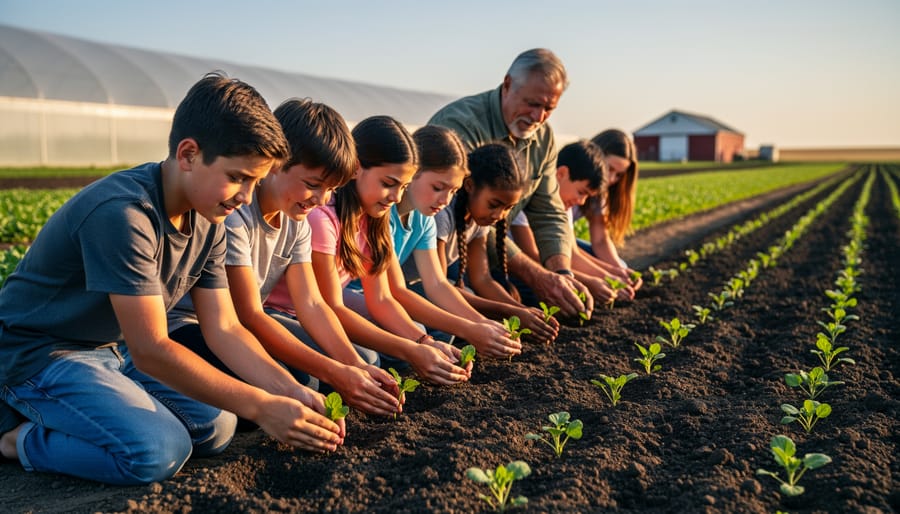
To maintain viability, consider diversifying your revenue streams. Agritourism activities like farm tours, pick-your-own operations, or farm-to-table dining experiences can supplement traditional farming income while building customer relationships. Some Alberta peri-urban farmers have successfully combined production agriculture with educational workshops, creating community connections that build long-term customer loyalty.
Conservation easements and agricultural land trusts offer tools to protect your land from development pressure while potentially providing tax benefits. These legal agreements preserve agricultural use even as surrounding areas urbanize.
Building relationships with chefs, institutional buyers, and local food hubs creates stable markets for your products. Start small, perhaps supplying one restaurant, then expand as you understand market demands and adjust production accordingly. Your geographic advantage means you can offer what distant farms cannot: truly local, harvest-fresh products delivered the same day.
Transportation and Distribution: The Missing Link
Getting fresh produce from rural farms to urban dinner plates quickly is one of the biggest challenges facing Canada’s farm-to-table movement. While consumer demand continues to grow, the infrastructure connecting producers to city dwellers often lags behind. Cities across Canada are now recognizing this gap and actively working to bridge it through innovative planning and investment.
The challenge is particularly relevant for Alberta farmers looking to serve Edmonton and Calgary markets. Fresh produce has a limited shelf life, and traditional distribution systems were designed for industrial agriculture, not small-scale direct sales. Many municipalities are responding by incorporating agricultural access into their urban planning. This includes designating loading zones specifically for farm vehicles in downtown areas, adjusting delivery time restrictions to accommodate early morning drop-offs, and creating centralized distribution hubs where multiple farmers can pool resources.
Calgary’s increasing adoption of coordinated distribution systems demonstrates how collaborative approaches reduce individual farmer costs while maintaining product freshness. These systems allow producers to share refrigerated transport, consolidate deliveries, and access urban markets that would otherwise be financially impractical to serve independently.
Road infrastructure improvements matter too. Rural highway conditions directly affect delivery reliability and produce quality. Several Alberta municipalities have partnered with agricultural associations to prioritize road maintenance on key farm-to-market routes, recognizing that smooth transportation protects both product quality and farmer livelihoods.
Mobile technology is also playing a role. Route optimization apps help farmers minimize travel time and fuel costs, while digital coordination platforms connect producers with urban distribution partners. Some cities now offer online permitting systems that simplify the process for farmers selling at multiple urban locations.
For farmers considering urban markets, investigating your target city’s distribution infrastructure is essential. Contact municipal planning departments about loading zones, delivery regulations, and available support programs. These practical logistics often determine whether farm-to-table ventures succeed or struggle.
Expert Perspective: Urban Planner Meets Alberta Farmer
We sat down with Marcus Chen, an urban development consultant from Calgary, and Janet Kowalski, who runs a 120-hectare mixed farm near Airdrie, to discuss the realities of connecting rural producers with urban markets.
Marcus: Janet, when did you first consider selling directly to Calgary restaurants and consumers?
Janet: About five years ago. We were getting squeezed on commodity prices, and I kept reading about chefs wanting local ingredients. But honestly, I had no idea where to start.
Marcus: That’s common. Many farmers don’t realize urban planners and economic development officers actually want to facilitate these connections. What was your first step?
Janet: I attended a regional food hub meeting in Red Deer. That’s where I learned about aggregation points and met a distributor who works with smaller producers. Within three months, we had our first restaurant client.
Marcus: From my perspective, the infrastructure challenge is significant. Urban centers need designated spaces for farmers’ markets and distribution. What logistical hurdles did you face?
Janet: Transportation costs nearly killed the whole venture. Driving to Calgary twice weekly wasn’t sustainable. We eventually partnered with three neighboring farms to share delivery routes and split fuel costs. That partnership saved us.
Marcus: Collaboration seems essential. What surprised you most about urban markets?
Janet: The relationship aspect. Chefs want to visit the farm, understand our practices, and plan menus around what we’re growing. It’s completely different from selling to commodity buyers. More work, but incredibly rewarding.
Marcus: For farmers considering this path, what’s your honest assessment of the time commitment?
Janet: It’s substantial, especially initially. You’re building relationships, managing different product specifications, and handling marketing. We dedicated about 15 hours weekly in year one. Now it’s maybe 8 hours, but you need systems in place.
Marcus: From an urban planning angle, successful farm-to-table requires municipal support through zoning for processing facilities and delivery coordination. Janet, what advice would you give farmers starting out?
Janet: Start small with one or two clients. Join a local food network or cooperative. Don’t try expanding to urban markets while simultaneously changing your entire operation. Test the waters, learn the rhythm, then scale up. And honestly, talk to other farmers already doing it. We’re not competing; we’re building a movement together.

Making It Work: Practical Steps for Farmers
Building Relationships With City Officials
Building meaningful relationships with municipal decision-makers starts with understanding their priorities. Begin by identifying key contacts in your local urban planning department, economic development office, and food policy council. Many Alberta municipalities now employ food system coordinators who actively seek partnerships with regional producers.
Start attending public consultations about zoning changes, food charters, or sustainability initiatives. These meetings provide valuable insights into upcoming policies while demonstrating your commitment as a local food producer. Come prepared with specific examples of how your farm operation can support urban food security goals.
Consider the example of a Red Deer area vegetable farm that successfully lobbied for amendments to farmers’ market bylaws. The farmer attended three consecutive city council meetings, presented data on local food demand, and connected with councillors individually between sessions. Within six months, new regulations expanded market opportunities for all regional producers.
When approaching officials, frame your operation as a solution to their challenges. Urban planners increasingly face pressure to reduce food transportation emissions and enhance community resilience. Position your farm as a partner in achieving these objectives rather than simply seeking favours.
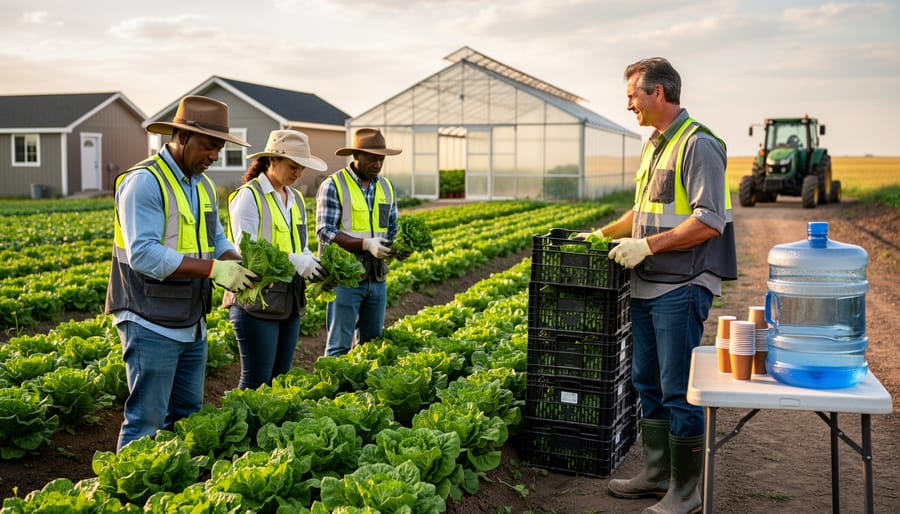
Document your contributions to the local food economy including jobs created, students trained, and donations to food banks. This data strengthens your credibility when participating in policy discussions. Join or establish a regional farm association to amplify your voice and coordinate advocacy efforts.
Remember that relationship-building takes time. Consistent engagement through emails, brief office visits, and participation in city-led agricultural roundtables gradually establishes you as a trusted resource in local food policy conversations.
The farm-to-table movement represents far more than a culinary trend—it’s a fundamental shift in how Canadian communities approach food production and consumption. For Alberta farmers, urban development doesn’t have to signal the end of agricultural opportunity. Instead, thoughtful farm-to-table urban planning creates a framework where cities and rural producers thrive together, building resilient local economies that benefit everyone involved.
When municipalities prioritize connections between urban consumers and nearby farms, they create stable markets that help farming operations weather economic uncertainty. These direct relationships mean better prices for producers, reduced transportation costs, and the kind of customer loyalty that sustains operations through challenging seasons. Alberta farmers who’ve embraced these partnerships report not just improved financial stability, but renewed purpose in their work as they see their products valued by engaged community members.
The community-building aspect proves equally valuable. Farm-to-table initiatives strengthen local food systems while fostering meaningful connections between rural and urban Albertans. These relationships break down misconceptions about modern agriculture and help city residents understand the realities of food production. For farmers, this translates into educated consumers who appreciate quality and are willing to support local operations.
Long-term sustainability advantages extend beyond economics. Shorter supply chains reduce environmental impact, preserve farmland through economic viability, and create food security for entire regions. As urban populations grow, farms positioned to serve these markets secure their future relevance.
The opportunity is clear: view urban expansion as a chance to strengthen your operation’s foundation. By engaging with farm-to-table initiatives, you’re not just selling products—you’re investing in a sustainable agricultural future for Alberta.