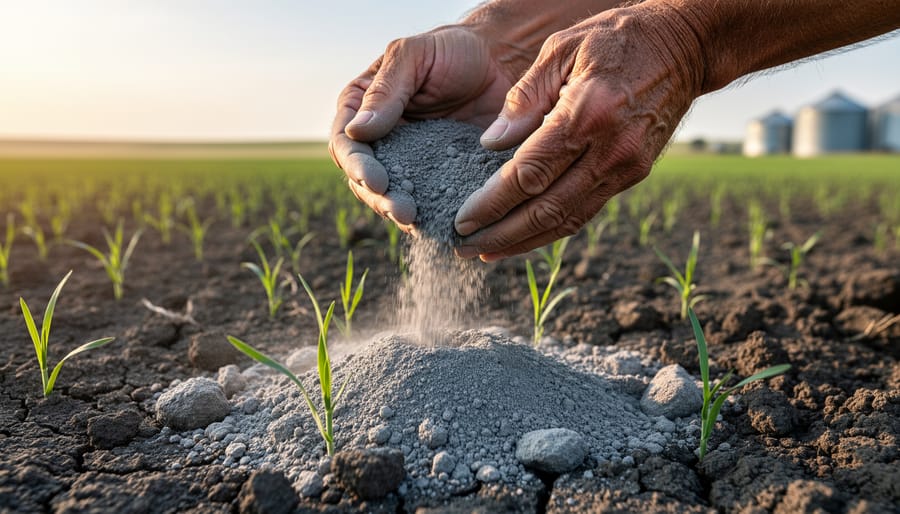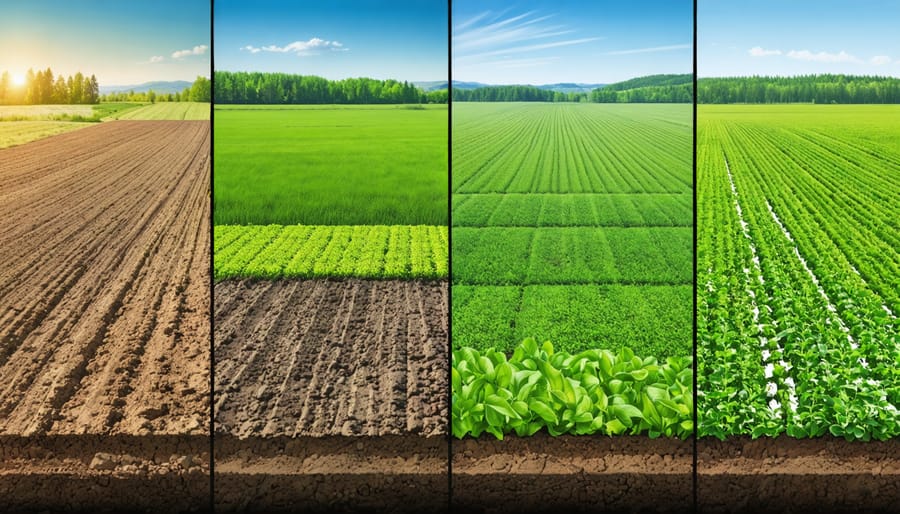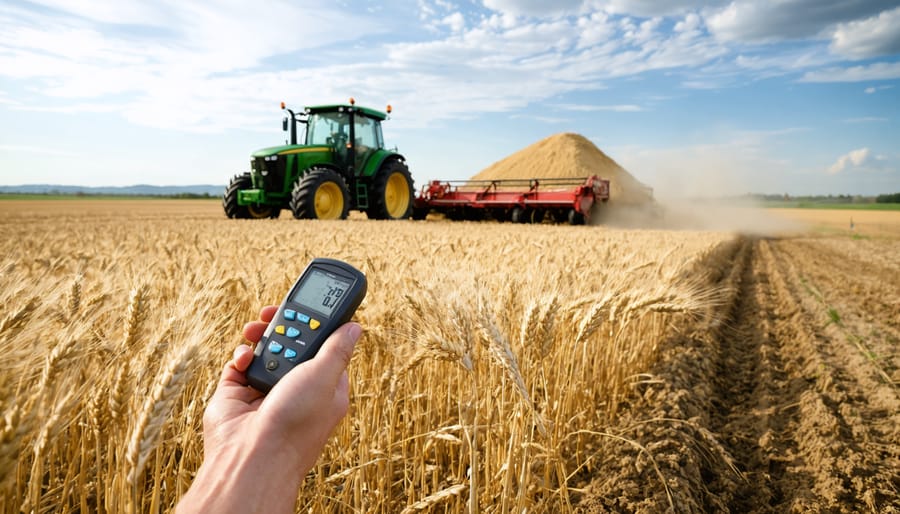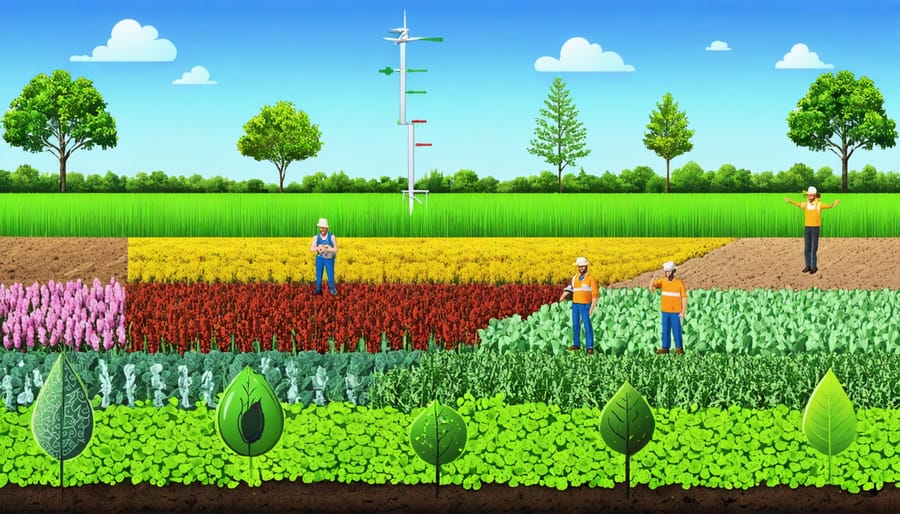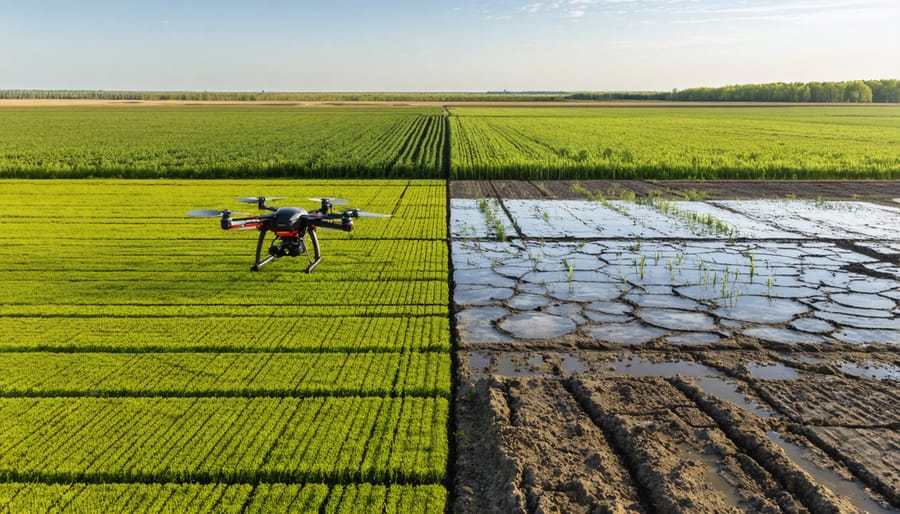
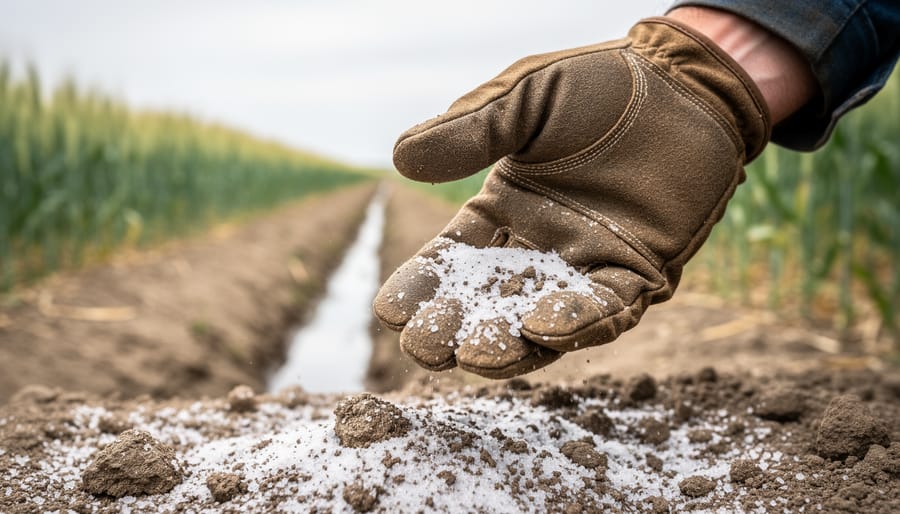
Test your soil salinity levels before any symptoms appear by collecting samples from multiple depths—0-15 cm, 15-30 cm, and 30-60 cm—across problem areas and sending them to an accredited lab for electrical conductivity (EC) analysis. This baseline data reveals whether you’re dealing with surface accumulation or deeper subsoil issues, determining which management approaches will actually work on your land.
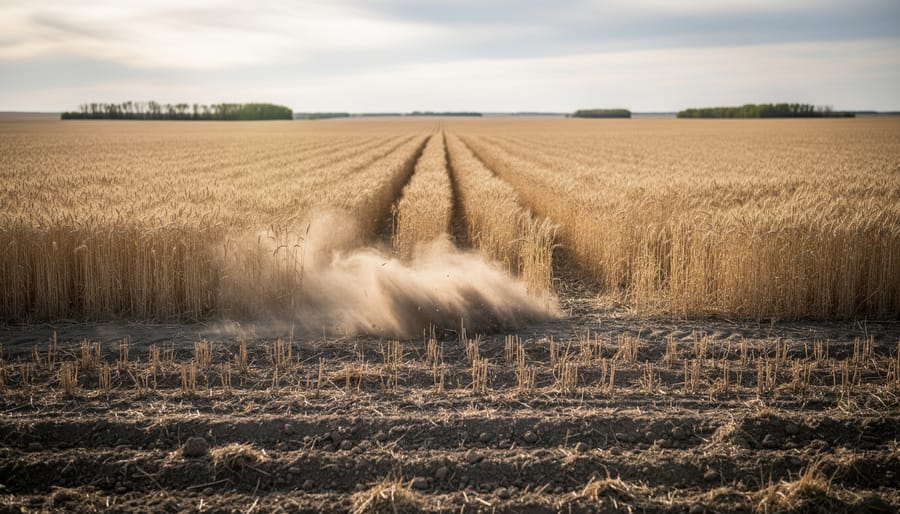
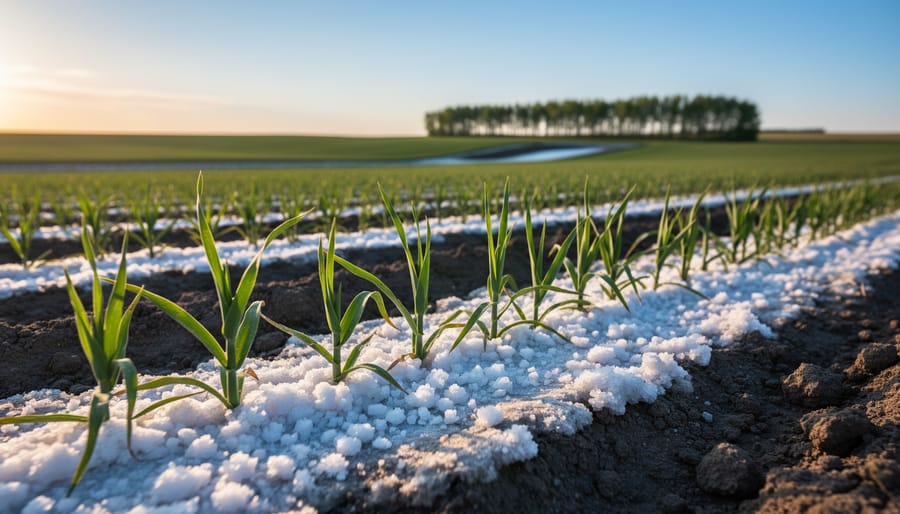
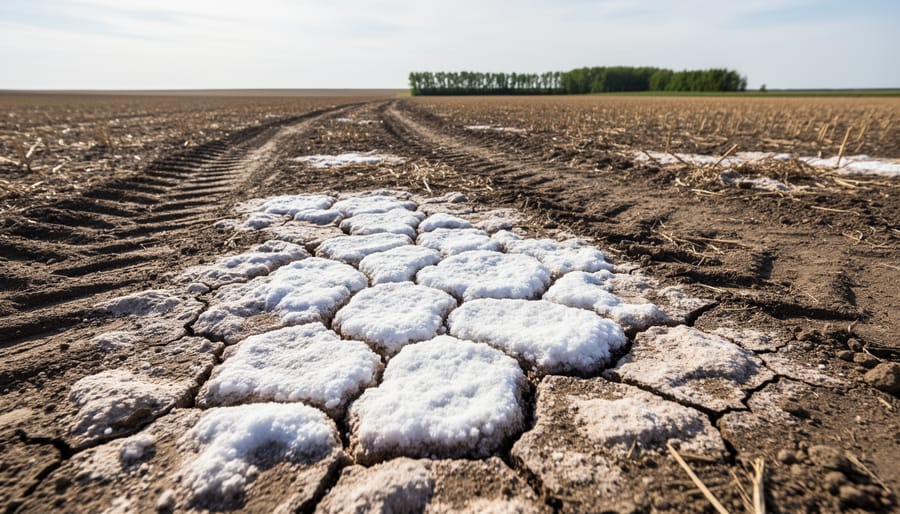
Identify white crusting, patchy crop growth, or areas where only salt-tolerant weeds thrive as early warning signs that salinity has already compromised soil productivity. Alberta farmers lose an estimated 2 million acres to salinity-related yield reductions, but catching the problem early means you can implement corrective measures before permanent damage occurs.
Improve drainage in affected areas by installing tile drainage systems or constructing surface drainage channels that redirect water away from salt accumulation zones. Poor drainage allows salts to move upward through capillary action and concentrate in the root zone, so moving excess water off your fields prevents this damaging cycle.
Select salt-tolerant crop varieties like barley, canola, or tall wheatgrass for moderately affected areas, allowing you to maintain production while managing the underlying salinity issue. These crops withstand EC levels up to 8 dS/m, compared to sensitive crops like field beans that struggle above 2 dS/m, giving you practical options that protect your bottom line.
Agriculture salt isn’t a single substance—it’s a complex mixture of soluble salts, primarily sodium sulfate and sodium chloride, that accumulates in Prairie soils through natural geological processes, irrigation practices, and water table fluctuations. Understanding what you’re facing and taking targeted action transforms this challenge into a manageable aspect of your farming operation rather than a threat to your land’s future productivity.
What Agricultural Salt Actually Is (And Where It Comes From)
The Science Made Simple
Understanding how salt behaves in your soil starts with recognizing that agricultural salts are simply minerals that dissolve in water. When water moves through soil—whether from irrigation, rainfall, or groundwater—it carries these dissolved salts along with it. Think of it like sugar dissolving in your coffee and spreading throughout the cup.
In healthy soils, water drains downward, carrying salts away from the root zone. However, in Alberta’s clay-heavy soils or areas with poor drainage, water moves upward through capillary action as it evaporates from the soil surface. This upward movement brings salts to the topsoil where your crops grow, leaving them behind as the water evaporates. It’s similar to a candle wick drawing up wax.
Once concentrated near the surface, these salts create two main problems for your crops. First, they make it harder for plant roots to absorb water, even when moisture is present—a process called osmotic stress. Second, certain salts like sodium can break down soil structure, reducing the air spaces that roots need to thrive. Understanding these soil health fundamentals helps you recognize why managing salt movement is essential for productive farmland.
Alberta’s Unique Salt Challenge
Alberta’s arid climate creates a perfect storm for agricultural salt accumulation, making salinity one of the province’s most persistent soil challenges. With annual precipitation averaging just 300-450 millimetres in many farming regions, there simply isn’t enough rainfall to flush salts deeper into the soil profile where they won’t harm crops.
Below the surface, Alberta’s geology adds another layer of complexity. Ancient seabeds left behind salt-rich bedrock and groundwater that naturally contain dissolved minerals. As water moves upward through soil capillaries—a process called capillary rise—it carries these salts toward the surface. When the water evaporates in our dry conditions, the salts remain behind, accumulating year after year.
The challenge intensifies in areas with shallow water tables, typically found in low-lying fields and depressions. According to Dr. James Robertson, soil scientist with Alberta Agriculture and Irrigation, “When the water table sits within two metres of the surface, you’re essentially creating a salt delivery system. The closer that water table, the more efficiently salts move upward.”
This combination—limited rainfall, mineral-rich groundwater, and shallow water tables—means Alberta farmers face salinity issues that differ significantly from humid regions. Understanding these unique conditions is the first step toward developing effective management strategies that work with, rather than against, our prairie environment.
How Salt Is Quietly Killing Your Crops
The Warning Signs Every Farmer Should Know
Recognizing salinity problems early can save you significant time and money. The most obvious sign is white salt crusts forming on the soil surface, particularly after rainfall or irrigation when water evaporates and leaves mineral deposits behind. These crusty patches often appear in low-lying areas where water naturally collects.
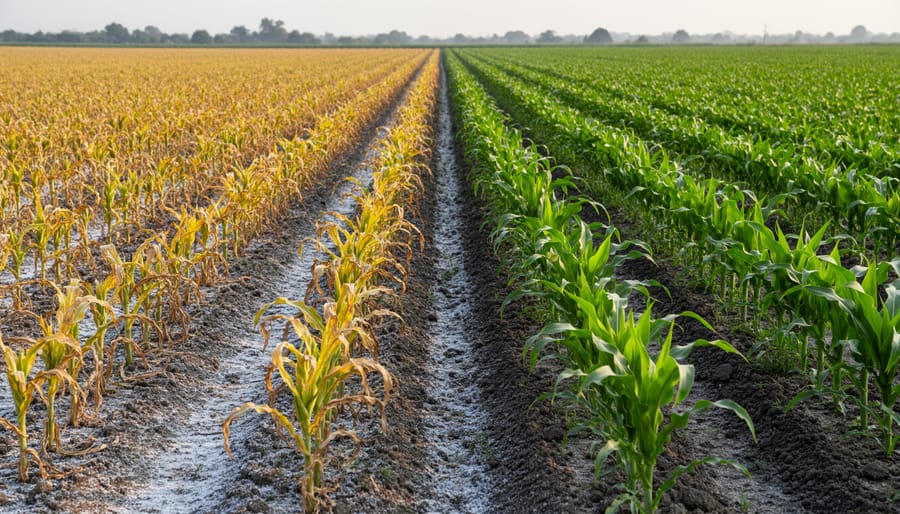
Bare or thinning patches in your fields are another red flag. Salt-affected areas typically show poor germination and stunted growth, creating noticeable gaps in what should be uniform crop stands. You might also observe a specific pattern where vegetation thrives at field edges but struggles in the centre, or vice versa, depending on your land’s drainage characteristics.
Different crops show sensitivity at varying levels. Canola and dry beans are among the first to display symptoms, making them excellent indicator crops. Watch for leaf burn, yellowing, or wilting that isn’t explained by drought or disease. Barley and some wheat varieties can mask early problems since they’re more salt-tolerant, potentially hiding issues until they become severe.
Jim Patterson, a soil specialist working with Alberta farmers for over 20 years, notes that “many producers miss the subtle signs – like crops maturing unevenly or grain quality declining in certain areas year after year. These patterns often point to developing salinity issues before the white crusts even appear.”
Pay attention to seasonal timing too. Salt-stressed plants often emerge later in spring and show increased vulnerability to frost damage. Walking your fields regularly and documenting these patterns helps you catch problems while they’re still manageable.
The Real Cost to Your Bottom Line
Soil salinity doesn’t just affect your crops—it hits your wallet hard. Alberta farmers dealing with saline soils report yield losses ranging from 10% in mildly affected areas to complete crop failure in severely impacted zones. For a typical grain operation, this translates to losses of $50 to $150 per acre annually, according to Alberta Agriculture and Irrigation data.
The financial impact extends beyond immediate yield reductions. “We were losing about 30% of our canola yield on 40 acres of saline patches,” shares Mark Chen, a farmer near Lethbridge. “That’s roughly $6,000 in lost revenue every year, not counting the extra inputs we were wasting on areas that couldn’t support healthy growth.”
Input costs compound the problem. Farmers often over-apply fertilizers and seeds to saline areas, trying to compensate for poor performance. These efforts rarely succeed because salt-stressed plants can’t effectively use additional nutrients. You’re essentially throwing money at a problem that requires a different approach entirely.
Land value takes a substantial hit too. Agricultural land appraisers in Alberta indicate that properties with documented salinity issues sell for 15-25% less than comparable non-saline land. For a quarter-section farm, that could mean $75,000 to $125,000 in reduced equity.
The good news? Early intervention makes a difference. Farmers who implement targeted management strategies within the first few years of noticing salinity typically recover 60-80% of lost productivity, protecting both current income and long-term land value.
Testing Your Soil: Know What You’re Fighting
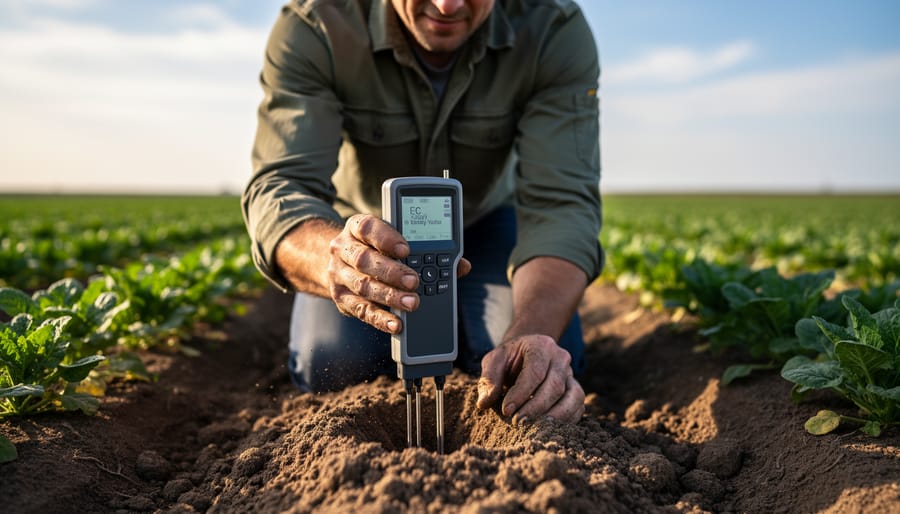
Understanding Your Test Results
Reading your soil test results doesn’t have to be complicated. The key measurement you’ll encounter is electrical conductivity (EC), expressed in deciSiemens per metre (dS/m) or millimhos per centimetre (mmho/cm)—these units are interchangeable.
Here’s what the numbers mean for your operation: EC values below 2 dS/m indicate minimal salinity impact on most crops. Between 2-4 dS/m, you’ll see yield reductions in sensitive crops like beans and carrots. At 4-8 dS/m, moderately tolerant crops like wheat and canola begin showing stress. Above 8 dS/m, only highly tolerant crops like barley and some forage grasses will produce reasonable yields.
Alberta agronomist Dr. Sarah Mitchell explains, “Think of EC as a crop’s comfort zone. Each plant species has a threshold where salt stress begins affecting productivity.” For example, field peas struggle above 2 dS/m, while barley can handle up to 8 dS/m before significant yield loss occurs.
Your lab report will also show sodium adsorption ratio (SAR), which indicates structural soil damage risk. Values above 13 signal potential problems with water infiltration and soil workability, requiring targeted management beyond simple drainage improvements.
Where to Get Testing Done in Alberta
Getting accurate soil and water testing is your first step toward managing salinity effectively, and several trusted resources are available right here in Alberta. The Alberta Agriculture and Irrigation department operates regional soil and crop diagnostic centres throughout the province that can conduct comprehensive salinity testing at reasonable costs. These labs analyze electrical conductivity, sodium adsorption ratio, and specific ion concentrations to give you a complete picture of your soil health.
For university-backed expertise, the University of Alberta’s Department of Agricultural, Food and Nutritional Science offers soil testing services and connects farmers with research-based recommendations. Their specialists can help interpret results within the context of Alberta’s unique growing conditions.
Your local agronomist remains one of your most valuable resources for both testing coordination and result interpretation. Many work directly with certified laboratories and can visit your operation to collect samples properly, ensuring accurate results. They understand regional salinity patterns and can translate lab numbers into actionable management plans specific to your crops and soil type.
County agricultural fieldmen also provide testing guidance and can connect you with provincial programs or funding opportunities for salinity management projects. Don’t hesitate to reach out—these professionals are here to support your farm’s long-term success.
Proven Strategies for Managing Salt on Your Farm
Improving Your Drainage System
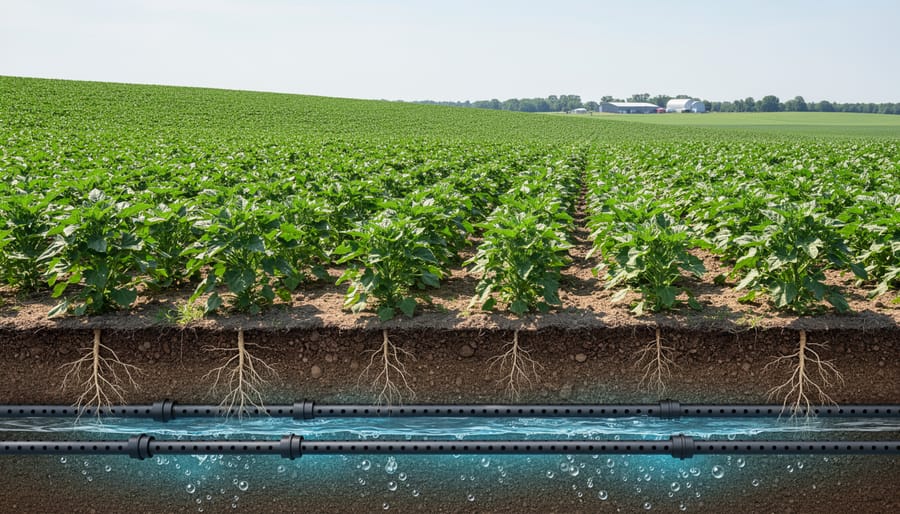
One of the most effective ways to manage soil salinity is through improved drainage systems that help flush excess salts below the root zone. When properly designed, drainage allows you to apply irrigation water that leaches salts downward and away from where your crops grow.
Tile drainage involves installing perforated pipes underground, typically at depths of 1 to 1.5 metres, which collect water carrying dissolved salts and direct it away from fields. This subsurface approach works particularly well in heavier clay soils common across Alberta’s agricultural regions. The spacing between drainage tiles depends on your soil type and salinity levels, but typically ranges from 15 to 30 metres apart.
Surface drainage focuses on removing water quickly from the soil surface through careful land grading and construction of drainage ditches. This prevents water from pooling and evaporating, which concentrates salts at the surface. Even a gentle slope of 0.2 to 0.5 percent can make a significant difference in water movement.
Managing your water table is equally important. When groundwater sits too close to the surface—within 2 metres—capillary action draws salty water upward. As this moisture evaporates, it leaves salt deposits in the root zone.
A 2019 case study from Lethbridge demonstrated remarkable results when a producer installed a combination tile and surface drainage system on 65 hectares of saline-affected land. Within three growing seasons, soil salinity decreased by 40 percent in the most affected areas, and barley yields improved from 2.1 to 3.8 tonnes per hectare. The investment paid for itself within five years through improved productivity.
Irrigation Best Practices for Salty Conditions
Managing irrigation in salty conditions requires a strategic approach that addresses both water quality and application methods. For Alberta farmers dealing with salinity challenges, understanding these practices can make a significant difference in crop performance.
Start by testing your irrigation water for salt content. Water with an electrical conductivity above 0.7 dS/m requires careful management. When possible, blend saline water with fresher sources to reduce overall salt concentration. If you’re using groundwater, periodic testing helps you track seasonal variations in water quality.
Leaching is essential for managing salt accumulation in the root zone. Apply 10-20% more water than your crops need to push salts below the root zone. Time these leaching applications during periods of lower evaporation, typically early morning or evening, to maximize effectiveness. In Alberta’s climate, spring leaching before seeding can help flush accumulated winter salts.
Increase irrigation frequency while reducing application amounts. This approach maintains soil moisture and prevents salt concentration around roots. Drip irrigation and micro-sprinklers excel in salty conditions because they apply water slowly and uniformly, minimizing surface evaporation that concentrates salts.
Smart irrigation technology helps Alberta producers monitor soil moisture and salinity levels in real-time, allowing for precise water management. Soil moisture sensors placed at multiple depths can indicate when salts are moving through the profile.
Avoid irrigation during hot, windy conditions when evaporation rates peak. This simple adjustment prevents rapid salt concentration at the soil surface where it can damage emerging seedlings and young plants.
Choosing Salt-Tolerant Crops
Not all crops respond to saline conditions equally, and selecting salt-tolerant crops can make a significant difference in your yields when dealing with salinity issues.
Among cereals, barley shows the best tolerance to moderate salinity levels, making it a reliable choice for affected fields. Triticale also performs reasonably well and offers good feed quality. For forage crops, tall wheatgrass, altai wildrye, and Russian wildrye are excellent options that establish well in saline areas while providing nutritious livestock feed. Many Alberta producers have found success with slender wheatgrass for both forage and soil improvement.
Kochia, while often considered a weed, can actually serve as emergency forage in highly saline zones where few other plants survive. Sugar beets and canola demonstrate moderate tolerance and may work in less severely affected areas.
Keep in mind that salt tolerance varies by crop growth stage, with germination typically being the most vulnerable period. Consider testing different varieties in smaller areas first to see what works best for your specific soil conditions and salinity levels before committing entire fields.
Soil Amendments That Actually Work
Gypsum stands out as the most reliable amendment for salt-affected soils in Alberta. It works by displacing sodium with calcium, improving soil structure without raising pH levels. Application rates typically range from 2-5 tonnes per hectare, depending on your soil test results. “We’ve seen consistent improvements with gypsum on our Lethbridge farm,” notes agronomist Sarah Mitchell, “but patience is key—expect gradual changes over 2-3 years, not overnight fixes.”
Organic matter additions like compost and manure help buffer salt effects and improve water infiltration. While they won’t remove salts directly, they create better growing conditions. Apply 10-20 tonnes per hectare annually where feasible.
What doesn’t work? Elemental sulphur alone won’t address salinity, though it can help with sodic conditions when combined with proper drainage. Lime makes salt problems worse by increasing pH. Quick-fix products promising instant results rarely deliver.
The reality is that amendments support recovery but aren’t magic solutions. They work best alongside drainage improvements and proper irrigation management. Focus your amendment budget on fields with moderate salinity where you’ll see measurable returns.
What One Southern Alberta Farmer Did to Reclaim 40 Hectares
When Tom Berkshire first noticed white crusts forming on his canola fields near Lethbridge in 2016, he didn’t realize he was looking at the beginning of a seven-year salinity management journey. What started as a five-hectare problem spot had expanded to nearly 40 hectares by 2018, threatening the viability of his quarter section.
“I watched my yields drop from 45 bushels per acre down to nothing in those saline patches,” Tom recalls. “The economic hit was substantial, but what really concerned me was how quickly it was spreading.”
Tom’s situation is common across southern Alberta, but his systematic approach to reclamation offers a roadmap for others facing similar challenges. He started by bringing in Dr. Sarah Chen, a soil scientist with Alberta Agriculture and Irrigation, to conduct detailed soil testing across the affected areas.
“We mapped the salinity levels throughout the field and discovered the salt was concentrated in the low-lying areas where water naturally collected,” Dr. Chen explains. “The electrical conductivity readings ranged from 4 dS/m in the moderately affected zones to over 12 dS/m in the worst spots.”
Tom’s integrated approach began in 2019 with strategic drainage improvements. He invested $8,500 in installing subsurface drainage tiles in the most severely affected areas, redirecting water away from salt accumulation zones. By spring 2020, he had incorporated salt-tolerant crops into his rotation, planting tall wheatgrass in the worst zones and barley in moderately affected areas.
The timeline of improvements was gradual but measurable. By year two, soil salinity levels in the drained areas had dropped by 30 percent. Tom also implemented precision irrigation management, applying water only where needed and avoiding over-irrigation that would raise the water table.
“The key was patience and diversification,” Tom notes. “I didn’t expect immediate fixes, but each year brought visible improvements.”
By 2023, Tom had successfully reclaimed 28 of the 40 affected hectares for grain production. His total investment over five years was approximately $22,000, but the recovered productive capacity now generates an estimated $15,000 additional revenue annually. The remaining 12 hectares support productive forage crops, turning former dead zones into usable pasture.
Your Action Plan: Where to Start Tomorrow
No matter where you are in your salinity journey, taking that first step makes all the difference. Here’s your roadmap based on your current situation.
If you’re just noticing problems—patchy growth, white crusting, or crops struggling in certain areas—start with observation and testing. Walk your fields this week and map out the affected zones using your phone’s GPS or simple field markers. Contact your local agricultural fieldman to arrange an electrical conductivity test. In Alberta, many municipal districts offer subsidized soil testing programs. Document what you see with photos; patterns often become clearer when you review images side-by-side over time.
For those dealing with moderate salinity issues, it’s time to implement targeted strategies. Begin with the low-hanging fruit: adjust your irrigation schedule if you’re using it, ensuring you’re not over-watering affected areas. Plant salt-tolerant crops like barley or certain forage varieties in problem zones this coming season. Consider installing tile drainage in your worst areas—yes, it’s an investment, but many Alberta farmers report seeing improvements within two years. Reach out to your agrologist about accessing provincial programs that might offset costs.
If you’re facing severe salinity, you’re not alone, and solutions exist. Priority one is preventing further spread—this means addressing drainage immediately and potentially taking severely affected areas out of annual crop production temporarily. Consider transitioning these zones to perennial forages or native grass mixtures that can tolerate higher salt levels while you work on longer-term remediation. Connect with your local Ag-Info Centre to discuss intensive management options and financial support programs.
Regardless of your situation, document everything. Keep records of tests, treatments, and results. Join your local agricultural society or online farming communities where Alberta producers share real-world experiences. Your future self will thank you for the detailed notes, and the community support makes challenging seasons more manageable.
Managing salinity in your fields doesn’t have to be overwhelming. While salt accumulation presents real challenges, Alberta farmers have proven time and again that with the right knowledge and consistent effort, productive agriculture on salt-affected land is entirely possible. The key is to start somewhere, even if it’s just testing one problem area or trying a salt-tolerant crop variety on a small section of your operation.
You’re not alone in this journey. Alberta’s agricultural community offers tremendous support through local extension offices, conservation groups, and fellow farmers who’ve successfully tackled similar challenges. Take advantage of these networks—whether it’s attending a workshop on soil health, connecting with agronomists who specialize in salinity management, or simply talking with a neighbour who’s implemented drainage improvements. The collective experience within our farming community is one of our greatest resources.
Remember that soil health management is a marathon, not a sprint. Small, incremental changes—adding organic matter, adjusting your crop rotation, monitoring drainage patterns—add up to significant improvements over time. Some farmers see measurable results within a single growing season, while others work toward longer-term restoration goals. Both approaches are valid.
As stewards of the land, we have a responsibility to the next generation of Alberta farmers. The choices we make today about managing salinity and protecting soil quality will determine the productivity of these fields for decades to come. By taking action now, testing your soil regularly, and implementing even modest management strategies, you’re investing in a sustainable agricultural future. Your land has supported your livelihood—now it’s time to return that support through informed, proactive salinity management.