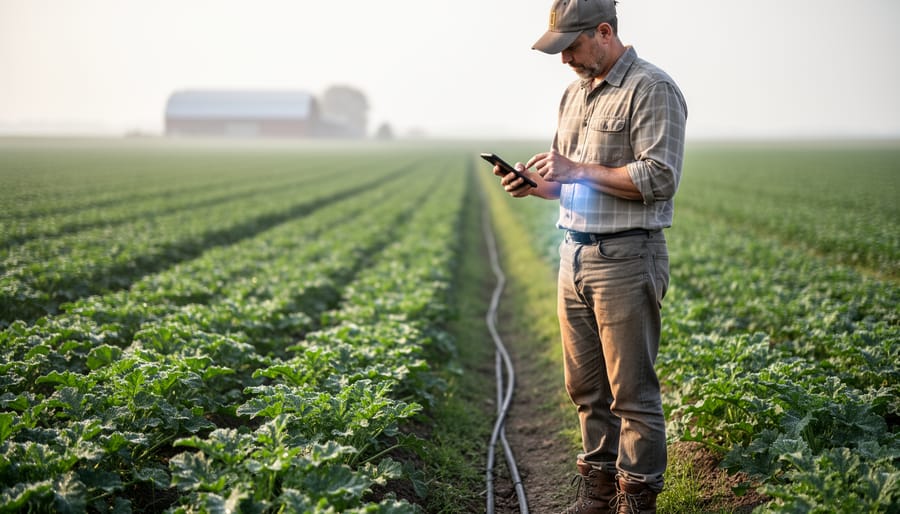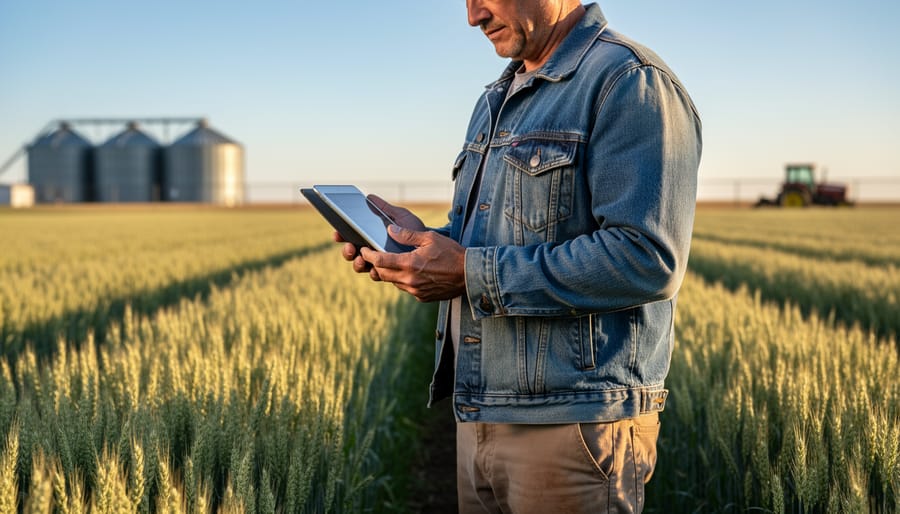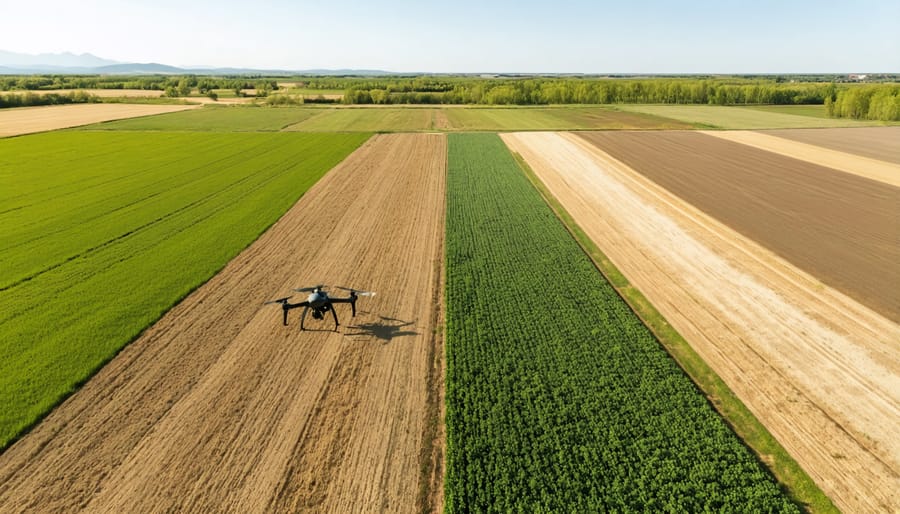
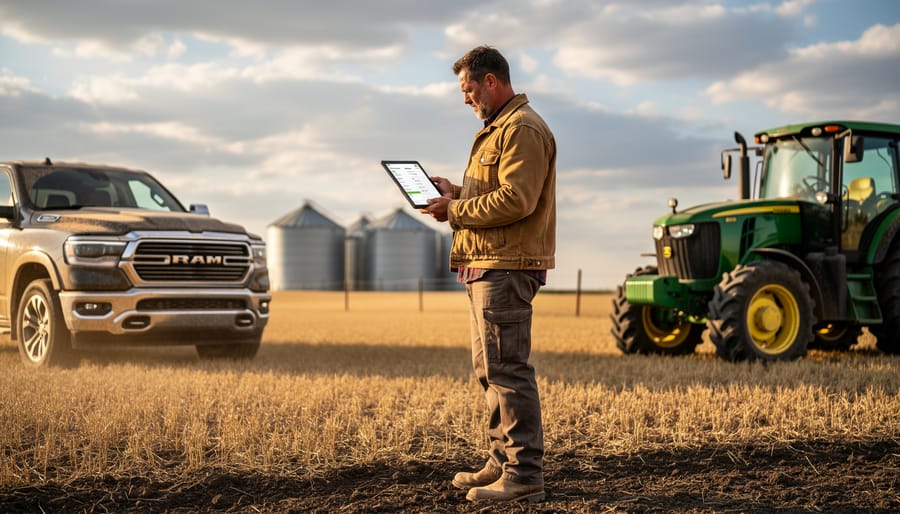
Access e-compliance training through digital organic certification platforms that allow you to complete mandatory organic standards education on your own schedule, eliminating the need to travel hours to in-person workshops during peak farming seasons. Complete modules in 15-30 minute segments between field work, using any device with internet access, and track your progress automatically through integrated dashboards. Download certification records immediately upon completion to submit with your organic applications, reducing paperwork delays by weeks compared to waiting for mailed certificates from traditional training sessions. Review complex requirements like buffer zone calculations or livestock health protocols as many times as needed without feeling rushed or embarrassed to ask questions in group settings.
For Canadian organic producers managing remote operations across Alberta’s vast landscapes, e-compliance training transforms certification from a logistical burden into a manageable task you control. The flexibility proves especially valuable during unpredictable weather windows when leaving the farm isn’t an option. Most platforms now offer bilingual content, live chat support during business hours, and recorded webinars featuring certification officers who explain recent regulatory changes. The technology meets you where you are, both literally and in terms of your digital comfort level, making organic certification more accessible for operations of all sizes and experience levels.
The Reality of Traditional Organic Compliance Training in Rural Alberta
For many Alberta farmers pursuing organic certification, the path to compliance often feels like an additional full-time job layered onto already demanding schedules. The traditional training system presents significant barriers that can discourage producers from entering or maintaining organic certification.
Distance remains one of the most persistent challenges. Rural producers often face drives of 200 to 400 kilometres to reach certification training sessions in cities like Calgary, Edmonton, or Red Deer. This translates to full-day commitments when you factor in travel time, representing lost hours that could be spent on farm operations. For operations in more remote areas like the Peace Country or southeastern Alberta, these distances stretch even further.
Timing creates another layer of difficulty. Certification training sessions typically follow fixed schedules that don’t always align with agricultural realities. Spring seeding and fall harvest are critical periods when farmers can least afford to be away from their operations, yet these are often when training sessions are scheduled due to venue availability in urban centres.
Access to qualified trainers presents its own complications. With a limited pool of certified organic inspectors and trainers in Western Canada, producers sometimes wait months for available sessions. This can delay certification processes and create bottlenecks for farmers trying to enter organic markets during optimal windows.
The paper-based documentation systems still prevalent in traditional training add administrative burden. Farmers receive binders full of regulations and forms that must be manually completed, filed, and updated. When changes occur to certification standards, producers may not receive timely updates, risking non-compliance through outdated information.
Consider the experience of the Hoffman family, who operate a 240-hectare mixed grain and livestock operation near Vermilion. Their initial certification process required four separate trips to Edmonton over six months, totaling 1,600 kilometres of driving. Between fuel costs, accommodation for overnight stays, and time away during their busiest season, they estimate losing nearly $3,000 in direct costs and opportunity costs before even completing their certification paperwork.
These challenges aren’t insurmountable, but they represent real barriers that digital solutions are now beginning to address.
What E-Compliance Training Actually Means for Your Farm

Core Components of Digital Compliance Platforms
Modern e-compliance platforms break down complex certification requirements into manageable, farmer-friendly components that fit into your daily routine. At the heart of these systems are interactive learning modules that you can access from your phone or computer during morning coffee or after evening chores. These modules typically present certification standards through short videos, infographics, and scenario-based quizzes that relate directly to real farm situations you encounter regularly.
Digital documentation systems replace traditional paper trails with cloud-based record-keeping. You can snap photos of field maps, upload harvest logs, and track input purchases all in one secure location. Many Canadian farmers report spending 40-60% less time on paperwork using these systems compared to manual methods. The software automatically organizes your records according to certification body requirements, making annual audits significantly smoother.
Automated reminder features act as your virtual compliance assistant, sending notifications about upcoming renewal deadlines, required soil testing dates, or documentation submissions. This eliminates the stress of tracking multiple calendar dates manually. One Alberta grain farmer shared how automated reminders helped him avoid missing a critical buffer zone inspection deadline that would have delayed his certification renewal by months.
Virtual audit capabilities allow certifiers to review your documentation remotely, reducing the need for on-farm visits while maintaining certification integrity. During initial implementation, you’ll receive video tutorials and email support to ensure comfortable navigation of all platform features, making the transition accessible regardless of your technical experience level.
How It Fits Within Canadian Organic Standards
E-compliance training fully aligns with the Canada Organic Regime (COR) requirements, offering farmers a legitimate pathway to maintain certification standards. The Canadian Food Inspection Agency (CFIA) recognizes digital training platforms as valid educational tools, provided they cover essential topics outlined in the Canadian Organic Standards.
Canadian organic certification bodies, including organizations serving Alberta producers, have embraced e-learning platforms that demonstrate comprehensive coverage of organic farming practices. These digital systems must address key compliance areas such as soil management, pest control protocols, record-keeping requirements, and traceability standards outlined in CAN/CGSB-32.310.
According to Sarah Thompson, certification specialist with a major Canadian organic body, “Digital training platforms have proven highly effective at delivering standardized content while allowing farmers to document their learning progress.” This documentation becomes part of your certification file, satisfying auditor requirements.
The flexibility of e-compliance training particularly benefits remote Alberta operations where in-person sessions prove challenging. As long as your chosen platform covers COR-mandated topics and provides verifiable completion certificates, certification bodies accept this modern approach. Most platforms update automatically when standards change, ensuring you always access current information without additional cost or travel.
Real Benefits You’ll Experience on Your Farm
Training on Your Schedule, Not Someone Else’s
One of the biggest advantages of e-compliance training is that it works around your farm’s rhythm, not against it. Traditional in-person training sessions often fall during peak farming periods when you simply can’t afford to be away from your operation. With online modules, you can complete your organic certification training during those quieter winter months when fieldwork slows down, or tackle a lesson in the evening after chores are done.
Alberta grain farmer Tom Richardson from Red Deer County found this flexibility game-changing. “I knocked out most of my certification modules in February and March when things are slower. There’s no way I could have attended week-long workshops during seeding or harvest,” he explains. The system remembers your progress, so you can stop mid-module to handle an unexpected calving or equipment issue, then pick up exactly where you left off.
This flexibility is particularly valuable for livestock operations where daily care schedules are non-negotiable. You’re not choosing between attending a mandatory training session and feeding your animals. Instead, you’re integrating learning into your existing routine, making compliance training a manageable part of farm life rather than a disruption to it.
Reduced Costs and Travel Time
The financial benefits of e-compliance training become clear when you calculate the real costs of traditional in-person sessions. Consider a farmer in rural Alberta traveling 250 kilometers to attend a certification workshop in Calgary. At current fuel prices averaging $1.60 per liter and typical vehicle efficiency of 10 liters per 100 kilometers, that round trip costs approximately $80 in fuel alone. Add overnight accommodation at $150, meals at $60, and you’re looking at $290 per training session before considering the value of your time away from farm operations.
For operations requiring multiple certifications or annual refresher courses, these expenses multiply quickly. A farm sending two team members to three compliance sessions annually could spend over $1,700 on travel-related costs. E-compliance training eliminates these expenses entirely, allowing you to complete required coursework from your kitchen table or farm office.
Beyond direct savings, consider the productivity gains. Traditional training often means 8-10 hours away from your operation during critical seasons. Online platforms let you schedule learning during slower periods or break sessions into manageable chunks between tasks. Many Alberta producers report completing compliance modules during winter months or rainy days when field work isn’t possible, maximizing their productive hours during peak season.
Better Record-Keeping That Actually Helps During Audits
When audit season arrives, you’ll appreciate how e-compliance training platforms keep everything organized in one accessible location. Unlike paper files that can fade, get misplaced, or suffer damage in barn conditions, digital records remain crisp and searchable for years.
These platforms automatically timestamp your training completions, track certificate renewals, and store all compliance documentation electronically. Instead of flipping through binders or filing cabinets, you can pull up specific records within seconds using simple keyword searches. This capability proves invaluable when certifiers request proof of employee training or documentation of your organic practices.
Many digital farm management tools integrate directly with compliance training systems, creating a comprehensive record of your farm’s certification journey. The platforms reduce human error by eliminating manual data entry and ensuring consistent documentation across your operation.
Alberta farmer testimonials consistently highlight reduced audit stress as a top benefit. Rather than scrambling to compile records before inspection visits, farmers simply grant auditors secure access to their digital files. The system does the heavy lifting, presenting organized evidence of your ongoing compliance efforts and demonstrating your commitment to maintaining organic standards year-round.
Getting Started: What You Need and How to Choose a Platform
Technical Requirements (They’re Simpler Than You Think)
Here’s the good news: you likely already have everything you need to get started with e-compliance training. The technical requirements are straightforward and designed with rural accessibility in mind.
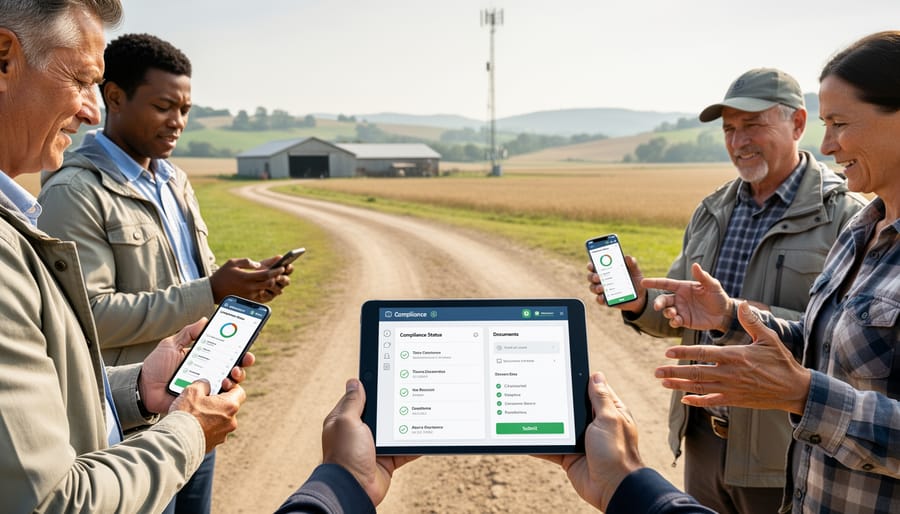
Most platforms work seamlessly on any device you have on hand—whether that’s your smartphone, tablet, or desktop computer. This flexibility means you can complete training modules during your morning coffee or review materials on your tablet while monitoring equipment in the field.
Regarding internet connectivity, standard home internet is more than sufficient. Many platforms are optimized for rural connections and require surprisingly minimal bandwidth—often less than streaming a single video. James Morrison, a barley farmer near Red Deer, notes that he completes his training sessions using the same internet connection that handles his farm management software without any issues.
For those in areas with limited connectivity, several platforms offer downloadable content that you can access offline. You can download training modules when you have a stable connection, then work through them at your own pace without staying online.
The bottom line? If you can check your email and browse farming forums, you have the technical capacity for e-compliance training. The systems are built to work with your existing setup, not against it.
Questions to Ask Before Choosing a Platform
Before committing to an e-compliance training platform, take time to evaluate whether it truly fits your operation’s needs. Start by confirming the platform’s recognition by Canadian certification bodies. Contact organizations like the Canadian Food Inspection Agency or your provincial organic association to verify which platforms they accept for meeting training requirements.
Mobile accessibility matters significantly for farm operations. Ask whether you can access the platform from your smartphone or tablet while working in the field. Many Alberta farmers appreciate the flexibility to complete modules during equipment downtime or between tasks rather than being tied to an office computer.
Investigate customer support availability carefully. Find out if support staff understand agricultural contexts and whether they’re available during hours that work for your schedule. Some platforms offer dedicated phone lines, while others rely solely on email support that may take days to resolve technical issues.
Examine the cost structure thoroughly. Look beyond the initial price to understand what’s included. Does the fee cover one person or your entire team? Are there additional charges for certificates, updates, or accessing courses beyond the first year? Some platforms offer volume discounts for farm operations training multiple employees.
Finally, check integration capabilities with your existing farm management software. Seamless data transfer can save considerable administrative time. Ask whether the platform can export completion certificates and training records in formats compatible with your current systems, reducing duplicate data entry and streamlining your certification documentation process.
Making the Transition Smooth
Start by contacting your certification body to confirm they accept e-compliance training for your specific certification requirements. Most Canadian organic certifiers now recognize digital formats, but it’s wise to verify before beginning. Request a recommended learning schedule that aligns with your certification renewal timeline, giving yourself adequate time to complete modules at a comfortable pace.
For farmers less experienced with technology, begin with a single practice module to build confidence. Many platforms offer introductory tutorials specifically designed for agricultural professionals. Consider pairing up with a neighbor or family member who’s tech-savvy for your first session. Alberta farmer James Chen notes, “I had my daughter walk me through logging in the first time, and after that, I was comfortable navigating on my own.”
Set aside dedicated time weekly when farm work is lighter, treating online training sessions like any other important farm management task. Most platforms allow you to save progress and return later, so you can work in 20-30 minute blocks. Keep your certification documents and farm records handy during training, as you’ll often need to reference specific practices. Technical support is typically available through phone or email if you encounter difficulties, ensuring you’re never stuck without assistance.
Expert Insights: What Alberta Farmers Are Saying
When Sarah Mitchell transitioned her 65-hectare organic grain operation near Lacombe to digital certification management in 2023, she was skeptical about online training. “I thought it would be another complicated system that didn’t fit our reality,” she admits. “But the e-compliance modules actually addressed situations I deal with daily—from buffer zone management to proper record-keeping during harvest.”
Mitchell’s experience mirrors feedback from several successful Alberta organic farms that have adopted e-compliance training over the past two years. The common thread? Practical application beats theoretical knowledge every time.
James Chen, who manages a certified organic vegetable operation in the Calgary region, discovered unexpected benefits beyond basic compliance. “The training modules helped our seasonal workers understand why certain protocols matter,” he explains. “When they grasp the reasoning behind organic standards—not just the rules—they’re more invested in following them correctly.”
Agricultural consultant Linda Kowalski, who works with transitioning farms across central Alberta, emphasizes the importance of choosing training that reflects Canadian conditions. “Generic programs don’t address our climate challenges or provincial regulations,” she notes. “Look for platforms that include scenarios about frost management, prairie soil conditions, and Canadian Food Inspection Agency requirements.”
The learning curve varies by operation size and existing digital literacy. Trevor Johnson, who farms near Red Deer, recommends starting small. “We began with just the recordkeeping module before tackling the full certification training. That gradual approach built confidence without overwhelming our team.”
One frequently mentioned advantage is the ability to revisit training content during critical periods. “During my first organic harvest, I rewatched the post-harvest handling section twice to ensure we maintained certification standards,” Mitchell shares. “That flexibility made the investment worthwhile—no driving to workshops or waiting for the next scheduled session.”
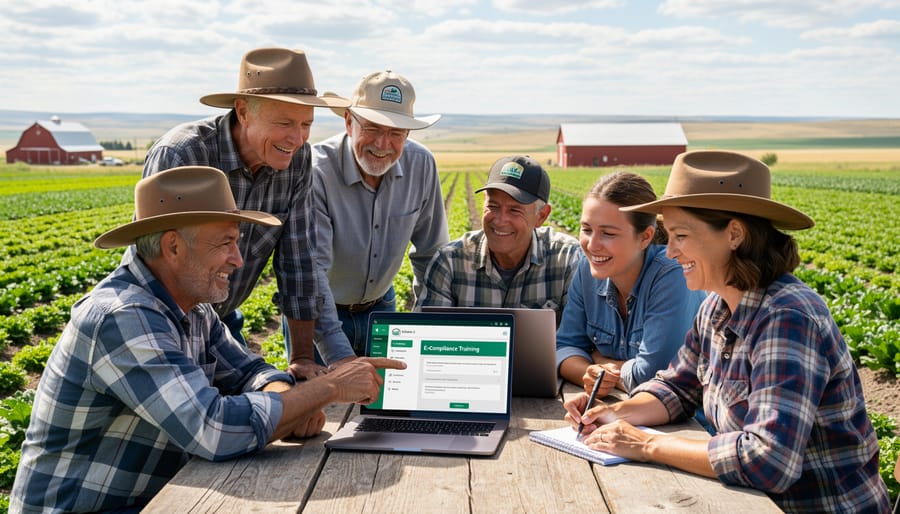
E-compliance training isn’t about adding another burden to your already full plate—it’s designed to make your life easier. For Canadian farmers managing diverse operations, particularly in regions like Alberta where growing seasons are short and every hour counts, online compliance training offers a practical path forward. You can complete modules during quieter winter months, refresh your knowledge before inspection season, or quickly address specific questions as they arise. The beauty of these platforms is their flexibility: they work around your schedule, not the other way around.
As you explore e-compliance training options, focus on finding systems that match your operation’s scale and needs. Start small if you’re uncertain—many platforms offer trial periods or introductory modules. Talk with fellow farmers who’ve made the transition; their experiences can guide your decision-making process. Remember that choosing accessible compliance tools strengthens not just your individual farm, but the entire organic farming community. When certification requirements feel manageable rather than overwhelming, more producers can participate in organic agriculture, expanding local markets and building collective knowledge. Investing time in finding the right e-compliance training solution today means more time tomorrow for what matters most—growing quality food and stewarding your land.