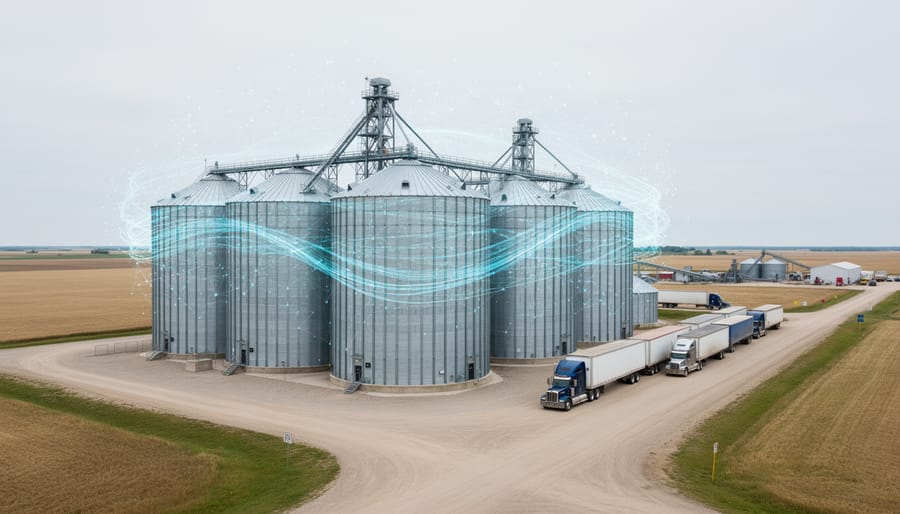
A digital twin in supply chain management is a virtual replica of physical assets, processes, or systems that uses real-time data and simulation to mirror, predict, and optimize the movement of goods from source to consumer. Think of it as a living, breathing digital copy of your entire operation, one that tracks everything from grain in your silos to trucks on the highway, updating continuously as conditions change in the real world.
For Canadian farmers navigating increasingly complex distribution networks, this technology addresses a pressing challenge: how to maintain visibility and control when your crop moves through multiple handlers, across provinces, and into international markets. The same weather event that delays harvest in central Alberta can ripple through storage capacity, transport scheduling, and buyer commitments. A digital twin captures those connections and shows you the cascade before it happens.
The opportunity extends beyond logistics. Producers focused on sustainable practices can now demonstrate exactly how their grain traveled, the fuel consumed in transit, the carbon footprint of cold storage, and the efficiency of every link in the chain. Buyers demanding transparency get verifiable data, not just certificates. Operations planning the next growing season can model how different yield scenarios will stress their existing infrastructure and partnerships.
This article breaks down what digital twins actually do in agricultural supply chains, how the technology captures and uses data from field to buyer, the core components that make the system work, and the specific applications transforming Canadian farming operations in 2026. You’ll see examples from prairie producers already using these tools and hear from experts implementing them across the sector.
What Digital Twins Mean for Supply Chains
A digital twin in supply chain management is a virtual replica of your physical operations that updates in real time as conditions change on the ground. Think of it as a living mirror of your farm’s supply chain, from the moment you plant a seed to when your product reaches the buyer, that lets you see, test, and improve every step without disrupting actual operations.
For Canadian farmers, this technology transforms abstract data into actionable insights. When you track a grain shipment from your Alberta field to a Vancouver port, the digital twin shows you exactly where delays happen, how temperature fluctuations affect quality, and which routes save fuel. It mirrors your cold storage facility’s conditions minute by minute, alerting you before spoilage occurs rather than after. When you’re planning fertilizer distribution across multiple fields, the virtual model tests different timing and application strategies to find the most efficient approach before you spend a dollar or burn a litre of diesel.
- Digital Twin
- A virtual replica of physical assets, processes, or systems that updates continuously based on real-world data. In agriculture, this could mirror your entire grain handling operation from harvest through delivery.
- Real-Time Data Integration
- The continuous flow of current information from sensors, GPS units, and monitoring systems into the virtual model. This ensures your digital twin reflects actual conditions as they happen, not yesterday’s numbers.
- Virtual Simulation
- The ability to test “what if” scenarios in the digital environment before making real-world changes. You can model the impact of weather delays or route changes without risking actual shipments.
- Physical Asset
- The tangible equipment, facilities, and products in your operation, tractors, grain bins, cold storage units, livestock, crops, that the digital twin represents. Each physical element has a corresponding virtual counterpart.
- Predictive Modeling
- Using historical data and current conditions to forecast future outcomes, such as when equipment will need maintenance or how harvest timing affects storage requirements.
The power lies in the feedback loop. Your physical operations generate data through sensors and tracking systems, the digital twin processes that information to spot patterns and problems, and you use those insights to make better decisions that improve supply chain traceability and efficiency. Rather than reacting to breakdowns or waste after they occur, you can see potential issues developing and adjust course before they cost you money or product quality.
How Digital Twin Supply Chain Systems Work
Data Sources in Agricultural Supply Chains
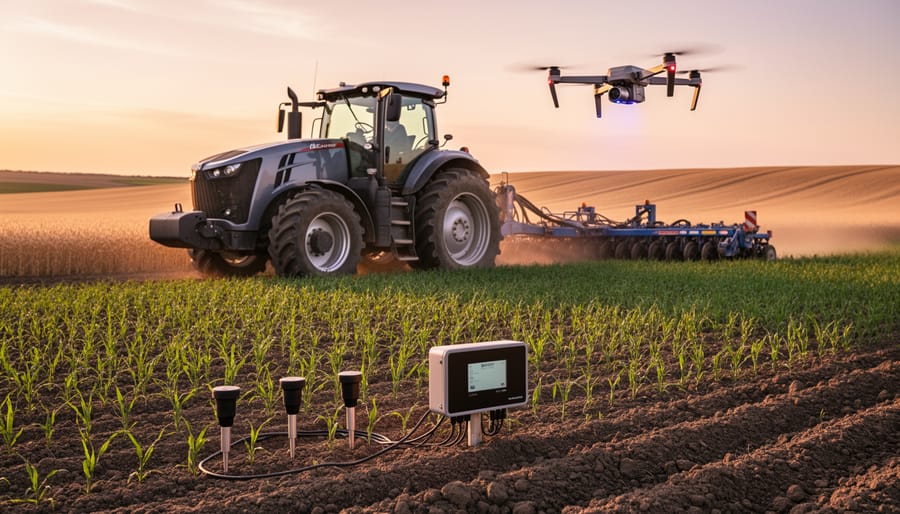
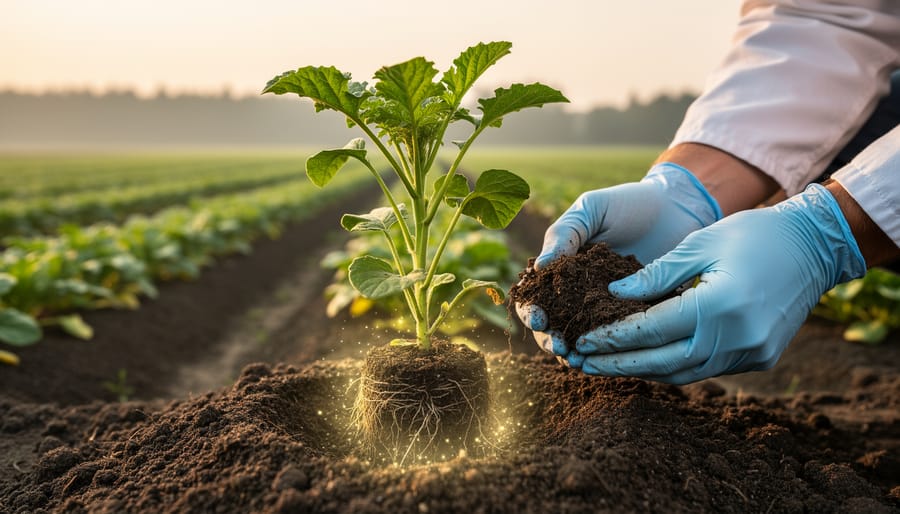
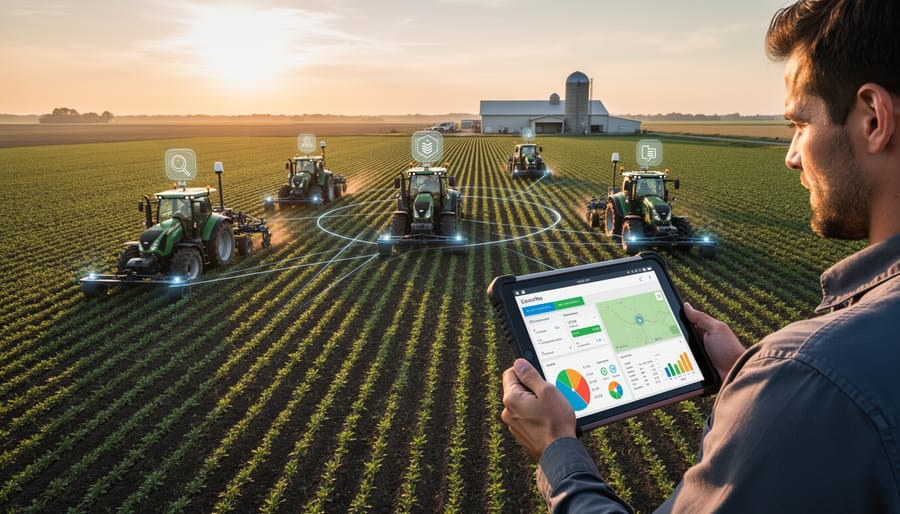
Canadian farms generate data from multiple streams that feed digital twin systems. Weather sensors track temperature, precipitation, humidity, and wind patterns, critical for timing planting, harvest, and transport decisions. Soil monitors measure moisture levels, nutrient content, and pH, enabling precision application of water and fertilizers while reducing waste.
GPS trackers installed on tractors, combines, and delivery trucks provide real-time location data, helping optimize routes and monitor equipment performance. In grain operations, these trackers follow shipments from field to elevator, revealing bottlenecks and delays. RFID tags on livestock or produce containers add another layer, monitoring conditions like temperature during cold chain transport.
Inventory management systems record stock levels in grain bins, fertilizer stores, and equipment sheds. When integrated with a digital twin, this data helps predict shortages, plan purchases, and reduce storage costs.
Market demand forecasts, sourced from commodity exchanges, buyer contracts, and regional consumption trends, allow farmers to model optimal selling windows. A Saskatchewan wheat producer might simulate holding grain versus selling immediately, factoring in storage costs, price projections, and transportation availability. Together, these data sources create the foundation for accurate, responsive digital twin simulations.
The Simulation and Analysis Layer
Once the digital twin collects live data from your farm, the simulation layer puts that information to work. This is where the system runs “what if” scenarios before you commit resources in the real world.
Think of it as a test kitchen for your supply chain decisions. The virtual model can predict what happens if a rainstorm delays your canola harvest by three days, will that affect trucking schedules, storage capacity, or delivery contracts? It calculates the ripple effects across your entire operation.
Transportation simulations reveal hidden opportunities. By modeling different delivery routes and timing windows, the system identifies options that cut diesel consumption by 10-20% while meeting the same deadlines. You see the fuel savings and carbon reduction before the truck leaves the yard.
Storage scenarios prevent costly losses. The twin simulates temperature fluctuations in your grain bins over a two-week period, flagging spoilage risks and recommending ventilation adjustments. This protects crop quality and reduces waste.
For inputs like fertilizer and water, the analysis layer models application timing against weather patterns, soil moisture data, and crop growth stages. You apply exactly what’s needed, when it’s needed, nothing more. That precision translates directly into lower costs and reduced environmental impact.
Components That Make Up a Digital Twin System
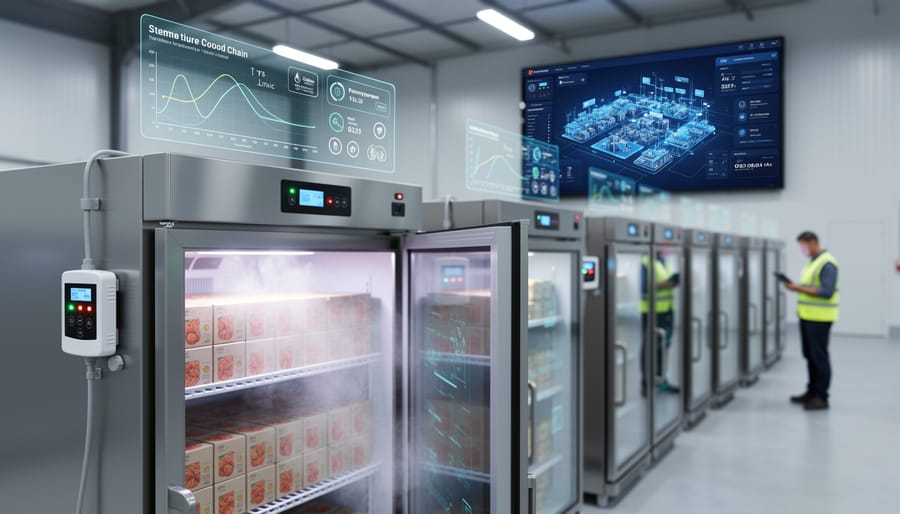
A digital twin system for agricultural supply chains relies on several interconnected components working together to create an accurate virtual replica of physical operations. Understanding these building blocks helps Canadian farmers evaluate what they need and how it fits into their current setup.
The foundation starts with hardware that collects real-world data. Sensors monitor everything from soil moisture and temperature in storage bins to fuel consumption in tractors and combines. GPS trackers follow shipments from field to elevator, while RFID tags attached to livestock or equipment crates provide precise location and condition data. On a grain farm, this might mean sensors in each bin reporting moisture levels every hour, GPS units on trucks tracking delivery routes, and weather stations capturing localized climate data that affects harvest timing.
Connectivity infrastructure ties these devices together. Most digital twin systems need reliable internet access, though many now operate on cellular networks to reach remote fields and rural areas. In Alberta, where farms can span thousands of acres far from urban centers, LTE or satellite connectivity often bridges the gap. The data flows continuously from sensors to central platforms, creating the real-time link between physical and virtual.
The system’s core components include:
- IoT sensors and devices capturing field, storage, and equipment data
- Connectivity infrastructure using internet, cellular, or satellite networks
- Data storage and cloud platforms housing historical and real-time information
- Analytics and AI software running simulations and generating insights
- User interfaces and dashboards displaying actionable information for farmers
Software platforms process incoming data and run the simulations. Cloud-based systems store massive datasets without requiring farmers to maintain expensive servers. AI algorithms analyze patterns, predict outcomes, and suggest adjustments. For example, the software might simulate what happens to grain quality if you delay harvest by three days due to weather, factoring in moisture trends, market prices, and available storage capacity.
Integration with existing farm management systems completes the picture. Digital twins work best when they connect to tools farmers already use: accounting software, yield monitors, equipment telematics, and crop planning applications. This integration means data flows seamlessly without manual entry, and insights appear where farmers make daily decisions.
How Digital Twins Are Used in Sustainable Agriculture
Case Study: Alberta Grain Producer Reduces Waste Through Supply Chain Simulation
In 2025, Wheatland County producer Mark Henderson faced a recurring problem: despite careful planning, his 2,000-acre wheat and canola operation consistently lost revenue to spoilage and inefficient hauling. Grain sat too long in on-farm storage during wet weather, while trucks made half-empty runs to the elevator when conditions improved. Transport costs ate into margins, and quality degradation from delayed delivery reduced his grade premiums.
Henderson partnered with a Calgary-based agtech firm to build a digital twin of his entire supply chain, from combine to elevator. The system integrated weather forecasts, real-time moisture sensors in grain bins, GPS data from his truck fleet, and live pricing feeds from three regional elevators. The virtual model ran dozens of scenarios daily, optimizing harvest timing, storage duration, and delivery routes.
The results surprised him. By following the system’s recommendations for staggered deliveries based on predicted weather windows and elevator capacity, Henderson cut fuel consumption by 15% in the first season. Spoilage dropped by nearly a third because the model flagged bins at risk of moisture buildup before quality declined. Route optimization reduced empty return trips, and better timing meant he consistently hit premium delivery windows at peak prices.
Henderson now shares data with neighbours exploring similar systems, seeing digital twins as complementary to other precision agriculture tools like AI for soil health. “It’s not about replacing experience,” he says. “It’s about making smarter decisions with better information when margins are tight.”
Benefits for Climate Resilience and Environmental Protection
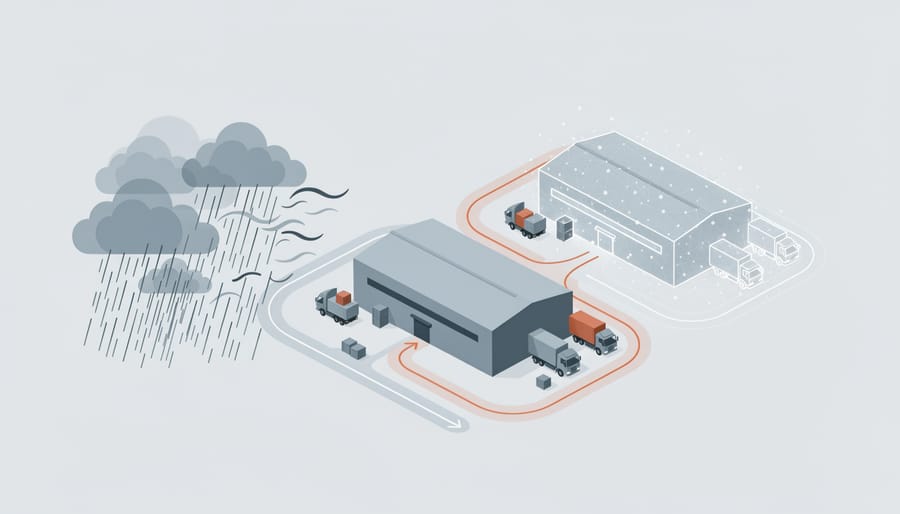
Digital twin technology helps Canadian farms cut emissions and protect natural resources in ways that directly improve the bottom line. By simulating transportation routes and timing, these systems identify fuel-saving opportunities, often reducing diesel consumption by 10 to 20 percent across the logistics chain. That translates to measurable smart carbon cuts while lowering operating costs during planting, harvest, and delivery cycles.
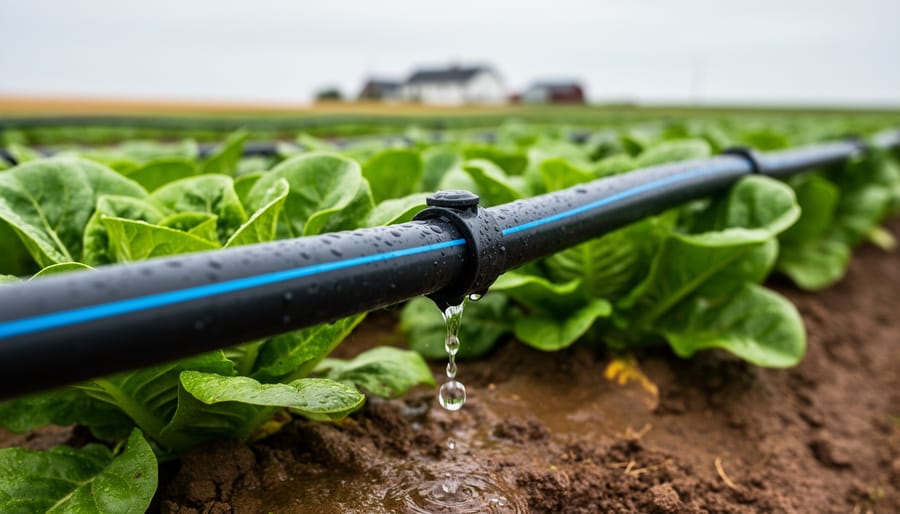
Water conservation becomes more precise when virtual models test irrigation schedules against weather forecasts and soil moisture data. Farmers can reduce water waste by simulating application rates before committing resources in the field, protecting aquifer health and cutting energy costs tied to pumping. The same approach applies to fertilizer and pesticide use: running scenarios in the digital twin reveals the minimum effective application, preventing runoff and preserving soil biology.
Climate adaptation gets stronger when systems model responses to extreme weather. If a sudden frost threatens harvest timing or a heat wave affects cold storage reliability, the digital twin can simulate alternate plans, rerouting shipments, adjusting storage protocols, or shifting harvest windows, before losses occur. This proactive capacity builds resilience into operations that increasingly face unpredictable conditions.
Environmental reporting becomes simpler and more credible. Digital twins generate detailed records of fuel use, water consumption, emissions, and waste reduction, data that supports carbon credit applications, sustainability certifications, and access to green financing programs available to Canadian producers.
Getting Started: What Canadian Farmers Should Consider
Start with what you already have. Before shopping for digital twin systems, map your current technology setup, what sensors and GPS devices are running on your equipment, whether you have reliable internet connectivity across your operation, and how you currently track inventory and logistics. This baseline helps you spot gaps and avoid buying redundant tools.
Next, pinpoint the bottlenecks costing you the most. Are late-season rains forcing you to guess at optimal harvest windows? Do transportation delays spoil perishables or spike fuel costs? Is equipment downtime hitting during critical planting or harvest periods? Digital twins work best when aimed at specific, measurable problems rather than vague “optimization” goals.
Costs vary widely depending on scale and complexity. Entry-level systems for single-function tracking, monitoring grain bins or planning transport routes, can start around a few thousand dollars, while comprehensive platforms that simulate entire supply chains run into tens of thousands. Calculate return on investment by estimating savings from reduced waste, lower fuel consumption, or avoided breakdowns. Many Alberta farmers report payback periods of two to three seasons when targeting high-impact pain points.
You don’t need to figure this out alone. Reach out to agricultural technology advisors through provincial extension services or industry associations. Attend workshops and field days where other farmers demonstrate pilot projects. Some equipment manufacturers and software companies offer trial programs that let you test digital twin capabilities on a limited scale before committing to a full rollout.
Consider starting small with a partner or neighbouring farm. Collaborative pilots spread costs, generate shared learning, and build community knowledge. The strongest implementations often come from farmers who experiment together, troubleshoot as a group, and adapt systems to local conditions through collective problem-solving.
Common Questions About Digital Twins in Supply Chains
Canadian farmers exploring digital twin technology often have similar questions about costs, complexity, and practical implementation. Here are answers to the most common concerns.
Can small to mid-sized farms afford digital twin technology?
Entry-level systems start around $2,000 to $5,000 annually for basic supply chain tracking, with scalable options that let you add features as your operation grows. Many providers offer flexible pricing based on farm size and scope, and some government programs in Alberta and across Canada provide grants or subsidies for adopting sustainable agricultural technologies.
What technical skills do I need to use these systems?
Most modern platforms are designed for farmers, not IT specialists. If you can use a smartphone or tablet and manage basic farm software, you can learn to operate digital twin dashboards. Training is typically included with setup, and many providers offer ongoing support in plain language.
How secure is my farm data?
Reputable platforms use encryption and secure cloud storage similar to banking systems. You control who accesses your data, and most providers comply with Canadian privacy regulations. Ask potential vendors about their security certifications and data ownership policies before signing on.
Will digital twins work with my current equipment and software?
Most systems are built to integrate with common farm management tools, GPS trackers, and even older equipment through add-on sensors. Vendors typically assess your existing setup during consultation and recommend compatible solutions rather than requiring a complete technology overhaul.
Finding training and support is easier than you might expect. Agriculture and Agri-Food Canada offers workshops and online resources covering digital agriculture technologies. In Alberta, organizations like Olds College and regional agricultural societies run hands-on sessions where farmers share experiences and learn together. Many equipment dealers and agricultural technology cooperatives also provide demonstrations and peer learning opportunities specific to supply chain optimization and sustainability tools.
Start by connecting with your local agricultural extension office or attending farm technology showcases in your region. These events let you see systems in action, ask questions directly to other farmers using the technology, and get a realistic sense of what implementation looks like for operations similar to yours.
Digital twin technology offers Canadian farmers a powerful pathway to modernize operations while advancing environmental goals. By creating virtual mirrors of physical supply chains, from seed planting through harvest, storage, and market delivery, these systems reveal hidden inefficiencies, predict disruptions before they occur, and test improvements without risking real resources.
The sustainability benefits align directly with the challenges facing Alberta and Canadian agriculture today: reducing fuel consumption through optimized logistics, cutting waste from spoilage or overuse of inputs, conserving water and soil health, and building resilience against increasingly unpredictable weather patterns. For operations of any size, these tools transform abstract climate commitments into measurable operational wins.
Start small. Identify one persistent problem, transportation delays, inventory management gaps, or resource waste, and explore how simulation might address it. Connect with agricultural technology advisors, attend regional workshops, or partner with universities conducting pilot programs. Many provinces offer funding support for sustainability-focused technology adoption.
The farmers who embrace digital twins now will gain competitive advantages: lower costs, stronger environmental credentials, and operations better equipped to thrive through climate uncertainty. This technology bridges traditional farming wisdom with modern data-driven decision-making, creating a foundation for the next generation of Canadian agriculture.