Every year, Canadian farmers lose between 10-30% of their harvest between the field and the market. A bin of wheat left too long at high moisture grows mold. Potatoes bruised during handling rot in storage. Canola overheated in the bin loses grade and value. These losses directly cut into your operation’s profitability, sometimes erasing the gains from an excellent growing season.
Post-harvest technology has evolved far beyond basic grain bins and coolers. Today’s solutions range from affordable moisture monitoring systems that send alerts to your phone, to sophisticated automated storage facilities that maintain optimal conditions without constant supervision. Alberta producers are already seeing dramatic results: reduced spoilage, better grain grades, extended storage periods, and improved cash flow through strategic marketing enabled by confident storage.
The technology isn’t just for large operations. Scaled solutions exist for farms of every size, from simple ventilation upgrades that cost a few hundred dollars to comprehensive monitoring systems. The return on investment often comes within a single season through preserved quality and reduced losses.
This article examines proven post-harvest technologies currently working on Canadian farms, what they cost, how they perform in our climate, and practical steps to implement them in your operation. You’ll see real numbers from Alberta producers who’ve made the investment and concrete guidance on choosing solutions that match your crop mix, storage capacity, and budget.
Why Post-Harvest Matters More Than You Think
The Real Cost of Losing Crops After Harvest
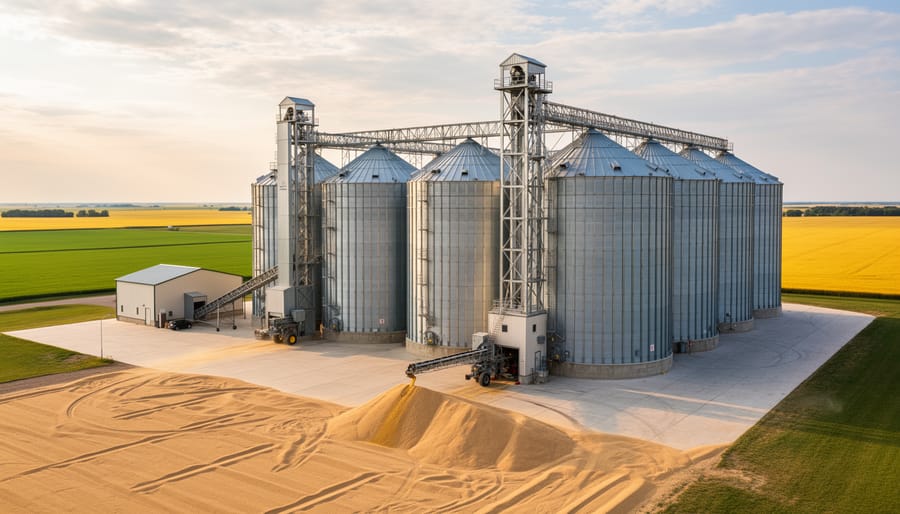
Post-harvest losses hit Alberta farmers harder than many realize. Industry data shows that Canadian grain producers lose between 2-5% of their harvest during storage and handling, translating to roughly $500-$2,000 per farm annually for mid-sized operations. For specialty crops like pulses and vegetables, those numbers climb even higher—lentil and pea producers can lose up to 8% of their yield to improper storage conditions, moisture issues, and pest damage.
Consider the ripple effects beyond your bottom line. When a tonne of canola spoils in storage, you’re not just losing the crop value of approximately $650. You’re also wasting all the fuel, water, fertilizer, and labor invested in growing it. A University of Alberta study found that post-harvest waste carries 2.5 times the environmental footprint of the original crop production because it negates the resources already used while contributing to methane emissions during decomposition.
For Alberta vegetable growers, the stakes are particularly high. Root vegetables like potatoes and carrots can experience 15-20% losses without proper temperature and humidity control. At current market prices, that represents $3,000-$8,000 in lost revenue per acre for commercial operations.
The good news? These losses are largely preventable. By integrating circular agriculture practices with modern post-harvest technology, farmers across the province are cutting waste by 40-60% while protecting their investment and reducing environmental impact. The solutions are more accessible than you might think.
Game-Changing Technologies Reducing Post-Harvest Waste
Smart Storage Solutions That Preserve Quality
Keeping your harvest in optimal condition doesn’t require guesswork anymore. Modern storage monitoring systems give you real-time data about what’s happening inside your bins, allowing you to make informed decisions before quality deteriorates.
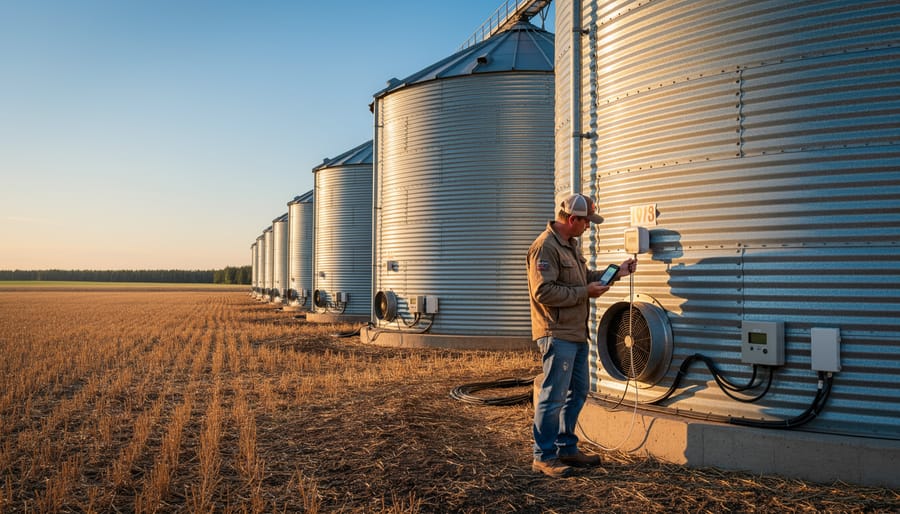
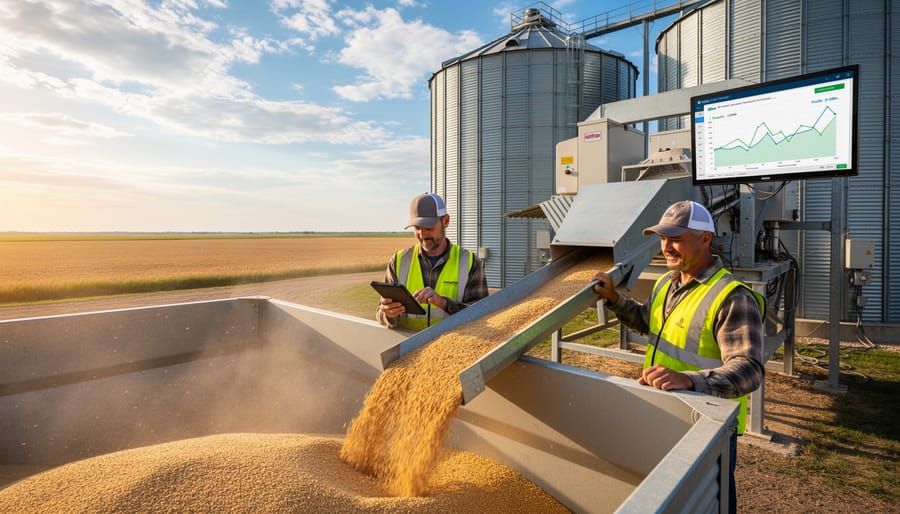
Temperature and humidity monitoring systems are game-changers for grain storage. These wireless sensors, placed at multiple levels throughout your bins, send alerts directly to your phone when conditions shift outside safe parameters. At a canola operation near Lethbridge, producer James Chen installed a monitoring system across six bins in 2022. “I caught a hot spot developing in my barley within 48 hours,” he explains. “Five years ago, I would have lost 15 tonnes before noticing the problem.”
These systems typically cost between $800 and $2,000 per bin, depending on sensor density and features. Most Alberta producers report the investment pays for itself within the first season through reduced spoilage alone.
Controlled atmosphere storage takes preservation further by managing oxygen and carbon dioxide levels. This technology, once reserved for large commercial operations, is now accessible at farm scale. Red Deer area wheat producer Sarah McDonald uses a modified atmosphere system that reduces oxygen levels to slow insect activity and mold growth. “We’re storing premium milling wheat for an extra four months without quality loss,” she notes.
Grain bin monitoring sensors have evolved significantly. Modern options include cable sensors that run the full height of your bin and provide continuous temperature readings at 2-metre intervals. Some systems integrate weather forecasts to predict potential condensation issues before they occur.
The key is choosing technology that matches your operation’s scale and commodity mix. Start with one or two bins to learn the system, then expand as you see results.
Sorting and Grading Tech That Maximizes Value
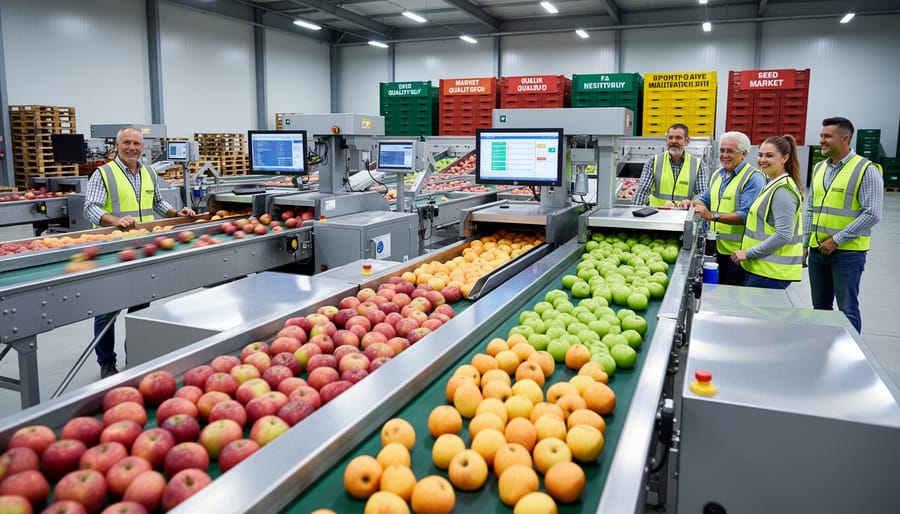
Modern sorting and grading technology has become remarkably accessible for Canadian operations of all sizes, transforming how farms maximize returns from their harvest. Optical sorting systems use high-speed cameras and sensors to analyze produce characteristics like size, color, shape, and even internal defects. These systems can process thousands of units per hour, automatically directing each item to its appropriate grade category.
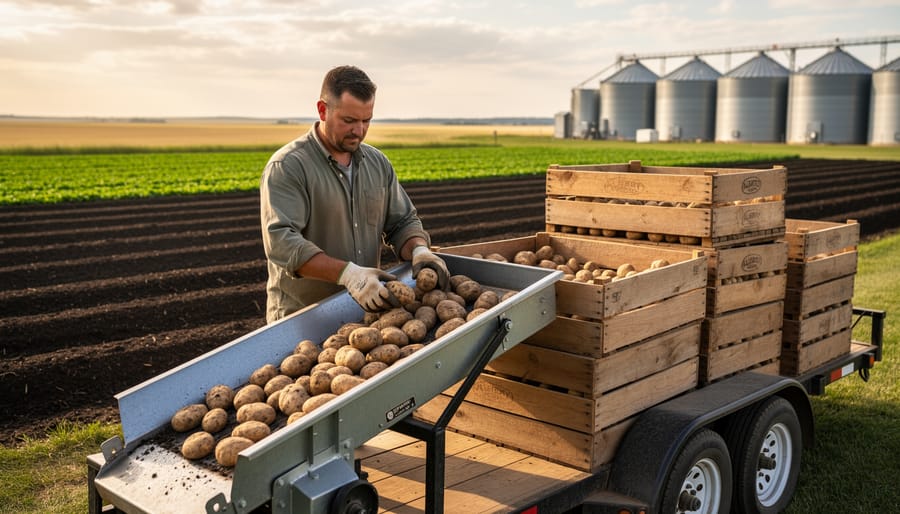
For Alberta potato growers, this technology has proven particularly valuable. A medium-sized operation near Lethbridge implemented an optical sorter that identifies surface blemishes invisible to the naked eye, allowing them to separate premium-grade potatoes destined for fresh markets from those better suited for processing. The result was a 15 percent increase in revenue from the same harvest volume.
Automated grading equipment isn’t limited to large farms. Smaller sorting tables with weight sensors and diameter gauges offer affordable entry points, helping vegetable producers create distinct quality tiers that command different price points. A carrot producer in southern Alberta shared that proper grading allowed them to sell premium carrots to high-end grocery chains while directing smaller or slightly misshapen carrots to juice processors, eliminating waste entirely.
The key advantage extends beyond just sorting good from bad. These systems help you identify multiple revenue streams from a single harvest, ensuring every product finds its highest-value market. Even produce that doesn’t meet fresh market standards can be redirected to processing, animal feed, or composting operations, turning potential waste into profit.
Handling Equipment That Prevents Damage
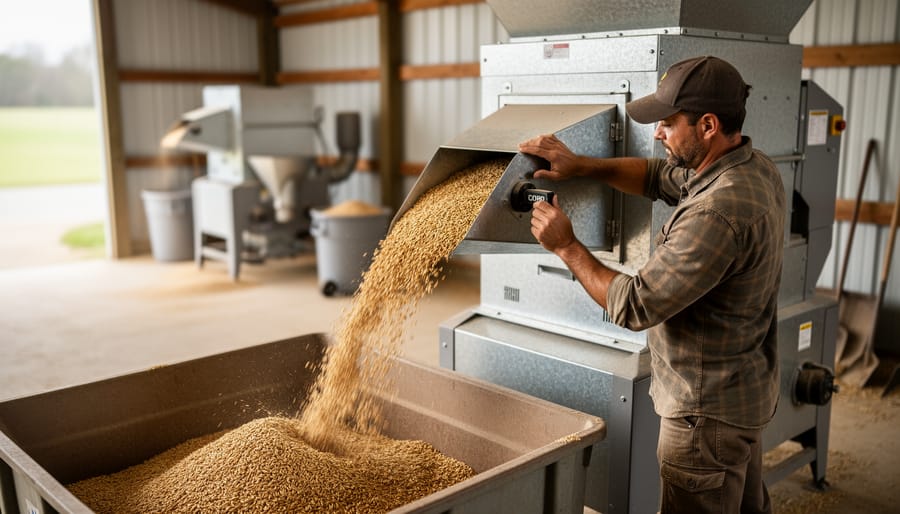
Modern handling equipment can make a substantial difference in preserving the quality of your harvest from field to market. Traditional conveying systems often subject produce to drops, impacts, and compression that create bruising, splitting, and shortened shelf life. Fortunately, newer gentle handling technologies are becoming increasingly accessible for Canadian operations.
Soft-sided conveyor systems with cushioned belts and adjustable speeds allow you to move delicate crops like tomatoes, berries, and leafy greens without the damage caused by rigid surfaces. Many Alberta vegetable growers have switched to roller conveyors with individual padded rollers that cradle each piece of produce, reducing contact points and preventing pile-up pressure. These systems might represent a significant investment initially, but the payback comes through reduced waste and premium pricing for unblemished produce.
Packaging innovations also play a crucial role. Ventilated plastic containers with rounded corners prevent puncture damage during stacking and transport, while maintaining airflow that’s essential for cooling. Some Alberta potato operations have adopted bulk handling systems that eliminate individual drops, using gentle elevation and controlled release mechanisms instead.
For transportation, suspension improvements and climate-controlled units maintain consistent conditions. Consider spring-loaded decking in transport vehicles to absorb road vibration, particularly important given our varied road conditions across the Prairies.
When evaluating handling equipment, start by identifying your highest-value crops and where damage most frequently occurs. Even upgrading one critical point in your handling chain can deliver measurable returns through improved product quality and reduced losses.
Data Systems That Predict Problems Before They Happen
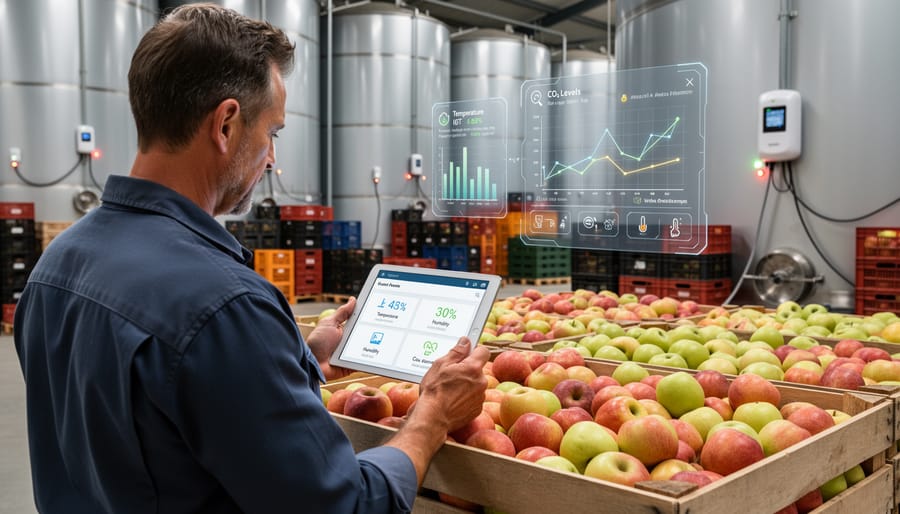
Modern data systems are transforming how Canadian farmers manage their harvest, shifting from reactive problem-solving to proactive prevention. These smart technology solutions combine sensors, analytics, and real-time monitoring to catch potential issues before they result in spoilage or loss.
At the heart of these systems are Internet of Things sensors that continuously track critical conditions in storage facilities. These small devices monitor temperature, humidity, carbon dioxide levels, and even ethylene gas concentrations. For Alberta grain farmers, this means receiving instant alerts when bin conditions shift toward ranges that promote mold growth or pest activity. One Lethbridge-area producer reduced wheat storage losses by 18 percent after installing wireless sensors that flagged temperature spikes from moisture pockets.
Predictive analytics takes this monitoring further by analyzing patterns in your data to forecast problems days or weeks ahead. The system learns from historical trends, weather patterns, and product characteristics to predict optimal processing times and identify high-risk storage areas. A Red Deer vegetable operation uses this technology to determine precise harvest windows, ensuring crops reach peak quality exactly when market demand and prices align.
These systems also optimize logistics decisions. By tracking ripeness indicators and storage conditions across multiple locations, the software recommends which batches to process first and which can safely wait. This prevents the common scenario where produce spoils in one facility while another sits underutilized.
The investment typically ranges from 2,000 to 15,000 dollars depending on operation size, with many farmers reporting payback within two seasons through reduced losses and better-timed sales. Most importantly, these tools provide peace of mind, replacing guesswork with confidence backed by real-time data.
Resource Optimization: Getting More from What You Grow
Turning Grade-B Products Into Profit
Lower-grade produce doesn’t have to mean lost income. Across Alberta, innovative farmers are discovering that what can’t reach premium markets still holds significant value through smart processing and creative product development.
Take Sunview Orchards near Kelowna, where apples with minor cosmetic blemishes are transformed into cold-pressed juice and apple cider vinegar. Owner Marie Chen explains, “We recover about 30% of our harvest that would otherwise be composted. Our pressed juice line now generates $45,000 annually.” This approach to turning waste into profit requires minimal investment in a small-scale press and bottling equipment.
Saskatchewan vegetable farmer David Kowalski partnered with a local restaurant to supply “imperfect” tomatoes for sauces and soups. “They pay 60% of premium prices, which is far better than zero,” he notes. His grade-B produce now accounts for 15% of total revenue.
Similarly, Red Deer’s Prairie Roots Farm dehydrates misshapen carrots and beets into vegetable chips sold at farmers’ markets. The dehydrator cost $3,200 but paid for itself within eight months.
Secondary markets offer additional opportunities. Animal feed suppliers, processors making frozen meals, and craft brewers all seek lower-grade produce at fair prices. Brooks-area grain farmer Tom Hassan sells weather-damaged wheat to a craft distillery, recovering 40% of market value rather than accepting total loss.
The key is matching your surplus to available processing technology and identifying buyers who value nutrition over appearance.
Water and Energy Recovery in Processing
Water and energy represent significant operational costs in post-harvest processing, but innovative recovery systems are helping Canadian producers turn these expenses into savings. Modern recycling technologies can reduce water consumption by 50-70% while cutting energy bills substantially.
Water recycling systems capture, filter, and treat water from washing and cooling operations for reuse. A Saskatchewan vegetable operation reported reducing their water usage from 15,000 litres per day to just 4,500 litres after installing a closed-loop washing system with sediment filters and UV treatment. The system cost $18,000 but saved approximately $6,200 annually in water and wastewater costs.
Energy-efficient cooling technologies are equally transformative. Variable-speed refrigeration systems adjust compressor output based on actual cooling demand rather than running at full capacity constantly. An Alberta potato grower who upgraded to variable-speed cooling in their 500-tonne storage facility saw energy costs drop by 38%, saving roughly $4,800 per season.
Heat recovery systems capture warmth from refrigeration condensers to preheat washing water or maintain comfortable workspace temperatures. A central Alberta apple producer uses this approach to heat their packing facility during shoulder seasons, eliminating $3,200 in annual propane costs.
Energy-efficient drying systems, including heat pump dryers and solar-assisted models, reduce electricity consumption by 40-60% compared to conventional forced-air systems. While initial costs range from $8,000 to $35,000 depending on capacity, most Alberta installations achieve payback within 3-5 years through reduced utility bills.
Grants through programs like the Canadian Agricultural Partnership often cover 25-50% of equipment costs, significantly shortening payback periods. When evaluating these investments, consider your current utility expenses, processing volume, and available incentives to calculate realistic returns for your operation.
What Alberta Farmers Are Actually Using (And What Works)
Small-Scale Solutions That Don’t Break the Bank
You don’t need a massive budget to start reducing post-harvest losses on your farm. Many effective solutions are surprisingly affordable and can deliver quick returns on investment.
Consider starting with simple temperature monitoring systems. Basic digital thermometers with remote sensors cost as little as $50-150 and help you track storage conditions in real-time. Pairing these with proper ventilation fans (around $200-500) can significantly extend the shelf life of stored produce without expensive infrastructure changes.
For grain operations, portable moisture meters are essential tools ranging from $300-800. These devices help you make informed decisions about when to harvest and how to store your crop, preventing costly spoilage. Some Alberta farmers have successfully built DIY grain aeration systems using readily available materials for under $1,000, adapting designs shared through local farming networks.
Small-scale farmers can also explore mobile sorting tables and washing stations, which several Alberta’s agricultural leaders have implemented for under $2,000.
Financial support makes these investments even more accessible. The Canadian Agricultural Partnership offers cost-share programs covering up to 50% of eligible equipment costs. Alberta’s On-Farm Energy Management Program provides rebates for energy-efficient cooling and storage systems. Additionally, many regional agricultural service boards offer equipment-sharing programs, allowing you to access technology without full purchase costs.
Start small, track your results, and scale up as you see returns. Even modest improvements in storage conditions can reduce waste by 10-20%, quickly paying for initial investments.
When to Scale Up: Investing in Larger Systems
Moving beyond small-scale systems makes financial sense when your operation consistently handles volumes that justify the investment. As a benchmark, many Alberta farmers find that commercial-scale drying, cooling, or storage systems become economical when processing over 100 tonnes of product annually, though this varies significantly by crop value and local market conditions.
Start by calculating your current post-harvest losses in dollar terms. If you’re losing $15,000 annually to spoilage and your proposed system costs $60,000, you’re looking at a four-year payback period before factoring in quality improvements and premium pricing opportunities. Don’t forget to include labour savings in your calculations, as automated systems often reduce handling time by 30-50%.
Co-operative models are gaining traction across Alberta as a way to share infrastructure costs. The Fairview and District Co-op recently invested in shared grain drying facilities that serve twelve member farms, dramatically reducing individual capital requirements. This approach works particularly well for specialized equipment like optical sorters or climate-controlled storage that individual farms might use seasonally.
When evaluating shared infrastructure, consider proximity to your operation, scheduling flexibility during peak harvest periods, and governance structure. Successful co-ops typically establish clear usage agreements and maintenance responsibilities upfront.
Provincial programs through Agriculture Financial Services Corporation sometimes offer financing options for post-harvest infrastructure, with some grants covering up to 25% of eligible costs for innovative systems that demonstrate environmental benefits. Connect with your regional agricultural fieldman to explore current funding opportunities and connect with nearby farms interested in collaborative investments.
Making It Work On Your Farm
Assessing Your Current Post-Harvest Losses
Before investing in new technology, you need a clear picture of where losses actually happen on your farm. Start with a simple walk-through assessment during your next harvest. Track losses at each stage: field losses during combining, damage during transport, and storage losses over time.
Establish baseline metrics by weighing samples at critical points. For grain operations, measure bushels left in the field per acre, calculate the percentage of cracked or damaged kernels after handling, and monitor storage bin temperatures weekly to catch spoilage early. Alberta grain farmer Tom Richardson discovered he was losing 4% of his canola crop just in combine settings—a loss worth $12,000 annually on his operation.
For fruit and vegetable growers, count unmarketable produce at harvest, during packing, and after storage. Use percentage calculations rather than absolute numbers so you can compare across different harvest volumes.
Document your findings in a simple spreadsheet over one complete season. This data reveals your biggest opportunities. Many Canadian farmers find their largest losses occur in just one or two areas, making targeted improvements more cost-effective than broad technology overhauls. Focus your initial efforts where even small percentage improvements translate to significant financial gains.
Building Your Post-Harvest Tech Roadmap
Starting your post-harvest tech journey doesn’t require a complete operation overhaul. Begin by assessing your current losses through a simple harvest audit. Track where products are damaged, degraded, or rejected over one season. This data reveals your priority investment areas and potential return on investment.
Next, focus on quick wins. Alberta Agriculture and Irrigation offers free consultation services to help farmers identify appropriate technologies for their specific crops and scale. Their regional specialists can connect you with demonstration farms where you can see equipment in action before committing funds.
For training, Alberta’s agricultural colleges provide hands-on workshops covering everything from moisture meter calibration to automated grading system operation. Many equipment suppliers also offer comprehensive training packages with purchase or lease agreements, ensuring your team can maximize technology benefits from day one.
Funding shouldn’t be a barrier. Explore programs like the Canadian Agricultural Partnership, which supports technology adoption through cost-sharing grants. Several Alberta credit unions now offer specialized agricultural technology loans with flexible repayment schedules aligned to harvest cycles.
Building connections accelerates learning. Join groups like the Alberta Farm Fresh Producers Association or commodity-specific organizations where farmers share real experiences with different technologies. These peer networks provide honest assessments beyond marketing materials and can recommend local service providers who understand prairie conditions.
Consider starting small with one technology, measuring results, then expanding based on proven outcomes. This staged approach manages risk while building your team’s confidence and expertise with new systems.
Adopting post-harvest technology represents a powerful opportunity to strengthen both your farm’s profitability and its environmental footprint. The economic benefits are clear—reducing losses by even 10-15% translates directly to increased revenue without expanding production. Simultaneously, you’re cutting methane emissions from decomposing produce and making more efficient use of water, land, and energy already invested in growing your crops. This dual advantage makes post-harvest improvements an essential component of modern sustainable farming, working hand-in-hand with programs like Alberta’s sustainability certification to build resilient agricultural operations.
The key is starting small. You don’t need to overhaul your entire operation overnight. Choose one improvement that addresses your biggest current challenge—perhaps better ventilation in your storage area or implementing a simple quality sorting system. Monitor the results, learn from the experience, and build from there. Many Alberta farmers have found that their initial modest investment pays for itself within the first season, creating momentum for further enhancements.
Remember, post-harvest technology isn’t just about fancy equipment; it’s about matching the right solutions to your specific needs and scale. Whether you’re managing 10 hectares or 1,000, there are practical options available. Explore our platform’s resources for detailed case studies, equipment guides, and connections to other Canadian farmers who’ve successfully implemented these systems. Your journey toward reducing waste and increasing profitability starts with that first step.