Every time Canadians play bitcoin casino blackjack online or place digital bets, they’re contributing to a carbon footprint that rivals the energy consumption of many mid-sized farms. The servers, data centers, and network infrastructure powering Canada’s growing online gambling industry consume massive amounts of electricity, drawing from a national grid that produced 623 terawatt hours in 2024.
For Alberta farmers already focused on reducing carbon footprints in their operations, understanding this digital environmental impact provides valuable context for sustainable living beyond the farm gate. Global data center electricity consumption is projected to reach 565 TWh in 2026, up from 447 TWh in 2025. That’s energy that could power grain dryers, irrigation systems, or entire rural communities across the country.
This connection matters because Canadian farmers are increasingly measuring their complete environmental footprint, from field to household. While 65% of Canada’s electricity comes from renewable sources and 55% from hydroelectric power specifically, the sheer volume of energy consumed by digital platforms adds up quickly. Just as precision agriculture helps optimize resource use on your land, making informed choices about digital entertainment can extend your sustainability commitment to everyday activities. Understanding these hidden costs empowers you to make decisions aligned with the environmental stewardship values already guiding your agricultural practices.
What Makes Online Gambling a Carbon Emitter?

The Energy Appetite of Data Centers
Data centers powering online gambling platforms consume extraordinary amounts of electricity. In Canada, these facilities use approximately 3% of the nation’s total electricity supply, with that figure climbing annually as digital entertainment grows. To put this in perspective familiar to agricultural producers, a single large data center can consume as much electricity in one year as 50,000 average Canadian homes, or roughly the equivalent energy needed to power 200 mid-sized dairy operations running milking equipment, refrigeration, and lighting systems.
In 2024, Canada produced 623 terawatt-hours of electricity, with data centers collectively consuming about 2.5 terawatt-hours of that total. The nation’s electricity generation mix positions it relatively well for low-carbon digital infrastructure compared to many countries:
| Source | Share of Generation | TWh (2024) |
|---|---|---|
| Hydroelectric | 55% | 343 |
| Nuclear | 13% | 81 |
| Other Renewables | 10% | 62 |
| Fossil Fuels | 22% | 137 |
Overall, 78% of Canada’s electricity comes from non-greenhouse gas emitting sources including solar, hydro, wind, and nuclear power. This stands in sharp contrast to global data center growth projections: worldwide, these facilities will consume 565 terawatt-hours in 2026, up 26% from 447 TWh in 2025. Some jurisdictions face far more intense pressure, with data centers claiming 21% of Ireland’s national electricity demand and 9% of Singapore’s.
The servers running online gambling sites must operate continuously, 24 hours a day, to maintain real-time gaming experiences. This constant operation, combined with intensive cooling requirements to prevent equipment overheating, creates an energy demand comparable to running grain dryers at peak harvest season, except it never stops.
While farms are increasingly adopting renewable energy solutions to reduce their carbon footprint, the environmental impact of data centers varies dramatically by province. In regions where the grid draws heavily on fossil fuels, this digital infrastructure carries a substantial carbon cost that often goes unnoticed by end users engaging in online activities.
From Your Device to the Server and Back
Every time you place an online bet or stream a casino game, data travels from your device through network infrastructure to distant servers and back again. This constant data exchange requires energy at every step. Think of it like transporting grain from your field to the elevator – there’s an energy cost involved in the journey.
According to research from the Shift Project, streaming one hour of video generates approximately 36 grams of CO2. Online gambling platforms, which often combine streaming, animations, and real-time data updates, have comparable or higher impacts. To put this in perspective, that’s roughly equivalent to driving a small tractor 150 metres across your field.
Dr. Sarah Chen, a Canadian data centre researcher from the University of Alberta, explains it simply: “Every click, every spin, every card dealt requires electricity to power servers, cool data centres, and transmit information across networks.” For a farmer running a 500-hectare operation, an hour of daily online gambling over a year could produce carbon emissions equal to the fuel needed for about two hours of combine operation. While that might seem small individually, millions of Canadians engaging in online gambling create a collective impact worth understanding as we all work toward sustainability goals.
Canada’s Online Gambling Carbon Footprint: The Numbers
Quantifying the exact carbon footprint of Canada’s online gambling industry remains challenging, but we can examine the broader digital infrastructure that powers it. Global data center electricity consumption is projected to reach 565 TWh in 2026, up from 447 TWh in 2025, a 26% increase that reflects the explosive growth of digital services including online casinos and sports betting platforms.
To put that 565 TWh figure in perspective, Canada produced 623 TWh of electricity in 2024. The global data center industry alone consumes nearly as much power as Canada’s entire national grid generates.
Canada’s electricity profile offers some environmental advantages. About 78% of the country’s electricity comes from non-greenhouse gas emitting sources like hydro, wind, solar, and nuclear. Hydroelectric sources account for 55% of generation, while nuclear plants contribute another 13%. This means servers and data centers operating in Canada benefit from one of the cleanest electricity grids in the developed world.
The scale of data center energy demand varies dramatically by country. Ireland dedicates 21% of its national electricity to data centers, while Singapore uses 9%. Canada, by comparison, exports about 6% of the electricity it generates to the United States, suggesting there’s capacity in the system even as digital services expand.
For a Canadian comparison that hits closer to home: a mid-sized data center can consume as much electricity annually as a 500-acre grain farm running irrigation systems, grain dryers, and climate-controlled storage facilities. The difference? That farm feeds thousands of people. A data center might host poker tables and slot machines alongside legitimate cloud services.
How It Compares to Other Industries
To put online gambling’s environmental impact in perspective, let’s compare it to industries you know well. The global data center industry, which powers online gambling and streaming services, produces roughly 2% of global greenhouse gas emissions. That’s comparable to the aviation industry’s contribution.
Here in Canada, agriculture accounts for approximately 10% of national emissions, primarily from livestock and crop production. The scale and energy patterns create interesting parallels:
- A single online gambling server farm uses about the same energy annually as a mid-sized dairy operation with 200 head of cattle
- Streaming an hour of online casino games generates roughly 55 grams of CO2, similar to the fuel emissions from running a tractor for about 20 minutes
- The collective hours Canadians spend on gambling platforms each year equals the operating time of several hundred combine harvesters running continuously through harvest season
The scale differs dramatically when you consider thousands of servers running 24/7 across the country. Data center energy demand varies widely by nation. Ireland saw data centers consume 21% of national electricity in recent years, while Singapore’s data centers used 9% of the country’s power. Canada’s situation sits between these extremes, with data centers representing a growing but still modest share of the grid.
Dr. Sarah Chen, an environmental researcher at the University of Alberta, notes that digital entertainment’s footprint often goes unnoticed because it’s invisible. “Farmers understand the carbon cost of running equipment or heating barns,” she explains. “Digital activities carry similar costs, just hidden in distant data centers.”
The key difference is awareness. Most farming operations actively monitor and work to reduce their environmental impact through precision agriculture and improved practices. The digital entertainment sector is only beginning this journey, with many users unaware of the energy consumption behind their screens.
The Bigger Picture: Digital Carbon Consumption in Rural Canada
Every time we stream a video, send an email, or place an online bet, data centers across the country consume electricity to process our digital activities. While online gambling’s carbon footprint might seem disconnected from agricultural life, understanding this relationship helps us recognize how all our digital tools contribute to emissions—including those we rely on daily in farming operations.
Just as online casinos run 24/7 on server farms requiring constant cooling and power, the digital farm tools many Alberta producers now depend on also consume energy. Weather monitoring apps, yield mapping software, automated irrigation systems, and livestock tracking platforms all require data processing and storage. The difference lies in purpose and outcome: while entertainment platforms generate emissions purely for recreation, agricultural technology directly supports food production and often enables more sustainable farming practices.
Consider this parallel: A single hour of online gambling might generate roughly 50-100 grams of CO2 equivalent, depending on device and data usage. Similarly, running farm management software or accessing satellite imagery for field monitoring creates a digital carbon footprint. However, precision agriculture tools typically offset their emissions by reducing fuel consumption, optimizing fertilizer application, and preventing waste—something recreational gambling cannot claim.
This comparison isn’t meant to judge personal choices, but rather to build awareness about our total digital consumption. Canadian farmers are already climate-conscious, managing carbon through soil health practices and crop rotation. Recognizing that digital tools also carry environmental weight allows us to make informed decisions about which technologies truly serve our operations and sustainability goals.
The key takeaway? Digital emissions exist across all online activities. By understanding this bigger picture, we can advocate for cleaner energy powering data centers while choosing agricultural technologies that deliver genuine environmental benefits alongside their carbon costs.
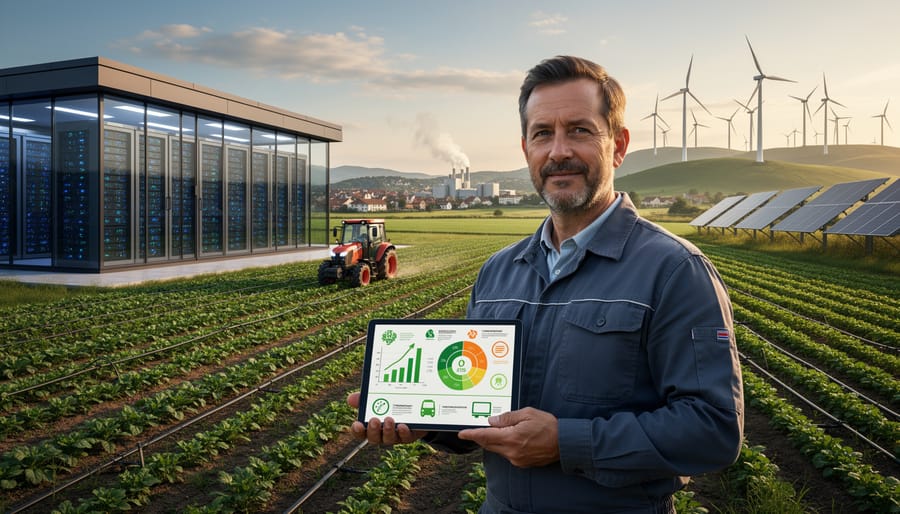
What Farmers Can Learn from This Digital Wake-Up Call
The digital sector’s growing carbon footprint might seem worlds away from farming, but there’s a valuable lesson here: every industry has a role to play in reducing emissions, and awareness is the first step toward meaningful action.
Just as the online gambling industry is beginning to face scrutiny over its energy consumption, agriculture has been on a similar journey. The difference? Farmers are already leading the charge with tangible solutions.
Consider how BC farmer James Morton approached his operation’s carbon footprint. After calculating emissions from his equipment and operations, he implemented precision agriculture technology that reduced fuel consumption by 22 percent in one season. “Once you start measuring, you find opportunities everywhere,” Morton explains. “It’s not about perfection; it’s about progress.”
The parallel to digital carbon awareness is clear: visibility drives change. When online platforms track their energy use, they discover reduction opportunities. Farmers can apply this same principle by conducting regular carbon audits of their operations, from diesel consumption to soil management practices.
Agricultural sustainability consultant Dr. Sarah Chen, based in Lethbridge, notes that farmers often underestimate their influence. “Every hectare managed with carbon sequestration in mind makes a difference,” she says. “Whether it’s cover cropping, reduced tillage, or optimized fertilizer application, these practices accumulate impact across the sector.”
The key takeaway isn’t that farmers should worry about online gambling’s emissions. Rather, it’s recognizing that climate solutions require collective action across all sectors. While tech companies optimize their servers, farmers can continue innovating with regenerative practices, proving that rural communities aren’t just observers in the climate conversation—they’re essential participants driving real-world solutions that benefit everyone.
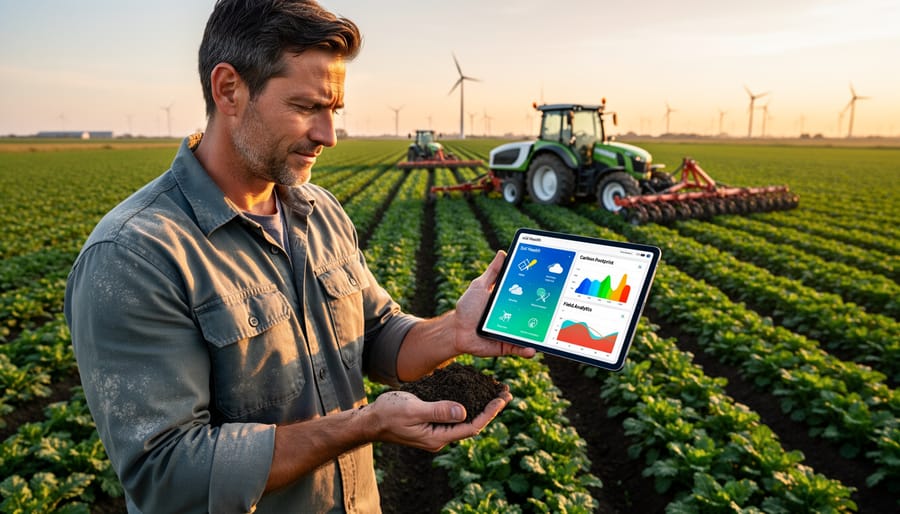
- Conduct comprehensive carbon audits. Track emissions from diesel, fertilizer, and electricity use, but also account for digital infrastructure like cloud-based farm management software and data storage.
- Choose green hosting and services. When selecting farm management platforms, weather apps, or marketing websites, ask providers about their renewable energy commitments and data center efficiency.
- Optimize digital tool usage. Delete unused accounts, reduce redundant data storage, and consolidate software platforms to minimize your digital energy draw.
- Implement precision agriculture strategically. Use GPS-guided equipment and sensor networks to reduce inputs and fuel consumption, ensuring the carbon savings from efficiency outweigh the digital overhead.
- Monitor total energy consumption. Create a dashboard that tracks both on-farm energy use and digital service consumption, revealing opportunities across your entire operation.
Expert Perspective: Carbon Accountability Across All Sectors
Dr. Sarah Chen, an environmental scientist specializing in digital carbon emissions at the University of British Columbia, brings valuable perspective on why farmers should care about carbon footprints beyond agriculture.
“When we talk about climate action, many people assume agriculture is the main concern,” Dr. Chen explains. “But the reality is that comprehensive climate solutions require accountability across every sector of our economy, including digital services that seem invisible.”
According to Dr. Chen, understanding the carbon footprint of industries like online gambling helps farmers in two important ways. First, it demonstrates that environmental responsibility extends far beyond traditional high-emission sectors. “Farmers often face disproportionate scrutiny about their environmental impact,” she notes. “When we shine a light on the carbon costs of data centers, streaming services, and online gaming platforms, it creates a more balanced conversation about who needs to contribute to climate solutions.”
Second, this knowledge empowers agricultural communities to make more informed choices. “A farmer in Alberta who’s invested in reducing their operation’s emissions might also enjoy online entertainment,” Dr. Chen says. “Understanding that an hour of online gaming can produce emissions comparable to driving several kilometers helps them align their entire lifestyle with their sustainability values, not just their farming practices.”
Dr. Chen emphasizes that this isn’t about creating guilt around digital activities. “It’s about transparency and collective responsibility. When farmers advocate for climate policy, they can point to concrete examples showing that every sector needs to participate in emission reductions. The data center powering online gambling in Ontario uses as much electricity as some small towns, yet faces far less regulatory pressure than agriculture.”
She concludes with an encouraging message: “Farmers are already climate leaders through practices like carbon sequestration and renewable energy adoption. Understanding broader carbon impacts strengthens their voice in demanding economy-wide action, ensuring the burden of climate responsibility is shared fairly across all industries.”
Understanding the carbon footprint of digital activities like online gambling helps us recognize that climate awareness extends well beyond the farm gate. While the energy consumption of data centers and digital entertainment might seem distant from agricultural operations, this knowledge reinforces an important truth: every sector has environmental responsibilities, and collective awareness matters.
As Canadian farmers, you’re already leading the way in practical sustainability. From implementing no-till practices to managing livestock emissions and optimizing fuel consumption, your daily decisions directly impact our climate future. The insights about digital carbon footprints shouldn’t distract from this vital work, but rather remind us that climate action requires engagement across all industries.
Your focus should remain where it belongs: on the land you steward and the innovative climate action strategies you implement in your operations. Whether you’re exploring regenerative agriculture, enhancing soil carbon sequestration, or investing in renewable energy for farm buildings, these tangible actions create measurable environmental benefits.
The agricultural community has always adapted to changing conditions, and climate action is no different. By staying informed about environmental impacts across all sectors while continuing to refine your own sustainable practices, you contribute to a broader culture of climate responsibility. Together, through knowledge sharing and practical implementation, Canadian farmers are building a more sustainable future for agriculture and beyond.