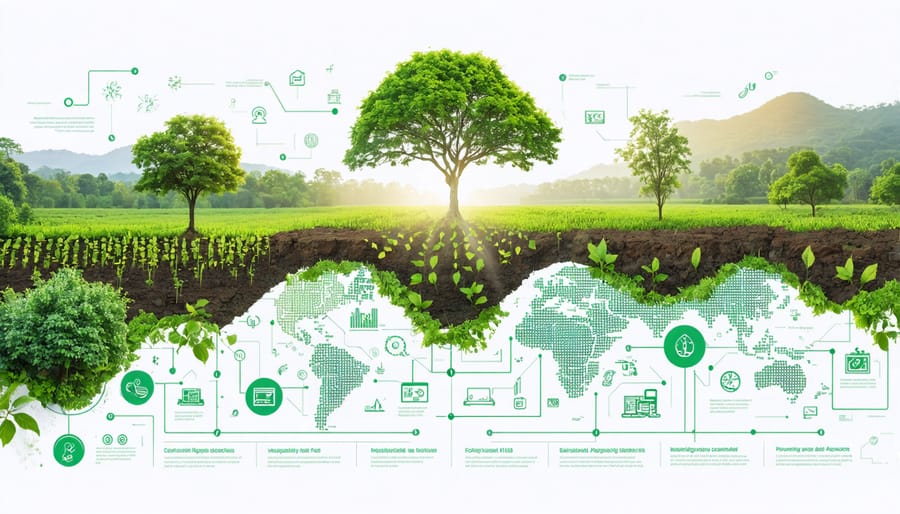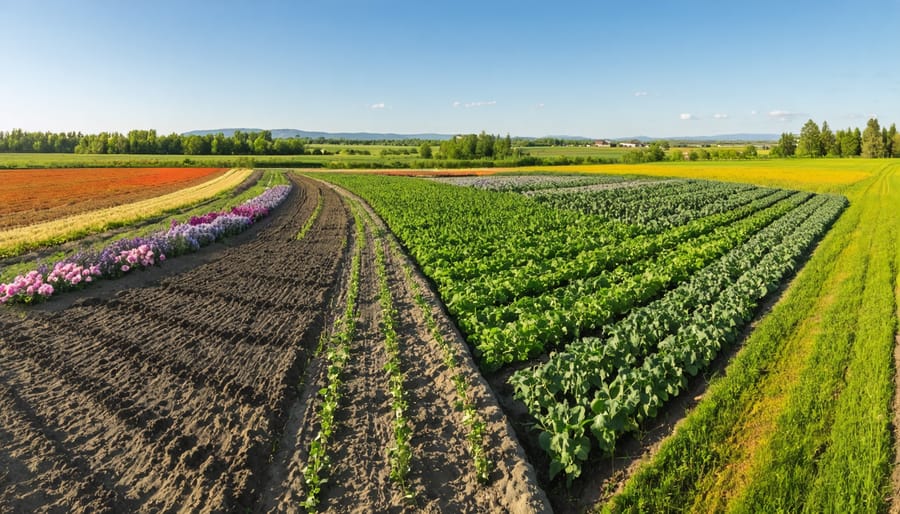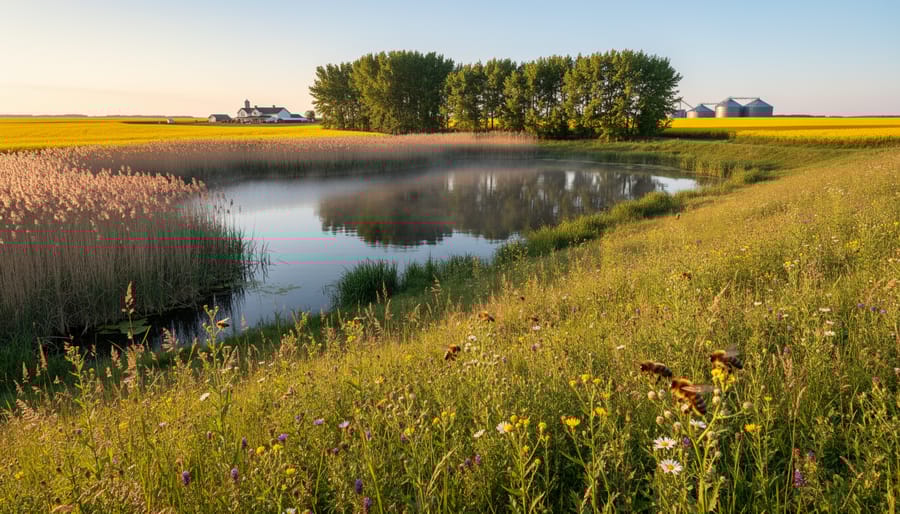
Your farm’s wetlands, shelterbelts, and grasslands are generating measurable economic value right now—you just haven’t been paid for it yet. These natural features filter water, sequester carbon, support pollinators, and regulate local climate, providing services that governments, municipalities, and corporations increasingly recognize as financially valuable assets.
Ecosystem services valuation assigns dollar figures to these natural processes, transforming conservation practices from cost centers into revenue opportunities. A quarter-section of restored wetland in central Alberta, for example, can sequester 50-100 tonnes of carbon annually while filtering nutrients from surrounding cropland—services worth $2,000-$5,000 per year through emerging carbon and water quality markets.
The transition from conventional agriculture to recognizing these revenue streams requires understanding three core valuation approaches. Replacement cost methods calculate what it would cost society to replicate your land’s services through built infrastructure—think water treatment plants or artificial pollination. Market pricing connects your practices to existing payment programs for carbon credits, biodiversity offsets, or watershed protection. Avoided cost approaches measure the economic damages your land prevents, such as flood mitigation or soil erosion control.
Canadian farmers are already accessing these markets. Saskatchewan producers earn $15-$30 per acre through grassland conservation payments, while Ontario farmers receive watershed stewardship funds for maintaining riparian buffers. Alberta’s emerging carbon protocols now include opportunities for crop rotation modifications and nitrogen management improvements.
Understanding ecosystem services valuation positions your operation to capture multiple revenue streams while maintaining productive agriculture. The question isn’t whether these services have value—it’s whether you’ll be positioned to monetize them as markets mature and payment mechanisms expand across Canadian agricultural landscapes.
What Ecosystem Services Really Mean for Your Operation
Services You’re Already Providing (Without Knowing It)
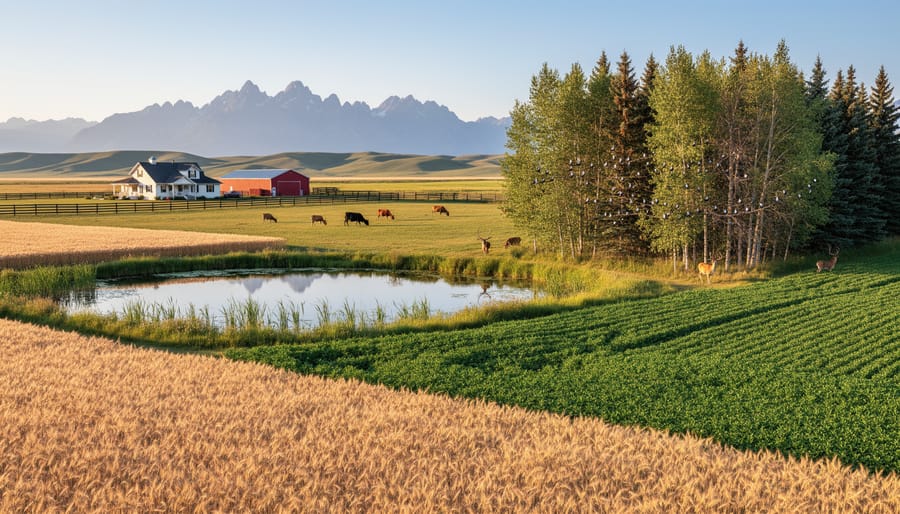
Your farm is already working overtime providing valuable services to the environment and community, whether you realize it or not. These ecosystem services are happening right now across your land, contributing real value that goes far beyond your crop yields or livestock production.
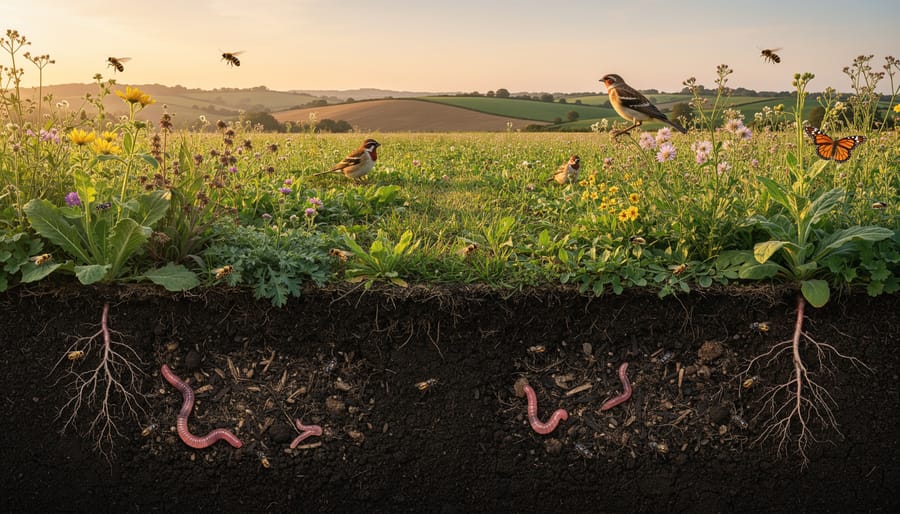
Let’s start with pollinator habitat. Those field margins, shelterbelts, and native grassland patches on your property? They’re providing critical nesting sites and food sources for bees, butterflies, and other pollinators. Research from the University of Alberta shows that farms with diverse habitats support up to 40% more pollinator species, directly benefiting not just your crops but neighbouring operations too.
Your soil is also quietly sequestering carbon. Every hectare of well-managed cropland or pasture is pulling carbon dioxide from the atmosphere and storing it underground. Alberta farms practicing conservation tillage or maintaining permanent pasture are particularly effective at this, with some operations storing 0.5 to 1.5 tonnes of carbon per hectare annually.
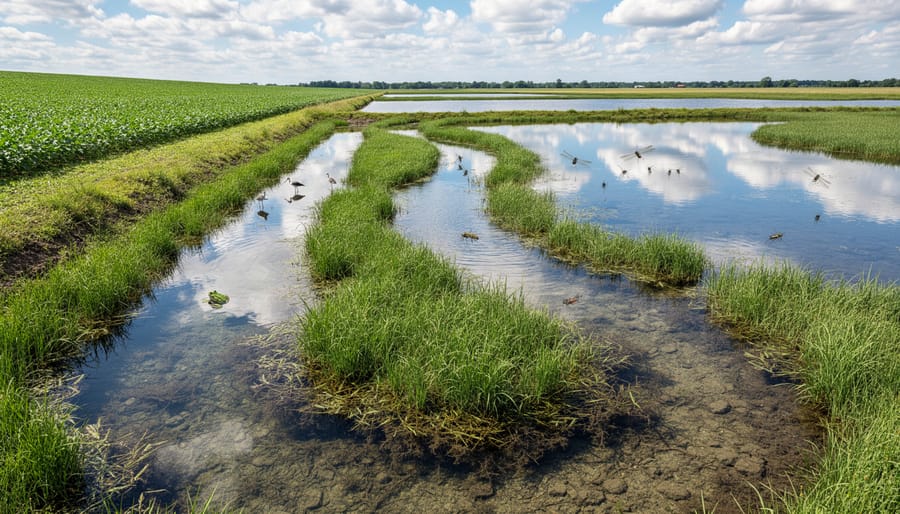
Water retention is another service happening beneath your feet. Healthy soil with good organic matter acts like a sponge, reducing runoff during heavy rains and slowly releasing water during dry spells. This natural filtration also improves water quality for downstream communities.
Finally, your farm supports biodiversity. Those wetlands, woodlots, and grasslands provide habitat for countless species, from songbirds to beneficial insects to small mammals. This diversity creates ecological resilience that benefits everyone in the region.
The Economic Side That Nobody Talks About
Here’s a reality most agricultural discussions skip over: the natural work happening on your farm has real economic value, even when it doesn’t show up in your crop sales. When your soil captures carbon, your wetlands filter water, or your hedgerows support pollinators, you’re providing services that would otherwise cost municipalities and industries millions of dollars to replicate artificially.
Consider this: a single hectare of healthy wetland on farmland can filter up to 2,000 kilograms of sediment annually, saving water treatment facilities significant costs downstream. Your windbreaks reduce soil erosion, preventing an estimated $3 billion in annual agricultural productivity losses across Canada. These aren’t just environmental benefits; they’re measurable economic contributions that support both your operation and surrounding communities.
The challenge? Without proper valuation, these services remain invisible in traditional accounting. You’re essentially providing free infrastructure that benefits everyone from urban water users to food processors relying on wild pollinators. Understanding and quantifying this value opens doors to new revenue streams through carbon credits, conservation payments, and partnerships with municipalities. Just as circular agriculture systems demonstrate value in resource loops, ecosystem services create economic value through natural cycles. Proper valuation ensures you’re compensated for the full range of benefits your land generates.
How to Actually Measure What Your Land Provides
Market-Based Valuation: When Your Services Have a Price Tag
Some ecosystem services come with clear price tags attached, making them the easiest to value and monetize. These market-based services offer immediate opportunities for Canadian farmers to generate additional revenue streams.
Carbon credits lead this category, with Alberta’s carbon offset market currently trading between $40-65 per tonne of CO2 equivalent. Farmers implementing no-till practices, cover cropping, or converting marginal cropland to grassland can sell verified credits through provincial programs. A typical 400-hectare farm adopting no-till can sequester approximately 0.5-1.0 tonnes of carbon per hectare annually, potentially generating $8,000-26,000 in annual credits.
Water quality markets are emerging across Canada, particularly in Ontario and Quebec watersheds. Farmers creating riparian buffers or implementing nutrient management plans can receive payments ranging from $150-400 per hectare from municipalities seeking to protect drinking water sources. The Lake Winnipeg Basin, for example, now offers compensation for reducing phosphorus runoff.
Pollination services carry tangible value for specialty crop producers. Renting honeybee colonies in Alberta currently costs $150-200 per hive for canola pollination, demonstrating the direct market value of natural pollinator habitat. Farmers maintaining wildflower strips or natural areas can potentially offset these costs by supporting native pollinator populations while offering habitat rental to neighbouring operations.
These market-based approaches provide straightforward entry points into ecosystem service valuation, requiring less complex calculations than non-market services.
Replacement Cost Method: What Would It Cost to Replace You?
The replacement cost method asks a straightforward question: what would it cost to build human-made systems that replicate what nature does for free on your farm?
Consider wetlands on your property. They naturally filter agricultural runoff, preventing nutrients and sediments from entering waterways. If those wetlands disappeared, you’d need to construct artificial filtration systems. Municipal water treatment facilities cost between $50,000 and $200,000 per hectare to build and maintain. That’s the replacement value your wetlands provide.
For pollination, the calculation becomes even clearer. Wild pollinators contribute significantly to canola, lentil, and fruit crops across Alberta. If you lost those natural pollinators, you’d need to rent commercial honeybee hives at approximately $200-300 per hive per season. A typical farm might require dozens of hives to achieve comparable pollination rates.
Soil formation offers another example. Healthy grasslands and riparian areas prevent erosion and build topsoil naturally. Replacing lost topsoil through commercial products costs roughly $30-50 per cubic metre, not including application and transportation.
To calculate replacement costs for your operation, identify specific ecosystem services you receive, research equivalent commercial services or technologies, and document those figures. This method provides concrete dollar values that resonate with lenders, insurance providers, and conservation program administrators.
Tools That Make Valuation Simple
Valuing your farm’s ecosystem services doesn’t require an economics degree. Several user-friendly tools have been developed specifically for Canadian producers. Agriculture and Agri-Food Canada offers the Farmland Health Check-Up, a free online tool that helps you assess soil health, water quality, and biodiversity benefits on your operation. The tool generates a report estimating the dollar value of these services based on your inputs.
The University of Alberta’s Agricultural, Life and Environmental Sciences department has developed the Alberta Farm Carbon Calculator, which quantifies carbon sequestration potential and associated credits. Many Alberta farmers have used this calculator to explore carbon credit programs, turning sustainable practices into revenue streams.
For wetland valuation, the Ducks Unlimited Canada Wetland Value Calculator provides estimates for water filtration, flood control, and wildlife habitat services. It’s particularly useful if you’re considering wetland restoration projects.
The Canadian Organic Standards also provide frameworks for documenting ecosystem benefits, which can support certification applications. Your local agricultural fieldmen and sustainability coordinators often have access to these tools and can help you navigate them. Many offer free workshops demonstrating how to use these calculators effectively for your specific operation.

Alberta Farmers Who’ve Turned Ecosystem Services Into Revenue
Carbon Farming Success in Central Alberta
The Pedersen family’s 800-hectare grain and cattle operation near Red Deer demonstrates how ecosystem services valuation can transform farm economics. In 2019, they began quantifying their carbon sequestration efforts after implementing several key changes to their operation.
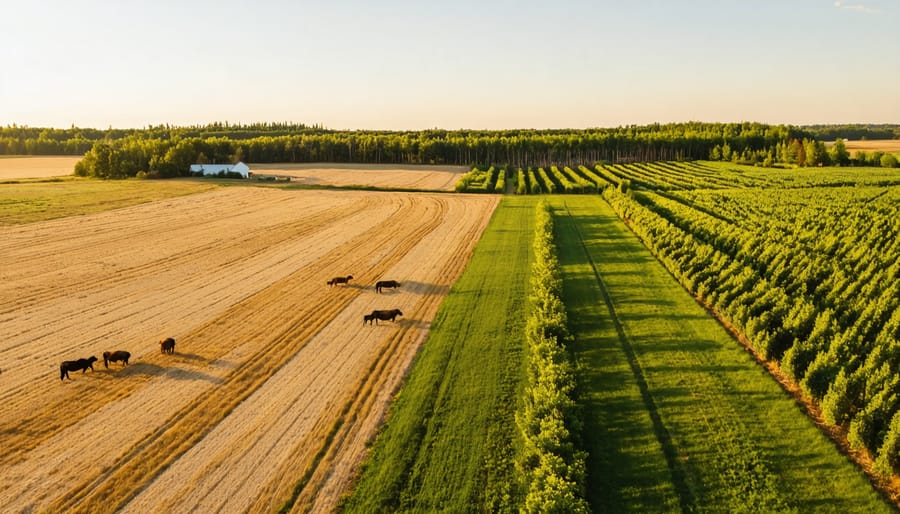
Their strategy centered on three core practices: transitioning to no-till farming across all cropland, establishing 120 hectares of shelterbelts and riparian buffers, and adopting rotational grazing on their 200-hectare pasture system. These regenerative agriculture practices not only improved soil health but created measurable carbon credits.
Working with a third-party verification service, the Pedersens documented a sequestration rate of 1.2 tonnes of carbon dioxide equivalent per hectare annually across their cultivated land. Their grazing management added another 0.8 tonnes per hectare on pasture. Through Alberta’s carbon offset system, they earned $32 per tonne, generating $38,400 in the first year alone.
Beyond carbon credits, they tracked additional benefits including a 15 percent reduction in fertilizer costs due to improved soil organic matter and enhanced water retention that reduced irrigation needs by 20 percent. Their shelterbelts also provided quantifiable wildlife habitat, qualifying for additional provincial conservation payments of $8,000 annually.
The initial investment in verification and practice changes totaled $45,000, which they recovered within 18 months through combined carbon revenues and input savings. Now in year four, their cumulative ecosystem service payments exceed $180,000, proving that environmental stewardship and economic viability work hand-in-hand.
Water Stewardship Pays Off in Southern Alberta
The Bow River Basin in Southern Alberta offers a compelling example of how ecosystem services valuation works in practice. Jim and Sarah Chen, who operate a 400-hectare mixed farm near Lethbridge, partnered with the Oldman Watershed Council in 2021 to protect critical riparian habitat along their property.
The Chens implemented several water stewardship practices including fencing off 2 kilometers of creek bank, establishing 50-meter vegetated buffer zones, and installing alternative livestock watering systems. These changes reduced sediment loading by 65 percent and improved downstream water quality for municipal users and neighbouring farms.
Through the Alternative Land Use Services (ALUS) program, the Chens now receive $12,000 annually to maintain these conservation areas. The payment covers approximately 80 percent of their maintenance costs and compensates for the land removed from production. Additionally, they secured a one-time $8,500 grant from the Growing Forward 2 program for initial infrastructure costs.
The partnership involved the Oldman Watershed Council providing technical expertise, ALUS Alberta facilitating funding, and local conservation officers conducting annual monitoring. Jim notes that the process took roughly six months from initial contact to receiving their first payment, with the watershed council handling most paperwork.
The Chens report unexpected benefits beyond compensation, including improved fish habitat attracting recreational anglers and reduced bank erosion protecting valuable cropland. Their success has inspired three neighbouring operations to explore similar arrangements.
Making Ecosystem Services Work for Your Bottom Line
Start With a Simple Assessment
Starting your ecosystem services valuation doesn’t require hiring consultants or complex software. Begin by walking your property with a simple inventory checklist. Divide your farm into distinct zones: cropland, pasture, wetlands, shelterbelts, and riparian areas. For each zone, document what services you observe.
Look for water-related services first. Are there areas that filter runoff before it reaches waterways? Do wetlands store water during spring melt? Next, identify pollination hotspots by noting where native plants and pollinators congregate near your fields. Document any wildlife corridors or nesting areas that support beneficial species like pest-eating birds.
Measure what you can. Walk shelterbelts and estimate their length in metres. Calculate approximate wetland areas. Take photos throughout growing seasons to track changes.
Create a simple spreadsheet listing each service, its location, and approximate size. Mark your three most significant services based on area covered and potential benefit to your operation. Alberta farmer James Chen from Lacombe found his 400-metre shelterbelt and 2-hectare wetland were his most valuable assets, protecting crops worth thousands annually.
This baseline inventory becomes your foundation for deeper valuation and future program applications. Set aside just two hours to complete this initial assessment.
Connect With Payment Programs Available Now
Several programs across Canada now offer financial compensation for farmers who implement ecosystem service practices, making it easier than ever to get paid for environmental stewardship.
At the federal level, the Canadian Agricultural Partnership’s Environmental Sustainability and Climate Change programs provide funding for projects that enhance carbon sequestration, improve water quality, and protect biodiversity. Eligible farmers can receive cost-share funding up to 50-70% for activities like riparian area restoration, wetland conservation, and cover crop implementation. Applications typically open annually through provincial agriculture departments, with funding amounts varying based on project scope and regional priorities.
In Alberta specifically, the Agricultural Carbon Offset Programs allow farmers to generate carbon credits through practices like reduced tillage, improved grazing management, and nitrogen management. These credits can be sold on voluntary or compliance markets, creating ongoing revenue streams. The Alberta government’s Growing Forward initiatives also provide grants for on-farm environmental projects.
The Alternative Land Use Services (ALUS) program operates in several Canadian provinces, including Alberta locations like Lacombe County and Mountain View County. ALUS pays farmers annual per-hectare payments for establishing and maintaining ecosystem services on marginal lands. Participating farmers work with program coordinators who help identify suitable areas on their property and provide technical support throughout the enrollment process.
To access these programs, start by contacting your regional agricultural fieldman or provincial agriculture office. Most programs require a farm environmental assessment and project proposal. Keep detailed records of your current practices, as baseline documentation strengthens applications and helps quantify improvements over time.
Integrate Valuation Into Your Farm Planning
Start by identifying which ecosystem services your farm already provides. Walk your land and note areas with wetlands, shelterbelts, wildlife habitat, or pollinator strips. Document these features with photos and measurements in hectares. This inventory becomes your baseline for planning decisions.
When considering land use changes, weigh ecosystem service values alongside production potential. For example, before draining a small wetland for cropland, calculate the wetland’s water filtration and carbon storage benefits. These services might generate more long-term value through carbon markets or cost savings than additional crop revenue. Alberta farmer Jim Peterson kept a 3-hectare riparian buffer that qualified for both carbon credits and habitat incentive payments, earning more annually than converting it to pasture.
Build ecosystem services into your 5-year farm plan. Set specific goals like establishing pollinator corridors, improving soil organic matter, or enhancing water retention. Track progress using simple metrics such as bird counts, soil tests, or water quality measurements. This data strengthens applications for conservation programs and demonstrates stewardship to buyers interested in sustainable sourcing.
Connect with agricultural professionals who understand these valuations. Conservation districts and farm advisors can help identify payment opportunities and integrate them into your financial planning. Remember, ecosystem services aren’t separate from farming; they’re assets that smart management can turn into diversified income streams.
What This Means for the Future of Canadian Agriculture
The landscape for ecosystem services in Canadian agriculture is shifting rapidly, creating new opportunities for farmers who embrace this approach. Dr. Sarah Mitchell, agricultural economist at the University of Alberta, notes that “we’re seeing a fundamental transformation in how society values farming. Farmers aren’t just food producers anymore—they’re recognized as environmental stewards, and markets are beginning to reflect that.”
Canada’s agricultural policy environment is evolving to support this transition. The federal government’s On-Farm Climate Action Fund and various provincial programs now provide direct financial incentives for practices that enhance ecosystem services. Alberta Agriculture recently expanded its Environmental Stewardship and Climate Change Framework, signaling increased provincial commitment to compensating farmers for ecological contributions.
Carbon markets represent the most developed opportunity currently, with platforms like the Alberta Emission Offset System already operational. However, biodiversity credits and water quality markets are emerging rapidly. “Within five years, I expect to see established markets for pollinator habitat and watershed protection services across Western Canada,” predicts Mark Thompson, sustainability coordinator with Alberta Wheat Commission. “Forward-thinking farmers who start documenting their ecosystem services now will be first in line.”
This approach integrates seamlessly with sustainable agroecology and climate-smart agriculture movements gaining momentum nationwide. Rather than viewing environmental stewardship as separate from profitability, ecosystem services valuation makes conservation a revenue stream.
The key for Canadian farmers is recognizing this transition early. Those who begin measuring and documenting their ecosystem services today—whether through baseline soil carbon testing, biodiversity assessments, or water quality monitoring—position themselves to capitalize on expanding market opportunities. As Thompson emphasizes, “The data you collect now becomes the foundation for payment programs tomorrow.” This isn’t just environmental responsibility; it’s smart business strategy for the future of Canadian agriculture.
Your farm produces more value than what leaves the gate. By recognizing and quantifying ecosystem services—from carbon sequestration to water filtration and pollinator habitat—you’re not just documenting environmental benefits; you’re unlocking potential revenue streams and building long-term resilience for your operation.
The journey to ecosystem services valuation starts with a simple assessment of what your land already provides. Connect with organizations like the Alberta Land Institute or local watershed groups to identify services your farm delivers. Consider participating in carbon offset programs, exploring payment for ecosystem services opportunities, or investigating conservation easements that reward your stewardship efforts.
Canadian farmers are already leading this shift, proving that profitability and environmental responsibility aren’t competing goals—they’re complementary strategies for sustainable success. Whether you manage 50 hectares or 5,000, your land plays a critical role in supporting healthy ecosystems while feeding communities.
Take that first step today. Document your practices, reach out to agricultural extension services, and join the growing network of Alberta farmers pioneering ecosystem services valuation. Your stewardship matters, your contribution is measurable, and your leadership in sustainable agriculture shapes the future for generations to come.