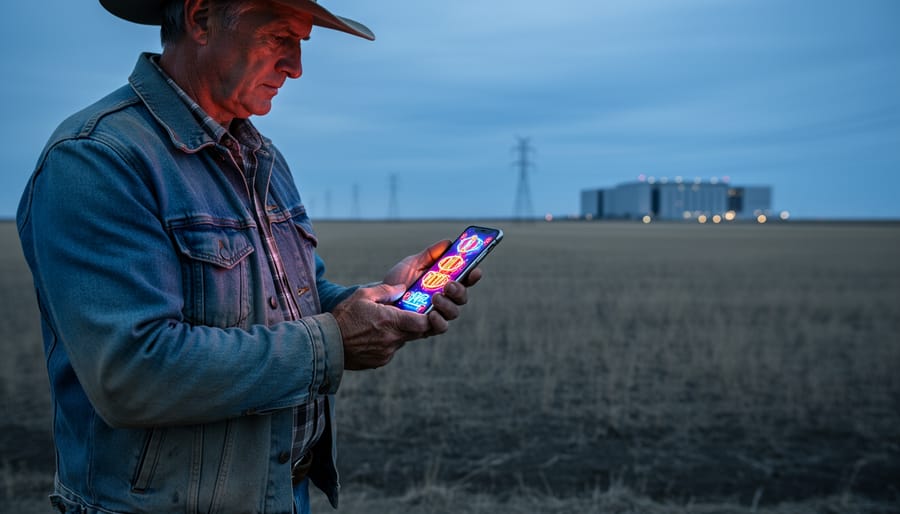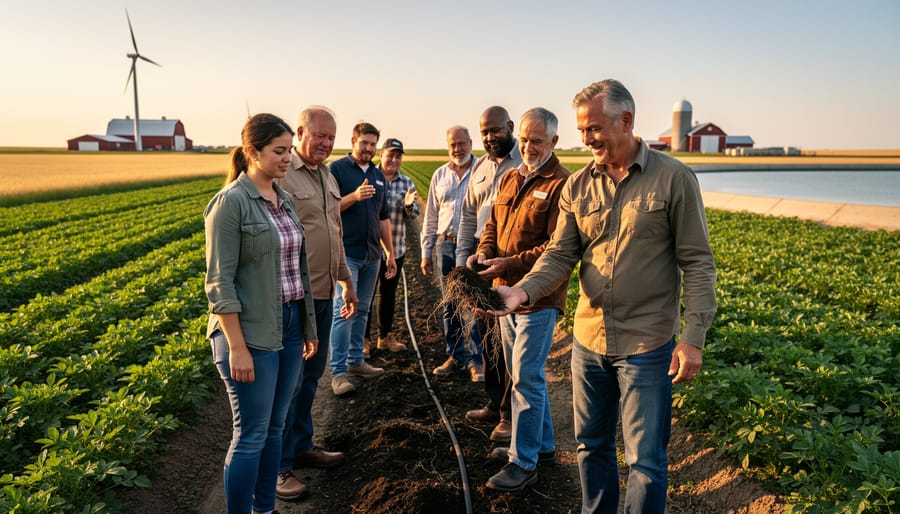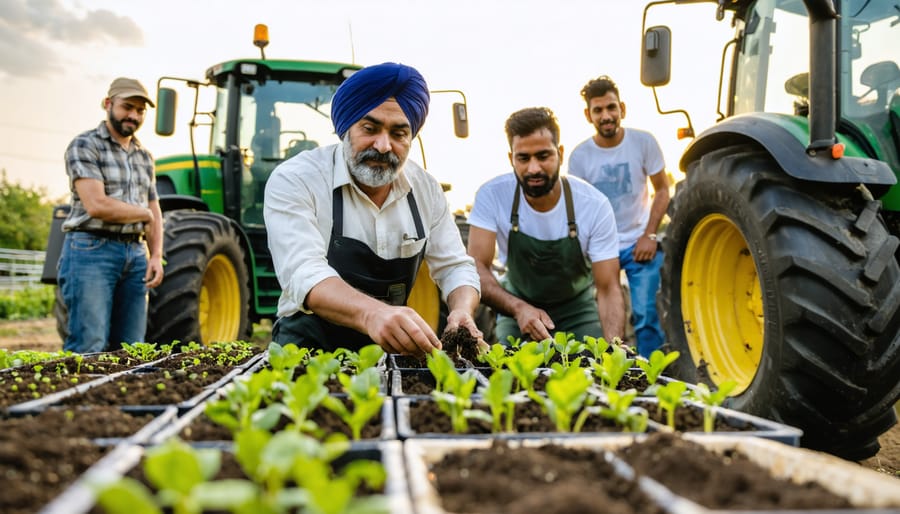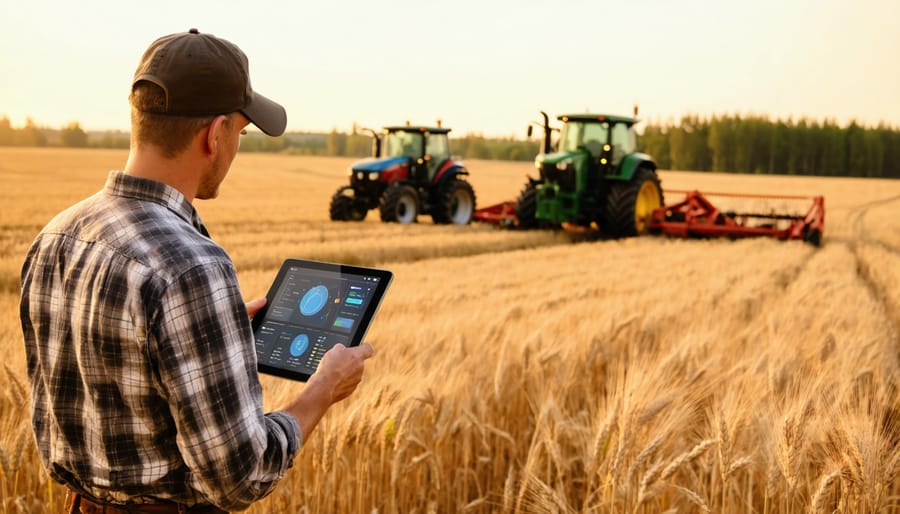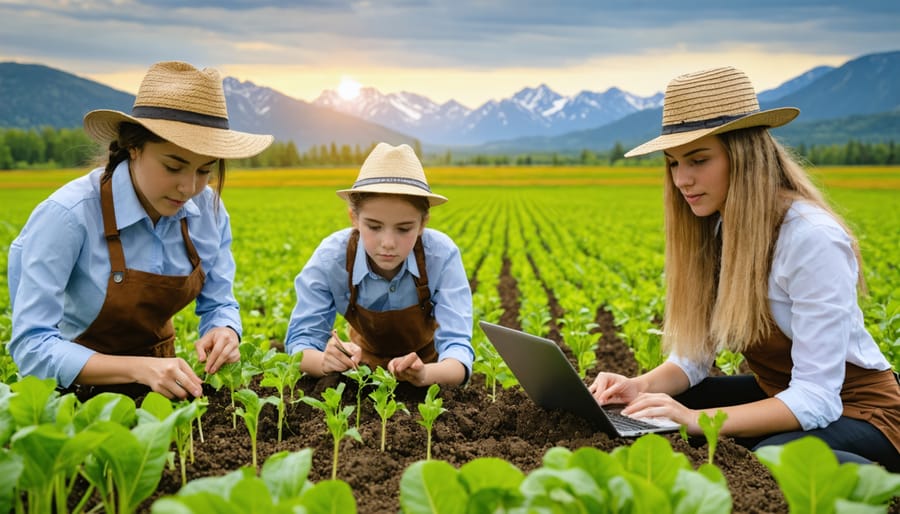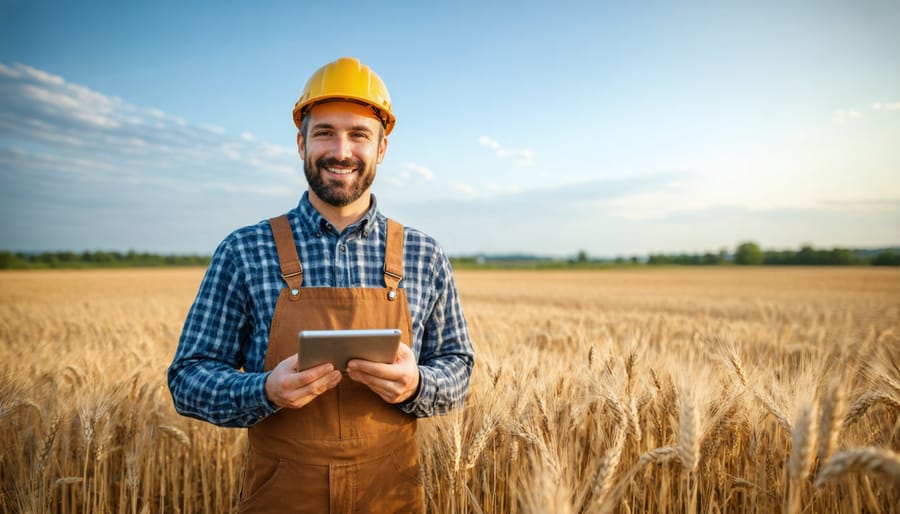
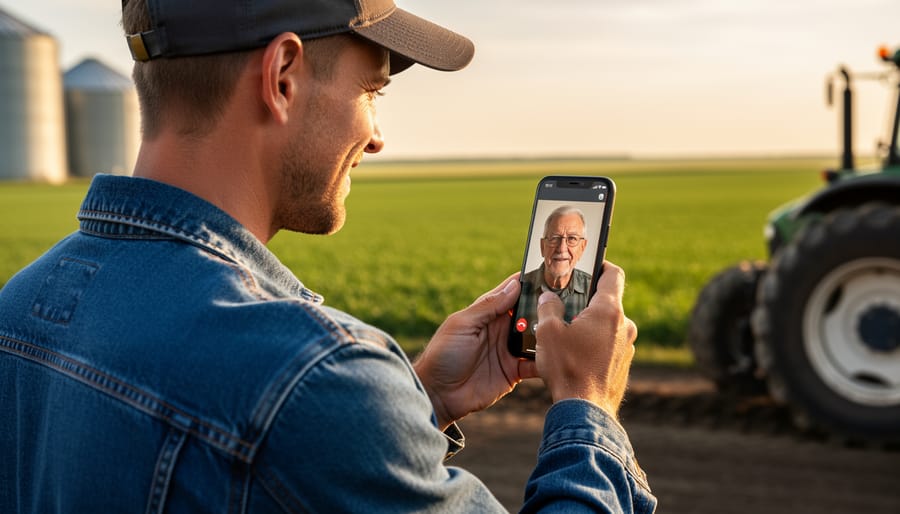
Connect with experienced farmers across provinces through video calls and messaging platforms to access expertise that once required hours of travel. E-mentorship breaks down geographic barriers that have traditionally isolated rural producers, particularly in Alberta’s vast agricultural landscape where the nearest experienced grower might be 200 kilometers away.
This digital approach to knowledge transfer has transformed how Canadian farmers access guidance. A Manitoba grain producer can now troubleshoot pest management with a Saskatchewan specialist during morning coffee. An Ontario dairy farmer shares calving techniques with an Atlantic operation through recorded videos. These connections happen in real-time or asynchronously, fitting around harvest schedules and livestock demands rather than requiring coordinated travel.
The results speak clearly. Agriculture and Agri-Food Canada reports that farmers participating in structured e-mentorship programs demonstrate 34% faster adoption of sustainable practices compared to those relying solely on in-person networks. Young producers entering the industry cite digital mentorship as their primary knowledge source, surpassing traditional extension services.
The technology requires nothing complex—most farmers already own the necessary tools. A smartphone, reliable internet connection, and willingness to ask questions form the foundation. Platforms range from simple video calling apps to purpose-built agricultural mentorship networks connecting thousands of Canadian producers.
This shift matters because farming knowledge traditionally passed face-to-face across generations now needs new pathways. With the average Canadian farmer aging and fewer young people entering agriculture, e-mentorship creates bridges that preserve expertise while welcoming fresh perspectives into our food production systems.
The Challenge: Why New Farmers Need More Than Just Land
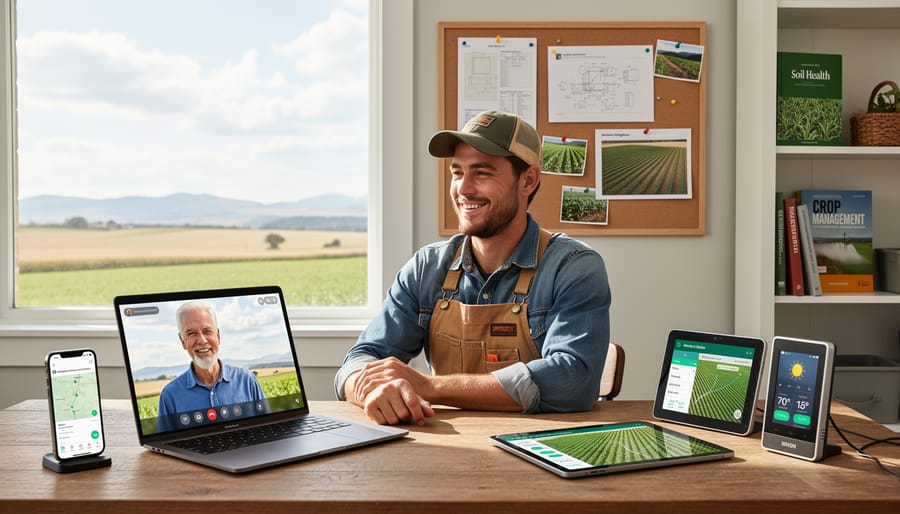
The Knowledge Gap That Costs New Farmers
New farmers face steep learning curves in areas where mistakes can be financially devastating. A 2022 survey of Alberta beginning farmers revealed that 73% struggled most with practical knowledge gaps in their first three years—challenges that mentorship could directly address.
Soil health assessment tops the list of critical knowledge needs. Understanding soil testing results, interpreting organic matter percentages, and knowing when to add amendments makes the difference between thriving crops and failed harvests. Many new farmers don’t realize that Alberta’s diverse soil zones—from the grey luvisols of central regions to the black chernozems further south—require distinctly different management approaches.
Crop rotation planning presents another significant challenge. New producers often don’t understand how pulse crops can fix nitrogen for subsequent wheat plantings, or why canola should only return to the same field every four years to manage disease pressure. These decisions affect profitability for years ahead.
Pest management specific to Alberta’s climate also confuses newcomers. Identifying wheat midge damage versus fusarium head blight, or knowing when grasshopper populations warrant intervention, requires experienced eyes. Climate variability—chinooks in winter, late spring frosts, summer hailstorms—adds complexity that textbooks don’t fully capture.
Equipment investment decisions can make or break farm finances. Should you buy new or used? Lease or purchase? What horsepower do you actually need for your acreage? These questions benefit enormously from mentor guidance, and assistance programs for organic farmers can help navigate these decisions alongside experienced mentors.
Geographic Isolation in Rural Canada
In rural Alberta and across Canada’s agricultural regions, farmers often face significant geographic challenges when seeking mentorship. The average farm spans hundreds of hectares, with neighbouring operations frequently located kilometres apart. This physical separation makes casual knowledge-sharing difficult—you can’t simply drop by a neighbor’s field during coffee break to discuss crop rotation strategies or livestock management techniques.
Population density compounds this isolation. Many rural municipalities have fewer than two people per square kilometre, creating a sparse network of experienced farmers within reasonable travel distance. A beginning farmer might drive 50 kilometres or more to connect with someone facing similar challenges or growing the same specialty crops.
Traditional agricultural extension services, once a cornerstone of farmer education in Canada, have experienced substantial cutbacks over the past two decades. Provincial agriculture departments have reduced field staff, leaving fewer advisors to cover larger territories. According to interviews with agricultural professionals, some extension officers now serve regions exceeding 10,000 square kilometres, making regular farm visits impractical.
Winter weather further restricts in-person connection opportunities. Between November and March, travel becomes hazardous, and many farmers focus on equipment maintenance and planning rather than networking. These combined factors create a perfect scenario where digital mentorship solutions can bridge the isolation gap, connecting farmers regardless of distance or season.
What E-Mentorship Actually Looks Like on the Farm
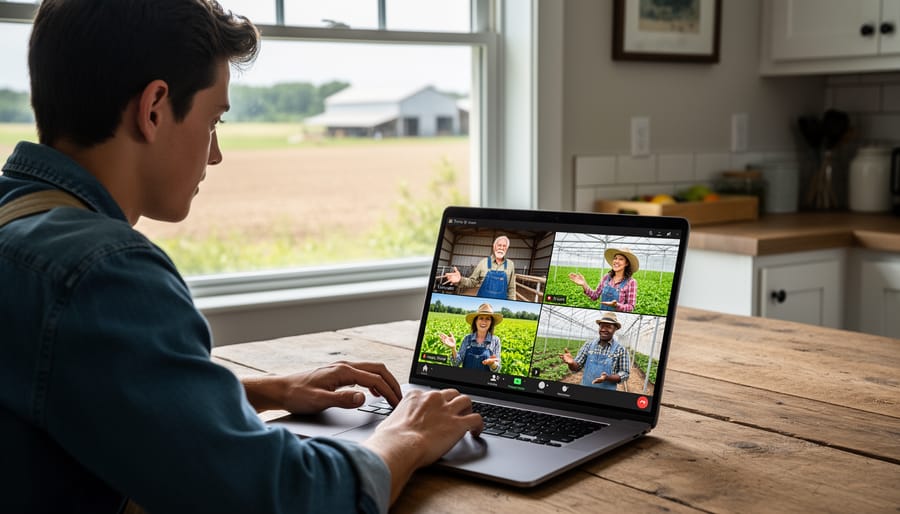
Tools That Work on Rural Internet
Not all digital tools for farmers require high-speed internet, and understanding which platforms work with rural connectivity makes e-mentorship accessible to more producers. Many Alberta farmers have successfully connected with mentors using surprisingly simple technology.
Text-based messaging platforms like WhatsApp, Signal, or even basic SMS work remarkably well on limited bandwidth. These allow mentors and mentees to exchange ideas, questions, and updates without needing video capabilities. Saskatchewan grain farmer Tom Henderson shares that his mentorship relationship thrived through text exchanges: “We’d send messages throughout the day whenever questions came up. No fancy technology needed.”
Voice messaging apps offer a middle ground between text and video calls. Recording 30-second voice notes uses minimal data while adding personal connection that text alone can’t provide. Many farmers find this particularly useful for explaining complex situations while feeding livestock or walking fields.
Photo-sharing through compressed images works even on slower connections. Mentees can document crop issues, equipment setups, or livestock conditions for mentor feedback without uploading high-resolution files. Most smartphones automatically compress images when connection speeds are slow.
Offline-capable resources include downloadable PDFs, podcasts saved for later listening, and apps that sync when connection is available. Agricultural extension offices often provide downloadable guides that mentors can reference during discussions.
Email remains surprisingly effective, functioning well even with intermittent connectivity. Detailed questions and thoughtful responses don’t require real-time interaction, allowing both parties to engage when connection permits. The key is choosing tools that match your infrastructure rather than forcing technology that frustrates both mentor and mentee.
The Rhythm of Digital Check-Ins
The most successful e-mentorship relationships thrive on predictable communication rhythms that honor the agricultural calendar. Rather than rigid weekly schedules, effective pairs establish flexible check-in patterns that recognize when farmers are neck-deep in spring seeding or harvesting through October’s long days.
Many Alberta mentorship programs recommend bi-weekly video calls during slower winter months, transitioning to quick text updates or voice messages during peak seasons. One canola producer near Lethbridge found success with his mentor by scheduling 20-minute morning coffee chats every other Tuesday from November through March, then switching to brief weekend voice notes during planting and harvest. This approach maintained connection without adding stress during critical field work periods.
Digital tools make this flexibility possible. Shared calendars help both parties block out unavailable periods months in advance, while messaging apps allow asynchronous communication when schedules don’t align. Some pairs use shared photo albums to document crop progress, letting mentors provide input without requiring real-time conversations.
The key is establishing these patterns early in the relationship, with both parties openly discussing their seasonal capacity. This mutual respect for agricultural realities builds trust and ensures mentorship support arrives precisely when it’s needed most, rather than when it’s convenient.
Real Results: Canadian Farmers Making E-Mentorship Work
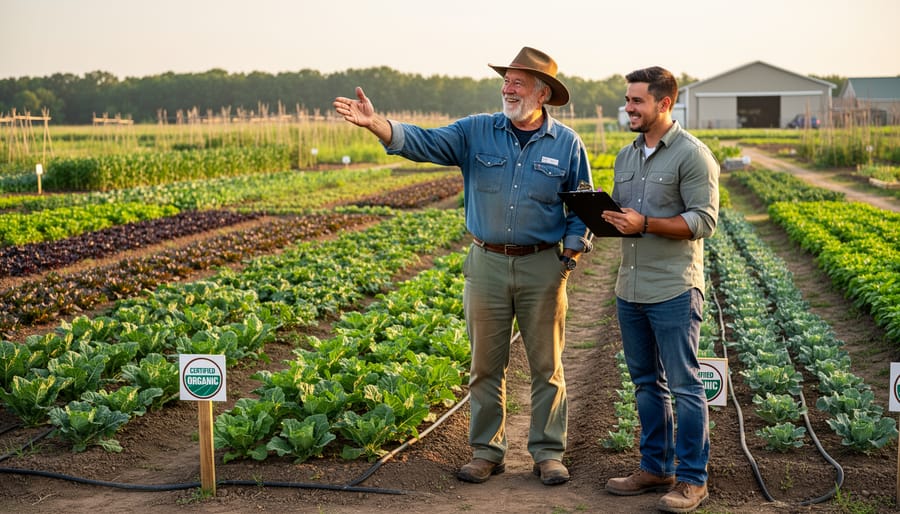
Case Study: Transitioning to Organic in Southern Alberta
When Marcus Reimer decided to transition his 160-hectare conventional grain operation near Lethbridge to organic production in 2021, he felt overwhelmed by the requirements. The three-year certification process, unfamiliar crop rotations, and completely different market channels seemed daunting for someone who had farmed conventionally for fifteen years.
Through the Alberta Farm Mentorship Network, Marcus connected with Sandra Chen, an established organic grain producer based 400 kilometres away near Edmonton. Their relationship began with weekly video calls where Sandra walked him through the organic certification documentation step-by-step, explaining each requirement in practical terms rather than bureaucratic language.
Sandra recommended starting with certified organic wheat and green lentils—crops that would perform well in Marcus’s soil type while meeting market demand. She shared her own crop rotation schedule and connected him with her seed supplier, saving Marcus months of research. When Marcus struggled with weed management in his first transition year, Sandra sent photos comparing different harrowing techniques and suggested timing adjustments based on southern Alberta’s specific growing conditions.
Perhaps most valuable were Sandra’s introductions to organic grain buyers and her local cooperative. By harvest, Marcus had secured contracts before his crop came off, eliminating his biggest worry about finding markets.
Two years into his transition, Marcus reports that having Sandra available through text, email, and video calls made the difference between succeeding and potentially giving up. The remote nature of their mentorship actually worked in his favour—he could reach out exactly when problems arose rather than waiting for in-person meetings.
Expert Voice: What Mentors Gain From the Exchange
For Tom Belanger, a third-generation grain farmer near Lethbridge who’s been mentoring remotely for three years, the benefits flow both ways. “I thought I’d just be sharing what I know, but these younger farmers keep me sharp,” he explains. “They ask questions about precision agriculture tools I haven’t tried yet, which pushes me to research and sometimes adopt new practices myself.”
The satisfaction of giving back runs deep for many experienced farmers. Sarah Mitchell, who transitioned from conventional to organic farming in Saskatchewan fifteen years ago, now mentors through video calls twice monthly. “When someone messages that they successfully navigated their first organic certification because of our conversations, that’s incredibly rewarding. I remember how isolated I felt making that transition.”
Remote mentoring also provides unexpected learning opportunities. “My mentee in Northern Alberta deals with completely different soil conditions and a shorter growing season,” shares James Kowalski from Southern Ontario. “Understanding his challenges has made me think differently about my own operation. He’s introduced me to cover crop varieties I’d never considered.”
The exchange keeps experienced farmers engaged with innovation without the pressure of immediate implementation. “I learn about emerging technologies through my mentees’ eyes,” Tom adds. “They’re experimenting with drone imagery and soil sensors, giving me real-world feedback before I invest.” This knowledge transfer works as a true partnership, where wisdom meets curiosity, creating value that extends far beyond simple advice-giving.
Setting Up Your E-Mentorship Connection
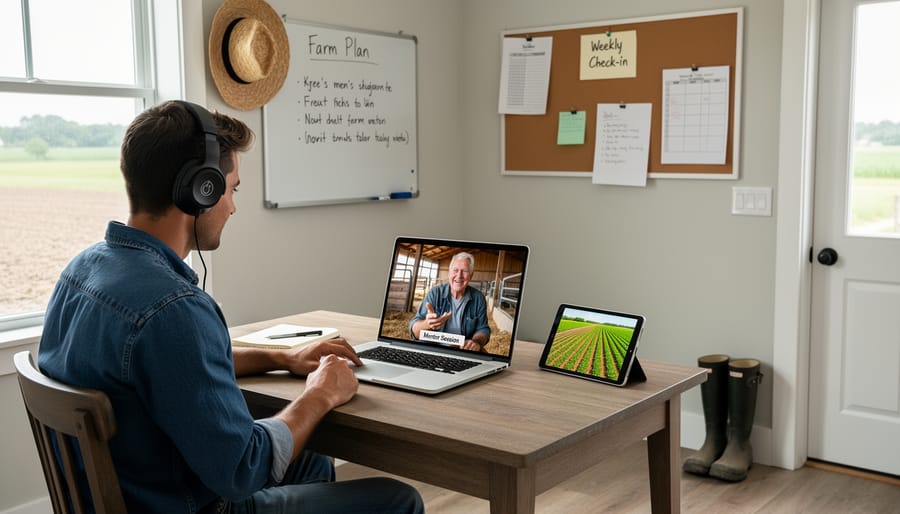
Finding the Right Match
Finding the right e-mentor is like matching seed varieties to your soil conditions—specificity matters. Start by identifying mentors who share your agricultural context. Look for someone farming similar crops at a comparable scale. A mentor growing 20 hectares of organic canola in central Alberta will offer more relevant guidance than someone managing 500 hectares of conventional wheat in Ontario, even though both grow grains.
Climate zone alignment is essential. Saskatchewan’s chinook winds and Alberta’s shorter growing season create unique challenges that a mentor from British Columbia’s Fraser Valley might not fully appreciate. Similarly, if you’re pursuing or maintaining organic certification, connect with mentors who’ve navigated that process themselves—they’ll understand the recordkeeping requirements and transition periods.
When interviewing potential mentors, ask specific questions. How do they handle frost events in June? What’s their approach to pest management without neonicotinoids? How did they secure financing for equipment? Request examples of challenges they’ve overcome rather than just successes. A good mentor shares both triumphs and setbacks.
Watch for red flags. Be cautious of mentors who dismiss your questions, push specific product brands aggressively, or claim their methods work everywhere without adaptation. Genuine mentors acknowledge regional differences and encourage you to test recommendations on a small scale first.
The best mentoring relationships feel collaborative rather than prescriptive. Your mentor should ask questions about your operation, listen actively, and adapt advice to your circumstances. Remember, you’re building a professional relationship, not looking for a guru with all the answers.
Structuring Your First 90 Days
The first three months set the foundation for a successful e-mentorship. Start by scheduling a kickoff video call to establish your communication rhythm. Most farming mentorships thrive with weekly 30-minute check-ins during busy seasons and bi-weekly sessions during quieter periods. Choose platforms that work reliably in rural areas—sometimes a simple phone call beats a glitchy video connection.
During your first meeting, identify three priority topics you want to tackle. Perhaps you’re transitioning to organic certification, exploring direct-to-consumer marketing, or implementing rotational grazing. Break these into achievable 30-day milestones. For example, an Alberta grain farmer might set month one to research equipment options, month two to connect with three suppliers, and month three to create a financial projection.
Build in accountability by sharing a brief weekly progress update via email or text. This doesn’t need to be formal—a quick photo of your new hoophouse construction or a question about soil test results keeps the dialogue flowing. Schedule a 90-day review call to assess what’s working and adjust your approach. Many Canadian farming mentorships use shared Google documents to track goals, resources, and action items, creating a helpful reference you’ll revisit throughout the growing season.
Common Pitfalls and How to Avoid Them
While e-mentorship opens incredible doors for Canadian farmers, it’s not without its challenges. Understanding these common pitfalls—and how to navigate them—can make the difference between a transformative relationship and a frustrating experience.
Communication breakdowns often top the list of e-mentorship challenges. Without face-to-face interaction, messages can be misinterpreted or lost entirely. Set a regular communication schedule from day one, whether that’s weekly video calls or bi-weekly check-ins. Alberta rancher Tom Hendricks learned this the hard way: “My mentor and I would go weeks without connecting, then we’d both feel guilty. Once we committed to Tuesday morning calls, everything clicked.” Use multiple channels—video for complex discussions, email for resource sharing, and quick texts for urgent questions.
Mismatched expectations create another stumbling block. A mentee hoping for daily guidance paired with a mentor expecting monthly touchpoints leads to disappointment on both sides. Create a simple mentorship agreement early on outlining communication frequency, response times, topic boundaries, and relationship duration. Be honest about what you can realistically commit to.
Over-reliance on your mentor can stifle your own problem-solving growth. Remember, mentorship works best when you bring your questions after you’ve done some initial research. Try solving challenges independently first, then bring specific questions to your mentor rather than expecting them to provide all the answers.
Technology frustrations shouldn’t derail valuable relationships. If video platforms feel overwhelming, start with simple phone calls and gradually introduce new tools. Most agricultural extension offices offer free digital literacy workshops. Keep backup communication methods handy—poor rural internet is a reality many Canadian farmers face. The goal is meaningful connection, not technological perfection.
Beyond One-on-One: Group E-Mentorship and Peer Learning
While individual mentorship offers personalized guidance, group e-mentorship formats create powerful opportunities for shared learning and community building among Canadian farmers. These collaborative approaches harness collective knowledge and create support networks that extend beyond single mentor-mentee relationships.
Online farmer cohorts bring together producers facing similar challenges or pursuing comparable goals. For example, the Alberta Farm Business Management Program has successfully facilitated virtual cohort sessions where grain farmers share financial strategies and discuss market trends in real-time video meetings. These structured groups typically meet monthly, allowing participants to learn from both facilitators and each other’s experiences.
Peer learning circles take a less hierarchical approach, where experienced farmers rotate facilitation roles within small groups of five to eight participants. Manitoba’s Growing Forward program documented how these circles helped vegetable producers collectively problem-solve irrigation challenges and share equipment purchasing decisions, reducing individual risk while building regional expertise.
Community-based models prove particularly effective for specialized farming sectors. Saskatchewan’s organic grain growers established a WhatsApp-based learning community where over 60 farmers exchange real-time advice during seeding and harvest seasons. This informal network complements formal mentorship by providing immediate peer support when time-sensitive decisions arise.
The combination of structured group sessions and informal peer networks creates what researchers call “communities of practice,” where farmers continuously learn through ongoing interaction rather than episodic mentorship encounters. This approach proves especially valuable for new entrants who benefit from diverse perspectives while building lasting professional relationships within their agricultural community.
E-mentorship isn’t a substitute for the hands-on, boots-in-the-dirt experience that builds genuine farming expertise. No video call can replace the feeling of rich soil between your fingers or the satisfaction of successfully calving your first heifer. What e-mentorship does offer, however, is a way to accelerate your learning curve and avoid the costly mistakes that can derail a farming operation before it gains momentum. By connecting with experienced mentors, you gain access to decades of wisdom that helps you make informed decisions about everything from crop rotation timing to equipment investments.
If you’re an emerging farmer, take the initiative to reach out and build these digital connections. The farming community is more willing to help than you might expect. For experienced producers, consider this an invitation to give back. Sharing your knowledge with the next generation isn’t just charitable—it’s an investment in the future of sustainable Canadian agriculture. Every mentoring relationship strengthens our agricultural community and ensures that hard-won knowledge continues serving the land and those who work it for generations to come.