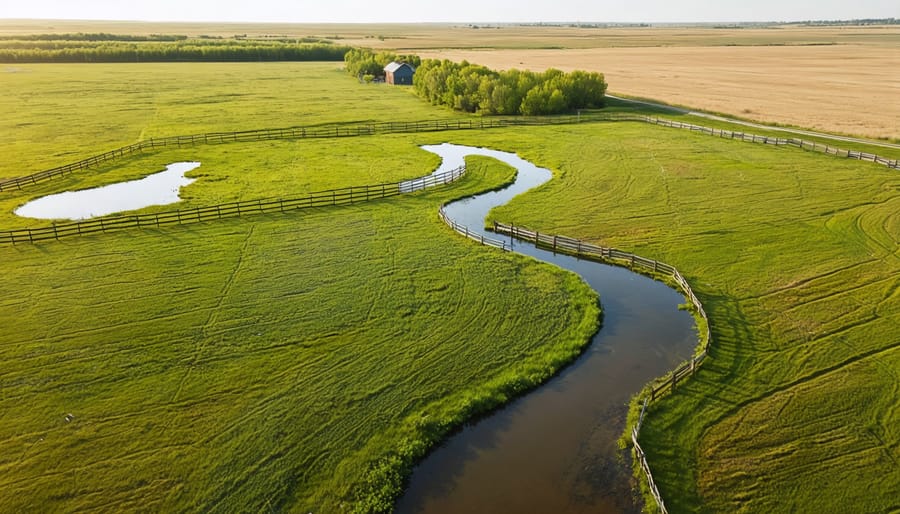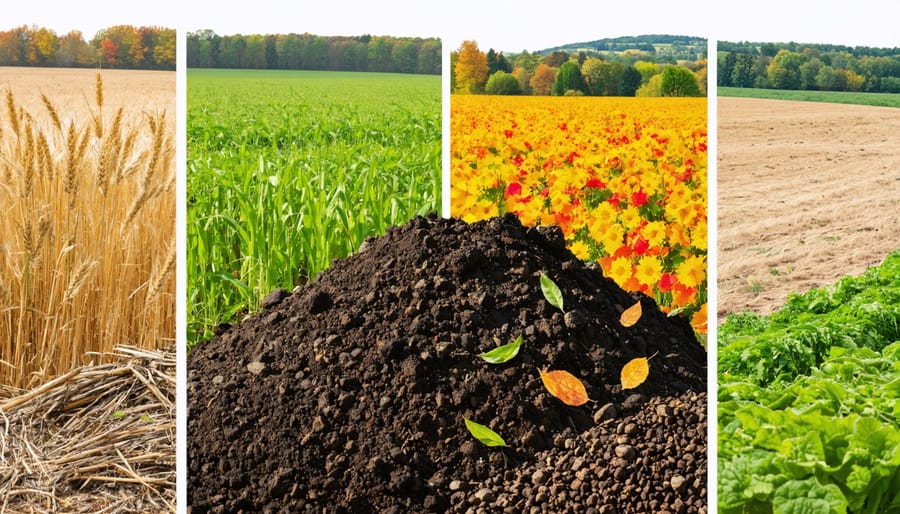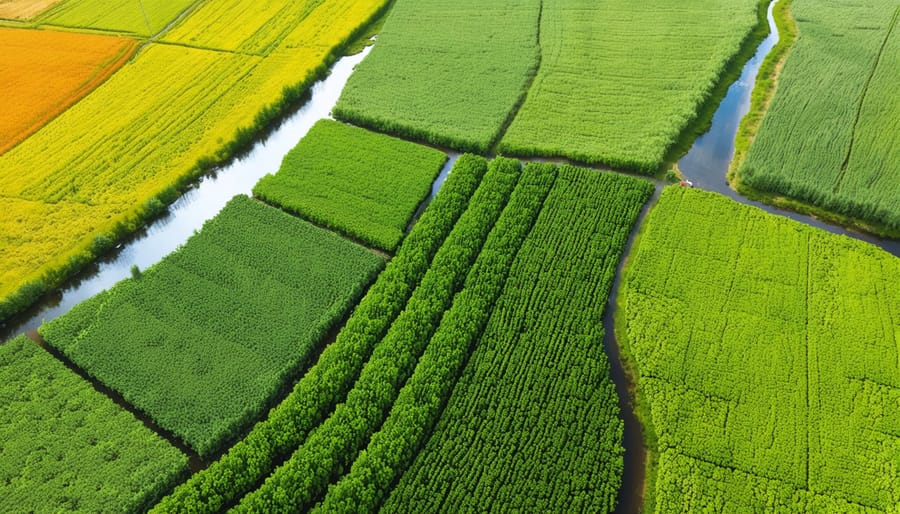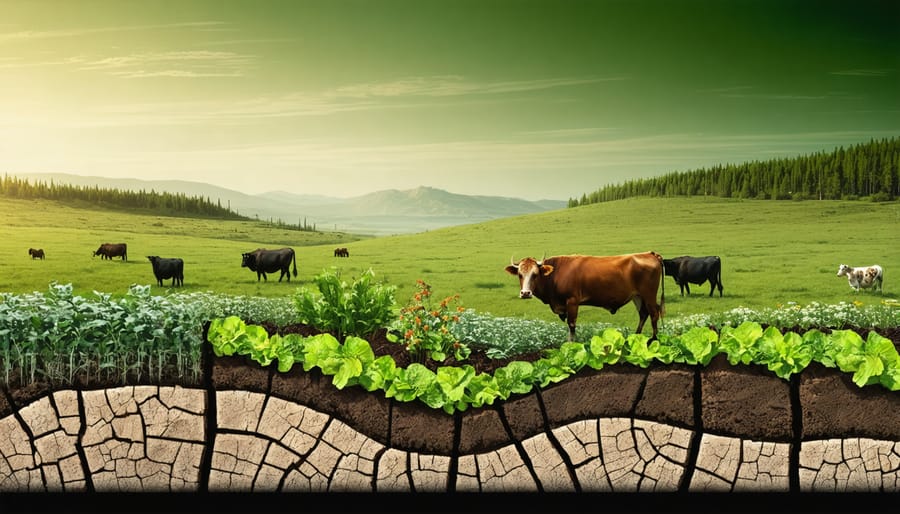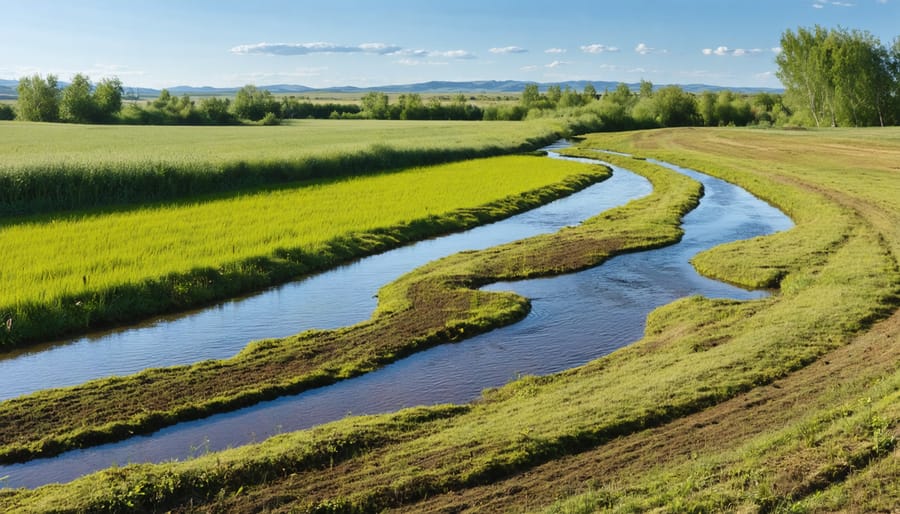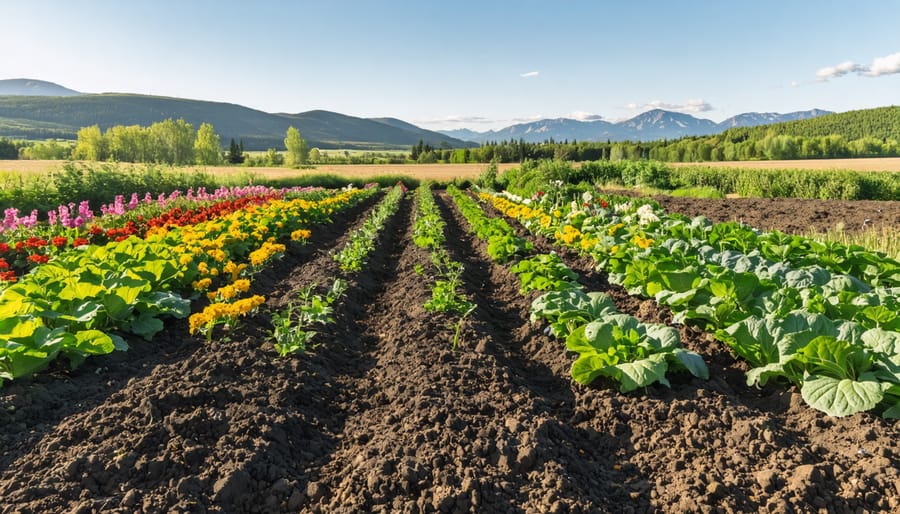
Carbon sequestration qualifies unequivocally as a regulating ecosystem service—one of the most critical functions our agricultural lands can perform. When your soil captures and stores atmospheric carbon dioxide through plant photosynthesis and root systems, it’s actively regulating Earth’s climate by removing greenhouse gases from the atmosphere. This natural process sits alongside other essential regulating services like water filtration, pollination, and flood control that ecosystems provide without human intervention.
For Canadian farmers, particularly across Alberta’s diverse growing regions, understanding this connection transforms how we view our role in environmental stewardship. Your fields aren’t just production zones; they’re active climate solutions. Every tonne of carbon sequestered in your soil represents roughly 3.67 tonnes of CO2 removed from the atmosphere—a measurable contribution to climate regulation that generates real regenerative organic agriculture benefits beyond environmental impact.
The science is straightforward: healthy soils with diverse microbial communities, robust organic matter, and minimal disturbance sequester carbon more effectively than degraded lands. This regulatory service happens naturally when we implement practices like cover cropping, reduced tillage, and diverse crop rotations. What makes carbon sequestration particularly valuable is its dual benefit—while your land regulates atmospheric carbon levels, you simultaneously build soil health, water retention capacity, and long-term productivity. Understanding this ecosystem service framework helps you recognize the full value your farming practices deliver to both your operation and the broader environment.
Understanding Ecosystem Services: Where Carbon Sequestration Fits
What Makes Carbon Sequestration a Regulating Service
Yes, carbon sequestration absolutely qualifies as a regulating ecosystem service. To understand why, let’s look at what regulating services actually do—they moderate natural processes that affect our environment and, ultimately, our ability to farm productively.
Carbon sequestration regulates atmospheric composition by removing carbon dioxide from the air and storing it in soils, plants, and other organic matter. This process directly influences climate stability by reducing greenhouse gas concentrations that contribute to global warming. For Alberta farmers, this matters because climate regulation affects everything from growing season length to precipitation patterns and extreme weather frequency.
The classification as a regulating service becomes clearer when you consider how carbon sequestration works alongside other regulatory functions. Healthy soils rich in organic carbon don’t just store carbon—they improve water filtration and retention, reduce erosion, and support beneficial microbial communities. These interconnected services create more resilient agricultural systems.
Dr. Sylvie Brouder from Purdue University explains it this way: “When we build soil organic matter through carbon sequestration, we’re not just addressing climate change. We’re enhancing the soil’s ability to filter water, cycle nutrients, and maintain structure—all regulating services that support agricultural productivity.”
In practical terms, every hectare of farmland actively sequestering carbon is performing measurable regulatory work. Research from Agriculture and Agri-Food Canada shows that adopting practices like cover cropping and reduced tillage can sequester 0.5 to 1.5 tonnes of carbon per hectare annually while simultaneously improving soil health indicators. This dual benefit—climate regulation plus on-farm advantages—exemplifies why carbon sequestration fits squarely within the regulating services category of ecosystem functions that maintain environmental conditions suitable for life and agriculture.
How Carbon Sequestration Works in Agricultural Soils
The Soil Carbon Cycle on Your Farm
Understanding how carbon moves through your farm ecosystem helps you make informed management decisions. The process starts above ground, where your crops and pasture plants capture carbon dioxide from the atmosphere through photosynthesis. In Alberta’s growing season, a healthy stand of perennial forage can photosynthesize significant amounts of carbon daily, converting it into plant biomass.
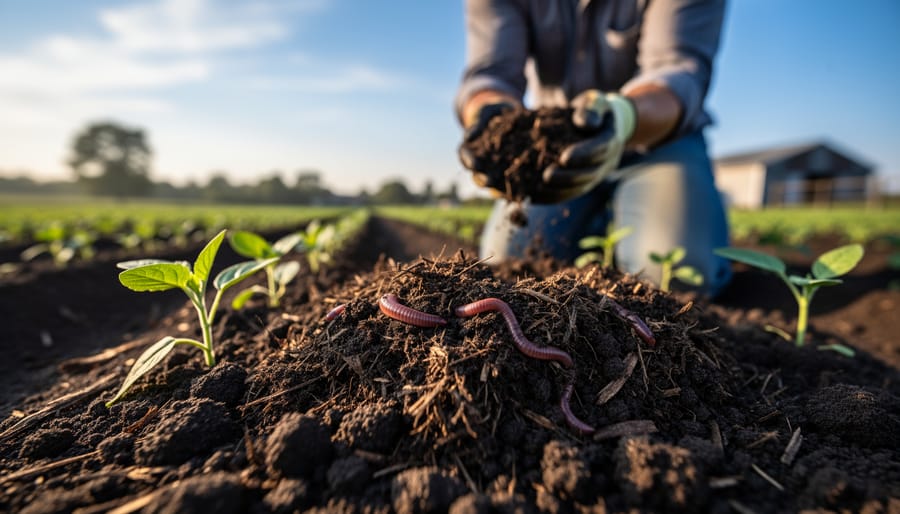
Here’s where it gets interesting for soil health: plants don’t keep all that captured carbon in their leaves and stems. Through their root systems, plants actively pump 30 to 40 percent of photosynthesized carbon directly into the soil as root exudates—sugary compounds that feed soil microbes. Think of it as your plants feeding the underground workforce.
These soil microbes, including bacteria and fungi, consume the exudates and decompose dead plant material, creating stable organic compounds that bind to soil particles. This microbial activity transforms simple carbon compounds into complex humus that can remain in your soil for decades or even centuries.
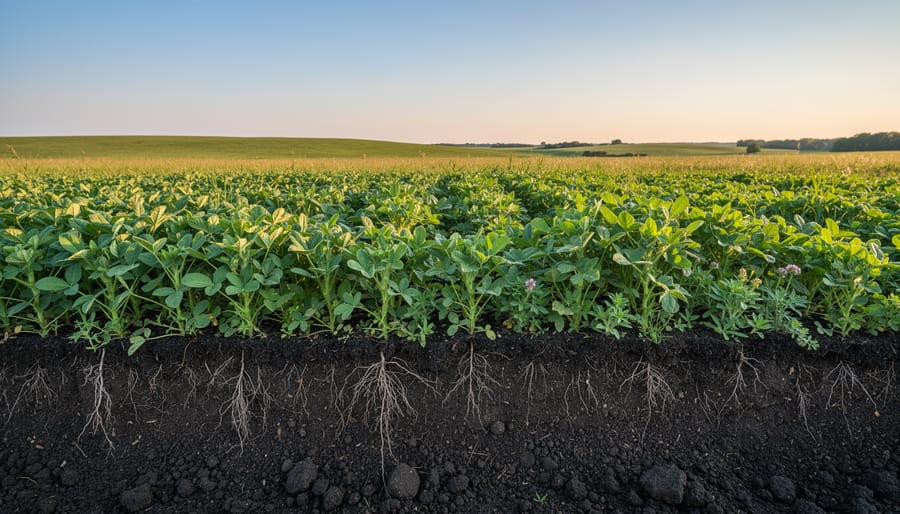
The root systems themselves contribute significantly to soil carbon. When plants die back seasonally or roots naturally turnover, they add organic matter directly into the soil profile. Perennial crops, with their extensive root networks reaching 2 to 3 metres deep in prairie soils, are particularly effective at building soil carbon at depth where it’s more protected from disturbance and decomposition.
Why Alberta Soils Have Unique Carbon Storage Potential
Alberta’s soils offer exceptional carbon storage advantages that position Prairie farmers at the forefront of climate change mitigation. The region’s dominant Chernozemic soils—characterized by deep, dark topsoil layers rich in organic matter—naturally excel at holding carbon. These soils developed over thousands of years under native grasslands, creating a foundation perfectly suited for sequestration practices.
The Prairie climate plays a crucial role too. Cold winters slow decomposition rates, allowing organic matter to accumulate rather than break down rapidly. Meanwhile, the semi-arid conditions mean carbon stays locked in the soil longer compared to wetter regions where microbial activity accelerates decomposition.
According to Dr. Martin Entz from the University of Manitoba, “Prairie soils can store 30-50% more carbon per hectare than many other Canadian agricultural regions when managed properly.” This natural advantage means Alberta farmers can achieve measurable results more quickly with regenerative practices.
The region’s clay-rich soil texture in many areas provides additional benefits, as clay particles bind tightly with organic carbon molecules, creating stable, long-term storage. Combined with Alberta’s extensive agricultural land base—over 20 million hectares in production—the cumulative carbon storage potential is substantial, making every farm’s contribution meaningful to both local ecosystems and global climate goals.
Regenerative Agriculture Methods That Maximize Carbon Sequestration
Cover Cropping for Year-Round Carbon Capture
Alberta’s short growing season demands strategic cover crop selection to maximize carbon capture during frost-free months. Winter-hardy species like fall rye and hairy vetch excel in our climate, establishing roots before freeze-up and resuming growth early spring. These workhorses can sequester between 0.5 to 1.5 tonnes of carbon per hectare annually when managed properly.
For spring seeding after early cereals, consider fast-growing options like oats, field peas, or radishes. These establish quickly in our compressed timeline and add organic matter before winter. Mixed species plantings often outperform monocultures, with combinations like oats and peas capturing 20-30% more carbon through complementary root structures.
Dr. Sarah Mitchell from Olds College emphasizes timing: “Seed cover crops immediately after harvest. Every week of growth adds measurable carbon to your soil bank.” Alberta farmer James Kroetsch reports visible soil structure improvements after just two seasons of cover cropping on his Red Deer County operation.
Start small with 10-20 acres to learn what works for your specific conditions. Track soil organic matter through regular testing to quantify your carbon sequestration success. Local seed suppliers now stock climate-appropriate mixes designed specifically for Alberta’s regions.
No-Till and Reduced Tillage Practices
Conventional tillage disrupts soil structure and exposes organic matter to oxygen, releasing significant amounts of stored carbon back into the atmosphere. By contrast, no-till practices preserve soil aggregates and protect carbon-rich organic matter from decomposition. Research from Alberta’s agricultural regions shows that minimizing soil disturbance can increase carbon sequestration rates by 0.3 to 0.5 tonnes per hectare annually.
For conventional farmers considering the transition, start by reducing tillage intensity rather than eliminating it entirely. Strip-till or zone-till systems offer a middle ground, disturbing only 25-30% of the soil surface while maintaining seedbed preparation benefits. Invest in proper residue management equipment and consider cover crops to suppress weeds naturally as your soil biology strengthens.
The transition period typically spans three to five years as soil structure rebuilds and beneficial microorganism populations establish. During this adjustment phase, you may experience temporary yield fluctuations, but improved water infiltration, reduced fuel costs, and carbon credit opportunities often offset initial challenges. Many Alberta farmers report long-term soil health improvements that enhance both carbon storage capacity and overall farm profitability.
Rotational Grazing and Livestock Integration
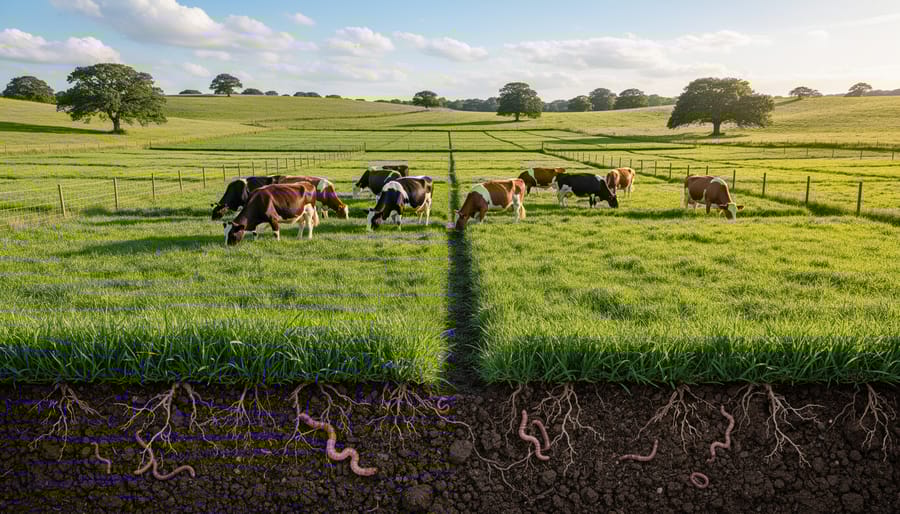
Rotational grazing systems offer Alberta farmers a practical way to boost carbon sequestration while strengthening pasture productivity. When livestock move frequently between paddocks, plants experience periods of grazing followed by recovery time. This cycle stimulates deeper root growth, with plants pushing roots up to 30 centimetres deeper into the soil profile compared to continuous grazing.
These deeper roots deposit carbon-rich compounds and feed beneficial soil microbes that build stable organic matter. The physical impact of hooves also presses plant material and manure into the soil surface, creating better contact for decomposition. Alberta rancher testimonials reveal that well-managed rotational systems can increase soil organic matter by 0.5 to 1 percent over five years.
The result is a win-win scenario: healthier pastures that support more livestock per hectare while storing atmospheric carbon underground. This integration transforms grazing from a potential soil degradation concern into an active carbon sequestration tool.
Composting and Organic Amendments
Adding composted organic matter to your fields represents one of the most accessible ways to boost soil carbon while improving overall soil health. When you incorporate finished compost at rates of 10-20 tonnes per hectare, you’re adding stable carbon compounds that resist decomposition while enhancing microbial activity. Alberta farmers working with municipal compost programs have documented soil organic carbon increases of 0.3-0.5% within three years of regular applications.
Start small with on-farm composting using livestock manure, crop residues, and food waste if available. The key is maintaining proper carbon-to-nitrogen ratios around 25:1 to 30:1 and ensuring adequate moisture and aeration during the decomposition process. Apply finished compost in spring or fall, working it into the top 15-20 centimetres of soil where biological activity peaks.
Consider biochar additions alongside compost for even greater carbon stability. This charcoal-like material, when mixed at 2-5% by volume with compost before application, can lock carbon away for centuries while improving water retention. Many Saskatchewan producers now coordinate with local agricultural waste processors to source affordable biochar, turning what was once burned stubble into long-term carbon storage.
Real Results: Alberta Farmers Leading Carbon Sequestration
When Brad Morrison transitioned his 2,400-hectare grain operation near Lethbridge, Alberta to regenerative practices in 2018, he wasn’t sure what to expect. Five years later, the results speak for themselves—and they’re measurable.
Morrison’s farm now sequesters approximately 1.8 tonnes of carbon per hectare annually, verified through soil testing conducted by the University of Alberta’s Agricultural, Food and Environmental Sciences department. “We started with a baseline soil organic carbon level of 2.1 percent,” Morrison explains. “After four years of no-till, cover cropping, and integrating livestock, we’re sitting at 2.9 percent. That’s real carbon being pulled from the atmosphere and stored in our soil.”
The transition required patience and planning. Morrison eliminated tillage completely, established diverse cover crop mixtures featuring radishes, oats, and legumes, and introduced rotational grazing with a small cattle herd. He also reduced synthetic fertilizer applications by 40 percent, relying instead on biological nitrogen fixation from his cover crops.
The economic benefits have been substantial. Through Alberta’s Agricultural Carbon Credits program, Morrison generates approximately $18,000 annually in carbon credit revenue. More significantly, his input costs have dropped by 28 percent while yields have remained stable, with wheat production averaging 3.2 tonnes per hectare—comparable to his pre-transition numbers.
“The soil health improvements alone justify the changes,” Morrison notes. “We’re seeing better water infiltration, which matters during our dry spells. Our fields held up remarkably well during the 2021 drought when neighbouring conventional fields struggled.”
Dr. Patricia Chen, a soil scientist who has studied Morrison’s operation, confirms the broader implications. “What we’re seeing here demonstrates that carbon sequestration through regenerative agriculture isn’t theoretical—it’s happening right now on Alberta farms. Brad’s soil is providing that critical regulating service we discussed: capturing atmospheric carbon and storing it long-term while simultaneously improving agricultural productivity.”
Morrison now mentors other farmers considering the transition. “Start small, test your soil regularly, and connect with other producers doing this work,” he advises. “The learning curve exists, but the environmental and financial returns make it worthwhile. We’re not just farming—we’re actively healing our land while growing food.”
Measuring and Verifying Carbon Sequestration on Your Farm
Carbon Credit Opportunities for Canadian Farmers
Canadian farmers have unprecedented opportunities to generate revenue from their carbon sequestration efforts through various carbon credit programs. These programs compensate producers for implementing practices that remove atmospheric carbon dioxide and store it in agricultural soils.
Alberta farmers can access several established programs. The Canadian Agricultural Partnership offers cost-share funding for beneficial management practices that enhance soil carbon. Private sector initiatives like Nori and Indigo Ag provide direct payment models, typically ranging from $15 to $40 per tonne of carbon dioxide equivalent sequestered. The federal government’s Greenhouse Gas Offset Credit System creates additional market opportunities through verified emission reductions.
Eligibility generally requires baseline documentation of existing practices, commitment to approved sequestration methods for 3-10 years, and third-party verification through soil sampling or modeling. Common qualifying practices include no-till farming, cover cropping, rotational grazing, and precision nutrient management.
Economic potential varies by farm size and practice adoption. Alberta case studies show producers earning between $5,000 and $25,000 annually through combined program participation. Early adopters benefit most, as some programs reward transition from conventional to regenerative methods rather than maintaining existing conservation practices.
Producers should compare program requirements, payment structures, and contract terms carefully. Many agricultural associations now offer workshops to help farmers navigate enrollment processes and maximize returns while advancing their sustainability goals.
Expert Perspective: The Future of Carbon Sequestration in Canadian Agriculture
Dr. Michelle Perrin, a soil health researcher at the University of Alberta, has spent fifteen years studying carbon sequestration in Prairie agricultural systems. Her perspective offers valuable insight into where Canadian agriculture stands in the climate mitigation conversation.
“Carbon sequestration absolutely functions as a regulating ecosystem service,” Dr. Perrin explains. “When we look at the scientific evidence, healthy agricultural soils are actively removing carbon dioxide from the atmosphere and storing it underground. This isn’t just environmental theory—it’s measurable climate action happening on working farms across Alberta and throughout Canada.”
Dr. Perrin’s research shows that adopting practices like cover cropping, reduced tillage, and diverse crop rotations can sequester between 0.5 to 1.5 tonnes of carbon per hectare annually on Prairie farms. “The variability depends on soil type, climate conditions, and management intensity, but the trend is consistently positive when farmers commit to soil-building practices,” she notes.
Recent policy developments are creating new opportunities for farmers to benefit economically from this regulating service. “Federal and provincial programs are increasingly recognizing carbon sequestration as a valuable environmental contribution. We’re seeing protocol development for agricultural carbon credits that could provide additional revenue streams for early adopters,” Dr. Perrin says.
She emphasizes that the immediate benefits extend beyond potential carbon markets. “Farmers tell me they’re seeing improved water infiltration, better drought resilience, and reduced input costs within three to five years of implementation. The carbon sequestration is almost a bonus on top of these operational improvements.”
Looking ahead, Dr. Perrin believes Canadian farmers are uniquely positioned to lead. “We have the scientific knowledge, the land base, and increasingly, the policy support. The question isn’t whether carbon sequestration matters—it’s how quickly we can scale these practices across the agricultural landscape.”
Carbon sequestration is undeniably a vital regulating ecosystem service, and as a Canadian farmer, you’re uniquely positioned to enhance it through your land management decisions. The soil beneath your fields holds tremendous potential to capture atmospheric carbon, mitigate climate change impacts, and improve your farm’s resilience and productivity simultaneously.
The regenerative practices we’ve explored—from cover cropping and reduced tillage to rotational grazing and agroforestry—aren’t just theoretical concepts. Alberta farmers are already implementing these methods with measurable success, seeing improvements in soil health, water retention, and long-term profitability. You don’t need to overhaul your entire operation overnight.
Start with one practice that fits your current resources and goals. Perhaps it’s planting a simple cover crop mix after harvest, or adjusting your tillage depth on a test field. Connect with local agricultural extension services, conservation districts, or programs like the Canadian Agricultural Partnership that offer technical support and potential funding. Your regional agronomists understand prairie conditions and can help you navigate the transition.
Every hectare you manage regeneratively contributes to this essential regulating service while building a more sustainable future for your operation. The knowledge exists, the support networks are available, and the benefits extend far beyond carbon—now it’s about taking that first practical step forward.