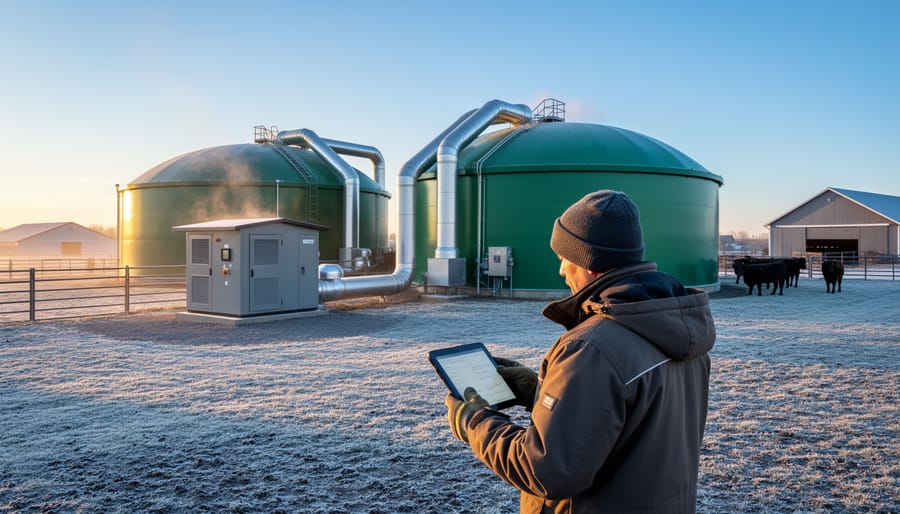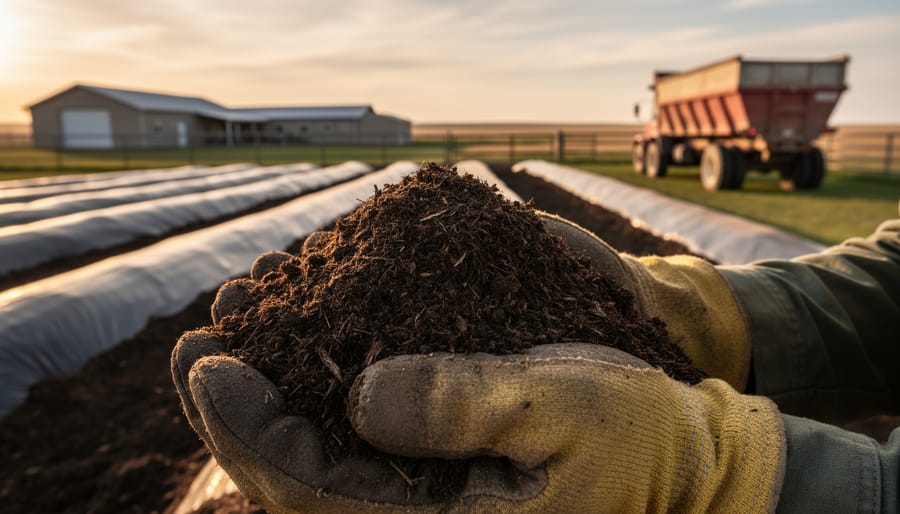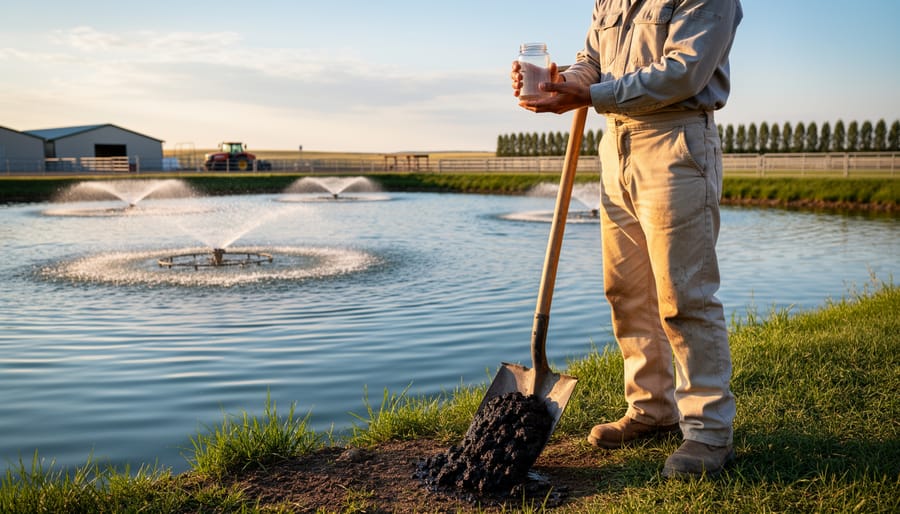
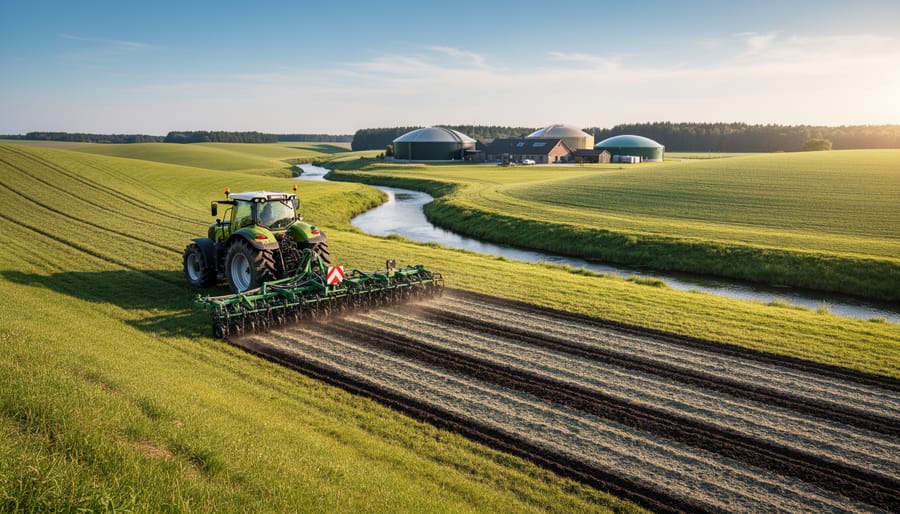
Study how Massachusetts Department of Agricultural Resources regulates digestate application rates at 50 tonnes per hectare annually for Class A materials, then compare these thresholds against your provincial nutrient management requirements. Canadian farmers can adapt MDAR’s three-tier classification system—which categorizes digestate by pathogen levels and heavy metal content—to meet local environmental standards while maximizing soil amendment benefits.
Review MDAR’s mandatory pre-application soil testing protocols that measure nitrogen, phosphorus, and potassium levels before digestate spreading. This approach prevents nutrient overloading and protects waterways, a practice directly transferable to prairie agricultural operations where runoff management is equally critical. Alberta producers implementing anaerobic digestion systems should mirror this testing frequency—annually for new fields, biennially for established application sites.
Examine MDAR’s setback requirements: 30 metres from surface water, 15 metres from property lines, and seasonal application restrictions during frozen ground conditions. These distance-based protections align closely with Canadian agricultural environmental regulations and provide proven benchmarks for developing your own digestate management plans. The Massachusetts framework includes detailed record-keeping mandates tracking application dates, volumes, and field locations—documentation that strengthens regulatory compliance and demonstrates environmental stewardship to both authorities and local communities.
MDAR’s experience managing over 40 operational digesters since 2010 offers valuable lessons for Canadian agricultural professionals evaluating renewable energy investments. Their regulatory model balances environmental protection with operational flexibility, creating pathways for farmers to convert organic waste into revenue-generating soil amendments while reducing methane emissions from traditional manure storage.
Understanding Agricultural Digestate: The Basics for Canadian Producers
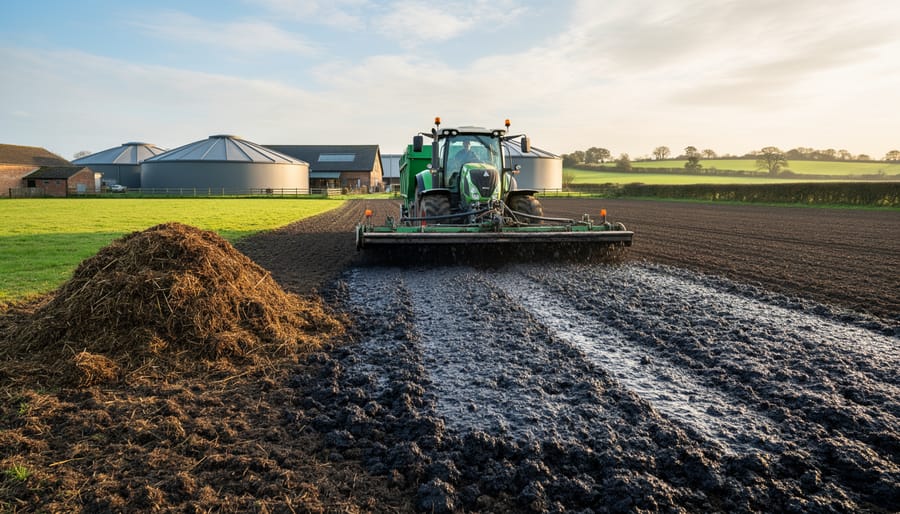
What Makes Digestate Different from Raw Manure
Digestate, the nutrient-rich material produced through the anaerobic digestion process, offers distinct advantages over raw manure for Canadian farmers. The key difference lies in nutrient availability: digestate contains more readily plant-available nitrogen compared to raw manure, as the digestion process breaks down organic compounds into simpler forms. This means crops can access nutrients more quickly, potentially reducing fertilizer costs.
MDAR research demonstrates that digestate has significantly reduced pathogen levels compared to untreated manure. The high-temperature digestion process eliminates many harmful bacteria and parasites, making digestate safer to handle and apply near sensitive areas. For Alberta producers managing livestock operations, this pathogen reduction addresses both environmental and food safety concerns.
From a handling perspective, digestate is typically more homogeneous and easier to pump and spread than raw manure. It has reduced odor, which helps maintain positive community relations in rural areas. The material also contains fewer viable weed seeds due to the digestion process. These characteristics make digestate a more versatile soil amendment that fits well into modern precision agriculture systems while supporting your farm’s sustainability goals.
The Resource Recovery Opportunity
Digestate, the byproduct of anaerobic digestion, offers Alberta farmers significant value beyond renewable energy production. This nutrient-rich material contains nitrogen, phosphorus, and potassium—essential elements that can reduce dependence on commercial fertilizers. Unlike raw manure, digestate’s nutrients are more plant-available, making it an efficient soil amendment that improves crop yields while lowering input costs.
The nutrient recovery potential extends beyond traditional land application. Advanced separation technologies allow farms to extract concentrated liquid fertilizers and create stable solid amendments suitable for various applications. The liquid fraction provides readily available nitrogen for growing crops, while the solid portion enhances soil structure and water retention—particularly valuable in Alberta’s variable climate conditions.
Water recovery represents another opportunity. Properly managed digestate processing can reclaim clean water for farm operations, reducing freshwater demand during dry periods. For Alberta producers managing large livestock operations, this closed-loop approach transforms waste management challenges into resource opportunities, creating additional revenue streams while supporting environmental stewardship goals that align with both regulatory requirements and community expectations.
How MDAR Regulates Digestate: A Framework Worth Studying
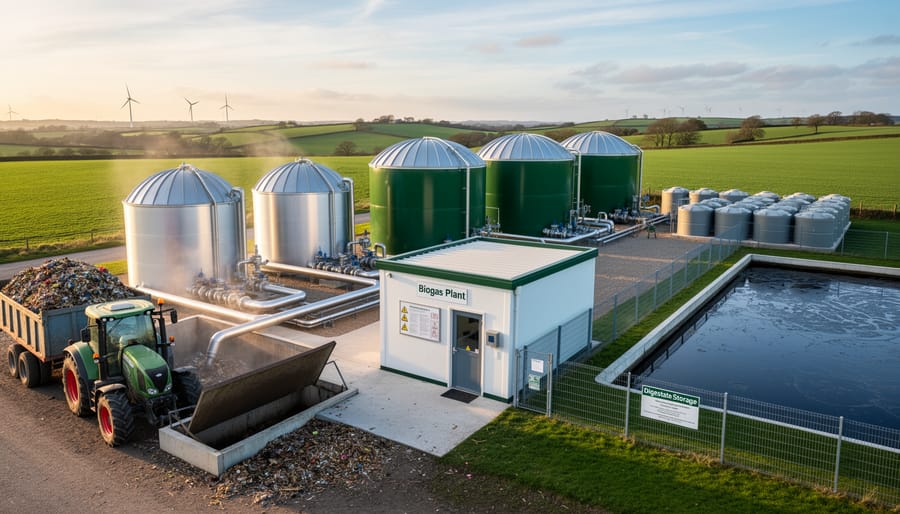
MDAR’s Three-Tier Digestate Classification System
Massachusetts has developed a practical framework that sorts digestate into three distinct tiers, offering valuable insights for Canadian farmers exploring anaerobic digestion. This system helps operators understand what they’re working with and how they can safely use their digestate products.
The first tier includes digestate from source-separated organic materials like farm manures, food scraps, and dedicated energy crops. When processed through properly managed anaerobic digestion systems, this material meets the highest quality standards. Think of it as your premium product—suitable for direct land application with minimal restrictions.
Tier two covers digestate from mixed feedstocks that may include some pre-consumer food waste or materials requiring additional verification. This category needs more documentation and testing but remains valuable for agricultural use. Most farm-scale operations producing digestate from on-farm materials and selected off-farm feedstocks fit comfortably here.
The third tier applies to digestate requiring the most oversight—typically from facilities processing diverse waste streams or materials with contamination risks. While still useful, this digestate faces stricter application requirements and monitoring protocols.
For Canadian operations, particularly in Alberta where livestock operations dominate, understanding this tiered approach helps you plan your feedstock strategy from day one. If you’re considering bringing in off-farm materials to boost biogas production, knowing how different inputs affect your digestate classification prevents surprises down the road. The system rewards careful feedstock selection with simpler compliance requirements and greater application flexibility—something that translates well across jurisdictions. This classification thinking helps you communicate digestate quality to neighbors, regulators, and potential customers who might value your nutrient-rich end product.
Application Standards and Nutrient Management Requirements
The Massachusetts Department of Agricultural Resources has developed comprehensive application standards that offer valuable insights for Canadian farmers exploring digestate management. At the heart of MDAR’s approach is mandatory soil testing conducted at least every three years, which establishes baseline nutrient levels before any digestate application occurs. This data-driven foundation ensures applications match actual crop needs rather than guesswork.
Application rate limits under MDAR regulations are calculated based on nitrogen content and crop uptake capacity. Farmers must not exceed the amount of nitrogen that crops can reasonably absorb during the growing season, typically measured in kilograms per hectare. For example, corn might utilize 170-225 kg of nitrogen per hectare, setting a natural ceiling for digestate applications. This approach to sustainable nutrient management prevents over-application while maximizing crop productivity.
Record-keeping requirements are equally important. MDAR mandates detailed documentation including application dates, rates in litres or tonnes per hectare, field locations, weather conditions, and incorporation methods. These records must be retained for at least three years and made available for inspection.
Timing restrictions protect water quality during vulnerable periods. Applications are prohibited on frozen, snow-covered, or saturated soils, and setback distances from water bodies typically range from 30 to 100 metres depending on slope and vegetation buffers. For Alberta farmers considering similar systems, these standards provide a practical framework that balances agricultural productivity with environmental stewardship, demonstrating how regulatory structure can support rather than hinder sustainable farming operations.
Adapting MDAR Principles to Canadian Prairie Conditions
Climate and Soil Considerations for Alberta Farms
Alberta’s climate presents distinct challenges when adapting Massachusetts digestate management practices. While MDAR guidelines provide excellent foundational principles, our prairie conditions require thoughtful modifications.
The most significant difference is our extended winter freeze period. Alberta experiences soil freezing from November through March in most regions, compared to Massachusetts’ shorter, milder winters. This dramatically narrows your application window and requires strategic planning for digestate storage. You’ll need larger capacity than eastern operations, potentially 6-8 months of storage versus 3-4 months in Massachusetts.
Our shorter growing season, typically 100-120 frost-free days compared to Massachusetts’ 180-200 days, means timing is critical. Spring applications must wait until soil temperatures reach 5°C to prevent runoff and maximize nutrient uptake. Late summer applications work well here, giving crops time to utilize nutrients before fall dormancy.
Prairie soils offer advantages too. Our darker chernozemic soils generally have higher organic matter and better nutrient retention than many Massachusetts soils. However, our lower rainfall—averaging 400-500mm annually versus Massachusetts’ 1,000mm—means digestate provides valuable moisture alongside nutrients.
Saskatchewan farmer Tom Henderson adapted MDAR protocols by conducting soil tests every fall rather than spring. “This gives us winter to plan application rates and timing perfectly for our short season,” he explains. His approach demonstrates how Massachusetts frameworks can successfully guide Alberta operations when adjusted for local realities.
Consider working with provincial agrologists familiar with both digestate management and prairie soil science to optimize your protocols.
Scaling Lessons for Western Canadian Operations
Adapting MDAR’s digestate management protocols to Western Canadian operations requires thoughtful consideration of scale and regional growing patterns. Alberta farms typically span significantly larger acreages than Massachusetts operations, with many grain and canola producers managing 1,000 to 4,000 hectares compared to Massachusetts’s smaller mixed vegetable operations.
When scaling MDAR’s application rate guidelines, focus on field-specific nutrient mapping rather than blanket applications. Your larger field sizes make precision agriculture technology particularly valuable for targeted digestate distribution. Consider investing in GPS-guided spreaders with variable rate technology to match MDAR’s emphasis on environmental protection while covering more ground efficiently.
The Prairie crop rotation cycle differs substantially from Eastern operations. While MDAR protocols often address annual vegetable rotations, your wheat-canola-pulse rotations require adjusted timing. Apply digestate in fall after harvest or early spring before seeding, accounting for our shorter growing season and the need to capture nutrients before spring melt.
Storage capacity becomes critical at Western scale. MDAR recommends 180 to 270 days of storage, but Alberta operations may need larger capacity to accommodate longer winter periods and spring runoff restrictions. Budget approximately 15 to 20 percent more storage volume than MDAR’s baseline to account for prairie weather patterns.
Transportation logistics also shift with scale. Evaluate on-farm application versus contracted services, considering that larger distances between fields can impact the economic viability of digestate as a fertilizer replacement.
Resource Recovery Success Stories: Learning from Implementation
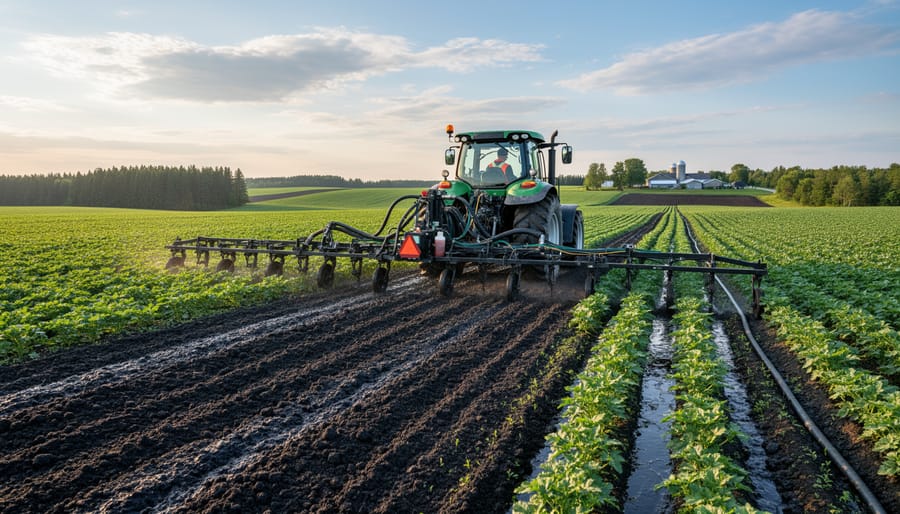
A Massachusetts Dairy Farm’s Digestate Program
Sunny Acres Dairy in Western Massachusetts offers a compelling example of successful digestate management under MDAR regulations. The 300-cow operation installed an anaerobic digester in 2019, processing approximately 18,900 liters of manure daily alongside food waste from local processors.
The farm’s digestate program follows MDAR’s comprehensive nutrient management planning requirements. Owner Sarah Bennett explains their approach: “We test our digestate monthly and maintain detailed application records. It’s more work upfront, but the regulatory compliance gives us credibility with neighbors and buyers.”
Economic returns proved substantial. The farm generates enough electricity to power 45 homes, selling excess to the grid. Their separated solids digestate replaces purchased bedding, saving $28,000 Canadian annually. Liquid digestate reduced commercial fertilizer costs by 65 percent while improving soil organic matter from 3.2 to 4.8 percent over four years.
Environmental benefits included a 40 percent reduction in greenhouse gas emissions and virtually eliminated manure odor complaints. The operation’s success attracted attention from Alberta’s agricultural community, where similar dairy operations face comparable challenges.
Bennett advises farmers considering digestate programs to “start with your soil tests and build relationships with regulators early. The MDAR framework provided clear guidelines that made implementation straightforward once we understood the requirements.”
Canadian Case Study: Alberta’s Digestate Pioneer
Hillside Colony near Lethbridge, Alberta, operates one of the province’s most successful farm-scale anaerobic digestion systems, processing approximately 45,000 tonnes of organic material annually. The operation combines dairy manure with food processing waste to generate electricity while producing high-quality digestate for their 2,400 hectares of cropland.
Manager Peter Hofer explains their adaptation strategy: “We modified our digestate storage to handle freeze-thaw cycles, adding insulated covers and extending our retention capacity to 180 days. This gives us flexibility during our long winters when field application isn’t possible.”
The colony’s circular agriculture approach has reduced commercial fertilizer costs by 65 percent while improving soil organic matter from 2.8 to 4.1 percent over six years. They’ve also installed heated application equipment and developed a winter staging protocol for spring distribution.
Key lessons learned include the importance of adequate winter storage, building strong relationships with food processors for consistent feedstock, and maintaining detailed nutrient records. The operation now serves as a demonstration site for other Alberta producers considering digestate management systems, hosting over 200 visitors annually.
Expert Perspective: Making Digestate Work on Your Farm
We spoke with Dr. Sarah Chen, an agricultural waste management specialist with 15 years of experience helping Canadian producers optimize digestate systems. “The biggest mistake I see is farmers treating digestate like raw manure,” she explains. “Understanding nutrient availability is crucial—digestate’s nitrogen is immediately plant-available, so timing applications properly prevents losses and maximizes crop uptake.”
Dr. Chen emphasizes starting small. “Begin with test plots, measure soil responses, and gradually scale up. This reduces risk and builds confidence.” She notes that economic viability depends heavily on existing infrastructure. “Producers already managing liquid manure systems find digestate integration smoother and more cost-effective.”
Common pitfalls include inadequate storage capacity and overlooking transportation costs. “Calculate your actual application windows for your region—Alberta’s shorter growing season requires different planning than Massachusetts,” she advises. On economic returns, Dr. Chen is encouraging: “Farms integrating digestate typically see fertilizer cost reductions of 30-40% within two years, plus the environmental benefits position you well for future carbon credit programs.”
Practical Steps to Start Digestate Management on Your Operation
Assessing Digestate Quality and Application Rates
Testing your digestate ensures you’re applying the right nutrients while protecting soil health and water quality. Start by collecting representative samples from different areas of your storage system—aim for at least three samples mixed together for accuracy.
Send samples to an accredited agricultural laboratory that provides nutrient analysis in metric units. Request a complete profile including total nitrogen, ammonium-nitrogen, phosphorus (P2O5), potassium (K2O), and organic matter content. Labs typically return results within one to two weeks.
Once you receive lab results, calculate application rates based on your crop’s nutrient needs. For example, if canola requires 120 kg/ha of nitrogen and your digestate contains 4 kg of nitrogen per tonne, you’ll need approximately 30 tonnes per hectare. However, remember that only about 50-70% of organic nitrogen becomes available in the first growing season.
Alberta farmer James Pritchard from Red Deer County shares his approach: “We test our digestate twice yearly and maintain detailed application records. This helps us reduce synthetic fertilizer costs by nearly 40% while improving soil structure.”
Always account for nutrient carryover to subsequent crops and consider soil test results alongside digestate analysis. Apply digestate when crops can immediately utilize nutrients, typically during active growth periods, to minimize losses through leaching or volatilization.
Working with Canadian Regulations and Support Programs
If you’re managing digestate in Alberta, you’ll find a supportive framework of regulations and programs designed to help you succeed. Agriculture and Agri-Food Canada administers several funding initiatives that can offset infrastructure costs for anaerobic digestion systems and digestate management facilities. The Canadian Agricultural Partnership offers cost-share programs that cover up to 50 percent of eligible expenses for environmental improvements, including digestate storage and application equipment.
At the provincial level, Alberta Agriculture and Irrigation provides technical assistance through regional agrologists who can visit your operation and offer site-specific guidance on digestate management planning. Their soil and crop specialists help optimize nutrient application rates based on your land’s unique characteristics.
Federal regulations under the Fertilizers Act classify digestate as a supplement when properly processed, streamlining distribution pathways. Alberta’s Agricultural Operations Practices Act establishes reasonable setback distances and application timing windows that protect water resources while maintaining operational flexibility.
Many farmers have successfully accessed Growing Forward funding to install covered digestate storage facilities. Farm Credit Canada also offers specialized financing for renewable energy projects incorporating digestate systems. Consider connecting with your regional Agriculture and Agri-Food Canada office early in your planning process—their staff can identify applicable programs and assist with applications, ensuring you access available support before making significant infrastructure investments.
The Massachusetts Department of Agricultural Resources has demonstrated that thoughtful digestate management can transform what many view as waste into a valuable agricultural resource. For Canadian farmers, particularly those in Alberta where livestock operations and crop production intersect, the lessons from MDAR’s approach offer a practical roadmap for implementing sustainable nutrient management systems.
The key takeaway is clear: digestate management isn’t just about regulatory compliance—it’s about resource recovery that can strengthen your operation’s bottom line while reducing environmental impact. By treating digestate as a soil amendment rather than waste, you’re investing in long-term soil health, reducing synthetic fertilizer costs, and contributing to a more circular agricultural economy.
Canadian farmers are already proving this works in our climate. The case studies we’ve explored show that with proper planning, cold-weather digestate handling is entirely feasible. Whether you’re operating a large dairy farm or exploring community-scale biogas projects, the principles remain consistent: test your digestate regularly, understand your soil needs, follow nutrient management guidelines, and connect with fellow farmers who’ve successfully implemented these systems.
We encourage you to take the next step in your sustainability journey. Start by assessing your current manure management practices and exploring how anaerobic digestion might fit your operation. Reach out to provincial agricultural extension services, connect with farmers in your region who are already using digestate, and consider attending workshops focused on renewable energy in agriculture. The agricultural community thrives when we learn from each other and share practical solutions that work in real-world conditions.