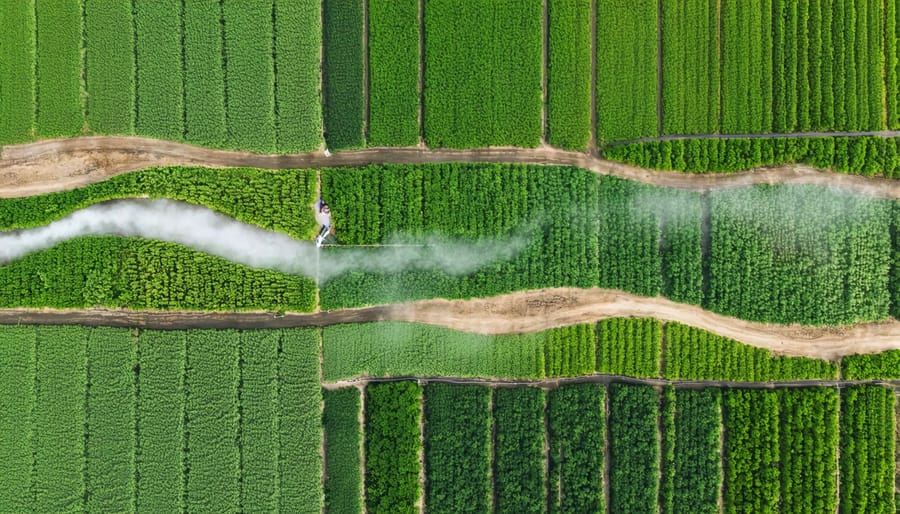
Agriculture in wetlands is the practice of cultivating crops or raising livestock in seasonally or permanently flooded ecosystems, where water management and plant selection align with the natural hydrology of the landscape. Rather than draining wetlands to create conventional farmland, this approach works with the wetland’s water cycle to produce food, fiber, or forage while maintaining ecological functions like water filtration, carbon storage, and habitat provision.
For Canadian farmers, particularly those managing land across the Prairie Pothole Region of Alberta, Saskatchewan, and Manitoba, this concept challenges generations of drainage-focused farming. Yet wetland agriculture is gaining attention in 2026 as both a climate adaptation strategy and a way to turn marginal land into productive assets. With increasing rainfall variability and growing awareness of wetland ecosystem services, producers are asking whether these wet spots on their operations can generate income without heavy infrastructure costs.
The viability question hinges on understanding which systems suit your landscape and goals. Some wetland farming models involve perennial crops like cattails or willow that tolerate flooding. Others use controlled water levels to grow wild rice, cranberries, or other specialty crops during specific growth windows. Indigenous communities across Canada have practiced variations of wetland agriculture for centuries, offering proven blueprints that balance harvest with habitat protection.
This article unpacks what wetland agriculture looks like in practice, how different systems function ecologically, and which approaches Canadian farmers are testing today. You’ll find clear explanations of the core mechanisms, categories of wetland farming types, and real examples from producers who’ve integrated these systems into their operations. Whether you’re evaluating a quarter section with persistent wet areas or exploring new revenue streams for restored wetlands, the goal here is practical clarity on what works and why.
What Wetland Agriculture Means
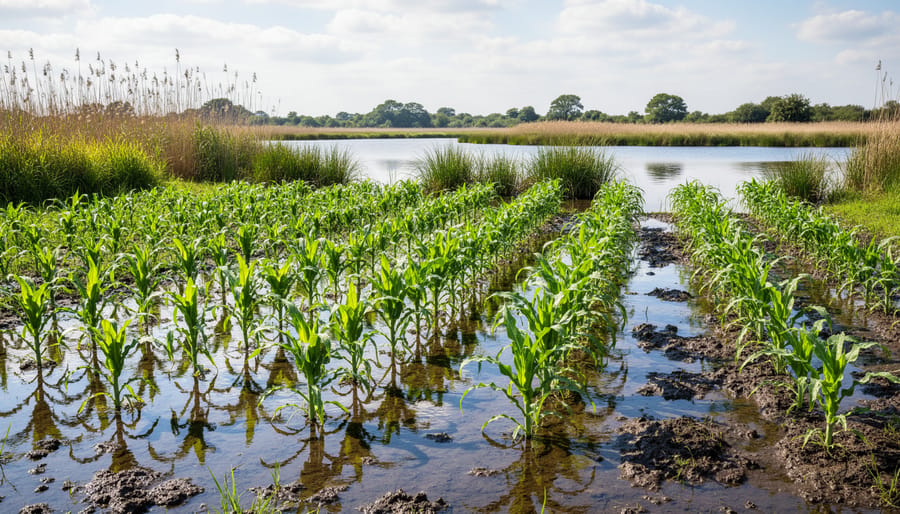
Wetland agriculture means growing crops, raising aquatic species, or managing vegetation in areas where the soil stays waterlogged for significant portions of the year. Rather than fighting against saturated conditions through drainage, the conventional approach, wetland farming intentionally works with water, choosing plants and production methods suited to wet environments. This approach differs fundamentally from dryland farming, where moisture management focuses on irrigation during dry periods and runoff control during wet ones.
The concept encompasses both natural wetlands adapted for production and constructed systems designed to mimic wetland functions. In practice, this means farmers select species that thrive in water-saturated soils, wild rice, cranberries, certain willow varieties, fish species, and time planting or harvesting around seasonal flooding patterns. The soil itself behaves differently when saturated: nutrients cycle through different pathways, beneficial anaerobic bacteria replace aerobic ones, and plant roots adapt to lower oxygen levels.
- Wetland agriculture
- Farming practices that intentionally utilize seasonally or permanently water-saturated soils to grow crops or raise aquatic species, working with wet conditions rather than draining them.
- Agro-aquaculture
- Integrated systems that combine crop production with fish, shellfish, or other aquatic species in the same wetland environment, creating mutually beneficial relationships.
- Riparian zones
- The vegetated strips along streams, rivers, and lakes where soil moisture remains high year-round, offering potential for perennial crops and buffer plantings.
- Hydric soils
- Soils that developed under saturated conditions and support vegetation adapted to low-oxygen environments, the foundation of wetland agriculture.
- Constructed wetlands
- Human-made water treatment systems that filter nutrients and can simultaneously produce marketable crops like willow, reeds, or watercress.
Several wetland environments suit agricultural use. Marshes, shallow water areas dominated by grasses and reeds, support wild rice cultivation and waterfowl-plant systems. Swamps, characterized by standing water and woody vegetation, work for agroforestry approaches. Riparian zones offer linear growing spaces ideal for perennial crops and livestock forage. Constructed wetlands, built specifically for nutrient management, can serve dual purposes as production areas.
A common misconception holds that farming in wet conditions inevitably means crop failure, disease pressure, and equipment stuck in mud. Traditional Indigenous practices prove otherwise: controlled flooding protects crops from frost, saturated soils require zero irrigation infrastructure, and many wetland plants naturally resist pests that plague dryland crops. The challenge lies not in whether wetland farming works, but in matching the right species and management approach to your specific water patterns and soil conditions.
How Wetland Farming Systems Work
Water and Nutrient Dynamics
Wetlands work as living filters because water moves slowly through dense vegetation and saturated soils, giving microbes time to break down pollutants. Plant roots absorb excess nitrogen and phosphorus, the same nutrients that cause algae blooms in rivers, and use them for growth instead. Studies show that wetlands remove nutrients like phosphorus at rates conventional treatment systems can’t match, sometimes capturing 80% or more before water leaves the system.
For farmers, this means you can grow crops in nutrient-rich conditions without buying fertilizer. The saturated soil holds nutrients in place rather than letting them leach away, and the shallow water creates an anaerobic zone where beneficial bacteria convert nitrates into harmless nitrogen gas. In a cranberry bog or wild rice bed, the wetland essentially fertilizes itself, decaying plant matter and incoming runoff from adjacent fields provide a steady supply of nutrients that plants tap directly. You’re not adding chemicals; you’re positioning crops where the ecosystem concentrates fertility naturally. This works best when you match your planting to the wetland’s nutrient load and water flow patterns.
Integrated Plant and Animal Production
The most productive wetland farms layer different organisms at multiple heights and depths, turning what looks like wasted space into stacked income. Fish swim below rice paddies, fertilizing the crop with their waste while eating pest larvae. Ducks paddle through flooded cranberry beds, controlling weeds and insects while their droppings feed the plants. Freshwater crayfish burrow in the mud beneath wild rice stands, aerating roots and providing a second harvest without competing for the same ecological niche.
This layering works because each species occupies a different part of the water column and feeds on different resources. In integrated rice-fish systems carp graze on algae and weeds that would otherwise choke the crop, while their constant movement stirs nutrients into the root zone and disrupts mosquito breeding. The rice canopy shades the water, keeping it cool enough for fish to thrive through summer heat. Neither component produces as well alone.
Canadian farmers adapting these principles to cooler climates stock cold-tolerant species like trout or perch in constructed wetlands, pair them with moisture-loving crops like wild rice or cattail, and time the harvest so fish reach market size just as the grain ripens. The system needs less fertilizer, fewer pesticides, and delivers two products from the same flooded acre.
Types of Wetland Farming Systems
Wetland farming systems span a remarkable range of approaches, from ancient techniques refined over millennia to modern constructed systems that solve contemporary agricultural challenges. Each type leverages the unique properties of saturated soils and standing water to support food production while maintaining or enhancing ecosystem functions.
Floating gardens, known as chinampas in their Mesoamerican origin, create highly productive growing spaces by building raised beds in shallow wetlands or lake edges. Farmers pile layers of aquatic vegetation, mud, and organic matter to form fertile islands anchored by willows or other water-loving trees. The surrounding water provides constant irrigation and nutrient exchange, while the decomposing plant material feeds crops without synthetic fertilizers. Though chinampas developed in tropical climates, the core principle translates to temperate regions with shallow wetlands or constructed ponds, particularly for intensive vegetable production on small acreages where land is limited but water is abundant.
Rice-fish culture integrates aquatic species directly into flooded rice paddies, creating a symbiotic system where fish consume pests and weeds while their waste fertilizes the rice. This centuries-old Asian practice works in any climate suitable for rice cultivation, including southern British Columbia and experimental plots in warmer prairie microclimates. The fish provide protein and additional income while reducing the need for pesticides and chemical fertilizers, making the system economically resilient for small to mid-sized operations.
Cranberry bog systems represent North America’s most established commercial wetland agriculture, particularly successful in British Columbia’s coastal regions and parts of Quebec. These constructed wetlands maintain precise water levels throughout the growing season, flooding for frost protection, pest management, and mechanical harvesting. The acidic, organic soils and controlled hydrology create ideal conditions for cranberry production at commercial scales, though the specialized infrastructure requires significant upfront investment.
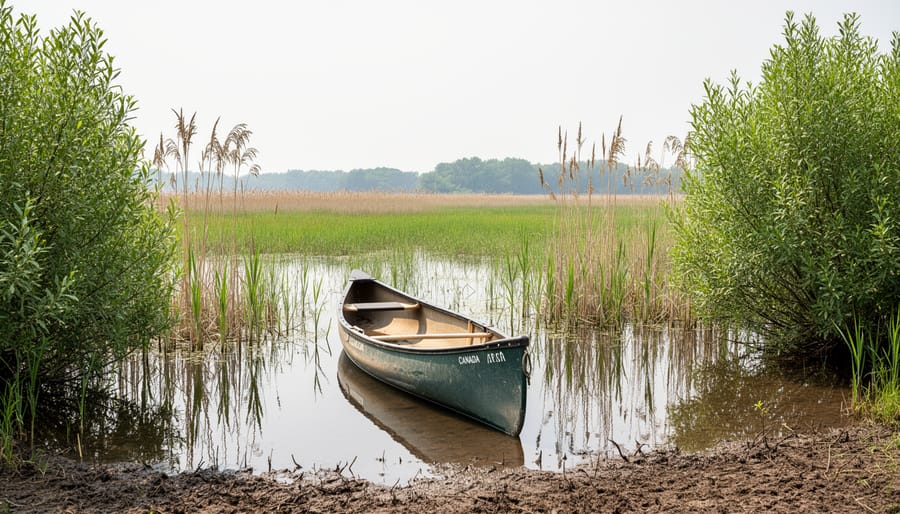
Wild rice cultivation works within natural or restored wetland ecosystems rather than transforming them. The grain grows in shallow lakes, slow-moving rivers, and marsh edges across northern climates, thriving in Ontario, Manitoba, Saskatchewan, and Minnesota. Harvesters work from canoes, carefully bending stalks to collect ripe kernels while leaving the plant intact for future years. This low-impact approach requires minimal infrastructure and respects traditional Indigenous soil practices that have sustained wetland ecosystems for generations.
Constructed treatment wetlands serve dual purposes, filtering nutrient-rich runoff from livestock operations or crop fields while producing marketable biomass. Cattails, willows, and other wetland plants remove excess nitrogen and phosphorus, preventing water pollution while generating animal bedding, biofuel feedstock, or materials for crafts and construction. These systems scale from small on-farm applications to municipal wastewater treatment facilities in Alberta and across the Prairies.
Wetland agroforestry combines tree crops with saturated soils, integrating species like willow, alder, or silver maple that tolerate flooding. These systems provide long-term income from timber, fuelwood, or specialty products like maple syrup while stabilizing wet areas that conventional farming cannot use. The tree canopy moderates temperature extremes and creates microclimates suitable for shade-tolerant understory crops, expanding productive capacity on marginal land.
Indigenous Agro-Aquaculture: Time-Tested Wetland Practices
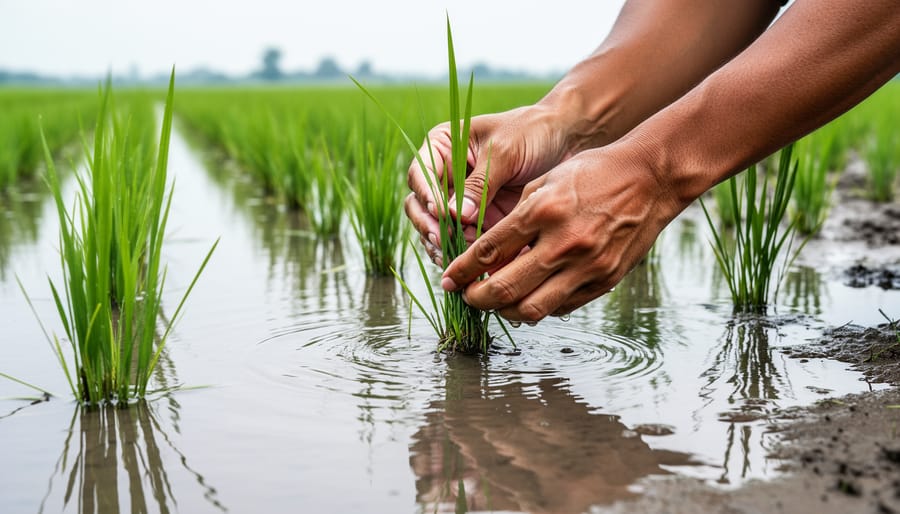
Long before European contact, Indigenous communities across North America developed sophisticated wetland farming systems that sustained large populations while enhancing ecosystem health. These practices offer proven blueprints for modern wetland agriculture, grounded in centuries of observation and adaptive management.
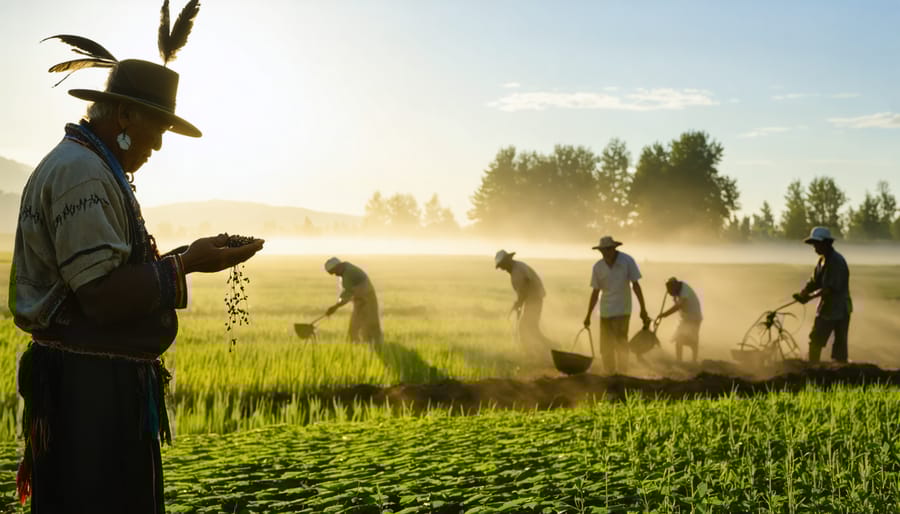
The Anishinaabe and other First Nations peoples perfected wild rice cultivation in the Great Lakes region and Canadian Shield watersheds. Rather than planting seed, harvesters work with naturally occurring stands, returning to the same beds each August when kernels reach optimal ripeness. Traditional canoe-based harvesting involves gently bending stalks over the boat and tapping them with cedar sticks, allowing roughly half the grain to fall into the water. This intentional seeding ensures the following year’s crop while providing food for waterfowl and muskrats. The timing matters: harvest too early and kernels shatter, too late and ducks consume the majority. This Indigenous water wisdom recognizes wetlands as dynamic systems requiring patience and reciprocity, not extraction.
Pacific Northwest communities cultivated extensive wapato gardens in shallow marshes and river deltas. Wapato, a starchy tuber from an aquatic plant, was harvested by wading into autumn wetlands and loosening roots with toes, allowing tubers to float to the surface. Women managed these beds by selectively harvesting larger tubers while leaving smaller ones to mature, effectively thinning stands and promoting vigorous growth. The practice created prime habitat for salmon fry, ducks, and muskrats, demonstrating how food production can increase rather than diminish biodiversity.
Cranberry harvesting in eastern wetlands involved carefully timed gathering from natural bogs, with families returning to specific areas under understood stewardship responsibilities. Harvesters took only what they needed, leaving adequate berries for winter bird populations and seed dispersal. Some communities enhanced productivity by occasionally burning edges to control shrub encroachment, maintaining the open bog structure cranberries require.
The salmon-berry ecosystems of coastal British Columbia show integrated thinking at landscape scale. Communities managed riparian zones to support salmon runs while cultivating berry patches in the moist edges. Salmon carcasses fertilized berry bushes, which in turn stabilized banks and shaded streams. This Indigenous knowledge recognized that managing for one species meant supporting entire ecological relationships.
These systems share common principles: working with natural cycles rather than against them, taking only a portion of available harvest, understanding that abundance comes from maintaining habitat health, and recognizing wetlands as living communities requiring respectful relationships. For Canadian farmers exploring wetland agriculture, these time-tested approaches offer practical frameworks that have proven both productive and sustainable across millennia.
How Wetland Agriculture Is Used Today
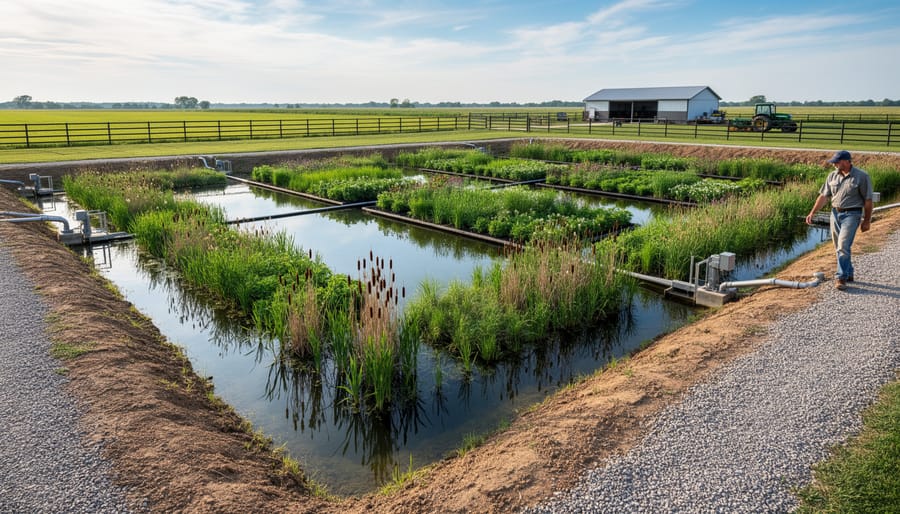
Commercial cranberry production in British Columbia’s Fraser Valley demonstrates wetland agriculture at scale, with operations covering thousands of hectares of constructed bog systems. These farms flood and drain fields on a seasonal cycle, using the water management techniques refined over decades to control pests, regulate temperature, and harvest fruit efficiently. The industry generates over $70 million annually while maintaining habitat for migratory waterfowl and filtering agricultural runoff before it reaches salmon-bearing streams.
Wild rice cultivation in Ontario and Manitoba follows a different model, often combining commercial harvesting with traditional Indigenous practices. Producers work within natural lake and river systems, seeding beds in early summer and harvesting by canoe or airboat in late August through September. The crop requires no fertilizer, no pesticides, and minimal intervention, the wetland ecosystem does the work. Markets for wild rice have expanded beyond health food stores into mainstream grocery chains, with premium prices reflecting both nutritional value and sustainable production methods.
Livestock operations across the Prairies increasingly use constructed wetlands to manage nutrient-rich runoff from barns and feedlots. These treatment systems filter nitrogen and phosphorus through planted cells of cattails, bulrushes, and sedges before water re-enters natural waterways. A dairy farm near Red Deer, Alberta, reduced its nutrient discharge by 85% using a two-hectare wetland system that cost less to build and operate than a mechanical treatment facility.
Greenhouse growers in southern Ontario have adopted wetland biofilters to recycle irrigation water and capture excess nutrients. These systems use shallow planted beds filled with wetland species that absorb dissolved fertilizers, allowing the cleaned water to recirculate rather than discharge. The approach cuts fertilizer costs by up to 40% while eliminating permit concerns about nutrient releases.
Canadian farmers implementing wetland agriculture systems have documented several tangible benefits:
- Reduced input costs from eliminated or decreased fertilizer and pesticide applications
- Improved drought resilience through enhanced water retention and infiltration
- Premium pricing for specialty crops like wild rice and organic cranberries
- Wildlife habitat credits and conservation program payments
- Wastewater treatment value replacing costly mechanical systems
Emerging agro-aquaculture projects integrate fish or crayfish production with wetland crops, creating stacked income opportunities on land previously considered marginal. A Saskatchewan pilot project raises perch in seasonal wetlands while harvesting cattail shoots for Asian markets, generating revenue from two products on the same footprint. These diversified systems prove particularly valuable for farms facing climate variability, as wetland components buffer both drought and excess moisture while maintaining productive output.
Alberta Case Study: Integrating Wetlands into Prairie Farms
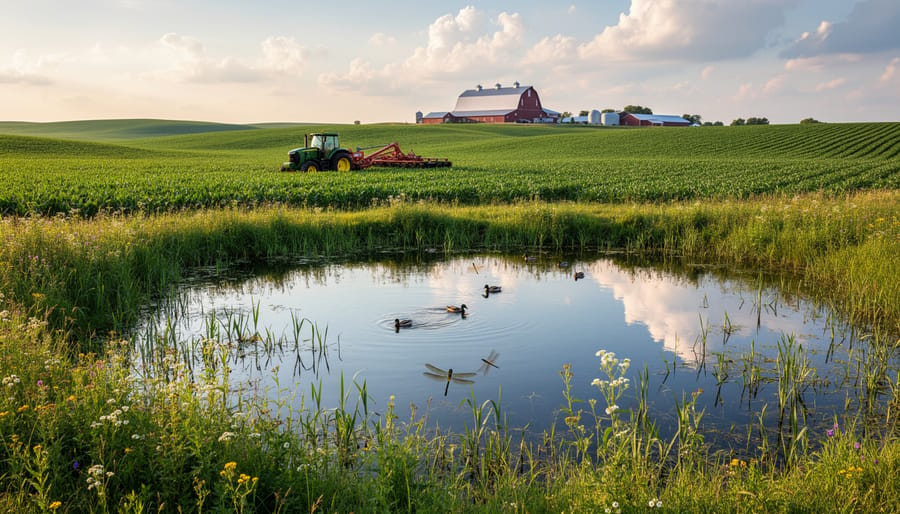
The Kowalski family’s 320-hectare mixed grain and cattle operation near Wetaskiwin demonstrates how restored prairie potholes can function as productive farm assets rather than obstacles. Before 2021, the farm had drained three seasonal wetlands decades earlier to maximize cultivated acres. Chronic issues with spring runoff flooding, nutrient loading in downstream waterways, and declining soil health prompted a rethink.
Working with researchers from Olds College and local Métis knowledge keepers, the Kowalskis restored two wetland basins totaling 4.5 hectares and constructed a 1.2-hectare treatment wetland adjacent to their cattle wintering area. The restored potholes now support wild rice cultivation in deeper zones and native sedge production in shallow margins. The constructed wetland filters runoff from livestock pens before it reaches the restored natural wetlands.
Implementation faced real challenges. Spring 2022 flooding exceeded design capacity, requiring emergency spillway modifications. Equipment access proved difficult until the family invested in a used marsh buggy. Local waterfowl initially devastated early wild rice plantings, leading to installation of motion-activated deterrents during the grain milk stage.
By 2024, measurable results emerged. Wild rice yields reached 180 kilograms per hectare in the third growing season, generating $2,400 in additional revenue. Water quality monitoring showed 67 percent reduction in nitrogen and 82 percent reduction in phosphorus leaving the farm compared to pre-restoration levels. The wetland complex now supports Indigenous crop rotation principles by alternating wild rice harvest intensity with rest years, mimicking traditional stewardship practices.
The most significant outcome wasn’t anticipated. Retained spring moisture in the restored basins raised the water table enough to improve grain yields on adjacent fields during the 2023 drought, adding an estimated $18,000 in avoided crop losses.
Key lessons: start small with one wetland basin, secure baseline water quality data before construction, budget 30 percent above initial cost estimates for unforeseen modifications, and connect with Indigenous producers experienced in wetland species management. The Kowalskis now advise neighbours that functional wetlands require patience but deliver compounding benefits that justify the transition period.
Common Questions About Wetland Farming
Getting started with wetland agriculture raises practical questions that deserve straightforward answers. Canadian farmers considering these systems need clarity on regulations, equipment, management challenges, and economics before making the jump. Here’s what you need to know.
Do I need special permits to farm in wetlands?
In most Canadian provinces, you’ll need to consult provincial environment ministries and possibly the Department of Fisheries and Oceans before modifying existing wetlands. Constructed wetlands on previously drained land or upland areas typically face fewer regulatory hurdles, though you should check with your local conservation authority first.
What equipment works in saturated soils?
Wide-track or amphibious vehicles, floating platforms for harvest operations, and specialized low-pressure tires prevent soil compaction in wet conditions. Many cranberry and wild rice operations use water-based harvesting methods that eliminate the need for heavy field equipment altogether.
How do I manage mosquitoes and other pests?
Healthy wetland systems with diverse predators (dragonflies, fish, birds) naturally control mosquito populations far better than stagnant water. Maintaining water flow, introducing native fish species, and preserving habitat for insect-eating birds create a balanced ecosystem that minimizes pest issues without chemical intervention.
Can wetland crops qualify for organic certification?
Yes, crops grown in wetland systems can be certified organic if you follow Canadian organic standards, which actually align well with wetland farming practices that avoid synthetic inputs. The natural nutrient cycling in these systems makes meeting organic requirements easier than in conventional agriculture.
Winter presents unique challenges in northern climates, but it’s manageable. Perennial crops like wild rice and cranberries are naturally cold-hardy, and some Alberta operations have found that flooding fields before freeze-up protects plant roots through the cold months. Spring thaw timing becomes critical for planting windows, so you’ll want to track your site’s specific drainage patterns over at least one full year before committing to a cropping plan.
Startup costs vary widely depending on whether you’re working with existing wetlands or building new systems. Restoring a drained prairie pothole might cost $2,000 to $5,000 per hectare for earthworks and native plantings, while constructing a treatment wetland with water control structures can run $10,000 to $20,000 per hectare. Compare this to the ongoing fertilizer, tillage, and drainage costs in conventional systems, and many operations see payback within five to seven years, especially when you factor in provincial wetland restoration incentives.
Integration with existing farm operations works best when you start small. A quarter-section trial plot lets you learn water management without risking your whole operation, and you can scale up as you gain confidence. Crop insurance coverage for wetland agriculture is still developing in most provinces, so talk with your broker about options for diversified farming operations and whether constructed wetlands qualify as beneficial management practices that might reduce your premiums.
Agriculture in wetlands represents more than an alternative farming method. It’s a practical response to the water management challenges Canadian farmers increasingly face. The systems described in this article, from Indigenous wild rice cultivation to modern constructed wetlands, demonstrate that working with wet conditions rather than fighting them can improve both ecological health and farm economics.
The evidence is tangible. Farmers integrating wetlands report lower fertilizer costs, cleaner downstream water, and new revenue streams from specialized crops or aquatic species. In Alberta’s prairie pothole region, where drainage has historically been the default approach, strategic wetland restoration now offers drought resilience, biodiversity benefits, and compliance with evolving environmental regulations. These aren’t abstract environmental wins; they translate to operational advantages.
Indigenous agro-aquaculture practices provide tested blueprints. Thousands of years of observation have refined methods that maintain productivity while sustaining the ecosystem. Modern farmers adapting these principles, selective harvesting, seasonal timing, integrated species management, gain knowledge that conventional agriculture often overlooks.
Start small. Assess marginal wet areas on your property, consult with provincial wetland specialists or Indigenous agricultural advisors, and consider pilot projects that fit your operation’s scale. Organizations like the Alberta Wetland Policy implementation teams and university extension services offer technical support specific to regional conditions.
Wetland agriculture isn’t appropriate for every farm or every acre. But where water naturally accumulates or where restoration makes sense, these systems offer a diversified, climate-adapted path forward worth serious consideration.