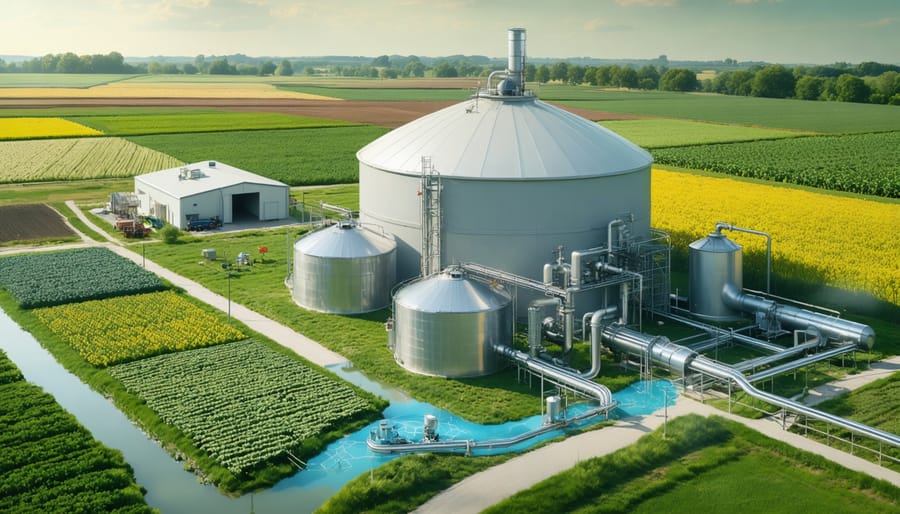
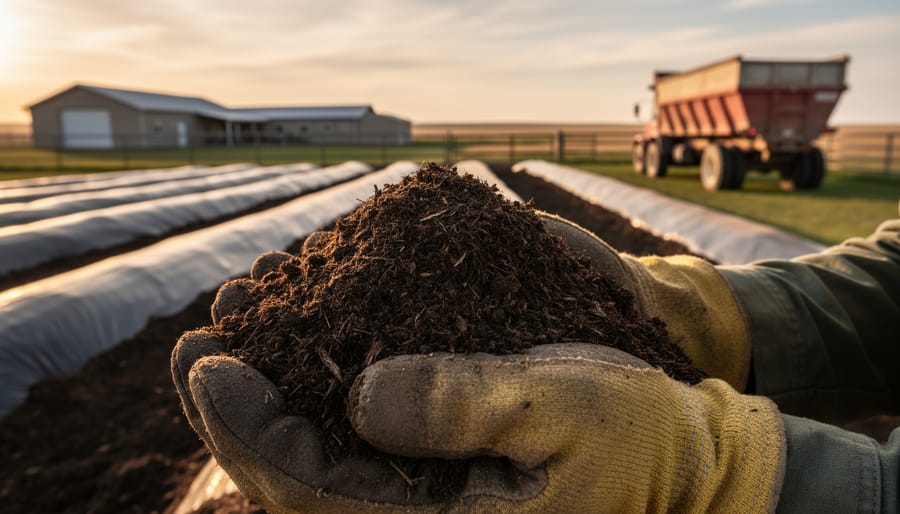
Test your cow manure before application to get accurate N-P-K values, as nutrient content varies significantly based on cattle diet, bedding materials, and storage methods—typical ranges sit at 0.6% nitrogen, 0.3% phosphorus, and 0.5% potassium for raw manure, but composted material can concentrate these levels by 40-60%. Calculate the pounds of nutrients you’re actually spreading per acre by multiplying application rate by nutrient percentage, then subtract this from your soil test recommendations to determine how much commercial fertilizer you still need.
Track your manure’s economic value by multiplying nutrient content against current fertilizer prices—with nitrogen at $1.50/lb, phosphorus at $1.20/lb, and potassium at $0.80/lb, a single ton of quality dairy manure delivers roughly $25-35 in fertilizer replacement value. Factor in application costs of $8-12 per ton to calculate your net savings, and prioritize spreading on fields with the highest fertilizer needs to maximize return on investment.
Implement proper storage and composting systems to recover more nutrients and reduce losses—covering manure piles prevents nitrogen leaching from rainfall, while managed composting raises phosphorus and potassium concentrations as moisture evaporates. Sample from multiple locations in your storage facility quarterly, as nutrient stratification creates variations of 30% or more between top and bottom layers, directly affecting field application accuracy and crop response rates across your operation.
Understanding Cow Manure’s N-P-K Ratio: What’s Really in Your Manure
Fresh vs. Composted: How Processing Changes Nutrient Content
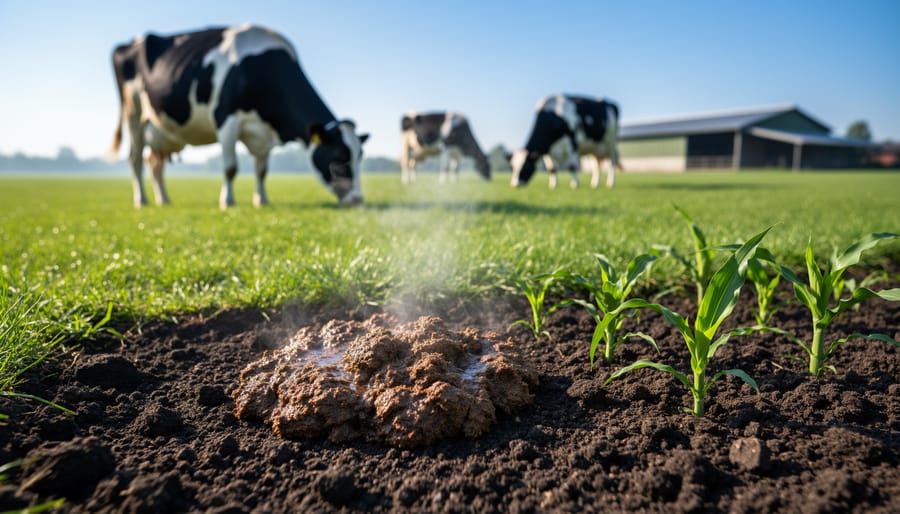
The processing method you choose for cow manure dramatically affects its nutrient profile and agricultural value. Understanding these changes helps you maximize the benefit from your manure resources.
Fresh cow manure typically contains approximately 0.5% nitrogen, 0.3% phosphorus, and 0.5% potassium on a wet weight basis. However, this material is roughly 80-85% water, meaning the nutrients are quite diluted. Within days of collection, nitrogen losses begin through ammonia volatilization, particularly in warm conditions or when manure is spread thin.
Aged manure stored in piles for several months undergoes significant nutrient concentration as moisture evaporates. While you might expect higher N-P-K percentages, nitrogen losses can reach 40-50% during unmanaged aging. A typical aged manure sample might show 1.5-2% nitrogen, 1.4% phosphorus, and 2.4% potassium on a dry weight basis, but the volatile nitrogen fraction has largely escaped.
Composted manure using proper composting systems provides more stable nutrients. Through controlled decomposition, you’ll see nitrogen content stabilize around 1-2%, with phosphorus and potassium concentrating to approximately 1-1.5% and 1.5-2.5% respectively. The key advantage is that remaining nitrogen converts to slow-release organic forms, reducing leaching risks.
Dave Martens, a soil specialist working with central Alberta cattle operations, notes that “properly composted manure delivers 60-70% of its nitrogen value over two seasons, compared to fresh manure’s immediate but inefficient release pattern.”
For practical application, composted manure requires less volume per hectare than fresh material while providing steadier nutrient availability. Testing your specific manure at various processing stages ensures accurate application rates matched to crop requirements.
Regional Variations: What Alberta Farmers Should Expect
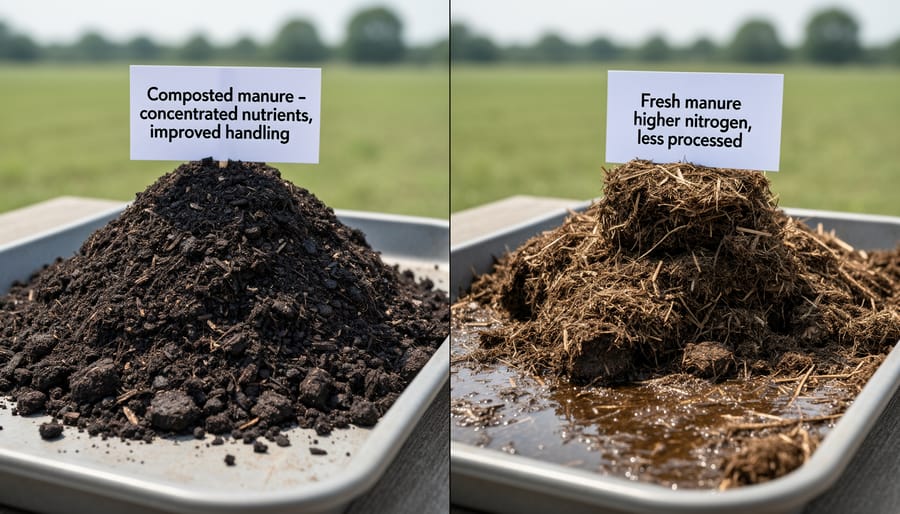
Alberta’s diverse cattle operations create significant variation in manure nutrient content that you should understand for optimal nutrient recovery. The primary factors affecting N-P-K ratios in our province include cattle type, feeding programs, and manure handling systems.
Beef cattle operations, which dominate Alberta’s landscape, typically produce manure with lower nitrogen content compared to dairy operations. Fresh beef cattle manure generally ranges from 0.5-0.7% nitrogen, 0.3-0.5% phosphorus, and 0.4-0.6% potassium. However, feedlot operations using high-grain rations can push these values higher, particularly phosphorus levels, which may reach 0.6% or above.
Dairy operations in central Alberta regions like Red Deer County often show different patterns. According to local agronomists working with dairy producers, their manure typically contains 0.6-0.9% nitrogen due to higher protein diets. “We’re seeing dairy manure from well-managed operations hitting the upper end of that range consistently,” notes a soil specialist from Lacombe County.
Your feeding program makes a considerable difference. Winter feeding with high-quality hay and grain supplements increases nutrient density, while summer pasture grazing produces lower concentrations. Bedding materials also matter – straw-bedded systems dilute nutrients compared to concrete-based systems with minimal bedding.
The key takeaway for Alberta farmers is this: don’t assume standard values. A Red Deer feedlot operator who tested his manure discovered phosphorus levels 40% higher than reference tables suggested, completely changing his application strategy and saving thousands in commercial fertilizer costs. Regular testing specific to your operation provides the accuracy needed for precise nutrient management.
Why Your Manure’s N-P-K Ratio Matters for Nutrient Recovery
Calculating Your Fertilizer Savings
Understanding the dollar value of your cow manure helps you make informed decisions about nutrient management and fertilizer purchases. By calculating the nutrient worth based on current commercial fertilizer prices, you can see the real economic benefit of proper manure management.
Start with your manure test results showing nitrogen, phosphorus, and potassium content. Let’s work through a practical example using typical Alberta prices. If your manure tests at 0.5% nitrogen, 0.2% phosphorus (P2O5), and 0.5% potassium (K2O), one tonne of manure contains 5 kg nitrogen, 2 kg phosphorus, and 5 kg potassium.
Now apply current fertilizer prices. In 2024, urea (46-0-0) averages around $650 per tonne in Alberta, phosphate (11-52-0) runs approximately $900 per tonne, and potash (0-0-60) costs about $550 per tonne. Converting these to price per kilogram of actual nutrient gives you $1.41 per kg of nitrogen, $1.73 per kg of phosphorus, and $0.92 per kg of potassium.
Using these values, each tonne of manure provides $7.05 in nitrogen value, $3.46 in phosphorus, and $4.60 in potassium, totaling $15.11 per tonne. Apply 25 tonnes per acre, and you’re adding $377.75 worth of nutrients to each acre.
These calculations integrate with broader sustainable fertilizer strategies on your farm. Keep in mind that nitrogen availability varies with application timing and method, so adjust your calculations based on expected nutrient recovery rates. Spring-applied manure typically provides 35-40% nitrogen availability in the first year, while fall application may only deliver 25-30%. Update your calculations quarterly as fertilizer prices fluctuate to maintain accurate valuations.
Testing and Tracking: Getting Accurate Numbers for Your Operation
When and How to Sample Cow Manure
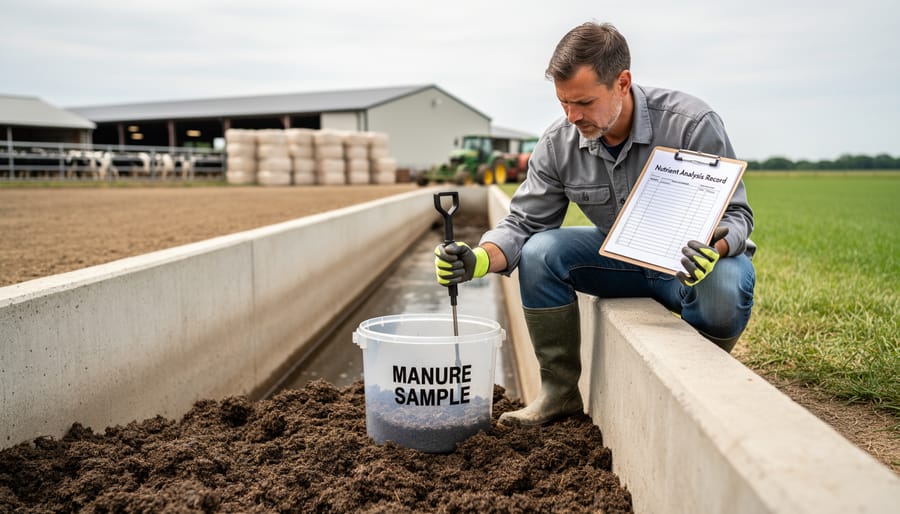
Proper sampling is essential for getting accurate nutrient readings that reflect what you’re actually applying to your fields. The best time to sample is right before land application, as nutrient concentrations can change during storage. For solid manure, collect at least 10 to 12 sub-samples from different locations throughout the pile or storage area, mixing them thoroughly in a clean plastic bucket to create one composite sample. You’ll need about half a kilogram for laboratory analysis.
With liquid manure systems, sample after agitation to ensure nutrients are evenly distributed. Draw samples from the spreader tank or directly from the storage lagoon using a manure probe or long-handled dipper. Again, combine multiple sub-samples into one representative sample.
Store your sample in a sealed plastic bag or container and keep it cool. Most testing labs recommend refrigeration if you can’t submit within 24 hours. Contact your local laboratory beforehand to confirm their specific requirements for sample size, containers, and turnaround times.
Brian Southwell, an agronomist working with Alberta beef producers, emphasizes consistency: “Sample the same way each year so you can track trends in your manure quality. This helps you predict nutrient values more accurately between tests.”
Many producers find spring sampling works well, allowing time to receive results and adjust fertilizer plans before seeding. Budget around 50 to 75 dollars per sample for standard N-P-K analysis, though comprehensive tests including micronutrients cost more.
Maximizing Nutrient Recovery: Practical Strategies for Alberta Farms
Storage Solutions That Preserve Nutrient Value
Protecting the nutrient value of your cow manure starts the moment it leaves the barn. In Alberta’s variable climate, proper storage is essential to prevent nitrogen losses, which can reach 50% or more through ammonia volatilization and runoff without adequate protection.
Covered storage systems are your first line of defense. Simple tarp covers or more permanent roof structures significantly reduce nitrogen loss by limiting air exposure and preventing rainfall from leaching nutrients. Many Alberta producers report maintaining nitrogen levels 30-40% higher compared to uncovered stockpiles. The investment typically pays for itself within two to three years through reduced commercial fertilizer purchases.
Composting systems offer another effective approach, particularly for solid manure. Properly managed composting with regular turning maintains temperatures between 55-65°C, killing weed seeds and pathogens while preserving nutrients. Jake Martens, a Red Deer area dairy farmer, switched to windrow composting three years ago and now sells premium compost to local market gardeners, creating an additional revenue stream while managing his nutrient resources.
Solid-liquid separation technology is gaining traction across the prairies for larger operations. By separating manure components, you can concentrate nutrients where they’re most valuable. The liquid fraction, rich in readily available nitrogen, works well for immediate crop needs, while the solid portion provides slower-release phosphorus and potassium. Several Alberta custom operators now offer mobile separation services, making this technology accessible without major capital investment.
Choose storage solutions that match your operation’s scale and your specific nutrient management goals.
Application Timing and Methods for Best Results
Timing your manure application properly maximizes nutrient availability and minimizes losses. In Alberta, fall application remains popular, but spring application better matches crop nutrient uptake patterns and reduces nitrogen loss through volatilization and leaching. For most field crops, apply manure 2-4 weeks before seeding to allow time for microbial breakdown and nitrogen conversion to plant-available forms.
Incorporation is essential for capturing nitrogen value. Surface-applied manure can lose 50-70% of its nitrogen content within days through ammonia volatilization. Incorporate within 24 hours of application, ideally within 6-8 hours on warm, windy days. Injection or immediate tillage preserves significantly more nitrogen compared to broadcast methods.
Calculate application rates based on your soil test results and crop requirements. If your soil test shows adequate phosphorus but low nitrogen, you’ll need to account for the manure’s P-K contribution and supplement with additional nitrogen fertilizer. A dairy operation near Red Deer successfully reduced commercial fertilizer costs by 40% using this targeted approach.
For example, if applying solid dairy manure testing at 10-5-10 and your barley crop needs 100 kg/ha of nitrogen, you’d apply approximately 10 tonnes per hectare. This delivers the required nitrogen plus 50 kg phosphorus and 100 kg potassium as bonus nutrients. Always credit these nutrients when calculating your total fertilizer program to avoid over-application and environmental concerns.
Regular manure testing ensures accurate nutrient crediting and prevents costly mistakes in your fertilizer budget.

Real Alberta Success Stories: Farms Getting It Right
Seeing how fellow Alberta farmers are making nutrient recovery work can be the push you need to start your own program. Here are three operations that have turned cow manure from a disposal problem into a valuable resource.
Clearview Dairy Farm near Red Deer took a straightforward approach that many mid-sized operations could replicate. Owner James Peterson started by investing in solid-liquid separation equipment in 2019. “We were spending $28,000 annually on commercial fertilizer for our 160 acres of silage corn,” James explains. “The separation system cost us $45,000 installed, but we’ve cut our fertilizer bill by 65 percent.”
James sends manure samples to a lab three times per year to track NPK values, which average 11-6-8 for their Holstein herd. He applies the liquid fraction through injection equipment during spring, keeping detailed field maps that show application rates. “Our corn yields improved by 8 percent in year two, and soil organic matter increased from 3.2 to 3.8 percent over four years,” he reports. The key challenge was learning to calibrate equipment properly, which took a season of trial and adjustment.
Foothills Cattle Company near Claresholm operates a 600-head beef feedlot and partnered with three neighboring grain farms to create a nutrient sharing program. Ranch manager Susan Kowalski coordinates manure testing monthly during application season. “Our beef cattle manure tests around 12-8-10, which is perfect for the barley and canola rotations our neighbors run,” Susan notes.
The co-op arrangement means Foothills covers hauling costs while crop farmers provide spreading labor. They’ve documented $52,000 in combined fertilizer savings across all four operations annually. Susan emphasizes that clear communication made the difference: “We created a shared spreadsheet showing nutrient values, application dates, and field locations. Everyone knows exactly what’s going where.”
Mountain View Ranch near Olds raises 400 dairy cattle and composts all solid manure before field application. Manager David Chen reports their composted product tests at 8-4-6, lower than fresh manure but more stable and easier to handle. “Composting takes 90 days, but we get uniform nutrient distribution and our neighbors actually request it for their gardens and hayfields,” David says.
The operation saved $18,000 on fertilizer costs last year while improving soil structure on fields that previously struggled with compaction. David’s advice? “Start small with one field, test everything, and keep records. The data will convince you it’s worth expanding.”
Common Pitfalls and How to Avoid Them
Even experienced farmers can make mistakes when managing cow manure nutrients. Understanding these common pitfalls will help you maximize the value of your manure program and protect both your soil health and bottom line.
Over-application remains the most frequent error. Many producers assume more is always better, but applying manure beyond crop needs wastes nutrients and can lead to environmental concerns. “I’ve seen Alberta farms apply manure at rates that exceed their crop requirements by 50% or more,” notes agronomist Dr. Sarah Chen from Lethbridge. “This not only wastes valuable nutrients but can also lead to phosphorus accumulation in soil.” The solution is straightforward: conduct soil tests before application and match your rates to actual crop nutrient requirements, accounting for existing soil fertility.
Another common mistake is treating all manure the same. Nutrient content varies significantly based on animal diet, bedding materials, and storage methods. Fresh manure differs substantially from composted material, with typical N-P-K ratios ranging from 0.5-0.3-0.5 to 3-2-2 depending on handling. Always test each batch or storage facility separately rather than relying on generic values or last year’s results.
Poor timing also undermines nutrient recovery. Spreading manure on frozen ground or before heavy rainfall leads to runoff and nutrient loss. Plan applications for spring or fall when soil can absorb nutrients effectively. Saskatchewan farmer Tom Morrison learned this lesson after switching his timing: “Moving our application from late fall to early spring increased our crop response noticeably and reduced our commercial fertilizer needs by 30%.”
Finally, many farmers neglect to calibrate their spreaders, leading to uneven distribution and unpredictable nutrient delivery. Take time to calibrate equipment annually and adjust for different manure consistencies. This simple step ensures you’re applying exactly what you intend, protecting your investment in nutrient management while optimizing crop performance.
Understanding your cow manure’s N-P-K ratio isn’t just smart farming—it’s a powerful step toward building a more resilient and profitable operation. When you treat manure as the valuable nutrient resource it truly is, rather than simply as waste, you’re making a choice that benefits your bottom line and the environment simultaneously.
The financial advantages are clear: recovering nutrients from manure can significantly reduce your commercial fertilizer expenses, often by hundreds or thousands of dollars per season. But the benefits extend beyond immediate cost savings. By integrating circular agricultural practices, you’re contributing to healthier soils, reduced greenhouse gas emissions, and a more sustainable food system for future generations.
Start small if needed—get a single manure test this season, track your application rates more carefully, or connect with your local agricultural extension office. Every step matters. Alberta’s farming community has already demonstrated remarkable leadership in nutrient recovery and sustainable land management. Your participation strengthens this collective effort toward climate action and agricultural innovation. The knowledge you gain today about your manure’s nutrient value becomes an investment in tomorrow’s soil health and farm profitability.