Food hubs are revolutionizing how Canadian farmers connect with markets, aggregate products, and build sustainable distribution networks. The KC Food Hub model demonstrates how collaborative agriculture transforms small-scale farming operations into competitive regional suppliers while reducing individual marketing costs by up to 40 percent.
Consider joining or establishing a food hub if you’re spending more than 15 hours weekly on marketing and distribution, struggling to meet wholesale volume requirements, or seeking consistent buyers for your harvest. Food hubs handle aggregation, storage, processing coordination, and distribution logistics, allowing you to focus on production while accessing institutional buyers, restaurants, and retail chains that typically require larger quantities than individual farms can provide.
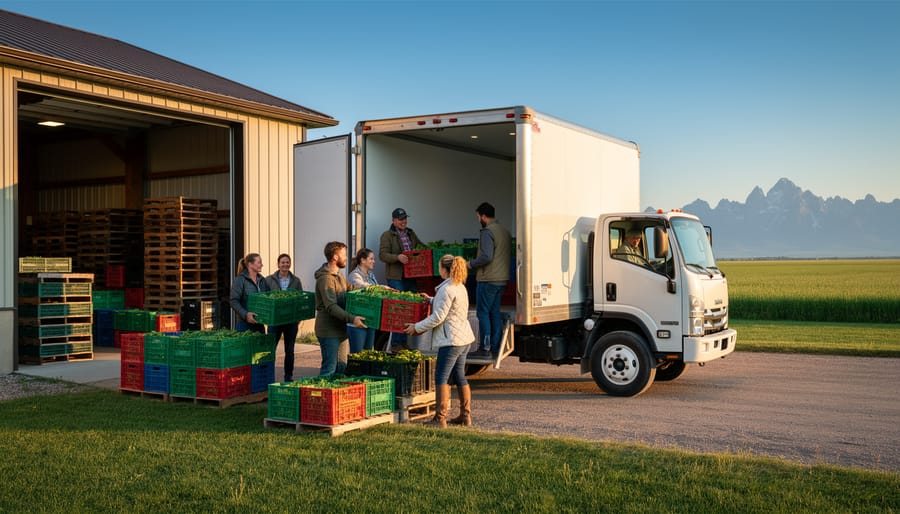
The model works through shared infrastructure where multiple producers pool resources for cold storage, processing facilities, and coordinated delivery routes. Participating farmers maintain their brand identity while benefiting from collective bargaining power and reduced transportation costs through consolidated shipping. Alberta producers are particularly well-positioned for this approach given the province’s concentrated urban markets and growing consumer demand for locally sourced products.
Successful Canadian food hubs typically require 15 to 25 committed producer-members, annual volumes exceeding $500,000, and strong relationships with anchor institutions like universities, hospitals, or school districts. Understanding this framework helps you evaluate whether the food hub model aligns with your operation’s scale, production capacity, and market goals.
What Makes KC Food Hub Different from Traditional Distribution
The Cooperative Advantage for Small-Scale Producers
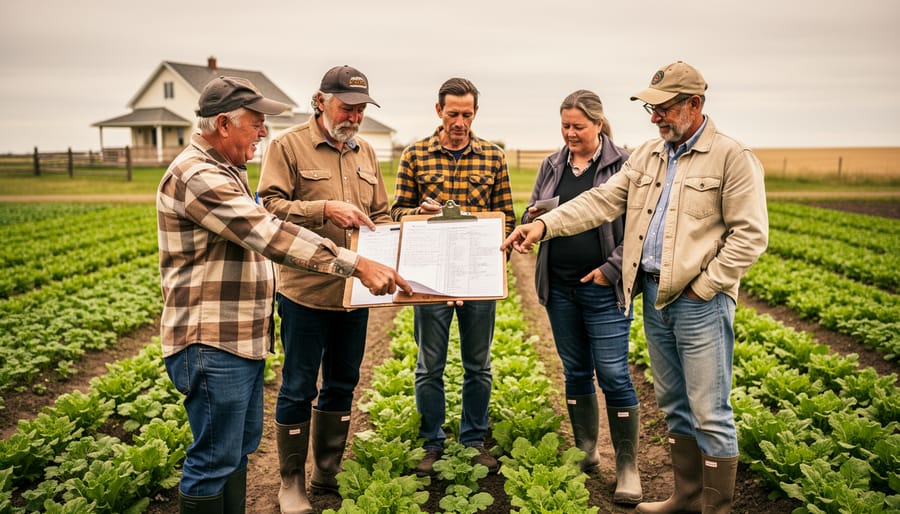
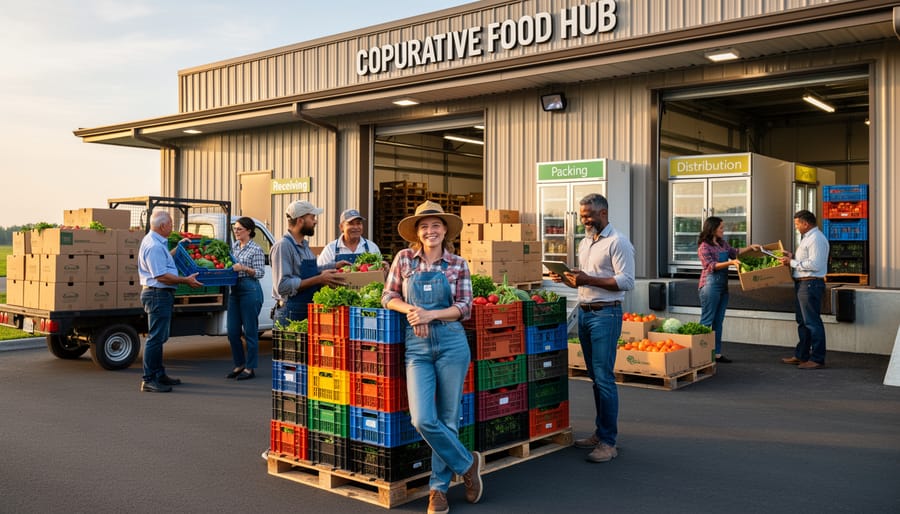
For small and mid-sized farm operations, competing with large-scale industrial agriculture often feels like an uphill battle. This is where the cooperative model of food hubs becomes a game-changer. By joining forces through food collaboratives like the KC Food Hub, smaller producers gain access to resources and infrastructure that would be financially out of reach individually.
Storage facilities represent one of the most significant shared benefits. Instead of each farm investing tens of thousands of dollars in refrigerated storage, members access climate-controlled spaces at a fraction of the cost. A vegetable producer in central Alberta, for example, can store 500 kilograms of produce alongside other members, paying only for the space used.
Transportation costs drop dramatically when multiple farms coordinate deliveries. Rather than making individual trips to farmers’ markets or restaurants, members consolidate shipments, reducing fuel costs by up to 60 percent while lowering their carbon footprint. One truck carrying products from five farms is significantly more efficient than five separate vehicles.
Marketing expenses also become manageable through collective promotion. The food hub brand carries weight that individual small farms struggle to achieve alone. Shared costs for website maintenance, photography, and promotional materials mean professional marketing becomes accessible. Additionally, buyers appreciate the convenience of sourcing diverse products from a single point of contact, opening doors that might otherwise remain closed to individual small-scale operations.
From Farm Gate to Consumer Plate: The Shortened Supply Chain
The traditional food supply chain often involves multiple intermediaries between farm and table—distributors, wholesalers, brokers, and retailers—each taking a portion of the profit while products travel hundreds or thousands of kilometres. The KC Food Hub model fundamentally transforms this system by creating direct pathways from producers to consumers.
By eliminating these middlemen, farmers retain a significantly larger share of the food dollar. Research from Ontario food hub networks shows producers can capture 70-85% of retail value compared to just 15-25% in conventional wholesale arrangements. This improved margin makes a tangible difference for small and mid-scale operations working with tight profit margins.
The shortened supply chain delivers measurable environmental benefits. When a Calgary restaurant sources carrots directly through a food hub from a producer 50 kilometres away rather than through a distributor bringing produce from California or Mexico, food miles drop dramatically—often by 90% or more. This reduction translates directly into lower carbon emissions from transportation.
Product quality improves substantially too. Vegetables harvested Monday morning can reach Edmonton consumers by Tuesday afternoon, maintaining peak freshness and nutritional value. Compare this to conventional supply chains where produce might spend 7-14 days in transit and storage before reaching store shelves.
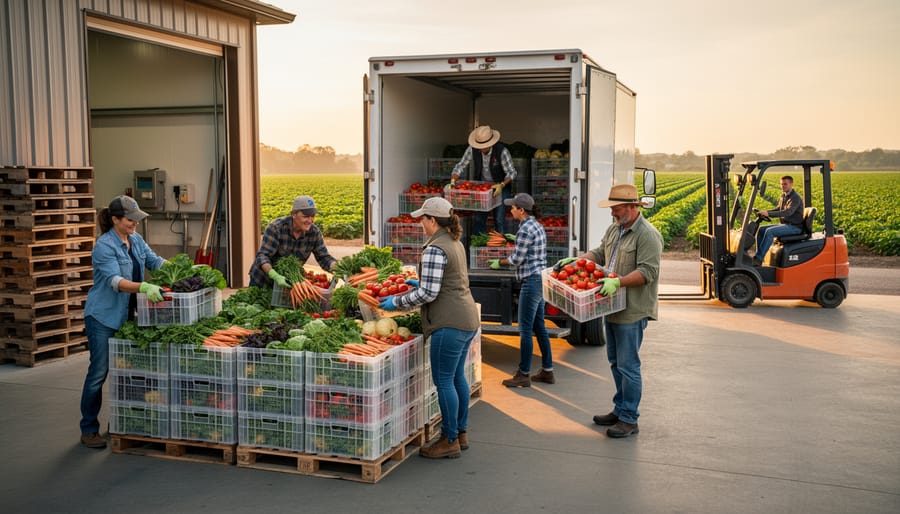
The hub acts as an efficient aggregator, collecting products from multiple farms and coordinating single deliveries to buyers. This shared logistics system makes direct marketing economically viable for producers who couldn’t justify individual delivery routes, creating opportunities previously available only to larger operations.
Real Results: Alberta Farmers Using the Food Hub Model
Case Study: Vegetable Growers Expanding Winter Markets
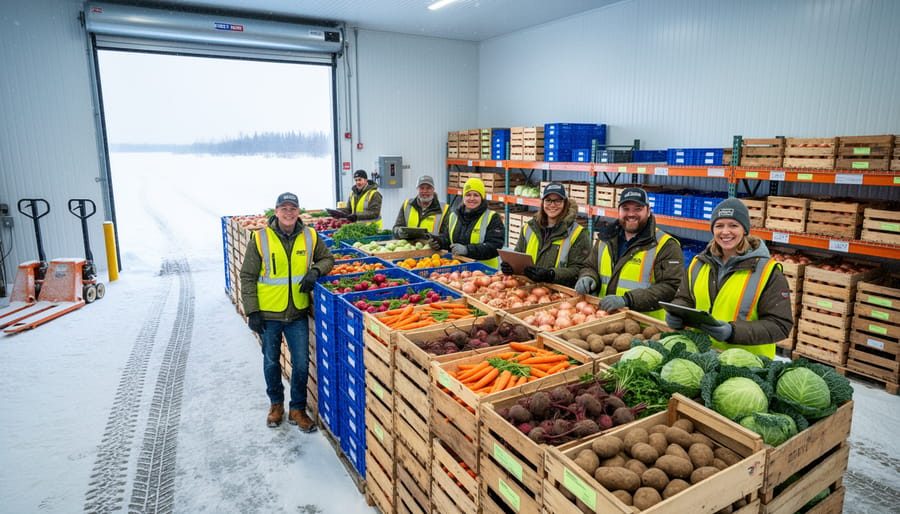
In southern Alberta, a group of six vegetable producers discovered that winter meant losing customer relationships and income despite having quality produce in storage. Their solution came through partnering with KC Food Hub’s cooperative infrastructure to maintain year-round market access.
The producers collectively invested in temperature-controlled storage units, maintaining produce at optimal conditions between 0-4°C. This shared investment reduced individual capital costs by approximately 60% compared to building separate facilities. Through KC Food Hub’s coordination, they established consistent delivery schedules to Edmonton and Calgary retailers every two weeks from November through April.
Sarah Chen, who grows carrots and beets near Lethbridge, explains the transformation: “Before joining, I’d sell my entire crop by October at whatever price I could get. Now I store 40% of my harvest and sell it through winter when prices are 30-50% higher. The cooperative handling means I’m not driving to cities myself.”
The arrangement mirrors successful cooperative models where shared logistics reduce individual workload. KC Food Hub manages quality checks, coordinates orders, and handles retailer relationships, allowing producers to focus on crop management.
Winter sales now represent 35% of annual revenue for participating growers, demonstrating how strategic partnerships extend growing seasons economically rather than just physically.
Case Study: Livestock Producers Reaching Institutional Buyers
Meeting institutional buyers’ volume and consistency requirements often feels impossible for individual producers, but a group of livestock ranchers in Kansas City demonstrated how food hubs solve this challenge. Five cattle and hog operations, each running 50-150 head annually, partnered through the KC Food Hub to supply local school districts, hospitals, and restaurants seeking regional meat products.
The collaboration worked because the hub coordinated delivery schedules and aggregated orders. When a hospital system requested 225 kilograms of ground beef weekly, no single ranch could commit to that volume consistently. Through the hub, three ranchers shared the contract, each contributing their available supply while maintaining their existing direct-to-consumer sales.
The hub also standardized processing requirements. All participating ranchers used the same USDA-inspected facility, ensuring consistent cuts and packaging that met institutional food safety standards. This uniformity gave buyers confidence while allowing ranchers to maintain their individual farm identities for premium products.
Financial benefits extended beyond increased sales volume. Ranchers received payment within 15 days compared to the 30-60 day terms they’d experienced selling independently to restaurants. The hub’s 12 percent service fee covered logistics, invoicing, and buyer relationship management, freeing producers to focus on animal husbandry rather than sales administration.
Building Your Own Regional Food Hub: Practical Steps
Assessing Community Need and Producer Interest
Understanding your community’s needs and producer interest forms the foundation of a successful food hub. Start by conducting straightforward surveys with local restaurants, retailers, institutions like schools and hospitals, and consumers. Ask specific questions about preferred product types, seasonal availability requirements, desired delivery schedules, and price points they consider reasonable.
Simultaneously, reach out to farmers and food producers in your region. Alberta’s Barons Food Co-op began this way, discovering through informal conversations that 23 local producers wanted reliable market access but lacked distribution networks. Your survey should gauge their current production volumes (measured in kilograms or litres), capacity for scaling up, quality standards they already meet, and willingness to coordinate harvest timing with other producers.
Identify gaps by mapping what’s currently available against market demand. Perhaps local restaurants need 500 kilograms of root vegetables weekly, but individual farmers can’t commit to consistent volumes alone. Or maybe organic dairy products aren’t reaching urban buyers despite regional production.
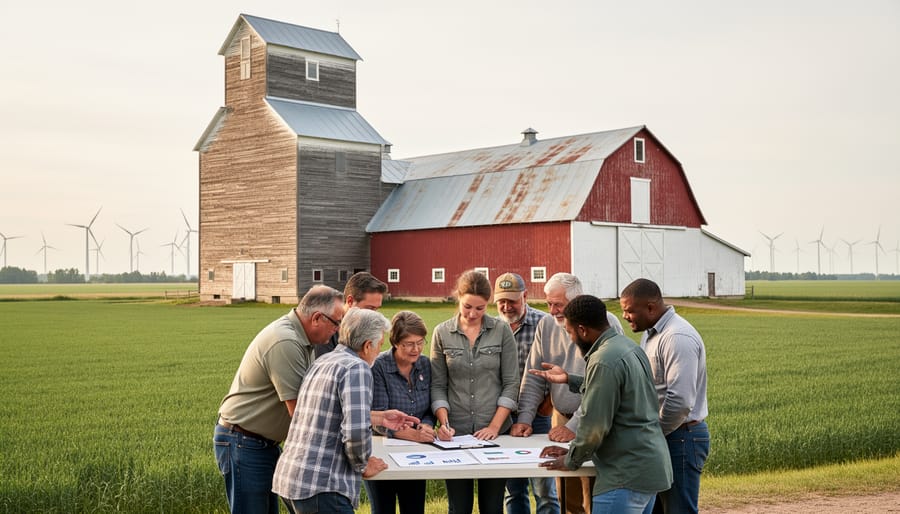
Consider hosting community meetings where farmers and buyers can discuss needs face-to-face. These gatherings build trust and reveal practical barriers like transportation challenges or storage limitations. Document everything carefully—this data becomes your roadmap for designing a hub that genuinely serves your community’s unique food system.
Infrastructure and Technology Requirements
Setting up a successful food hub requires thoughtful investment in both physical infrastructure and digital systems. At the core, you’ll need an aggregation center – a central facility where products from multiple farms can be received, stored, and redistributed. This space should include adequate refrigeration units to maintain product quality, with separate cold storage zones for different temperature requirements (typically 0-4°C for most produce, and -18°C for frozen goods).
Essential equipment includes commercial-grade refrigerators and freezers, pallet jacks for efficient movement of goods, proper shelving systems, and food-safe packaging materials. A delivery vehicle with temperature-controlled capacity becomes crucial for distribution routes, though many Alberta hubs start by coordinating with existing transportation services to reduce initial costs.
Digital tools streamline operations significantly. Inventory management software helps track product availability across multiple farms, while online ordering platforms allow buyers to place orders efficiently. Simple spreadsheet systems can work initially, but as your hub grows, consider purpose-built food hub management software that integrates ordering, invoicing, and logistics coordination. These systems reduce administrative burden and minimize errors that can erode farmer confidence and buyer satisfaction.
Many Canadian food hubs begin modestly, sharing existing facilities like community kitchens or partnering with established warehouses before investing in dedicated infrastructure. This approach allows you to test operations and build relationships while managing startup costs responsibly.
Governance Models That Work
Alberta food hubs can operate under several legal structures, each offering distinct advantages. Producer cooperatives remain popular, allowing farmer-members to collectively own and control operations while sharing costs and risks. The Alberta Cooperative Association provides templates and support for establishing agricultural co-ops, requiring minimum memberships of three to five producers.
Multi-stakeholder cooperatives incorporate farmers, consumers, and community organizations into governance, ensuring diverse perspectives shape decision-making. This model supports collaborative farming success through shared accountability.
Non-profit societies offer tax advantages and grant eligibility, particularly for hubs focused on food security rather than profit maximization. This structure suits community-driven initiatives partnering with municipalities or health authorities.
For-profit social enterprises combine business efficiency with social missions, appealing to hubs seeking investor capital while maintaining community benefits.
Decision-making processes should balance efficiency with inclusivity. Many successful Alberta hubs use consent-based governance for major decisions, with operational matters delegated to managers. Clear bylaws, transparent financial reporting, and regular member meetings build trust and ensure long-term viability.
Environmental and Soil Health Benefits of Local Distribution Networks
Food hubs represent a powerful intersection between economic viability and environmental responsibility, offering measurable benefits that extend far beyond the marketplace. When food travels shorter distances from farm to consumer, the environmental advantages become immediately apparent. A typical food item in North America travels approximately 2,400 kilometres before reaching the dinner plate. By contrast, food distributed through regional hub networks might travel only 160 to 240 kilometres, reducing transportation emissions by up to 80 percent while maintaining product freshness and quality.
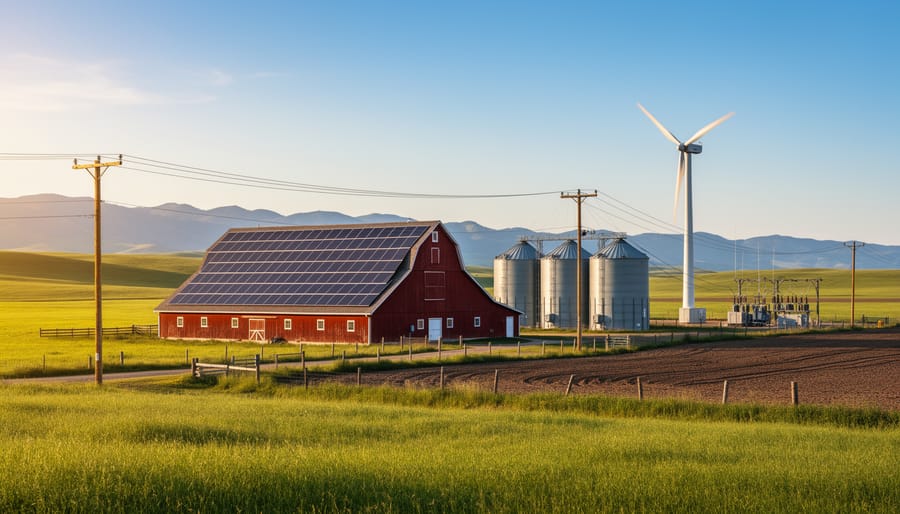
The food hub model naturally supports environmental stewardship by creating market opportunities for farmers practicing regenerative agriculture. When producers can access reliable local markets through a coordinated distribution system, they gain financial incentive to implement soil-building practices like cover cropping, reduced tillage, and diverse crop rotations. These methods sequester carbon, improve water retention, and enhance biodiversity—benefits that compound over time.
Alberta farmers working with food hub networks report that local distribution partnerships allow them to maintain smaller field sizes and practice more intensive soil management. Rather than pursuing monoculture production for distant commodity markets, these producers can diversify their operations with vegetables, heritage grains, and pasture-raised livestock that contribute to healthier soil ecosystems.
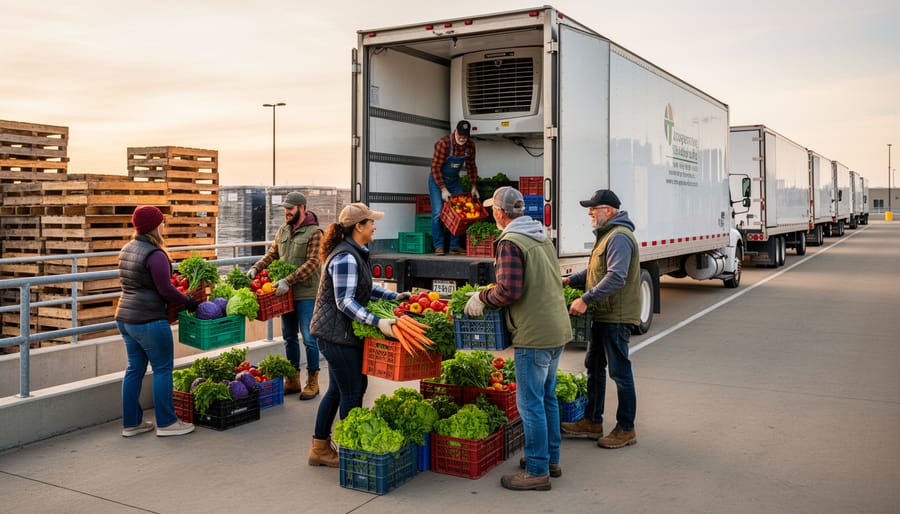
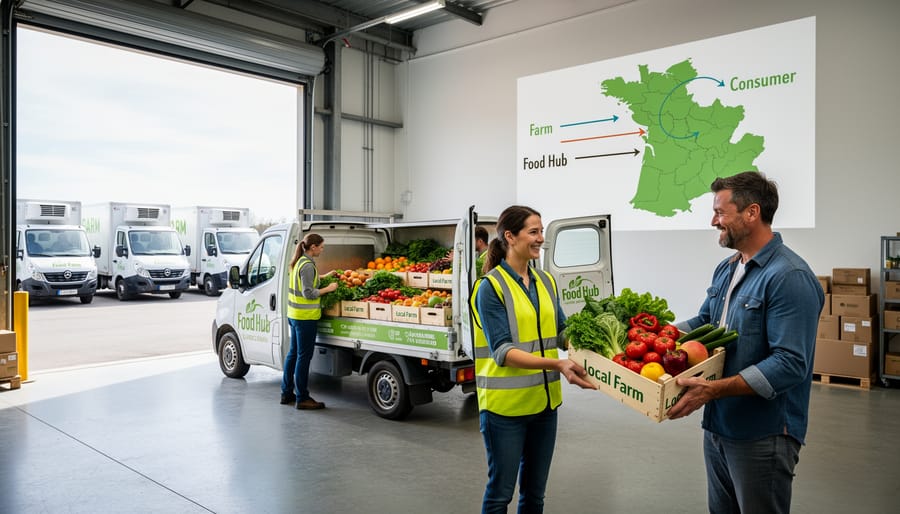
The aggregation function of food hubs also reduces redundant trips. Instead of multiple farmers making individual deliveries to various restaurants and retailers, consolidated distribution means fewer vehicles on the road and more efficient route planning. A single refrigerated truck can transport products from fifteen farms rather than fifteen separate vehicles making the same journey.
Furthermore, food hubs often establish quality standards that reward sustainable practices, creating premium market access for producers who prioritize soil health. This economic recognition transforms conservation from a cost centre into a competitive advantage, encouraging broader adoption of regenerative methods throughout the farming community while building resilient local food systems that benefit both land and livelihoods.
Overcoming Common Challenges in Cooperative Distribution
Food hubs face real challenges, but understanding them upfront helps farmers and coordinators build more resilient systems. The good news? Most obstacles have practical solutions based on what successful hubs have already figured out.
Coordination complexity ranks among the most common hurdles. Managing pickup schedules, aggregating orders from multiple buyers, and ensuring everyone gets what they need when they need it requires solid systems. The Edmonton Food Hub addressed this by implementing shared digital platforms where farmers upload availability in real-time and buyers place orders within designated windows. Start simple with spreadsheets if needed, then scale up as volume grows.
Volume fluctuations create headaches for both growers and buyers. One week you’re scrambling to fill orders, the next you’re managing surplus. Saskatchewan’s Harvest Moon Local Food Initiative tackles this through staged contracts where institutional buyers commit to minimum volumes during peak season, providing predictable demand. They also developed relationships with processors who can handle overflow production, turning excess into value-added products.
Quality standardization matters more than many farmers initially realize. Buyers need consistency, whether that’s uniform sizing for restaurants or organic certification for retailers. The Ontario-based Local Food Plus program created clear grading guidelines that member farmers follow, with periodic peer reviews ensuring everyone maintains standards without expensive third-party inspections.
Financial sustainability remains the toughest nut to crack. Most food hubs operate on thin margins, especially in early years. Successful models typically combine member fees, modest transaction percentages (usually 8-12 percent), and grant funding for infrastructure. The Red Deer Food Hub achieved break-even within three years by diversifying revenue streams and keeping overhead low through shared warehouse space with an existing cooperative.
Community food hubs like KC Food Hub demonstrate a practical, collaborative approach that addresses the real challenges Alberta farmers face today. By pooling resources, sharing infrastructure, and accessing broader markets together, these networks create economic resilience that individual operations often struggle to achieve alone. The environmental benefits—reduced food miles, minimized waste, and support for regenerative practices—align perfectly with the growing consumer demand for sustainably produced local food.
For farmers considering this model, the path forward starts with conversation. Connect with neighboring producers to explore shared interests and complementary products. Research existing cooperative opportunities in your region or province, as many agricultural networks already provide frameworks for collaboration. Attend local food system meetings, reach out to agricultural extension services, and don’t hesitate to contact established food hubs for guidance—most are eager to share their experiences.
The success of food hubs across Canada proves that farmers don’t have to navigate market access and sustainability challenges alone. Whether you join an existing network or help build a new one, community-focused collaboration offers a viable foundation for long-term farming success in Alberta and beyond.