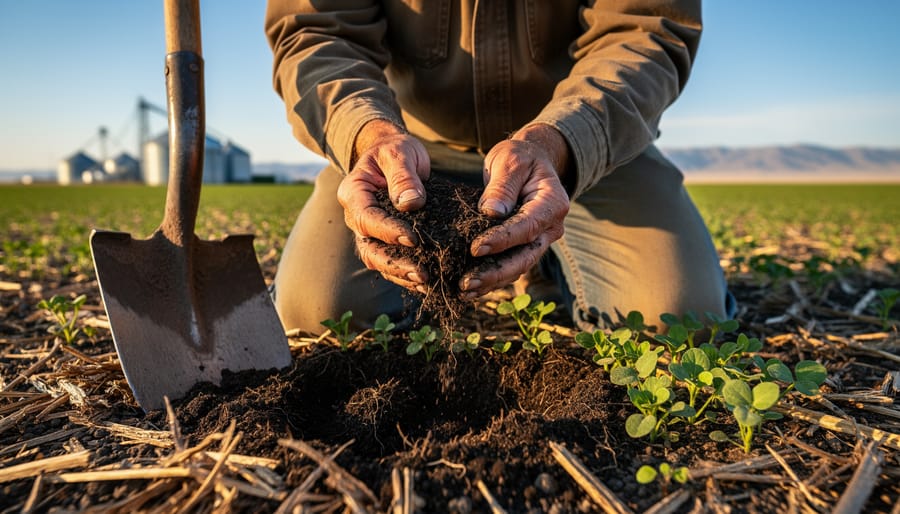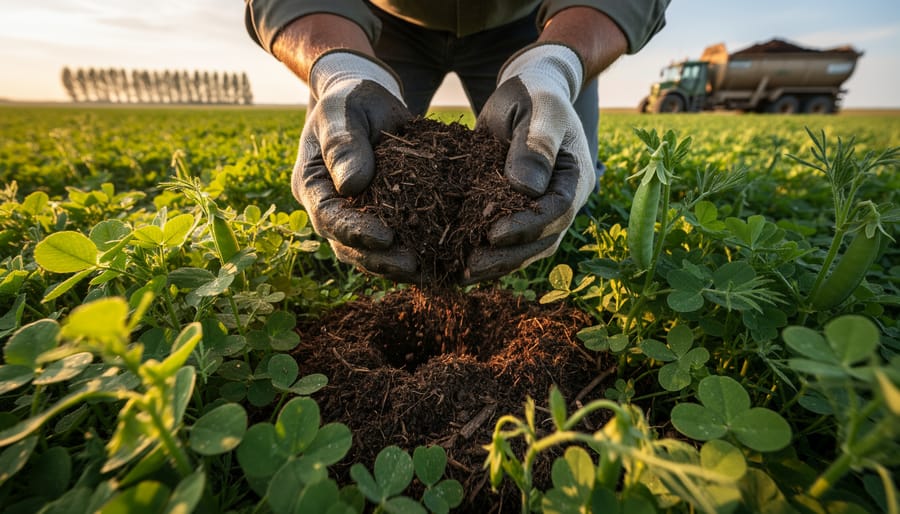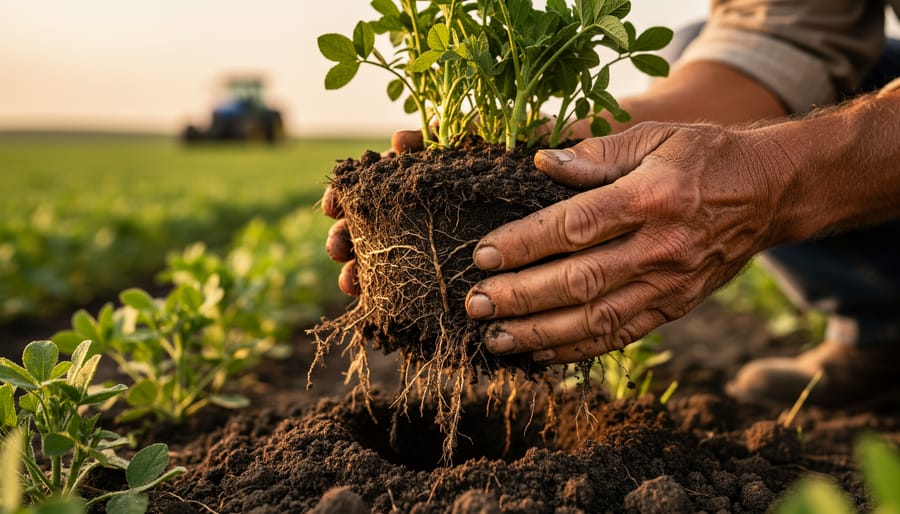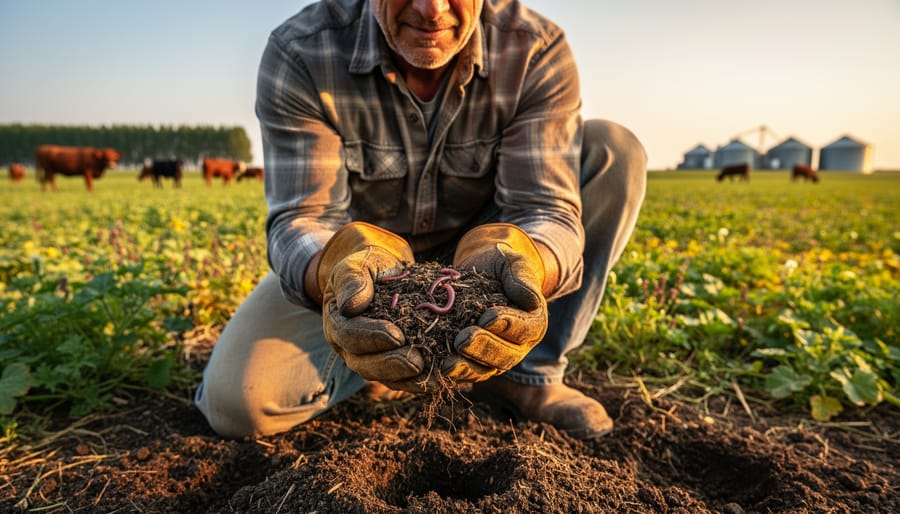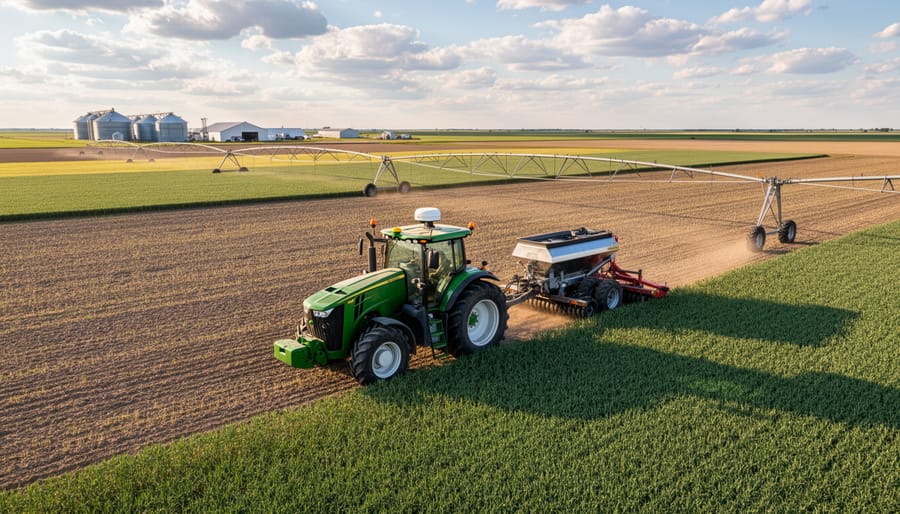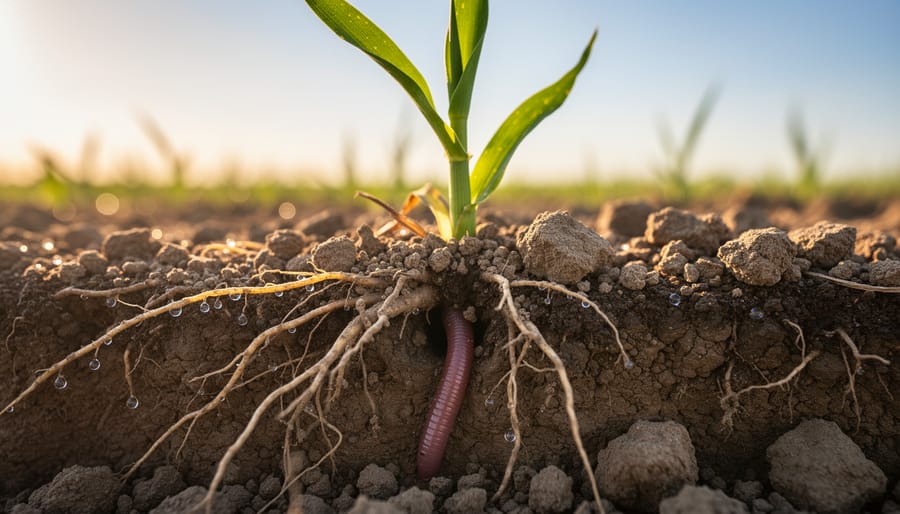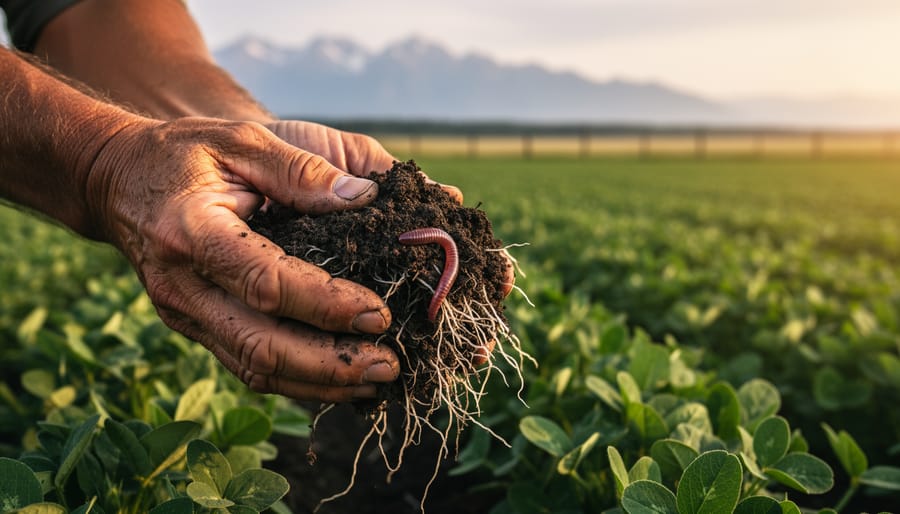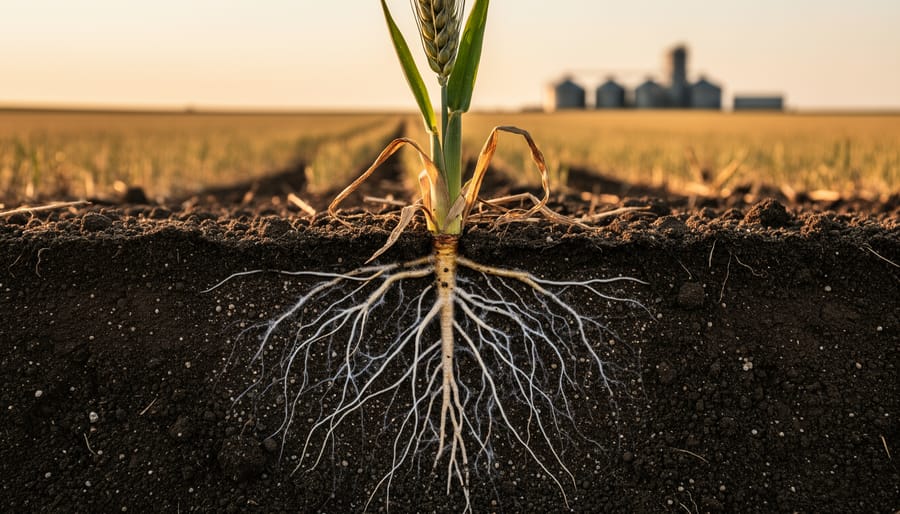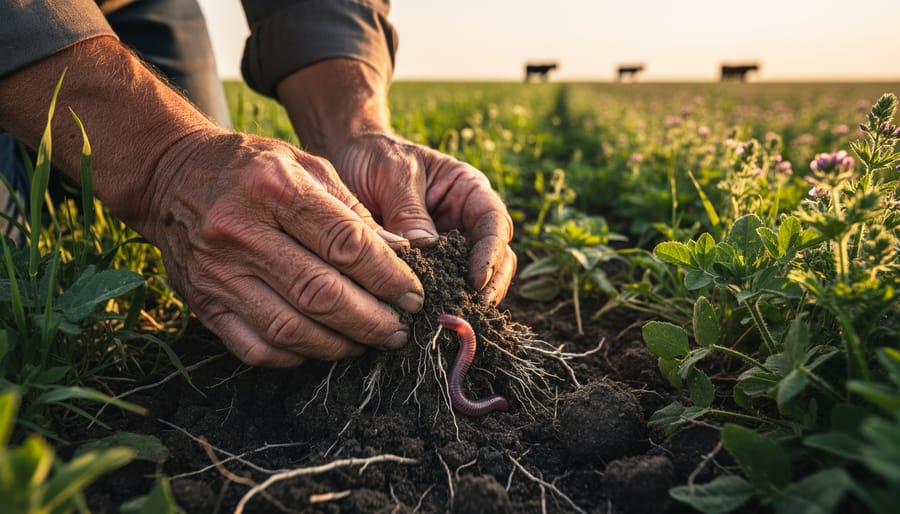
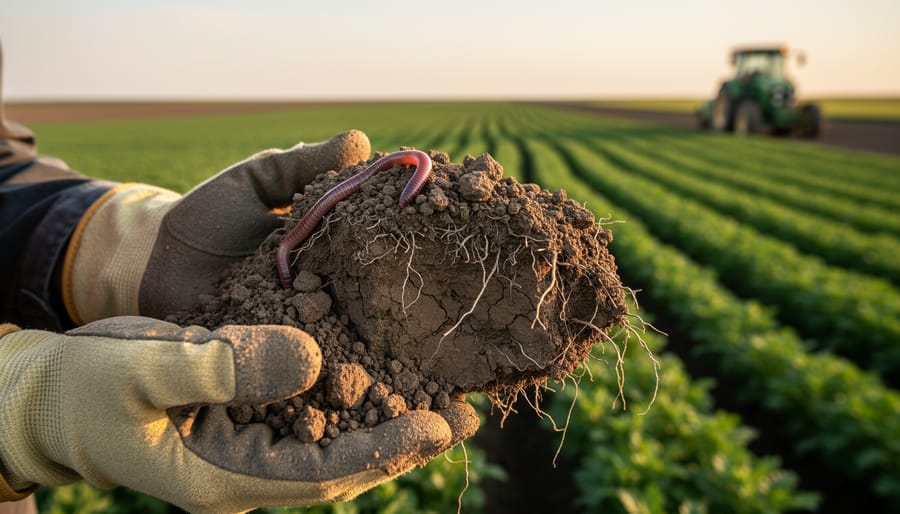
Understand that inorganic soils contain less than 20% organic matter by weight and make up the vast majority of agricultural land across Alberta and Canada. These mineral-based soils—classified as sandy, silty, or clay depending on particle size—form the foundation of your farming operation, and managing them effectively within an organic system requires working with their physical and chemical properties rather than against them.
Your inorganic soil’s texture determines water retention, nutrient availability, and tillage requirements. Sandy soils drain quickly but require frequent organic amendments to hold nutrients and moisture. Clay soils retain water and nutrients but compact easily and need careful timing for field operations. Silty soils offer middle ground but remain vulnerable to erosion without adequate cover.
The apparent contradiction between “inorganic soils” and “organic farming” disappears when you recognize that organic management focuses on building biological activity within your mineral soil matrix. Alberta farmer James Chen increased his clay loam’s water infiltration by 40% over three years by adding compost and reducing tillage, allowing beneficial organisms to create soil structure where mechanical methods had failed.
Test your soil’s current mineral composition, organic matter percentage, and biological activity through accredited laboratories before implementing changes. This baseline data guides which organic amendments—compost, green manures, or cover crops—will most effectively improve your specific inorganic soil type. The management strategies that work for sandy soils near Medicine Hat differ significantly from approaches needed for heavy clays in the Peace Region, making soil-specific knowledge essential for success.
What Exactly Are Inorganic Soils?
The Mineral Foundation of Alberta Soils
Alberta’s agricultural landscape is built on predominantly inorganic, or mineral-based, soils that form the foundation of our province’s productive farmland. Understanding these soil types is essential for organic farmers looking to work effectively with what nature has provided.
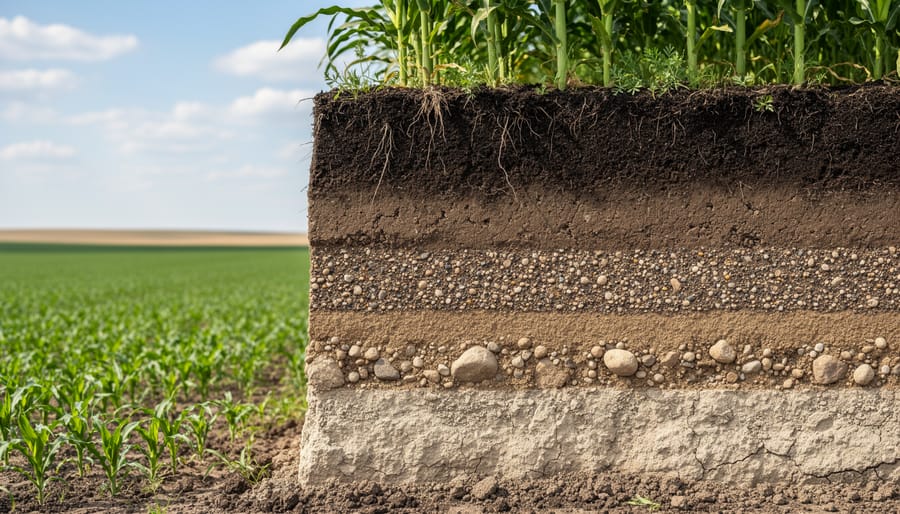
The most common soil orders across Alberta’s agricultural regions are Chernozemic and Luvisolic soils. Chernozemic soils, found primarily in the grassland and parkland regions of southern and central Alberta, are characterized by their dark, organic-rich surface layers overlying mineral horizons. These soils developed under native prairie vegetation and contain significant amounts of clay minerals, calcium carbonate, and other mineral particles that give them excellent nutrient-holding capacity.
“Chernozemic soils are the workhorses of Alberta agriculture,” explains Dr. Sarah Chen, soil scientist at the University of Alberta. “Their mineral composition provides a stable structure and natural fertility that responds beautifully to organic management practices.”
Moving northward into the boreal and parkland transition zones, Luvisolic soils become more prevalent. These forest-derived soils feature a characteristic clay-enriched subsurface layer and are typically more acidic than their Chernozemic counterparts. The mineral composition includes various clay minerals, quartz, and weathered rock fragments.
Both soil types consist primarily of mineral particles – sand, silt, and clay – mixed with varying amounts of organic matter. This mineral foundation provides the physical structure, water-holding capacity, and nutrient reservoir that organic farming practices can enhance and optimize for sustainable production.
Breaking Down Soil Components: Organic vs. Inorganic Matter
Healthy agricultural soils typically contain about 93-97% inorganic matter and only 3-7% organic matter by weight. Here in Alberta, many of our productive farmlands sit closer to that 3-5% organic range, which is perfectly normal for mineral soils. Don’t let these numbers discourage you – that small percentage of organic matter punches well above its weight.
The inorganic portion, made up of sand, silt, and clay particles, provides the physical structure and mineral nutrients your crops need. It’s the foundation that holds everything together. Meanwhile, that modest 3-7% organic component – decomposed plant material, microorganisms, and humus – acts as the engine driving soil biological activity, water retention, and nutrient cycling.
Think of it like this: your soil’s mineral fraction is the house, while organic matter is the life happening inside it. Both are essential, and understanding this balance helps explain why even organic farming practices must work with your soil’s inorganic properties. Saskatchewan farmer James Mitchell shared with us that when he stopped fixating on achieving unrealistic organic matter percentages and instead focused on maintaining his soil’s natural 4-5% range through cover cropping and reduced tillage, his yields actually improved. The goal isn’t to dramatically alter this ratio but to optimize both components for maximum soil function.
Why Inorganic Soil Properties Drive Organic Management Success
Texture, Structure, and Water Management
The proportions of clay, silt, and sand in your soil create what’s called soil texture, and this directly impacts how your fields perform throughout Alberta’s dramatic seasonal shifts. Clay particles, being the smallest, pack tightly together and hold water and nutrients effectively but can become waterlogged in wet springs or concrete-hard during dry summers. Sandy soils, with their large particles, drain quickly—sometimes too quickly—meaning irrigation and nutrients can pass right through before crops access them.
Most Alberta farms work with loam soils, which balance these three components. A good loam typically contains 40% sand, 40% silt, and 20% clay, providing both drainage and retention. Understanding your specific texture helps you make smarter decisions about organic amendments.
Here’s where it gets practical: clay-heavy soils benefit tremendously from compost additions that improve structure and water infiltration, preventing that spring puddling many of you battle. Sandy soils need organic matter that acts like a sponge, holding moisture and nutrients in the root zone longer.
Red Deer organic producer Tom Henderson shared his experience: “Once we understood our clay-loam texture, we adjusted our compost application timing to fall rather than spring. The freeze-thaw cycles help break up compaction, and by seeding time, water moves through beautifully.”
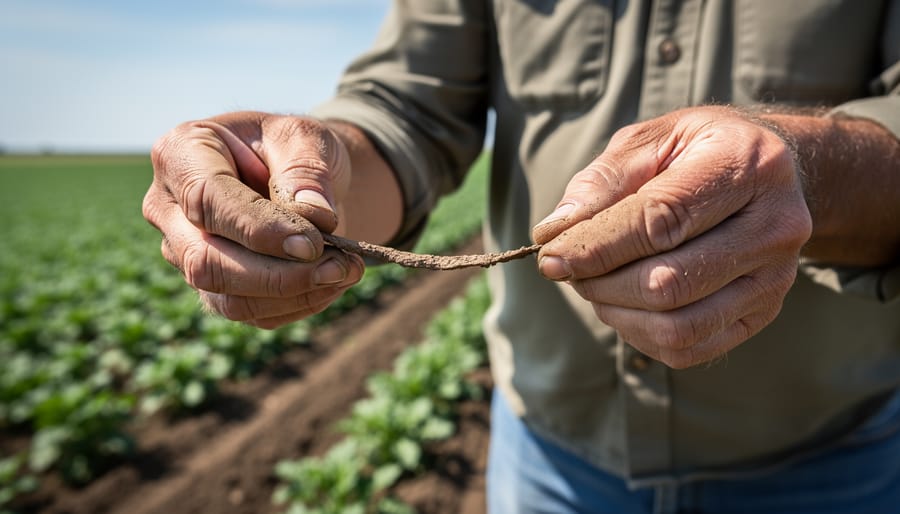
Test your texture by moistening soil and rolling it between your fingers. Clay forms a ribbon, sand feels gritty and won’t hold shape, while silt feels smooth like flour. This simple field test guides your organic management approach.
Cation Exchange Capacity: The Hidden Power of Clay Minerals
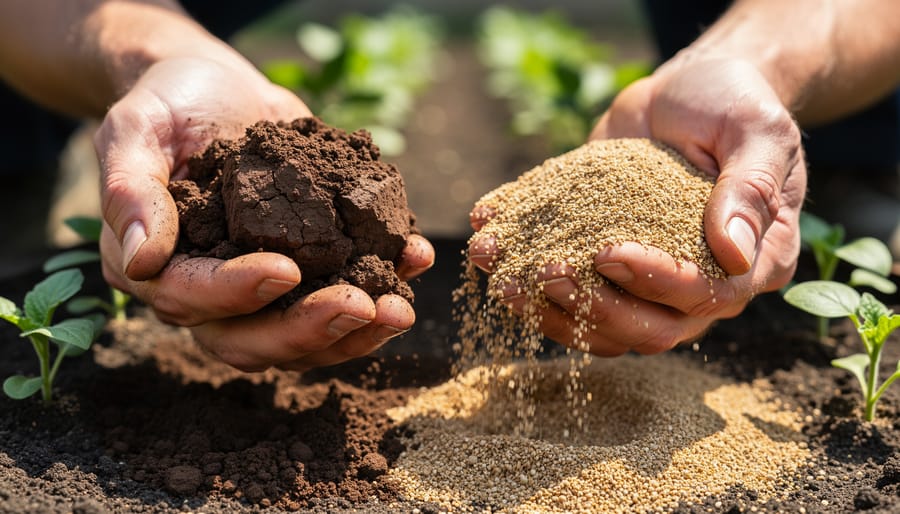
Think of your soil particles as tiny magnets with a superpower—they can grab onto nutrients and hold them until your crops need them. This is cation exchange capacity, or CEC, and it’s one of the most valuable characteristics of mineral soils.
Clay and organic matter particles carry negative electrical charges on their surfaces. These negative charges attract positively charged nutrients called cations—think calcium, magnesium, potassium, and ammonium. Picture it like a parking lot where nutrients wait safely until plant roots come calling. Soils with high CEC can hold more nutrients, while sandy soils with low CEC let nutrients slip through like water through a sieve.
For organic farmers in Alberta, understanding CEC changes everything about fertilizer timing and application. Dr. Maria Lange, a soil scientist at the University of Alberta, explains: “When you apply organic amendments like compost or manure to high-CEC clay soils, nutrients become available gradually as microbes break down organic matter. Your soil acts as a nutrient bank account.” This means your organic fertilizer investments work harder and longer.
In contrast, sandy soils with low CEC need more frequent, smaller applications. A Manitoba organic grain farmer found success by splitting his compost applications into two seasons rather than one heavy spring dose, reducing nutrient losses and improving efficiency by 30 percent.
Test your soil’s CEC—measured in milliequivalents per 100 grams—to match your organic management strategy to your soil’s natural nutrient-holding capacity.
Organic Techniques for Improving Inorganic Soil Health
Building Organic Matter in Mineral-Dominant Soils
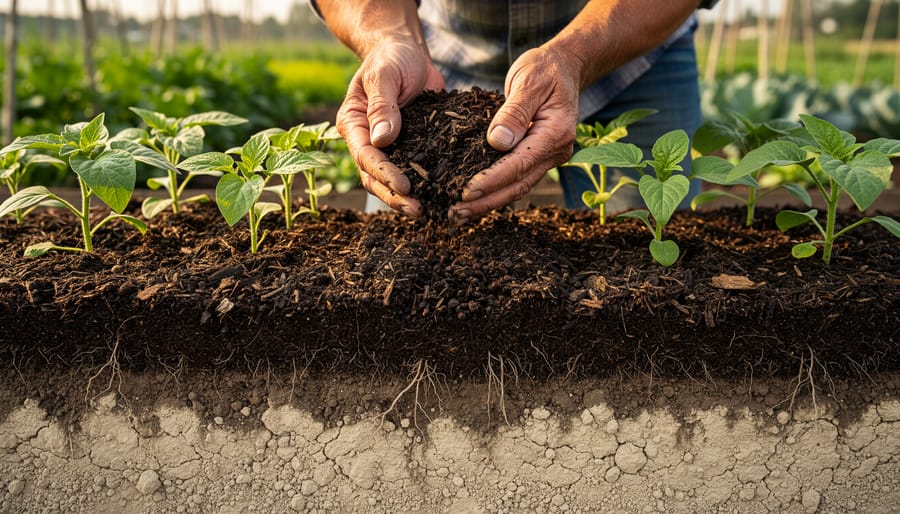
Success with mineral soils starts with understanding that building organic matter is a gradual process requiring consistent effort and realistic expectations. In Alberta’s challenging climate, annual increases of 0.1 to 0.3 percent organic matter are achievable goals when using integrated approaches.
Cover cropping stands as one of the most effective strategies for mineral soil improvement. Winter-hardy species like fall rye and hairy vetch work particularly well in Alberta’s conditions, protecting soil through harsh winters while adding 1,500 to 3,000 kilograms of organic material per hectare annually. Mixed-species covers combining legumes with grasses deliver both nitrogen fixation and diverse root structures that enhance soil aggregation.
Composting offers concentrated organic matter additions, but timing matters in our climate. Apply finished compost in spring when soils warm above 10 degrees Celsius to maximize microbial activity. Target application rates of 10 to 20 tonnes per hectare for vegetable production areas, scaling down to 5 tonnes per hectare for field crops to maintain economic viability.
Manure management requires careful attention to application timing and incorporation methods. Fresh manure applied in fall allows winter weathering to begin decomposition, while spring applications should be incorporated within 24 hours to prevent nitrogen loss. Aged manure at 20 to 40 tonnes per hectare every two to three years provides steady organic matter gains without overwhelming soil systems.
A Three Hills, Alberta organic grain farmer shared that combining annual cover crops with biennial manure applications increased their clay-loam soil’s organic matter from 2.8 to 3.4 percent over five years, demonstrating that patience paired with consistent practices yields measurable results in our region’s mineral soils.
Tillage Strategies That Respect Soil Structure
Managing tillage in mineral soils requires careful timing and technique to protect soil structure while meeting organic production goals. The key is understanding when your soil can handle equipment traffic without causing lasting damage.
For clay-dominant soils common across Alberta’s parkland region, avoiding tillage when soil moisture exceeds field capacity prevents compaction and structural breakdown. Wait until soil crumbles easily in your hand rather than forming a sticky ball. Spring tillage should be minimal and shallow, ideally limited to 7-10 cm depth for seedbed preparation.
Sandy loam soils tolerate tillage more readily but lose organic matter faster with excessive disturbance. Consider transitioning toward no-till practices or reduced tillage systems that maintain crop residue cover. Red Deer-area organic producer James Halford reduced his tillage passes from five to two by incorporating cover crops and strategic timing, improving both soil aggregation and water infiltration.
For silt loam soils prone to crusting, focus on maintaining surface residue through zone tillage or strip-till approaches. These targeted methods prepare planting rows while leaving interrow areas undisturbed, supporting biological activity and aggregate stability.
Under organic certification standards, mechanical weed control often necessitates some tillage. Balance this by choosing equipment that causes minimal soil inversion. Cultivators with sweeps or tines disturb less soil volume than moldboard plows. Track your field conditions before every tillage operation, and establish personal guidelines for acceptable moisture levels and soil consistency based on your specific soil texture and weather patterns.
Mineral Amendments in Organic Systems
When managing mineral soils in certified organic systems, you have access to several powerful amendments that work with your soil’s natural chemistry to boost fertility and improve structure. These amendments respect both organic certification standards and the unique properties of prairie soils.
Rock phosphate stands out as a slow-release phosphorus source, particularly valuable in Alberta’s alkaline soils where traditional phosphorus can lock up quickly. Unlike synthetic fertilizers, rock phosphate releases nutrients gradually as soil microbes break it down, providing steady nutrition throughout the growing season. Application rates typically range from 500 to 1,000 kg per hectare, depending on your soil test results.
Gypsum offers a dual benefit for heavy clay soils common across the prairies. It improves soil structure by helping clay particles aggregate, creating better water infiltration and root penetration. Simultaneously, it provides calcium and sulfur without altering soil pH, making it ideal when your magnesium levels are already adequate. Many Alberta producers apply 1,000 to 2,500 kg per hectare to address compaction issues.
Agricultural lime remains the cornerstone amendment for acidic soils, though less common in Alberta’s naturally alkaline conditions. However, in areas where continuous cropping has lowered pH, lime raises it back to optimal ranges while supplying essential calcium. Always base lime applications on soil tests, with rates varying from 2,000 to 5,000 kg per hectare.
Sulfate of potash, greensand, and langbeinite round out the organic mineral amendment toolkit, each addressing specific nutrient needs while maintaining certification standards. The key is matching amendments to your soil test results and crop requirements.
Testing and Monitoring Your Inorganic Soil Properties
Which Tests Matter Most for Organic Farmers
Understanding your mineral soil’s characteristics helps you make better management decisions aligned with soil health principles. While basic NPK tests provide snapshots, comprehensive analysis reveals the full picture of your soil’s potential.
Start with texture analysis to understand your soil’s water-holding capacity and drainage patterns. This one-time test guides irrigation and tillage decisions for years. Cation exchange capacity (CEC) testing shows how well your soil holds nutrients, critical for optimizing organic amendments. pH testing should happen annually, as it directly affects nutrient availability and microbial activity.
Don’t overlook micronutrients like zinc, boron, and manganese. These often-deficient elements significantly impact crop health but require only modest testing frequency, typically every three years.
Alberta farmers can access affordable testing through A&L Canada Laboratories in London, Ontario, or Exova in Edmonton, with comprehensive packages ranging from 75 to 150 dollars. Many regional agronomists recommend ALS Laboratory Group for their western Canadian reference ranges.
Myron Bjorndahl, an organic grain farmer near Lacombe, notes that investing in thorough soil testing saved him thousands in unnecessary amendments while boosting yields by identifying specific zinc deficiencies his basic tests missed.
Reading Your Soil: On-Farm Assessment Techniques
Understanding your soil starts right in your field. One of the most reliable methods is the ribbon test: take a handful of moist soil and squeeze it between your thumb and fingers. Sandy soils won’t hold together, while clay-rich soils form long ribbons. Loam, ideal for most crops, creates a short ribbon before breaking.
The shovel test reveals soil structure at deeper levels. Dig down 30 centimetres and examine the layers. Healthy inorganic soil shows distinct horizons with good aggregation – small clumps that don’t turn to powder when pressed. Look for earthworm channels and root penetration as signs of biological activity.
Alberta farmer Tom Henderson from Red Deer County uses a simple drainage test each spring. “I dig a hole about 30 centimetres deep, fill it with water, and time how long it takes to drain,” he explains. “If it’s gone in 12 to 24 hours, my soil structure is working well.”
Check for compaction by pushing a wire flag or metal rod into the soil after rain. It should penetrate at least 45 centimetres easily. Resistance indicates compaction layers that restrict root growth and water movement, signaling the need for management adjustments.
Real Results from Alberta Farms
Alberta’s organic farmers are proving that challenging inorganic soil types aren’t obstacles, but opportunities for building resilient, productive systems. These real-world examples demonstrate how understanding mineral soil properties leads to measurable success.
Near Lacombe, the Morrison family transformed their heavy clay loam operation over five years. “We initially struggled with waterlogging and compaction on our 160-hectare certified organic grain farm,” explains Sarah Morrison. They implemented a strategic approach: installing tile drainage in problem areas, incorporating deep-rooted cover crops like tillage radish and sweetclover, and maintaining continuous living roots. Within three growing seasons, their soil organic matter increased from 3.2 percent to 4.8 percent, and water infiltration rates improved by 60 percent. Their spring wheat yields now consistently exceed 3,000 kilograms per hectare, matching conventional neighbours without synthetic inputs.
In the Peace Country region, Miguel Santos tackled sandy loam soils prone to nutrient leaching. His 240-hectare mixed operation now retains fertility through proven soil practices including diverse crop rotations with nitrogen-fixing pulses, strategic compost applications of 10 tonnes per hectare every third year, and permanent alleyways between crop fields planted with perennial grasses. “Understanding our sandy soil’s limitations helped us work with it, not against it,” Santos notes. His soil tests now show stable phosphorus and potassium levels, eliminating the nutrient decline he experienced in his first certification years.
Southern Alberta producer Jennifer Chen manages saline-affected soils near Lethbridge. After soil testing revealed electrical conductivity readings above 4 dS/m in several fields, she planted salt-tolerant crops like barley and forages in affected zones while implementing targeted gypsum applications at 2 tonnes per hectare. She established vegetated buffer strips to intercept saline groundwater flow. Over four years, salinity levels decreased by 35 percent in treated areas, and previously bare patches now support productive crops.
These farmers share common threads: comprehensive soil testing to understand their specific mineral composition, patience with biological processes, and willingness to adapt conventional organic practices to their unique inorganic soil properties. Their experiences confirm that mineral soils, when managed according to their physical and chemical characteristics, can support thriving organic operations. Each farm demonstrates that success comes from respecting soil type while building organic matter and biological activity appropriate to local conditions.
Common Challenges and How to Overcome Them
Alberta’s diverse landscape presents unique soil challenges that can feel overwhelming, but understanding these obstacles is the first step toward successful organic farming.
Heavy clay soils dominate many Alberta regions, creating drainage headaches and compaction issues that restrict root development. Red Deer organic farmer Maria Chen tackled this challenge on her 65-hectare operation by implementing a multi-year strategy. “We started with deep-rooted cover crops like daikon radish and alfalfa,” she explains. “Their taproots naturally broke up compacted layers without expensive machinery.” Maria combined this with regular compost applications at 20-25 tonnes per hectare every three years, gradually improving soil structure. The key is patience – clay improvement takes 3-5 years, but the results transform your land’s productivity.
Sandy soils present the opposite problem: they drain too quickly and struggle to retain nutrients and moisture. Peace Country grower Tom Bakker discovered that building organic matter was essential. “We went from 1.2 percent organic matter to 3.8 percent over six years,” he shares. His approach included applying composted manure before each growing season, planting winter cover crops to prevent nutrient leaching, and using mulch to reduce moisture loss. Tom also adjusted his irrigation schedule, applying smaller amounts more frequently to match his soil’s limited water-holding capacity.
Salinity remains a persistent challenge across prairie regions, particularly in lower-lying areas. Dr. Jennifer Wong, soil scientist at Olds College, recommends organic farmers focus on improving drainage first. “Install tile drainage where feasible, and create berms to redirect water away from salt-affected zones,” she advises. Growing salt-tolerant crops like barley or certain forage varieties in these areas maintains productivity while you work on long-term solutions. Deep-rooted perennials can help lower water tables that bring salts to the surface.
The common thread across all these challenges is building soil organic matter through compost, cover crops, and strategic crop rotations. While results don’t happen overnight, Alberta’s organic farming community has proven these solutions work. Connect with your local organic farming association to learn from neighbours who’ve overcome similar obstacles on their land.
Understanding your mineral soils isn’t contradictory to organic farming—it’s essential to it. The most successful organic operations across Alberta recognize that knowing their inorganic soil properties creates a roadmap for effective organic management. When you understand your soil texture, mineral composition, and pH levels, you can make informed decisions about which organic amendments will work best and when to apply them.
Your mineral soils are assets waiting to be optimized. That clay-heavy field that’s been challenging to work? With proper organic matter additions and thoughtful timing, it can become your most productive land. The sandy section that dries out quickly? Strategic cover cropping and compost applications can transform its water-holding capacity. The key is working with your soil’s natural characteristics, not against them.
Take your next steps today. Start with a comprehensive soil test that includes texture analysis, pH, and mineral content. Join your local agricultural extension or organic farming groups to learn what’s working for neighbours with similar soil types. Document your baseline conditions and begin experimenting with one or two targeted organic practices that align with your specific mineral soil properties.
Remember, sustainable agriculture is built on knowledge and patience. Each season of working with your inorganic soils through organic practices builds resilience, productivity, and long-term soil health. Your journey toward optimized soil management starts with understanding what you’re working with—and that foundation is solid.