Your soil holds invisible wealth that could generate thousands of dollars per year while improving your farm’s long-term productivity. Soil carbon stocks—the total amount of carbon stored in your soil—represent both an environmental asset and an emerging revenue stream through carbon credit markets. For every tonne of carbon dioxide you sequester through regenerative organic practices, you can potentially earn $15-40 in carbon credits, with some Alberta farms already banking $20,000-50,000 annually.
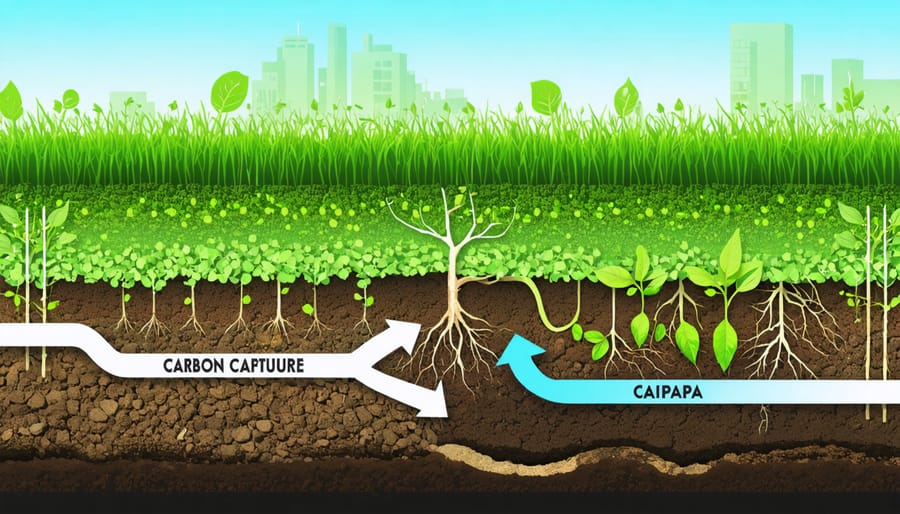
The science is straightforward: plants capture carbon dioxide from the atmosphere during photosynthesis and store it in soil through root systems and organic matter decomposition. When you implement practices like reduced tillage, cover cropping, or diverse crop rotations, you increase these carbon stocks measurably—and that measurement is what makes carbon credits tradable commodities.
Canadian farmers currently access carbon markets through programs like the Alberta Emission Offset System and federal frameworks under the Greenhouse Gas Pollution Pricing Act. These programs pay you for verified increases in soil carbon, creating a financial incentive that aligns profitability with sustainability. However, participation requires understanding baseline measurements, verification protocols, contract terms, and realistic timelines before carbon storage translates into payments.
This guide breaks down the complete picture: what soil carbon stocks mean for your operation, how credit markets actually function, whether the numbers make sense for your acreage and management style, and the practical steps to get started if you decide it fits your farm’s future.
What Are Soil Carbon Stocks and Why They Matter Now
How Carbon Gets Stored in Your Fields
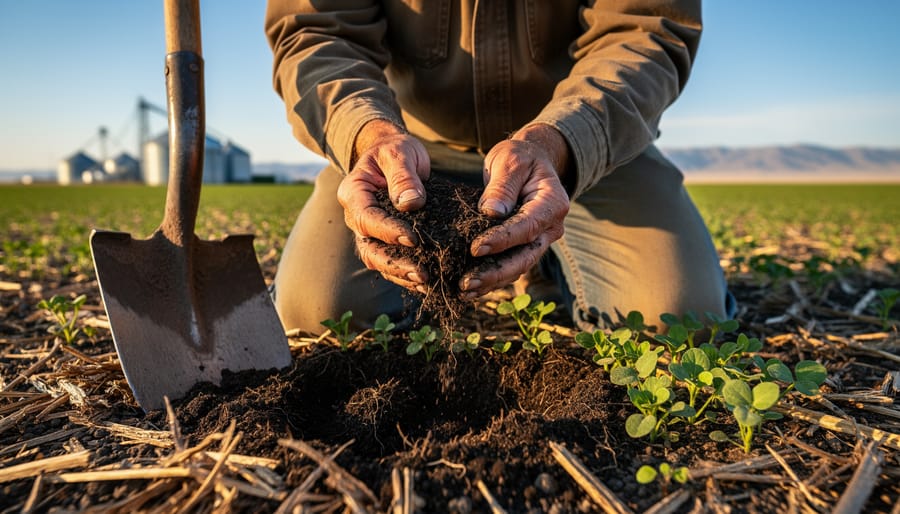
Think of your fields as living carbon factories. Every growing season, your crops are pulling carbon dioxide from the air and storing it underground through natural carbon sequestration processes that have been working since the prairies first formed.
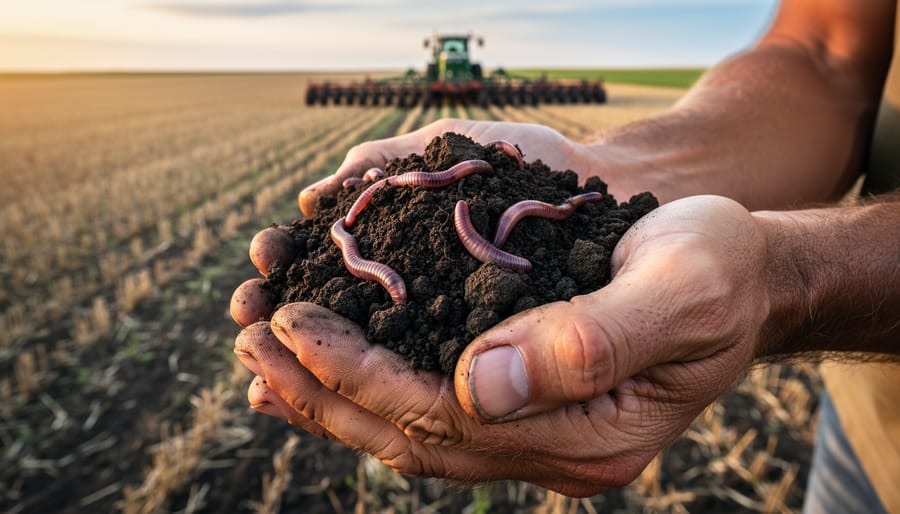
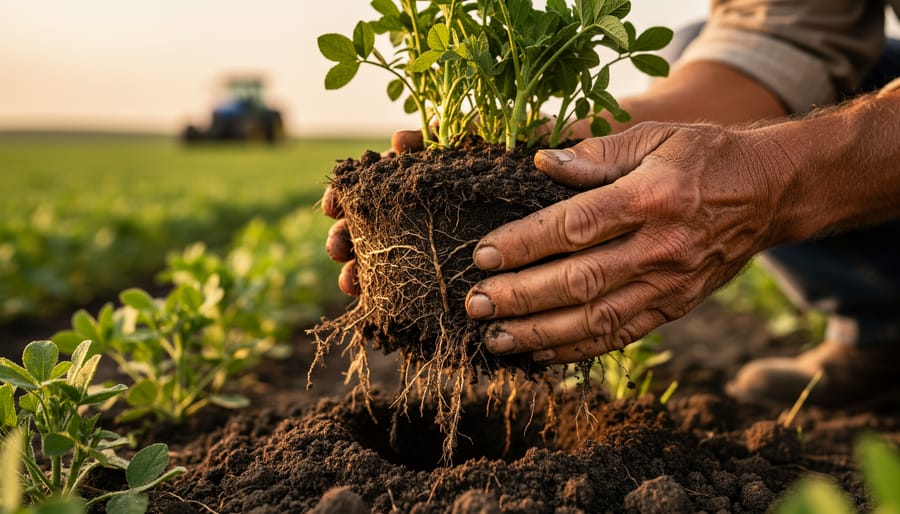
Here’s how it works on your farm: When plants photosynthesize, they convert atmospheric CO2 into sugars. About 40 percent of those sugars travel down through the roots and leak into the surrounding soil. This isn’t waste – it’s actually feeding an underground workforce of billions of microbes, fungi, and other organisms that turn this carbon into stable soil organic matter.
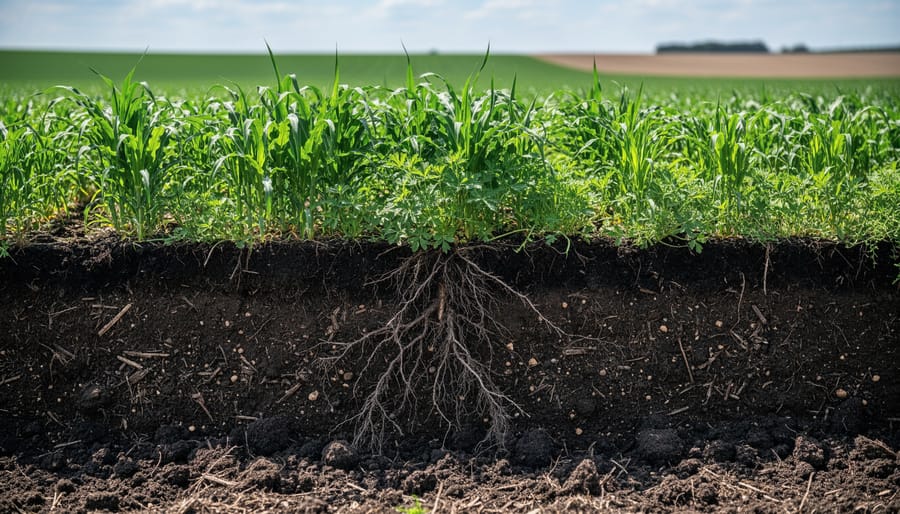
Root systems play the starring role. Perennial forages like alfalfa, with roots reaching 4 metres deep, deposit more carbon than annual crops. Even within annuals, choosing deep-rooted varieties makes a difference. When roots die and decompose, they leave behind channels that improve soil structure while adding carbon-rich organic matter at various depths.
Alberta farmer Jim Macartney from Lacombe found that maintaining diverse crop rotations increased his soil organic matter from 3.2 percent to 4.1 percent over eight years. That represents roughly 30 tonnes of additional carbon per hectare stored in the top 30 centimetres of soil alone.
The key is keeping living roots in the soil as long as possible each year, minimizing tillage disturbance, and feeding your soil biology with diverse crop residues.
The Difference Between Carbon Stocks and Carbon Sequestration
When you’re exploring carbon credit opportunities, understanding the difference between soil carbon stocks and carbon sequestration is essential for determining your farm’s eligibility and potential revenue.
Soil carbon stocks represent the total amount of carbon currently stored in your soil at any given time. Think of it as a snapshot—the accumulated carbon in your fields from years of organic matter buildup. Alberta soils typically contain between 60 to 150 tonnes of carbon per hectare, depending on your management history and soil type.
Carbon sequestration, on the other hand, is the active process of capturing and storing new atmospheric carbon dioxide in your soil. It’s the flow rather than the pool—the ongoing addition of carbon through practices like reduced tillage, cover cropping, or improved grazing management.
Here’s why this matters for carbon credits: most programs reward sequestration, not existing stocks. You’re compensated for measurably increasing your soil carbon over a baseline period, typically requiring an annual increase of 0.5 to 1.0 tonnes per hectare. As Dr. Kari Dunfield from the University of Guelph explains, “Carbon credits incentivize the transition to practices that actively remove carbon from the atmosphere, creating additional environmental benefits beyond what already exists.”
Understanding both concepts helps you assess whether your farm is positioned to generate meaningful credits through management changes.
How the Soil Carbon Credit Market Actually Works
Who’s Buying Carbon Credits and Why
The carbon credit market brings together diverse buyers, each with distinct motivations for purchasing agricultural carbon offsets. Understanding who’s buying can help you identify potential opportunities for your operation.
Corporate buyers represent the largest segment of purchasers. Companies like Microsoft, Shopify, and Canadian corporations such as Nutrien are actively purchasing carbon credits to meet their net-zero commitments. These businesses face increasing pressure from investors, consumers, and regulations to reduce their carbon footprint. When direct emissions reductions prove challenging or costly, they turn to carbon credits as part of their climate strategy.
Government programs also participate as buyers. While Canada doesn’t currently have a federal program directly purchasing agricultural carbon credits, provincial initiatives exist. Alberta’s government has supported carbon offset protocols that enable agricultural credits to enter compliance markets, where large industrial emitters purchase offsets to meet regulatory requirements.
The voluntary carbon market attracts individual consumers and smaller organizations wanting to offset their personal or business emissions. Online platforms connect these buyers with farmers generating credits, though prices in voluntary markets typically run lower than compliance markets.
Financial motivations vary by buyer type. Large corporations often pay premium prices for high-quality, verified agricultural credits with co-benefits like improved water quality or biodiversity. They value the positive story behind regenerative agriculture practices. Meanwhile, compliance buyers focus primarily on meeting regulatory obligations at the lowest cost.
For Canadian farmers, corporate buyers seeking agriculture-specific credits often provide the most stable demand and competitive pricing, particularly when credits come with verification through recognized protocols and third-party certification.
The Verification Process: What You Need to Prove
Before you can start earning carbon credits, your soil carbon stocks need rigorous documentation. Think of verification as creating a credible story about your soil’s carbon journey—one that buyers and regulators can trust.
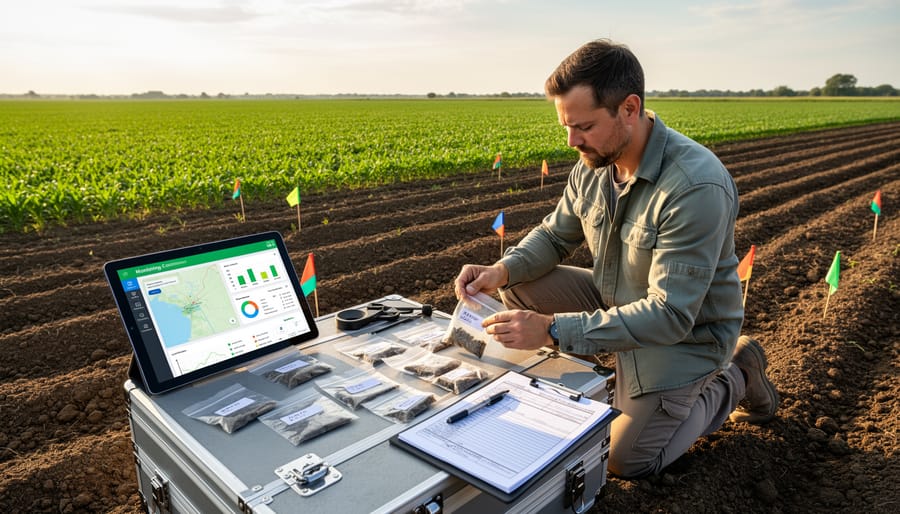
The process begins with establishing your baseline. A qualified agronomist or soil specialist will collect soil samples from multiple locations across your fields, typically testing to depths of 30 centimeters or more. These samples measure your starting point—how much carbon your soil currently holds. Most programs require sampling from representative management zones, accounting for variations in soil type, topography, and historical land use.
“The initial assessment usually costs between $15 to $25 per hectare,” explains Dr. James Chen, a soil scientist who works with Alberta producers. “For a 160-hectare operation, you’re looking at roughly $2,400 to $4,000 for baseline establishment.”
Once enrolled, you’ll follow approved monitoring protocols. These typically require resampling every three to five years to measure carbon accumulation. You’ll also document your management practices—what cover crops you planted, tillage methods used, fertilizer applications, and crop rotations. Detailed record-keeping isn’t optional; it’s essential for verification.
Third-party verification adds another layer of credibility. Independent auditors review your documentation, confirm sampling methods met protocol standards, and validate reported carbon increases. This verification happens annually or biennially, depending on your program, with costs ranging from $500 to $2,000 per verification cycle.
The timeline matters too. Most programs require a minimum commitment of five to ten years, and carbon sequestration doesn’t happen overnight. Expect to wait two to three years before generating saleable credits. This upfront investment of time and money challenges many operations, but understanding these requirements helps you plan accordingly and assess whether carbon markets fit your farm’s financial picture.
Current Market Prices and What Farmers Are Actually Earning
The current market for soil carbon credits in Canada operates across a wide price spectrum. As of 2024, carbon credits typically trade between $15 and $50 per tonne of CO2 equivalent, though prices fluctuate based on market conditions, credit quality, and buyer demand.
Alberta farmers working with established programs are seeing varied returns depending on their practices and acreage. Jason Mitchell, a grain producer near Red Deer with 800 hectares, enrolled in a carbon program two years ago. Through reduced tillage and cover cropping, his operation generated credits worth approximately $6,400 in the first year, averaging about $8 per hectare. While not transformative income, Jason views it as meaningful compensation for practices he was already implementing.
Payment structures differ across programs. Some offer upfront payments of $10 to $20 per tonne, while others provide annual payments over 5 to 10-year contracts. Aggregators typically take 15 to 30 percent as administrative fees, reducing the farmer’s net return.
Market volatility remains a reality. Prices dropped in early 2023 due to oversupply concerns but have since stabilized. Dr. Sarah Chen, agricultural economist at the University of Alberta, notes that corporate sustainability commitments are driving steady demand, though farmers should view carbon credits as supplementary income rather than primary revenue.
The voluntary carbon market continues evolving, with increasing buyer interest in high-quality agricultural credits backed by rigorous verification protocols.
Canadian Carbon Credit Programs Available to Alberta Farmers
Federal and Provincial Programs
Alberta farmers have access to several government-supported programs designed to make carbon credit participation more accessible and financially rewarding. Understanding these options can help you determine which pathway aligns best with your operation.
The Agricultural Carbon Solutions program, offered through Emissions Reduction Alberta, provides funding to help farmers adopt practices that sequester carbon. This initiative covers a portion of implementation costs for practices like no-till farming, cover cropping, and enhanced rotations. Eligible participants must farm within Alberta and commit to maintaining these practices for a minimum period, typically three to five years.
At the federal level, the Canadian Agricultural Partnership offers cost-share programs that indirectly support carbon-friendly practices. These programs can help offset initial investments in equipment or seeds needed for carbon sequestration activities. Farmers can combine federal and provincial support to maximize financial assistance.
To apply, you’ll need detailed records of your current farming practices, including tillage methods, crop rotations, and input usage from the past several years. The Alberta government’s website provides application portals with step-by-step guidance, and many agricultural service boards offer free assistance with the paperwork.
Payment structures vary by program. Some provide upfront cost-sharing of 25 to 50 percent for practice changes, while others offer performance-based payments once carbon sequestration is verified. Most programs issue payments annually after third-party verification confirms your soil carbon increases.
Consider connecting with your local agricultural fieldman or extension specialist who can walk you through eligibility requirements specific to your region and farming system. These experts often know about additional regional incentives that complement federal and provincial programs.
Private Sector and Aggregator Programs
Several private companies have entered the Canadian soil carbon market, offering farmers different pathways to monetize their carbon sequestration efforts. These aggregators serve as intermediaries, connecting farmers with carbon credit buyers while managing the complex verification and documentation processes.
Companies like Viresco Solutions, Nori, and Carbon Streaming Corporation operate in Canada, though their program structures vary significantly. Most aggregators handle soil sampling, analysis, and credit verification in exchange for a percentage of the credit revenue, typically ranging from 15 to 40 percent. Some cover upfront costs, while others require farmer investment in soil testing.
Payment structures differ widely across programs. Some companies offer upfront payments of $10 to $20 per tonne of carbon dioxide equivalent, while others provide annual payments over multi-year contracts. Contract lengths typically span 5 to 10 years, during which farmers commit to maintaining the practices that sequester carbon.
Jim Halford, a barley producer near Lethbridge, partnered with a carbon aggregator in 2021. “They handled the paperwork and connected me with buyers, which saved considerable time,” he explains. “The trade-off was giving up 30 percent of the credit value, but I wasn’t confident I could navigate the process alone.”
Before signing with an aggregator, review contract terms carefully. Key considerations include payment timing, credit ownership, contract duration, exit clauses, and liability for reversals if carbon stocks decrease. Some programs require exclusive agreements, preventing participation in other carbon markets. Consider consulting with an agricultural lawyer to understand your obligations and ensure terms align with your long-term farming plans.
Farming Practices That Build Carbon Stocks and Generate Credits
Cover Cropping and Diverse Rotations
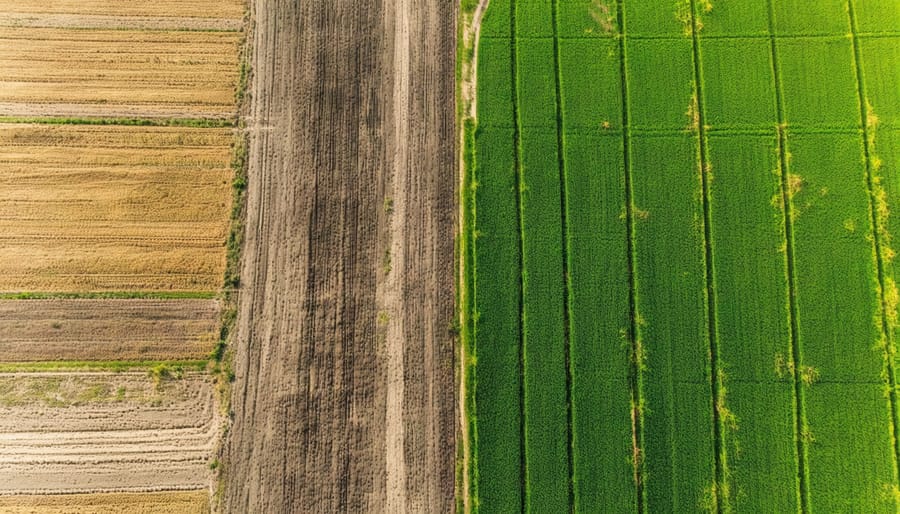
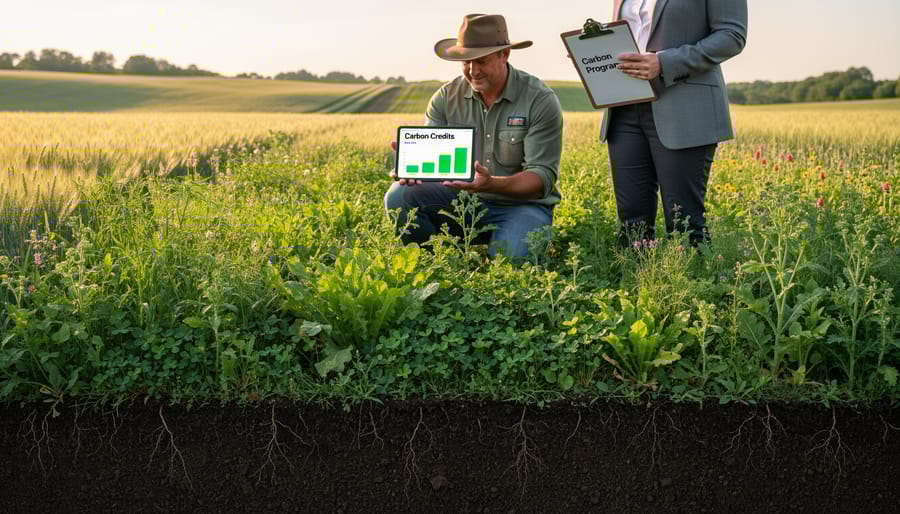
Integrating cover crops and extending crop rotations beyond the traditional canola-wheat cycle are proven strategies to increase soil carbon stocks while qualifying for carbon credit programs. When you plant species like fall rye, winter wheat, or hardy legumes after harvest, you’re keeping living roots in the soil longer, feeding microbial communities, and capturing carbon that would otherwise be lost. These practices are particularly valuable in Alberta’s shorter growing season, where every day of active photosynthesis counts.
Research shows that cover crops build carbon at rates of 0.3 to 0.5 tonnes per hectare annually when managed properly. Diversified rotations that include pulses, oilseeds, and cereals create different rooting depths and residue types, enhancing carbon storage throughout the soil profile.
Many carbon credit programs recognize these practices as eligible activities. Protocols typically require documentation of seeding dates, species selection, and termination methods. Central Alberta producer James Martinez added fall rye to his rotation and saw carbon credits generate an additional 18 dollars per hectare while improving soil structure for subsequent crops. The key is selecting cover crop species that establish quickly in Alberta’s cooling autumn temperatures and provide winter protection.
Reduced or No-Till Systems
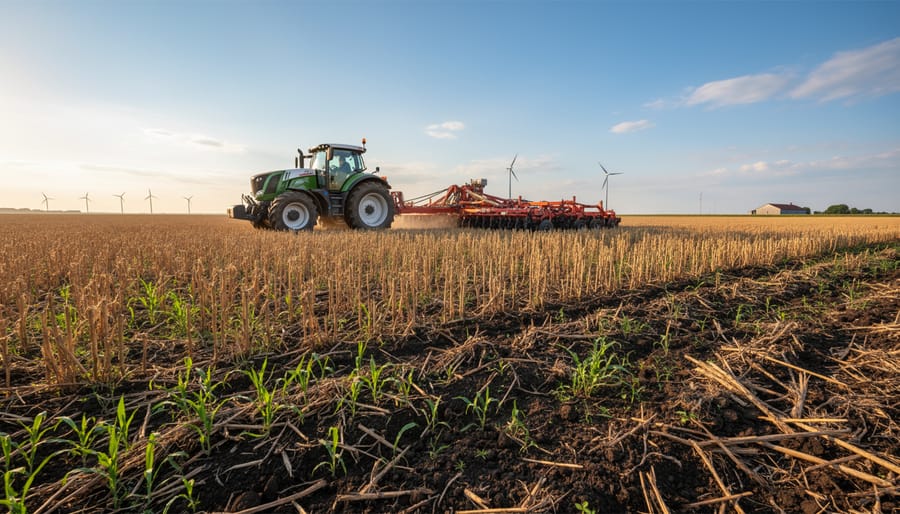
Reducing or eliminating tillage represents one of the most effective strategies for building soil carbon stocks on prairie farms. When you minimize soil disturbance, you preserve existing carbon while creating conditions where microorganisms can work their magic, storing more carbon deeper in the soil profile. No-till systems can increase soil organic carbon by 0.5 to 1.0 tonnes per hectare annually, making them attractive for carbon credit programs.
For Alberta producers, the transition does come with challenges. Equipment modifications or purchases may be necessary, and you might see increased weed pressure in the first few years. However, many farmers report long-term benefits including reduced fuel costs, improved soil moisture retention, and better overall soil health.
Trevor Johnson, a fourth-generation farmer near Red Deer, shares his experience: “We’ve been no-till for eight years now. The first two seasons were tough as we learned to manage residue and adjust seeding depth. But now our soil structure has improved dramatically, and we’re seeing fuel savings of roughly 40 percent compared to conventional tillage. Plus, we’re eligible for carbon credit payments that add another revenue stream.”
Starting with reduced tillage on a portion of your land allows you to learn the system while managing risk effectively.
Organic Amendments and Compost Applications
Adding organic amendments like composted manure, green waste compost, and biosolids is a proven way to boost soil carbon stocks on your farm. These materials deliver carbon-rich organic matter directly to your soil while improving soil structure, water retention, and nutrient availability. A 2021 University of Alberta study found that consistent compost applications increased soil organic carbon by 0.3 to 0.8 tonnes per hectare annually in prairie soils.
When it comes to carbon credit eligibility, the picture gets more complex. Most programs distinguish between on-farm manure management and purchased amendments. Applying manure from your own livestock operation typically qualifies under improved nutrient management protocols, particularly if you’re changing application timing, rates, or incorporation methods. However, simply purchasing and spreading compost may not generate credits in some programs because the carbon originated elsewhere.
Alberta-based farmer Tom Mitchell shared his experience: “We’ve been composting our cattle manure for five years. The soil improvement is remarkable, and we qualified for credits by documenting our shift from raw manure broadcasting to composted, incorporated applications.”
Check with your carbon program provider about specific protocols. Some programs are expanding to recognize purchased organic amendments, especially when combined with reduced tillage practices that help retain the added carbon long-term.
Real Numbers: Canadian Case Study on Carbon Credit Returns
When Trevor and Sandra McLeod decided to explore carbon credits for their 2,400-hectare mixed grain operation near Red Deer, Alberta, they weren’t entirely sure what to expect. After three years in the program, they’re willing to share the real numbers—both the promising returns and the honest challenges.
The McLeods had been practicing no-till farming since 2008 and incorporated cover crops on about 30 percent of their land starting in 2015. These existing practices positioned them well for carbon credit enrollment through a Canadian aggregator in 2019.
Their initial investment included agronomic consulting to document baseline practices ($1,200), soil sampling across representative fields ($3,800 for 40 samples), and additional record-keeping software ($400 annually). The aggregator handled verification coordination, taking a 15 percent commission on credits sold but eliminating upfront verification costs that can reach $5,000 to $8,000 for independent verification.
To generate additional credits, the McLeods expanded cover cropping to 60 percent of their operation and added winter rye to their rotation. Seed costs for cover crops averaged $35 per hectare, totaling roughly $50,000 annually. They also invested in a roller-crimper ($12,000) to terminate covers without tillage.
After the three-year verification period, their farm generated 1.8 carbon credits per hectare annually—slightly above the provincial average of 1.5 credits per hectare for similar operations. At prevailing market prices averaging $28 per credit over the period, this translated to approximately $50 per hectare in gross revenue, or $120,000 annually for their operation.
After deducting the aggregator’s commission and ongoing costs, the McLeods netted approximately $42 per hectare—roughly $100,000 annually. While the cover crop investment initially seemed to offset gains, Sandra notes the additional benefits: “We’re seeing improved water retention and reduced fertilizer needs. Our canola yields increased by about 8 percent in fields with consistent cover cropping.”
Trevor emphasizes patience: “Year one felt expensive with sampling and practice changes. By year three, the revenue stream became meaningful, and the soil health improvements are legitimately valuable beyond the credits.”
Their experience represents a realistic middle-ground outcome—neither a windfall nor a disappointment, but a supplementary revenue stream that rewards practices benefiting long-term soil health. The key factor in their success was having foundational practices already established, reducing the transition costs many farms face when starting from conventional tillage systems.
The Challenges and Limitations You Should Know About
Upfront Costs and Long-Term Commitments
Before enrolling in a carbon credit program, you’ll need to budget for several upfront expenses. Initial soil testing typically costs between $1,500 and $3,000 for baseline measurements across an average-sized farm, depending on your acreage and the number of sampling points required. Some programs require annual or bi-annual verification testing, adding $800 to $1,500 to your ongoing costs.
Most carbon programs charge project registration fees ranging from $500 to $2,000, plus verification fees that can reach $1,000 to $3,000 annually. These third-party audits confirm you’re following approved practices and accurately measuring carbon sequestration.
Contract commitments deserve careful consideration. Many programs require 5 to 25-year agreements, which lock you into specific management practices during that period. Alberta farmer James Chen from Leduc County notes, “The 15-year commitment felt daunting initially, but the practices aligned with where we were heading anyway.”
Breaking contracts early often means repaying credits if subsequent soil tests show carbon losses. Additionally, transitioning out of conservation tillage or other carbon-building practices during your commitment period could trigger financial penalties. Review contract terms thoroughly and consider whether the required practices fit your long-term farm vision before signing on.
Market Uncertainty and Contract Terms
The carbon credit market remains relatively new, which means prices can fluctuate significantly. In 2023, Canadian agricultural carbon credits ranged from $15 to $40 per tonne, depending on the verification program and buyer. This volatility makes revenue forecasting challenging, though many programs now offer multi-year contracts with minimum price guarantees to provide stability.
Contract terms typically span 5 to 25 years, with specific requirements about maintaining practice changes. If you need to exit early due to land sale, retirement, or financial hardship, most agreements include provisions, though penalties may apply. Some contracts allow transferring obligations to new landowners, while others require carbon credit repayment if practices aren’t maintained for the full term.
Program requirements also evolve as science advances and verification standards improve. Alberta farmers working with aggregators report that established programs generally grandfather existing participants under original terms when making changes, though this isn’t universal.
Before signing, carefully review exit clauses, force majeure provisions covering events like drought or market collapse, and whether you retain land management flexibility. Many Alberta agricultural professionals now recommend having a lawyer review carbon contracts, particularly the termination and liability sections, to protect your operation’s long-term interests.
Expert Perspectives: What Alberta Agronomists and Carbon Specialists Are Saying
Alberta’s agricultural experts are cautiously optimistic about carbon markets, emphasizing both the potential and the practical considerations farmers should understand before jumping in.
Dr. Sarah Chen, a soil scientist at the University of Alberta, notes that “soil carbon sequestration isn’t just about participating in carbon markets – it’s fundamentally about building healthier, more resilient soils that perform better over time.” Her research with Alberta producers shows that farms implementing carbon-friendly practices often see improved water retention and nutrient cycling within three to five years, benefits that exist regardless of carbon credit revenue.
Jason Markwell, an agronomist working with mixed farming operations near Red Deer, brings a practical perspective: “The farmers I work with who’ve succeeded in carbon programs already had good record-keeping habits. If you’re not comfortable with documentation and long-term tracking, the administrative side can be challenging.” He recommends starting with one field as a pilot project to understand the commitment level before expanding.
Several Alberta producers already enrolled in carbon programs emphasize the importance of choosing the right aggregator or program administrator. Tom Hendricks, who farms 1,200 hectares near Lethbridge, shares: “Don’t just look at the credit price per tonne – understand the contract length, what happens if you need to sell land, and how much support you’ll get with verification.” He spent months comparing programs before committing and advises others to do the same.
The consensus among experts is clear: carbon markets represent a genuine opportunity for Alberta farmers, but success requires careful planning, realistic expectations about revenue, and alignment with your existing farm management philosophy.
Building soil carbon stocks represents one of the most practical steps you can take to strengthen your farming operation today. Whether or not you ever participate in a carbon credit program, the benefits to your soil health, water retention, and long-term productivity make this work worthwhile on its own merits.
The good news is that many practices that build soil carbon are strategies you may already be considering or implementing: reducing tillage, planting cover crops, extending crop rotations, and integrating livestock grazing. These aren’t radical changes, but rather refinements to your management approach that pay dividends in resilience and reduced input costs.
If you’re curious about carbon credit opportunities, start by assessing where your operation stands today. Connect with your local agricultural extension office or agronomist to discuss baseline soil testing and which practices make the most sense for your land and climate. Many Alberta farmers have found that beginning with one field or practice area allows them to learn and adapt without overextending.
Organizations like the Agricultural Carbon Alliance and various provincial programs offer resources specifically designed for Canadian producers. Take time to understand the commitment requirements, measurement protocols, and payment structures before signing any agreements.
Remember that Jim Peterson from our case study didn’t transform his entire 800 hectares overnight. He started small, learned from the process, and expanded as he gained confidence. Your journey toward improved soil health and potential carbon revenue can follow the same practical, incremental path. The key is taking that first step toward understanding what’s possible on your land.