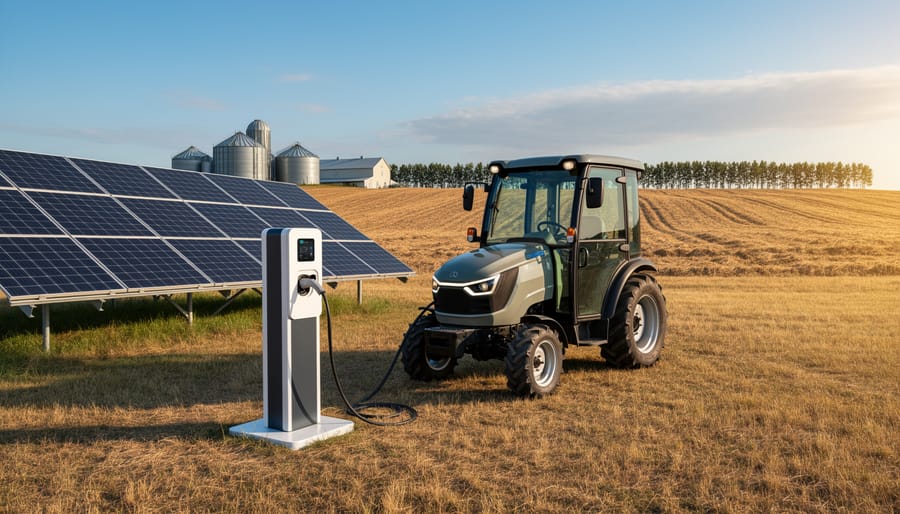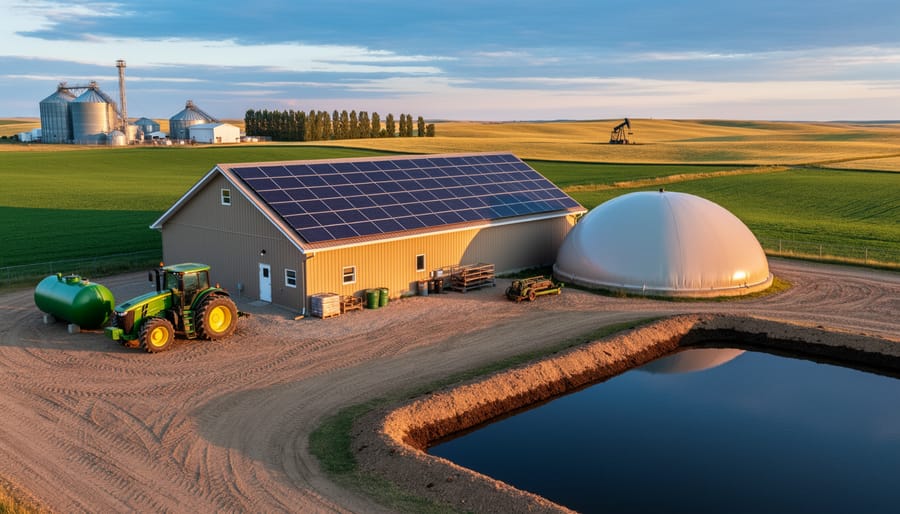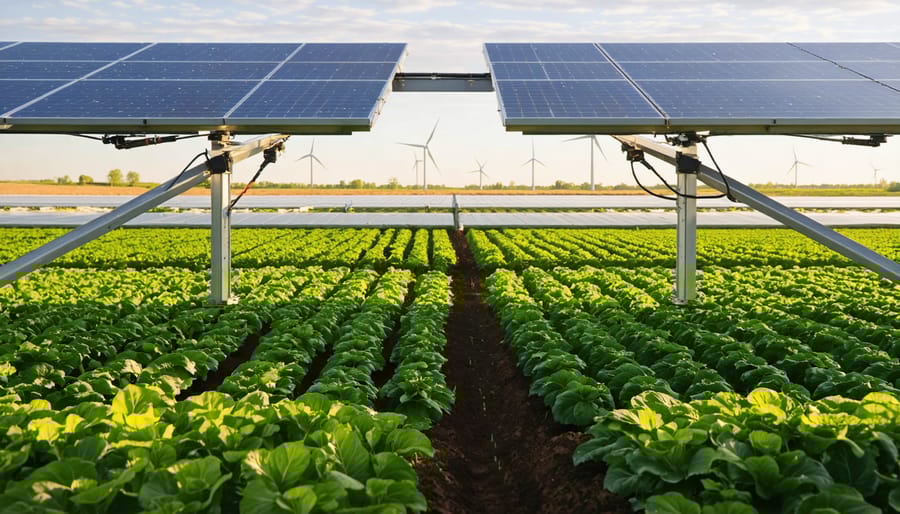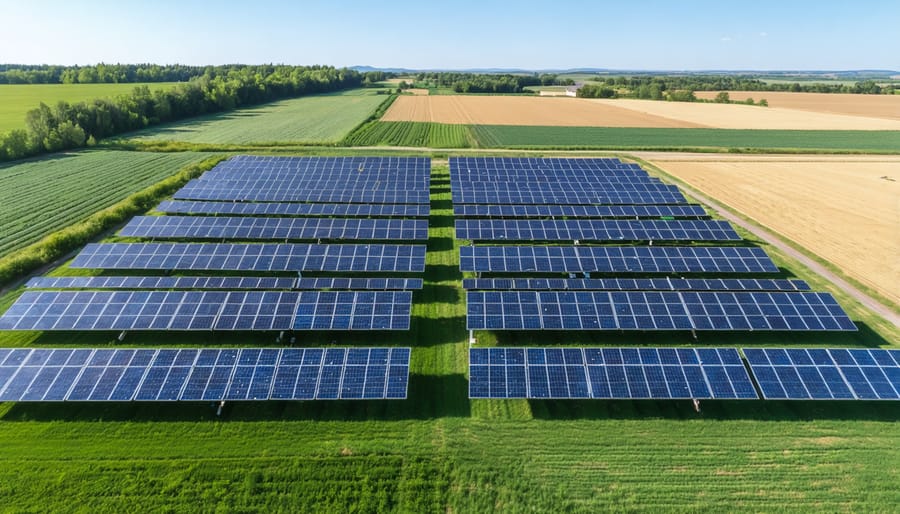
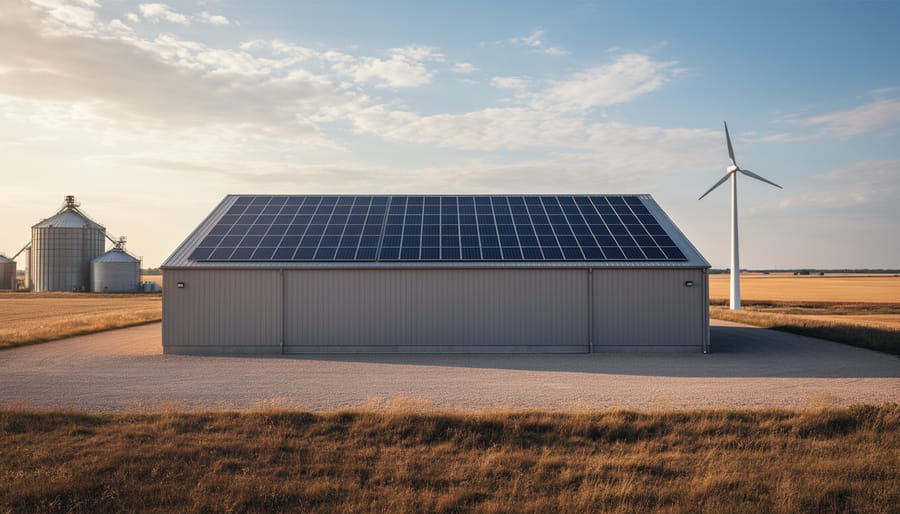
Integrate solar panels on your grain dryer or barn roof to cut electricity costs by 40-60% during peak harvest season. Prairie farmers near Lethbridge have documented annual savings of $8,000-$12,000 by powering ventilation fans and conveyor systems with 25-30 kilowatt rooftop installations that generate power even during Alberta’s shorter winter days.
Install wind turbines in exposed field locations where average wind speeds exceed 4.5 metres per second. A 10-kilowatt turbine can power cold storage units for potato or vegetable operations, with Alberta producers reporting payback periods of 7-9 years when combining provincial rebates with reduced grid dependency.
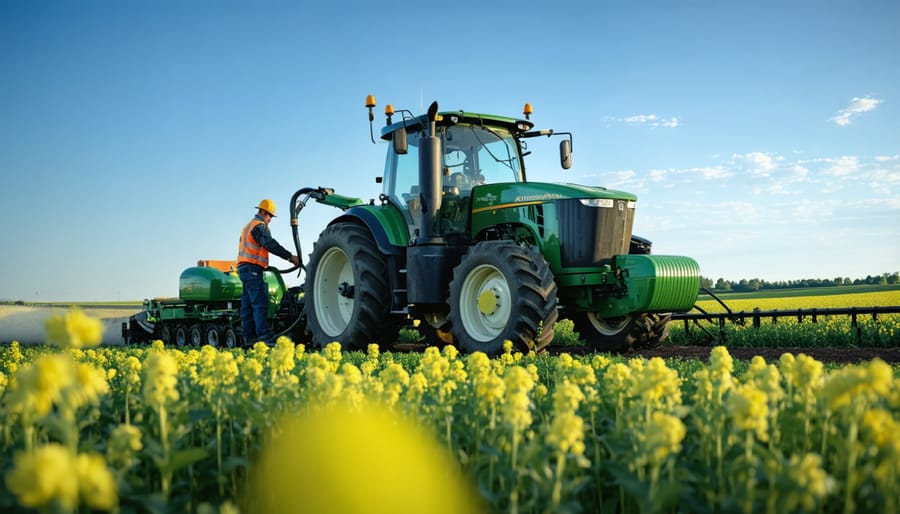
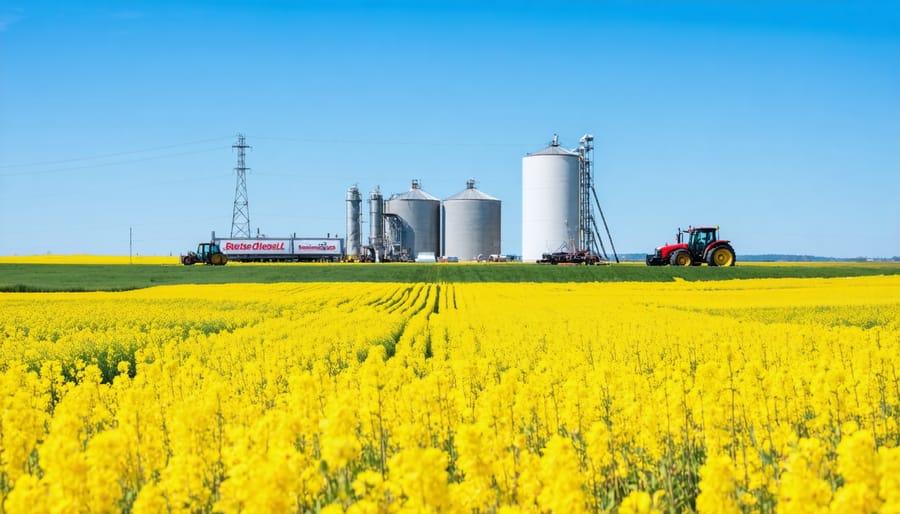
Convert organic waste from livestock operations into biogas using anaerobic digesters that simultaneously produce renewable electricity and reduce methane emissions. Dairy farms in central Alberta running 200-head operations generate enough biogas to power their entire milking parlour refrigeration systems while creating nutrient-rich fertilizer as a byproduct.
Retrofit existing cold storage facilities with geothermal heat pump systems that maintain consistent 2-4°C temperatures using 50% less energy than conventional refrigeration. Saskatchewan potato growers have demonstrated that shallow horizontal ground loops work effectively in prairie conditions, with installation costs recovered through energy savings within 10-12 years.
These renewable solutions address the dual challenge facing Canadian agriculture today: rising operational costs and increasing pressure to reduce carbon footprints. The cold chain represents your farm’s largest energy expense, making it the ideal starting point for renewable integration that delivers measurable financial returns while building long-term sustainability.
Why Your Cold Chain is Draining Your Profits
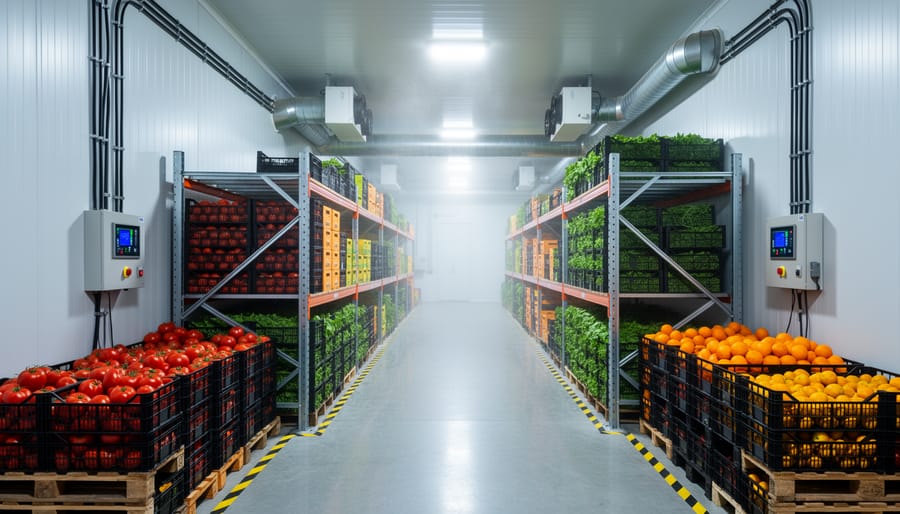
The Real Cost of Conventional Cooling
For most Alberta farms operating cold storage facilities, conventional cooling represents one of the largest line items on the electricity bill. During peak summer months, when harvest season coincides with maximum cooling demand, energy costs can surge 40-60% above winter baselines. A typical mid-sized operation running 500 cubic metres of cold storage might consume 3,000-4,500 kWh monthly during July and August alone.
The challenge intensifies in rural areas where electricity rates often include delivery charges that sometimes exceed the actual energy costs. Many farmers report paying 18-22 cents per kWh when all fees are calculated, compared to urban rates of 12-15 cents. This rural penalty adds thousands annually to operating expenses.
Grid dependency creates another hidden cost: vulnerability to rate increases. Over the past decade, Alberta electricity prices have fluctuated dramatically, making long-term financial planning difficult. One Peace Country vegetable grower we spoke with saw his cooling costs jump 35% in just two seasons, despite no change in usage patterns.
Seasonal demand charges pose additional concerns. Utilities often charge premium rates during afternoon peak hours when solar gain and ambient temperatures force cooling systems to work hardest. For farms storing temperature-sensitive crops like berries or leafy greens, there’s no option to shift usage to cheaper overnight periods without risking product quality.
These compounding factors make conventional cooling increasingly unsustainable for farms focused on long-term profitability. Understanding these cost patterns is the first step toward exploring renewable alternatives that offer greater control over energy expenses.
What Makes Agricultural Cold Chains Different
Farm-based cold storage faces distinctly different challenges compared to commercial warehouse operations, and understanding these differences is essential for choosing the right renewable energy solutions.
The most significant factor is the harvest cycle. Unlike commercial facilities with steady, year-round cooling demands, agricultural cold storage experiences dramatic seasonal peaks. When harvest arrives, your cooling infrastructure needs to handle massive volumes quickly—often within days. This creates intense energy demands during specific periods, typically late summer and fall in Alberta, which actually aligns well with peak solar production hours.
Scale considerations also set farm operations apart. While commercial cold storage facilities might handle thousands of tonnes continuously, most farm operations need flexible capacity ranging from 10 to 500 tonnes. This smaller, more variable scale means your renewable energy system must be right-sized to avoid unnecessary investment while still meeting peak demands. Many Alberta producers are finding success with modular solar installations that can expand as operations grow.
Rural infrastructure presents unique challenges that urban facilities never encounter. Limited grid capacity in agricultural areas means power interruptions can threaten entire harvests. Distance from electrical substations often results in higher connection costs and voltage irregularities. These limitations actually strengthen the case for on-site renewable energy generation, providing both backup power and grid independence.
Weather exposure is another critical factor. Farm cold storage facilities endure Alberta’s temperature extremes—from minus 40°C winters to plus 30°C summers—requiring robust insulation and climate-adapted renewable systems. Your energy solution must perform reliably through these conditions while maintaining consistent internal temperatures to preserve crop quality and market value.
Renewable Energy Options That Actually Work on Farms
Solar Power for Year-Round Cooling
Photovoltaic systems offer Canadian farmers a practical solution to offset the substantial energy costs of year-round cold storage. In Alberta, where sunshine hours average 2,300 annually—higher than many Canadian provinces—solar panels can generate significant electricity even during winter months when cooling demands remain constant for root cellars, potato storage, and meat processing facilities.
Alberta’s seasonal performance patterns show solar panels producing peak output during summer months (May through August), conveniently aligning with increased cooling needs for fresh produce storage. Winter production drops to approximately 20-30% of summer levels, but modern cold storage facilities still benefit from offsetting daytime energy consumption. Farmers considering solar power investment should plan systems sized to meet baseline cooling loads while drawing from the grid during peak demand periods.
Battery storage integration presents both opportunities and challenges for agricultural operations. While lithium-ion battery systems can store excess summer production for evening use, the upfront costs remain substantial—typically adding $10,000 to $25,000 for farm-scale installations. Many Alberta farmers find greater value in net metering programs, which credit excess solar production back to their utility accounts, effectively using the grid as virtual storage.
Cost-benefit analysis for a typical 10-kilowatt solar installation shows promising returns. Initial investment ranges from $18,000 to $25,000 after federal incentives, with annual electricity savings of $1,500 to $2,500 for cold storage operations. Most systems achieve payback within 8-12 years, then provide decades of reduced operating costs. Alberta farmer Dale Henderson reduced his cold storage electricity bills by 65% after installing a 15-kilowatt system, demonstrating real-world viability for producers committed to long-term sustainability and energy independence.
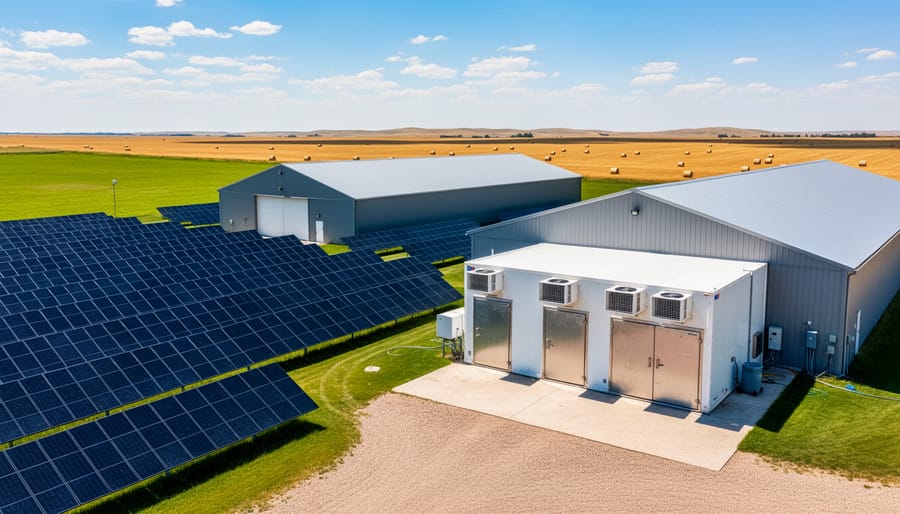
Wind Energy and Farm Cold Storage
Small-scale wind turbines present a practical opportunity for Canadian farms, particularly in Alberta where average wind speeds of 4-6 metres per second support reliable energy generation. Modern agricultural wind systems typically range from 10 to 100 kilowatts, sufficient to power cold storage facilities that demand consistent electricity for refrigeration and freezing operations.
Prairie locations with minimal wind obstructions make ideal candidates for wind energy for agriculture, especially farms already operating cold storage for produce, dairy, or meat processing. These turbines integrate seamlessly with existing cooling infrastructure through grid-tied systems that reduce utility dependence during peak production periods.
A southern Alberta vegetable operation recently installed a 50-kilowatt turbine that now covers 60 percent of their cold storage energy needs, cutting monthly electricity costs by approximately $1,800 during harvest season. The system also provides backup power reliability, critical for maintaining product quality during outages.
Initial investment typically ranges from $50,000 to $150,000 depending on turbine size, with federal and provincial incentive programs offsetting 25-40 percent of installation costs. Most agricultural wind systems achieve payback within 8-12 years while providing 20-25 years of service life, making them financially viable for operations with substantial cooling requirements.
Biogas from Farm Waste
Turning farm waste into power creates a win-win scenario for Alberta producers. Bioenergy from farm waste transforms manure, crop residues, and spoiled feed into methane-rich biogas through anaerobic digestion. This renewable fuel can directly power refrigeration units, cooling facilities, and grain dryers while addressing waste management challenges.
A typical 100-cow dairy operation in central Alberta can produce enough biogas to offset 30-40% of its cold storage energy needs. The process works year-round, even in harsh winters, with insulated digesters maintaining optimal temperatures. Beyond energy production, the system generates nutrient-rich digestate that serves as high-quality fertilizer, reducing input costs.
Grant McRae, a livestock producer near Red Deer, installed a small-scale digester in 2021. He reports annual savings of $8,000 on electricity while eliminating manure storage issues. The system paid for itself in seven years through combined energy savings and improved nutrient management.
Start small with feasibility assessments through programs like the Canadian Agricultural Partnership. Many Alberta producers begin with micro-digesters handling 5-10 cubic metres of waste daily, scaling up as they gain experience with this circular approach to farm energy management.
Real Alberta Farms Making the Switch
Case Study: Southern Alberta Vegetable Operation
When Derek Chen purchased his 50-acre vegetable operation near Lethbridge in 2019, electricity costs for cold storage were eating into his margins. His potato, carrot, and onion crops required year-round cooling, and his monthly power bills averaged $2,400 during peak summer months.
After attending a renewable energy workshop, Derek decided to transition his 930-square-meter cold storage facility to solar power. He partnered with a Calgary-based installer who designed a 75-kilowatt system with battery storage to maintain consistent temperatures overnight and during cloudy periods.
The installation took three weeks in spring 2021. The total project cost came to $98,000, with Derek securing a $25,000 grant through a federal agricultural sustainability program and financing the remainder through his farm credit line. The system included 200 solar panels mounted on a south-facing equipment shed and a 50-kilowatt-hour battery bank.
The results exceeded expectations. Derek’s electricity costs dropped by 82 percent in the first year, saving approximately $23,000 annually. The system has performed reliably through Alberta’s variable weather, with the battery storage proving essential during winter months when daylight hours are limited.
Derek’s key advice for other farmers considering solar integration: “Start with an energy audit to understand your actual consumption patterns. We discovered our old cooling units were inefficient, so we upgraded those first. The combination of efficient equipment and solar power made the economics work much better than solar alone would have.”
The system should pay for itself within four years, after which Derek expects decades of reduced operating costs.
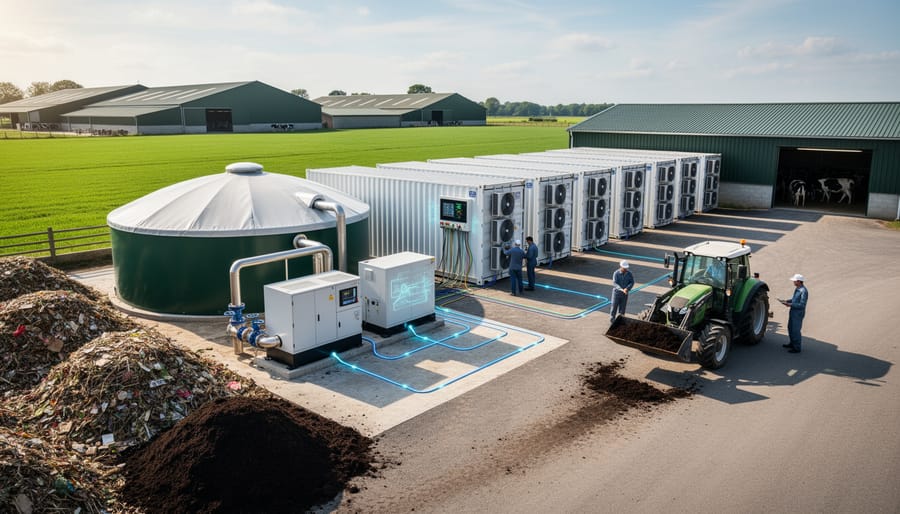
Case Study: Mixed Farm with Biogas Integration
The Ridgeview Mixed Farm near Red Deer, Alberta, demonstrates how biogas technology can transform waste into valuable energy for agricultural operations. Owner Marcus Chen partnered with his dairy and grain operation to install a 150-cubic-meter anaerobic digester in 2021, processing manure from 200 head of cattle.
The system design centers on a heated digester tank that breaks down manure in oxygen-free conditions, producing methane-rich biogas. This gas feeds directly into a modified generator that powers the farm’s three refrigeration units, including a 280-square-meter cold storage facility for vegetables and a dairy cooling system. Excess electricity flows back to the farm’s main power grid, reducing overall energy consumption by 65 percent.
“We were spending about $2,400 monthly on electricity for our cooling operations alone,” Chen explains. “The biogas system cut that to roughly $850, and we’re producing fertilizer as a bonus byproduct.”
The initial investment totaled $185,000, with federal and provincial grant programs covering $67,000. Chen expects full payback within seven years based on current energy savings and reduced fertilizer purchases. The digester produces approximately 20 tonnes of nutrient-rich digestate annually, which he applies to his grain fields.
The system requires about 45 minutes of daily monitoring and quarterly maintenance checks. Chen recommends farmers consider biogas integration when they have consistent manure volumes exceeding 15 tonnes weekly and year-round refrigeration needs. Winter operation in Alberta requires additional insulation investment, adding roughly $12,000 to setup costs but ensuring reliable cold-weather performance.
Getting Started: Your Implementation Roadmap
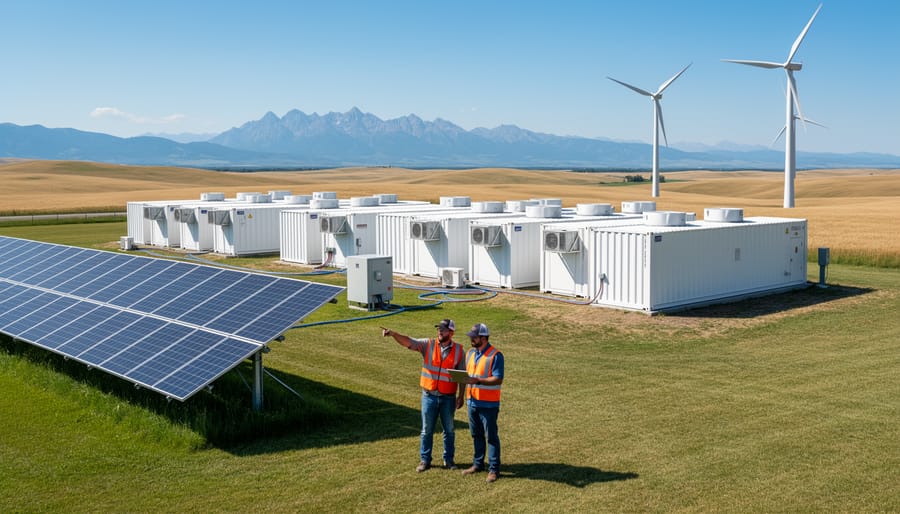
Assessing Your Current Energy Use
Before transitioning to renewable energy, you need a clear picture of your current cold storage energy consumption. Start by gathering 12 months of utility bills to identify seasonal patterns and peak demand periods. Alberta farmers often see significant spikes during harvest season when cooling demands intensify.
Walk through your facility with a checklist. Document your refrigeration equipment specifications, including compressor sizes, age of units, and insulation quality. Note lighting types, door seals, and ventilation systems. Many agricultural operations discover that outdated equipment accounts for 30-40% of unnecessary energy costs.
Calculate your baseline energy consumption in kilowatt-hours per cubic metre of storage space. This metric helps you compare your operation against industry standards and measure future improvements. For example, Lethbridge vegetable producer Sarah Chen reduced her monthly consumption from 180 kWh to 95 kWh per cubic metre after identifying inefficiencies.
Consider hiring an energy auditor familiar with agricultural operations. Agriculture and Agri-Food Canada offers resources and sometimes cost-sharing programs for professional assessments. These experts use thermal imaging and monitoring equipment to pinpoint heat leaks and inefficient systems you might miss.
Document everything in a simple spreadsheet. This baseline becomes your roadmap for renewable integration and helps justify investment decisions to lenders or family members involved in farm management.
Sizing Your Renewable System
Getting your system size right means avoiding costly over-investment while ensuring you have enough capacity when you need it most. Start by calculating your peak cooling demand—typically during harvest season when storage facilities run at maximum capacity. Review at least two years of electricity bills to identify your highest consumption months.
Alberta’s seasonal temperature swings require careful planning. Your solar array will produce significantly less during winter months (approximately 30-40% of summer output), so factor this into your calculations if you operate year-round cold storage. A dairy farmer near Red Deer found that sizing their solar system to cover 70% of summer cooling needs, rather than 100%, provided the best return on investment while still delivering substantial savings.
Don’t forget to account for growth. If you’re planning to expand storage capacity within five years, design your renewable infrastructure with modular expansion in mind. Most solar arrays and wind systems can be increased incrementally without redesigning the entire setup.
Consider hybrid approaches too. Combining solar panels for daytime cooling with grid power for nighttime operations often proves more economical than battery storage systems. Local energy advisors familiar with Alberta’s agricultural sector can help you model different scenarios based on your specific operation and budget.
Funding and Incentives in Canada
Canadian farmers have access to several funding streams that can significantly reduce the upfront costs of renewable energy projects. At the federal level, Agriculture and Agri-Food Canada offers the Canadian Agricultural Partnership program, which provides cost-sharing grants for on-farm infrastructure improvements, including solar installations and biogas systems. Eligible projects can receive up to 50 percent funding support, making renewable energy adoption much more accessible.
The Federal Business Development Bank and Farm Credit Canada both offer green financing options with favorable terms specifically designed for agricultural renewable energy projects. These loans often feature lower interest rates and extended repayment periods that align with energy savings timelines.
In Alberta, the Municipal Climate Change Action Centre provides grants through the Community Energy Transition Incentive program, which supports solar and energy efficiency upgrades. Alberta farmers can also benefit from Emissions Reduction Alberta programs that fund innovative clean technology demonstrations, particularly for biogas and waste-to-energy systems.
The federal government’s Accelerated Capital Cost Allowance allows farmers to write off renewable energy equipment costs faster, improving cash flow during the critical first years. When combined with provincial programs and utility rebates, these incentives can cover 40 to 60 percent of total project costs, making the transition to renewable energy economically viable for operations of all sizes.
Expert Insights: What Canadian Agricultural Engineers Recommend
Canadian agricultural engineers who specialize in renewable energy integration consistently emphasize starting with an energy audit before investing in any alternative energy system. “Many farmers are surprised to discover that upgrading insulation and sealing air leaks in their cold storage facilities can reduce energy needs by 20-30 percent,” explains Dr. Michael Chen, an agricultural engineer who has worked with over 40 Alberta farms on renewable energy projects. “This makes your eventual solar or wind installation much more cost-effective because you need fewer panels or a smaller turbine.”
For Alberta’s specific climate conditions, engineers recommend hybrid systems that combine multiple renewable sources. Sarah Thompson, a renewable energy specialist based in Lethbridge, notes that solar panels paired with propane backup have proven particularly reliable for cold chain operations. “Solar performs exceptionally well during our long summer days, and modern battery storage can carry you through shorter winter days. The propane backup ensures you never risk product loss during extended cloudy periods.”
Sizing your system correctly ranks as the most critical technical consideration. Engineers caution against both undersizing, which leaves you dependent on grid power during peak times, and oversizing, which extends your payback period unnecessarily. “We use historical energy consumption data combined with future growth projections,” says Chen. “For most cold storage operations in Alberta, we’re looking at systems that cover 60-80 percent of annual energy needs through renewables, with grid or backup power filling the gaps.”
Both experts stress the importance of working with engineers familiar with agricultural applications rather than residential solar installers. Agricultural cold storage has unique requirements including three-phase power, higher voltage systems, and different usage patterns than residential applications. Thompson adds, “The provincial and federal incentive programs change regularly, so connecting with engineers who stay current on available funding can significantly impact your project economics. We’ve seen farmers reduce their upfront costs by 30-40 percent through properly structured applications.”
Overcoming Common Obstacles
Managing Winter Performance
Alberta’s winter temperatures, regularly dropping below -30°C, demand strategic planning to keep your cold storage systems running efficiently when solar production decreases. The good news? Several proven approaches can maintain reliable operations during these demanding months.
Battery storage systems serve as your primary buffer, storing excess solar energy generated during longer summer days for winter use. Southern Alberta producer James McKenzie shared that his 100 kWh battery bank covers approximately 60% of his winter cold storage needs, with grid power supplementing during extended cloudy periods. “The key is sizing your system based on your worst-case winter scenario, not your average needs,” he explains.
Hybrid systems combining solar with wind turbines offer another effective solution. Winter winds across the prairies often peak when solar production drops, creating a natural complement. Agricultural energy consultant Dr. Patricia Chen recommends evaluating your site’s wind resources alongside solar potential during the planning phase.
Improving cold storage insulation before winter reduces overall energy demands significantly. Many Alberta farmers report 20-30% energy savings after upgrading to higher R-value insulation and installing thermal curtains in loading areas. Load management strategies, like scheduling non-critical cooling tasks during peak solar hours and maintaining slightly higher temperatures when possible, also help stretch your renewable energy further through winter months.
Backup Systems and Grid Connection
While renewable energy offers significant independence, most Alberta farms benefit from maintaining grid connectivity as a reliable backup. Hybrid systems—combining solar or wind with grid power—ensure your cooling operations never face interruptions during low-production periods or equipment maintenance. This approach provides peace of mind during critical harvest seasons when refrigeration downtime could mean substantial crop losses.
Net metering programs available through many Alberta utilities allow you to sell excess power back to the grid, effectively using it as a giant battery. During peak production hours, your solar array might generate more electricity than your cold storage requires, earning credits that offset nighttime power consumption. This arrangement can reduce payback periods by 15-30% compared to off-grid systems.
Pairing renewables with energy storage solutions like lithium-ion batteries creates additional flexibility. Manitoba farmer Jennifer Kowalski reports her hybrid solar-battery-grid system maintains 99.9% uptime while cutting annual energy costs by $12,000. Start by consulting with a qualified energy advisor who understands agricultural operations to design a system matching your specific reliability needs and budget constraints.
Integrating renewable energy into your agricultural cold chain operations delivers measurable benefits for both your bottom line and the environment. Canadian farmers who have made this transition report energy cost reductions of 30-70%, with most systems achieving payback periods within 7-12 years. Beyond the financial gains, you’re contributing to a more sustainable agricultural sector while gaining greater energy independence and stability in your operations.
Taking the first step doesn’t require a complete overhaul of your existing infrastructure. Start by conducting an energy audit of your current cooling systems to identify where renewable solutions could deliver the greatest impact. Many Alberta farmers begin with a single solar array or small wind turbine installation, then expand as they gain confidence and see results. This incremental approach reduces financial risk while allowing you to learn what works best for your specific operation.
You don’t have to navigate this transition alone. Alberta’s agricultural community offers extensive support networks, from local renewable energy cooperatives to provincial agricultural extension services. These resources connect you with farmers who have successfully implemented sustainable farm solutions, providing valuable peer-to-peer learning opportunities. Many financing programs and grants specifically target renewable energy adoption in agriculture, making your investment more accessible than ever. The path to a more efficient, sustainable cold chain starts with a single practical decision—reach out to your local agricultural network today and explore the options that align with your farm’s unique needs and goals.