An economic threshold is the pest or disease level at which the cost of controlling it matches the crop loss you’d otherwise take, which makes it your signal to spray or to hold off. Cross it, and action pays for itself. Stay under it, and waiting is usually the smarter, cheaper call.
That’s the whole idea, and it’s a good one. Instead of reacting to the first insect you spot or spraying on a calendar, you compare what’s in the field against a number that’s been worked out from crop value, control costs, and expected yield loss. For a Prairie grower scouting canola or wheat in a busy June, that turns a gut-feel decision into a repeatable one, measured in things you can count, like insects per sweep or per square metre.
The threshold isn’t a prediction or a promise. It’s a decision rule, and it works best when you pair it with timely scouting, a proper count, and an eye on crop stage and weather.
Below, we’ll cover how thresholds are built, where they apply and where they don’t, what you’re responsible for as the grower, and a scouting routine you can use this season. We’ll also point you to the provincial and industry sources that publish current numbers, since those figures get revised as research and crop values change.
What an Economic Threshold Is and How It Fits Into IPDM Decision Rules
Threshold Terms in Plain Language
Three terms get tossed around a lot, and they’re easy to mix up. Here’s how they fit together.
The economic injury level (EIL) is the pest density where the crop damage costs you about the same as the control would. Cross it, and you’re losing money by doing nothing.
The economic threshold (ET) sits lower. It’s the density at which you should act so the pest doesn’t reach the EIL. Think of the economic threshold below injury as your early warning, set low enough to leave time for the spray to work and for the pest population to keep growing in the meantime.
The action threshold is the number you actually use in the field. Many growers and advisors treat it as the same thing as the ET, though some set it a touch lower to build in a buffer for weather delays or a busy spraying window.
In a field-level decision, it looks like this: you count pests, compare your count to the action threshold, and decide whether to act. The EIL stays in the background as the line you’re trying never to cross. Because thresholds depend on crop value, input cost and stage, always confirm the current numbers for your crop with provincial guidance.
How the Decision Rule Works in the Field
A decision rule is a short, repeatable sequence you run the same way every time you scout. It keeps the call about the field in front of you rather than the calendar or your gut feeling.
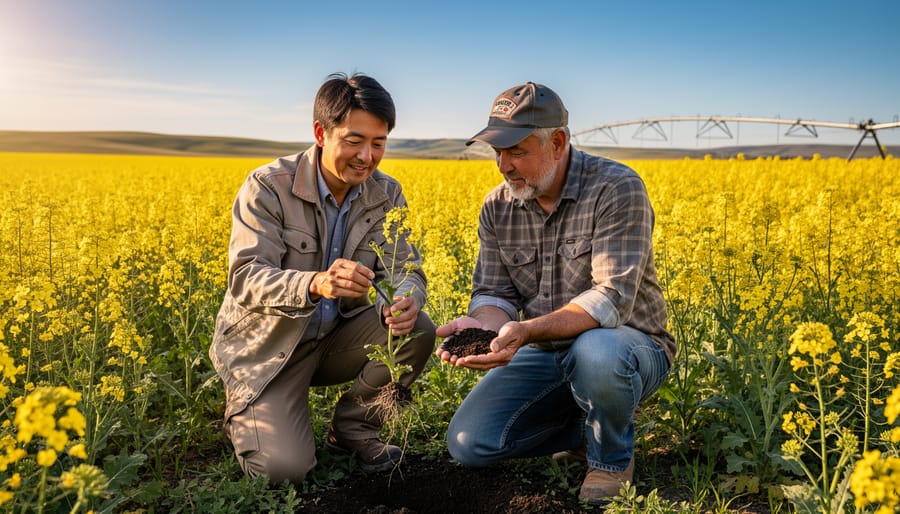
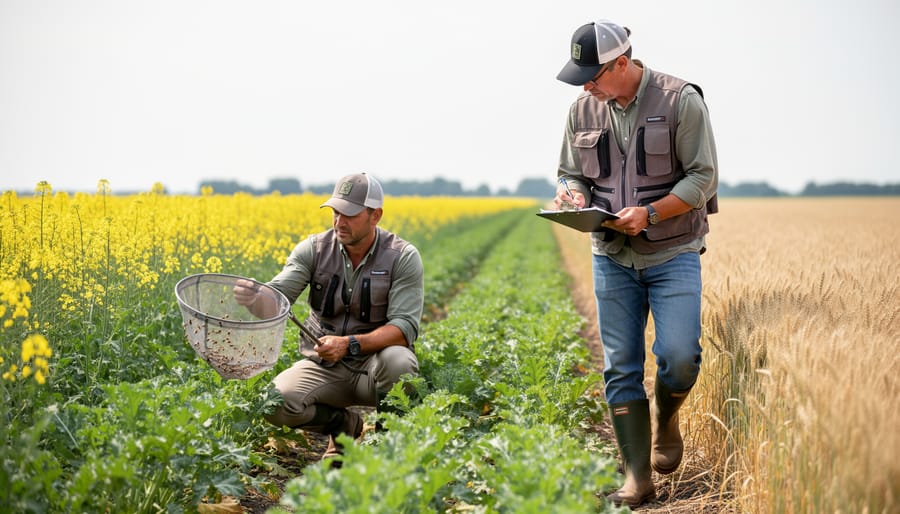
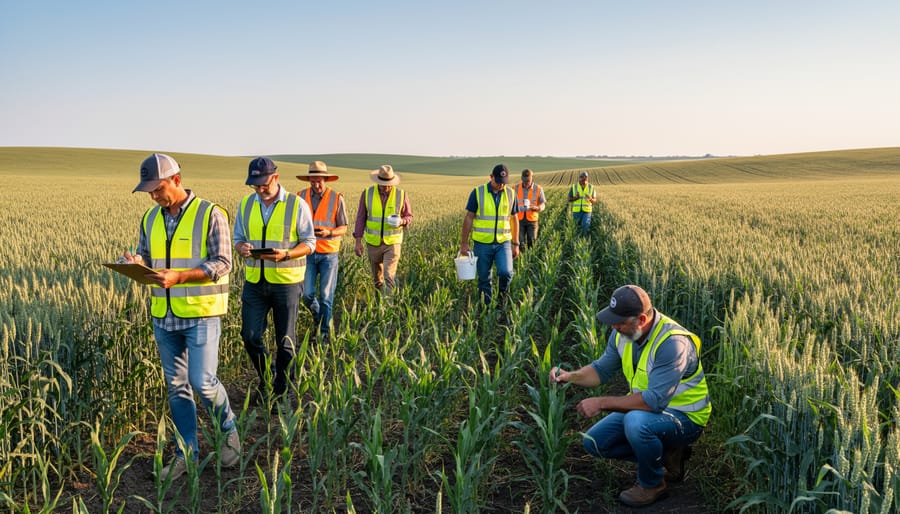
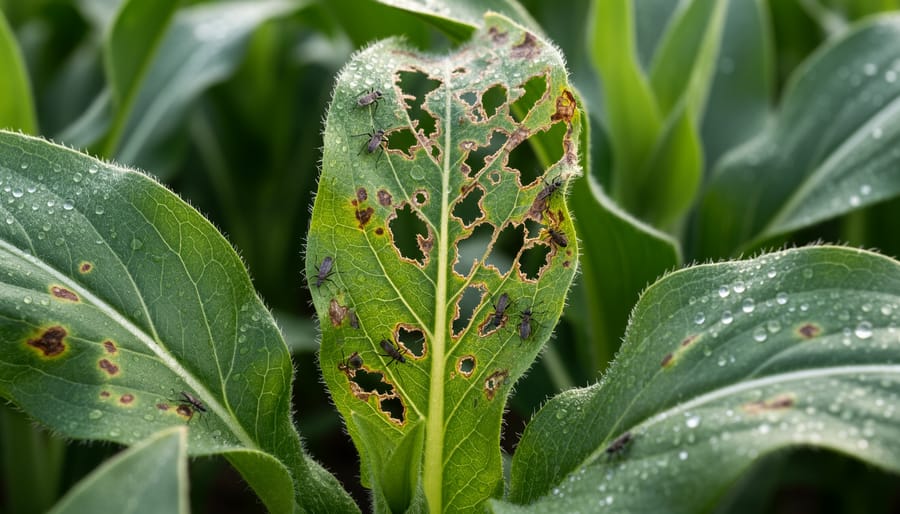
Start with scouting. Walk a consistent pattern across the field, stopping at several spots well away from the edges, and count what you find using the method recommended for that pest, such as insects per sweep or plants per square metre. Then confirm what you’re looking at. Misidentifying a harmless insect, or a pest that looks like another, is how a perfectly good threshold leads to the wrong decision.
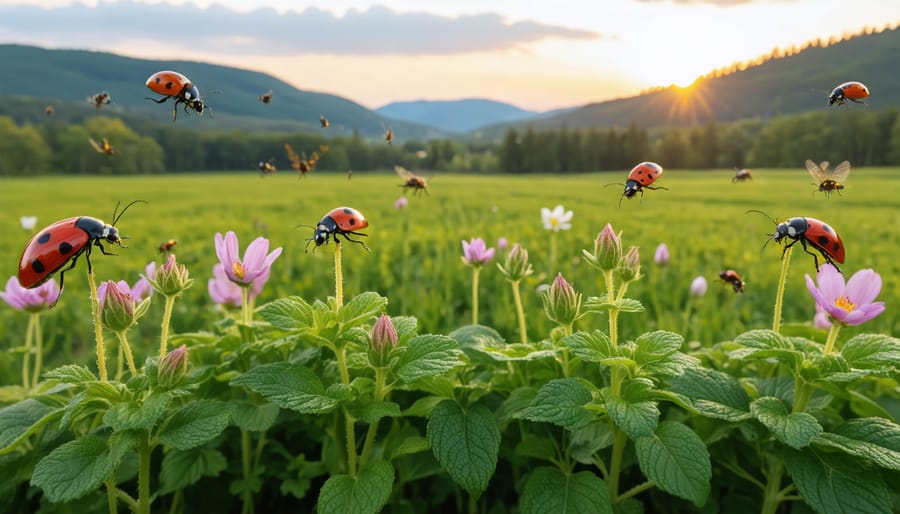
Next, compare your average count to the threshold for that crop and stage. If you’re well below it, hold off and note the date. If you’re at or near the action threshold, don’t spray on the number alone. Look at the crop first. A crop close to maturity may no longer be vulnerable, while a young, stressed crop can lose yield faster than the numbers suggest. Check for natural enemies too. Lots of lady beetles or parasitic wasps can pull a borderline population back without any help from you.
Then choose one of three paths: act, wait, or re-scout. When counts are rising but still under the line, re-scout in two or three days rather than a week, since pests can build quickly in warm weather. When counts are steady or falling, extend the interval. If you do act, follow the label on rate, timing and pre-harvest interval, then scout again afterward to see whether the treatment worked.
Write down each count and decision as you go. Over a few seasons, those notes become your best local reference.
Which Crops, Pests and Farms These Thresholds Suit
When a Fixed Threshold Doesn’t Exist
Not every pest or disease comes with a tidy number. Many diseases, fusarium head blight and sclerotinia stem rot among them, can’t be counted in the field the way grasshoppers can, because by the time symptoms show up, the damage is done. In those cases, growers lean on risk-based decision tools instead of a fixed threshold.
Start with field history. A canola field that had sclerotinia two years ago, or a tight rotation that keeps host crops coming back, carries a higher baseline risk. Then layer in weather: warm, humid conditions during flowering raise disease pressure, while a dry spell lowers it. Provincial risk maps and checklists pull these factors together so you can make a call at the right crop stage. Choosing pest-resistant varieties also lowers your exposure before the season even starts.
Those notes become your own local threshold data over time, which makes next year’s decision a little easier.
Your Rights and Responsibilities When Using Thresholds on the Farm
One of the best parts of working with thresholds is the freedom they give you. As a Canadian grower, you get to decide how to manage your own fields, and a threshold lets you base that call on what you actually counted rather than on habit or a calendar date. That freedom comes with a handful of practical responsibilities, and most of them are simply good farming.
If you decide a spray is warranted, the product label is your rulebook. It sets the rate, the crop stage, the timing, the pre-harvest interval and any buffer zones around water or sensitive areas. Following it protects your crop, your marketability and your neighbours. Reading it every time, even for a product you’ve used for years, is a habit worth keeping because labels get updated.
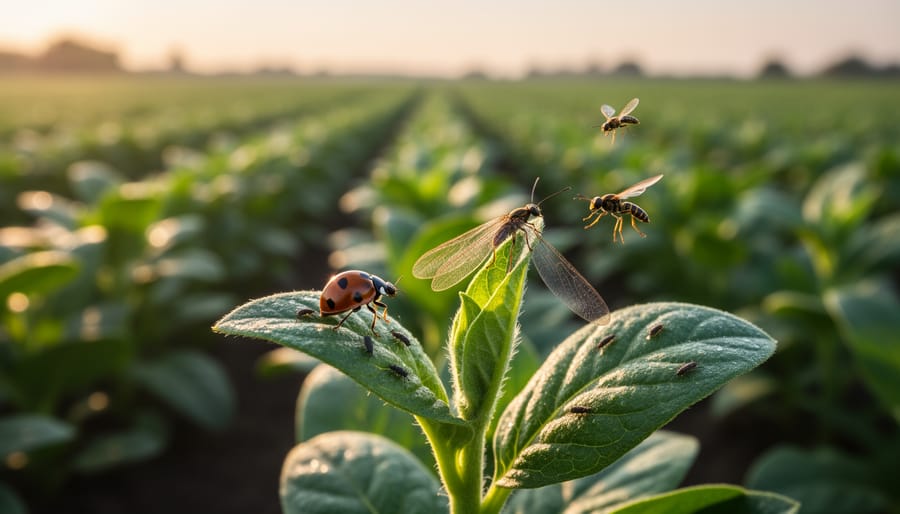
Protecting the helpers in your field is part of the job too. Pollinators and beneficial insects keep working for you long after the sprayer is parked, so think about when bees are foraging, avoid spraying open bloom where you can, and pick the timing that does the least collateral harm. Counting natural enemies during scouting makes this much easier to judge.
Here’s a simple checklist to keep handy:
- Follow the product label for rate, timing and crop stage.
- Observe buffer zones and pre-harvest intervals.
- Protect pollinators by avoiding spraying during bloom and peak foraging.
- Keep dated scouting and application records for every field.
- Check what your certification and contracts require before you act.
- Let neighbours know about planned applications when it makes sense.
Records deserve a special mention. A short note with the date, field, counts and what you decided takes a couple of minutes, yet it becomes your best reference next season and your proof if anyone ever asks why you acted or didn’t.
Being a good neighbour mostly comes down to drift and timing. Watch wind speed and direction, avoid spraying when conditions are marginal, and give a heads-up to the folks next door if you’re working near their fence line, gardens or beehives. A quick phone call goes a long way in a rural community.
Finally, stay aware of any requirements tied to your crop insurance, buyer contracts or organic certification. Some programs restrict certain products or ask for specific documentation, and the rules differ from one program to the next. Because those details change, treat your insurer, buyer or certifying body as the authority and confirm specifics with them directly, rather than relying on general guidance like this.
Putting Thresholds to Work: A Practical Scouting and Decision Routine for Alberta Fields
Common Slip-Ups and Easy Fixes
Even experienced scouts fall into a few habits that skew the numbers. The good news is that each one has an easy fix.
Sampling only the field edges is the most common. Edges often carry heavier pressure, so counts there can push you to spray a field that doesn’t need it. Fix: walk in at least 20 to 30 metres and sample several spots across the whole field in a W or zigzag pattern.
Scouting too late is another. By the time damage is obvious, you’ve missed the window to act. Fix: scout on a regular schedule tied to crop stage, so you catch pests while a decision still helps.
Ignoring beneficial insects can mean spraying away your own helpers. Fix: count them alongside the pests and weigh them in your call.
Skipping records leaves you guessing next season. Fix: jot down date, location, counts and your decision each visit.
The table below shows how decision guidance varies, which is why it pays to check what applies to your crop.
| Crop | Example pest or disease | What is typically scouted | Type of guidance |
|---|---|---|---|
| Canola | Flea beetles | Seedling feeding damage | Threshold |
| Cereals | Grasshoppers | Insects per square metre | Threshold |
| Wheat | Fusarium head blight | Weather, field history, crop stage | Risk assessment |
| Canola | Clubroot | Field history, resistant varieties | Preventive timing |
Confirm current numbers with provincial sources before you act.
Where to Get Help and Current Threshold Numbers
Thresholds aren’t carved in stone. They get revised as new research comes in, so the number you read in an old guide or a neighbour’s notes might not match what’s recommended today. Before you commit to a spray decision, check the figure against current provincial guidance. Here’s where Alberta growers can turn:
- Alberta Agriculture and Irrigation and the Ag-Info Centre: current thresholds, factsheets and a phone line for quick agronomy questions.
- Alberta Pest Surveillance Network: regional pest monitoring and risk updates to help you time scouting.
- Canola Council of Canada: crop-specific agronomy and canola pest guidance.
- Alberta Wheat and other grower commissions: research summaries and practical resources for their crops.
- Agriculture and Agri-Food Canada: federal research and pest information behind many threshold recommendations.
- Local agrologists and crop advisors: field-level advice that fits your soils, rotation and market.
- Local agricultural service boards and watershed groups: regional contacts and community knowledge.
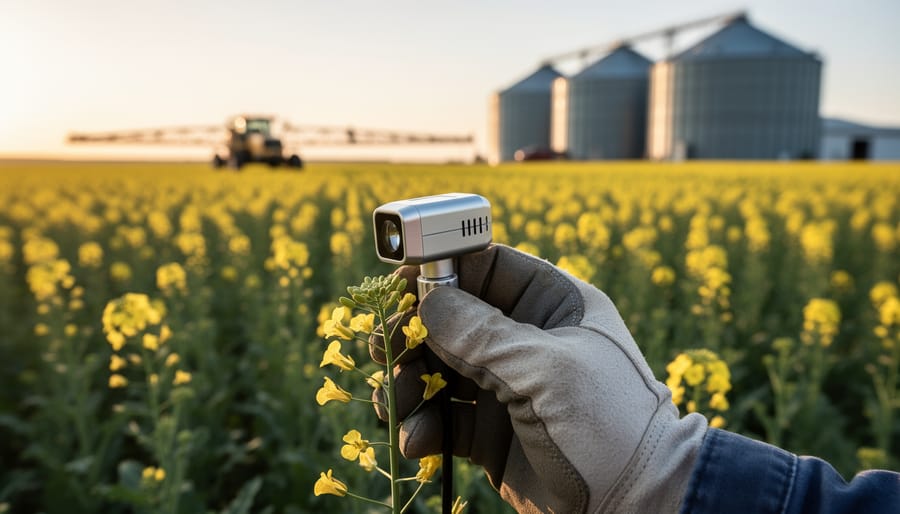
Good scouting data is only half the picture, so it also pays to understand what’s already working in your field. Learning how natural predators keep pest numbers in check can change how you read a count against a threshold. If you’re curious about newer tools, take a look at how smart sensors are helping Alberta farmers monitor pests more efficiently.
For ongoing learning, the Organic Farming, The Canadian Way workshops and podcasts are a friendly place to pick up practical IPDM ideas alongside other growers. Keep an eye on the site for what’s on offer. And don’t be shy about picking up the phone: someone in your local farming community has probably wrestled with the same decision.
Common Questions About Economic Thresholds
Here are some of the questions growers ask most, with plain answers you can use in the field.
Is an economic threshold the same as the point where I should spray?
Not quite. The economic threshold is the level where control starts to pay for itself, so you act once counts reach it or are clearly heading there. Many growers also use a slightly lower action threshold so there’s time to get the job done before losses add up.
What if I’m below the threshold but close?
Re-scout in a few days rather than spraying right away. Check how fast the pest is building, what stage the crop is at, and whether the weather favours it, then decide based on that trend.
Do thresholds apply to organic farms?
Yes, the logic works the same way. You’re still weighing cost against yield protected, but your control options are narrower, so watching counts early matters even more.
What if I find beneficial insects as well as pests?
That’s good news worth factoring in. Natural enemies can knock pest numbers back on their own, so note them in your scouting records and consider holding off if the pest population is near the threshold and the beneficials are active.
Two other questions come up a lot. How often should you scout? During the risk window for a given pest, a regular schedule works best, often every few days when numbers are climbing, and a consistent method beats a perfect one. And do thresholds change from year to year? They can, since research keeps refining them, so check current numbers with Alberta Agriculture and Irrigation or the Canola Council of Canada before you commit to a decision.
If something in your field doesn’t match any of these answers, a local agrologist or crop advisor can help you sort it out. Asking is part of how good decisions get made.
Economic thresholds take the guesswork out of a stressful call. Instead of reacting to every bug you spot or spraying “just in case,” you’ve got a clear line to measure against, and that confidence is worth a lot, both on your bottom line and in how you sleep in June. Every unnecessary pass saved means fuel, product and time back in your pocket. It also means the lady beetles, parasitic wasps and soil life working for you get to keep doing their jobs.
You don’t have to overhaul your whole operation to get started. Pick one field and one pest this season. Scout it well, count carefully, write the numbers down, and compare them to the current threshold from your provincial sources. By harvest, you’ll know more about that field than you did in spring, and that knowledge builds year over year.
And you’re not doing this alone. Your neighbours, local agrologists and crop advisors, and the broader farming community have seen things you haven’t yet, so ask questions and swap notes. If you’d like to see how thresholds fit into the bigger picture, take a look at how a pest management program comes together, then keep exploring the practical IPDM resources here on the site. Your fields, and your budget, will thank you.