MRV stands for measurement, reporting and verification, and an MRV protocol is the set of rules that tells you what to measure on your farm, how to record it, and how a third party confirms it’s accurate. If you want to earn carbon credits or get certified for a sustainability program, your MRV data is the evidence that makes it all count. Think of it as the paper trail behind every tonne of carbon dioxide equivalent (CO2e) a program recognizes.
In practice, that means keeping clear records of things like tillage passes, seeding dates, fertilizer rates in kilograms of nitrogen per hectare, grazing rotations and soil sampling results. A good protocol also spells out the units, timing and format for each data point, so a verifier can follow your numbers from the field to the final report.
Two things shape how smoothly this goes: data quality and interoperability. Clean, consistent records save you hours at verification time. And when your farm software can share data with a program’s platform without retyping everything, you spend less time on paperwork and more time farming.
Protocols don’t all line up yet, and the industry is working on that. This guide breaks down how MRV works in plain language, what to record and when, and how Alberta producers are putting it into practice.
What an MRV Protocol Actually Asks of Your Farm
How a Protocol Turns Field Records Into a Certifiable Claim
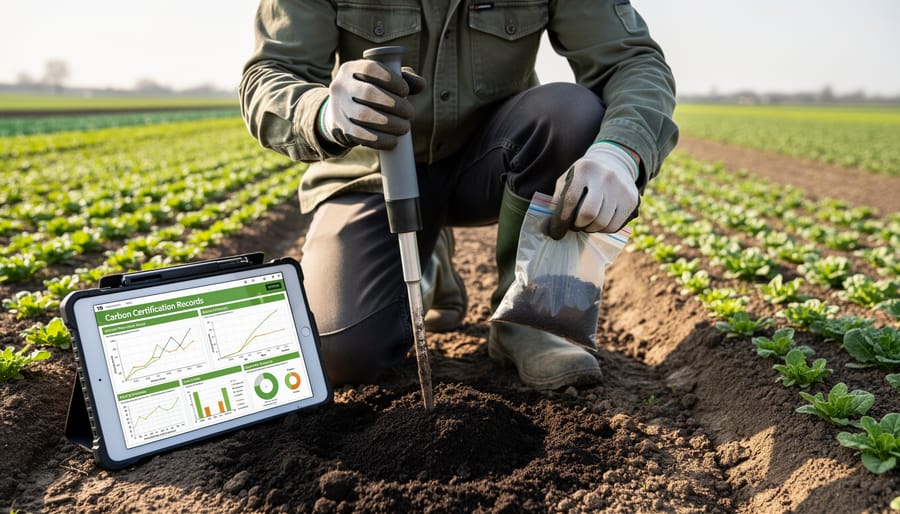
Everything starts with what happens in the field. Your seeding dates, tillage passes, input rates in kg/ha and soil sample results are the raw material, and the protocol decides which of those records count and how they must be documented. If you’re new to this, our MRV protocol basics guide covers the big picture.
Here’s the usual flow. First, the protocol defines your baseline, meaning what you were doing before the practice change. Then it sets the rules for recording the new practice: how you log a reduced-tillage pass or a cover crop seeding date, and what proof backs it up. Soil sampling comes next, and the protocol spells out sampling depth in cm, how many cores per field and which lab methods are acceptable.
From there, the protocol specifies how those records feed into a calculation, often a mix of measured data and a model. It also states how uncertainty gets handled, which is why a documented method matters. Practices like those described under NRCS soil health systems show the kind of field activity these rules are built around.
Finally, a verifier checks your records against the protocol. If everything lines up, the result is expressed as tonnes of CO2e per hectare, and that’s the number a program can certify.
What Counts as Good Data: The Quality Standards Verifiers Look For

Soil Sampling, Sensors and Satellite Data: Matching Method to Confidence
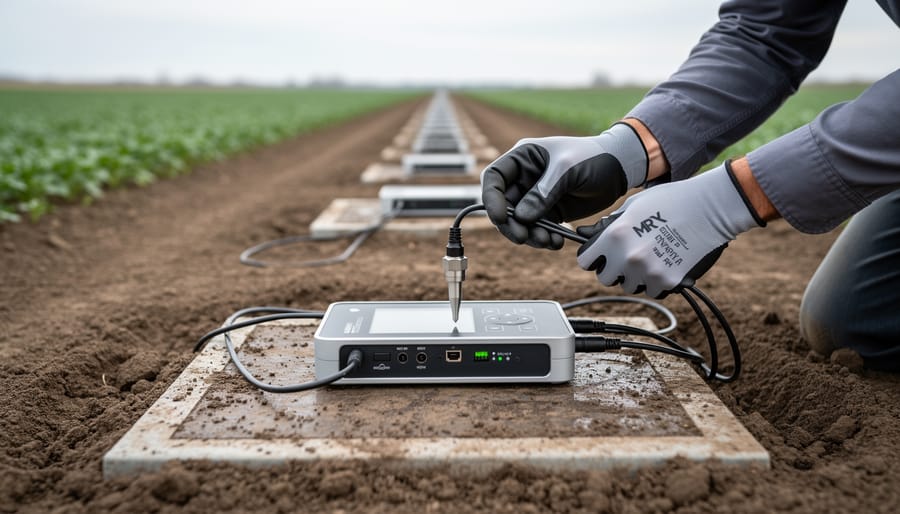
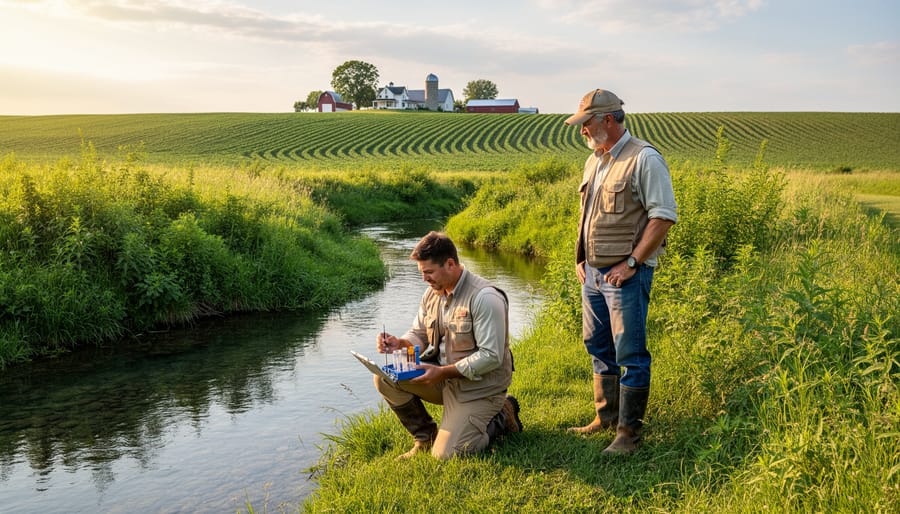
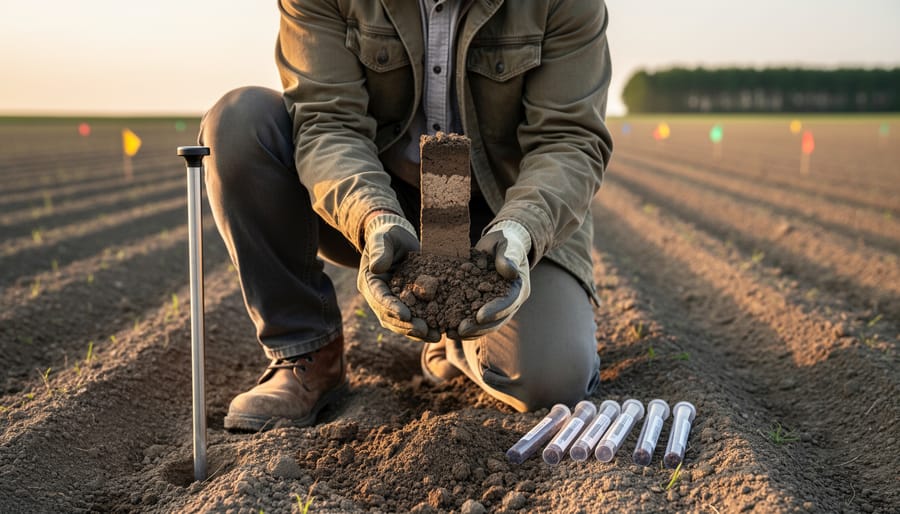
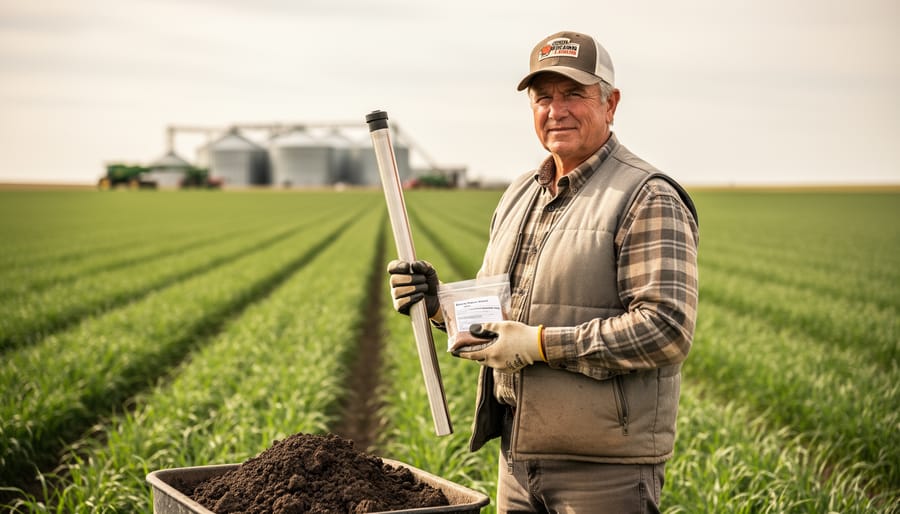
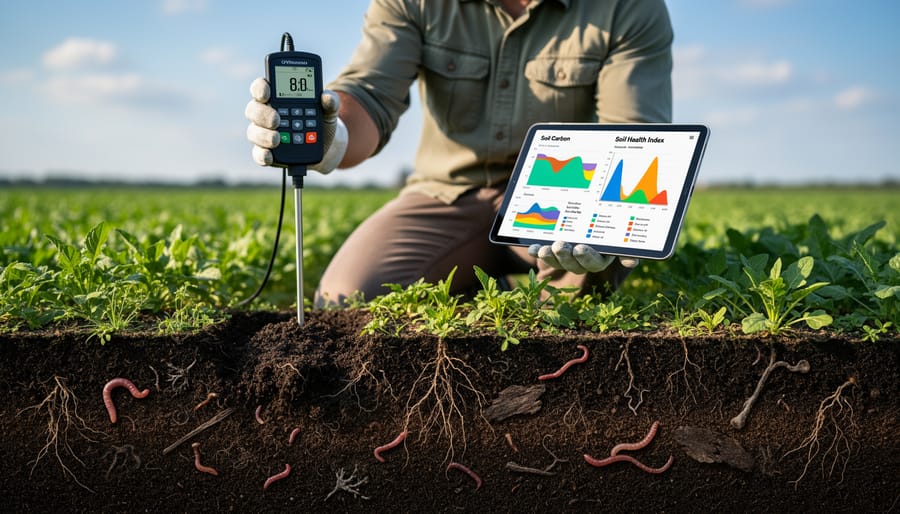
Direct soil sampling is the benchmark most protocols trust. A typical approach pulls cores to a set depth, often 0 to 30 cm, sometimes deeper, then sends composite samples to a lab for organic carbon and bulk density. Sampling density matters here: more cores per hectare, and a repeatable pattern across the field, narrows the uncertainty. It’s also the most expensive route, so many farms sample a representative subset of fields rather than every acre.
Modelling sits at the other end of the cost scale. Process-based models estimate carbon change from your management records, such as tillage passes, crop rotations and fertilizer in kg/ha. They’re affordable and scalable, but their precision depends on the quality of the inputs you feed them. A model run on vague records gives you a wide margin of error, no matter how sophisticated the software.
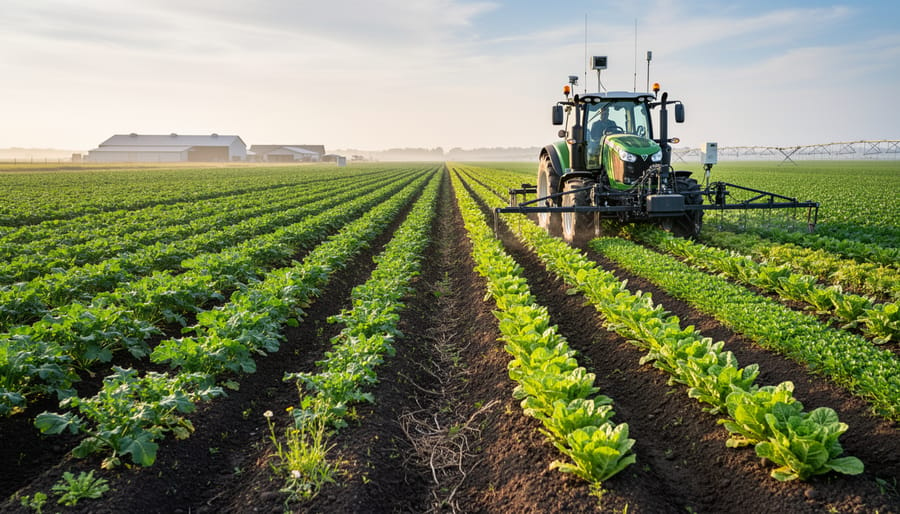
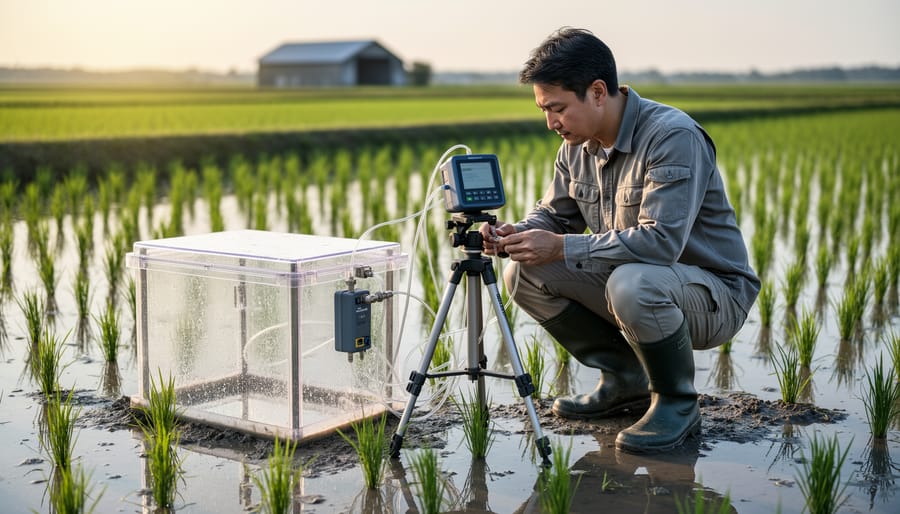
Remote sensing, including satellite imagery and on-field sensors, fills in the gaps. It can confirm cover crop presence, residue cover and crop growth across large areas at low cost. On its own, it rarely measures soil carbon directly, so protocols usually treat it as supporting evidence rather than the final word.
That’s why many protocols blend the three. Sampling anchors the model, and imagery verifies that the practices you reported actually happened. Protocols handle uncertainty differently, too. Some apply a discount to your credits when confidence is lower, while others set minimum sampling requirements before they’ll accept a claim.
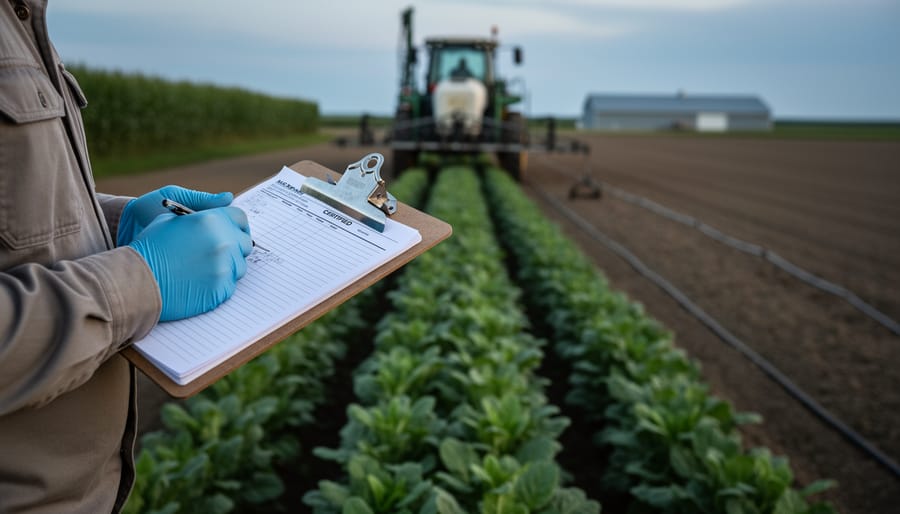
Whichever mix you choose, write down how you did it. Note your sampling depth, the number of cores, the dates, the lab and its methods, and the model version. A verifier can work with a modest method that’s well documented far more easily than a strong method with no paper trail.
Simple Habits That Keep Your Records Verification-Ready
Good records don’t need to be fancy. They need to be consistent, and most of that comes down to a few habits you can build into the season you already run.
Start with field names. Pick one label for each field and use it everywhere, from your seeding notes to your lab reports. “North Quarter” in one place and “NQ-12” in another is exactly the kind of mismatch that slows a verifier down.
Date every entry. A seeding pass, a tillage operation, a nitrogen application in kg/ha: each one should carry the day it happened, even if you jot it on a notepad in the truck and transfer it later.
Keep the paper trail. Hold onto input receipts, soil sample lab reports and any equipment or custom-application invoices. Snap a photo of each one the day you get it so nothing fades in a glovebox.
Back up your digital files in two places, such as a cloud folder and an external drive. It takes ten minutes a month.
Finally, note any change to field boundaries, rented land or ownership right when it happens. Building these small routines early is what gets you certification-ready records without a last-minute scramble.
Interoperability: Why Your Data Should Work Across Programs and Platforms
Data Ownership, Consent and Portability on Your Terms
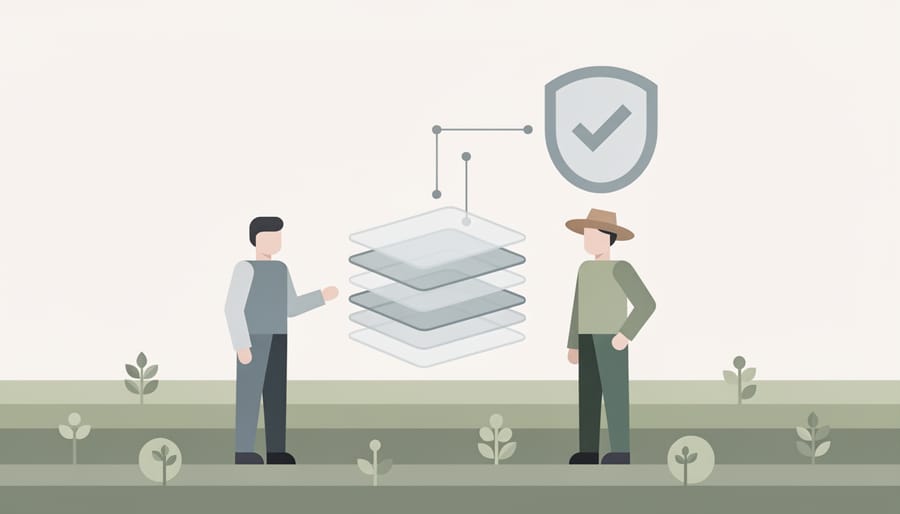
Your records belong to you, and a good MRV setup keeps it that way. Before you sign up with any platform or program, read the data-sharing agreement with a few simple questions in mind.
Start with ownership. The agreement should say plainly that you own the data you enter, including field boundaries, input records and lab results. Next, look at what you’re consenting to. Good agreements spell out who can see your data, for what purpose and for how long, and they let you adjust or withdraw consent later. Be cautious of broad wording that allows your data to be reused for unrelated purposes without asking you first.
It also helps to check three practical points:
– Can you export your records in a usable format, such as a CSV file or shapefile, rather than a locked PDF?
– What happens to your data if you leave the program or the company changes hands?
– Is information shared with verifiers and buyers in aggregated or anonymized form where possible?
Portability matters most when you want to switch tools or join a second program. If your yield maps, seeding dates and soil sample results can move with you, you won’t be re-entering years of records by hand. A short conversation with your advisor or a local farm organization can also help you interpret the fine print with confidence.
Where Protocols and Registries Don’t Quite Line Up Yet
Protocols don’t always speak the same language yet. One protocol might measure a baseline from the three years before you changed practices, while another uses a regional average. Field boundaries can differ too, and so can the labels for practices. What one program calls “reduced tillage” another may split into no-till and minimum-till, each with its own definition. The result is that a record built for one framework can’t always be reused as-is in another.
This isn’t a flaw on your end. It’s a sign of a young field, and groups across Canada and beyond are working toward more shared definitions. Comparing how different program data standards handle boundaries and practice categories is a useful way to see where the gaps sit.
What you can do today is keep your records granular. Log each tillage pass with its date, depth in cm and implement. Record inputs in kg/ha by field and application date. Use clear, consistent field names and note any boundary changes. Detailed, well-labelled data is easy to sort into whichever categories a protocol asks for, while a summary entry like “tilled in spring” is much harder to map later.
An Alberta Case Study: Getting Records Certification-Ready
This profile is built from interview notes and is meant to be confirmed with the farm and its verifier before publication. Treat the details below as a framework for that conversation, not as verified figures.
Consider a mixed grain operation in central Alberta, roughly 1,200 hectares of wheat, canola and barley, that wanted its records ready for a carbon program. The family started with what they already had: seeding dates in a spiral notebook, input receipts in a shoebox, and soil test reports from their agronomist.
Their first step was simple. They gave every field a single, permanent name and used it everywhere, from the notebook to the spreadsheet to the lab reports. That one habit saved them hours later, because the verifier could trace each tillage pass and fertilizer application, recorded in kg/ha, back to a specific field.
For tools, they chose farm management software that could export records as spreadsheets rather than locking data inside one platform. When they spoke with a second program, they were able to reuse most of the same file instead of re-entering it.
The verifier asked for dated soil sampling records, including sampling depth in centimetres, and for documentation of a field boundary that had changed after a land purchase. That boundary note was the one gap they had to fix.
Lessons learned, to be confirmed in the interview:
– Time invested: ask how many hours the first season took, and how many the second.
– Biggest surprise: ask which record the verifier cared about most.
– What they would do differently: ask whether they would digitize earlier and photograph receipts as they go.
Their advice to neighbours is likely to be practical: start with the records you have, name your fields consistently, and keep every file backed up.
Expert Perspective: What Verifiers and Agronomists Wish Farmers Knew
I haven’t spoken with a named verifier, soil scientist or agronomist for this article, so there are no direct quotes here. What follows is a framework for the interview, built around the data gaps and habits that come up most often in Prairie MRV work. Treat it as an outline to confirm and fill in with a real source.
Themes to cover with your expert
The most common data gaps. Verifiers frequently run into missing seeding or tillage dates, field boundaries that changed without being documented, and soil sample results that arrive without depth, sampling date or lab method. Ask which gaps slow verification down the most and which are easiest to fix.
What good documentation looks like. Strong records are consistent, dated and traceable. Think of a field named the same way in every file, nitrogen rates in kg/ha tied to an invoice, and lab reports saved with the sample locations they came from. Ask for an example of a file a verifier would call “easy to work with.”
Encouragement for farmers just starting out. Most farmers already hold much of what’s needed in seeding notes, input receipts and yield data. Ask what a first-timer should do in the first season, and what small habit pays off most.
Suggested interview questions
1. What data gap do you see most often, and how can a farmer avoid it?
2. How much detail on soil sampling (depth in cm, density, timing) do you want to see?
3. Do paper records cause problems, or is organization the bigger factor?
4. What would you tell a farmer who feels overwhelmed by the paperwork?
5. When records don’t line up between programs, what helps most?
6. If a farmer could change one recordkeeping habit this year, what should it be?
Once you have real answers, quote them directly and attribute them by name and role.
Your Next Steps: Preparing for MRV Without Overwhelm
Start with what you already have. Pull together seeding dates, input receipts, soil test reports and equipment records from the past few seasons. Sort them by field, label them clearly and note any gaps. You don’t need perfect files to begin, just a starting point you can build on.
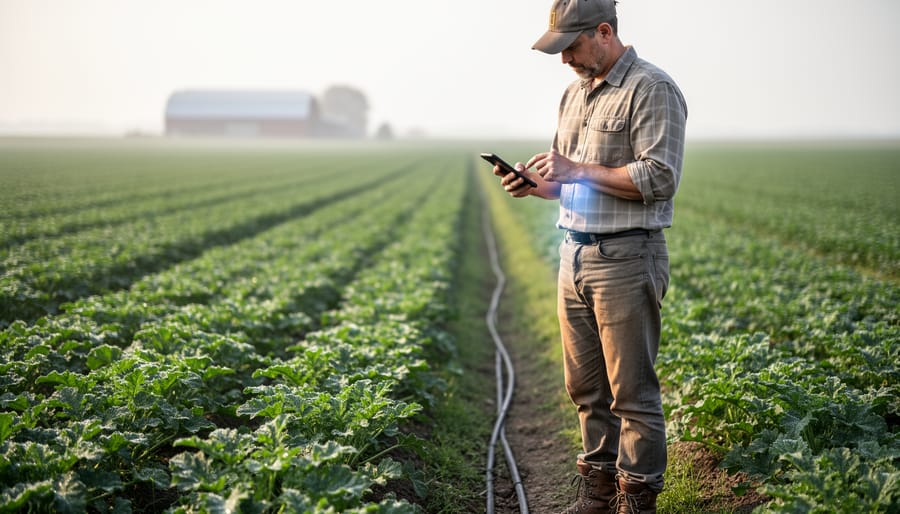
Next, pick tools that play well together. Before you commit to a farm management app or MRV platform, ask whether it can export your records in a usable format, such as a spreadsheet or standard data file. If it can, you keep the freedom to switch later or join more than one program.
Then ask programs the right questions. What data do they need, and at what level of detail? How long should you keep records? Who owns the data once you share it? Getting clear answers early saves rework down the road. If you’re ready to go further, this guide shows how to build an MRV plan around your own operation.
Finally, lean on your neighbours. Local agronomists, verifiers and farm groups often run workshops, and most have seen the same record-keeping questions before. Starting small is perfectly fine, and you don’t have to figure it out alone.
Common Questions About MRV Data Quality and Interoperability
Most farmers ask the same handful of questions once they start looking at MRV, so here are straight answers to the ones that come up most. Specific requirements vary by program and protocol, so treat these as a starting point and confirm details with the program you’re considering.
How much data is enough?
It depends on the protocol, but the goal is a complete, dated record of what happened in each field, such as seeding, tillage, inputs and soil samples. Ask your program for its minimum data list before you start collecting, so you aren’t guessing.
Are paper records acceptable?
Often yes, as long as they are legible, dated and tied to a specific field. Many farmers scan or photograph their notebooks so the records are backed up and easier to share with a verifier.
What happens if my records have gaps?
Gaps don’t automatically rule you out. Verifiers may accept supporting documents like input receipts, lab reports or equipment logs, and some protocols apply more conservative assumptions where data is missing.
Can I reuse my data across programs?
Sometimes, though protocols define baselines and practice categories differently, so reuse isn’t guaranteed. Granular, well-labelled records give you the best chance of mapping the same data to more than one framework.
Two more questions come up often. On record retention, programs set their own timelines, and some verification cycles span several years, so ask how long you’ll need to keep field records before you sign on. A safe habit is to hold onto everything, including backups, until you’ve confirmed the requirement in writing.
As for platform lock-in, it’s a fair concern. Before committing to a tool, check whether you can export your records in a usable format and whether you retain ownership of the data under the agreement. Platforms that let you take your data with you make it much easier to switch tools or join another program later, and they keep the decision in your hands.
MRV protocols can look like a mountain of paperwork from the outside, but they come down to something farmers already do well: keeping honest, organized records of what happens in the field. When that data is accurate, complete and easy to move between platforms, certification becomes more accessible. You spend less time re-entering the same seeding dates and input rates, and you keep the freedom to choose the tools and programs that suit your operation.
Most important, good data stays yours. Clear consent, exportable files and well-labelled records mean you decide who sees what, and when.
Alignment between protocols is still a work in progress, and that’s fine. Starting small, with the records you have today, is a solid first move. If you’ve already begun this journey, we’d love to hear what’s worked on your farm. Join an upcoming workshop, listen to a related podcast episode, or share your experience with neighbours. We learn best from one another.